Louvre, Musée d’Orsay or Rodin First in Paris? A Private Art Day for a Luxury Stay Without Museum Fatigue

Updated
Which museum should you start with in Paris if you want art, lunch, and a real evening?
Start with the Musée d’Orsay, not the Louvre. The reason is easiest to see at Pont Royal between the Tuileries and the Musée d’Orsay: on a map, the crossing looks elegant and brief, but in real Paris conditions the museum you choose before that bridge decides whether the day opens out into lunch, a Seine-side walk, and a second soft landing, or collapses into one long indoor campaign. For a first art-focused day in Paris, Orsay gives the strongest ratio of masterpieces to fatigue, the cleanest cross-river options, and the best chance of leaving the museum with enough attention left for the rest of the city. The clearest exception is simple: if the Louvre is the emotional reason you came to Paris, let it own the day and do not pretend you still need another major museum afterward.
This is the thesis that matters in Paris: your first museum should not be the most famous one; it should be the one that leaves enough city in the day for the art to stay vivid. The default winner is the Musée d’Orsay. The runner-up is the Louvre, but only when you are willing to shape the day around it. The wrong fit is the cultured-sounding double of Louvre plus Musée d’Orsay, which usually turns curiosity into endurance. Travelers who truly want the Louvre can absolutely do it well, especially with focused help such as a private Louvre tour, but they do better when they treat it as the day’s center of gravity rather than act one of two.
Three openings, three very different days
The same hotel, the same reservations, and the same appetite for art can still create three different Paris days depending on where you begin. Start at the Musée d’Orsay and the city tends to feel edited and legible. Start at the Louvre and the city feels grand but much heavier. Start at Musée Rodin and the day feels almost conversational, as though Paris is giving you room to look rather than daring you to keep up. That difference matters more than raw prestige because the first museum sets your walking load, your lunch window, your willingness to cross the river, and your mood at dinner.
Default winner: Musée d’Orsay. Best for first Paris stays that want an art-rich morning, a proper lunch, and the option of a graceful second act.
Runner-up: Louvre. Best when canonical icons are non-negotiable and you are ready to give the museum the larger share of the day.
Specialist choice: Musée Rodin. Best for sculpture lovers, arrival days, mixed-energy couples, and travelers who want an elegant half-day rather than a collection marathon.
The plan to stop forcing: Louvre plus Musée d’Orsay in one day. It sounds cultivated and usually leaves both museums feeling skimmed.
The comparison criteria should be explicit. A first museum in Paris needs to do four jobs at once: reward a first visit, survive a return visit, fit actual city routing, and leave enough physical and mental margin for lunch or a walk. By that standard, Orsay wins most often because its payoff arrives faster. The Louvre can still win, but only under narrower conditions. Rodin is not a lesser choice; it is the right choice for a smaller art day, not the right choice for everyone’s only big museum. That is also why a focused Louvre plan deserves its own track, and why a separate curated Louvre day guide makes more sense than trying to fold every art urge into one overstuffed day.
Another way to frame the choice is this: ask which museum still sounds appealing after you imagine the entire day around it. If Orsay sounds even better once you picture lunch and a walk, that is a strong sign. If the Louvre only sounds right when everything else disappears from the itinerary, that is also a sign, and not a negative one. If Rodin begins to sound perfect the moment you imagine sunlight, conversation, and a smaller second act, trust that. The first museum should be chosen by how it behaves inside a full Paris day, not by how loudly its name speaks on a shortlist.
Why Musée d’Orsay wins the first art day for most Paris stays
The Musée d’Orsay wins because it gives a first-time visitor concentrated reward without asking for Louvre-level stamina. Its core cluster is both famous and legible: Manet’s “Olympia,” Degas’s dancers, Renoir’s “Bal du moulin de la Galette,” and Van Gogh’s self-portraits tell a story most travelers can feel in one visit without wandering through unrelated civilizations and centuries first. On a first trip, that concentration means quicker emotional payoff. On a return trip, Orsay still rewards deeper looking because you can narrow the visit into one movement, one artist, or one floor and leave satisfied instead of half-finished.
Its location is part of the victory, not a footnote. The museum sits on the Left Bank in a part of Paris that moves naturally into lunch and outside air. Step out toward Quai Anatole France, drift west or east along the river, cross at Pont Royal if you want the Tuileries, or stay Left Bank and angle toward rue du Bac, Saint-Germain-des-Prés, or Musée Rodin. None of those moves feel like a full reset. That is why an Orsay morning so often becomes the day that actually works: the museum is large enough to matter, but not so dominant that your next decision becomes defensive.
There is a second reason Orsay works so well at the start of a stay: it teaches scale honestly. Paris has many grand rooms and many worthy detours, but Orsay lets you calibrate how long your own looking actually takes before you commit to the Louvre’s magnitude. Travelers who begin there come away knowing whether they are a ninety-minute highlights visitor, a three-hour deep diver, or someone who wants one great museum and then daylight. That self-knowledge pays back immediately across the rest of the trip, especially for visitors staying on the Left Bank or in the 8th, where it is very easy to keep adding one more polished stop until the day becomes over-designed.
Orsay is also the museum that collaborates best with neighborhood plans. If your hotel is on the Left Bank, the museum can anchor a day without making the rest of the neighborhood feel decorative. If you are staying in the 8th, it still connects neatly across the river without the psychological weight of committing to the Louvre immediately. That adaptability matters on short stays because the first museum is rarely the only thing happening that day. It may need to coexist with a celebratory lunch, an afternoon pause, or an evening reservation that you do not want to reach already depleted. Orsay is the museum most likely to coexist gracefully with those realities.
There is also a quieter advantage for art-loving travelers who are staying well and expecting the day to remain polished. Orsay is easier to pace around real life. Couples can take a long lunch without feeling they abandoned the point of the day. Small groups with mixed interests can agree on a two- or three-hour focus without resentment. Families with older teens get recognizable names and images quickly, which matters more than many adults admit. If what you want is a museum that still leaves room for Paris itself, Orsay is the start that most often keeps its promise.
When the Louvre should still be your first museum
The Louvre should be first only when the Louvre is not merely one museum among others, but the reason this day exists. Its first-visit payoff is undeniable when your must-see cluster is Winged Victory of Samothrace, Venus de Milo, and the Mona Lisa, or when you want the palace setting, the scale, and the sense of entering a collection that exceeds one artistic era. It rewards a return visit even more strongly than it rewards a first one, because repeat visitors can finally stop sampling and start choosing: one wing, one civilization, one painterly thread, one royal room sequence. But that same scale is exactly why it loses as the default answer for a first Paris art day.
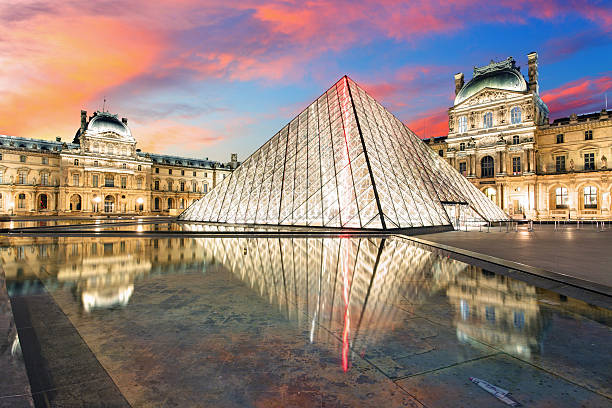
In practice, the Louvre asks more from the body before it gives back. You arrive, orient yourself around the Pyramid or another entrance, manage security, find the right wing, and start making cuts almost immediately. Denon, Sully, and Richelieu are not just labels on a map; they are energy decisions. Even a beautifully planned visit can end with the feeling that you have done something significant and are no longer available for much more. That is why private guidance matters more here than in the other two museums: not because the Louvre is impossible alone, but because a guide can cut dead time, stop over-viewing before it starts, and turn a giant building into a sequence with intention. Travelers choosing this route should confirm the current entry rules and timing on the Louvre hours and admission page (https://www.louvre.fr/en/visit/hours-admission) rather than assuming old habits still apply.
Louvre-first also has a very specific traveler profile. It suits the visitor who would feel genuine disappointment leaving Paris without those anchor works, the return traveler finally ready to study one department rather than collect icons, and the group that understands in advance that the museum is the event, not the prelude. It is a weaker fit for anyone who values a languid lunch as much as the visit, for travelers with mixed museum stamina, and for families who think “we will just see the highlights quickly” inside a building that resists quickness by design. In other words, the Louvre wins when desire is focused enough to justify the effort it requires.
The strongest correction to make early is this one: Louvre plus Musée d’Orsay in a single day is usually not refined planning; it is a very elegant form of overbooking. The only clean way to make the Louvre first is to cut aggressively. Cut the second major museum. Cut the idea that you must also have a grand riverside walk. Sometimes cut the late reservation you thought you wanted. If the Louvre is your priority, let it be the whole statement. Or, if your trip can absorb it, move the visit to a night Louvre format on another day so the museum does not consume the same daylight you wanted for Paris itself.
When Musée Rodin is the smartest opening, not the consolation prize
Musée Rodin is the right first museum when the day needs art without bulk. Its masterpiece cluster is immediate and physically generous: “The Thinker,” “The Kiss,” and “The Gates of Hell” all reward even a short visit, and the garden changes the experience from gallery endurance to sculpture in air and light. For a first visit, that clarity is a gift. For a return visit, Rodin is even better, because you no longer feel pressure to “cover” anything; you can look harder, sit, circle a sculpture, and notice how different the work feels outside and inside.
Rodin also fits kinds of Paris days that travelers often under-value. It is excellent on an arrival day after a comfortable but still tiring flight, excellent for couples who want the museum to lead naturally into lunch, excellent for celebration travelers who do not want to spend their entire best daylight hours in one building, and excellent for small groups with uneven stamina. From Rue de Varenne or the museum garden, the day can slide toward Invalides, rue de l’Université, or Saint-Germain without the sensation that you are commuting between attractions. That is a real luxury in Paris: not more exclusivity, but fewer hard resets.
Rodin is not the universal answer, and pretending otherwise would flatten the choice. If this is your one major museum day and what you really want is the sweep of nineteenth-century painting or the canonical force of the Louvre, Rodin may feel too slight. It is a brilliant opener for the right traveler, but not always enough for the traveler whose deepest regret would be missing a broader art statement. In other words, Rodin is an intelligent first choice when the trip already contains other large sights, when the hotel stay is short, or when calm is part of the goal. It is the wrong choice when what you need emotionally is a capital-M museum morning.
Rodin is also unusually good at preserving conversation within a group. In the Louvre, people separate emotionally even when they stay physically close, because each person is quietly managing a different threshold for crowds, scale, and attention. At Rodin, that drift happens less. The garden gives the group places to regroup without killing momentum, and the sculpture itself invites slower shared looking. That is why this museum overperforms for honeymooners, anniversary travelers, and multi-generational groups who want art in the day but do not want the day to become a test of museum appetite.
Is it better to pair Louvre and Orsay, Orsay and Rodin, or just one museum?
The best pairing for this kind of Paris day is Musée d’Orsay plus Musée Rodin, not Louvre plus Orsay. This is where Pont Royal between the Tuileries and the Musée d’Orsay becomes a real planning hinge rather than a romantic detail. The bridge does make the Louvre and Orsay look close. They are close. What drains the day is not only the distance; it is the second threshold. After the Louvre, you are not simply crossing a river. You are resetting your attention, entering another institution, making another set of cuts, and asking tired eyes to care again. In the other direction, Orsay can lead into Rodin without that same emotional restart because you stay on the Left Bank and the second museum is smaller, greener, and easier to enter as a second movement.
There are route consequences here that maps do not show well. Orsay to Rodin can be a purposeful walk along Quai Anatole France and inward through streets that still feel like Paris rather than transit. Rodin to Orsay also works on a shorter day, especially if you started late and want sculpture first, then painting. Louvre to Orsay across Pont Royal can be beautiful in theory and still waste the part of the day that travelers usually remember least kindly: the hour when the legs are heavy, the mind is full, and the second museum starts to feel like homework. The river crossing is not the problem by itself. The sequence is.
A few clean sequences illustrate the point. If you begin at Orsay, keep the morning tight, exit toward the river, and decide after lunch whether Rodin still sounds appealing. If you begin at Rodin, let the garden set the tone and use Orsay only if the group still wants a larger artistic statement. If you begin at the Louvre, assume the smartest second act is often not another museum at all but the Tuileries, Palais Royal, or a deliberate return to the hotel before dinner. The better sequence is usually the one that leaves you with one strong museum memory and one strong Paris memory, not two half-memories of collections.
That is why the cleanest plans are usually the boldest. Choose one museum, or choose one large museum and one smaller one. Orsay plus Rodin is cultured without being punishing. Louvre alone can be magnificent. Rodin plus a long lunch can be one of the most satisfying Paris art days a couple ever has. The combination to stop forcing is still the same. Louvre plus Orsay sounds like you are making efficient use of Paris. More often, you are spending your attention twice before it has time to recover.
What to cut first when the day also needs lunch or a Seine-side walk
If the day also needs lunch, a terrace, or even twenty unhurried minutes by the Seine, cut the second indoor collection before you cut the meal. That sounds almost unserious until you watch what happens in Paris when travelers over-prioritize museum volume. They rush, snack badly, drag themselves across the river, and arrive at dinner with the satisfied exhaustion of people who completed a task, not the brighter mood of people who actually had a day. A proper lunch is not the frivolous part of an art day. In Paris, it is often the hinge that keeps the afternoon from turning flat.
The rule becomes practical fast. On an Orsay day, keep the museum highlights, keep lunch, and treat Rodin as the optional extension. On a Rodin day, keep the garden, keep lunch, and add Orsay only if the group still wants painting and has the legs for it. On a Louvre day, keep the Louvre and cut almost everything else first. The thing to stop sacrificing is the transition that lets the art settle. Travelers who care about food as much as they care about painting do better when they admit that early and build accordingly; a good museum day can pair beautifully with ideas from a Paris food-and-wine day guide without trying to become that guide at the same time.
Even the direction of the walk matters. A lunch that keeps you on the Left Bank after Orsay tends to support Rodin because it avoids the mental fiction of “just one quick crossing.” A lunch in or near the Tuileries after the Louvre can be lovely, but it also tempts travelers into thinking Orsay is now the obvious next step because they can see the river and the bridge. That is the exact moment many good days go wrong. The bridge is short; the reset is not. In Paris, the visible distance between sites is often less important than the invisible cost of beginning again.
The finer cut-first rule is different for each route. On Orsay plus Rodin, cut Rodin’s interior before you cut the garden or lunch. On a Louvre-centered day, cut the second museum before you cut your guided core. On a hot-weather day, cut the extra riverside wandering before you cut the museum you truly came for. In every case, the best cut is the one that preserves the mood of the day, not the one that preserves the highest attraction count. Paris is not testing whether you can fit two names on one line of an itinerary.
What Paris does to the body, and what it does to the trip mood
Paris museum fatigue is not abstract. It lands in the calves from standing on stone floors, in the shoulders from carrying a jacket you no longer need, in the mind from making too many small orientation choices, and in the late afternoon from the false promise of “it’s only across the river.” Queue drag matters. Security pauses matter. Stairwells and long galleries matter. Even on days with comfortable weather, the walk from one institution to another can feel longer after two hours of concentrated looking than it would have felt at breakfast. The Louvre amplifies all of that because it begins large and stays large. Orsay contains it. Rodin diffuses it with air, benches, and garden rhythm.
The mood consequence is just as important. A good first museum should leave the evening intact. Orsay usually does. You come out with enough mind left for conversation, enough appetite left for dinner, and enough elasticity left to stroll rather than march. Rodin does this even more strongly when the day begins there. The Louvre can still leave you exhilarated, but only if you stopped in time; if you push it into a second museum day, the mood changes from Paris discovery to logistical recovery. That is why some travelers misread their own dissatisfaction. They do not actually regret the museum. They regret what the museum order did to the rest of the day.
Weather sharpens these effects but does not create them. In hotter months, the quays and open crossings add sun to a day already shaped by indoor standing. In colder or wetter weather, wet coats, umbrella handling, and the desire to stay inside can push travelers into doing more museum than they actually enjoy. Neither condition changes the core editorial judgment. The museum order that respects your physical attention span is the one that will feel more luxurious than the museum order that merely sounds ambitious on paper.
This is especially visible with couples, celebration travelers, and small groups who care about how the city feels, not just what it contains. A plan can be technically efficient and emotionally poor. It can deliver more art and less pleasure. In a city with so many seductive additions, the body and the mood should be treated as planning facts. The first museum is not only about art history. It is about whether Paris still feels available afterward.
Where a private guide changes the day, and where premium spend does not
Private guidance changes the Louvre most. That is the place where expert routing cuts the most dead time, where context stops the collection from becoming a blur, and where someone else’s judgment can save you from looking at too much and remembering too little. It is also the place where mixed groups benefit most from triage: the person who wants ancient sculpture, the person who wants royal rooms, and the person who only truly cares about three icons can all leave happier when the visit is designed instead of improvised. For the Louvre, paying for shape is often smarter than paying for more.
At Orsay and Rodin, guidance still helps, but the return is different. In Orsay, it helps by sharpening the story and editing the route through a manageable but still rich collection. In Rodin, it helps by deepening the work and pacing the garden and interiors around the group’s energy. Those are meaningful upgrades, especially for travelers who value interpretation, but they are not as transformational as guided triage inside the Louvre. The Louvre is where over-viewing begins fastest and where a strong guide can stop it before it starts.
A chauffeur adds little on a Left-Bank-heavy art day centered on Orsay, Rodin, Saint-Germain, and a Seine-side walk. The distances there are not the true source of friction, and paying for a vehicle does not remove the museum fatigue created by too much art or the second-threshold problem created by too many institutions. Where a car helps is on genuinely cross-city sightseeing days, days with mobility concerns, or days that include a hotel reset, arrival logistics, or far-apart neighborhoods. Travelers weighing that broader question should look at a chauffeured Paris day guide separately rather than assuming every elegant Paris day needs a car.
The spend question is easiest to answer when you separate access from shaping. Paying simply to accumulate premium touches rarely improves an art day. Paying for the right timed structure, the right museum sequence, and the right amount of interpretation often does. This is especially true in Paris because friction hides in moments that do not look extravagant enough to plan around: where to enter, when to stop, whether to cross the river now or after lunch, whether the second museum is still appetite or only inertia. The best private planning removes those small mistakes before they can stack up.
What this article points toward is a simpler kind of upgrade: the right museum first, the right amount of art, the right lunch, and a route that does not waste the city between stops. When that is what you want, the value is not in doing more. It is in being edited well. For travelers who want that day built around their pace, interests, hotel location, and appetite for one or two museum acts, Inquire now.
How to place this museum choice inside a longer Paris stay
On a three-day Paris stay, the safest pattern is usually Orsay first, Louvre later. That sequencing lets your first art day feel complete without using up your biggest museum before you have found the city’s pace. The Louvre can then become a separate daylight anchor or a later evening plan, and Rodin can appear as the lighter art choice on a day that also includes neighborhoods, shopping, or a celebration lunch. On a four- or five-day stay, the choices become even cleaner: keep Orsay as the first concentrated museum, give the Louvre its own terms, and use Rodin as either the softer opening or the refined recovery day after a heavier sequence. Travelers still deciding how much room Paris really needs will get more from a broader how many days in Paris framework than from squeezing every museum urge into the same afternoon.
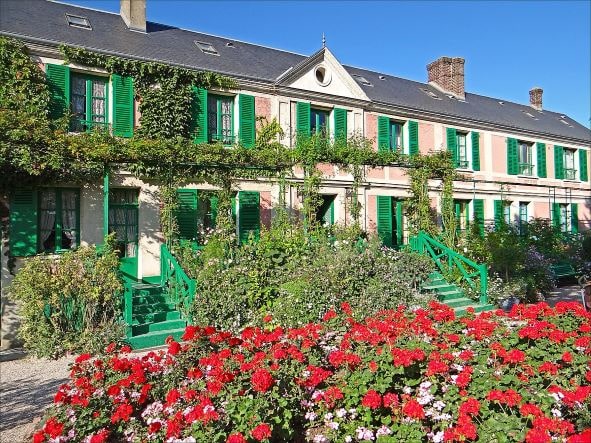
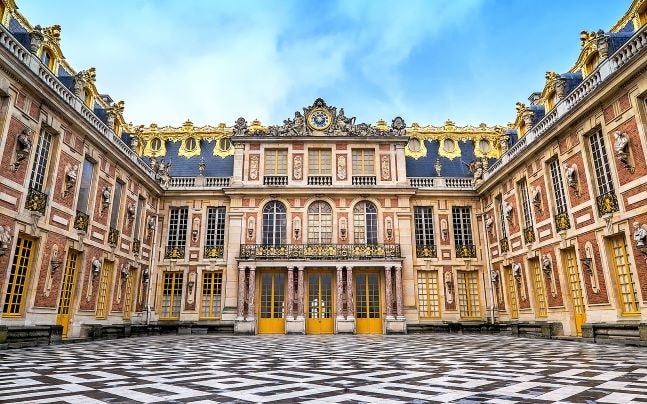
It also helps to separate this museum question from your day-trip question. If Versailles is in the trip, do not place it as though it were merely another museum morning. Use the official Versailles planning page (https://en.chateauversailles.fr/plan-your-visit) when booking and keep that day distinct from your city art day. If Monet is your real emotional priority, that is not a reason to rush through Orsay; it is a sign to give Giverny its own attention and start with the official Monet Foundation page (https://fondation-monet.com/en/giverny-2/). Paris punishes travelers who confuse “all art” with “the same kind of day.”
This is also where return visits change the recommendation. Travelers who know they will be back can let the first trip be more selective and humane. They can give Orsay the first-museum slot now, save the Louvre for a narrower future visit, or use Rodin as the art day that keeps the rest of Paris open. Travelers who suspect this may be their only Paris trip often panic into choosing the biggest museum first. Sometimes that is correct. Just as often it is anxiety masquerading as ambition, and Orsay remains the better opening because it lets the trip build rather than peak too early.
The sequencing point is simple but powerful. Choose the first museum that suits your current stamina and your hotel rhythm, not the one you feel socially expected to mention first. Louvre-first can be spectacular, but not every first Paris day needs to begin at maximum scale. Orsay-first is often the better opening because it teaches you the city’s art rhythm without spending the whole trip’s energy upfront. Rodin-first is the elegant exception that proves the rule: sometimes the most intelligent first museum is the one that leaves you wanting more, not the one that tries to end the conversation at once.
FAQ
Is the Louvre or Musée d’Orsay better for a first visit to Paris?
For most first art-focused Paris stays, the Musée d’Orsay is the better first museum because it delivers major works faster, is easier to pace, and still leaves room for lunch, a walk, or a second gentle act. The Louvre is the better first choice only when it is the emotional priority of the trip and you are willing to let it dominate the day.
Can you do the Louvre and Musée d’Orsay in one day without museum fatigue?
You can, but most travelers should not. The combination sounds efficient and often feels draining because the second museum arrives after a river crossing, another threshold, and a first collection that was already large enough to be a full day. If you insist on the Louvre first, cut the second major museum rather than skimming both.
Is Musée Rodin worth it on a first Paris trip?
Yes, especially if you want sculpture, garden space, and a calmer art day. Musée Rodin is particularly strong for couples, arrival days, and travelers who already know they do not want a long indoor museum campaign. It is less ideal as the only major museum if your strongest desire is to see the Louvre’s canonical icons or Orsay’s sweep of nineteenth-century painting.
What is the best museum pairing in Paris for one art-heavy day?
The best pairing is usually Musée d’Orsay plus Musée Rodin. It keeps you largely on the Left Bank, avoids the punishment of two giant indoor collections, and creates a day with better transitions. Louvre plus Orsay is the famous pair to be wary of, not the gold standard.
Does a private guide matter more at the Louvre or at Musée d’Orsay?
A private guide matters more at the Louvre because the museum’s size creates more dead time, more route decisions, and more temptation to over-see. Orsay also benefits from expert editing, but the improvement is less dramatic because the collection is more concentrated and easier to shape alone.
Is a chauffeur worth it for this kind of Paris museum day?
Usually not if the day is mostly Left Bank and river-adjacent. A chauffeur can help on broader cross-city days, on mobility-sensitive itineraries, or when the day includes hotel resets and far-apart neighborhoods. For Orsay, Rodin, Saint-Germain, and a Seine-side walk, the bigger win is better sequencing rather than more transport.
Should I save Versailles or Giverny for another day?
Yes. Versailles and Giverny deserve their own planning logic and should not be treated as add-ons to a museum day in central Paris. If either is in your trip, build it as a separate outing and start with the official planning tools you actually need: the official Versailles planning page and the official Monet Foundation page.
What if I love the Louvre but do not want to lose my whole day to it?
Then the answer is not usually “add Orsay as well.” The better move is to make the Louvre more focused, narrower, and better timed. That can mean choosing only one wing strategy, accepting that you are not covering the whole museum, or using a later visit window such as a separate Louvre night plan so the collection does not absorb the same daylight you wanted for the city.
If you’re interested in any private tours of Paris, please reach out to us.



 So if you are looking for the absolute best in Paris & surroundings with authentic local fully-licensed native guides whose English you can actually understand and with an exclusive and amazingly fun itinerary













