One Night in Champagne After Paris: Reims, Épernay and the Pace a Day Trip Cannot Match

Updated
For travelers who care about cellar depth rather than a Champagne checkbox, one night after Paris is usually the better plan than a long same-day return. It works because the real hinge is not only Paris-to-Reims distance; it is the Right Bank-to-Left Bank crossing logic, the morning exit from your hotel, the cellar appointment sequence, and whether you want your second tasting to feel attentive or merely scheduled. The clearest exception is a short Paris stay where you want one excellent house visit, a good lunch, and a return before dinner; then a focused private Champagne tour from Paris can still be the right choice. Champagne rewards one night when Reims handles the cellar infrastructure, Épernay supplies the slower wine-country rhythm, and the route stops fighting the evening.
The counterintuitive correction is that Épernay is often overvalued as the automatic overnight base. It sounds more vineyard-specific, and Avenue de Champagne is a powerful mental image, but many polished one-night plans work better when Reims anchors the stay and Épernay becomes the second-day release valve. Reims has the rail gravity, the cathedral-scale context, and the cluster of deep chalk-cellar appointments; Épernay has the softer pace, the Marne-side wine-country mood, and the reason not to rush back to Paris before the day has settled. Treating them as competitors is the mistake. Let them do different jobs.
Is one night in Champagne worth it after Paris, or is a day trip enough?
One night in Champagne is worth it when you want two different Champagne experiences without turning the day into a transfer exercise. A day trip can be excellent if it is deliberately narrow: one major cellar, perhaps one smaller producer or a lunch-led stop, and a clean return. The overnight begins to win when you want Reims and Épernay, when cellar appointments sit at fixed times, when your Paris hotel is not near the north-east rail exit, or when the trip continues onward and luggage becomes part of the design.
The day-trip promise is seductive because the map looks simple. Paris to Reims can appear fast enough that travelers imagine a light morning departure, two famous houses, the cathedral, lunch, a stroll on Avenue de Champagne, and dinner back near Saint-Germain or the 8th. That plan usually fails not because the places are unworthy, but because each reset steals attention: hotel lobby to car or station, Paris exit traffic or rail timing, first cellar check-in, lunch logistics, second appointment, Reims-to-Épernay movement, the return leg, and then the Right Bank-to-Left Bank crossing logic again if dinner or your hotel sits south of the Seine.
In a private, tailor-made context, the overnight is less about adding luxury for its own sake and more about removing compression. It lets your guide sequence the cellars with some oxygen between them; it lets a chauffeur handle bags rather than leaving you to protect the luggage plan; it lets lunch belong to the region rather than become the hour you fear is running late. For couples and celebration travelers, that shift changes the emotional texture of the trip. Champagne stops feeling like a commute with tasting glasses attached.
The wrong-fit case matters. If Paris itself is only three nights, if you have already committed to Versailles or Giverny, or if no one in the group wants more than one serious cellar visit, do not force the overnight. Use the same editorial restraint you would use with a museum day: fewer moves, better attention. Our companion guide on when a Champagne day trip still earns its place is the better frame when Champagne needs to fit inside a Paris hotel base rather than reshape the route.
The route-based comparison: three Champagne choices after Paris
Use the route, not the romance of the label, to compare your options. The strongest plan is the one that reduces repeated starts, not the one that name-checks the most houses.
- 1. One night in Champagne: Reims plus Épernay. Best when wine is a central reason for the trip, when you want cellar depth and a softer second day, or when you are using Champagne as a bridge after Paris rather than a round-trip excursion.
- 2. A focused Paris-to-Reims Champagne day trip. Best when you want one or two carefully chosen appointments, a guided cellar context, and a same-evening return to your Paris hotel without changing rooms.
- 3. Skip Champagne this time and choose a different add-on. Best when the group is more garden-, palace-, or art-led than wine-led, or when your calendar already contains a long transfer day and another hotel move would cost more mood than it creates.
The first option is the article’s default recommendation for wine-led travelers because it changes the pace of the region, not just the number of tastings. The second option is still valuable when the city stay matters more than the add-on. The third option is not a defeat; it is good planning. If the official facts you need are about palace or garden logistics rather than wine logistics, compare directly with the official Versailles planning page (https://en.chateauversailles.fr/plan-your-visit) and the official Monet Foundation page (https://fondation-monet.com/en/giverny-2/). Those are different kinds of days. Champagne should win because wine, cellars, and regional pacing matter to you, not because it is another famous name within reach of Paris.
The priority ladder for a one-night Champagne stay
The priority ladder should start with cellars, then routing, then lunch, then the evening; reverse that order and the overnight becomes decorative rather than useful. In practice, this means choosing the appointments that shape the day before choosing the prettiest stop on the map.
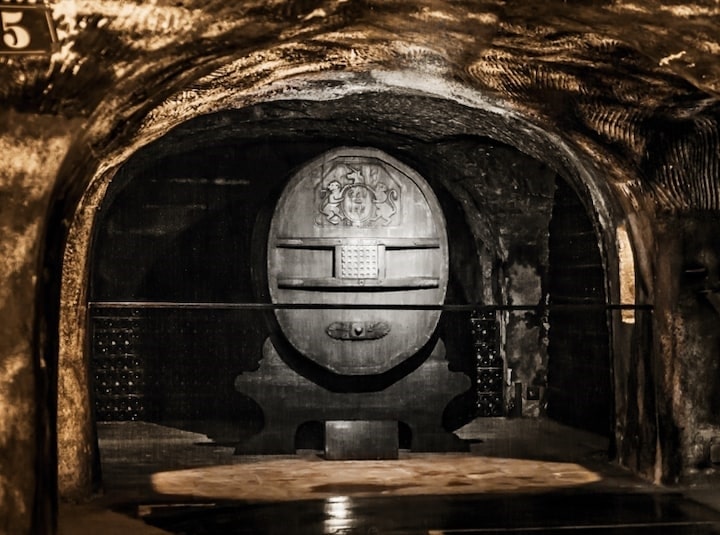
- First priority: the cellar architecture and interpretation. Champagne is not only a drink in this plan; it is a built environment. Chalk cellars, house histories, and tasting formats require attention, and attention requires time between appointments.
- Second priority: the Reims and Épernay division. Reims should not be asked to feel like a vineyard village, and Épernay should not be asked to carry the major-house cellar depth alone.
- Third priority: the luggage and hotel handoff. If the bags are moving with you, the route must be designed as a stay, not as a day trip pretending to have an overnight attached.
- Fourth priority: lunch and the afternoon mood. A regional lunch is valuable only if it does not make the second cellar visit feel like a deadline.
- Fifth priority: the return or onward route. Decide whether Champagne is a loop back to Paris or the hinge between Paris and the next French region before you book the night.
This ladder prevents the most common overbuild: two prestige appointments, a famous lunch address, Reims Cathedral, Avenue de Champagne, a vineyard drive, and a late return all in one breath. Our explicit editorial no is firm: do not force Reims Cathedral, Avenue de Champagne, two prestige houses, lunch, and a Paris dinner into one day. It reads well in an itinerary proposal and performs poorly in the body.
What the city does to the body is not abstract. A Paris morning starts with hotel elevators, lobby timing, the car or rail transfer, and often a cross-city movement toward Gare de l’Est or a north-east road exit. Champagne adds cellar stairs, cool underground air, standing tastings, lunch pacing, and the mental load of making the next appointment. Then Paris asks for one more arrival, one more bridge or boulevard crossing, and one more dinner transition. The overnight removes the late-stage pileup.
What the route does to the trip mood is just as important. A day trip often makes the second half of Champagne feel shorter than it is, because everyone can feel the return sitting in the room. With one night, the second appointment can remain part of the conversation rather than the thing before the drive back. That is where the value appears: not in more spectacle, but in the absence of the clock dominating the table.
Reims and Épernay should divide the job, not compete for the same hour
Reims should usually carry the first-day cellar weight, while Épernay should give the second day its slower wine-country release. This is the cleanest way to see both without making either feel like a drive-by.
Reims is the operational anchor. It receives many Paris arrivals more naturally, it has the urban structure for a first cellar appointment, and it gives a guide more to interpret between tastings: cathedral city, coronation history, rebuilt streets, and the Champagne houses whose cellars sit around the south-eastern edge of town. Ruinart 4 Rue des Crayères (https://www.ruinart.com/en-us/maison---4-rue-des-cray%C3%A8res-4ruedescrayeres.html), Veuve Clicquot cellar visits (https://www.veuveclicquot.com/en-int/visitus.html), and Champagne Taittinger visits in Reims (https://www.taittinger.com/en/visits-reims) all point to the same planning reality: some of the region’s most meaningful visitor experiences are not casual pop-ins. They are appointment-shaped, cellar-shaped, and easier to appreciate when the rest of the day has margins.
That does not mean Reims should consume the whole stay. The mistake is turning Reims into a checklist of house names. A better first day might pair one significant cellar visit with cathedral context, a thoughtful lunch, and an unhurried check-in. If your hotel is in Reims, the evening can stay local: no heroic Paris dinner, no late Left Bank return, no group pretending it is still lively after a day underground and on the road.
Épernay then performs a different role. Avenue de Champagne is not just a street to photograph; it is a useful pacing device because it slows the second day. It lets the itinerary breathe after the deeper Reims cellar focus. It can support a lighter tasting, a grower-led conversation nearby, a vineyard-side view, or a lunch that feels anchored in Champagne rather than wedged between two transfers. For a wine-first couple or a small group celebrating together, Épernay gives the trip the thing a day trip often misses: a morning when Champagne is already where you are.
The Reims-to-Épernay movement is also where a chauffeur earns practical value. It is not simply door-to-door comfort; it is the ability to keep the bags in the plan, adjust for appointment geography, and avoid turning the second day into a sequence of taxis and station choices. For guests comparing a self-managed rail loop with chauffeured Paris support, the upgrade matters most when the route contains luggage, two towns, and fixed cellar times. It matters less when the whole day is one Reims appointment and a simple return.
A realistic first day therefore needs a protected order rather than an ambitious list. Leave the Paris hotel, reach Reims, complete one substantial cellar visit, and place lunch where it supports the appointment instead of competing with it. Cathedral context can follow if the group is still attentive, but it should be treated as interpretation rather than another timed conquest. Check-in should happen before the evening becomes a luggage problem. This sequence may look lighter than a two-house day on paper, yet it gives the guide room to connect the chalk cellars, the cathedral city, and the house histories without asking guests to absorb each subject while already thinking about the next door time.
The second day should begin with the advantage the overnight purchased: no Paris departure. Move toward Épernay after breakfast, let Avenue de Champagne or a nearby wine-country stop carry the morning, and reserve enough margin for the return or onward leg. The useful contrast is not “more famous house versus less famous house.” It is Reims depth followed by Épernay release: underground architecture and urban history first, then a more open sense of landscape and regional rhythm. When the plan follows that contrast, even one lighter second-day tasting can add more than another prestige appointment squeezed into the first afternoon. The overnight succeeds because the two towns stop competing for the same tired hour.
Where the overnight creates the payoff a day trip cannot match
The overnight creates its payoff in the gaps between official experiences. That sounds modest, but in Champagne the gaps are where comprehension, appetite, and enjoyment either recover or collapse.
Cellar visits are not interchangeable. One might emphasize chalk, another house history, another blending, another the sensory grammar of a cuvée. A rushed day encourages travelers to remember labels; an overnight gives them time to compare ideas. The distinction is especially important for food-and-wine travelers who already know they do not need another generic tasting. They want to understand why the region is built the way it is, how the houses relate to place, and how Reims and Épernay express different kinds of Champagne prestige.
A second payoff is lunch. On a day trip, lunch often becomes the vulnerable middle of the plan: too short and it feels transactional, too long and the afternoon appointment tightens. On an overnight, lunch can be placed according to the route rather than the return. That does not require naming a famous dining room or chasing a fragile reservation claim. It simply means the meal can do what a regional meal should do: reset the palate, slow the group, and keep the conversation in Champagne instead of turning everyone’s attention toward Paris traffic or train time.
A third payoff is the evening. Champagne after dark is not necessarily about nightlife; it is about not having to re-enter Paris when your senses are done for the day. This is particularly valuable for older parents, multi-generational families, and travelers celebrating an anniversary or milestone. The end of a Champagne day should not require the group to agree on whether they still have the stamina for a Left Bank dinner or a return across the Seine. The overnight lets the evening stay proportionate.
A fourth payoff appears the next morning. Waking in the region changes the order of the day. You are not asking everyone to assemble in a Paris lobby, exit the city, and become attentive on command. You are already near the subject. That makes Épernay, a vineyard-road context, or a second cellar visit feel natural rather than ambitious. This is the point at which an overnight stops being a hotel indulgence and becomes a better interpretive structure.
When a Champagne day trip is still the sharper choice
A day trip is still the sharper choice when Champagne is a taste of the region, not the wine center of the journey. This is common on first Paris trips, family itineraries, and stays where the city itself already has several fixed reservations.
Choose the day trip if you only want one major cellar experience, if your group would rather keep the same Paris room, or if your next day is already heavy. A focused Reims day can be polished, informative, and enjoyable when it does not try to imitate an overnight. The right question is not, “Can we add Épernay?” The better question is, “Will adding Épernay improve the day enough to justify another transfer?” Often the answer is no. A single strong cellar visit with guide context beats a two-town plan that leaves everyone watching the clock.
Choose the day trip if your Paris geography makes return comfort unusually easy. A hotel in the 8th, near the north side of the city, or with a dinner plan that does not require a cross-river reset can make the same-day plan feel smoother than it would from a Left Bank base. This is where the Right Bank-to-Left Bank crossing logic matters again: a beautiful Saint-Germain hotel can be perfect for Paris evenings and slightly less convenient for a Champagne morning exit and late return.
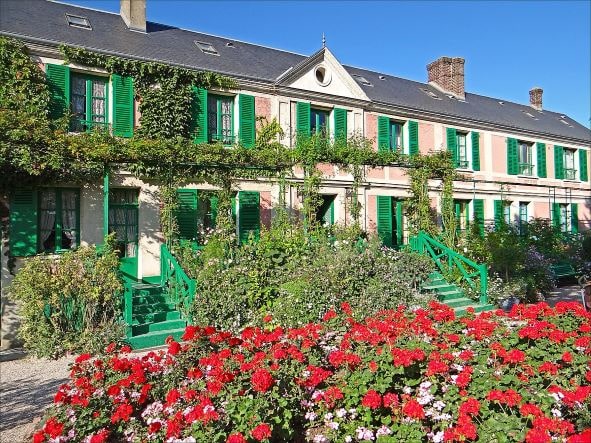
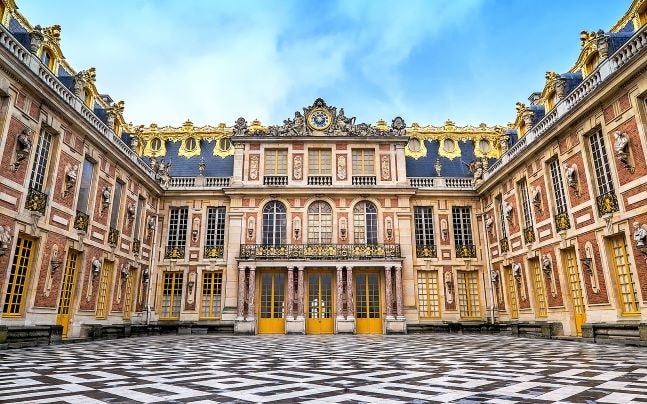
Choose the day trip if Champagne is competing with one other major add-on and you do not have the night to spare. Versailles and Giverny are not lesser choices; they are different planning problems. Versailles concentrates pressure around palace scale and timed visit design. Giverny depends more on garden season, light, and whether Monet’s house-and-garden world is the emotional target. Champagne should not win because it sounds more celebratory. It should win when wine depth, cellar interpretation, and a calmer regional sequence are the actual priority.
The cut-first rule is this: if you are not sleeping in Champagne, cut Épernay before you cut the quality of the Reims experience. That is the opposite of how many travelers plan, because Épernay feels like the romantic add-on. But for a same-day return, a stronger Reims plan usually leaves a better memory than a diluted two-town plan.
Where extra spend changes the stay, and where it does not
Extra spend changes a Champagne overnight when it removes route strain, protects appointments, and lets the hotel transfer become part of the plan. It does not automatically create better wine understanding.
The valuable upgrades are practical. A chauffeur who can collect you from your Paris hotel, manage luggage, wait through cellar visits, and move you from Reims to Épernay without renegotiating each leg changes the rhythm of the stay. A guide who understands why one cellar visit should not be stacked too tightly against another protects attention. A hotel plan that avoids a late check-in scramble keeps the evening from feeling like a second travel day. These are not glamorous details; they are the mechanics that let a short wine-region stay feel coherent.
Premium spend looks impressive on paper but does not materially improve the day when it only buys a higher vehicle category, a longer prestige-house list, or a showier lunch while the same rushed timing remains. It does not earn its cost when it simply upgrades the car category for a one-house Reims day trip while leaving the itinerary compressed and the late Paris return unchanged. Paying more for a heavier vehicle, a longer house list, or a prestige label does not fix a plan that is trying to do too much. In Champagne, the highest-value spend is often restraint: fewer appointments, cleaner transfers, and a sequence that gives the best cellar enough mental room to land.
Private touring matters most when the group is mixed. Wine collectors may want technical conversation; a spouse or parent may care more about comfort and historical context; teenagers may tolerate one cellar but resist a day of repeated explanations; celebration travelers may want the day to feel elegant without becoming ceremonial. A tailored plan can reduce those conflicts by controlling order and intensity. It can also say no to the wrong addition before the day is burdened by it.
This is the natural conversion point: once you see that the issue is not “Can we reach Champagne from Paris?” but “Can the transfers, hotel handoff, cellar appointments, lunch, and return route behave like one stay?”, private planning becomes a design tool rather than a luxury flourish. For a short-stay optimization that joins Champagne with Paris hotel logistics, onward routing, and guide-led context, Inquire now.
Routing back to Paris or onward after one night
The return route should be chosen before the Champagne hotel, because the wrong exit can erase much of the overnight’s calm. Decide whether Champagne is a loop, a bridge, or a soft landing after Paris.
The simplest loop is Paris to Reims, overnight in or near Reims, Épernay on the second day, and back to Paris in time for a light evening. This works when Paris remains your base, when you have a dinner or flight plan later in the stay, or when you want the comfort of returning to a known hotel. The key is not to pretend the return day is also a full Paris sightseeing day. If you arrive back with bags and tasting fatigue, choose a neighborhood dinner, a Seine-side hour, or a hotel reset over another museum reservation.
The bridge version uses Champagne between Paris and another French leg, but it requires more caution than many travelers expect. Do not assume every onward route is cleaner from Reims or Épernay than from Paris. Some itineraries still work best by returning to Paris for a southbound departure, especially if the next major train is from Gare de Lyon or if hotel comfort and luggage handling are more important than geographic purity. For broader sequencing choices, Paris as a first France base is the useful adjacent frame.
The soft-landing version places Champagne immediately after Paris but before a more intensive regional stay. This can work beautifully for couples and small groups who want to decompress after several city days. It can also backfire if the next destination already includes long transfers, winery visits, or heavy dining. Champagne should not become the first of three consecutive “special” days with no recovery space. A private planner’s job is often to protect the trip from too much excellence in a row.
For departures, the practical question is luggage. If bags are moving, the Champagne day should be designed around the vehicle, hotel timing, and station or airport plan. If bags are not moving, rail and walking options become easier. That single difference can flip the recommendation. A traveler with one small case and a Reims hotel near the station has a different day from a family with multiple bags, an Épernay lunch, and an evening return to a Left Bank suite.
How Orange Donut Tours would shape the overnight
Orange Donut Tours would shape the overnight around the route first, then the cellar story, then the celebratory details. The right private plan does not begin by ranking houses; it begins by deciding what the night is supposed to solve.
For a wine-led couple, the plan might start with a Paris hotel pickup, one serious Reims cellar, cathedral context if it deepens the story rather than bloats the day, a regional lunch, and a late afternoon check-in. The second day might move toward Épernay and the surrounding wine-country rhythm before returning to Paris or continuing onward. The point is not to maximize the number of glasses. It is to make the two days feel like a single argument about Champagne: chalk and house history first, landscape and slower tasting context second.
For a family or multi-generational group, the plan should reduce standing time and avoid making every adult preference into an appointment. One cellar may be enough on the first day, especially if the second day includes a lighter Épernay sequence. The guide’s value is not only information; it is calibration. Knowing when to leave, when to sit, when to skip a marginal stop, and when the group has absorbed enough is what keeps a premium itinerary from becoming a polite endurance test.
For celebration travelers, the overnight earns its place when it makes the occasion feel unforced. A chauffeur and hotel transfer can turn two rushed travel legs into a coherent wine-region stay, especially when bags, timing, and dinner geography are handled as one design. If Champagne is meant to mark an anniversary, birthday, engagement, or private family milestone, the most elegant choice is often the least frantic one. For fully tailored routing across Paris, Champagne, and the next stop, tailor-made Paris planning gives the itinerary room to be built around your actual constraints.
The final editorial judgment is this: choose one night in Champagne when the region is meant to be remembered as a place, not only tasted as an excursion. Choose the day trip when Champagne is a beautiful interruption inside a Paris stay. Skip the add-on when it would turn a short trip into a sequence of departures. The best plan is the one that leaves the group with enough attention to notice what they came for.
FAQ
Is one night in Champagne after Paris better than a day trip?
One night is better when you want both Reims and Épernay, more than one meaningful cellar experience, and a calmer route with luggage and hotel timing handled. A day trip is better when you want one focused Reims visit and a same-evening return to Paris.
Should I stay in Reims or Épernay for one night in Champagne?
Reims is usually the stronger operational base for one night because it works well for Paris arrivals and major cellar context. Épernay is better as the slower second-day counterpoint, unless your evening specifically revolves around Avenue de Champagne.
Can Reims and Épernay fit into one Paris day trip?
They can fit on paper, but the result is often rushed. If you are not sleeping in Champagne, it is usually better to prioritize a strong Reims cellar experience and cut Épernay rather than dilute both towns.
Where does a chauffeur help most in Champagne?
A chauffeur helps most when the route includes luggage, two towns, fixed cellar appointments, and a hotel transfer. It helps less when the plan is a simple one-house Reims day with an easy rail or car return.
How many cellar visits should a one-night Champagne stay include?
Most travelers should plan around one substantial cellar experience on the first day and one lighter or contrasting wine experience on the second. More can work for serious wine travelers, but only if lunch, transfers, and attention are protected.
Should Champagne replace Versailles or Giverny after Paris?
Champagne should replace Versailles or Giverny only when wine, cellars, and regional pacing matter more than palace scale or garden atmosphere. If your main interest is royal history or Monet’s garden world, those add-ons may be the better use of the extra day.
Can Champagne work as an onward stop instead of returning to Paris?
Champagne can work as an onward stop, but it is not automatically cleaner than returning to Paris. The best choice depends on your next train, luggage, hotel location, and whether the next region is easier to reach from Paris than from Reims or Épernay.
How should I start planning a private Champagne overnight from Paris?
Start with the route and hotel handoff, then choose the cellar sequence. Orange Donut Tours can fold Champagne into Private Tours in Paris so the overnight works with your Paris hotel, onward travel, and group pace.
If you’re interested in any private tours of Paris, please reach out to us.



 So if you are looking for the absolute best in Paris & surroundings with authentic local fully-licensed native guides whose English you can actually understand and with an exclusive and amazingly fun itinerary













