Architecture-Led Paris: Haussmann Boulevards, Guimard Entrances and One Modern Counterpoint

Updated
Build this Paris architecture day from the Opéra-to-boulevard corridor, not from a cross-city list: start with Haussmann on foot, place Guimard at the moment the Métro becomes part of the story, then use one westward transfer to Fondation Louis Vuitton as the modern counterpoint. This works in real Paris because the boulevard sequence around Opéra, Boulevard des Capucines and Boulevard des Italiens lets the city’s political geometry, retail rhythm and street movement line up in one readable walk instead of scattering you across façades. The clearest exception is a short first visit or a group that cannot enjoy sustained pavement time; in that case, skip the modern transfer and keep the Haussmann-plus-Guimard arc.
A useful clue appears before you look up: at Place de l’Opéra, the station called Opéra is not the place to “collect” a Guimard entrance. That absence is the lesson. Monumental Paris disciplined even its transit thresholds; Guimard’s sinuous green iron belongs where the Métro speaks as an urban system rather than where the square is still performing Second Empire ceremony. A private architecture route should respect that order: first the corridor, then the entrance grammar, then the modern rupture. This is the difference between a cultured walk and a checklist of famous surfaces, and it is exactly the kind of route logic that can be built into a tailor-made Paris private tour without making the day feel overproduced.
The priority ladder for an architecture-led Paris day
The winning sequence is Haussmann first, Guimard second, and one modern counterpoint only if it earns the transfer. That order matters because each layer changes how you read the previous one. Haussmann gives the wide street and controlled façade; Guimard gives the city’s smaller but highly visible design language at the threshold of movement; Fondation Louis Vuitton gives a deliberate break from stone, cornice and boulevard discipline. Reverse the order and the day becomes a style sampler. Keep the order and Paris becomes a political and physical argument you can walk.
- Priority one: the Opéra-to-boulevard corridor. This is where Haussmann’s Paris is legible as a system rather than as a façade style. Start around Palais Garnier and Place de l’Opéra, then use Boulevard des Capucines, Boulevard des Italiens and the Grands Boulevards to see how width, corners, balconies, shopfronts and traffic work together.
- Priority two: Guimard as movement, not decoration. The Art Nouveau Métro entrances make most sense after the boulevard walk, when the group understands why turn-of-the-century transit needed a public design identity. Do not waste the day hunting every example.
- Priority three: one modern counterpoint. Fondation Louis Vuitton is the strongest transfer-worthy contrast because it changes the material language, city edge and patronage story without requiring another historic neighborhood detour.
This ladder also gives you the cut-first rule: if energy, weather or dinner timing starts to tighten, remove the modern transfer before you damage the boulevard walk. The central Paris sequence is the spine. The modern stop is the coda. A coda can be elegant, but it should not steal the music. Skip the modern counterpoint whenever keeping the day walkable matters more than completing the full arc: short first stays, older parents, hot afternoons, tight dinner windows and groups that are already getting enough architecture from the boulevard sequence should stop with Haussmann and one well-placed Guimard entrance.
Why Haussmann needs a walking corridor, not a monument stop
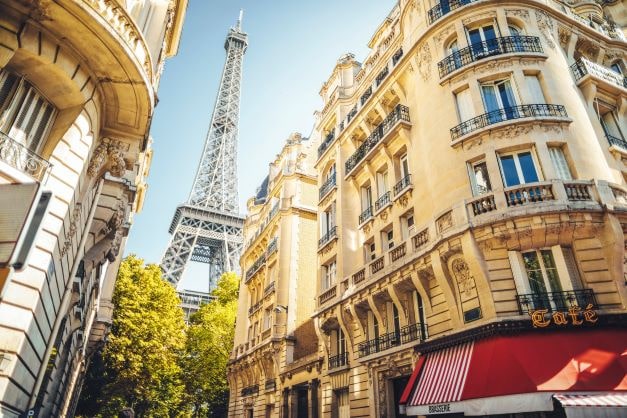
Haussmann’s Paris is best understood by walking a corridor because his work was urban choreography, not only architecture. A single photograph of a cream-stone building with iron balconies tells you almost nothing about the way the Second Empire changed movement, visibility, sanitation, policing, commerce and social display. The point is not merely that the façades align. The point is that the city becomes readable in long views, standardized heights, shaved corners, repeating balcony lines and the sudden authority of a boulevard cutting across older fabric. The City of Paris summary of Haussmann (https://www.paris.fr/pages/haussmann-l-homme-qui-a-transforme-paris-23091) is useful background, but the real proof is what happens to your eye between Opéra and the Grands Boulevards.
Start too far west, and the day slides toward prestige shopping and palace-hotel geography. Start too far east, and the Grands Boulevards become entertainment history before the Haussmann lesson has settled. The Opéra-to-boulevard corridor is the cleaner opening because Place de l’Opéra gives you spectacle, Boulevard des Capucines gives you lateral movement, and Boulevard des Italiens begins to show how uniform façades could serve cafés, theatres, banks and department-store life without losing the sense of state order. For travelers who have already done the Seine, Louvre and Eiffel Tower, this corridor makes Paris feel newly engineered rather than merely beautiful.
The route also makes a counterintuitive correction: do not treat Palais Garnier as the only architectural prize. It is the magnetic object, but the planning value comes from stepping away from it. Stand at the edge of Place de l’Opéra and notice how the avenues pull the eye outward; then move onto the boulevard and let the building become one actor in a larger urban machine. If you stay fixed at the Opéra steps, you admire a monument. If you walk the corridor, you understand why Haussmann’s Paris still controls how visitors move, where taxis stall, why cafés occupy corners, and why a short distance can feel grander than a longer museum march.
The cleanest micro-route is not long, but it must be protected. Begin with the Palais Garnier exterior and the traffic geometry of Place de l’Opéra, then move into Boulevard des Capucines before the group’s attention disperses. Let Boulevard des Italiens carry the lesson forward through repeated façades, active corners and commercial ground floors. A short side glance toward a covered-passage scale can sharpen the comparison, but the group should always feel pulled back to the boulevard. The body consequence is simple: a concentrated corridor teaches more with less distance than a prettier but scattered set of stops.
A car does not replace the need to walk the key boulevard sequence. Premium spend does not help if it is used to replace the Opéra-to-boulevard walk with a car, because the logic of Haussmann is in the sequence your eye assembles from the pavement. Where a driver helps is before and after: hotel pickup that avoids a messy start, a well-timed westward transfer after the walking portion, and a softer return before dinner. For the architecture itself, the upgrade is not leather seats; it is a guide who can slow the group at the right corners and prevent the walk from becoming a stream of names.
Where Guimard context belongs on a Haussmann and Art Nouveau Paris architecture route
Guimard belongs after the boulevard lesson, not at the beginning as a pretty symbol of Paris. The Métro entrances are not isolated ornaments; they are street-level answers to a new problem in 1900: how to make underground transit visible, modern, legible and unmistakably Parisian. RATP’s own Guimard note describes him as the architect of the iconic entrances, but the planning consequence is more important than the fact itself: Guimard should appear when the route turns from grand surface movement to the designed threshold of transit. That is why his work is best used as a hinge, not a scavenger hunt. The useful source is RATP’s Guimard primer (https://www.ratp.fr/en/decouvrir/sorties-et-visites/culture/hector-guimard); the useful travel decision is where to place him.
Use Porte Dauphine when Fondation Louis Vuitton is the counterpoint
Porte Dauphine is the cleanest Guimard hinge if you are continuing to Fondation Louis Vuitton. It sits near the western edge of Paris, close enough to the Bois de Boulogne to make the city feel as if it is loosening its belt after the boulevards. That physical shift matters. You move from Haussmann’s stone-and-traffic discipline to Guimard’s green iron at a transit threshold, then toward a glass-and-structure object at the edge of a park. The day becomes an arc rather than a set of taxi stops.
This is especially strong for couples and second-stay travelers who enjoy reading a city through movement. It is also useful for families with older children because the entrance gives a short, tactile design lesson before the modern building. The mistake is to make Porte Dauphine a long photo session. Treat it as a hinge: look, decode, connect, continue. The architecture day gets stronger when Guimard explains how Paris branded movement; it gets weaker when every Métro mouth becomes a collectible.
Use Cité or a central Guimard stop when the day must stay walkable
If the modern transfer is being cut, a central Guimard stop is the better choice. Cité works because it can keep you within a river-and-center geography after the boulevard sequence, especially if the rest of the day needs to drift toward Île de la Cité, Sainte-Chapelle or a Seine-side evening. It changes the story from “westward counterpoint” to “Paris made transit visible inside the historic core.” That is a smaller architecture day, but it is not a lesser one if the group is tired or the schedule is tight.
The practical consequence is calmer pacing. A central Guimard stop avoids the psychological tax of leaving the heart of Paris and returning later. It also gives first-time visitors a way to make the architecture theme visible without sacrificing the familiar center. If the group is staying on the Left Bank or near the Louvre, central Guimard plus a light river route can be more humane than pushing out to the Bois de Boulogne and back.
Leave Abbesses for a Montmartre day
Abbesses is tempting because its Guimard entrance is photogenic and the square feels like a ready-made Paris postcard. For this specific article, it is usually the wrong add-on. The Montmartre hill changes the day’s body load, the mood and the subject. Once you go there, you are no longer telling a focused story about Haussmann boulevards, transit design and one modern counterpoint; you are starting a village-and-view route that deserves its own half-day. Save Abbesses for a Montmartre plan rather than using it as an ornamental detour.
Which modern counterpoint deserves the transfer?
Fondation Louis Vuitton is the modern counterpoint that deserves the transfer when the group wants the full architecture arc. It is not the closest modern building, and that is part of the reason it works. The transfer creates a deliberate break: from the commercial boulevard and the Métro threshold to a park-edge cultural building by Frank Gehry, where glass, structure and brand-era patronage replace the unified street wall. The official Fondation Louis Vuitton building page (https://www.fondationlouisvuitton.fr/en/fondation/the-building) frames the building through Gehry’s design and its setting at the edge of Jardin d’Acclimatation; for travelers, the value is that the building changes the scale of the day without forcing another dense historic quarter.
For architecture-focused travelers, this is a stronger counterpoint than La Défense. La Défense offers corporate modernity at urban scale, but it tends to flatten the mood of a Paris day unless the group is explicitly interested in business districts, infrastructure or the Grande Arche. It is too large to be a coda and too separate to be a graceful finish. The transfer out and back can make the afternoon feel as if Paris has been interrupted rather than expanded.
It is also a better current choice than building the day around Centre Pompidou as an interior visit. Centre Pompidou remains a major modern reference, but its own transformation page (https://www.centrepompidou.fr/en/centre-pompidou-is-transforming-itself) explains the closure and renovation program that affects the main building in this period. As an exterior reference, Beaubourg can still be discussed in a broader modern Paris conversation, but for this route it is not the counterpoint that earns the transfer. The point is not to name the most famous modern structure. The point is to choose the one that gives the day a clean historical and physical finish.
Fondation Louis Vuitton also has better traveler consequences. It gives a natural place to sit, pause and let the group’s eyes adjust after the boulevard density. It can work with a chauffeur without pretending the car is the experience. It can be an exterior-led architecture stop if the group is not in the mood for a full museum visit, or a longer cultural pause if the exhibition program genuinely fits the travelers. The caution is simple: do not add it because it sounds premium. Add it because the day’s story needs a modern rupture, and because the westward hinge through Guimard makes the transfer feel designed rather than indulgent.
The route that keeps the day curated rather than encyclopedic
The best version of this day feels like a single argument in motion. It does not chase every Paris style, and it does not use architecture as an excuse to cross the city repeatedly. The route begins with a defined walking corridor, pauses at a design hinge, and then either ends centrally or transfers west for the modern counterpoint. That discipline is what keeps the day premium in practice: not more stops, but fewer resets.
- Begin at Opéra. Use the square and the Palais Garnier exterior to set the language of authority, spectacle and axial planning. Do not linger so long that the building swallows the theme.
- Walk the boulevards. Move along Boulevard des Capucines and Boulevard des Italiens toward the Grands Boulevards. Let the guide point out repeated façade logic, corner behavior, commercial ground floors and the way street width changes the visitor’s pace.
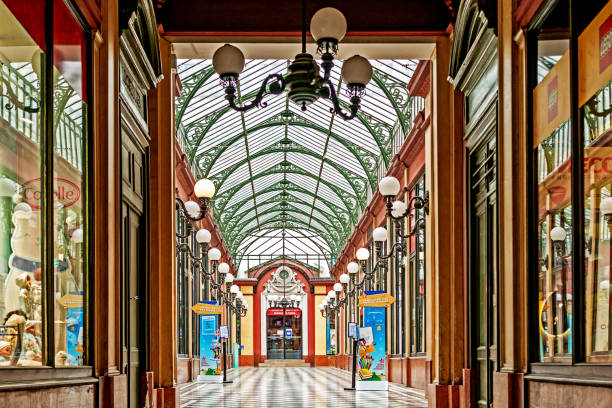
- Use one older-scale interruption. A short glance into a covered passage or a tighter side street can show what Haussmann’s broad strokes replaced or disciplined. This should be a contrast, not a second guidebook chapter.
- Place Guimard at the hinge. Choose Porte Dauphine if Fondation Louis Vuitton follows, or a central Guimard entrance if the day stays compact.
- Finish with one modern counterpoint or stop before the transfer. Fondation Louis Vuitton is the full arc; a central finish is the right choice when the group needs the day to remain walkable.
For travelers booking a broad first encounter with the city, this can be folded into a Best of Paris private tour only if the architecture lens is chosen deliberately. Otherwise, a general highlights day will pull the route toward the Eiffel Tower, the Louvre and the river, and Haussmann will become background. That is fine for a first day, but it is not the article’s promise. This route is for travelers who want the city’s built logic to lead.
Traveler-fit clusters: who should keep, cut or upgrade the route
The full Haussmann-Guimard-modern arc is best for travelers who have enough Paris context to enjoy a focused argument. It can still work for first-timers, but only when the rest of the stay already covers the obvious icons. The decision is not whether architecture is interesting. The decision is whether this kind of architecture day will make the trip feel sharper or whether it will steal time from the places a group still emotionally expects to see.
Second-stay architecture and culture travelers should keep the full arc
This is the strongest fit. Travelers who already know the Seine, the Louvre, Montmartre or the Eiffel Tower often want Paris to become less postcard and more intelligible. The full route gives them that. Haussmann explains the capital’s urban grammar; Guimard introduces designed transit identity; Fondation Louis Vuitton brings the story into a more contemporary language of patronage, spectacle and engineered form. The day feels curated because it has an argument, not because it has rare access.
Couples and celebration travelers should keep the walk but watch the afternoon
For couples, the boulevard walk can be quietly absorbing without becoming academic. The risk is afternoon drag before a serious dinner or celebration evening. If the day includes a special meal, a private cruise or dressed-up evening plans, the modern counterpoint should be placed only if the return is easy and the group has a real pause before dinner. Otherwise, keep Haussmann and Guimard, finish centrally, and let the evening have its own shape. A Paris day can be intellectually rich without being physically maximal.
Families and three-generation groups should shorten the boulevard section before cutting the guide
Families do not need a simplified story; they need a route that respects attention spans and knees. The best family version starts at Opéra, chooses fewer boulevard stops, turns Guimard into a concrete “how do you enter the underground city?” question, and uses the modern counterpoint only if the transfer gives everyone a seated break. For grandparents or younger children, a luxury chauffeured Paris private tour can help with the westward transfer and return, but it should not erase the essential walking corridor.
First-time visitors should choose this only after the river question is solved
First-timers can love this route, but it should not be their only Paris day unless they are unusually architecture-led. If the Seine, Île de la Cité, the Louvre or the Eiffel Tower are still unresolved, this article’s route may feel too specialized. In that case, begin with a river-led structure such as the Paris by the Seine plan, then reserve the architecture arc for a second day or a half-day variation. The regret risk is not that Haussmann is boring; it is that the group may spend the evening wondering why they missed the Paris they had pictured.
How a private guide changes the architecture day without overproducing it
A private guide earns the day by connecting style, politics and movement at walking speed. Self-guided architecture walks often fail in Paris because they over-explain façades and under-explain transitions. A good guide does the opposite. They can show why the boulevard corner matters, why a balcony line is not just decorative, why a Métro entrance belongs to a transport identity, and why the modern counterpoint should feel like a chosen rupture rather than a luxury errand. This is where expert guidance changes the trip: not by adding more facts, but by deciding which facts should be visible at each turn.
The value is also social. Couples may want a more conversational pace. Families may need shorter explanations and cleaner pauses. Small groups often need someone to prevent one person’s curiosity from pulling the route into a side quest. Food-and-wine travelers may want the architecture morning to finish near an elegant lunch or return cleanly before a tasting menu. A private guide can hold the historical thread while adjusting the human rhythm, which is hard to do from a saved map.
At the broad planning level, this is why architecture belongs inside private tours in Paris only when the route has a firm spine. Without the spine, customization can become a polite way of adding too much. With the spine, the private format lets the guide shorten the boulevard, choose the right Guimard hinge, keep a driver useful but secondary, and decide whether Fondation Louis Vuitton is an earned finish or an elegant omission.
For Orange Donut Tours, this is the natural point to customize: the boulevard walk, the Guimard hinge, the modern counterpoint, the driver segment, and the return can be designed as one piece rather than booked as separate fragments. When the concern is not “what should we see?” but “how do we make this feel coherent, comfortable and worthy of one Paris day?”, Inquire now.
What to cut first when the plan starts to sprawl
Cut anything that turns the day from a historical arc into a citywide architecture hunt. The first thing to remove is a second modern district. Do not add La Défense after Fondation Louis Vuitton. Do not add Bibliothèque François-Mitterrand because it sounds intellectually satisfying. Do not add a separate Montmartre Guimard stop after using Porte Dauphine. These are all defensible on other days, but together they create transfer fatigue and blur the central question.
The second thing to cut is an interior that does not serve the architecture arc. A museum hour can be excellent if it reinforces the building or gives the group a seated pause. It becomes a mistake when it turns the day into “architecture plus whatever exhibition is available.” This article is not built around fragile exhibition timing. The exterior, street sequence and movement logic must still carry the day.
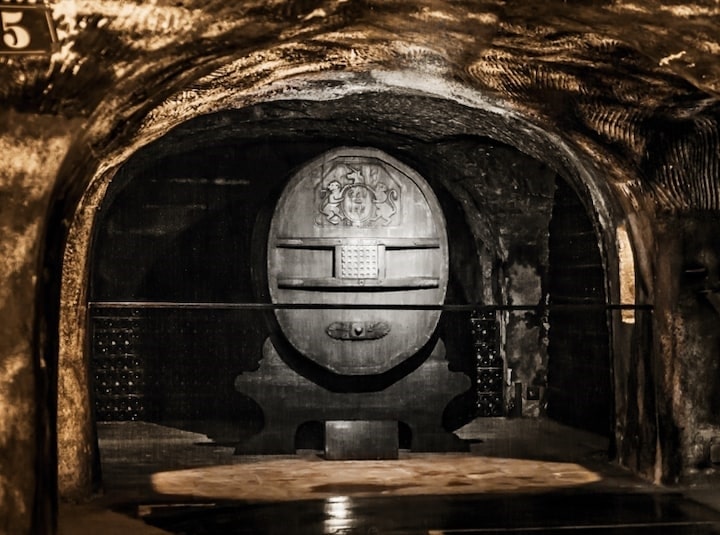
The third thing to cut is a Champagne detour disguised as contrast. Champagne is a superb separate decision when the day is about cellars, lunch and Reims logistics, but it is not a modern counterpoint to Haussmann. If cellar visits are the real desire, plan them honestly: Champagne Taittinger visits in Reims (https://www.taittinger.com/en/visits-reims) and Veuve Clicquot cellar visits (https://www.veuveclicquot.com/en-int/visitus.html) belong in a day shaped by train or driver timing, not as an architectural afterthought. For that decision, use a separate framework such as when a Champagne day earns its place.
The final cut is the famous stop that does not suit the current route. Centre Pompidou may be the better reference in a modern-art conversation, but when its main-building experience is constrained, it should not be forced into this day as proof that you have covered modern Paris. The more confident editorial choice is to acknowledge it, then choose the counterpoint that works in the actual route.
Comfort, body load and the mood of the day
This route is not physically extreme, but Paris makes architecture walking more tiring than it looks on a map. The boulevards expose you to crossings, curb edges, delivery movement, café spillover, bus lanes, construction patches and the constant need to look up while staying aware of the pavement. Around Opéra, traffic geometry can make a short crossing feel mentally louder than a longer garden walk. Métro stairs can add fatigue if the route is built around too many station hops. In warm weather, the stone-and-asphalt corridor can feel brighter and harder than the shaded streets of the Marais or the Luxembourg area.
The practical answer is to build fewer, better stops. Give the group time to stand still at the right angle, then move. Use a seated pause before the Guimard hinge or before the westward transfer. Do not make travelers absorb façade history while navigating a crowded crossing. A polished architecture day often depends less on total distance than on when the guide asks people to concentrate.
The mood consequence is just as important. Too many cross-city photo stops make Paris feel large, interrupted and oddly generic; the day becomes a collection of arrivals. A corridor-led route makes the city feel shorter and more intentional. It lets the evening remain pleasurable because the day has had a beginning, middle and finish rather than a series of resets. If dinner is on the Right Bank, the modern counterpoint needs a clear return. If dinner is on the Left Bank, consider cutting the westward coda and finishing centrally. Architecture should sharpen the day, not leave everyone quietly negotiating how soon they can sit down.
For travelers already considering a driver, compare the role of the car carefully. A chauffeur can improve the transfer to Fondation Louis Vuitton, help older parents avoid unnecessary station stairs, and make the return more composed. A chauffeur cannot make Haussmann legible from behind glass. For a related planning lens, see when a chauffeur changes a Paris museum day. The same principle applies here: pay for the movement that reduces fatigue, not for movement that erases the reason you came.
FAQ
What is the best architecture route in Paris for Haussmann boulevards and Guimard Métro entrances?
The best focused route starts around Opéra, walks the Boulevard des Capucines and Boulevard des Italiens corridor, then places Guimard at a Métro entrance that fits the onward plan. Use Porte Dauphine if you are transferring to Fondation Louis Vuitton, or a central Guimard stop if the day needs to stay walkable.
Why should Haussmann be seen on foot instead of by car?
Haussmann is best understood as a walking sequence because the boulevard width, façade rhythm, corners, shopfronts and sightlines work together over several blocks. A car can help before or after the route, but it cannot replace the visual logic you assemble from the pavement.
Where does Guimard fit into a Paris architecture day?
Guimard fits after the Haussmann boulevard walk, when the story turns from grand urban surfaces to the designed threshold of the Métro. His entrances are most useful as context for movement and modern public identity, not as isolated photo stops.
Is Fondation Louis Vuitton worth the transfer on an architecture-led Paris day?
Fondation Louis Vuitton is worth the transfer when you want one modern counterpoint to Haussmann and Guimard. It works best as a deliberate westward coda, especially with a driver or carefully planned transfer, and should be skipped when the group needs the day to remain fully walkable.
Should Centre Pompidou be the modern counterpoint instead?
Centre Pompidou is an important modern Paris reference, but it is not the strongest counterpoint for this route when the main-building experience is affected by its transformation period. Use it as a discussion point if relevant, but choose Fondation Louis Vuitton when the day needs a transfer-worthy finish.
Can this architecture route work for first-time visitors?
It can work for first-time visitors who are strongly architecture-led or who already have the Seine, Louvre and Eiffel Tower covered elsewhere. For a very short first stay, keep the Haussmann and Guimard core and skip the modern transfer.
How long should this architecture-led Paris route take?
The focused Haussmann and Guimard version works as a substantial half-day. Adding Fondation Louis Vuitton turns it into a longer architecture-led day, especially if you include an interior visit, a seated pause and a careful return before dinner.
What should be skipped first if the day is getting too full?
Skip the modern transfer first if the group is tired, the weather is difficult or dinner timing is tight. The Opéra-to-boulevard corridor and one well-placed Guimard stop are the core; extra modern districts, Montmartre detours and unrelated Champagne plans should be saved for separate days.
If you’re interested in any private tours of Paris, please reach out to us.

 So if you are looking for the absolute best in Paris & surroundings with authentic local fully-licensed native guides whose English you can actually understand and with an exclusive and amazingly fun itinerary