Where Opéra Garnier Belongs in a Paris Day Before Shopping and Dinner

Updated
Put Opéra Garnier in the late morning or early afternoon, then let the Opéra-to-Place Vendôme transition carry you into the shopping half of the day and a Right Bank dinner. That order works because Paris does not reward decorative zigzags: the Auber and Opéra station exits, the traffic ring around Place de l’Opéra, Rue de la Paix, Place Vendôme, Rue Saint-Honoré and the Tuileries edge form a real sequence, not a postcard chain. The clearest exception is a Left Bank dinner or hotel evening; in that case, do Garnier earlier, cut the shopping arc shorter, and do not cross the Seine late simply because the map makes it look close.
The thesis is simple but very Paris-specific: Opéra Garnier is not the day’s finale; it is the hinge that turns a culture stop into a coherent Right Bank route before shopping and dinner. Treat it as a route hinge and the day feels edited. Treat it as a floating ornament between Avenue Montaigne, Le Marais and Saint-Germain, and the afternoon becomes a sequence of transfers in good clothes.
This is a narrow planning guide for travelers who are asking where Opéra Garnier belongs in a Paris day before shopping and dinner. It is not an opera performance guide, not a department-store roundup, and not a generic Right Bank list. The useful decision is where to place one richly contextual interior so that the rest of the day still has lift: shopping that does not sprawl, dinner that does not require a tired cross-town push, and enough local texture for the day to feel like Paris rather than errands near expensive façades. For a broader guided city arc, see Best of Paris private tour, but this article stays with the Opéra Garnier question.
Why Opéra Garnier works as the Right Bank hinge
Opéra Garnier works best as the hinge because it sits between two different Paris speeds: the wide Haussmann stage around Place de l’Opéra and the more compressed luxury geography leading toward Place Vendôme. This is the non-obvious planning advantage. Many visitors see the building as a single monument near the grands magasins, but the more useful move is to use it as a transition from boulevard scale to evening scale.
Start with the surrounding conditions. Place de l’Opéra is not restful. It is handsome, but it is also a working traffic space where Boulevard des Capucines, Avenue de l’Opéra, Rue Auber, Rue Halévy and Boulevard Haussmann all press toward the façade. Arrive there too late, already dressed for dinner and carrying shopping bags, and the monument can feel like one more crowded threshold. Arrive late morning, after a lighter architectural or neighborhood hour, and the same bustle reads as part of the story: the opera house as the public stage of Napoleon III’s Paris, with broad streets designed for movement, visibility and display.
The move that changes the day is not just entering the building. It is what happens after. From the Opéra steps, the walk down Rue de la Paix to Place Vendôme turns a big, exposed square into a calmer shopping-and-dinner approach. That short line is why the Opéra-to-Place Vendôme transition matters. It lets a guide explain Haussmann, theater culture, jewelry geography, palace hotels and Right Bank power in one contained arc, while your feet are moving toward the evening instead of away from it.
There is a counterintuitive correction here: Avenue Montaigne is often overvalued as the automatic next stop after Opéra Garnier. It is a beautiful fashion address and it may be the right address for a highly specific shopping plan, but it is not the natural continuation of a Garnier-to-Place Vendôme day unless your dinner, hotel or boutique appointments pull you west. The Right Bank is not one compact luxury village. Place Vendôme and Avenue Montaigne both belong to Paris style geography, but forcing both after Garnier can make the day feel wider and less elegant.
For current visitor access and ticketing details, check the official Palais Garnier visit page (https://www.operadeparis.fr/en/visits/visit-and-explore/visit-the-palais-garnier) before you fix the day. The practical point is not to chase a fragile hour-by-hour claim. It is to make sure the Garnier interior is available in the part of the day where it actually improves the route.
Should you visit Opéra Garnier in the morning or before dinner?
Choose late morning or early afternoon for Opéra Garnier when shopping and dinner are also in the plan. A pure first-thing visit can work for architecture lovers, but a pre-dinner Garnier visit only works when the evening remains nearby and light.
Priority 1: late morning, then Place Vendôme and shopping
This is the strongest order for couples, style travelers and small groups who want culture before commerce without turning the day into a museum morning. A light Right Bank start might include a short Haussmannian architecture walk, the edge of Boulevard des Capucines, or one covered-passage thread if the weather is poor. Then Opéra Garnier gives the day its interior drama before the route narrows toward Rue de la Paix and Place Vendôme.
The consequence is practical. You are not asking a shopper to concentrate after a heavy museum. You are not asking a dinner traveler to absorb a major monument at the hour when they would rather slow down. Garnier becomes the bridge between morning context and afternoon choice, and the later shopping has a Paris story behind it rather than a pure retail rhythm.
Priority 2: early afternoon, after a lunch close to the route
Early afternoon can be excellent if your morning is intentionally soft: a hotel start near the 8th, a short Tuileries edge, or a first coffee-and-window-shopping route that does not require decisions yet. In this version, Garnier prevents the day from becoming all shopping. It gives the afternoon a cultural spine before the Place Vendôme and Rue Saint-Honoré section begins.
The risk is that lunch can run long. Paris does not punish lingering, but it does punish pretending that a long lunch, a full Garnier visit, multiple boutique stops and a serious dinner all belong in one unbroken march. If lunch becomes the day’s pleasure, shorten the shopping route rather than shrinking Garnier into a rushed look at the staircase.
Priority 3: first thing only when Garnier is the point
A morning-first Garnier visit is the right call when the building itself is your main cultural priority. Architecture-led travelers, repeat visitors and families with shorter attention spans may prefer to see the interior before the surrounding streets get busier. That order also works when you plan to leave the Opéra district afterward rather than keep the day on a Place Vendôme track.
The tradeoff is that a first-thing Garnier can leave too much empty road before dinner if the rest of the day is not carefully edited. Once the interior is done, the temptation is to add a department store, then the Louvre exterior, then Le Marais, then a Seine view, then dinner somewhere else. That is how a good morning becomes a blurry city checklist.
Priority 4: pre-dinner only for a nearby Right Bank evening
Pre-dinner Garnier is the narrowest fit. It can be lovely if dinner is around Place Vendôme, the 1st, the Madeleine edge, the 8th, or a hotel dining room nearby. It breaks down when dinner is in Saint-Germain, the deeper Left Bank, eastern Le Marais or across town after a full shopping afternoon.
The body feels this mistake before the itinerary admits it. Hard pavements, Métro stairs, boulevard crossings, security checks, shop-floor standing and the final taxi wait all accumulate. Add dress shoes, bags and a reservation time, and the last transfer becomes the part of the day everyone remembers. A private day should not make dinner feel like a logistical apology.
Traveler-fit clusters: who should build the day around Garnier
Build the day around Opéra Garnier if the traveler’s ideal Paris combines style, architecture, and a dinner route that feels intentional. Avoid centering the day on Garnier when the group mainly wants deep museum time, serious Left Bank wandering, or a shopping appointment map that is already fixed far from the Opéra district.
The style-and-culture couple
This is the cleanest fit. Opéra Garnier gives the day a shared cultural moment before the shopping becomes more individual: one person may care about architecture, another about jewelry, fragrance, fashion, or interiors. The route from the opera house toward Place Vendôme keeps both travelers inside the same atmosphere, which matters more than another famous stop.
The mood-preserving decision is to keep the evening on the same side of the river. After Garnier, Place Vendôme and a few carefully chosen addresses, the couple should feel that the day has narrowed toward dinner. The mood-killing mistake is to add a late Seine crossing because someone feels Saint-Germain would be more “romantic.” Saint-Germain can be wonderful on its own evening. After a full Right Bank day, it often becomes a cab-window idea.
The serious shopper who still wants Paris context
For a serious shopper, Garnier works when it is short, guided and placed before the most decision-heavy shopping. A guide can use the opera house and the surrounding streets to explain why this part of Paris became a theater of display: façades, arcades, jewelry houses, hotel lobbies, couture addresses and the old department-store gravity around Boulevard Haussmann.
What to avoid is the false economy of doing “just a quick look” after boutique appointments. Decision fatigue is real. By late afternoon, even beautiful interiors can feel like more visual demand. A better plan gives Garnier a protected slot and then lets shopping become selective. For a more shopping-led version of this day, the stronger adjacent planning page is Paris shopping private tours.
The comfort-first family or small private group
For families or small groups, Garnier belongs in the day if it replaces a heavier museum rather than joining one. Its public spaces can hold attention without requiring the same patience as a long art collection, and the surrounding route gives non-shoppers something to notice while others browse.
The friction appears when every traveler has a different errand. One person wants Boulevard Haussmann, another wants Place Vendôme, another wants Avenue Montaigne, and someone else wants a café near the Seine. A guide helps most by choosing the end point before the day begins. Once the endpoint is fixed, the route can be edited around the group’s actual energy instead of becoming a democratic spiral.
The food-and-wine traveler with a serious dinner
For a food-and-wine traveler, Garnier belongs before dinner only if it protects appetite and attention. The day should not be full of heavy interiors, long transfers and a late return to the hotel before a tasting menu. A single culture hinge, selective shopping, and an easy dinner geography will do more for the meal than another monument.
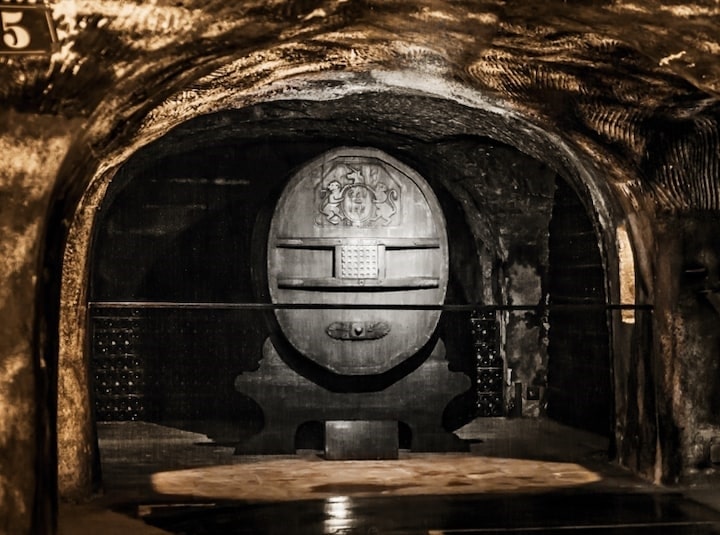
If the wine priority is larger than the city day, do not pretend it belongs in this route. Champagne is a separate decision, not an afternoon add-on after Garnier. Travelers who are weighing cellar time should treat Champagne Taittinger visits in Reims (https://www.taittinger.com/en/visits-reims) as evidence of a different kind of day, and consider a dedicated Champagne private tour rather than squeezing Reims logic into a Right Bank shopping afternoon.
What to pair with Opéra Garnier before shopping
Pair Opéra Garnier with nearby Right Bank texture, not with every famous address within a taxi ride. The strongest pairings are the ones that keep the day moving from public boulevard to more private evening geography.
A light architecture prelude works well. The area around Boulevard des Capucines, Boulevard Haussmann, Rue Scribe and Avenue de l’Opéra gives enough 19th-century context to make Garnier legible before you enter. This is not filler. It changes how the building reads. Instead of seeing a grand staircase in isolation, you understand why the opera house faces a city remade around sightlines, traffic, spectacle and social display.
After Garnier, Place Vendôme is the natural next anchor. The square’s geometry slows the pace after the visual density of the opera house, and the jewelry-house geography gives the shopping part of the day a defined center. The official Paris tourism office describes Place Vendôme (https://parisjetaime.com/eng/transport/place-vendome-p1970) as a symbol of luxury and classical urban design, but the planning value is more specific: it gives your group a contained place to decide whether the afternoon should stay near Rue Saint-Honoré, move toward the Tuileries, or continue west.
Rue Saint-Honoré is the best continuation when the group wants fashion and accessories without a long transfer. It keeps the route compact, gives window-shopping value even when no one buys, and allows an easy turn toward either a Right Bank dinner or a hotel pause. This is also where a private guide can make the day feel less transactional: choosing a side street, explaining a façade, pausing at a courtyard, or knowing when not to push into another boutique matters as much as the official stop list.
Boulevard Haussmann and the department-store zone can be useful, but they should not dominate this particular day. The grands magasins are efficient for certain categories, weather, and practical shopping needs. They are not the reason Opéra Garnier improves a dinner-bound route. If the day becomes a department-store sweep, Garnier starts to feel like a convenient nearby attraction rather than the hinge that gives the day coherence.
Avenue Montaigne belongs only when the shopping brief is explicitly couture-led or when dinner or the hotel sits west. The official tourism profile for Avenue Montaigne (https://parisjetaime.com/eng/transport/avenue-montaigne-p1984) notes the connection between the Champs-Élysées and the Alma Bridge, which is exactly the routing issue: it pulls the day toward a different corridor. Use Champs Elysées private tour logic when that western 8th-arrondissement axis is the point. Do not bolt it onto a Place Vendôme afternoon simply because both addresses sound polished.
Le Marais is usually the wrong add-on after Garnier, Place Vendôme and shopping unless you cut the Right Bank shopping section earlier. It is not far in abstract terms, but it changes the day’s character. Le Marais wants slower streets, courtyards, Jewish and aristocratic layers, galleries, design addresses and a different dining geography. When added late, it becomes a transfer destination rather than a neighborhood. The better rule is to give Le Marais its own half-day or make it the main shopping route from the start.
Where not to cross the river late
Do not cross the Seine late from a Garnier, Place Vendôme and shopping day unless dinner itself justifies the crossing. The main places to resist are Pont de la Concorde toward the Assemblée Nationale and Saint-Germain, Pont Royal toward the Musée d’Orsay side, and any last-minute move that sends you from Rue Saint-Honoré or Avenue Montaigne into the deeper Left Bank after the shopping has already tired the group.
This is where maps mislead discerning travelers. A crossing from the Tuileries or Place de la Concorde can look graceful because the river is close. But a late crossing is not only a line across water. It is a sequence: finish shopping, retrieve or carry bags, find a car or descend into transit, cross traffic near Concorde or the quays, arrive on a different dining grid, and reorient at the hour when everyone would rather settle. The trip may still be beautiful, but the evening has changed from continuation to relocation.
Saint-Germain is the most tempting mistake. It sounds like the perfect dinner answer after a Right Bank afternoon, and on another day it may be. But after Opéra Garnier and Place Vendôme, Saint-Germain often asks too much from the final hour. The Left Bank’s charm is not at its best when entered as an exhausted reservation chase. Save it for a day that begins or breathes there, especially if your hotel is also on that side of the river.
Le Marais is a different kind of mistake. It stays on the Right Bank, but it is not the same Right Bank. Moving from Place Vendôme or Rue Saint-Honoré to the Marais late can work for travelers who actively want that contrast and have a dinner address there. It does not work as a casual “one more neighborhood” add-on. The streets become narrower, the decision points multiply, and the earlier Opéra-to-Place Vendôme clarity dissolves.
Avenue Montaigne creates the westward version of the same problem. It can be a superb finish when the day is designed around the 8th, the Champs-Élysées corridor, or a dinner near Alma, the Golden Triangle or a palace-hotel setting. It is less successful as the third act after Garnier and Place Vendôme because the route stretches just when the day should be narrowing. For a dinner-led way to think about these choices, compare the geography in Paris dinner geography around the Seine.
A car does not make a scattered Right Bank loop elegant. It can save steps, protect older travelers, move purchases, and rescue bad weather, but it cannot turn Opéra Garnier, Place Vendôme, Avenue Montaigne, Le Marais and a Left Bank dinner into one graceful arc. The upgrade that matters is not a wider radius. It is a better endpoint.
The cut-first rule when the day starts to bulge
Cut the extra district before you cut the Opéra Garnier context. If the day is built around Garnier before shopping and dinner, the first thing to remove is not the explanation inside the opera house; it is the additional neighborhood that does not serve the dinner route.
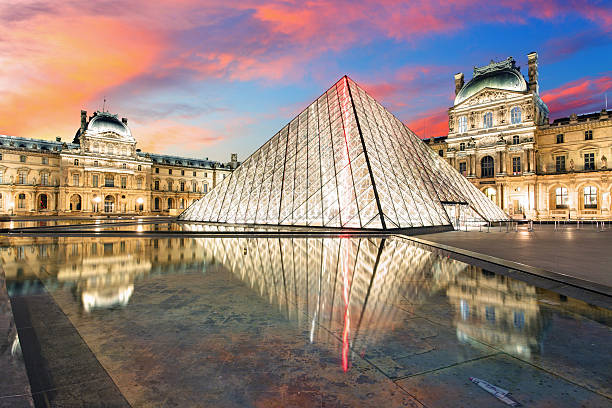
The Louvre interior is usually the first famous thing to cut from this specific day. The Louvre is not “too much” in general. It is too much when the same day already asks for Garnier, shopping and a serious evening. Even a focused Louvre visit has security, scale, gallery movement and emotional weight. Pairing it with Garnier can make both interiors feel smaller than they are. If the Louvre is essential, it deserves its own plan, not a cameo.
The Eiffel Tower and Trocadéro should also be resisted here unless they are the only major Paris icon your group will see. They pull the day west and across a different visual axis. A quick view can seem harmless, but the transfer cost is often paid at dinner. The day becomes a race between symbols rather than a route. The better version is to let Garnier, Place Vendôme and the surrounding Right Bank carry their own authority.
Skip Opéra Garnier if the building is not available at the right time, if your group has no interest in interiors or architectural storytelling, if your dinner and hotel are both firmly Left Bank, or if the day already contains a major museum. Also skip it if you only have enough time to photograph the façade between shopping stops. In that case, the building becomes a backdrop, not an experience, and the route may be better served by a clean shopping-and-dinner plan.
Cutting Garnier is also right for travelers whose private shopping appointments are already split between Avenue Montaigne and Le Marais. The issue is not whether Garnier is worthwhile. It is whether it improves the day you actually have. When the shopping map is already scattered, adding a monument at the center can create a false sense of structure while doing little to reduce movement.
The strongest version of this article’s plan is not maximal. It is a disciplined Right Bank sequence: one cultural interior, one elegant transition, one shopping zone, one dinner geography. That structure leaves room for conversation, for a coffee or Champagne pause, for an unforced boutique decision, and for arriving at dinner without the feeling that Paris has been consumed rather than experienced.
How a private guide makes this route coherent
A private guide helps most when the day needs an editor, not a louder list of stops. Around Opéra Garnier, the guide’s value is the ability to connect the building, the surrounding streets, the shopping choices and the dinner endpoint in one route that suits the actual travelers.
Inside and around Garnier, a guide can keep the interpretation tight. The goal is not a lecture on every decorative program. It is to make the building useful for the day: why this opera house belongs to Haussmann’s Paris, why the staircase mattered socially, how spectacle and urban planning speak to each other, and why the exit toward Rue de la Paix changes the next hour. Good guidance turns the visit from “we saw a famous interior” into “we understand why this district behaves this way.”
Afterward, the guide’s work becomes even more practical. Should the group linger around Place Vendôme or move toward Rue Saint-Honoré? Is Boulevard Haussmann useful today or merely noisy? Should Avenue Montaigne be held for another day? Does the dinner address make a Seine crossing acceptable or foolish? These are not abstract preferences. They are small decisions that decide whether the evening feels composed or patched together.
For shopping travelers, this is where private touring and private shopping support overlap. A guide can coordinate context, pacing and street choice while leaving room for boutique appointments, personal interests and comfort breaks. The best route does not always add access; sometimes it removes the wrong stop. That is often the difference between a beautiful day and a day that only looked beautiful in the proposal.
When the route needs to hold culture, style and dinner without sprawl, Orange Donut Tours can shape the surrounding streets and endpoint around your group rather than forcing Opéra Garnier into a generic first-visit itinerary. Inquire now
A Right Bank sequence that keeps dinner intact
The cleanest sequence is light morning context, Opéra Garnier, the Opéra-to-Place Vendôme transition, selective shopping, then dinner on the same evening grid. The details change by hotel, mobility and reservations, but the structure should stay firm.
For a couple staying near the 1st or 8th
Begin with a short architectural approach rather than a long museum. Let the guide set up the boulevard context around Avenue de l’Opéra or Boulevard des Capucines, then enter Garnier while attention is still fresh. After the visit, walk down Rue de la Paix to Place Vendôme, pause for the square’s geometry and jewelry geography, then choose either Rue Saint-Honoré or a more westward fashion line depending on dinner.
The evening should feel like the day has been narrowing toward it. If dinner is near Place Vendôme, Madeleine or the 8th, do not add the Left Bank. If dinner is on the Left Bank, shorten the shopping and cross earlier with intention rather than late with bags.
For a serious shopping afternoon
Protect the Garnier slot before major shopping decisions. Use the opera house as the cultural anchor, then let the shopping route become precise: Place Vendôme and Rue Saint-Honoré for compactness, Boulevard Haussmann for function, or Avenue Montaigne for a westward luxury focus. Do not do all three unless the point of the day is shopping stamina rather than Paris coherence.
This is the version where a white-glove Paris shopping day becomes the better adjacent read. The Garnier-led version is more cultural. The shopping-led version lets appointments and categories dictate the geography.
For families or multigenerational groups
Keep the walking line legible and the stops few. Garnier can replace a larger museum, Place Vendôme can serve as the transition, and one shopping area can be chosen according to who needs what. The car can be useful at the end, especially for older parents or purchases, but it should not be used as permission to scatter the route.
The key is to end before the group splits emotionally. Paris days often fail not because one stop is wrong, but because the last hour asks everyone to keep caring at the same intensity. With a family or multigenerational group, a clean finish near dinner is more valuable than squeezing in another named neighborhood.
Spend on precision, not on a wider loop
Premium spend improves this day when it buys precision: a strong guide, properly timed Garnier access, boutique coordination when relevant, a restaurant chosen for geography as well as cuisine, and a car used at the point where it reduces fatigue. It does not help when it merely allows the route to spread farther.
The best spending decision is often a guide who can say no. No to a late Saint-Germain crossing after a Right Bank shopping afternoon. No to a department-store sweep when the traveler really wants Place Vendôme and one specialist address. No to Avenue Montaigne when dinner is back near the Louvre. No to a symbolic Champagne detour when Reims deserves its own day. The restraint is not anti-luxury; it is what lets premium travel feel unforced.
A chauffeur can be worth it when mobility, weather, bags or hotel geography require support. It is particularly useful at the end of the shopping section, when the group needs to move purchases or arrive fresh for dinner. But using a car throughout the entire Opéra-to-Place Vendôme transition can erase one of the reasons the route works. That walk is short, legible and meaningful. Outsourcing it to traffic makes the day less Parisian, not more comfortable.
Where a guide earns the cost is in stitching the day’s scale changes together. Opéra Garnier is monumental. Rue de la Paix is directional. Place Vendôme is contained. Rue Saint-Honoré is selective. Avenue Montaigne is a westward decision. The Seine crossing is an evening commitment. A private route makes those differences visible before they become fatigue.
That is also why the answer differs from a broader palace-hotel or Louvre-and-Seine itinerary. This article is not trying to make the 8th, the Louvre and the river belong in one polished day. It is solving a smaller, more useful problem: how to place Opéra Garnier so the shopping and dinner that follow feel like continuation rather than recovery.
FAQ
Is Opéra Garnier better in the morning or before dinner?
Opéra Garnier is usually better late morning or early afternoon when shopping and dinner are also planned. Pre-dinner works only if dinner is nearby on the Right Bank and the shopping route has stayed compact.
What should I do after visiting Opéra Garnier?
The best continuation is Rue de la Paix to Place Vendôme, then a selective shopping route around Rue Saint-Honoré, the Tuileries edge, Boulevard Haussmann or Avenue Montaigne only if your dinner geography supports it.
Can Opéra Garnier and Avenue Montaigne fit in the same Paris day?
Yes, but only when the day is designed westward and dinner or the hotel is in the 8th or near the Golden Triangle. If the day is centered on Place Vendôme and Rue Saint-Honoré, Avenue Montaigne can stretch the afternoon too far.
Should I add the Louvre to an Opéra Garnier shopping day?
Usually no. The Louvre and Opéra Garnier are both strong interiors, and adding both before shopping and dinner often creates museum fatigue and a rushed evening. Choose one major interior for this specific day.
Where should I not cross the Seine late after Opéra Garnier?
Avoid late crossings toward Saint-Germain or the deeper Left Bank after a Garnier, Place Vendôme and shopping afternoon unless dinner there is the central plan. Cross earlier with intention, not at the end with bags and a reservation clock.
When should I skip Opéra Garnier entirely?
Skip Opéra Garnier if the day already has a major museum, if your hotel and dinner are firmly Left Bank, if the building is unavailable at the right time, or if you only have time for a façade photo between shopping stops.
Does a chauffeur make this Right Bank day better?
A chauffeur helps with weather, mobility, purchases and the final dinner arrival, but it does not fix a scattered route. The Opéra-to-Place Vendôme walk is one of the useful parts of the day and should usually remain on foot.
Is this a good plan for couples before a special dinner?
Yes, if the plan stays edited. Opéra Garnier, Place Vendôme, one shopping zone and a Right Bank dinner can feel connected and celebratory; adding a late Left Bank transfer or a second shopping district often flattens the evening.
If you’re interested in any private tours of Paris, please reach out to us.



 So if you are looking for the absolute best in Paris & surroundings with authentic local fully-licensed native guides whose English you can actually understand and with an exclusive and amazingly fun itinerary













