Paris for a Two-Reservation Day: Sainte-Chapelle and the Louvre Without Sacrificing Dinner

Updated
At the crossing from Île de la Cité toward the Louvre, the day should feel like one westbound story, not a dash between confirmations. Book Sainte-Chapelle first, place the Louvre after lunch, and reserve a real interval before dinner. This sequence succeeds in Paris because Sainte-Chapelle has a bounded visit while the Louvre has an elastic exit, and Pont Neuf carries you naturally from the medieval royal island toward the Right Bank palace. The plan breaks when the slots are so close that security must run perfectly, or when the Louvre entry is so late that dinner becomes the museum’s closing bell; in either case, separate the reservations across two days.
The governing rule is this: build the day around the harder exit, not the grander attraction. Sainte-Chapelle may look like the easier booking on a map, yet it sits within the Palais de Justice security environment rather than behind an ordinary church door. The monument’s official access and security FAQ (https://www.sainte-chapelle.fr/en/visit/frequently-asked-questions) explains why entry can take time, and its practical information page (https://www.sainte-chapelle.fr/en/visit/practical-information) is the place to reconfirm current access conditions before the visit. That non-obvious detail is why a tight start-to-start schedule fails even when the two landmarks appear close.
A counterintuitive correction follows from the same geography: do not improve the day by adding a fashionable lunch detour deep into Saint-Germain. It creates a second river crossing before the Louvre and makes a couple spend the meal calculating departure time. The first thing to cut is any third major monument, not the buffer, lunch, or dinner. Notre-Dame can belong in a separate island-focused plan; the Île de la Cité, Notre-Dame and Sainte-Chapelle planning guide explains that different, slower arc.
Can Sainte-Chapelle and the Louvre fit in one day without losing dinner?
Yes, but only when the reservations obey a clear priority ladder: compatible slots first, a real security buffer second, lunch in the line of travel third, a bounded Louvre route fourth, and the evening fifth. The landmarks are close enough to share a day; they are not close enough to excuse careless timing.
Priority one: choose slot geometry before choosing the perfect hour
The best pairing usually places Sainte-Chapelle in the morning and the Louvre after lunch. An early chapel entry leaves room for security variation, a deliberate crossing, and a meal that does not feel like airport food eaten under pressure. The Louvre then becomes the day’s long final cultural chapter, with a defined exit before dinner. A marginally less attractive time of day with healthy spacing is better than two coveted slots that collide.
Priority two: treat the Louvre as a selected route
This is not the day for an encyclopedic Louvre visit. Choose a small number of collection priorities and accept that the palace itself, the internal distances, and the transitions between wings consume energy. Travelers who need the Louvre to be a four- or five-hour immersion should give it another day. A two-reservation day works because the museum is edited, not because the museum is easy.
Priority three: let dinner set the final boundary
A serious dinner reservation is not merely a clock time. It may require a hotel return, a change of clothes, a drive across the river, or enough quiet to arrive interested in the meal. As a planning rule, protect at least 90 minutes from the Louvre exit to a nearby dinner, and closer to two hours when a hotel change or cross-city transfer is involved. The Louvre exit therefore needs its own reservation in your private schedule, even though no ticket is attached to it. For a wider look at how the evening’s neighborhood changes the route, use the Paris dinner geography guide.
This sequence best suits first-time culture travelers, couples with a meaningful dinner, small groups that can agree on a concise Louvre brief, and families with older children who can manage two security processes and a substantial indoor visit. It is less convincing for very young children, travelers arriving in Paris that morning, anyone carrying luggage, or art specialists who will resent leaving the Louvre on schedule.
- Best fit for couples: one compact, luminous monument; one river transition; one edited museum visit; and an evening that still has emotional space.
- Best fit for first-time visitors: two defining places connected by a legible route rather than scattered across Paris.
- Conditional fit for families: workable with a short Louvre target list, food at the right moment, and no third attraction.
- Poor fit for deep art study: the Louvre deserves its own long day when the collections, rather than the overall Paris rhythm, are the primary purpose.
Judge the reservations as a pair, not one at a time. These three slot patterns are planning models rather than promises about current availability or queue length. They show how the same two monuments can produce a poised day, a compressed day, or a pairing that should be refused.
The spacious cultural arc
A morning Sainte-Chapelle entry followed by a Louvre reservation in the early or middle afternoon is the strongest pattern. There is room for strict security at the Palais de Justice, a complete chapel visit, the Place Dauphine and Pont Neuf crossing, a seated lunch on the direct line, and early arrival at the Louvre. The museum can then run for a focused two or three hours, with enough margin for a hotel change or a deliberate move toward dinner.
The compressed but workable pair
A later morning chapel slot and an early-afternoon Louvre entry can work for travelers who accept a shorter chapel visit, a direct crossing, and a fast lunch or substantial snack. The group must agree before the day that lunch will not become a destination and the Louvre route will remain selective. This pattern is poor for families that need an unhurried meal, travelers with reduced mobility, or anyone whose dinner requires a long return to the hotel.
The false bargain
A Louvre slot that ends close to a late Sainte-Chapelle reservation, or two starts separated by barely enough time on paper, is not improved by private transport. The Louvre exit is too elastic, Sainte-Chapelle’s controlled access is too consequential, and the evening becomes dependent on a perfect chain. Keep the more important ticket and move the other visit. The cost of changing one reservation is often lower than the cost of flattening an entire Paris day.
The best sequence therefore has a visible shape: compact monument, westbound crossing, lunch, bounded museum, genuine evening interval, dinner. Once the shape is clear, decisions become easier. The stop to cut is the one that breaks the line; the spend to approve is the one that reduces cognitive or physical load; the reservation to move is the one that forces the party to hurry through the place they came to see.
Sainte-Chapelle before Louvre or Louvre before Sainte-Chapelle?
Sainte-Chapelle first is the better default because it has the more useful finish. Do not base that decision on a supposed guarantee of superior morning light; weather, season, and the changing sky make that too fragile. Base it on the visit structure. Once inside, the visit is concentrated: the lower chapel, the ascent, the upper chapel, the stained glass, and the return to street level. The Louvre has no equivalent natural stopping point. Every gallery suggests another room, another wing, or another famous work, so placing it first makes the second reservation feel like an interruption and encourages the classic mistake of leaving too late.
The morning-first logic is operational rather than romantic. Sainte-Chapelle’s access is governed by a timed reservation and strict screening around the Palais de Justice. You should not assume that the ticket time equals the moment you stand in the upper chapel. Afterward, the route west is coherent: leave the Boulevard du Palais side, move toward the western tip of Île de la Cité, pass the edges of Place Dauphine, cross the north arm of the Seine at Pont Neuf, and continue toward the Louvre on the Right Bank. That line keeps the day moving in one direction.
It also creates a historical sequence that a knowledgeable guide can use without forcing a lecture. Sainte-Chapelle expresses Capetian kingship, sacred relics, and the medieval royal palace on the island. Pont Neuf opens the city and river. The Louvre then shifts the story from fortress and palace to collection and public museum. The walk is not filler; it prevents the visits from feeling like unrelated appointments with separate audio guides.
Reverse the order only under narrower conditions. A first Louvre entry can work when it is genuinely early, the visit is capped before you enter, and the Sainte-Chapelle slot sits comfortably after lunch rather than immediately after the museum. It also suits a traveler whose main Louvre priorities are few and near one another, or a family that functions better with the largest indoor visit before midday. Even then, the risk moves to the afternoon: a delayed Louvre exit can jeopardize the chapel booking, while a late Sainte-Chapelle finish can compress dinner preparation.
The inversion is a poor choice when the Louvre is the emotional centerpiece. The bigger the museum wish list, the less credible the promise to leave for a second timed entry. Travelers who already know they want Egyptian antiquities, major Italian paintings, French decorative arts, sculpture courts, and the palace history should not pretend that a short morning is enough. Use the curated Louvre day guide to design a separate museum-focused visit instead.
So the default remains firm: keep Sainte-Chapelle first unless your actual tickets make that order impossible. Do not reverse the day merely because someone says the Louvre is quieter at a certain hour. Crowd conditions vary, gallery access changes, and the most important advantage here is not theoretical quiet; it is the ability to finish the first visit, move west, eat, and enter the second reservation without turning dinner into a deadline.
How much time to allow between Sainte-Chapelle and the Louvre
Allow at least 75 minutes from the moment you expect to exit Sainte-Chapelle to the start of the Louvre entry window, and prefer 90 minutes when comfort matters. This is a planning buffer, not an invented claim about universal queue times. It covers leaving the Palais de Justice area, the walk and river crossing, finding the correct Louvre approach, a restroom or water stop if needed, and the fact that every Louvre visitor still faces security.
Start-to-start spacing must be wider because the Sainte-Chapelle reservation is not its exit time. For most private itineraries, treat two and a half hours between the booked starts as the lower edge when there is no seated lunch, and roughly three and a half to four hours when lunch belongs between them. Those are editorial working ranges, not guarantees. The correct interval depends on the travelers’ pace, current access procedures, mobility, weather, and how long they wish to remain in the chapel.
Count backward from the Louvre, not forward from breakfast
Write the Louvre entry time at the center of the page. Subtract the arrival margin you want at the correct entrance. Subtract the walk from Pont Neuf or the chosen crossing. Subtract the Sainte-Chapelle visit and its unpredictable entry process. What remains is the latest sensible Sainte-Chapelle slot. This backward method exposes bad pairings before the trip, whereas a forward itinerary often hides the pressure until the first security line.
Use Pont Neuf as the default route hinge
Pont Neuf is useful because it keeps the movement legible and avoids an unnecessary Left Bank loop. From the Palais de Justice, the Place Dauphine side offers a calmer visual transition before the north span. On the Right Bank, Quai du Louvre leads toward the museum without asking travelers to solve another neighborhood. In rain, strong heat, or with reduced mobility, the route can be shortened or partly driven, but a vehicle should not be treated as an automatic time machine around controlled entrances.
Arrive for the entrance you actually plan to use
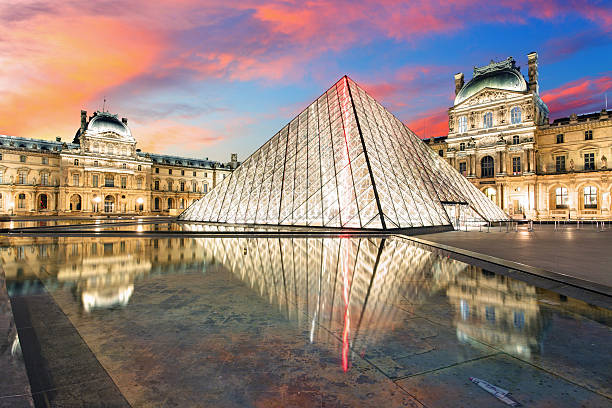
The Pyramid is the visible reference point, yet the Louvre has multiple approaches with eligibility and operating conditions that can differ. Check the official Louvre map, entrances and directions page (https://www.louvre.fr/en/visit/map-entrances-directions) close to the visit, then brief every member of the party on the same meeting point. “Meet at the Louvre” is not a usable instruction when one person is beneath the Carrousel, another is facing the Pyramid, and the guide is at a group entrance.
Paris makes this day physical in ways a map understates. Stone floors, prolonged standing, stairs, security trays, indoor warmth, and the Louvre’s internal scale accumulate before anyone feels dramatically tired. The fatigue usually appears late: slower decisions, less patience with wayfinding, and a desire to sit just when the dinner schedule requires another transfer. A buffer protects more than punctuality; it protects the quality of the second visit.
For older parents, a multigenerational party, or anyone who needs regular seating, add margin rather than relying on enthusiasm. For a family, assume that restroom requests and hunger will occur at the least convenient point. For a celebration trip, remember that a missed or breathless lunch changes the evening mood long before the dinner reservation begins. The schedule should absorb ordinary human behavior, not demand perfect compliance.
Lunch belongs between the island and the museum, when the clock permits
The best lunch window sits after Sainte-Chapelle and before the Louvre, close to the westbound route. Food performs two jobs here: it separates concentrated sacred architecture from a vast collection, and it gives the group a seated pause before the most demanding visit. The meal should be satisfying but controlled, with a reservation or a format that does not depend on a long, unpredictable wait.
The cleanest geography is the western end of Île de la Cité, the Right Bank near Pont Neuf, or the Palais-Royal and Louvre side after the crossing. The famous-looking mistake is to head south into the deeper Left Bank for atmosphere and then hurry north again. A Saint-Germain lunch can be excellent on another day; on this day it creates two extra decisions, another bridge, and a clock-facing meal. The same warning applies to a detour east into Le Marais.
When the slots are generously spaced
With roughly three and a half to four hours between booked starts, a composed lunch can fit. Finish Sainte-Chapelle, walk toward Pont Neuf without sightseeing sprawl, sit down on or near the direct line, and leave enough time to reach the selected Louvre entrance early. The meal can have two courses, conversation, and coffee, but it should not become the day’s second grand production if dinner is important.
When the slots are only moderately spaced
With closer to three hours between starts, choose a shorter lunch format and pre-decide the order. The purpose is nourishment and a pause, not culinary completeness. Skip the extra glass, the extended dessert, and any address that requires a taxi. A good private guide will know when the group needs twenty more minutes at Sainte-Chapelle and can compensate by simplifying lunch rather than stealing from the Louvre arrival margin.
When the slots are tightly spaced
If the start times are around two and a half hours apart, do not promise a seated lunch between them. Eat something substantial before Sainte-Chapelle, carry an appropriate small snack where permitted, or plan a late lunch after a shortened Louvre visit. What you should not do is book a table and hope both security processes run unusually fast. Hope is not a scheduling method.
When the Louvre entry is late
A late-afternoon Louvre slot changes lunch from a bridge into the main daytime meal. Keep the morning Sainte-Chapelle visit unhurried, cross by Pont Neuf, and allow a proper lunch, but still avoid adding another museum or a long shopping excursion. The danger is not insufficient content; it is reaching the Louvre already mentally full, leaving near dinner, and discovering that the evening has become a sequence of obligations.
For food-and-wine travelers, restraint at lunch is not a downgrade. It is how dinner remains vivid. A long wine pairing, rich multi-course lunch, or cross-city restaurant destination can flatten concentration in the Louvre and make the later reservation feel excessive. Choose which meal is meant to be the gastronomic event. On a two-reservation cultural day with a celebrated dinner, lunch should support the arc rather than compete with it.
For couples, the emotional difference is especially clear. A well-placed lunch lets the morning settle and gives both people a chance to revise the Louvre priorities together. A badly placed lunch turns one partner into the timekeeper and the other into the person being rushed. That dynamic, not the number of paintings seen, is what often determines whether the day feels generous or overmanaged.
At the Louvre, decide the exit before choosing the art
At the Louvre, the agreed exit time is the day’s third reservation. For this particular day, two to three focused hours inside is a more credible target than “as long as we feel like it.” The exact duration can move, but the exit cannot remain undefined. Decide whether the museum is a highlights visit, a palace-and-power narrative, or a collection-specific route, then remove everything that does not serve that choice.
A useful brief contains two principal anchors and one connecting interest. A first-time couple might choose a concise path through ancient sculpture and Italian painting, with palace history as the connector. A family might prioritize one civilization, one famous work, and the building itself. A design-focused traveler might choose decorative arts and royal interiors rather than crossing the museum for every headline object. The point is not to identify a universally correct list; it is to reduce internal transfers and preserve attention.
Inside the Louvre, distance has a psychological cost. A route that repeatedly changes wings, floors, and departments creates the feeling of being behind even when the timetable is technically intact. Every “while we are here” addition asks for wayfinding, stairs or lifts, and another decision about whether to stay. That is why a private Louvre private tour can change the day more through selection than through speed: the value lies in knowing what to connect, what to bypass, and when the group has seen enough.
Do not make the Mona Lisa, or any single famous work, the structural center unless it genuinely matters to your party. Access within the museum can vary, and a dense room can consume disproportionate attention. Build a route with value before and after any headline stop so the visit still succeeds if the pace changes. Likewise, do not chase a temporary gallery or distant department simply because it appears on a generic “must-see” list.
Check the Louvre hours and admission page (https://www.louvre.fr/en/visit/hours-admission) for the date, and reconfirm exceptional changes close to the visit. The official page is also the right place to verify admission conditions rather than relying on an old screenshot or a reseller’s summary. Current opening patterns matter, but this article’s planning principle remains stable: a late closing does not mean every late slot is compatible with dinner.
Plan the final thirty minutes inside as an exit sequence, not another gallery. Move toward the relevant cloakroom or meeting point, collect belongings, use facilities, and orient everyone toward the next transfer. A museum departure can take longer than the last artwork suggests. Couples who leave the final room at the exact moment they hoped to be in a car have already spent the evening buffer.
The mood-preserving decision is to stop while curiosity remains. The mood-killing mistake is to add one more wing because the ticket felt expensive. Sunk-cost touring produces a strange result: travelers see more objects but remember less, then arrive at dinner discussing exhaustion and logistics. The better day leaves a few Louvre rooms unseen and gives the evening a clean beginning.
A hotel reset is worth the detour only when it follows the evening’s geography
Return to the hotel only when the hotel lies on, or very near, the path from the Louvre to dinner. A reset can be excellent after the museum: shoes come off, clothes change, devices recharge, and the sensory volume drops. It is not excellent when it creates two cross-city legs and replaces rest with traffic, station corridors, or repeated curbside waiting.
Hotels around the 1st arrondissement, Palais-Royal, Rue de Rivoli, or Place Vendôme have the clearest case. The return is short enough to feel like part of the neighborhood rather than a new transfer. A Saint-Germain hotel can also work when dinner is on the Left Bank, because the river crossing continues the evening’s direction. A hotel in the 8th requires more precise judgment: the eastern side near Madeleine is different from a property well west toward Avenue Montaigne.
Le Marais is useful when dinner is also east or when the hotel itself is the evening destination, but it can become backtracking after a westbound Louvre day. Trocadéro, the 16th, Montmartre, and hotels beyond the central river axis usually need a stronger reason. A chauffeur can improve comfort and weather exposure, yet the reset still has to earn the distance. The test is not whether a car is available; it is whether door-to-door travel leaves a meaningful period in the room.
Use a simple rule: if the proposed hotel break cannot deliver at least about 45 minutes inside the room for a calm change, a seated pause, and an unhurried departure, skip it. Replace it with a quiet café, a reserved lounge, a short Seine-side pause, or an early move toward the dinner neighborhood. The best reset is sometimes not the hotel but the elimination of another task.
For celebration travelers, the hotel return often earns more than another sight because it changes how the evening begins. For a casual dinner near the Louvre, it may be unnecessary. For families, the room can be decisive if a child needs actual downtime rather than adult-style coffee. For a small group staying in different hotels, however, a shared reset is nearly impossible; end the touring program earlier and let everyone separate.
When deciding, read when a chauffeur changes a Paris museum day through the lens of your hotel and dinner address. The vehicle is valuable when it removes a long, exposed transfer or supports mobility. It is overvalued for the short Sainte-Chapelle-to-Louvre link, where curb access, controlled perimeters, and the loss of the Pont Neuf narrative can make walking the better premium choice.
When the two reservations should be separated across different days
Separate Sainte-Chapelle and the Louvre when the bookings require the day to perform without margin. The fact that both tickets are available on the same date does not make them a compatible pair. A high-quality itinerary sometimes begins with an editorial no.
- Split them when the start times are less than about two and a half hours apart. That spacing asks the first security process, the chapel visit, the exit, the crossing, and the Louvre arrival to run without ordinary variation.
- Split them when the Louvre must be a deep visit. If leaving after two or three hours would feel like a failure, the museum should own its own day.
- Split them before an early or highly important dinner. A celebration meal with a dress change and cross-city transfer needs a larger evening margin than a casual table near Palais-Royal.
- Split them for arrival-day travelers. Flight delays, room readiness, jet lag, and luggage introduce too many variables into two timed entries.
- Split them when mobility requires a substantial midday recovery. Theoretical proximity does not cancel the cumulative effect of standing, stone, stairs, and internal museum distance.
- Split them when the only available order creates backtracking. A late Sainte-Chapelle slot after a Louvre visit, followed by a hotel in the west and dinner farther west again, turns the Seine into a repeated barrier rather than a graceful route.
There is also a softer warning sign: if the itinerary keeps adding conditions such as “only if we leave the first room by,” “only if lunch is very fast,” or “only if traffic is light,” the plan is already telling you it is fragile. Two paid reservations do not deserve equal protection when one compromises the whole day. Keep the harder-to-rebook or more important visit and move the other.
Do not solve bad spacing by inserting a third attraction into the gap. An awkward four-hour interval can tempt travelers to add the Conciergerie, Notre-Dame, the Orangerie, or shopping. That usually increases security, standing, and decision fatigue without fixing the underlying rhythm. Use the space for lunch, the Pont Neuf walk, a short hotel pause, or nothing at all. Empty time is not wasted when it prevents the Louvre from becoming a pre-dinner endurance test.
For a short first trip, separation may still be the right choice. Sainte-Chapelle can anchor an Île de la Cité morning on one day, while the Louvre receives a fresh first slot on another. This is not less efficient if both visits improve and the dinners remain enjoyable. Cross-city transfers and repeated security lines are what quietly eat a short stay, not the decision to give two major experiences enough room.
Buy coherence, not recovered time
The premium upgrade that earns its cost is expert sequencing and interpretation, not the promise that Parisian security and fixed entries will disappear. A private guide can meet the party before Sainte-Chapelle, manage the historical thread across Île de la Cité and Pont Neuf, calibrate the lunch stop to the real pace, and enter the Louvre with a route already reduced to the travelers’ interests. That turns two confirmations into one day with an argument and a rhythm.
Private guidance is especially valuable when the group has mixed interests. One traveler may care about Gothic architecture, another about royal history, and another about a handful of Louvre works. The guide can connect those priorities rather than making everyone complete two generic highlight circuits. The same guide can also recognize when the group needs to shorten the Louvre route, preserving the dinner without framing the change as a failure.
A chauffeur has a narrower role. It can help with rain, heat, reduced mobility, a hotel return, or a dinner far from the Louvre. It usually adds little to the direct crossing from Île de la Cité, where the walk via Pont Neuf is part of the day’s coherence and where vehicle access does not eliminate the controlled entrances at either end.
Premium spend does not help when the entry slots themselves are incompatible: skip-the-line access or a chauffeur cannot repair two incompatible entry slots. Timed or priority arrangements may improve the process described on skip-the-line options in Paris, but they do not abolish mandatory screening. Paying more should buy a better route, stronger context, reduced indecision, and a more comfortable transfer where distance justifies it. It should not be used to rationalize a schedule that has no recovery margin.
The most natural Orange Donut Tours role begins after the bookings are known. A specialist can test the actual entry times, choose the right meeting and ending points, shape a concise tailor-made Paris day, and align the hotel or dinner transfer with the travelers’ mobility and priorities. When the day needs that kind of logistics rescue, Inquire now.
FAQ
Should I visit Sainte-Chapelle before or after the Louvre?
Visit Sainte-Chapelle first in most cases. Its visit has a more natural finish, and the route west via Pont Neuf leads coherently toward the Louvre. Putting the Louvre first risks an elastic museum visit overrunning the chapel reservation. Reverse the order only when the Louvre slot is genuinely early, the museum route is strictly limited, and the Sainte-Chapelle entry sits comfortably after lunch.
What is the minimum time between Sainte-Chapelle and Louvre reservations?
Use about two and a half hours between the booked start times as the lower edge for a direct, no-lunch pairing, and allow more for a seated meal. Separately, protect at least 75 minutes between the expected Sainte-Chapelle exit and the Louvre entry, with 90 minutes preferable. These are planning margins, not guarantees about queues; current security and access conditions can change.
Can I visit Notre-Dame, Sainte-Chapelle, and the Louvre on the same day?
You can pass Notre-Dame for brief exterior context, but a full third major visit usually weakens the day. Another controlled interior, longer stop, or guided circuit removes the lunch and security margin that make the two reservations work. Give Notre-Dame and Île de la Cité their own focused half-day when the cathedral is a true priority rather than treating it as an add-on.
Where should I have lunch between Sainte-Chapelle and the Louvre?
Choose the western end of Île de la Cité, the Right Bank near Pont Neuf, or the Palais-Royal and Louvre side of the crossing. Those areas keep the route westbound. Avoid a deep Saint-Germain or Le Marais detour unless the reservation gap is unusually generous, because the extra river crossing or backtracking turns lunch into a timed transfer.
How long should I spend in the Louvre on this day?
Plan roughly two to three focused hours for this specific two-reservation day. Select two main collection priorities and one connecting theme, then agree on an exit time before entering. Travelers who want a broad survey across several wings, extended study, or four or more hours should put the Louvre on a separate day.
Is a hotel break worth it between the Louvre and dinner?
Yes when the hotel lies on the route to dinner and the return produces real rest. It works best around the 1st arrondissement, Palais-Royal, Rue de Rivoli, Place Vendôme, or a Left Bank hotel when dinner is also south of the Seine. Skip the detour when the hotel is far west, north, or east and the room time would be shorter than the combined transfers.
Does skip-the-line access remove security at Sainte-Chapelle or the Louvre?
No. Priority or timed entry can improve organization, but mandatory security remains. Sainte-Chapelle is within the Palais de Justice environment, and the Louvre applies security checks at its entrances. Build the day with screening margin even when tickets, a guide, or premium services are arranged.
When should Sainte-Chapelle and the Louvre be on different days?
Separate them when the slots are too close, the Louvre is meant to be a deep visit, dinner is early or highly important, the travelers need a substantial midday recovery, or the available order creates repeated cross-city backtracking. Two strong visits on different days are better than two paid entries completed under continuous time pressure.
If you’re interested in any private tours of Paris, please reach out to us.



 So if you are looking for the absolute best in Paris & surroundings with authentic local fully-licensed native guides whose English you can actually understand and with an exclusive and amazingly fun itinerary













