Paris When a Museum Is Closed: Monday–Tuesday Routing for Louvre, Orsay and Smaller Collections

Updated
Verdict: For a Monday–Tuesday Paris museum plan, make Monday the Louvre day and Tuesday the Musée d’Orsay day. This works because the Louvre, Tuileries and Rue de Rivoli axis can carry a major guide-led Monday while Orsay’s Left Bank position absorbs Tuesday when the Louvre and Orangerie are closed; you avoid turning the Pont Royal or Passerelle Léopold-Sédar-Senghor crossing into a late-day scramble. The clearest exception is a trip with only one fixed museum slot: if your slot falls on a closure day, choose a smaller collection as the main event rather than pretending it is an add-on. The Paris rule is not “book the famous museum whenever you can”; it is “let closure days decide the museum anchor before you reserve guide time, lunch and dinner.”
The counterintuitive correction is that the Orangerie is not the safe Tuesday fallback for a closed Louvre: it normally shares the Louvre’s Tuesday closure pattern. A traveler who learns this after breakfast in the Tuileries has not just lost one museum; they have lost the easy geography that made the day feel elegant. The better Tuesday pivot is usually the Musée d’Orsay, with Rodin, Arts Décoratifs or Marmottan chosen only when they replace a major museum, not when they are squeezed behind one.
This guide solves one narrow planning problem: how to route Paris art days when the Monday–Tuesday museum closure pattern threatens the Louvre, Musée d’Orsay and the smaller collections that often rescue a high-value stay. It is not a generic museum ranking. For a deeper Louvre-only plan, use Louvre Private Tour as the dedicated next step; for this article, the question is simpler and more consequential: which day gets which museum, and what do you refuse to force when the calendar will not cooperate?
The Monday–Tuesday museum closure pattern in plain English
The working rule is simple: Monday favors the Louvre; Tuesday favors the Musée d’Orsay. The official Louvre hours and admission page (https://www.louvre.fr/en/visit/hours-admission) lists Tuesday as the Louvre’s closure day, while the official Musée d’Orsay visit page (https://www.musee-orsay.fr/en/visit) lists Monday as Orsay’s closure day. The Musée de l’Orangerie visit page (https://www.musee-orangerie.fr/en/visit-orangerie) also puts Orangerie in the Tuesday-closure family, which is why it is a poor Tuesday rescue plan for a missed Louvre. Always recheck the official site before purchase, especially around holidays, exhibition installs and exceptional closures, but do not treat the pattern as trivia. It should shape the route.
That pattern matters because Paris makes false proximity look harmless. On a map, the Louvre, Orangerie and Orsay form a near-perfect triangle around the Seine and the Tuileries. In the body, the triangle is different: security lines, stone floors, a bridge crossing, room-clearing times, coat checks, taxi drop-off friction and a long walk through galleries before the art even begins. A Tuesday mistake at the Louvre does not merely ask you to walk across the river; it asks your group to restart concentration after the city has already spent some of it.
Smaller museums do not all rescue the same day. The Musée des Arts Décoratifs opening-hours page (https://madparis.fr/Opening-hours-and-admission-fees-1534) places the Rivoli-side design museum in the Monday-closure family, so it is usually more useful on Tuesday than Monday. The Musée Rodin plan-your-visit page (https://www.musee-rodin.fr/en/plan-your-visit/plan-your-visit-musee-rodin) and the Musée Marmottan Monet practical-information page (https://www.marmottan.fr/en/prepare-your-visit/practical-information/) also put those collections in the Tuesday-through-Sunday rhythm. This is why a comfort-first plan should not ask, “What museum is best?” It should ask, “Which museum is open on the day when it helps the rest of the trip?”
The strongest Paris museum days use the closure pattern as a filter before they use taste as a filter. First decide whether Monday or Tuesday is carrying the major art load. Then choose the smaller collection by geography, dinner location and traveler type. A couple with a serious dinner in Saint-Germain should not end a Tuesday at Marmottan unless the 16th is the point of the afternoon. A family staying near the 8th should not cross from Orsay to Rodin to the Right Bank just because the labels are famous. A design-minded group near Palais Royal may get more from Arts Décoratifs on Tuesday than from treating Orsay as a mandatory substitute.
Priority ladder: which museum anchors Monday and Tuesday
The best Monday–Tuesday sequence is a priority ladder, not a two-day museum marathon. Place the largest collection where the calendar naturally supports it, use the adjacent collection only when it lowers friction, and let a smaller museum replace a major one when the trip needs calm or specificity. The following traveler-fit clusters are the practical way to choose.
1. Monday anchor: Louvre when the collection is the point
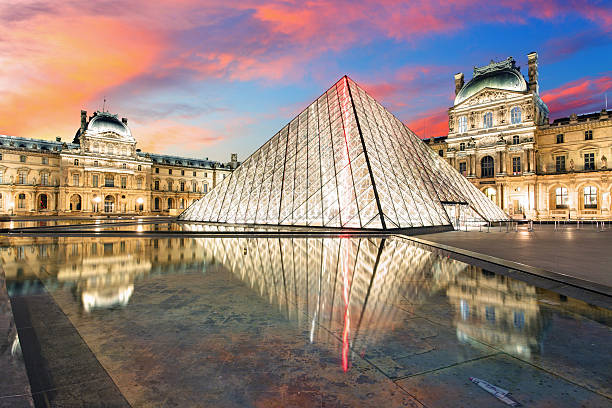
Monday is the cleanest Louvre anchor because the museum is normally available while Orsay, Rodin, Marmottan and Arts Décoratifs are not the reliable Monday answers. This is the day for first-time visitors who want antiquity, Italian painting, French history and the palace story without sacrificing the next evening. The Louvre also rewards a guide because the building is not just a collection; it is a royal and imperial maze. A private route can decide in advance whether the group needs Denon highlights, Richelieu sculpture, the moat and palace layers, or a calmer Sully-centered arc.
2. Monday alternative: Orangerie as the replacement, not the extra
Orangerie can be the right Monday museum when the group wants a shorter Impressionist hit, a Tuileries pause and a day that does not become all galleries. The mistake is adding Orangerie after an ambitious Louvre morning and then wondering why dinner feels like recovery. When the traveler’s real goal is Monet, intimacy and a lighter art day, Orangerie should replace a major museum rather than be added on top. That is the required cut: do not force Louvre plus Orangerie plus another collection just because the buildings are near each other.
3. Tuesday anchor: Musée d’Orsay when the Louvre is closed
Tuesday belongs to the Musée d’Orsay when art is still the priority. Orsay is not a consolation prize; it is the best Tuesday anchor because it turns the closed-Louvre problem into a coherent Left Bank day. The old station building, the river edge along Quai Anatole-France, the Solférino area and the short reach toward Saint-Germain make it easier to end with lunch, a café pause or an early return before dinner. This is the cleanest choice for Impressionist and Post-Impressionist travelers who would resent losing a museum day.
4. Tuesday specialist pivot: Rodin, Arts Décoratifs or Marmottan instead of a second major museum
Rodin, Arts Décoratifs and Marmottan are Tuesday pivots for travelers who know what they want. Rodin works when sculpture, gardens and the Invalides edge are enough. Arts Décoratifs works when design, fashion, jewelry or decorative arts matter more than another painting survey. Marmottan works when Monet is the emotional center of the trip and the 16th-arrondissement detour is worth the taxi or métro reset. These are not “after Orsay” default stops; they are replacements when the major-museum day would flatten the group.
For travelers comparing this with a booked-out Louvre problem, the difference is important. Orangerie, Arts Décoratifs or a Tuileries reset is about what to do after the Louvre is unavailable. This article is about protecting the whole Monday–Tuesday sequence before that problem exists.
What belongs on the closed-museum day, not after it
The closed-museum day should carry the collection that is open and geographically kind, not the leftovers from the day before. In Paris, a closure pivot fails when travelers treat Tuesday as “Louvre atmosphere without the Louvre” or Monday as “Orsay mood without Orsay.” The city has enough serious alternatives, but they work only when they are promoted to the main idea of the day.
If the Louvre is closed on Tuesday, do not build the morning around the Cour Carrée, the Pyramid exterior and the Tuileries as a substitute for the collection. That can be a pleasant walk, but it is not a museum plan for travelers who came for art. Use the Right Bank exterior only as a short orientation before moving decisively to Orsay, Arts Décoratifs, Rodin or a non-museum reset. The Tuileries is strongest when it gives air between choices, not when it becomes the apology for a missed reservation.
If Orsay is closed on Monday, do not try to fabricate an Impressionist day by stacking distant fragments. Orangerie can work because it sits at the Tuileries edge and keeps the route compact, but Marmottan and Rodin are usually closed on Monday, and Arts Décoratifs is usually closed too. The result is that Monday either belongs to the Louvre or to a lighter non-Orsay day. That is not a downgrade; it is a way to keep the trip from becoming a chase.
The smaller museum should replace a major museum when the group is already carrying fatigue, when dinner is important, when children or older parents are part of the trip, or when the collection match is unusually strong. A Monet-focused traveler may remember Marmottan more vividly than a hurried second hour at Orsay. A design collector may get more from Arts Décoratifs than from another sweep of 19th-century painting. A celebration couple may be happier with Rodin plus garden time than with a dutiful attempt to cover every canonical gallery.
This is also where premium planning becomes practical rather than decorative. The value is not in making every hour expensive; it is in refusing hours that damage the next one. A well-designed Tuesday might include Orsay in the morning, lunch near Saint-Germain, a single gallery or garden pause, and then a clean hotel return before a serious dinner. The weaker version adds Rodin because it is open, adds a Seine crossing because it looks close, and arrives at dinner with the group quietly done.
Tuesday when the Louvre is closed: use the Left Bank, not another Louvre-shaped day
On a Louvre-closed Tuesday, the most dependable art plan is an Orsay-led Left Bank route. Start with the Musée d’Orsay as the interpretive anchor, then decide whether the afternoon deserves Rodin, Saint-Germain, a river walk or a rest. What you should not do is spend the day orbiting the closed Louvre and trying to recreate its scale through substitutes.
Orsay works on Tuesday because it gives the day a clear beginning and a different story. Instead of palace-to-gallery sprawl, the narrative moves through 19th-century Paris, the railway age, academic painting, Impressionism, Post-Impressionism and the city that made modern looking possible. A guide can shape this into a concentrated route: the building as former station, the Salon system, the shock of Manet and Degas, the upper-level Impressionist galleries, then the question of what the group can still absorb.
The local advantage is the exit geography. From Orsay, you can keep lunch and the afternoon on the Left Bank: Rue de Lille, Boulevard Saint-Germain, the Carré Rive Gauche antiques district, or the Rodin direction via Rue de Varenne. The walking is still real, but it is intelligible. You are not repeatedly asking the group to cross the Seine, reorient at a new monument, stand in another security process and reassemble attention in a different century.
Rodin is the best Tuesday add-on only when sculpture and garden air are the point. It is not a universal second museum. The Hôtel Biron setting, the sculpture garden and the Invalides edge give the body a different rhythm after Orsay, but the benefit appears only if you leave space for it. If the group has already spent a focused two to three hours inside Orsay, Rodin should be a shorter, edited visit or it should wait. A private guide earns value here by cutting, not by proving endurance.
Arts Décoratifs is the sharper Tuesday pivot for design travelers staying near the Louvre, Palais Royal or the 1st. Its address on Rue de Rivoli makes it tempting after a closed-Louvre disappointment, and for the right traveler that is exactly the point: fashion, furniture, jewelry, decorative arts and exhibition design can create a collector-level day without pretending to be the Louvre. The drawback is that it pulls you back to the Right Bank. That is fine if dinner is near Palais Royal, the 8th or Le Marais; less fine if the evening is already Left Bank.
Marmottan is the highest-reward, highest-friction Tuesday pivot. It is the right choice when Monet is the reason the traveler cares, not when someone merely wants a museum that is open. The museum sits out toward the 16th, near La Muette and Ranelagh rather than the central Louvre-Orsay corridor. That distance can be restful for a repeat visitor, but it can feel like a transfer penalty during a short first stay. Treat Marmottan as a deliberate Monet afternoon, not a quick plug-in.
When the Louvre itself remains the emotional center of the trip, the best Tuesday move may be restraint. Use Tuesday for Orsay or a smaller replacement, then place the Louvre on Monday, Wednesday or Friday depending on the trip rhythm. If you are deciding whether a later Louvre can still work without spoiling dinner, the adjacent guide on Louvre at night or first thing helps frame that narrower timing question.
Monday when the Musée d’Orsay is closed: keep the Louvre clean and the afternoon light
On an Orsay-closed Monday, the best plan is usually a clean Louvre day with a controlled afternoon. The temptation is to “make up” the missing Orsay by adding Orangerie, Tuileries, Palais Royal, shopping and a major dinner. That sequence looks efficient on paper because the geography is compact. In real travel terms, it can be too much of one surface: crowds, stone, galleries, bright outdoor crossings and then a long seated evening.
A Monday Louvre route should decide what kind of Louvre day it is before anyone enters. First-time travelers usually need a highlights route with enough palace context to understand the building, not a heroic attempt to cover wings. Art travelers may need a more specialized route that spends less time on celebrity paintings and more time on the logic between Greek sculpture, Italian rooms, French painting or the royal apartments. Families may need fewer stops, stronger storytelling and an exit plan that does not require another museum immediately afterward.
The Tuileries is the natural decompression zone after a Louvre Monday, but it should be used with discipline. A walk from the Louvre toward the Carrousel and the garden can settle the body after the galleries; it can also become an accidental march to Concorde if no one is willing to call the end of the tour. The garden is not a neutral space after a museum morning. Gravel, sun, wind, queues at cafés and the long east-west axis can either restore the group or quietly spend the last energy they needed for the evening.
Orangerie is the best Monday cultural continuation only for travelers who want Monet more than they want breadth. The Nymphéas rooms can be the emotional finish to a shorter Louvre or the main museum of a lighter day. They are not a trophy to collect after a full Louvre morning. If you add Orangerie, cut something else: skip the long Tuileries walk, skip the extra Right Bank shopping, or shorten lunch. The gain is coherence; the cost is that you cannot pretend Monday still has unlimited attention.
The most overvalued Monday base is the glamorous Right Bank hotel zone when it is used as an excuse to hop everywhere. Staying near the 8th can be excellent for dinners, palace hotels and Avenue Montaigne, but it does not make every museum close. A car from the 8th to the Louvre can simplify arrival; it does not shrink the Louvre once you are inside, and it does not make Orsay open on Monday. The more honest plan is to use the Louvre-Tuileries-Palais Royal corridor and stop before the route starts feeding on the evening.
For travelers with a late dinner, Monday should end earlier than pride suggests. A quiet return, a change of clothes and a pause before dinner can be worth more than a final hour of semi-attentive viewing. Paris rewards the traveler who leaves the museum while the group still wants to talk about it. It punishes the traveler who leaves only when every painting has become a surface.
How to keep dinner from absorbing the museum-closure penalty
Dinner absorbs the penalty when the museum plan runs late, crosses the river too many times, or tries to rescue a closure after the group is already tired. For celebration travelers and food-and-wine travelers, this is the most expensive version of a museum mistake: the meal is still reserved, but the mood arriving at the table has changed.
The cleanest solution is to match dinner geography to the final cultural stop. A Louvre or Orangerie day should usually finish with a Right Bank or central dinner plan: Palais Royal, the 1st, the 8th, or a controlled move into Le Marais if that is the evening’s point. An Orsay or Rodin day should usually favor Saint-Germain, the 6th, the 7th, or a short transfer that does not ask the group to cross back and forth again. Marmottan should either lead to a relaxed 16th-arrondissement evening or to a hotel reset before dinner elsewhere. It should not be treated as a casual pre-dinner errand before a Left Bank tasting menu.
The city does something specific to the body on museum days. It stacks stillness and walking in a way travelers underestimate: standing on hard floors, moving slowly through dense rooms, then suddenly covering open ground across the Tuileries or along the Seine. Metro stairs, taxi waits near museum edges, coat-check pauses and security queues add micro-fatigue that does not appear in the itinerary. By late afternoon, one extra crossing from Orsay to the Right Bank can feel less like a stroll and more like an administrative task.
The city also changes the trip mood when dinner becomes a deadline rather than a reward. A good museum day leaves the group with one or two ideas they want to carry into the evening: why the Louvre is a palace as much as a museum, why Orsay’s clock matters, why Monet feels different in an oval room than in a survey gallery. A bad closure pivot leaves the group discussing logistics: where the taxi met them, why the museum was closed, why lunch moved, why everyone is slightly late. The goal is not merely to save time. It is to keep the evening from becoming a receipt for daytime errors.
For a dinner-sensitive day, use one of three rules. First, if the museum is a major anchor, do not add a second major museum after lunch. Second, if the smaller museum requires a cross-city transfer, make it the main afternoon idea or cut it. Third, if dinner is the emotional center of the day, end guided touring before the group starts bargaining with the schedule. The related guide to Paris dinner geography around the Seine is useful when the restaurant location is already fixed and the museum day has to bend around it.
Where private planning changes the day, and where it cannot
Private planning changes a Monday–Tuesday museum stay by deciding the sequence before the expensive parts are locked. It helps most with guide allocation, room selection, timed-ticket logic, lunch placement, drop-off strategy and the honest removal of stops that would make the day feel crowded. It does not help by overriding closures.
Premium spend does not help when the museum is closed: a private guide, chauffeur or concierge cannot make the Louvre open on Tuesday or the Musée d’Orsay open on Monday; the value is in advance sequencing that protects the day before you reserve guide time. This sentence matters because many high-end trips fail not from lack of service, but from late service applied to the wrong calendar.
Where a private guide earns the cost is inside the museum and in the cuts around it. In the Louvre, that may mean entering with a route that avoids dragging the group from one celebrity object to another without context. In Orsay, it may mean building a line from academic painting to Impressionism rather than climbing to the famous rooms too quickly. At Rodin, it may mean treating the garden as interpretation rather than filler. At Arts Décoratifs, it may mean selecting the design thread that matches the traveler instead of wandering through categories until attention thins.
Where a chauffeur helps is movement between mismatched geographies, not movement inside the museum zone. A car can make sense from a palace hotel to the Louvre, from Orsay to a Left Bank lunch with mobility concerns, or from Marmottan back to a hotel before dinner. It does not make the Tuileries gravel shorter, remove museum standing, or turn a closed museum into an open one. For cross-city museum days, skip-the-line planning and private sequencing are most valuable when they prevent day-of reshuffling rather than dramatize it.
This is the natural moment to plan privately, not because the itinerary needs more embellishment, but because the Monday–Tuesday closure pattern is exactly the kind of small operational rule that can waste a high-value day. If you want the Louvre, Orsay, Tuileries and one smaller collection placed in the right order for your hotel, dinner reservations and travel style, Inquire now.
The exception case: when Paris museums should yield to a day outside the city
The exception is a short stay where Monday and Tuesday are already distorted by arrivals, departures, dinner commitments or day-trip plans. In that case, do not force both Louvre and Orsay into compromised slots. Choose the one museum that matters most, give it the cleaner day, and let the other yield to a stronger non-museum plan.
Champagne is the most relevant example because it often sits near the end of a Paris stay and competes with museum recovery time. If Tuesday is already committed to Champagne Taittinger visits in Reims (https://www.taittinger.com/en/visits-reims), do not return and try to “just see Orsay” before dinner. The train day, cellar time, tasting rhythm and return logistics are already a full shape. Adding a museum after that turns both experiences into errands. If Champagne is a serious part of the trip, use the dedicated planning guide on when a Champagne day earns its place rather than treating Reims as a half-day gap.
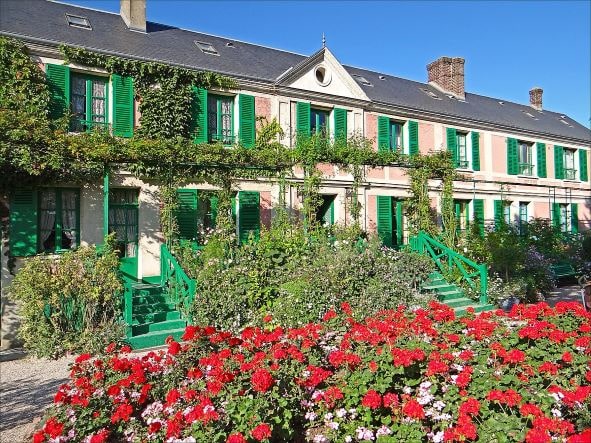
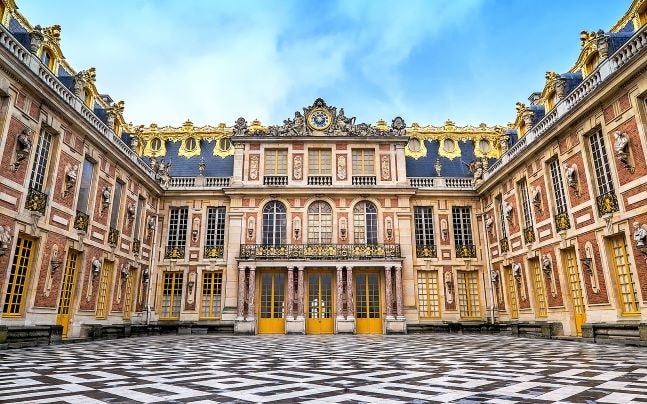
The same principle applies to Versailles, Giverny, Normandy or a late train day, but the article’s museum rule remains narrow: if a closure day collides with a major outside-Paris commitment, stop trying to rescue the museum day with scraps. Keep the major museum on its best available day, use a smaller collection only when it genuinely suits the traveler, and leave one evening unpunished by the calendar.
The firm editorial call is this: a smaller museum is a premium choice when it gives the day a clearer shape; it is an overvalued choice when it is used to deny that the major museum plan has already failed. Orangerie, Rodin, Arts Décoratifs and Marmottan all deserve better than being used as consolation prizes. The right pivot should make the day feel intentional, not patched.
A practical two-day routing model
The safest two-day model is Monday Louvre, Tuesday Orsay, with only one smaller collection added across the two days. That is the version most first-time, art-interested, comfort-aware travelers should start from. It gives the Louvre proper weight, keeps Orsay from becoming a tired afterthought, and leaves the smaller collection to perform a real role instead of acting as itinerary decoration.
- Monday morning: Louvre as the anchor, with a preselected route through the rooms that matter to your group.
- Monday afternoon: Tuileries, Palais Royal, Orangerie or a hotel pause, but not all of them. Orangerie belongs here only if Monet is the desired finish and the Louvre route has been kept tight.
- Monday dinner: Stay near the Right Bank, central Paris or your hotel unless the dinner itself justifies a transfer.
- Tuesday morning: Musée d’Orsay as the anchor, with enough time to understand the building and the art shift rather than rushing to the famous canvases.
- Tuesday afternoon: Choose one: Rodin for sculpture and garden air, Arts Décoratifs for design focus, Saint-Germain for a lighter cultural walk, or a hotel reset. Marmottan only if Monet is worth the 16th-arrondissement move.
- Tuesday dinner: Favor Left Bank geography after Orsay or Rodin, or return to the hotel before crossing town.
The cut-first rule is the second smaller museum. If the plan already has Louvre and Orsay in two days, the next museum must earn its place by traveler fit and geography. Rodin can earn it for sculpture lovers. Arts Décoratifs can earn it for fashion, jewelry and design travelers. Marmottan can earn it for Monet-first visitors. Orangerie can earn it as a shorter emotional finish. None of them earns it simply because there is a blank line after lunch.
For families, the smaller collection usually belongs instead of a second major museum. For couples with a dinner reservation, the smaller collection belongs only if it shortens the day or sharpens the mood. For private groups, the smaller collection belongs when it reduces split interests rather than multiplying them. For serious art travelers, the smaller collection belongs when it deepens a theme; otherwise, save the concentration for the major museum and let the afternoon breathe.
FAQ
Is the Louvre closed on Monday or Tuesday?
The Louvre is normally closed on Tuesday, so Monday is usually the better Louvre anchor in a Monday–Tuesday Paris museum plan. Always confirm the date on the official Louvre site before booking because holidays, exceptional closures and special events can alter normal operations.
Is the Musée d’Orsay closed on Monday?
Yes, the Musée d’Orsay normally closes on Monday. That is why Tuesday is usually the cleaner Orsay day when the Louvre is closed and the trip still needs a major museum anchor.
Can I use the Orangerie when the Louvre is closed on Tuesday?
Usually no. The Orangerie normally shares the Tuesday-closure pattern, so it is not the dependable Tuesday substitute for a closed Louvre. Use Orsay, Rodin, Arts Décoratifs or Marmottan instead, depending on your traveler fit and dinner geography.
What is the best Tuesday museum in Paris when the Louvre is closed?
For most art-focused first visits, the Musée d’Orsay is the best Tuesday anchor when the Louvre is closed. It gives the day a serious collection, a clear Left Bank route and better options for lunch, Rodin, Saint-Germain or a calm return before dinner.
What should I do on Monday if the Musée d’Orsay is closed?
Use Monday for the Louvre if it is a priority, or make Orangerie and the Tuileries a lighter museum-and-garden day. Do not try to recreate Orsay with scattered substitutes, because several strong smaller collections are also not reliable Monday options.
Should a smaller museum replace a major museum or be added after it?
A smaller museum should replace a major museum when the day is already full, the traveler has a specific interest, or dinner matters. Add it after a major museum only when the route is compact, the visit is edited and the group still has real attention left.
Can a private guide get us into a museum on its closed day?
No. A private guide cannot make a closed museum open. The guide’s value is in choosing the right day, shaping the route, reserving time wisely and avoiding the day-of reshuffle that makes a premium trip feel improvised.
How do I keep a museum day from ruining a serious Paris dinner?
End the museum route before the group is depleted, match dinner geography to the final stop and cut the extra museum first. A Louvre or Orangerie day usually pairs better with a Right Bank evening, while an Orsay or Rodin day usually pairs better with the Left Bank or a hotel pause before crossing town.
If you’re interested in any private tours of Paris, please reach out to us.




 So if you are looking for the absolute best in Paris & surroundings with authentic local fully-licensed native guides whose English you can actually understand and with an exclusive and amazingly fun itinerary













