Paris Before a Southbound Train: Gare de Lyon, Left Bank Lunch or One Last Museum?

Updated
Choose Gare de Lyon first in your planning, not last: for a southbound train, the best Paris final morning is usually a station-side lunch or a compact nearby stop after your luggage plan is already solved. It works because the hotel-to-Gare de Lyon transfer is the one movement that cannot be allowed to drift; the station sits east of the Seine at Place Louis-Armand, and a cross-city return from Saint-Germain, Orsay, or Rodin can turn a graceful morning into a countdown. The clearest exception is a genuinely late train with a Left Bank hotel and bags already being moved; then a short Left Bank lunch can work. This Paris departure day should be designed backwards from the platform, not forwards from whichever museum you still have not seen.
That makes this a different decision from a late Eurostar morning or an evening flight. Gare de Lyon is not a neutral endpoint. It pulls the day east, toward Bastille, Quai de la Rapée, Bercy, and the Viaduc des Arts, rather than toward the palace-hotel crescent, the western Left Bank, or a long Seine-side wander. If your onward leg is to Lyon, Burgundy, Provence, the Alps, or the Riviera, the train itself is part of the holiday rhythm; arriving frazzled at the platform is not a sophisticated use of the last Paris hours. For the neighboring St Pancras question, see Paris before a late Eurostar. For this southbound version, the station geography changes the answer.
The correction is counterintuitive but useful: the famous thing left undone is often the first thing to cut. Before Gare de Lyon, a modest eastern Paris lunch can be a stronger final memory than a rushed room at the Louvre or an elegant Left Bank table that forces the route west before the train pulls you east.
The Gare de Lyon departure ladder
The cleanest way to choose is to rank the morning by station anxiety, not by cultural ambition. Put the option with the fewest moving parts first, then add culture only if the luggage, lunch, and transfer all remain simple.
1. Station-side lunch or an eastern Seine pause. This is the default choice when the train is not late in the day. It suits couples, families, older parents, celebration travelers, and anyone who wants the next France leg to begin smoothly rather than with a last-minute taxi calculation. The day can still feel like Paris: Bastille, the Viaduc des Arts, the Coulée Verte René-Dumont, Marché d’Aligre, and the river edge near Pont d’Austerlitz all keep you close to the station’s orbit.
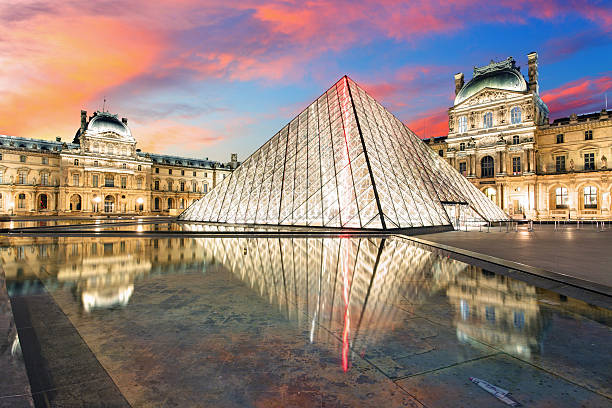
2. A compact museum hour before lunch. This is the runner-up when luggage has already been collected by a driver, left securely at the hotel, or otherwise removed from the visitor’s hands. The museum must be easy to enter, easy to leave, and narrow enough that an hour feels complete rather than insulting. A single Louvre wing can work for experienced art travelers; a whole Louvre idea does not. Use the official Louvre visitor page (https://www.louvre.fr/en/visit/hours-admission/tickets-and-prices) for current ticket and access details rather than assuming a last-minute entry will behave like a walk-in.
3. A Left Bank lunch. This is a narrow exception, not the natural winner. It suits travelers already sleeping near Saint-Germain, Odéon, or the Luxembourg side, with a late southbound departure and a pre-arranged luggage movement. It is much weaker from the 8th, Le Marais, the Tuileries side, or any hotel where lunch would force a river crossing, a meal, a bag pickup, and then a second cross-city push.
4. Directly to Gare de Lyon. This is the right answer when the train window is tight, the group is tired, the weather is punishing, or the bags are still in play. Going directly to the station is not a wasted Paris morning; it is the decision that protects the mood of the next city.
Why Gare de Lyon makes the last morning stricter than it looks
Gare de Lyon makes the final morning stricter because the station is east of many luxury-hotel instincts. A traveler at the Ritz-side of the 1st, the Champs-Élysées side of the 8th, Saint-Germain, or the Rodin-Orsay stretch may see Paris as compact on a map. The departure day sees it differently. The route must absorb checkout, luggage, one possible meal, one possible cultural stop, traffic at river crossings, and the psychological cost of watching the clock while the station is still not in sight.
The non-obvious hinge is the Seine. A Left Bank plan is not simply “across the river”; it often means crossing toward the morning, then crossing back toward Gare de Lyon, sometimes through a central bottleneck around Pont de Sully, Pont d’Austerlitz, or the Quai de la Rapée edge. Add a hotel pickup and the final morning becomes a triangle. Triangles are what spoil departure days. A straight line from hotel to a near-station lunch, or from hotel to one compact stop and then east, keeps the day legible.
For practical station confirmation, use the official Gare de Lyon station page (https://www.garesetconnexions.sncf/en/stations-services/paris-gare-lyon) and confirm train-specific details directly when traveling. The point of this guide is not to promise a gate, a platform, or a transfer minute. It is to help you choose a Paris morning that still holds together when checkout takes longer than expected, one person wants coffee, and the luggage has become the central character.
The first rule is blunt: if the plan requires returning to the hotel after lunch, it must be extremely close to the route toward Gare de Lyon. A lunch that feels leisurely at 12:30 can feel badly placed at 13:40 if the bags are still upstairs, the car is not yet loaded, and the train is no longer abstract. A better Paris departure morning has one final direction. It does not ask the group to keep reopening the day.
Should you do a Left Bank lunch before Gare de Lyon?
A Left Bank lunch before Gare de Lyon is worth it only when the Left Bank is already your base or the train leaves late enough that lunch is not carrying the whole risk of the day. The mistake is choosing Saint-Germain because it sounds like a more refined farewell than the station side. Refinement disappears quickly when the meal creates a second transfer, a bridge crossing, and a luggage retrieval.
The Left Bank works best from a hotel around Saint-Germain-des-Prés, Odéon, Luxembourg, or the quieter streets between the Seine and Boulevard Saint-Germain. In that case, a familiar restaurant, a short walk, and a direct car east after lunch can feel composed. It is also defensible for travelers who intentionally saved their last Paris meal for a specific Left Bank address and have no interest in adding a museum. The lunch becomes the event, not a filler between checkout and the train.
The Left Bank is too far when it sits west of the natural line to Gare de Lyon. Rodin, Invalides, and the Orsay side are beautiful, but they push the day away from the departure station before asking you to return east. That can be acceptable on a late evening train; it is a poor bargain when the train sits in the middle of the afternoon. The more premium the lunch, the more painful this becomes, because you either rush an expensive meal or cut the station margin that should have been protected.
The counterintuitive correction is this: the more elegant address is not always the more elegant plan. A polished lunch near the western Left Bank can create a less graceful final morning than a simpler meal closer to Bastille, Aligre, or the Gare de Lyon side of the river. For a departure day, elegance is not measured by the neighborhood name. It is measured by whether the table, the luggage, and the train all agree with each other.
Families and multi-generational groups should be especially careful. Children, older parents, and mixed-mobility groups turn every extra crossing into a visible tax: more standing, more restroom negotiation, more shoe fatigue, and more chances for one person to feel rushed while another wants the meal to last. A private guide can make the cultural meaning richer, and a driver can remove luggage handling, but neither changes the fact that the Left Bank can be geographically wrong for a short southbound rail window.
Which museum works before a southbound train from Paris?
The museum that works before a southbound train is the one you can leave without regret. That usually means a compact museum, a single gallery focus, or a pre-selected wing, not a major “we should see everything” institution. The museum hour before lunch is helpful when it gives the morning shape; it is harmful when it forces the first real move toward Gare de Lyon to happen after lunch.
A Louvre hour is possible only with discipline. It should be designed as one chapter, not a catch-up session: a focused route through one wing, a single theme, or a familiar masterpiece sequence for travelers who already understand the building’s scale. The Louvre sits on the Right Bank and can be easier than the far western Left Bank for some hotel locations, but the building’s internal distances, security rhythm, and emotional pull make it a dangerous “just one more thing” choice. If the Louvre was the heart of the trip, give it its own proper plan through a curated Louvre day rather than using departure morning as a leftover.
Smaller museum types are safer. A single-artist museum, a decorative-arts focus, a compact fashion or design stop, or a garden-linked collection can feel complete in a shorter window if it sits on a sensible route. Rodin can be lovely for travelers based on the Left Bank with a late train, especially if the garden matters more than covering every room. Orsay is more demanding before luggage movement because its scale and emotional weight invite lingering. A special exhibition is the riskiest category unless timed entry, bags, and exit route are already settled.
Before luggage movement, the museum must also tolerate real-world visitor behavior. Most travelers do not want to enter galleries with a coat, valuables, shopping bags, and the mental knowledge that suitcases are waiting elsewhere. Large museums add security, cloakroom decisions, and internal walking before the art even begins. Small museums, or a single short route with a guide who knows exactly where to begin and where to exit, keep the hour from expanding.
The cut-first rule is simple: if the museum requires a special trip in the wrong direction, cut the museum first. Do not cut the station margin. Do not cut lunch so sharply that the group boards hungry and irritated. Do not cut the luggage plan and hope the hotel pickup will be painless. Culture is valuable on a departure morning only when it behaves. When it starts asking the rest of the day to serve it, it no longer belongs there.
How hotel location changes the answer
Your hotel location decides the final morning more than your taste in museums. The same traveler can make a Left Bank lunch feel effortless from Saint-Germain and make it feel absurd from the 8th. The same Louvre hour can be reasonable from the Tuileries side and excessive from deep Montmartre or the far western Left Bank. Before choosing the last activity, draw the hotel-to-Gare de Lyon transfer as the day’s spine.
If you are staying on the Left Bank
A Left Bank hotel gives you the best case for a Left Bank lunch, but only if the train is late enough and bags are not dragging behind the meal. Saint-Germain, Odéon, and Luxembourg can support a short lunch before a direct eastbound transfer. Rodin or Orsay can work only when the museum is the only cultural stop, the lunch is nearby or skipped, and the luggage movement is handled cleanly. The wrong move is trying to combine a museum, a Left Bank lunch, hotel retrieval, and a station transfer as though each were weightless.
If you are staying near the Louvre, Tuileries, or the 1st
A central Right Bank hotel gives you a decent chance at one focused museum hour, especially around the Louvre or the Tuileries edge, but it does not justify a sprawling final morning. From here, the better pattern is one compact cultural chapter, then a steady move east. You can also use a short Seine-side pause instead of a museum, which preserves the feeling of Paris without asking the group to navigate another ticketed interior.
If you are staying in the 8th or palace-hotel corridor
The 8th can make the final morning look easier than it is. The hotels are comfortable, drivers are readily arranged, and the streets feel controlled, but Gare de Lyon is still across the city to the east. This is where premium travelers overpack the day: a late breakfast, one last boutique errand, a museum, lunch, and then a transfer. The more polished the hotel, the more tempting it is to delay the station logic. Resist that. Choose either a hotel-area morning with an early eastbound transfer, or move toward Gare de Lyon before the day begins to splinter.
If you are staying in Le Marais, Bastille, or near the eastern Seine
Le Marais, Bastille, Aligre, and the eastern Seine give you the most forgiving geography. You may not need a grand final sight because the neighborhood itself can carry the morning: a short guided walk, a market pass, a café, or a simple lunch before the station. This is the one case where a last Paris morning can feel both local and logistically sane. It is also where a private guide can add value without forcing a complicated route, because the conversation can unfold while the station remains close.
The body cost of a final Paris morning
Paris makes departure fatigue physical before travelers admit they are tired. The city adds standing in museum security, stone pavements, station concourses, stair choices, and the small muscular work of coats, bags, phones, tickets, and family members moving at different speeds. A single river crossing in a car may be easy; a day with two crossings, one gallery queue, one hotel return, and a station concourse is not. Heat, rain, and winter layers all magnify the same problem: what looked like one elegant last stop becomes a series of load-bearing transitions.
This is why a private plan should not be judged by how many famous things it includes. It should be judged by how many times it makes the group reassemble. Each reset costs attention. Someone finishes coffee later than expected. Someone checks the train time. Someone wonders whether the luggage is in the car. Someone wants one more restroom stop before the platform. Those are not glamorous details, but they decide whether the morning feels generous or clipped.
The mood cost matters just as much. A calm final Paris morning gives the southbound train a sense of continuation: Paris has ended, and the next landscape can begin. A rushed morning makes the train feel like an escape from a badly managed day. That difference changes the arrival in the next city. People who board with time to settle, buy water, and find their carriage carry a different energy into Lyon, Avignon, Aix-en-Provence, or wherever the next stage begins.
For travelers building a larger France itinerary, this is the hinge day between chapters. The same principle applies whether Paris follows Normandy, precedes Provence, or sits between Champagne and the south. If your trip includes Champagne Taittinger visits in Reims (https://www.taittinger.com/en/visits-reims), a Paris food-and-art stay, and then a southbound train, the departure morning should not be treated as spare time. It is the seam that keeps the itinerary from feeling stitched together too tightly.
Where a guide or driver changes the morning, and where it cannot
A guide or driver changes the final morning when the problem is coordination, luggage, and route discipline. A guide can make a one-hour museum visit feel intentional rather than random. A driver can remove the hotel-bag-station shuffle, hold the day to one direction, and prevent the group from debating taxis at the worst possible moment. This is where a chauffeured Paris plan earns its place: not by making Paris smaller, but by removing avoidable handling from a day that already has a fixed departure.
The strongest use is a split role. The guide meets the travelers for a focused final chapter near the hotel or along the route, while the luggage is handled separately and the driver becomes the quiet boundary around the morning. Instead of “what can we still squeeze in,” the day becomes “what can we enjoy without reopening the logistics.” That is the moment when a tailored private plan feels different from a self-managed checklist.
Premium spend does not help everywhere. A chauffeur cannot make a cross-river museum and a tight Gare de Lyon departure feel calm. Paying more does not erase the geometry of a western Left Bank museum, a lunch that runs long, and a station on the eastern side of Paris. The safest premium move is to skip the museum and protect the train when the departure is early or mid-afternoon, when bags are not already handled, or when the group includes travelers who need slower transitions.
Spend is valuable when it turns uncertainty into sequence. It helps when a driver collects bags while a guide keeps the museum hour contained; when lunch is chosen because it sits on the route, not because it photographs well; and when the final move to Gare de Lyon happens before anxiety arrives. It helps less when the itinerary is already overextended and the chauffeur is expected to rescue a poor route. For a broader view of the vehicle-versus-walking question, see when a chauffeur changes a Paris museum day.
If you want Orange Donut Tours to design the last Paris morning around checkout, luggage, a guide, a driver, and the exact character of your onward rail leg, Inquire now. This is the kind of day where customization matters because the best answer is rarely the most famous sight; it is the sequence that lets the group enjoy Paris until the handoff to the train feels complete.
How to use the final hours without overpacking them
The safest final morning uses one main event and one soft landing, not three attractions. The main event can be lunch, a compact museum, or a guided neighborhood pass. The soft landing is the station-side buffer: a café, a short walk, time to collect oneself, or simply arriving at Gare de Lyon early enough that the station no longer feels threatening. The station’s own scale, services, and waiting spaces are part of the plan, not dead time.
For an early or late-morning train, go directly to Gare de Lyon. Breakfast at the hotel, settle the bags, and let the train be the event. Trying to add a museum before a morning train is not cultured; it is brittle. If the group is disappointed, move the desired museum to the previous afternoon and cut something softer there.
For an early-afternoon train, choose either a hotel-nearby breakfast and direct station transfer, or a very short eastern stop with luggage already in the car. This is not the window for a Left Bank lunch unless you are already on the Left Bank and the route is unusually clean. It is also not the window for a major museum. A single street, market, or river edge is enough.
For a mid-afternoon train, the best pattern is a compact morning chapter and lunch close to the station’s side of town. The museum hour before lunch can work here if the museum is near the hotel or on the eastward route. Lunch should not be placed so far from Gare de Lyon that the meal becomes a timed performance. If the restaurant is the point, let lunch be the point and skip the museum.
For a late-afternoon or evening train, you have more freedom, but not unlimited freedom. This is when a Left Bank lunch, Rodin garden hour, or carefully bounded Louvre route can work. The danger is psychological: because the train feels far away, travelers behave as if the day has no fixed edge. Build the edge anyway. Decide when bags move, when the final car arrives, and what gets cut if lunch expands.
The clearest planning sentence is this: the final Paris morning should end before it has to end. That means the group reaches the station side while everyone still has patience. A departure day that uses every possible minute rarely feels abundant. It feels audited.
What to choose by traveler type
Couples should choose the station-side lunch or eastern Seine pause unless a specific Left Bank restaurant is the emotional reason for the morning. A quiet meal near the route can feel more intimate than a prestigious address that forces clock-watching. A short Seine view before the station can also do more for the day than another interior, especially if museums have already shaped the trip.
Families should bias toward directness. Children often handle trains well when the adult energy is calm; they handle trains poorly when the morning has become a sequence of “hurry, wait, hurry.” A small museum can work if it is truly short and the bags are gone. A major museum plus lunch plus station is usually too much unless the train is late and the children are unusually museum-ready. For art without a full museum day, the family planning logic in Paris for families who want art without a full museum day can help you decide what to keep light.
Older parents and three-generation groups should put restroom access, seating, and one-direction movement ahead of sightseeing density. A car helps, but it should not be used as permission to stretch the map. Gare de Lyon still requires walking, orientation, tickets, platform awareness, and the human work of boarding. The fewer pre-station resets, the more dignified the day feels.
Food-and-wine travelers should treat lunch as the main event, not as a logistical afterthought. If the meal is on the Left Bank, protect it by dropping the museum. If the museum matters more, keep lunch simple and closer to the eastward route. If the train leads to Burgundy, Provence, or the Rhône, the meal does not need to carry the entire French food story. The next region will have its own table.
Culture-first travelers should be the strictest, not the most permissive. The temptation to add “one last museum” is strongest when the trip has been art-rich, but departure mornings punish vague ambition. Choose one room, one artist, one theme, or one guide-led argument. For a deeper comparison of the Paris art-day hierarchy, use the Louvre, Musée d’Orsay, or Rodin decision guide before assigning any of them to a train day.
The final recommendation
For most travelers, the best Paris plan before a southbound train is to move the morning toward Gare de Lyon early and use culture sparingly. Choose a station-side lunch or eastern Seine pause as the default. Choose one compact museum hour only when bags are solved and the route stays simple. Choose a Left Bank lunch only when the hotel, train time, and luggage plan all make it genuinely easy. Choose directly to Gare de Lyon when the window is tight, the group is tired, or the next city matters more than one final Paris credential.
The famous thing to stop forcing is the last museum. A final museum can be beautiful, but it is not automatically a better use of the morning than a well-placed lunch, a calm car, and a train boarded without emotional residue. Paris is not diminished by leaving one room unseen. The trip is improved when the last Paris hours hand the travelers to the next chapter with their appetite, patience, and sense of occasion intact.
FAQ
Is the Left Bank too far before a train from Gare de Lyon?
The Left Bank is too far when it requires a separate river crossing, lunch, luggage pickup, and then a transfer back east to Gare de Lyon. It works best only if your hotel is already on the Left Bank, the train is late, and the luggage movement is already arranged.
Should I visit the Louvre before a southbound train?
Visit the Louvre before a southbound train only as a focused, pre-planned hour with luggage already handled. Do not use departure morning for a broad Louvre visit, a special exhibition gamble, or a first-time attempt to understand the whole museum.
What is the best museum type before Gare de Lyon?
The best museum type is compact, easy to exit, and satisfying in one clear chapter. Single-artist museums, small design or decorative-arts collections, and a pre-selected gallery route work better than vast museums that invite wandering.
When should I go directly to Gare de Lyon?
Go directly to Gare de Lyon for morning or early-afternoon trains, when luggage is still with you, when the weather is difficult, or when the group includes children, older parents, or anyone who needs slower transitions. Direct is often the most comfortable premium choice.
Can a chauffeur make a Left Bank museum safe before the train?
A chauffeur can make luggage and transfers easier, but it cannot make a cross-river museum calm if the departure window is tight. Use the car to simplify a good route, not to justify a route that already pulls too far away from the station.
Where should we have lunch before a southbound train?
Have lunch either near your hotel if the route to Gare de Lyon remains direct, or closer to the station’s eastern side of Paris. Bastille, Aligre, Bercy, and the eastern Seine are often easier than a prestigious lunch that sends the morning west.
How does hotel location change the last Paris morning?
A Left Bank hotel can justify a Left Bank lunch, a Louvre-side hotel can justify one focused museum hour, and an eastern Paris hotel can support a relaxed neighborhood morning. A hotel in the 8th or far west usually needs an earlier move toward Gare de Lyon.
Is it worth booking a private guide for the final morning?
A private guide is worth it when the morning has a narrow cultural purpose and a firm exit. The guide should make the hour richer and shorter, not add more stops. Pairing the guide with a luggage-aware driver is often the cleanest solution.
If you’re interested in any private tours of Paris, please reach out to us.


 So if you are looking for the absolute best in Paris & surroundings with authentic local fully-licensed native guides whose English you can actually understand and with an exclusive and amazingly fun itinerary













