Versailles, Giverny or Champagne After Paris: Which Add-On Deserves the Extra Day?

Updated
For a Paris hotel return after a full-day excursion, choose Versailles by default if you have not seen it; it gives the strongest cultural payoff without making the trip feel like you left Paris behind. That verdict works in real city conditions because Versailles absorbs one heavy day cleanly, while Giverny and Champagne depend more sharply on season, weather, appetite and the next morning’s plans. The clearest exception is a spring-to-early-autumn garden traveler: when the Giverny garden season is the emotional reason for the extra day, Giverny can beat the palace. Champagne is worth the day when wine, Reims and a celebratory lunch are the point, not when you simply want a famous add-on. The thesis is simple: after Paris, the extra day should add one distinct French rhythm without erasing the Paris evening you still need for dinner, sleep and a graceful departure.
Versailles, Giverny and Champagne each solve a different premium-trip desire. Versailles answers the “one great French statecraft and palace day” desire; Giverny answers the “light, seasonal, painterly countryside” desire; Champagne answers the “wine, cellar, Reims and occasion” desire. What separates a strong add-on from a tiring one is not fame. It is how much of Paris the choice displaces, how your body feels when you return, and whether the day adds depth or only travel time. A non-obvious Paris cue matters here: a palace-area hotel near Place Vendôme can be elegant but still awkward for a westbound morning if the car must crawl around Concorde and the Seine, while a Left Bank pickup near Invalides or Pont de l’Alma can sometimes feel cleaner for Versailles. The prestigious base is not always the smoother base.
The one-extra-day ranking, before your calendar starts negotiating
- Default winner: Versailles. Choose it when this is a first serious Paris stay, when French history and palace scale matter, or when the add-on should still feel connected to the capital. A private Versailles day can be shaped around interiors, gardens and return rhythm without pretending the palace is a casual half-day. Plan a private Versailles day
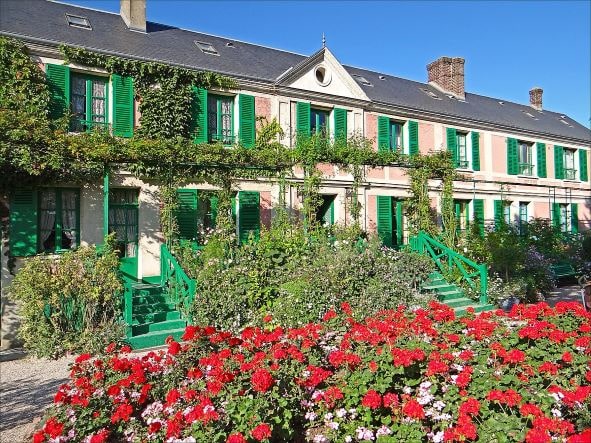
- Seasonal winner: Giverny. Choose it when the garden is open, the light is part of the appeal, and you would rather trade palace weight for color, air and Monet context. It is the most mood-sensitive option: when the garden sings, the day feels unforgettable; when the season is wrong, it can feel thin.
- Occasion winner: Champagne. Choose it when wine is central to the trip, when Reims or the chalk-cellar story matters, or when a couple or small group wants a day that feels celebratory without adding another museum. Do not choose it merely because Champagne sounds festive.
- The cut-first answer: stay in Paris. Keep the extra day in the city if you still have the Louvre, Musée d’Orsay, the Seine, or a serious food-and-wine day unresolved. A rushed excursion is not an upgrade over a better Paris day.
Which add-on after Paris deserves the extra day?
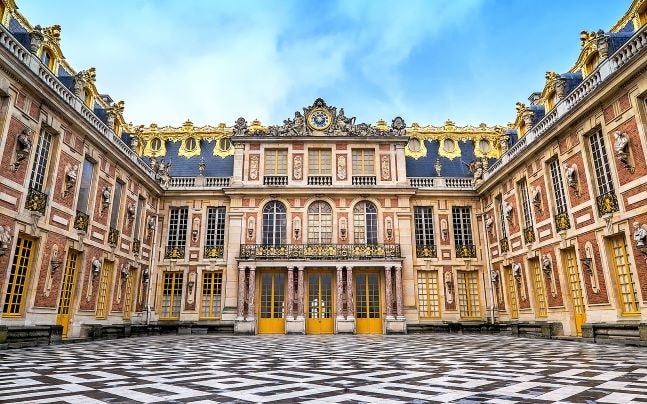
Versailles deserves the extra day when the trip needs one unmistakable French cultural anchor beyond the city. It wins because it gives you a coherent day: palace, gardens, court history, scale, and an easy conceptual return to Paris. You leave the city, but you do not leave the Paris story. For first-time visitors, couples marking a milestone, families with older children, and travelers who like architecture, politics and interiors, Versailles has the broadest payoff.
Giverny deserves the extra day only when season and temperament line up. It is not a smaller Versailles. It is a softer, more weather-dependent day that rewards people who genuinely want gardens, Impressionism and countryside pacing. The official Monet Foundation page is the practical source to check before treating Giverny as a fixed option: official Monet Foundation page (https://fondation-monet.com/en/giverny-2/). Outside the garden’s confirmed visiting season, Giverny should usually lose to a city art day, Versailles, or a different countryside plan.
Champagne deserves the extra day when the wine experience is not decorative but central. Reims adds cathedral and city texture; the crayères and cellar heritage add a different kind of depth; lunch can make the day feel like a celebration rather than a checklist. But Champagne is also the add-on with the highest “we liked the idea more than the day” risk. If only one traveler is truly interested in wine, or if the next morning is an early train or flight, Champagne can take more energy than it returns.
The correction worth making early is this: the famous-looking choice is not always the best add-on. Champagne can be overvalued by travelers who mainly want a toast, and Versailles can be overpacked by travelers who try to attach a grand dinner immediately after the palace. The trip is better when the add-on answers a real desire, not a name-recognition reflex. For a wider menu of possible excursions, Orange Donut Tours keeps the broader decision separate at Paris private day trips; this article is narrower, because the question here is what deserves one extra day after Paris, not which day trip is generally most interesting.
The decision hinge: what the add-on displaces from Paris
The right choice is the one that displaces the least important Paris day, not the one with the most famous name. This is why Versailles often wins after a first Paris stay: it replaces another heavy monument day with a coherent royal-world day. Giverny replaces a garden or Impressionist day inside the city. Champagne replaces a Paris food-and-wine day. The mistake is pretending all three sit in the same slot.
Look at the city day you would lose. If the extra day would otherwise be a second Louvre pass, Orsay plus Rodin, a Left Bank food morning, or a Seine-centered afternoon, the add-on must be genuinely better than that. Versailles can be better because it gives the monarchy, ceremony and spatial power behind much of Paris’s later urban theater. Giverny can be better when you already have enough museum time and want the visual source outside the frame. Champagne can be better when the Paris stay is already rich in art and the group needs conviviality, not more galleries.
Paris does something very specific to the body during a short stay: it makes distances feel smaller on the map than they feel by late afternoon. A “quick” cross-city hop from the Marais to the 7th, a Seine crossing toward the Tuileries, or a station reset at Gare Saint-Lazare or Gare de l’Est can become the hidden fatigue of the day. Add a palace, a garden or a wine region on top of that and the cost is not only travel time. It is standing, transitions, weather exposure, decision-making, and the late return when everyone would rather be clean, seated and close to dinner.
That is why a Paris add-on should be judged by the evening it leaves behind. Versailles often returns with the satisfied heaviness of a major cultural day; you should keep the evening simple. Giverny can return lighter, especially in generous daylight, but rain or peak heat changes the feeling quickly. Champagne can return buoyant or flat depending on pacing, lunch and how much the group actually cares about wine. For couples, the mood-preserving decision is to let the add-on own the day and keep the evening flexible. The mood-killing mistake is forcing a serious tasting menu after a long road-and-palace or road-and-cellar day just because it is the final Paris night.
Versailles: choose it when the day should still feel connected to Paris
Choose Versailles when you want the extra day to deepen Paris rather than interrupt it. The palace sits outside the city, but the story flows directly back into the capital: royal power, court etiquette, revolution, urban spectacle, and the later Paris obsession with ceremonial axes and controlled views. This makes Versailles the safest add-on for discerning travelers who want one more day of cultural substance before moving on.
The practical reason Versailles wins is that its scale is honest. You know you are giving the day to one major place. That clarity helps planning. You do not need to pretend you can “do Versailles” and then meaningfully fold in a full city afternoon, shopping route, museum visit and formal dinner. A better Versailles day treats the palace as the main event, lets the gardens and estate absorb the afterglow, and returns to Paris with enough margin that the evening does not become a negotiation.
There are two clean Versailles profiles. The first is the culture-led profile: palace interiors, Hall of Mirrors, royal apartments, political context, then a selective garden or estate walk. This suits first-timers, families with curious teenagers, and couples who want a day that feels weighty rather than quaint. The second is the space-and-garden profile: interiors kept focused, gardens given more time, and the rhythm softened so older parents or multigenerational groups are not trapped in one long interior push. The official palace site is the right place to confirm visit logistics before dates are fixed: official Versailles planning page (https://en.chateauversailles.fr/plan-your-visit).
The city-specific friction is not just the distance to Versailles. It is the morning exit and the return. Rail travelers often think in terms of the RER C from central stops such as Invalides or Pont de l’Alma; private-driver travelers think in terms of hotel pickup, the westward exit and how the A13 corridor behaves that day. Neither method removes the palace’s internal scale. Once you are there, the body cost is walking, standing, surfaces, garden distances and the concentration required to make sense of rooms that can blur without a strong narrative. A guide matters less because the palace is hard to find, and more because the palace is easy to overconsume.
Versailles is also the add-on most likely to disappoint travelers who want a soft countryside day. It is not soft. It is grand, formal, often busy, and mentally dense. The wrong version is the “palace plus everything” day: interiors, gardens, Trianon, a long lunch, shopping on return, and a late fine-dining reservation. The cut-first move is simple: cut the second Paris stop after Versailles. If you need guidance on what belongs after the palace, the separate return-day logic in Paris after Versailles is more useful than trying to stretch the excursion itself.
Versailles is the best extra day after Paris when you still need a canonical French chapter. It is not the best when you are already palace-tired, when the group has low tolerance for interiors, or when the trip has become too formal. In that case, forcing Versailles can make the itinerary feel dutiful. The day earns its place when it is allowed to be the major cultural act, not a souvenir photo between more Paris plans.
Giverny: choose it when the garden season changes the recommendation
Giverny wins when the garden itself is the reason for the day. This is the most seasonal of the three choices, and season should genuinely change the recommendation. In the right weeks, Giverny can feel more personal than Versailles and more emotionally specific than Champagne. In the wrong weather or outside the confirmed garden calendar, it loses much of its case.
The traveler who should choose Giverny is not simply “the art lover.” Many art lovers are better served by Orsay, Marmottan or the Orangerie inside Paris. Giverny is for the traveler who wants to understand Monet through setting, light, planting, domestic scale and the relationship between looking and living. It suits couples who want a quieter day, garden travelers, repeat Paris visitors, and families who need air after museums. It also suits visitors whose Paris stay already includes heavy interiors and who would benefit from a day that changes texture.
Routing shapes the experience more than many travelers expect. The public-transport version usually means thinking through Gare Saint-Lazare, Vernon-Giverny, and the last transfer from station to village. A private version removes station management and lets the day breathe, but it does not change the core truth: Giverny is a garden day, and a garden day depends on light, weather and season. A driver can make the approach calmer; a guide can connect Monet, the house, the studio world and the wider Impressionist map; neither can create bloom or sunshine on command.
That is why Giverny deserves a stricter filter than Versailles. If the garden is a “nice idea” rather than the point, do not spend the extra day here. Use Paris instead: Orsay for the arc, Orangerie for the water lilies, Marmottan for Monet depth, or a Left Bank art day if the trip needs a museum-and-garden blend without the road. For a deeper seasonal read, see Giverny by season, and for the guided excursion itself, the natural next step is a private Giverny tour.
Giverny is also the option with the strongest mood consequence. When it works, the day feels shorter than it is because the scale is human, the village is legible, and the visual reward is immediate. When it does not work, the day can feel oddly underpowered: a long movement for a house and garden that needed better conditions. This is especially true for celebration travelers. Giverny can be intimate and memorable, but it is not automatically festive. It gives quiet, not ceremony.
The cut-first rule for Giverny is to stop adding extra countryside just to make the day feel “worth it.” If the garden is enough, let it be enough. If it is not enough, that is a sign to choose Versailles, Champagne, or Paris rather than padding Giverny with unrelated stops. For comfort-first travelers, the best Giverny days often have a clean beginning, a garden-centered middle, and a low-pressure return, not a scavenger hunt across the Eure and the western edge of Île-de-France.
Champagne: choose it when wine is the occasion, not the souvenir
Champagne is worth the day when the group wants wine culture, Reims, cellars and a celebratory rhythm more than another Paris monument. It is the most social of the three add-ons. It can be superb for couples, friends, milestone birthdays, anniversaries and food-and-wine travelers who want one day outside the city that feels distinctly different from Paris. It is not the best general-purpose excursion.
The Champagne day has a different anatomy. You are not only choosing a destination; you are choosing a pacing contract. The day may include Reims, cathedral context, lunch, vineyard or house perspective, and cellar visits when confirmed. That can be beautiful, but it also means the day is more appointment-shaped than Versailles or Giverny. The more the day depends on one tasting room, the more fragile it becomes. Do not promise yourself specific cellar access until it is confirmed, and do not build the entire day around a single house unless that experience is the reason for going.
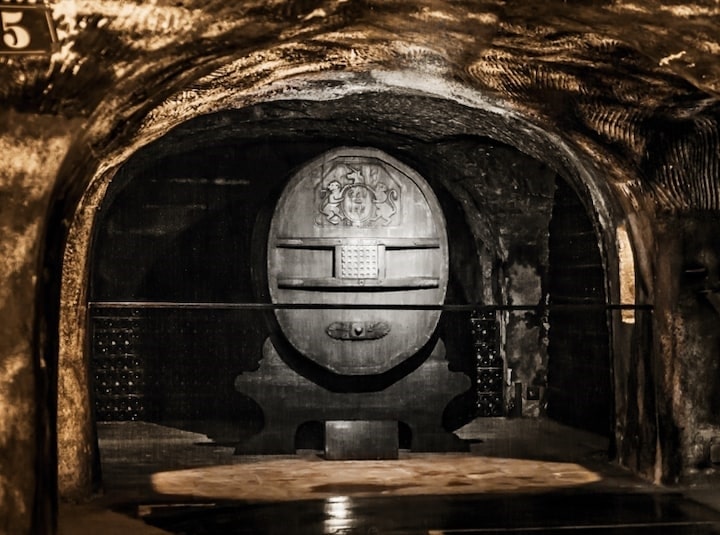
Reims gives Champagne a stronger cultural spine than travelers expect. It is not just a wine stop. The city adds royal and ecclesiastical history, a different urban grain, and the practical advantage of named houses and visitor experiences clustered enough to make a designed day possible. Champagne Taittinger visits in Reims are one official example to check when shaping a day: Champagne Taittinger visits in Reims (https://www.taittinger.com/en/visits-reims). Ruinart’s presence at 4 Rue des Crayères is another official anchor for understanding how the Reims crayères can shape the story, though availability and format should always be confirmed: Ruinart 4 Rue des Crayères (https://www.ruinart.com/en-us/maison---4-rue-des-cray%C3%A8res-4ruedescrayeres.html).
The travel consequence is the day’s biggest test. A rail-led Champagne plan often points toward Gare de l’Est and Reims; a driver-led plan can make the region feel more fluid, especially if the day includes countryside or Épernay, but road time still shapes the mood. This is where the add-on differs from a Paris food-and-wine day. In Paris, Saint-Germain, Le Marais, the 8th or a market-led morning can deliver food culture with short transfers. Champagne earns the road only when the region itself is the desire.
Champagne is the wrong fit for travelers who do not drink much, who want a flexible day, or who are already over-scheduled around meals. It can also be wrong for families unless the adults’ wine interest is strong enough to justify the child-management cost. A driver and guide can make the day smoother, but they cannot make indifferent travelers care about cellar method, chalk, dosage, vineyards or house style. A driver does not make an indifferent traveler enjoy a full Champagne or palace day.
Choose Champagne over Versailles when you have already had enough royal and museum density. Choose it over Giverny when the season is not garden-led or when the group wants conversation, lunch and a festive arc. Choose it over staying in Paris only when a Paris food day would feel like repetition. For the private version, start with a private Champagne day, then let availability and appetite shape the final route rather than forcing a brittle checklist.
When the extra day should remain in Paris
The extra day should remain in Paris when the city still has a higher-value unfinished chapter. This is the decision many travelers resist because an “extra day” sounds like it should become an excursion. It should not. If the Paris stay is only three nights, if the Louvre or Orsay is still unresolved, if the Seine has only been seen in transit, or if the trip includes a serious final dinner, a full-day add-on may be the wrong use of scarce energy.
There are four situations where staying in Paris is the stronger editorial call. First, when the group has not yet had a coherent museum day. A curated Louvre, Orsay, Rodin or smaller-museum plan can beat a road day because it deepens the trip without changing geography. Second, when the hotel location is doing useful work. A Left Bank stay near Saint-Germain, a Right Bank stay near the Louvre, or an 8th-arrondissement palace base can each support a calmer final day if you stop crossing the city. Third, when the evening matters. Paris rewards a day that leaves you alert for dinner, not a day that ends with everyone negotiating showers and shoes. Fourth, when the add-on is being chosen to avoid making a harder choice inside the city.
The cut-first move is this: cut the excursion before you cut the Paris day that explains why you came. Do not trade a focused Louvre morning, a Left Bank art route, a Seine hour, or a food-and-wine day for a destination no one in the group can defend beyond “we heard it was good.” That is especially true for couples. The mood-preserving Paris day is often a shorter guided route, a real lunch, one beautiful pause, and a clean return before dinner. The mood-killing mistake is treating the final day like a storage closet for everything the itinerary has not yet swallowed.
Remaining in Paris is not the lesser choice when it improves the trip’s ending. A slow morning around the Tuileries, a tighter museum visit, a market-led food route, or a Seine-centered afternoon can leave the departure day cleaner and the final evening more vivid. This is where the strongest private planning is sometimes restraint: refusing to sell a day trip when the better answer is to make Paris feel complete.
The guide-and-driver upgrade changes comfort, not desire
A private guide and driver can significantly improve the quality of Versailles, Giverny or Champagne, but they do not change the basic tradeoff. They can reduce transfer stress, remove station management, pace the day around attention spans, shape context, and protect the return. They cannot make a palace day light, make Giverny non-seasonal, or make Champagne compelling to someone who does not care about wine.
For Versailles, the guide’s value is interpretation and triage. The palace contains too many rooms, details and symbolic layers for a casual wander to remain sharp. A guide can decide when to slow down, when to summarize, when to move outside, and how to keep families or couples from glazing over. A driver can make hotel pickup and return easier, especially when the group is based away from the RER C or when older parents would find station movement tiring. Still, the palace remains a major day. Paying more does not make it small.
For Giverny, the driver’s value is comfort and flow. Avoiding Gare Saint-Lazare logistics can make the day feel more graceful, especially for small groups or travelers who dislike transfer friction. The guide’s value is making Monet’s house, garden, studio life and Impressionist context feel connected rather than decorative. But the season remains the gatekeeper. No premium arrangement can turn a weak garden moment into the best add-on of the trip.
For Champagne, the driver changes more of the day because the region is appointment-led and spread beyond one single monument. A driver can support a route that connects Reims, lunch, countryside or Épernay without making the group manage rail times, taxis and tasting-room spacing. A guide can turn the day from “we drank Champagne” into a clearer story of place, production, history and taste. But even here, the upgrade is not a magic wand. It improves the day for people who already want the day.
This is the natural place to involve Orange Donut Tours. Once you know whether the extra day should be Versailles, Giverny, Champagne or Paris itself, the private design can solve the parts that usually fray: hotel pickup, guide match, realistic pacing, lunch geography, return time and how much of the evening should remain uncommitted. For a tailored version that respects the tradeoff rather than disguising it, Inquire now.
How to place the add-on after Paris without flattening the trip
The best placement is usually after the main Paris cultural days and before the most delicate departure or dining day. Think of the add-on as a punctuation mark, not an escape hatch. It should come after the city has already established itself, and it should not sit so late that a delayed return or tired evening becomes the final memory of the stay.
For a four-night Paris stay, Versailles often works best as the third full day: the first day can settle the city, the second can handle a museum or Seine-led route, the third can carry the palace, and the fourth can be lighter or more personal. Giverny works better when the weather window is favorable and the previous day has not been garden-heavy. Champagne works better when the following morning is not a demanding transfer. If the next day is Eurostar, a long-haul flight, or an early train south, be more conservative than your enthusiasm suggests.
Left Bank versus Right Bank routing matters less for the final verdict than for the feel of the day. A Left Bank hotel can make certain Versailles movements feel cleaner, while a Right Bank palace hotel may make the return to shopping, the 8th, or a final dinner easier. For Champagne, Gare de l’Est geography matters if rail is part of the plan; for Giverny, Gare Saint-Lazare matters if you are not using a private driver. These are not reasons to move hotels. They are reasons to stop assuming every Paris base produces the same add-on day.
Do not stack the add-on on top of an already ambitious Paris plan. Versailles after a late Louvre night is a poor sequence. Champagne after a serious tasting-menu evening can turn the next morning into a chore. Giverny after a long garden-and-walking day may feel repetitive rather than restorative. The practical sequence is to put the add-on after a lighter evening and before a softer one, so the day has room to be itself.
Families should be stricter about the evening than couples. After Versailles, children and grandparents often need a direct hotel return more than another scenic stop. After Giverny, a simple dinner near the hotel can keep the day feeling pleasant. After Champagne, families should ask whether the adult pleasure is worth the group compromise. Couples should be stricter about mood. A day that looks impressive but leaves both people quiet, hungry and late is not a romantic win.
Final verdict: the extra day is earned, not owed
In a first serious Paris stay, Versailles is the add-on that most clearly earns the extra day. It gives the strongest cultural return, ties back to the city, and can be paced as one complete excursion rather than a scattered collection of stops. Giverny beats it when the garden season is genuinely the reason for the day and the group wants light, color and Monet context more than palace scale. Champagne beats both when wine, Reims and celebration are central enough to justify the movement.
The option to reject is not one of the three destinations; it is the reflex to leave Paris just because there is one day left. If Paris is still unfinished, keep the day in the city. A better museum route, food morning, Seine hour or neighborhood plan can be more luxurious than a famous excursion executed at the wrong moment. The best add-on after Paris is the one that makes the whole stay feel more complete when you return to the hotel, not the one that gives the itinerary the longest list of names.
FAQ
Is Versailles, Giverny or Champagne best for one extra day after Paris?
Versailles is the best default for one extra day after Paris because it delivers the broadest cultural payoff and still connects strongly to the Paris story. Giverny wins when garden season is the reason for the day, while Champagne wins when wine and celebration are central.
When is Giverny seasonal enough to choose over Versailles?
Giverny is seasonal enough to choose over Versailles when the garden is confirmed open, the weather window is favorable, and the traveler genuinely wants Monet’s house and garden more than palace interiors. If the garden is only a pleasant extra, Versailles or a Paris art day is usually stronger.
Is Champagne worth a full day from Paris?
Champagne is worth a full day from Paris when the group cares about wine culture, Reims, lunch and cellar context. It is not worth the day for travelers who only want a celebratory glass or who would be happier with a Paris food-and-wine route.
Should I do Versailles as a half-day or full day?
Versailles is best treated as a full-day commitment or a deliberately focused shorter day, not as a casual add-on between Paris plans. The palace and gardens have enough scale that squeezing them before another major city activity usually weakens both parts of the day.
Can a private driver make Champagne or Versailles feel easy?
A private driver can make Champagne or Versailles smoother by reducing transfers, station management and return friction. A driver does not change whether the group actually wants a wine day or a palace day, so the basic fit decision still matters.
When should the extra day stay in Paris instead?
The extra day should stay in Paris when the city still has an unresolved high-value chapter: the Louvre, Orsay, a Seine route, a food-and-wine day, or a final evening that needs energy. In that case, a better Paris day can beat a famous excursion.
Which add-on is best for couples after Paris?
Versailles is best for couples who want a major cultural day, Giverny is best for couples who want a quieter seasonal garden day, and Champagne is best for couples who want wine, lunch and celebration. The best couples choice is the one that leaves the evening relaxed rather than overplanned.
Which add-on is best for families or multigenerational groups?
Versailles is usually the strongest family or multigenerational choice if the group can handle palace scale and walking. Giverny can work beautifully for garden-minded families in season, while Champagne needs a stronger adult wine focus to justify the group logistics.
If you’re interested in any private tours of Paris, please reach out to us.



 So if you are looking for the absolute best in Paris & surroundings with authentic local fully-licensed native guides whose English you can actually understand and with an exclusive and amazingly fun itinerary













