Paris for Three Generations: Eiffel Views, One Museum and Seine Time Without Split Energy

Updated
Verdict: For a three-generation first Paris day, build around an Eiffel view before the museum choice, one compact museum, and the Seine reset after one cultural anchor. That works because Paris punishes repeated crossings more than it punishes a measured walk: the hinge from Trocadéro across Pont d’Iéna can give every age group one common win early before attention starts competing. The clearest exception is a family with a toddler who needs a real nap, a grandparent who cannot stand comfortably, or teenagers whose Paris wish is strongly elsewhere; in that case, split the afternoon rather than asking one route to keep everyone cheerful.
The thesis is simple: a multigenerational Paris day should not try to make the city equally exciting to every age at every minute; it should give the group one visible shared victory, one guided cultural spine, and one soft landing before dinner. Orange Donut Tours plans this kind of day less like a checklist and more like a pressure system: when the monument, museum, river and hotel break are in the right order, the group can stay together without making the pace bland. For families considering a private format, Paris family private tours are most useful when the guide is allowed to shape the day around attention, standing tolerance and the return leg, not simply narrate more loudly over a crowded route.
The counterintuitive correction is that the most glamorous-sounding base is not always the smoothest one. Staying near the Eiffel Tower can be wonderful for views, but it is overvalued for this particular day if it turns the post-museum hotel break into a long cross-city return. A 7th arrondissement hotel may look perfect on a map beside the tower, then become awkward after a Louvre or Musée d’Orsay visit when half the family needs a quiet reset and the other half wants the Seine. For three generations, the hotel is not just where you sleep; it is the place where the day either recovers or starts negotiating with itself.
The ranked ladder for a three-generation Paris day
The best multigenerational Paris plan is a priority ladder, not a democratic list of favorites. Start with the element that gives everyone a visible reward, then add only what the next movement can absorb. The ranking below is intentionally strict because a family day falls apart when every age group gets a turn but nobody gets a rhythm.
- 1. Eiffel view first: Give the group a shared visual anchor before asking them to care about art, history or logistics. A view from Trocadéro, Champ de Mars, Pont d’Iéna or a nearby river edge can be enough; the tower interior is a separate decision, not an automatic first move.
- 2. One museum only: Choose the museum by attention overlap, not by adult prestige. The Louvre, Musée d’Orsay and Rodin can all work, but they create very different body loads and exit moods.
- 3. Seine after culture: Use the river when legs and attention need a change of medium. The Seine belongs after one cultural anchor, not after three indoor stops.
- 4. Hotel break before evening: Protect the hotel return before you add dinner, shopping or an illuminated drive. The break is what keeps the evening from becoming a quiet family endurance test.
- 5. Split only when interests are no longer compatible: A split afternoon is not a failure. It is the right move when toddlers, teenagers and grandparents would otherwise make each other’s Paris smaller.
This ladder also gives the cut order. If the day starts getting crowded, cut the tower interior before cutting the Eiffel view, cut the second museum before cutting the Seine, and cut the late add-on before cutting the hotel break. The famous mistake is trying to keep every icon while trimming only meals, taxis or pauses; that removes the very things that make three generations pleasant together.
1. Start with an Eiffel view, not with the tower as a full expedition
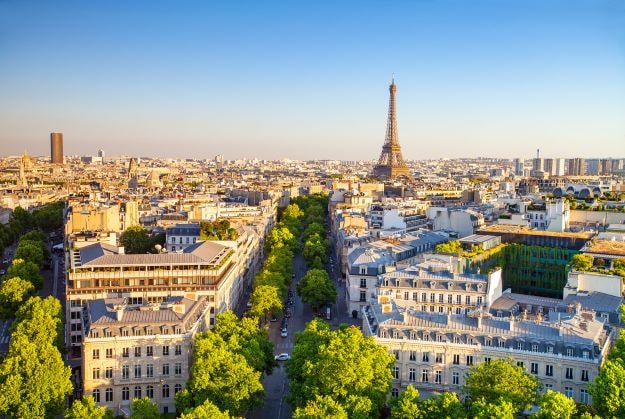
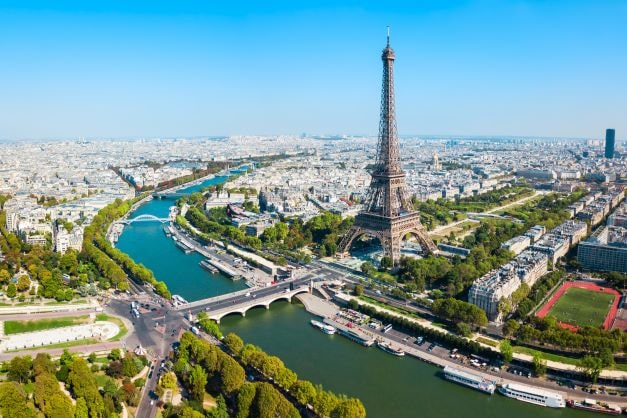
The Eiffel Tower should give the day its opening lift, but it does not always need to consume the morning. For a mixed-age group, the Eiffel view before the museum choice does something practical: it lets grandparents, parents and children agree that the day has already become Paris before anyone is asked to process paintings, security lines or chronology. That visible success matters more than many planners admit.
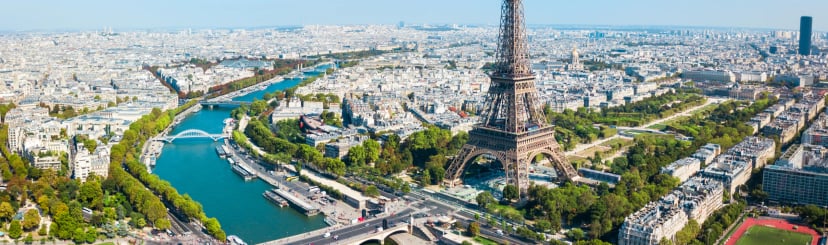
The cleanest version is often a view-led start around Trocadéro, Pont d’Iéna and the Champ de Mars edge, then a guided move toward the museum route that best fits the group. Pont d’Iéna is the local hinge that matters: it is short enough to feel manageable, visually generous enough for photographs, and close enough to river movement that the plan can pivot if someone is already tiring. In contrast, making the Eiffel Tower interior the first obligation can turn the morning into a timed-entry project before the day has even established its shared mood.
That does not mean going up the tower is wrong. It means the ascent has to earn its place. For some families, especially first-time visitors with children old enough to enjoy the engineering and grandparents who are comfortable with waiting and standing, the tower visit is the emotional core. For others, the better choice is to secure the view, tell the story from the ground, and preserve the museum and Seine rhythm. Check the official Eiffel Tower site (https://www.toureiffel.paris/en) before building the day around tower access, then decide whether the time inside the monument is worth what it does to the rest of the route.
This is where a private guide can be valuable without pretending access solves everything. A guide can make the structure visible to children, keep grandparents from feeling left out of a family-first explanation, and use the tower as a shared anchor rather than a waiting-room event. For families who do want the tower to be part of a guided plan, Eiffel Tower private tour planning should be tied to the museum and river sequence, not treated as a standalone victory.
The stop to avoid is the “while we are here” addition. Do not turn the Eiffel opening into tower, Trocadéro, Champ de Mars, Rue Cler, Invalides and then a museum. Each may look near the last one, but Paris distance is not only measured in blocks. It is measured in crossings, traffic lights, security checks, photo pauses, toilets, snacks, and the unspoken moment when the youngest traveler starts sitting on curbs and the oldest traveler stops volunteering opinions.
2. Choose one museum by attention overlap, not by fame
The right museum for three generations is the one that creates the most shared attention in the least draining shape. “One museum” does not mean a lightweight cultural day; it means the family is choosing depth over attrition. A museum that works for adults but makes children trail behind, or that thrills teens while grandparents search for seats, is not really a shared win.
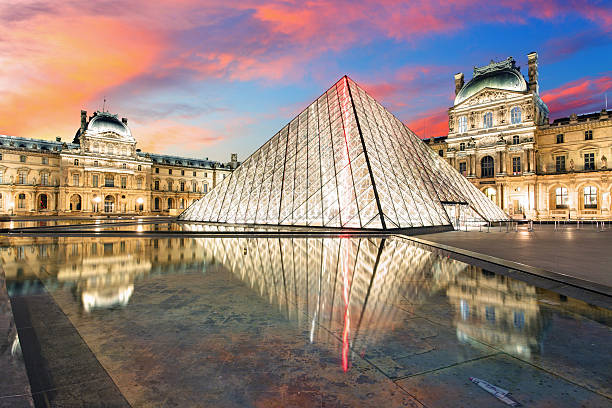
For a first Paris trip, the Louvre is the strongest choice when the group wants a true capital-M museum moment and can accept a curated route. The problem is not the Louvre’s quality; the problem is its scale. Entering near the pyramid or through the Carrousel, orienting in the Cour Napoléon area, and then moving through a focused sequence takes discipline. Without that discipline, the museum becomes a map-reading exercise with masterpieces attached. The Louvre works best for school-age children and older, teens who can enjoy mythology or power stories, and grandparents who are comfortable with long interior stretches if the route is edited tightly.
Musée d’Orsay is the better museum when the family wants art, Paris atmosphere and a contained physical experience. Its former station setting gives children and teens something architectural to notice before the art even begins, while adults get a more intuitive progression through 19th-century France. For many mixed-age groups, Orsay’s advantage is not that it is “easier” in a simplistic sense; it is that the building itself keeps orientation from becoming another task. It also sits by the Seine in a way that makes the post-museum river reset feel natural rather than bolted on.
Rodin is the choice when the group needs beauty, breathing room and a lower museum load. It can be excellent for younger children, older parents, or a family that already has a serious museum elsewhere in the trip. The gardens allow the mood to loosen, and the proximity to Invalides can help the route feel Paris-specific without adding another major interior. The tradeoff is that Rodin may not satisfy a first-time family that came to Paris expecting one great collection. It is the right answer when shared comfort matters more than canonical weight.
The practical rule is this: Louvre for the grand museum memory, Orsay for the best balance of art and manageable flow, Rodin for a softer cultural anchor. The more uneven the ages, the more Orsay and Rodin gain. The more art-serious the adults and teens, the more the Louvre can justify itself, provided the route is ruthless. For a deeper comparison of the three museum choices, Louvre, Musée d’Orsay or Rodin first is the planning question to resolve before you start assigning the river, lunch or hotel break.
One museum also makes the guide’s job better. A private guide can connect a Roman goddess to a child’s mythology phase, a royal portrait to a grandparent’s memory of European history, and an Impressionist room to a teenager’s eye for light. That cross-age translation is much harder when the family is racing between two museums. In Paris, more culture can make the day feel less cultured because nobody has enough space to absorb what they just saw.
3. Put the Seine after the museum, not as a random add-on
The Seine is most useful after the group has spent real attention on one cultural anchor. This is the Seine reset after one cultural anchor: after the museum, the family changes posture, sound level and visual distance without needing to invent a new sightseeing mission. The river gives the day continuity while letting the body stop behaving like it is inside a museum.
After the Louvre, the river can pull the group out of the courtyard-and-gallery intensity toward Pont Royal, the Tuileries edge or a Right Bank to Left Bank crossing that feels purposeful. After Musée d’Orsay, the transition is even cleaner: the group is already close to the river, and the movement toward Pont de la Concorde or Pont Royal can be handled as a release rather than another transfer. After Rodin, the Seine works best when the plan accepts that the group may need a short chauffeured move or taxi rather than pretending every elegant Paris transition must be walked.
This matters because Paris does something specific to the body. It invites more standing than travelers expect, especially inside museums and around monuments; it adds curb cuts, cobbles, bridge approaches, security checks and photo pauses to what looked like a short route; it makes repeated Left Bank and Right Bank hops feel charming once and tiring by the third time. A stroller that seems manageable in a garden can become a negotiation at a river quay or Metro connection. A grandparent who can walk well for twenty minutes may still find prolonged standing on hard floors more draining than a longer outdoor amble.
The Seine changes the trip mood as much as the body load. A family that leaves the museum and immediately enters another queue often gets flatter, quieter and more transactional. A family that moves to the river can talk again without the pressure of whispering, photographing, reading labels or staying together in a dense room. The day starts to feel shorter in the best sense: not because it has less substance, but because it has stopped asking everyone to consume Paris in the same posture.
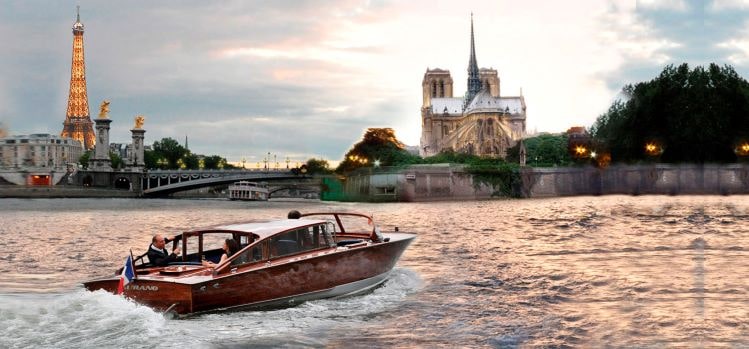
A private Seine moment is especially useful for celebrations, first visits and groups with older parents because it allows the guide to hold the city together while attention relaxes. The river can connect the Louvre, Orsay, the Eiffel Tower sightline, the bridges and the island spine without making the group walk every connection. For families considering a boat component, private Seine cruise planning should be placed after the museum or as the late-afternoon bridge to the hotel break, not scattered into the day because “we should do a cruise sometime.”
Weather changes the river decision. In heat, the Seine may be the moment that keeps the day breathable, but exposed quays and bridges can still be tiring. In rain, the river can remain useful if the boarding, drop-off and covered options are planned realistically; otherwise, it becomes a damp transfer with a prettier name. In cold or windy weather, the shorter river moment often beats the longer one. The goal is not to prove endurance; it is to change the day’s texture before the family starts splitting emotionally while still walking together.
4. Protect the hotel break where the return leg is easiest
The hotel break belongs where the group can actually take it, not where the map looks symmetrical. For three generations, the most elegant day is often the one that admits the hotel is part of the sightseeing plan. A quiet return, clean bathroom, shoe change, medication pause, child nap, or thirty minutes without decisions can save the evening more reliably than another famous stop.
The strongest break is usually after the Seine, before dinner or an evening stroll. If the hotel is on the Left Bank near Saint-Germain, an Orsay or Rodin-led day may return with minimal emotional drag. If the hotel is in the 8th, an Eiffel-and-Seine arc can work well, especially if the family avoids a late push deep into the Marais or Montmartre. If the hotel is in Le Marais, the Louvre may route more naturally than the Eiffel area, but the river segment needs to be placed carefully so the return is not just one more crossing after everyone has mentally finished.
This is why hotel choice and day design cannot be separated. A first-time family may choose a beautiful address for romance, shopping or palace-hotel polish, then discover that the multigenerational day needs a different geography. The question is not whether the Left Bank, Le Marais or the 8th is “best” in the abstract. The question is which base gives this family the easiest retreat after its one museum and river moment. For a broader base-choice frame, where to stay in Paris for a luxury first visit helps connect neighborhood appeal to touring consequences.
The return leg should be planned honestly. Do not assume the Metro is the sophisticated answer for a mixed-age group with a stroller, a cane, formal dinner clothes or post-museum fatigue. Do not assume a chauffeur removes every inconvenience either; some central Paris drop-offs still require short walks, traffic can blunt the advantage, and museum interiors remain interior. The best choice is the one that reduces negotiation. Sometimes that is a taxi from the river. Sometimes it is a chauffeured transfer after the museum. Sometimes it is choosing Orsay over the Louvre because the route back to the hotel is simply kinder.
Families often resist the hotel break because it sounds like losing Paris time. In practice, it protects the version of Paris they came for. Without it, dinner becomes earlier, shorter or quieter than planned. Children become less curious, teenagers become harder to impress, and grandparents conserve energy by opting out of conversation. A protected break lets the evening remain social. It is the difference between ending the day as one family and ending it as three age groups politely managing their own fatigue.
5. Let age bands decide what gets cut first
The first cut should be the stop that least improves shared attention. For multigenerational Paris, that is usually the second icon, the second museum, or the tower interior when the family already has the Eiffel view. Cutting meals, rests and transfers first is false economy because those are the elements that let different ages stay together.
With children under seven, the day should be built around short interpretive bursts, visible rewards and a protected nap or quiet window. The Louvre can work only as a very selective experience; Rodin or a compact Orsay route often gives the adults more pleasure because the child is not collapsing in the middle of it. Stroller planning needs caveats: Paris can be manageable with a stroller, but river quays, older Metro connections, security checks, narrow pavements and crowded crossings can make “short” feel complicated. A private guide should help choose where the stroller is an asset and where a car or simpler route is the better call.
With children roughly eight to twelve, the group can handle a stronger story arc. This is the age when the Louvre can become a treasure route rather than an adult museum, Orsay can become a light-and-color story, and the Eiffel view can become engineering rather than scenery. The danger is overconfidence. Because this age can rally, adults often add too much. The consequence appears later: the child who seemed fine at the museum becomes impossible at dinner because the day spent all its patience before the evening began.
Teenagers need agency without being handed the whole itinerary. Paris works better when teens are given a reason to notice: a bridge photograph, a fashion or cinema reference, a sharper historical story, a café pause that feels adult, or a museum route that does not condescend. What fails is a day that treats teenagers as older children while asking grandparents to pretend they enjoy teen pacing. If teen priorities are strong, such as Le Marais shopping, photography, football culture, or a food-focused afternoon, that may be the signal to split after the shared morning.
Older parents and grandparents need a plan that respects standing fatigue more than walking distance. A slow museum route with seating opportunities can be easier than a stop-start outdoor route with no clear rest. A short transfer can be better than a “pleasant” walk if the pleasant walk includes crossings, crowds and no graceful exit. Avoid making grandparents the reason the group slows down; build the slower gear into the day so nobody has to ask for it.
The firm do-not-stack judgment is this: do not combine the Eiffel Tower interior, the Louvre, Notre-Dame exterior, Montmartre and a Seine cruise in one three-generation day. It may look like a greatest-hits plan, but it asks the family to change neighborhoods, attention modes and physical rhythms too many times. The result is not a richer Paris day; it is a day where each person privately chooses which part to endure for someone else.
What higher-touch planning can change, and what it cannot rescue
Premium planning changes the day when it reduces decision friction, keeps the guide’s attention on the whole family, and places movement before fatigue becomes visible. It does not change the fact that three generations have different bodies and different boredom thresholds. The best private day is not a luxury version of a mass checklist; it is a narrower day with better judgment.
A private guide can make the museum shorter without making it thin. They can translate one object several ways, slow the group before anyone feels embarrassed, skip a gallery that would dilute the route, and move a family from the Eiffel area to the museum with context rather than silence. A chauffeur or carefully arranged transfer can help when the day crosses from the Eiffel area to the Louvre, from Rodin to the river, or from the Seine back to a hotel. Timed planning can also reduce the number of moments when the family is standing around asking what happens next.
Premium spend does not help when the itinerary is built on too many major stops. Private touring cannot make a five-stop mixed-age day effortless. Paying more may improve guiding, privacy, comfort and the quality of transitions, but it cannot make a toddler need less sleep, a grandparent enjoy more standing, or a teenager care about a second museum after the first one has already used their attention.
The value judgment is therefore sharp: spend on the guide, the route design and the transfer moments that protect the shared day; do not spend to preserve an overpacked list. A costly car waiting outside every stop is less useful than choosing the right stop order in the first place. A private guide inside one museum is more useful than unguided attempts at two. A well-placed river reset is more useful than another famous façade seen when everyone is already too tired to remember it.
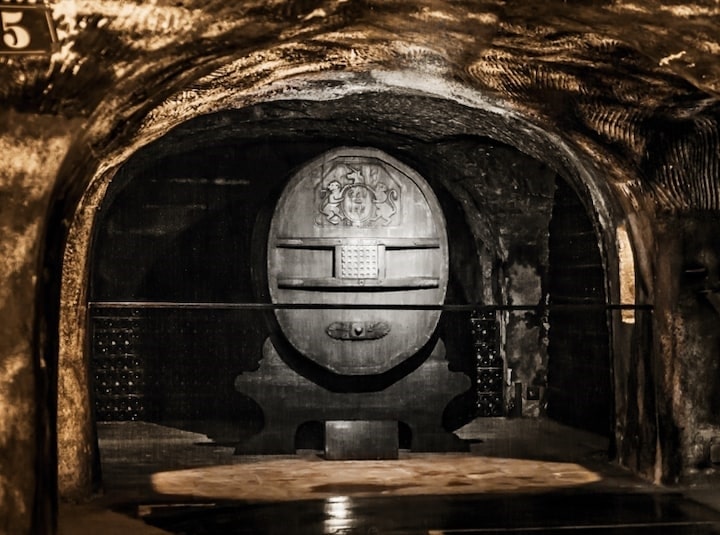
This principle also applies to day trips. Champagne belongs as its own day when it matters, not as a prestige label attached to an already full Paris day. If wine cellars are a real family priority, review Champagne Taittinger visits in Reims (https://www.taittinger.com/en/visits-reims) and plan Champagne separately, with cellar time and the return protected. Orange Donut Tours covers that decision in when a Champagne day earns its place. For this Paris day, keep the city intact: Eiffel view, one museum, Seine, hotel break.
When the group should split for one afternoon
The group should split for one afternoon when staying together would make each generation experience a smaller version of Paris. This is the exception that protects the larger trip. A split is especially sensible after the shared Eiffel view and museum have already given the family a common memory; from there, different ages can pursue different Paris moods without making the day feel like a compromise.
Split when toddlers need a real hotel nap and everyone knows a stroller doze will not be enough. Split when teenagers are resisting the museum-and-river rhythm because they want Le Marais, shopping, photography or a food stop that would bore younger siblings. Split when grandparents would prefer Rodin, a quiet Left Bank pause or a palace-lobby reset while the middle generation wants a more active neighborhood walk. Split when a celebration trip has one subset of the family preparing for a special dinner while another subset wants one last river or garden hour.
The split should not happen at the beginning unless the family truly has no shared priority. Start together with the Eiffel view if this is a first Paris visit; that shared opening makes the later split feel chosen rather than fractured. The best split point is often after lunch, after the museum, or after the Seine, depending on who is fading first. Reunite at the hotel, not at another attraction. A hotel reunion removes the pressure to synchronize arrivals on a sidewalk, in a crowd, or at a dinner reservation.
For private touring, the split can be designed with one main guide and a lighter secondary plan, or with one group guided and the other transferred back to the hotel. The point is not to make everyone do more. It is to prevent the itinerary from becoming a negotiation in public. Three generations do not need to share every hour to share the day well.
A workable no-split-energy sequence
A strong sequence starts with the shared visual reward, moves to one cultural anchor, changes medium on the Seine, then returns to the hotel before the evening has to carry the whole day’s fatigue. The details shift by hotel location and museum choice, but the structure should remain disciplined.
- Opening: Eiffel view from a practical vantage point such as Trocadéro, Pont d’Iéna or the Champ de Mars edge. Decide in advance whether the tower interior is part of the day or whether the view is enough.
- Late morning cultural anchor: Louvre, Musée d’Orsay or Rodin, chosen by attention overlap and physical tolerance. Keep the route focused enough that the youngest and oldest travelers still have something to give afterward.
- Lunch or seated pause: Keep it close to the museum or river direction. A long detour for a “better” lunch can cost more energy than it returns.
- Afternoon river shift: Use the Seine to change pace after the museum. This is the moment for views, bridges and orientation, not another dense historical lecture.
- Hotel return: Go back before the group is fully spent. The return should feel built into the day, not like a concession to whoever faded first.
- Evening: Choose one low-resistance plan: dinner near the hotel, a short illuminated drive, or a small neighborhood walk. Do not rebuild the itinerary from scratch after the break.
The lunch decision is often where otherwise good plans lose their shape. A special restaurant can be worth it when it sits naturally between the museum and river, or when the day is intentionally food-and-wine led. It is not worth it when it forces another cross-town hop between a museum and the Seine. With three generations, lunch is not only cuisine; it is seating, bathrooms, timing, noise, menu flexibility and whether the group can restart without feeling dragged.
The evening should be deliberately modest. A short Seine-adjacent dinner, a Left Bank walk, an easy Right Bank return, or a calm hotel-area meal will often feel more luxurious than chasing one more famous view. Paris rewards people who leave a little appetite for the next day. When a family finishes this route still speaking to each other with curiosity, the plan has done its job.
How a private guide keeps one day from becoming three parallel trips
A private guide earns their place when they keep the family’s attention braided while the route protects energy. That means knowing when to tell the child-sized version of a story, when to give teenagers a sharper angle, when to let grandparents set the walking pace without announcing it, and when to move before the group has to ask. The guide is not there to force equal enthusiasm. The guide is there to keep the day from splitting into private disappointments.
For short stays, the optimization is not to add more Paris. It is to choose which Paris appears while everyone is still receptive. The Eiffel view gives the group a common beginning, the museum gives the day its cultural spine, the river lets attention breathe, and the hotel break protects the evening. To shape that into a private, tailor-made Paris day for grandparents, parents and children, Inquire now.
FAQ
Can three generations do the Eiffel Tower, one museum and the Seine in one Paris day?
Yes, three generations can do an Eiffel view, one museum and the Seine in one day if the plan treats them as a sequence rather than separate checklist items. The safest shape is Eiffel view first, one curated museum, Seine afterward, then a hotel break before dinner.
Should a multigenerational family go up the Eiffel Tower or just see the view?
Many families should start with the Eiffel view and only go up the tower if the ascent is the day’s emotional priority. For mixed ages, the ground-level view can deliver the shared Paris moment while preserving energy for the museum and river.
Which Paris museum is best for grandparents, parents and children together?
The Louvre is best for a grand first-time museum memory if the route is tightly guided, Musée d’Orsay is often the best balance of art and manageable flow, and Rodin is best when gardens, beauty and lower fatigue matter more than seeing a vast collection.
When should the Seine cruise or river time happen?
The Seine works best after one cultural anchor, usually after the Louvre, Musée d’Orsay or Rodin. At that point it changes the day’s posture, gives the group visual continuity, and helps prevent museum fatigue from controlling the afternoon.
Where should we place the hotel break in a three-generation Paris day?
Place the hotel break after the Seine and before dinner whenever possible. The exact return depends on the hotel base, but the break should be close enough and easy enough that nobody has to argue for it once fatigue appears.
What should we cut first if the day is too full?
Cut the second icon, the second museum or the tower interior first; do not cut the hotel break, lunch pause or sensible transfer first. Those support elements are what allow grandparents, parents and children to stay together pleasantly.
When should a family split up for one afternoon in Paris?
A family should split for one afternoon when toddlers need a real nap, teenagers have a strong separate priority, or grandparents would enjoy a quieter route while others want a more active one. The best split usually happens after a shared Eiffel view and one common cultural anchor.
Can a private guide make a Louvre visit work for children and older parents?
A private guide can make the Louvre work by narrowing the route, translating stories across ages, and moving before fatigue takes over. A guide cannot make an overlong Louvre visit comfortable if the family also expects multiple major stops afterward.
If you’re interested in any private tours of Paris, please reach out to us.



 So if you are looking for the absolute best in Paris & surroundings with authentic local fully-licensed native guides whose English you can actually understand and with an exclusive and amazingly fun itinerary













