Where to Stay in Paris for a Luxury First Visit: Left Bank, Le Marais or the 8th Arrondissement?

Updated
Where to stay in Paris for first-time luxury travelers: the deciding lens
For a first luxury stay in Paris, I would book the Left Bank, and more specifically the north side of Place Saint-Sulpice, before I booked Le Marais or most of the 8th Arrondissement. That recommendation wins in real city conditions because Paris is rarely lost on headline sights and often lost on the last half hour: the return after dinner, the extra bridge crossing after river time, the slightly awkward ride back after a museum day that ended on the wrong bank. A hotel near Saint-Sulpice and the Saint-Germain streets below it keeps those endings smoother. The clearest exception is a short, arrival-heavy stay built around polished hotel service, couture shopping, and chauffeur use; then the 8th, especially the triangle around Madeleine and Rue du Faubourg Saint-Honore, can be the smarter landing pad.
In Paris, the winning base is not the one that looks most prestigious on a map. It is the one that lets the trip move in clean lines from morning to midnight. For a first-time visitor, three questions matter more than brochure language: where dinner will actually happen, how easy the walk back feels after river time or a late reservation, and whether museum, monument, and chauffeur starts begin with calm or with a reset. That is why this guide ranks the neighborhoods by day flow rather than by beauty alone. Le Marais can be enchanting, the 8th can be exquisitely serviced, and the Left Bank still comes out ahead because it handles more versions of a first Paris trip with fewer awkward transitions.
There is also a correction worth making early: the prestige-heavy 8th Arrondissement is less practical than its reputation suggests for this exact trip shape. Paying more for a glamorous address in the 8th does not materially shorten museum or monument days. Very often, it buys polish, bigger-room odds, stronger doormen, and a cleaner arrival experience, not a shorter sightseeing day. The Left Bank recommendation also needs precision. The Left Bank is not one uniform answer. The north side of Place Saint-Sulpice behaves very differently from a grand address deep in the 7th near Ecole Militaire or an eastern Latin Quarter hotel near busy student streets.
If your first full day includes a private orientation such as Best of Paris, that distinction becomes obvious fast. Starting from a hotel that lets you cross the Seine once, fall into Saint-Germain easily at night, and keep the route feeling continuous is not a small luxury in Paris; it is the difference between a city that feels stitched together and one that feels like separate episodes.
Match your sleep style, not the postcard map
The fastest way to choose among the Left Bank, Le Marais, and the 8th Arrondissement is to ignore the postcard version of Paris and define the trip by sleep style. Some travelers want the city to close softly around them after dinner, with a short walk through elegant streets and maybe one last look at the river. Others want a stately hotel arrival, larger rooms, shopping within a few blocks, and staff that can make a late landing feel almost effortless. A third group wants neighborhood intensity: wine bars, boutique energy, older streets, and the sensation that Paris begins right outside the door. All three are valid. They just do not point to the same base.
For most first luxury visits, the ranking is straightforward once those preferences are honest. The Left Bank wins the broadest range of first-trip plans because it balances both banks better than people expect. The 8th Arrondissement comes second because it lands beautifully and can be excellent for a short, polished stay, but its famed addresses are often paying for sheen more than for touring efficiency. Le Marais comes third not because it lacks charm, but because many first-timers overvalue atmosphere and undervalue what repeated westward drifts, old-street pickups, and late cross-city returns feel like by the third night.
Winner for the classic first luxury trip: the Left Bank, especially the north side of Place Saint-Sulpice and nearby Saint-Germain blocks, for travelers who want dinners on either bank, museum mornings that start cleanly, and evenings that end without friction.
Runner-up for short, polished stays: the 8th Arrondissement, especially the triangle around Madeleine and Rue du Faubourg Saint-Honore, for travelers who care about arrival handling, larger-room odds, shopping, and frequent chauffeur use more than neighborhood atmosphere.
Mismatch for many first luxury stays: Le Marais, unless your Paris is built around right-bank dining, boutique energy, and intimate streets, and you accept that some classic first-timer days will begin or end with more effort than the map suggests.
The best micro-location in this guide: not the Left Bank in the abstract, but the north side of Place Saint-Sulpice, because it changes both early museum starts and post-dinner walks in a way that broad arrondissement labels hide.
Why the Left Bank wins most first luxury visits
The Left Bank wins because it makes Paris feel easier at exactly the moments when first-time visitors are most likely to feel drag. From the north side of Place Saint-Sulpice, you are not trapped in a postcard bubble and you are not stranded in a purely residential pocket. You are sitting in a part of the 6th that can absorb Saint-Germain dinners, a river stroll, a quick crossing to Right Bank museums, and a civilized return without turning every night into transport arithmetic. That is a rare combination in Paris. Plenty of neighborhoods do one or two of those things well. Fewer do all of them well.
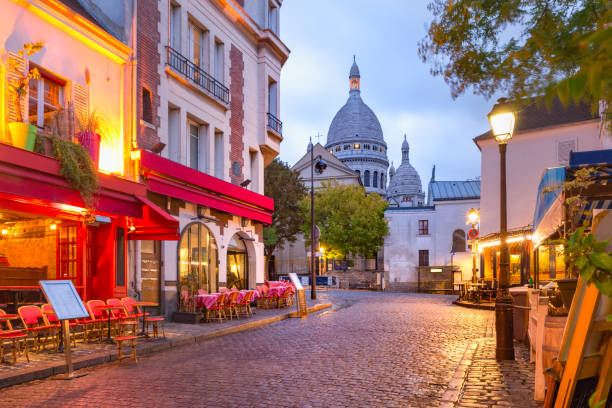
The reason this micro-location matters is not abstract atmosphere. It is route behavior. From Place Saint-Sulpice, rue Bonaparte runs you naturally toward the Seine. Pont des Arts, Pont Neuf, and the Louvre side of the river all feel accessible without needing to live directly beside them. After dinner in Saint-Germain, you are often walking home in minutes rather than thinking about one more ride. After time on the river, you can usually finish the evening with a simple crossing and a neighborhood that still feels alive but not punishing. That keeps the city feeling elegant rather than effortful, which is exactly what a first upscale trip should do.
This is also where the guide has to be stricter than the phrase stay on the Left Bank allows. A hotel deep in the 7th near Invalides or Ecole Militaire is not the same answer. Those addresses can be beautiful, quiet, and highly polished, but they tilt the trip toward car dependence in the evening and can thin out the dinner options you reach on foot. An eastern Latin Quarter hotel is not the same answer either; it may put you amid lively streets, but it can feel noisier, younger, and less composed than many comfort-first travelers want. The useful Left Bank answer is not all of the Left Bank. It is the compact zone that keeps Saint-Germain, the river, and early crossing logic working in your favor.
It also suits the widest range of travelers without anyone feeling they settled. Couples get the gentle late-night return that Paris does so well. Food-and-wine travelers can dine in Saint-Germain one night and cross north another without resenting the trip home. Families with older children or small groups can step into classic first-visit touring without feeling isolated in a formal hotel district. Celebration travelers still get service and glamour, just with more organic evenings. That is why the Left Bank is not merely the safest answer. It is the answer that keeps the trip feeling coherent from breakfast through the final walk back.
Why the 8th Arrondissement is polished, but overvalued for many first-timers
The 8th Arrondissement is the most persuasive alternative because it does several luxury things better than the Left Bank. Hotel service can be exceptionally smooth. Room stock tends to feel grander. Arrival nights land well. Shopping is easy to layer in without losing a day. If your hotel sits in the triangle around Madeleine and Rue du Faubourg Saint-Honore, you also have one of the cleanest car-based bases in central Paris. That zone can feel almost purpose-built for travelers who want Paris to open with discretion, order, and polish.
What it does not do, despite its reputation, is solve the geography of a classic first visit. Much of what first-timers actually do in Paris still pulls them south, east, or across the river: the Louvre, Orsay, Sainte-Chapelle, Notre-Dame, Saint-Germain dinners, river evenings, and any plan that wants the city to unfold on foot rather than by car between appointments. The 8th can certainly handle all of that. It just rarely handles it more gracefully than the right part of the Left Bank. When people say the 8th is central, they are often describing prestige and infrastructure, not the lived rhythm of a first trip.
This is where the premium-spend judgment matters. Paying more for a glamorous 8th address often changes your room, your lobby, your doorman, and your arrival impression. It often does not change how long you spend getting to museums, monuments, or Left Bank dinners once the trip is underway. That is the core reason I call it overvalued for this title. The 8th buys comfort of presentation and service more than it buys better touring flow. For some travelers, that is enough. For many first-time luxury visitors, it is not the highest-value use of the address budget.
The 8th becomes the right call under narrower conditions. Choose it when the stay is short, when arrival night really matters, when suites and traditional luxury service outrank neighborhood texture, or when fashion and shopping are genuinely central rather than incidental. It also works well when a chauffeur is in the plan often enough that arterial-road convenience begins to matter more than spontaneous walking home. What I would not do is choose it simply because it sounds grander. In Paris, grandeur on the hotel card does not always translate into a better-shaped day.
Why Le Marais is seductive, and why it can wear thin
Le Marais is the easiest neighborhood to fall for on paper because it promises exactly the kind of Paris many travelers imagine: intimate lanes, handsome facades, boutique hotels, great small-scale food, and evenings that feel locally lived rather than ceremonially staged. For certain travelers, that promise is real. If your happiest Paris night is built around wandering from wine bar to wine bar, lingering in right-bank streets, and returning to a compact, character-rich hotel rather than a formal palace rhythm, Le Marais can be thrilling.
The problem is that first luxury visits are rarely composed entirely of Le Marais-style days. They usually include museum mornings further west, river moments that end elsewhere, a mixture of banks at dinner, and at least one day where structure matters more than ambience. That is where Le Marais begins to ask more of you. A Place des Vosges after-dinner return is one of Paris’s loveliest finales when dinner happened nearby and you are already emotionally inside the neighborhood. The same Place des Vosges after-dinner return after Saint-Germain, a west-end tasting menu, or a late Seine evening can feel noticeably longer than it looks on a map. The distance is not huge. The accumulated effort is.
Le Marais also creates small forms of friction that comfort-first travelers notice more than they expect. Streets can be tighter for drop-offs and pickups. Boutique-hotel stock can mean less predictability in room size, lobby handling, and suite inventory. Older fabric and personality are part of the appeal, but they are not always what a first celebratory Paris trip needs after long sightseeing days. The more luggage, family logistics, or formal service expectations you add, the more Le Marais asks you to trade convenience for mood.
That trade can still be worth it for the right trip. It is especially strong for repeat visitors, design-minded travelers, or couples who want the neighborhood itself to be a central character. But many first-timers are better off giving Le Marais concentrated time rather than using it as base camp. That is why exploring it on a Le Marais private tour often makes more sense than sleeping there. You get the texture, the history, the streets, and the food without forcing the whole trip to inherit its structural inconveniences.
Arrival night versus full-day base tradeoffs
The 8th Arrondissement makes its strongest case on arrival night, while the Left Bank makes its strongest case once the trip settles into full days. That distinction is easy to miss when people shop for hotels mainly by star rating and neighborhood prestige. After a long-haul flight, the 8th can feel wonderfully forgiving: broad approaches, polished entries, better odds of generous rooms, and a district that absorbs late arrival better than older, finer-grained quarters. If your first evening is mostly about getting in gracefully, eating nearby, and sleeping well, the 8th can outperform the Left Bank.
By the second morning, the balance usually changes. Paris days are not just about how you start; they are about how you finish and how many times the plan breaks its own line. Over three or four nights, the first-arrival advantage becomes less important than whether dinners, river time, museums, and neighborhood wandering keep sending you back through the same awkward crossings. That is why I would still favor the Left Bank for the majority of first luxury trips longer than two nights. One elegant landing does not offset three evenings that end with more travel than they should.
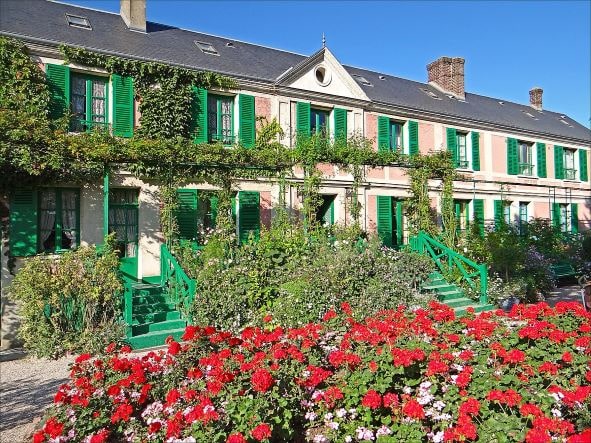
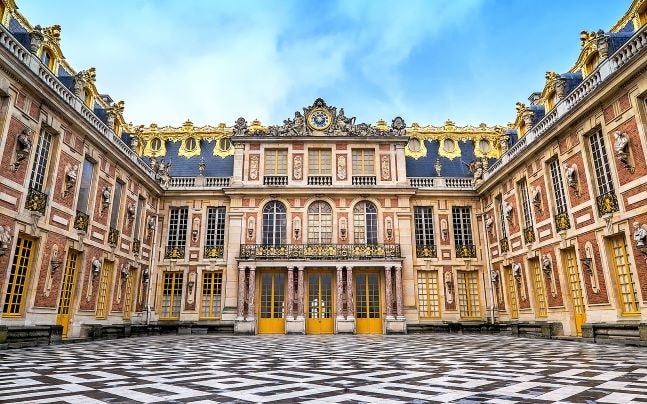
Day trips make people overthink this question. If Versailles or Giverny is fixed, travelers often assume they should sleep in the most road-convenient district and let the rest follow from that. In reality, one out-of-city day should not dictate every night of an urban stay. It is smarter to confirm logistics on the official Versailles planning page (https://en.chateauversailles.fr/plan-your-visit) or the official Monet Foundation page (https://fondation-monet.com/en/giverny-2/), then choose the base that improves the other city days as well. The day trip will consume itself no matter where you sleep; the real question is what the hotel does to the remaining mornings and evenings.
If you are still deciding whether those excursions belong in the trip at all, choose the outing first, then return to the hotel question. Hotel geography should answer the shape of the stay, not bully the stay into fitting the hotel.
Dinner geography, river time, and the walk back
Dinner geography is the hidden driver of this whole choice. First-time Paris travelers often plan monuments in detail and leave dinner to mood, but the opposite is frequently what determines whether a trip feels luxurious or merely expensive. A long, high-energy day can still end beautifully if the walk home is short and intuitive. A great dinner can feel slightly squandered if the last move is a bridge crossing, a search for a car, or a ride that pulls you out of the mood you just paid for. Paris reveals this truth more sharply than many cities because evenings are such a central part of why people come.
The Left Bank handles mixed dinner geography best. If you eat in Saint-Germain, you are simply home. If you dine on the Right Bank, you often have one clean river crossing and then calm streets. If the evening includes wandering along the Seine, the hotel remains close enough to feel like an extension of the walk rather than a separate journey. This is not a dramatic map advantage. It is a compounding comfort advantage. You feel it on night two, then you trust it by night three.
The 8th is most satisfying when your dinners are similarly weighted toward the 8th, the Golden Triangle, or other western Right Bank addresses. It is less satisfying if your Paris evenings lean toward Saint-Germain or if you want a casual ability to end a Right Bank museum day with a Left Bank dinner and still finish lightly. Le Marais is the most extreme in the other direction. It is wonderful for right-bank neighborhood dining close to home, but less forgiving when the night starts to roam. That is why a Place des Vosges after-dinner return can be magical one evening and burdensome the next; the base rewards local nights and taxes mixed-bank nights.
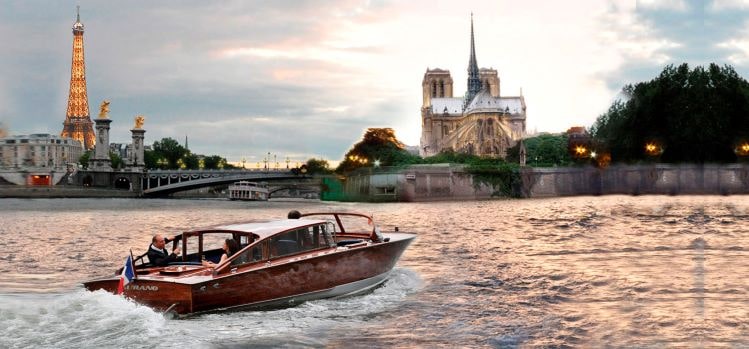
The same logic applies to river evenings. A Seine cruise is loveliest when the final move home feels like part of the same scene. The Left Bank often turns that into a stroll or a single, straightforward crossing. The 8th can still work well, especially if the evening is more formal and car-based. Le Marais tends to make the ending more diagonal. None of this ruins a trip. But travelers paying for a first Paris stay at a high level should expect the hotel location to support the night, not quietly flatten it.
How each base changes museum, monument, and chauffeur starts
Your hotel is not only where the evening ends. It also determines whether the day’s first fixed point feels direct or slightly clumsy. Paris rewards linear planning because timed entries, long museums, and major monuments create hidden anchors in the day. Once one or two appointments are set, hotel geography becomes more consequential than people expect. A good base lets the day flow outward. A weaker base makes you feel as if you are always repositioning before the interesting part begins.
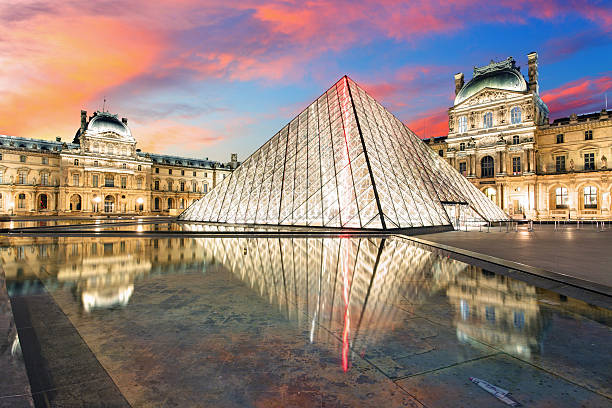
For classic museum mornings, the Left Bank again handles the widest range. A Louvre day often begins with one deliberate move north, not a series of warm-up transfers. Orsay sits on your side of the river. Saint-Germain lunches and a later Right Bank turn still feel logical. A Notre-Dame or Sainte-Chapelle day also reads cleanly from this side, especially if you want the Latin Quarter or Saint-Germain to absorb part of the afternoon. If the Louvre is a centerpiece, our curated Louvre day pairs naturally with a Left Bank stay because the hotel, the museum pacing, and the evening recovery all reinforce each other.
The 8th is cleanest on days that begin with shopping, western Right Bank sights, or a chauffeur pickup. It can also be excellent for a deliberately structured day in which the hotel functions almost like a service platform: breakfast, car, appointment, return, dinner, sleep. That is a legitimate luxury style, especially for couples celebrating or travelers who prefer protected transitions over spontaneous walking. What it does not do as elegantly is bridge a more mixed first-timer day that begins at a museum, crosses south for lunch or church visits, then ends with a neighborhood dinner that is not near the hotel. You feel the district’s strength most when the day is curated around its own western-central logic.
Le Marais changes the start logic in another way. For a right-bank culture day that stays nearby or moves west only gradually, it can be excellent. For the standard first-visit circuit, though, it is slightly east of where many fixed anchors pull you. That does not mean it is remote. It means it introduces more westward drift and more chances for the day to feel stretched rather than composed. It is often better for travelers who want to discover Paris through neighborhood intensity than for those who want to land the city’s major first-time sequence with minimum friction.
Chauffeur starts sharpen the contrast further. If you are planning frequent private-car departures, especially for full-day excursions or hotel-to-sight routing rather than long walks, the 8th and a well-located western-central Left Bank hotel behave more smoothly than Le Marais. The more your itinerary relies on a vehicle being exactly where you want it at exactly the right moment, the more old-street charm starts to lose its appeal as a base. This is not because Le Marais is impossible. It is because a tight street network and a more boutique hotel pattern add small bits of overhead that matter more when comfort and timing are the whole point.
That is the larger rule: the more walking and meandering define the trip, the more Le Marais gains ground. The more private guiding, timed museums, and formal dinners define the trip, the more the Left Bank and the right 8th micro-location pull ahead. First luxury visits usually include enough structure that the Left Bank remains the stronger compromise.
What Paris does to the body and the mood of the trip
Paris is not a city that usually defeats people with terrain. It wears people down through accumulation: long museum standing time, queue drag, a warm afternoon on stone quays, a dinner that runs properly late, and then one more crossing or one more ride when the body has already given you the day’s honest answer. This matters because affluent first-time travelers often buy comfort in the room and underbuy it on the map. By the third day, room size matters less than whether the city keeps asking for one final effort after everything that was already scheduled.
The Left Bank’s advantage is partly physical. It reduces the number of nights that end with a mental reset. You do not need to gear up for getting home. The 8th often keeps the body fresher at arrival and in the hotel itself, but not always in the city between appointments. Le Marais can feel wonderfully human-scaled while you are inside its streets and surprisingly demanding once the evening or the day requires you to reach beyond them. A Place des Vosges after-dinner return sounds romantic because it is. It just feels different after a nearby meal than after a long westward evening and a river crossing.
The mood consequence is equally important. Paris feels shorter, lighter, and more seductive when the last part of the evening is still Paris rather than logistics. A short walk home through Saint-Germain or back past Saint-Sulpice keeps the city emotionally open. A polished return to the 8th can feel stately, but sometimes slightly sealed off from the messier charm that makes a first visit memorable. Le Marais can feel intimate and thrilling, but also narrower if too many evenings start somewhere else. The right base changes not only how the body finishes the day, but what emotional tone the trip keeps at night.
What to cut first, and where premium spend does not help
If the trip is getting overpacked, cut the fantasy that the hotel must sit beside every postcard priority. That is the first thing to remove from the decision. On a first Paris trip, people often overpay to feel near the Eiffel Tower, or they choose an 8th address simply because it sounds like old-money Paris, or they force themselves into Le Marais because it seems more atmospheric. None of those impulses is automatically wrong. They are just weaker than the question of how the trip begins and ends each day.
This is also the place for the clearest premium-spend judgment. Premium spend absolutely helps when it buys room size, sound insulation, family interconnection, a better concierge, more reliable service, or smoother car handling. Premium spend does not help when it is spent on a glamorous address that leaves the daily geometry unchanged. Paying more in the 8th does not materially shorten sightseeing days if your museums, churches, river evenings, and dinners still keep pulling you south and east. Paying more on the far western Left Bank does not create Saint-Germain walk-back ease if you are simply too far from where the trip naturally ends.
I would also cut the idea of splitting hotels on a short first trip. A move from the Left Bank to Le Marais or the 8th may sound refined, but on a three- or four-night stay it usually steals focus and fractures the mood. Pick the base that serves the most evenings and the most structured mornings, then visit the other neighborhoods deeply instead of turning luggage into a daily planning tool.
Book the micro-location, not the arrondissement label
This decision is won at the block level, not the arrondissement level. If you choose the Left Bank, look hardest at the north side of Place Saint-Sulpice and the Saint-Germain blocks that pull toward rue Bonaparte and the Seine. That is the pocket where early crossings stay easy, dinners feel close, and the neighborhood still has life without asking you to sleep in noise. I would be more cautious about broad Left Bank labels that hide a hotel deep in the 7th or farther east in the Latin Quarter, because those addresses change the evening and morning logic more than booking pages admit.
If you choose the 8th Arrondissement, be selective inside it. The triangle around Madeleine and Rue du Faubourg Saint-Honore is the part that most clearly justifies the district’s reputation, because it combines service-heavy hotels, elegant streets, and cleaner arrival and pickup handling. Move too far west or too far north and the district can start to feel more like a formal platform than a lived base. It is still handsome. It is just less useful for the specific mix of museum, river, and neighborhood nights that defines a first Paris trip.
If you choose Le Marais, I would lean toward its southwestern side rather than a deeper eastern address if you know the classic first-timer circuit is still the trip’s spine. That choice will not turn Le Marais into the Left Bank, but it can soften the extra drag. The more your stay depends on large rooms, polished public spaces, straightforward car pickups, and very late returns, the more carefully you should examine whether Le Marais is the emotional choice rather than the practical one.
Once you know whether your Paris should end in Saint-Germain, Place des Vosges, or a hotel corridor with full-service calm, the rest of the trip gets easier to design. That is the moment to lock the base and then shape guides, dinners, and day trips around it instead of hoping one grand address can solve every version of Paris at once. If you want help matching your sleep style and dinner geography to touring days that actually flow, Inquire now
FAQ
Is the Left Bank or Le Marais better for a first Paris trip?
For a first luxury trip, the Left Bank is usually better because it handles a wider range of days and evenings with less friction. Le Marais can be more atmospheric and more intimate, but many first-timers discover that the trip itself is not made only of neighborhood wandering. Once you add museum mornings, one or two classic monument days, mixed-bank dinners, and river time, the Left Bank usually gives you the cleaner overall line. Le Marais is often the better neighborhood to visit deeply than to use as headquarters.
Is the 8th Arrondissement too far from the main sights?
No, but that is not the right question. The 8th Arrondissement is not too far to function well. The real issue is whether it helps enough to justify the premium many travelers pay there. For a short, arrival-heavy trip with strong hotel priorities, it can be excellent. For the classic first visit that mixes museums, river evenings, and Saint-Germain dinners, it is often less efficient than its reputation suggests. It is central in a polished, infrastructural sense more than in a day-flow sense.
Where on the Left Bank should I actually book?
The most useful answer in this guide is the north side of Place Saint-Sulpice and nearby Saint-Germain blocks that pull toward rue Bonaparte and the Seine. That is the zone where the Left Bank recommendation becomes practical rather than generic. I would be more cautious about assuming every 6th or 7th arrondissement address behaves the same way. A deep 7th address can be elegant but less flexible for dinners on foot. A farther-east Latin Quarter address can be lively but not as composed for a comfort-first stay.
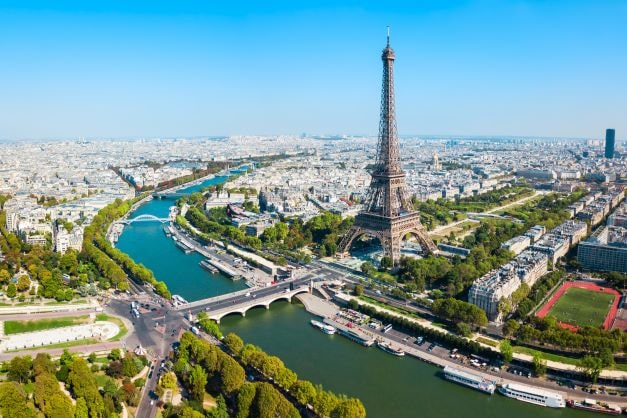
Should first-timers stay near the Eiffel Tower?
Usually not, unless the room view is itself one of the trip’s central goals. Being Eiffel-adjacent sounds efficient, but for many first visitors it over-prioritizes one postcard and under-prioritizes how the rest of Paris actually unfolds. The city’s best first trips are made of several neighborhoods and several kinds of evenings, not one monument. A well-chosen Left Bank hotel gives you easier access to more of the trip’s real rhythm. Sleeping by the tower can be visually special without being the strongest operational choice.
Is Le Marais a poor fit for families or older travelers?
Not automatically, but it is less forgiving when room size, pickup ease, and late-night returns matter. Families who need more generous rooms or smoother hotel handling often do better on the Left Bank or in the 8th. Older travelers can still love Le Marais, especially if the trip is neighborhood-led and not too dense. The issue is not age by itself. It is whether the stay benefits more from charm or from logistical softness. On a first luxury trip, softness often wins.
Which base works best if I know I want Versailles or Giverny?
One day trip should not dictate the entire stay. If Versailles or Giverny is fixed, I would still choose the base that makes the rest of Paris easier, which usually means the Left Bank unless your trip is especially short or chauffeur-heavy. The day trip itself will take the shape it takes wherever you sleep. The bigger planning question is what happens on the city days before and after it. If you are still weighing those options, our Paris day trips guide is the right companion piece.
Does a chauffeur make the hotel location less important?
It changes the equation, but it does not erase it. A chauffeur can make the 8th more attractive because the district’s road access and hotel style pair naturally with car-based days. It can also make a polished Left Bank stay feel even better. What it does not do is remove the value of an easy walk back after dinner or a neighborhood that still works on foot. If anything, travelers who use cars selectively often benefit most from the Left Bank, because it handles both the driven and the walkable parts of Paris gracefully.
Is it worth splitting a stay between the Left Bank and the 8th or Le Marais?
Usually no on a short first trip. Splitting can look sophisticated on paper, but in practice it introduces packing, check-out timing, and a subtle break in mood just when the trip should be feeling more settled. I would rather choose one strong base and use touring to reach the other neighborhoods properly. That approach also makes private planning cleaner, because dinners, museum days, and out-of-city departures can all be organized from one reliable home base rather than around a moving target.
If you’re interested in any private tours of Paris, please reach out to us.



 So if you are looking for the absolute best in Paris & surroundings with authentic local fully-licensed native guides whose English you can actually understand and with an exclusive and amazingly fun itinerary













