Paris After a Eurostar Arrival: Canal Saint-Martin, Montmartre or a Seine Reset?

Updated
Choose a Seine reset if your hotel is central and your room or luggage drop is settled; choose Canal Saint-Martin if you need a low-commitment first walk near Gare du Nord; save Montmartre unless your hotel is already on that side of town and everyone still has legs. That order works because Gare du Nord to hotel timing, bag handling, and check-in uncertainty usually decide whether the first Paris route should be scenic or restorative. The exception is a late, tired, or delayed arrival: then the right first Paris move is a hotel reset, not a neighborhood walk. In Paris after Eurostar, the best first move is not the prettiest one on a map; it is the one that avoids forcing a hill, a cross-city transfer, and a dinner deadline into the same first afternoon.
The non-obvious cue is the station edge itself. Gare du Nord sits close enough to Canal Saint-Martin to tempt a spontaneous walk, close enough to Montmartre to look easy, and far enough from many palace and Left Bank hotels that the transfer can quietly eat the first usable hour. Eurostar’s own Paris Gare du Nord station information (https://www.eurostar.com/rw-en/travel-info/your-trip/stations/paris-gare-du-nord) is worth checking before travel for operational details, but the editorial decision is simpler: once you have stepped off the train, you should choose by luggage, slope, hotel base, and evening plans, not by what sounds most Parisian.
The rail-arrival ladder: easiest first, most demanding last
The best post-Eurostar plan is a priority ladder, not a sightseeing contest. The choices in the title are all good Paris experiences on the right day; the mistake is treating them as equal after a rail arrival. Arrival-day comfort depends on how many transitions the plan creates before dinner: station exit, luggage decision, hotel handoff, first walk, refresh, and evening return.
First priority: a Seine reset from a central hotel. Choose this when your hotel is in the 1st, 6th, 7th, 8th, near the Louvre, Saint-Germain, or along a Right Bank palace corridor. It gives first-time travelers an immediate sense of Paris without requiring a steep climb or a deep neighborhood commitment.
Second priority: Canal Saint-Martin as the near-station soft landing. Choose this when you arrive before check-in, your hotel is around the 10th, 11th, République, or upper Marais, or you need a walk that can end quickly if the group fades.
Third priority: Montmartre only with a narrow green light. Choose it when your hotel is in South Pigalle, the 9th, or the 18th, bags are already handled, and the group actively wants a hill village rather than a gentle first view of the city.
Emergency priority: the hotel reset. Choose it when the train was late, lunch slipped, kids are overstimulated, older parents are tired, or your dinner matters more than proving you used every hour.
- Best default: Seine reset after luggage drop, especially for first-time visitors and celebration travelers.
- Best near-station runner-up: Canal Saint-Martin when the day is useful but not yet fully unpacked.
- Most overvalued arrival move: Montmartre straight from Gare du Nord, because map proximity hides the hill and the energy cost.
- First thing to cut: any plan that tries to combine Canal Saint-Martin, Montmartre, and the Seine before dinner.
Start with luggage and check-in before you choose a first walk
Luggage is the planning hinge after Eurostar because it decides whether Paris feels open or abrasive. A carry-on and one tote can make a short canal walk realistic; several rolling bags, garment bags, children’s backpacks, or camera cases can turn even a handsome route into a negotiation with curbs, station exits, hotel lobbies, and tired hands. This is where travelers coming from London often misread the day. A rail arrival feels easier than an overnight flight, so they assume the first afternoon can carry more. In reality, the comfort problem has changed rather than disappeared: you are less jet-lagged, but you are more exposed to immediate city logistics.
If your room is ready, the first move becomes easier: go to the hotel, change shoes, refresh, and choose either a short Seine route or a single neighborhood. If your room is not ready but the hotel will hold bags, the day can still work, provided the first route begins near the hotel rather than back at the station. If neither is settled, do not over-romanticize the station-to-stroll idea. Gare du Nord is a major transport edge, not a graceful antechamber to Paris, and Boulevard de Magenta is useful rather than soothing. The first destination should solve the waiting period, not add a second problem.
For families, the difference is visible within fifteen minutes. Children who were fine on the train often fray during the station exit, bathroom decision, taxi queue, and hotel handoff. Older parents may not say they are tired until they have already climbed too far. Couples on a celebration trip may be willing to push, then discover that the first cocktail or dinner is flatter because the afternoon was spent managing tiny frictions. Private planning helps most here when it turns the arrival into one coherent handoff: train, bags, hotel, a short first route, and a clean return. That is the natural place to consider ODT’s arrival-day support, even when the issue is rail rather than air, because the value is in removing the check-in gap rather than in adding another sight.
This is also the point where a private guide earns more than a driver alone. A driver can simplify the station-to-hotel piece, and that may be enough if the only problem is luggage. A guide changes the judgment once the bags are gone: which bridge gives the right first view, whether the group has enough energy for a second stop, whether to shorten the canal loop, and when to return before dinner. The upgrade is not about seeing more. It is about ending the first afternoon with Paris feeling manageable rather than already overfilled.
When Canal Saint-Martin is enough after Gare du Nord
Canal Saint-Martin is enough when you need a first Paris hour that is close, local-feeling, and easy to abandon if check-in, weather, or energy changes. It is not the grandest opening scene in Paris, which is precisely why it works for some rail-arrival travelers. From Gare du Nord, the canal sits in the practical 10th arrondissement orbit: close enough to serve a waiting period, but distinct enough from the station to feel like the trip has begun.
The useful canal route is not a full neighborhood guide. Keep it simple: drift toward Quai de Valmy or Quai de Jemmapes, use the footbridges and locks as rhythm rather than targets, and resist turning the walk into a long march toward every café, boutique, and side street. The official Paris tourism office frames Canal Saint-Martin (https://parisjetaime.com/eng/transport/canal-saint-martin-p1960) as a public, open-access Paris place, and that is the point for arrival day: it does not ask for a ticket window, a timed entry, or a grand interpretive effort when your brain is still sorting luggage and dinner.
Choose Canal Saint-Martin if your hotel is near the 10th, République, the upper Marais, or the 11th; if you arrive in the early afternoon before your room is ready; or if you want a soft first walk before a serious evening meal. The route suits repeat visitors especially well because it does not have to perform as a first Paris monument. It can simply provide water, trees, neighborhood movement, and enough texture to separate the train from the hotel.
The consequence is a calmer body but a smaller emotional payoff. Canal Saint-Martin will not give most first-time visitors the “we are in Paris” moment as strongly as Pont Neuf, the Louvre façades, or the Seine islands. If someone in the group has waited years for a first view of Paris, do not spend the whole arrival window on the canal just because it is close to the station. Use it when closeness is the point, not when you are trying to make a grand promise on a short fuse.
The best canal plan ends before it becomes a neighborhood project. Walk one good stretch, pause if the group wants a drink, and return to the hotel with margin. If the route starts expanding toward République, the Marais, and dinner in another district, you have already lost the arrival-day advantage. Canal Saint-Martin works because it is contained. The moment it becomes a pre-dinner cross-city sampler, the plan starts behaving like the overpacked first day you were trying to avoid.
How a Seine reset works from central hotels
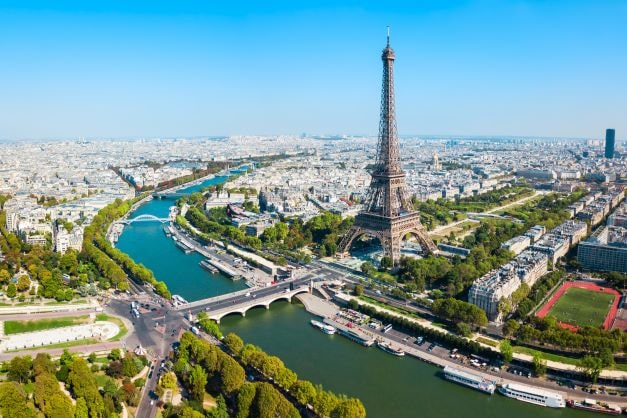
A Seine reset works best after a central luggage drop because it lets Paris orient you without demanding much from your legs. This is the strongest default for first-time travelers, couples, three-generation families, and comfort-first visitors staying around the Louvre, Saint-Germain, the 7th, the 8th, or a Right Bank palace zone. The river turns the first afternoon into a sequence of recognizable edges: bridge, island, façade, open sky, and return.
The simplest version is a guided walk along a short section rather than a heroic route. From a Louvre or 1st arrondissement base, Pont des Arts, Pont Neuf, the Cour Carrée edge, and the western tip of Île de la Cité can make the city legible quickly. From Saint-Germain, the route can stay closer to the Left Bank and cross only once if the group is already feeling the day. From the 7th or 8th, you can use a short transfer to the river and avoid turning the first afternoon into a zigzag through traffic and museum entrances.
What makes the Seine different from Canal Saint-Martin is not only scenery. It changes the mood of the arrival. The city feels open rather than tight; movement is linear rather than fussy; and the group can be seated quickly if you choose a river cruise. For a celebration traveler, that matters. The first evening often carries an emotional load: a birthday dinner, anniversary toast, reunion meal, or first Paris night after London. The river helps the day feel complete without using the energy that dinner needs.
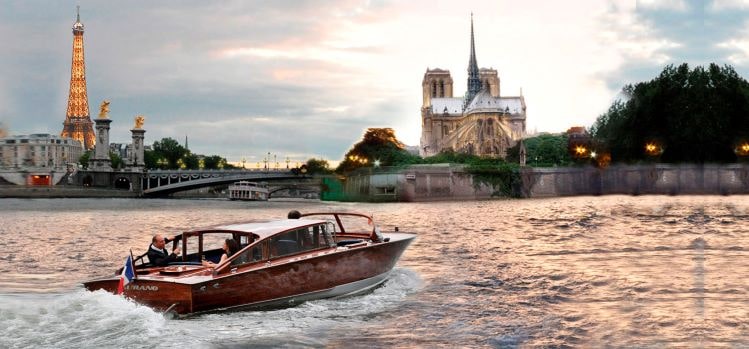
The river is also where a private plan can be elegant without being elaborate. A short walk can connect context to comfort: why the Right Bank and Left Bank feel different, why the islands make Paris easier to read, why the Louvre’s riverside edge should not automatically mean entering the museum on arrival day. If a boat belongs in the plan, keep it as a reset rather than an obligation. ODT’s private Seine cruise option can be a good fit for couples, families, or small groups when being seated, sheltered, and oriented matters more than covering extra ground.
The Seine is not perfect for every arrival. If your hotel is near Gare du Nord, République, or Canal Saint-Martin and you do not have a central dinner, forcing the river may create the exact cross-city drag you were trying to avoid. A car can help the transfer, but it cannot make a short stay feel calmer if you spend the first afternoon shuttling from station to hotel to river to dinner in four different zones. The Seine wins when it is naturally on the way, near the hotel, or clearly worth a single purposeful transfer.
For travelers comparing this with a broader first-day strategy, the nearest ODT overlap is the long-haul version: how to spend the first day in Paris after an overnight flight. This Eurostar plan should feel different. You are not mainly recovering from jet lag; you are managing a rail arrival, a room-readiness question, and the temptation to treat station proximity as an invitation to do too much.
When Montmartre is too ambitious after Eurostar
Montmartre is too ambitious after Eurostar when it is chosen because it looks close to Gare du Nord rather than because the group is genuinely ready for a hill. This is the most common planning trap in the title. On a map, the Gare du Nord to Montmartre decision looks efficient. In the body, it can feel punishing: station exit, luggage decision, transfer or walk, rising streets, viewpoint crowds, uneven pacing, and then a return before dinner.
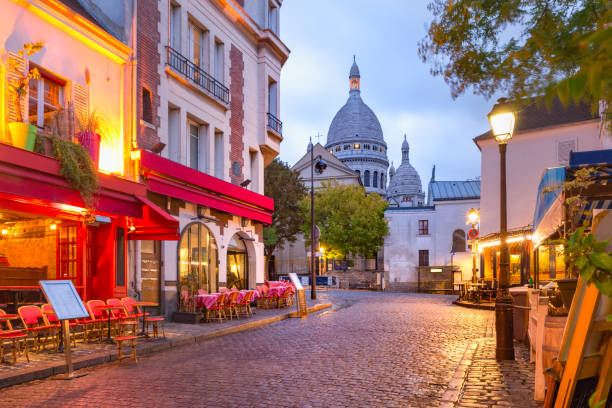
The hill is not a minor detail. Montmartre’s charm depends on slope, village turns, stair logic, and the sense of being above the city. Those are wonderful conditions for a focused morning or a well-paced private half-day, but they are less forgiving after rail travel. Rue Lepic, Abbesses, the lanes around Place du Tertre, and the climb toward Sacré-Cœur reward curiosity when the group is fresh. When the group is carrying arrival-day friction, the same features become drag. A charming half-day can feel punishing if the hill is placed too soon.
A car cannot make Montmartre feel light if the traveler is tired and carrying arrival-day friction. That sentence matters because premium spend is often misapplied here. A driver can improve drop-off and reduce the ugliest transfer, but Montmartre still asks you to walk, climb, turn, and manage altitude in a way the Seine does not. Paying more changes the approach; it does not remove the hill.
Choose Montmartre after Eurostar only when three conditions are true. First, your hotel base supports it: South Pigalle, the 9th, the 18th, or a nearby Right Bank location where the return is not a second cross-city exercise. Second, your luggage is fully handled before the walk begins. Third, your evening is flexible enough that the route can breathe. If you have a fixed dinner across town, a family group with uneven energy, or an older parent who is quietly pacing themselves, Montmartre belongs tomorrow.
There is a better way to treat Montmartre if it matters to your trip. Give it its own slot, preferably with a guide who understands where the hill should start and where it should end. ODT’s Montmartre private tour makes more sense as a dedicated experience than as an improvised first-afternoon add-on. If you want a deeper comparison of village-style Paris neighborhoods, the existing ODT guide to Montmartre or Le Marais for a private half-day is the better read. This article’s narrower point is arrival-day sequencing: close does not mean light.
What Paris does to the body and the mood after the train
Paris makes small route errors physical. A short cross-city plan can add station stairs, rolling-bag awkwardness, uneven pavements, river crossings, traffic pauses, and the mental load of deciding whether to keep going. None of those details is dramatic on a normal day. Together, after a train and before check-in, they are the difference between a first afternoon that feels graceful and one that quietly drains the evening.
The body feels Paris through surfaces and transitions. Canal Saint-Martin gives relatively modest walking and can be cut short; the Seine gives open-air orientation and places to sit or cruise; Montmartre gives climbing and stop-start movement. A museum interior on arrival day adds a different kind of load: security, ticket timing, gallery density, and decision fatigue. Unless you have a specific reservation or a passionate art reason, do not make the Louvre or another major museum the default answer to a rail-arrival gap. Save that energy for a properly curated slot, especially if museum reservation pressure already shapes another day of the stay.
The mood consequence is just as important. A good first route makes Paris feel shorter, kinder, and more coherent. A bad first route makes the city feel like a set of errands before dinner. Canal Saint-Martin creates a local, low-stakes mood but may underwhelm a first-timer expecting the Seine. The river gives the clearest emotional arrival for most central stays. Montmartre can be magical, but if forced too early it shifts from romance to management: where to stand, where to climb, how to get back, who is fading, and whether dinner is now too soon.
The cut-first rule is firm: cut the third place before you cut the rest. Do not do Canal Saint-Martin, Montmartre, and the Seine on a Eurostar arrival day. Choose one primary reset and one clean return. If the trip is short and you feel pressure to “use” the first afternoon, remember that an elegant first day is often the one that leaves everyone wanting dinner rather than negotiating one more stop.
Choose by hotel base, not by the station alone
The right route after Eurostar depends more on your hotel base than on the station. Gare du Nord starts the problem, but the hotel solves it. Once bags are handled, the first walk should either sit near the hotel or deliberately use the river as a first orientation. The station should not keep pulling the day back toward itself.
If you are staying near Gare du Nord, the 10th, or République
Canal Saint-Martin is usually the cleanest first move. Keep it short, choose one canal stretch, and return before the area’s practical edges start to dominate the mood. This is not the moment to drift all the way into a Marais evening unless dinner and hotel logistics already point that way. A canal hour can be exactly enough; a canal-to-Marais-to-river chain is usually too much for a rail arrival.
If you are staying around the Louvre, the 1st, or a Right Bank palace zone
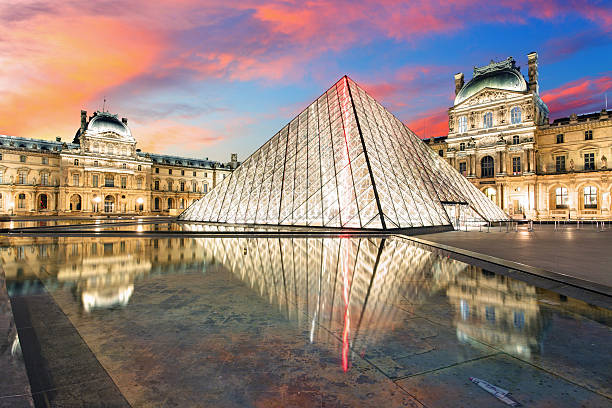
The Seine usually wins. Drop bags, refresh, and let the first route work along the river rather than through a major museum. The Louvre can be part of the visual context without becoming an entry. Pont Neuf, Pont des Arts, the Tuileries edge, and a short river orientation give first-time visitors a strong Paris beginning while keeping the evening intact.
If you are staying on the Left Bank or in Saint-Germain
The Seine still works, but the route should avoid unnecessary crossings. A short Left Bank river walk, one bridge, and a clean return will feel better than a Right Bank loop that tries to prove too much. Saint-Germain travelers are especially vulnerable to overfilling the first day because so much looks close: cafés, shops, the river, the islands, and museums. Choose one lane and leave the rest for a fresher morning.
If you are staying in the 9th, South Pigalle, or the 18th
Montmartre becomes more realistic, but not automatic. If the hotel is close, luggage is handled, and the group genuinely wants that village-on-a-hill mood, a restrained Montmartre route can work. The mistake is climbing to every famous point on the first afternoon. Start lower, avoid turning Place du Tertre into the whole plan, and let the guide decide whether the group has the energy to rise toward Sacré-Cœur or stay with the more intimate streets.
If you are staying in Le Marais
Choose between Canal Saint-Martin and the Seine based on check-in, not on taste alone. If the room is not ready and the group is already near the upper Marais or République, the canal may solve the waiting period elegantly. If bags are settled and dinner is central, the Seine gives the stronger first-Paris cue. Do not make the arrival day a shopping survey of Le Marais unless shopping is the actual purpose of the afternoon.
Where premium planning changes the day, and where it does not
Premium planning changes a Eurostar arrival when it reduces decisions at the exact moment travelers are least good at making them. It can coordinate station meeting, luggage, hotel timing, a short first route, a family-friendly pause, and a return that does not threaten dinner. It can also protect a special occasion by making the first afternoon feel intentional rather than improvised around a room that is not ready.
Where it does not earn its cost is equally important. Premium spend does not help when the real problem is an overambitious wish list. It cannot make three neighborhoods feel relaxed before dinner, it cannot remove Montmartre’s slope, and it cannot turn a late arrival into a full first day without consequences. The best use of higher-touch support is restraint with better execution: fewer places, cleaner transitions, and a guide who knows when to stop.
For Orange Donut Tours, the most useful arrival brief is not “show us Paris immediately.” It is more precise: “We arrive by Eurostar at Gare du Nord, our hotel is in this district, our room may or may not be ready, we have dinner at this time, and we want the first afternoon to feel like Paris without exhausting the group.” That is enough for a planner to decide whether the first move should be Canal Saint-Martin, a Seine reset, a restrained Montmartre route, or no walk at all.
For a tailor-made version of that handoff, with the first route shaped around luggage, hotel base, mobility, children, older parents, dinner, or a celebration setup, Inquire now. The best arrival support turns a rail landing into a gentle first route rather than a check-in gap, and it keeps the day from becoming a test of how much Paris can be squeezed into the hours before dinner.
The first-afternoon plan that protects the rest of the stay
The smartest Eurostar arrival plan leaves a clean runway for the days that follow. If you have Versailles, the Louvre, a food-and-wine day, or a Champagne excursion later in the itinerary, the first afternoon should not borrow energy from those larger pieces. This is especially true for multi-city travelers coming from London, continuing onward after Paris, or using the city as the elegant middle of a longer European trip.
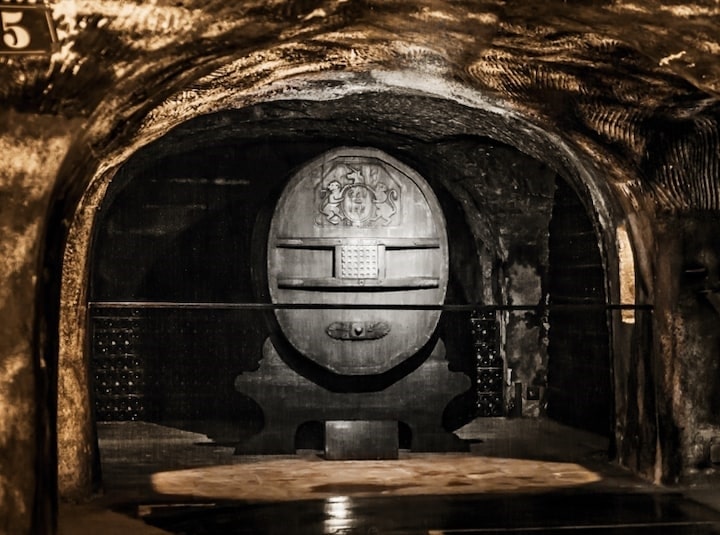
Think of the arrival day as a hinge, not a highlight reel. A Seine reset can introduce the city; Canal Saint-Martin can absorb an early check-in gap; Montmartre can wait for the moment when the hill will feel charming rather than strategic. The next day can carry the deeper agenda: museum depth, pastry, fashion, Versailles, or Champagne. If you are planning cellar visits, for example, Champagne Taittinger visits in Reims (https://www.taittinger.com/en/visits-reims) belong in a separate day with proper transfer logic, not in the mental clutter of the arrival afternoon. ODT’s guide to when a Champagne day earns its place in a Paris stay is the better place to make that decision.
The final judgment is simple but not generic: after Eurostar, the Seine is the default winner when your hotel is central and luggage is solved; Canal Saint-Martin is the practical runner-up when you need a near-station soft landing; Montmartre is the beautiful mistake unless the hotel base and energy level genuinely support the hill. When the train, room, or group energy has already used the day’s margin, the right answer is not a neighborhood at all. It is a hotel reset, a good dinner, and a fresher Paris tomorrow.
FAQ
What is the best thing to do after arriving in Paris by Eurostar?
The best default after arriving in Paris by Eurostar is to drop luggage at the hotel, then take a short Seine reset if your hotel is central. If your room is not ready and you are staying near the 10th, 11th, République, or upper Marais, Canal Saint-Martin is often the better low-commitment first walk.
Is Canal Saint-Martin a good first stop after Gare du Nord?
Yes, Canal Saint-Martin is a good first stop after Gare du Nord when you need a nearby, flexible walk before check-in. It is strongest for travelers staying near the station, République, the 10th, the 11th, or the upper Marais, and weaker for first-time visitors who want an immediate landmark-level Paris view.
Should we go to Montmartre straight after Eurostar?
Usually not. Montmartre looks close to Gare du Nord, but the hill, stairs, uneven pacing, and return logistics make it a demanding first move after a rail arrival. It works only when your hotel is nearby, your bags are handled, and everyone still has real energy.
How does luggage change the first Paris afternoon?
Luggage changes the day by limiting which routes feel graceful. If bags are not stored, keep the plan near the hotel or station and avoid ambitious neighborhood walks. If bags are stored and the room is ready, a short Seine route or one focused neighborhood becomes much easier.
Is a Seine cruise worth it on Eurostar arrival day?
A Seine cruise can be worth it on Eurostar arrival day when it functions as a seated, low-effort reset rather than a packed sightseeing obligation. It is especially useful for couples, families, older parents, and celebration travelers staying near the river or willing to make one clean transfer.
When is the hotel reset better than a neighborhood walk?
A hotel reset is better when the train arrived late, the room handoff took longer than expected, children or older parents are fading, or dinner is important. In those cases, forcing Canal Saint-Martin, Montmartre, or the Seine can weaken the evening instead of improving the day.
Can a private guide meet us after Eurostar at Gare du Nord?
Yes, a private guide can be planned around a Eurostar arrival, but the best version usually begins with luggage and hotel timing rather than immediate sightseeing. The guide’s value is in shaping the first route to the group’s energy, hotel base, dinner plans, and mobility needs.
What should we skip on a Eurostar arrival day in Paris?
Skip any plan that tries to combine Canal Saint-Martin, Montmartre, and the Seine before dinner. Also skip Montmartre if the group is tired, luggage is unresolved, or the hotel is far from the hill. Arrival day works best with one primary reset and a clean return.
If you’re interested in any private tours of Paris, please reach out to us.



 So if you are looking for the absolute best in Paris & surroundings with authentic local fully-licensed native guides whose English you can actually understand and with an exclusive and amazingly fun itinerary













