Montmartre or Le Marais for a Private Luxury Paris Half-Day? Choosing the Right Village-Style Reset

Updated
Choose Le Marais as the default private luxury Paris half-day when the goal is a village-style reset between major sights. It works because the Right Bank-to-Left Bank crossing logic matters: from a palace-hotel morning near the 8th, the Louvre, or the Seine, Le Marais gives layered streets, Jewish heritage, boutiques, and seated pauses without asking the group to climb for the mood. The clearest exception is an atmosphere-first couple or repeat visitor whose real wish is Montmartre’s hilltop art history and who can give the neighborhood a controlled start rather than squeezing it after a museum.
In Paris, the better “village” is not always the prettiest postcard; it is the one that lets the rest of the day keep its shape. Montmartre is more theatrical. Le Marais is easier to place. That distinction is not cosmetic when your half-day has to sit between a hotel pickup, a lunch reservation, a Seine plan, or an evening you do not want to spend recovering.
The non-obvious hinge is often Pont Marie, Pont Louis-Philippe, or the Hôtel de Ville edge, not the Sacré-Cœur dome. If your morning ends near the Louvre, Palais Royal, Place Vendôme, or a river route, Le Marais can be stitched into the day with one controlled Right Bank arc or one intentional river crossing. Montmartre usually asks for a northern transfer before the walk even begins.
Montmartre or Le Marais for a private luxury Paris half-day?
Le Marais wins the default slot because it is flatter, denser, and easier to combine with the rest of a high-end Paris day. It lets a guide build a satisfying route without relying on one famous view, one crowded square, or one steep push at the wrong time. Montmartre is the better choice only when the hilltop setting, artists’ mythology, and Sacré-Cœur approach are the reason for the half-day, not an add-on after something else.
Default village-style reset: Le Marais. Choose it for a calmer walking load, stronger route efficiency, Jewish heritage, private-context storytelling, boutiques, food texture, and a clean link to the Louvre, Notre-Dame area, the Seine, or a palace-hotel plan.
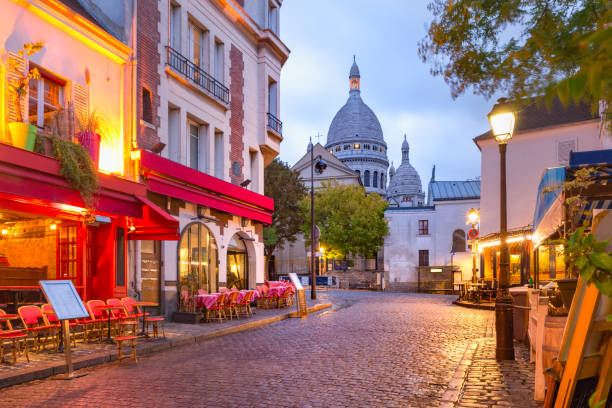
Atmosphere-first runner-up: Montmartre. Choose it for hilltop art history, cinematic streets, a more visible change of altitude and mood, and a route that feels distinct from central Paris when you can begin before the busiest part of the day or approach from the gentler northern side.
The wrong fit to avoid: Montmartre as a late consolation prize. If your group has already done a long museum morning, has limited mobility, includes tired children, or needs to arrive polished for dinner, Montmartre can turn from charming to laborious. The overvalued default is assuming that “romantic Paris” automatically means Montmartre; for many private half-days, Le Marais creates a more graceful afternoon.
- Walking load: Le Marais is the easier choice; Montmartre’s incline is part of the identity, but it is still an incline.
- Context per minute: Le Marais compresses medieval streets, aristocratic hôtels particuliers, Jewish heritage, galleries, and village-like squares in a short radius.
- Visual payoff: Montmartre has the stronger hilltop reveal; Le Marais offers texture rather than panorama.
- Hotel and transfer fit: Le Marais usually behaves better beside the Louvre, the Seine, the 8th, and many Right Bank hotel plans; Montmartre needs a more deliberate transfer strategy.
- Couples’ mood: Le Marais is better when you want the day to feel unforced; Montmartre is better when the couple actively wants a hilltop chapter and accepts the crowd management that comes with it.
That is the editorial no at the center of this guide: do not force both neighborhoods into one private half-day just because they are both beloved. You will spend the most valuable part of the experience in transfers, street compression, and reorientation. If the trip is already full, cut the second village before you cut the quality of the first one.
Priority 1: choose the route that saves the other half of your day
The first decision is not “which neighborhood is prettier,” but which neighborhood leaves the rest of the day intact. A half-day in Paris is rarely isolated. It comes before a Seine cruise, after a Louvre route, between a palace hotel breakfast and a late lunch, or just before a celebration dinner. The best neighborhood choice is the one that changes the mood without making the day feel longer than it is.
Le Marais is strong because it sits in the city’s planning middle. From the Louvre or Palais Royal, the eastward move through the Right Bank can be made with a guide who knows when to keep the group on broader edges and when to enter the smaller streets. From the Seine, the Hôtel de Ville and Saint-Paul side of the district gives you a natural doorway. From the Left Bank, the Right Bank-to-Left Bank crossing logic can still work if the crossing is treated as a hinge: Pont Marie and Île Saint-Louis can turn the move into a scenic transition rather than a disconnected transfer.
Montmartre is different. Its reward is the break from central Paris: the climb, the village edges, the art-history associations, the view, and the sense that you have left the Paris of museum queues and palace corridors. But the route has to pay for that reward. A transfer from the Louvre, Saint-Germain, the 8th, or a Seine embarkation area can quietly eat into the experience, especially when the group is dressed for dinner, carrying shopping bags, or moving with older parents or children.
This is why a private half-day has to be planned backward from the next fixed point. If dinner is on the Right Bank and the day begins near Place Vendôme, Le Marais can feel like a natural lowering of tempo. If the next fixed point is a northern dinner, an evening in Pigalle, or a hotel return that does not require crossing the city again, Montmartre becomes more plausible. The point is not to avoid transfers entirely; it is to make the transfer feel like part of the design rather than the tax you pay for a famous name.
For travelers building a wider first-visit route around river movement, the same logic applies beyond this single choice. A Seine-led day is strongest when bridges, banks, and neighborhood edges are arranged in sequence rather than treated as separate wishes. The practical companion to this article is Paris by the Seine planning guide, especially if your half-day has to connect to a cruise, Notre-Dame area walk, or Left Bank museum.
Priority 2: choose Montmartre only when the hill is the reason
Montmartre belongs in a private luxury half-day when the climb, the art history, and the village drama are central to the brief. It is not the best neighborhood to add casually after a long central Paris morning. The hill is the experience, and pretending otherwise is where many elegant itineraries start to fray.
The best Montmartre route is not a sprint from a metro exit to Sacré-Cœur. It needs a controlled angle: a softer start around Lamarck-Caulaincourt for groups that want less immediate strain, a carefully chosen approach from Abbesses for travelers who want the classic texture but can handle the steps, or a route that treats Rue Lepic, Rue des Abbesses, Rue Norvins, and the Sacré-Cœur terrace as a sequence rather than a checklist. A guide can decide when Place du Tertre is worth a short look and when it should be bypassed before the square starts to dominate the mood.
Montmartre is a strong choice for repeat visitors who have already done the Louvre, the Left Bank, and the major Seine axis. It is also strong for couples who want a visible shift from the more polished Paris of palace hotels and museum reservations. When the timing is right, the neighborhood gives a half-day a beginning, a climb, and a view. It can feel like a self-contained chapter rather than another central Paris walk.
The friction is real. The streets around Sacré-Cœur and Place du Tertre can compress, and a private guide does not make a busy public neighborhood private. Premium spend does not make the steps to Sacré-Cœur flatter, Place du Tertre less packed, or a cross-city transfer disappear. It earns its cost when it buys better sequencing, a guide who can choose calmer side streets, and a pickup or return plan that prevents the hill from becoming the last thing everyone remembers.
Montmartre is the wrong choice when one traveler in the group is already negotiating sore feet, jet lag, heat, or museum fatigue. It is also risky when the half-day has to end with everyone composed for a long tasting menu or a formal celebration dinner. The common mistake is to imagine the hill as purely romantic. For the body, it is still stairs, slopes, cobbles, standing, and crowd navigation. For the mood, it can be either cinematic or draining depending on when you ask it to happen.
If Montmartre is the neighborhood you truly want, give it its own brief instead of treating it as a scenic add-on. A focused route through the hill, art associations, village edges, and view logic is exactly where Montmartre Private Tour makes more sense than folding the area into an already crowded central Paris day.
Priority 3: choose Le Marais when you want density without a second commute
Le Marais is the stronger private half-day for travelers who want the day to feel full without feeling stretched. It is flatter than Montmartre, easier to pause, and denser in the kind of layered context that rewards a guide: medieval street lines, aristocratic courtyards, Jewish history, changing fashion districts, contemporary galleries, and residential pockets that still feel intimate beside the city’s larger icons.
The district’s value is not that it is empty or hidden. Rue des Rosiers, Rue des Francs-Bourgeois, and the approaches to Place des Vosges can be busy. The value is that the guide has more ways to adjust without breaking the route. A walk can begin near Saint-Paul, angle through the Jewish quarter, open into Place des Vosges, pass through quieter Marais edges, and finish toward the Seine or Hôtel de Ville. If one street feels too compressed, the district gives another thread without forcing a vehicle reset.
That makes Le Marais particularly useful for couples, families, and small groups who need a satisfying half-day between larger commitments. It can hold serious context without becoming heavy. Jewish heritage can be treated with care rather than reduced to a quick food stop. Fashion and design can be part of the walk without turning the afternoon into a shopping appointment. Food-and-wine travelers can use the district’s texture as a tasting-aware route, but the point is still the neighborhood, not a snack crawl.
Le Marais also has a cleaner relationship to comfort. You can stand for a while, sit for a while, move a few streets, and still feel the route is progressing. For older parents, children, or a mixed-pace group, that matters more than one panoramic photo. A private guide can keep the story moving through street choices and pauses rather than asking the slowest traveler to keep up with a hill.
There is one honest exception: Le Marais will disappoint travelers whose image of the half-day is specifically a hilltop Paris view, painters’ lore, and the approach to Sacré-Cœur. It is not Montmartre made easier. It is a different village-style reset, built from layers rather than altitude. If the heritage dimension is central, start with Le Marais Jewish Quarter Private Tour rather than treating the area as a shopping corridor with history added later.
Two route shapes that keep the half-day from scattering
A private half-day works best when it has a clear entry edge, one main arc, and one clean finish. The route should not feel like a loop designed to collect names; it should feel like a controlled change of scale. That is why the start point matters almost as much as the neighborhood choice.
The Le Marais arc
A strong Le Marais route often begins near Saint-Paul or Hôtel de Ville, then moves through the Jewish quarter, Rue des Rosiers, Rue des Francs-Bourgeois, and Place des Vosges before choosing either a quieter northern texture or a return toward the Seine. The advantage is modularity. If the group wants more heritage, the guide can slow the Pletzl portion. If the group wants more architecture, the route can lean toward hôtels particuliers and courtyard logic. If the next plan is the river, the walk can finish near Pont Marie or Île Saint-Louis without a jarring reset.
This is also the better shape for small groups with mixed interests. One traveler may care about Jewish history, another about design, another about food, and another about simply being somewhere that feels lived-in after the Louvre. Le Marais can carry those interests without turning the half-day into four separate errands. The guide’s job is to keep the arc legible so the group does not experience the district as a string of attractive but unrelated streets.
The Montmartre arc
A strong Montmartre route begins by deciding how much hill the group should actually spend. For comfort, Lamarck-Caulaincourt can offer a gentler-feeling entry into the village side. For a more classic start, Abbesses gives atmosphere but asks for more immediate negotiation with steps, slopes, and crowds. From there, the route should build through Rue Lepic or the village lanes, use Place du Tertre briefly and selectively, and treat the Sacré-Cœur area as a finale rather than a place to wander without a plan.
The exit matters. A chauffeured pickup after the hill can be more valuable than a showy arrival before it, because fatigue often appears at the end of Montmartre rather than at the beginning. The wrong move is to climb, linger too long in the busiest pocket, then ask the group to descend, transfer, and compose itself for the next fixed point. Montmartre is strongest when the day gives it a finish, not when the finish becomes another logistical task.
What Paris does to the body in this choice
The body remembers the neighborhood choice more bluntly than the itinerary document does. Montmartre adds climbing, steps, uneven rhythm, and a northern transfer before or after the walk. Le Marais adds standing, narrow streets, and occasional crowd compression, but it gives more opportunities to modulate the pace without changing the whole plan.
This matters because a private half-day is often the second or third movement of a Paris day. After the Louvre, the body has already spent hours standing, looking up, slowing down for galleries, and navigating security or reservation rhythms. After a palace-hotel morning or a shopping appointment, the group may be polished but not necessarily eager for stairs. After a river plan, a steep northern climb can feel like the city is asking for one more performance.
Montmartre’s physical demand is not extreme for active travelers, but it is poorly timed if you place it after another demanding block. The stairs near Abbesses, the slope toward the Sacré-Cœur area, and the stop-start movement around photo points can turn a graceful half-day into a series of negotiations. A guide can soften this by choosing the starting side carefully, avoiding the most congested moments, and controlling how much time is spent in the busiest pockets. The guide cannot remove the hill from the hill.
Le Marais is easier to adapt in real time. If one traveler needs a pause, the route can slow near Place des Vosges. If the group wants more heritage, the walk can linger around Rue des Rosiers and the Pletzl. If boutiques are becoming a distraction, the guide can redirect toward architecture, courtyards, or the Seine edge. The practical difference is that Le Marais gives the planner more small adjustments; Montmartre often demands larger choices before the day begins.
For families, this can determine whether the afternoon feels cultured or overmanaged. For couples, it can determine whether the walk leaves room for conversation or becomes a silent climb. For small celebration groups, it can determine whether the return to the hotel feels relaxed or rushed. These are not minor comfort details; they decide whether the half-day performs the role you assigned to it.
What the choice does to the trip mood
Le Marais preserves a softer mood when the day already contains major Paris icons; Montmartre creates a stronger mood shift when the neighborhood itself is allowed to lead. That is the emotional difference between the two choices. One calms the itinerary. The other dramatizes it.
A mood-preserving decision for couples is to choose Le Marais before a Seine cruise, dinner, or late museum slot when the day has already been public and structured. The district’s texture lets the conversation return. You can move through heritage, design, and quiet corners without making the experience feel like a second performance. The day still feels Parisian, but it becomes less ceremonious, which is often exactly what a couple needs after the Louvre or a palace-hotel morning.
A mood-killing mistake is forcing Montmartre at the end of a day because it looks romantic on paper. If one person is fresh and the other is tired, the hill exposes the mismatch quickly. The group starts managing steps, crowds, photos, and return timing instead of enjoying the view. A private guide can read that dynamic and reshape the route, but the better solution is to avoid asking Montmartre to rescue a day that is already too full.
Montmartre can be magnificent for mood when it is given the right assignment. It works for a couple who wants a deliberate hilltop chapter, for repeat visitors who are ready to leave the central museum-and-river axis, or for art-minded travelers who want the neighborhood’s mythology explained with restraint. In that case, the climb is not a problem; it is the plot. The view is not a detour; it is the emotional release.
Le Marais, by contrast, is best when the desired feeling is return-to-human-scale Paris. The streets do not need to announce themselves. The reward is accumulated: a doorway, a courtyard, a square, a synagogue story, a boutique, a pause, a quieter turn. It is less cinematic than Montmartre and often more useful in a luxury itinerary because it does not demand that the rest of the day rearrange itself around one moment.
How each neighborhood pairs with a palace hotel, Seine plan, or museum day
Le Marais pairs better with most palace-hotel, Seine, and museum plans; Montmartre pairs best when the itinerary can grant it a clean start or a graceful northern finish. The choice should be made from the fixed points around it, not from the neighborhood name alone.
After a palace-hotel morning in the 8th or around Place Vendôme
Le Marais is usually the more elegant continuation after a palace-hotel morning because it changes the scale of the day without sending the group into a distant transfer. A morning near the 8th, Place Vendôme, Tuileries, or Palais Royal can shift east toward the Marais and still feel coherent. The district brings the itinerary down from grand avenues and formal interiors into streets, courtyards, and smaller human details.
Montmartre can work from a palace-hotel base only when the transfer is planned as part of the half-day rather than hidden in the margin. A chauffeured start can help here, especially if the group is dressed well, shopping has already happened, or the return must be controlled. But the spend should be aimed at reducing the unglamorous parts of the day, not at pretending Montmartre is nearby. If the 8th, the Louvre, and the Seine are already sharing a day, use the logic in the palace-hotel day guide before adding the hill.
Before or after a Seine plan
Le Marais is the easier Seine companion because the river edge gives it a natural door. A route can finish toward Hôtel de Ville, Pont Marie, or Île Saint-Louis without making the cruise feel bolted on. This is especially useful for celebration travelers who want the afternoon to lead into the water rather than require a scramble to reach it.
Montmartre before a Seine cruise is possible, but it is usually more fragile. The hill and the river are both mood-heavy experiences, and combining them can make the day feel like it has two finales. If you do it, Montmartre should come early enough that the transfer to the Seine feels composed, not breathless. Otherwise, the day may flatten into logistics: finish the view, find the pickup, cross the city, board the boat, recover the mood.
With the Louvre, Musée d’Orsay, or Rodin
Le Marais is usually the better neighbor for a Louvre day, especially if the museum is the intellectual center of the itinerary. After a curated Louvre route, the Marais lets the eye come down in scale. You move from galleries and royal space to streets and lived history. That transition is easier on the body and the attention span than asking everyone to travel north and climb.
For the Musée d’Orsay or Rodin, the decision is more dependent on the river crossing and the evening plan. A Left Bank museum followed by Le Marais can work if the crossing is made part of the route, especially through Île Saint-Louis or the Hôtel de Ville side. A Left Bank museum followed by Montmartre is a stronger commitment and should be reserved for travelers who genuinely want Montmartre, not those trying to add one more famous district. If museum fatigue is already a concern, start with a curated Louvre day or a focused art-day plan before choosing the village layer.
The extras to cut before they flatten the half-day
The first thing to cut is the “while we’re nearby” add-on. Neither Montmartre nor Le Marais improves when it becomes a container for every leftover Paris wish. A private half-day should have one dominant job: hilltop atmosphere, layered heritage, a gentle post-museum transition, or a pre-Seine village walk. Once the job is clear, the cuts become easier.
Do not add a pastry class to a neighborhood reset unless the class is the actual centerpiece. La Cuisine Paris pastry classes and Le Cordon Bleu Paris pastry workshops can belong beautifully in a food-focused stay, but they are structured sessions, not effortless pauses between Rue des Rosiers, Place des Vosges, and a Seine pickup. If the goal is a walking reset, keep the pastry ambition to a light tasting thread or reserve the workshop for another day.
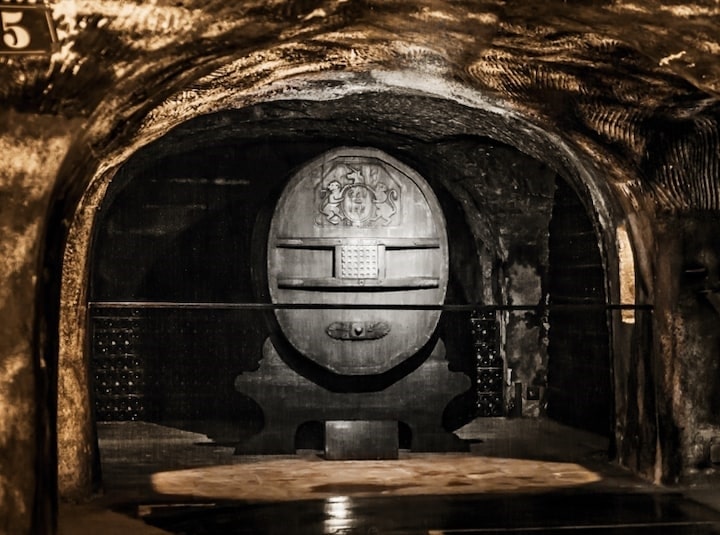
The same restraint applies to Champagne. Champagne Taittinger visits in Reims (https://www.taittinger.com/en/visits-reims), Veuve Clicquot cellar visits (https://www.veuveclicquot.com/en-int/visitus.html), and Ruinart 4 Rue des Crayères (https://www.ruinart.com/en-us/maison---4-rue-des-cray%C3%A8res-4ruedescrayeres.html) are not mood-board accessories for a Marais afternoon; they point to a separate Reims design problem with cellars, transfers, tastings, and return timing. If Champagne is competing with Montmartre or Le Marais, the better question is whether it deserves its own day, which is covered in when a Champagne day earns its place.
Do not overvalue Place du Tertre as the reason to choose Montmartre. It is famous, but it is not the whole neighborhood, and it can become the least refined part of an otherwise thoughtful route if the group lingers there at the wrong time. The more valuable Montmartre experience is the controlled build through streets, slopes, stories, and view logic, with the square treated as a passing context rather than the prize.
Do not overvalue boutiques as the reason to choose Le Marais, either. Shopping can be part of the district’s appeal, but a private luxury half-day is stronger when the guide makes the street fabric intelligible. The best Marais walk does not simply point out shops; it explains why this compact area can hold medieval traces, aristocratic architecture, Jewish heritage, creative retail, and contemporary Paris without requiring a citywide transfer.
When private guidance earns its place
A private guide earns the cost when the half-day needs judgment, not when the neighborhood merely needs a map. Both Montmartre and Le Marais can be walked independently, but independent walking often turns these districts into a pleasant drift. A guided half-day should do more: protect the route, manage the walking load, give context without lecturing, choose pauses, and stop the group from overfilling a small window.
In Montmartre, the value is route discipline. The guide decides whether the group should approach from Abbesses, Lamarck-Caulaincourt, or another edge; how much of the Sacré-Cœur area to include; when to step away from the most crowded lanes; and how to make the art history feel specific rather than decorative. The goal is not to promise solitude. The goal is to keep the hill from becoming a blunt instrument.
In Le Marais, the value is compression with clarity. Without guidance, the district can blur into attractive streets, boutiques, falafel queues, galleries, and a famous square. With guidance, the same half-day can become a layered sequence: the Pletzl and Jewish heritage, the logic of hôtels particuliers, the shift toward Place des Vosges, the changing use of old streets, and the practical choice of whether to end near the Seine, Saint-Paul, or a hotel return.
This is the natural point to involve Orange Donut Tours: not because a private guide makes Paris empty, but because the right guide turns a charming neighborhood walk into a paced, context-rich reset between larger commitments. For a tailored route that chooses Montmartre, Le Marais, or a custom bridge between neighborhood, museum, river, and hotel logistics, see Tailor-Made Paris Private Tours or Inquire now.
FAQ
Is Montmartre or Le Marais better for a private luxury Paris half-day?
Le Marais is the safer default for a private luxury half-day because it is flatter, denser, and easier to combine with the Louvre, the Seine, palace-hotel areas, and a composed evening. Montmartre is better when the hilltop setting and art-history atmosphere are the main purpose of the half-day.
Is Montmartre too crowded for a private tour?
Montmartre is not too crowded for a private tour if the route is disciplined, but it is too busy to promise solitude. A private guide can choose better approaches, avoid overlong stops in compressed areas, and keep the hill from becoming exhausting, but the public nature of Sacré-Cœur and Place du Tertre remains part of the reality.
Is Le Marais easier than Montmartre for older parents or children?
Yes. Le Marais is generally easier because it is flatter, offers more natural pauses, and can be adjusted street by street. Montmartre can work for active older parents or children, but the slopes, steps, and crowd compression require more careful timing.
Can we combine Montmartre and Le Marais in one private half-day?
You can, but it is usually not the best use of a luxury half-day. Combining them adds transfer time and reduces the depth of both neighborhoods. Choose one and let the guide build a fuller, calmer route unless there is a very specific reason to connect them.
Which neighborhood pairs better with the Louvre?
Le Marais pairs better with the Louvre because it lets the day move from museum scale into street scale without a major northern transfer. Montmartre after the Louvre is best reserved for travelers who are still fresh and specifically want the hill.
Which neighborhood pairs better with a Seine cruise?
Le Marais usually pairs better with a Seine cruise because the Hôtel de Ville, Pont Marie, and Île Saint-Louis edges make the river connection feel natural. Montmartre can pair with a cruise, but it needs a more deliberate transfer and should not be rushed.
Which is better for couples?
Le Marais is better for couples who want conversation, ease, heritage, and a polished lead-in to dinner or the river. Montmartre is better for couples who actively want a hilltop chapter and are happy to trade ease for atmosphere.
Should we use a chauffeur for Montmartre or Le Marais?
A chauffeur is more useful for Montmartre because the neighborhood sits farther from many central Paris hotel, museum, and Seine plans. For Le Marais, a chauffeur may help with arrival or pickup, but the district’s value is mostly in the guided walking route itself.
If you’re interested in any private tours of Paris, please reach out to us.



 So if you are looking for the absolute best in Paris & surroundings with authentic local fully-licensed native guides whose English you can actually understand and with an exclusive and amazingly fun itinerary













