A White-Glove Paris Shopping Day That Saves Time on a Luxury Stay: Avenue Montaigne, Le Marais and the Left Bank in the Right Order

Updated
Start on Avenue Montaigne, move to Le Marais after lunch, and finish on the Left Bank in Saint-Germain-des-Prés. That is the order that usually saves the most time on a luxury Paris stay because the least flexible part of the day is the morning fitting window, not the afternoon browse, and because the city becomes slower and heavier once bags, traffic, and evening plans enter the picture. The clearest exception is a deliberately simple day: if one department store or one neighborhood solves the brief, do not force all three districts just because they look good together on a map.
Paris shopping is not really a question of prestige versus discovery. It is a question of when to spend your precise hours, when to walk loosely, and when to stop carrying decisions as well as parcels. The article-specific truth here is simple: in Paris, the day is won or lost at the Avenue Montaigne-to-Le Marais parcel-handoff hinge, because that is the moment when a polished itinerary either stays elegant or turns into an expensive backtrack.
The most overvalued version of this plan is saving Avenue Montaigne for late afternoon because it feels more glamorous then. In practice, that is the wrong order for most appointment-heavy shoppers. By that point Franklin D. Roosevelt and Alma-Marceau no longer feel like easy hops once you are moving with bags, the eastbound transfer toward rue des Francs-Bourgeois gets slower, and the odds of arriving at dinner with shopping still physically attached to you rise fast. For travelers who want this route handled with appointments, pacing, and language support rather than improvised stop by stop, it is the sort of day that naturally fits Shopping Private Tours.
What is the best Paris shopping itinerary for Avenue Montaigne, Le Marais and Saint-Germain-des-Prés?
The best Paris shopping itinerary is Avenue Montaigne first, Le Marais second, and Saint-Germain-des-Prés last. This order works because each district asks something different of your body, your attention, and your clock.
Avenue Montaigne → Le Marais → Saint-Germain-des-Prés. This is the winning route when the day begins with fixed windows, opens into more flexible browsing, and ends where coffee, hotel access, and evening plans are easier to protect.
Avenue Montaigne → Saint-Germain-des-Prés. Keep this version when the point is one or two decisive purchases, a calm lunch, and no appetite for another eastbound district hop.
One district only, usually Saint-Germain-des-Prés or one department store afternoon. When one department store or one district solves the day, a private shopping guide is unnecessary.
Avenue Montaigne belongs first because it rewards precision. Even when your shopping is not strictly couture, the district works best when the morning has shape: appointment notes are clear, staff energy is fresh, and you have not yet let the day dissolve into wandering. Le Marais belongs second because it is more forgiving. The pleasure there is not a single timed threshold but the ability to walk, compare, pause, backtrack one block, and still feel as if the day is working. Saint-Germain-des-Prés belongs last because it gives the cleanest landing: a seated coffee if you need one, a quick hotel swing for a change before dinner if you are staying on the Left Bank, or a simpler final purchase at a calmer hour.
That is why order matters more than status signaling. A glamorous district is not necessarily the right late-day district. The district with the best address can still be the worst final stop if it leaves you boxed into a slow cross-city transfer with shopping bags and a dinner reservation. Paris punishes loose sequencing more quietly than some cities do. You do not lose the whole day at once. You lose it in twenty-minute drags: waiting on a car near Place de la Concorde, carrying more than you planned through a station entrance you would rather skip, pausing for a decision that should have been made before lunch.
The honest counterpoint is that this recommendation breaks down for travelers whose whole brief is concentrated luxury purchasing around the 8th arrondissement and whose hotel and dinner are nearby. If that is your day, do not add Le Marais just to prove range. Stay tighter. The route in this article is for travelers mixing serious morning appointments with a more exploratory afternoon and a civilized finish, not for people whose perfect Paris day is two purchases and then champagne within ten minutes of the hotel.
The morning belongs to Avenue Montaigne because it is the least flexible part of the day
Start Avenue Montaigne early because its value is not just what you buy there; it is how much certainty you can build before the city becomes messy. Morning is when fittings, follow-up questions, hold requests, and collection discussions are easiest to keep contained. Even when you are not visiting four separate maisons, one meaningful appointment there often creates a calendar spine for everything after it.
This is the first place to make a disciplined distinction between browsing and decision-making. Le Marais tolerates drift. Avenue Montaigne does not. If the day includes tailoring conversations, a second look, or comparing sizes or finishes across more than one stop, you want that work done before lunch, while you still have emotional and practical bandwidth. What affluent travelers often underestimate is not the transaction itself but the cognitive load around it. The purchase may take ten minutes. The surrounding decisions can take an hour if you have not reserved enough composure.
There is also a couples-specific reason to start here. The mood-preserving move is to do the most exacting shopping while both people still have patience. The mood-killing mistake is postponing the most precise part of the day until after lunch, after two other stores, and after one person is already carrying bags or waiting through a fitting that should have happened at eleven instead of five. A Paris shopping day is often less about romance than about not letting low-grade friction accumulate until dinner feels like recovery instead of pleasure.
If you are working with a private guide, this is where their value is clearest before the day becomes visually obvious. A skilled guide can help confirm sequence, translate a detail cleanly, keep the second stop informed if the first runs over, and make sure the lunch you chose actually supports the next district rather than interrupting it. That does not mean every traveler needs one. It means the guide earns their place in the hidden minutes, not only in storefront introductions.
What you should not do here is turn the morning into a sightseeing detour disguised as a warm-up. The common error is bolting a museum visit, a major monument, or a long scenic walk onto the front of an appointment day because the map seems generous. Paris is compact in theory and sticky in practice. Once the day includes fitting rooms, packing decisions, receipts, and possible hotel coordination, “just one more stop” is rarely just one more stop.
The Avenue Montaigne-to-Le Marais parcel-handoff hinge is the day’s real decision
The Avenue Montaigne-to-Le Marais parcel-handoff hinge is where this route either stays composed or starts fighting itself. The question is not whether you can get from the 8th to Le Marais. Of course you can. The question is whether you should do it carrying the consequences of your morning.
If the morning produced only a small bag or two, the eastbound move can stay light. If the morning produced substantial parcels, alterations paperwork, or even one purchase you would rather not keep lifting into cafés and cars, you need a plan before you leave the 8th. This is where hotel return, parcel stowage, later collection, or a waiting vehicle genuinely changes the day. The hotel-return or parcel-stowage decision before evening plans is not an administrative footnote; it is the difference between enjoying Le Marais and merely arriving there.
When chauffeur support materially improves a bag-heavy or appointment-heavy Paris day is not mysterious. It improves the day when there are enough purchases to make free movement annoying, when appointments matter enough that lateness costs real value, when the group includes more than two opinions and more than one shopper, or when dinner and evening plans are already fixed and elegant enough that nobody wants to show up carrying branded evidence of the afternoon. In those cases, a vehicle is not a symbolic luxury. It is a parcel strategy, a privacy buffer, and a way to keep the city from fraying the edges of the plan. Travelers weighing that upgrade against the broader question of city transport will often find the clearest companion read in this guide to when a chauffeured Paris day is worth it.
A driver or guide also earns their keep when your hotel is not conveniently on the line of travel. The seductive mistake is thinking, “We will just drop things at the hotel quickly.” Quick depends entirely on where the hotel sits relative to the route and the hour. A supposedly brief detour can become a two-reset day: once when you go back to unload, again when you go back out to shop. That is precisely why the best hotels for this type of stay are not always the best finishing points for this particular day; your base and your shopping geography should talk to each other, not merely coexist.
If you are self-managing the day, make the parcel decision in plain language before you move east. Keep carrying? Return to hotel? Ask for later collection? Move with a car? Do not wait until you are halfway through Le Marais, three streets off your intended line, and suddenly resent every object you were excited to buy two hours earlier. Paris is forgiving to walkers with curiosity and cruel to walkers with avoidable cargo.
Le Marais itself reinforces the point. Once you are in its smaller streets, the district works best at a looser walking tempo. That is part of its appeal. It is also why hauling the entire morning with you is such a poor bargain. The district around rue des Francs-Bourgeois, rue Vieille-du-Temple, and the lanes that pull you away from your original path rewards attention more than speed. Carry too much, and you stop browsing. You start calculating exits.
This is also the place to make a clear judgment about what not to over-prioritize. Do not over-prioritize the fantasy of a completely seamless all-day carry. Some purchases need to leave your hands before the day can stay pleasurable. For many luxury travelers, that is the moment a chauffeur, a guide coordinating the hotel, or a prearranged parcel handoff becomes worth real money. For a lighter day, it is not.
If what you actually want is a one-neighborhood stroll with nothing more than a handbag-sized purchase and a café, the whole parcel conversation is overkill. But if the day includes fittings, gifts, family shopping, or a celebration dinner with a dress change back at the hotel, solve the parcel problem before Le Marais, not after it.
Why lunch, coffee, and fitting windows change the district order
Lunch is not decorative in this route. Lunch is what keeps the city from flattening the second half of the day. The right order is shaped as much by food and sitting time as it is by storefronts.
The logic is simple. Avenue Montaigne asks for focus; Le Marais asks for curiosity; Saint-Germain-des-Prés rewards a slower final hour. Put a proper lunch or at least a real seated coffee between the first and second, and the day keeps breathing. Skip that pause, and Le Marais becomes the place where everyone starts making tired decisions with expensive consequences. The district is too interesting to be treated as a fatigue test.
This is one reason the middle of the day often works better near the route transition than at either extreme. You are not seeking the most photogenic meal stop. You are seeking the meal stop that supports the eastbound move and leaves enough patience for the browse phase. Travelers also planning a dedicated culinary day should keep that separate from this shopping clock; a more food-led version of Saint-Germain, Le Marais, and the 8th belongs in this Paris food-and-wine day guide, not inside a bag-heavy afternoon.
The fitting window versus browsing split matters because the two districts absorb delay differently. If an Avenue Montaigne appointment runs late, the day can still recover because Le Marais can absorb a shorter browse without feeling broken. Reverse the order and the damage is worse. A loose morning in Le Marais expands to fill the available hours, then the fixed appointment later in the day becomes the deadline that everyone rushes toward. That is how a supposedly luxurious plan starts to feel like work.
There is also a Left Bank reason to finish rather than begin in Saint-Germain-des-Prés. As a late-day district it does three things well: it gives you an elegant pause, it offers a clean transition toward the hotel or dinner, and it lets a final purchase happen at lower emotional temperature. What it does not do as well is set the pace for an entire three-district day. Starting there can be lovely, but for this specific problem it uses one of the calmest cards in your hand too early.
A coffee in Saint-Germain-des-Prés at four or five in the afternoon can rescue the tone of the whole day. The same coffee at ten-thirty in the morning is simply pleasant. That difference matters. Luxury travel is often less about adding more and more distinctive stops than about using your best atmospheric moments where they do the most work. A Left Bank finish, especially around Boulevard Saint-Germain or closer to rue de Sèvres if a department-store stop is part of the plan, can make the day feel shorter than it was because the last phase is calmer than the middle.
For couples, this is where the day either keeps its shape or turns argumentative. One person usually wants to browse longer in Le Marais than the other. A planned coffee or a defined crossing point toward the Left Bank prevents the classic Paris late-afternoon stall: nobody is done, but nobody is clearly enjoying themselves either. Put differently, the seated pause is not indulgent padding. It is route insurance.
Do not cut lunch first when the day starts slipping. Cut the third browsing add-on first. That is the cleanest cut-first rule in this entire article. A rushed coffee and no reset will do more damage to the afternoon than losing one marginal cluster of shops you probably would not remember two months later.
What is worth paying for in this route, and what is just expensive symbolism?
Pay for help when it changes movement, privacy, or decision quality. Do not pay for help merely to make the day look more important than it is.
That means a guide or chauffeur earns real value in four situations. First, you have appointment pressure in the morning and genuine bag volume by early afternoon. Second, the group is mixed, with different shopping goals, patience levels, or ages. Third, the hotel, afternoon route, and evening plan do not line up neatly, so someone needs to protect timing and handoffs. Fourth, you want independent browsing later in the day but not the language friction of asking about holds, collections, alterations, or coordination across multiple stops.
Premium spend does not help when the day is already self-contained. Paying for a chauffeur or guide does not materially improve a simple one-district Paris shopping afternoon in Saint-Germain-des-Prés or a single department-store run. If your plan is Le Bon Marché, a short stretch of rue du Bac or Boulevard Saint-Germain, and a lingering café, then the expensive support layer is mostly decorative. Walk it. Enjoy it. Keep the money for dinner or for a better purchase.
The same goes for a Marais-only browse if you are comfortable walking, carrying little, and making your own calls. A chauffeured plan is a poor fit for a district whose pleasure comes from meandering streets and spontaneous detours. A car can deliver you to the edge cleanly, but once you are committed to a true Le Marais afternoon, the vehicle often matters less than a sensible shoe choice and a willingness to let the streets decide some of the sequence.
There is also an honest point to make about private shopping guides. They are most useful when the day includes translation, appointment management, category knowledge, or a precise brief. They are much less useful when the truth is simply that you want the confidence boost of being accompanied. That may still be emotionally worthwhile for some travelers, but it is not the same as operational necessity. The clearest self-guided win is a Left Bank-only afternoon built around one department store or a short Saint-Germain-des-Prés walk. That plan is already easy.
Families and small groups should apply the same test. More people do not automatically justify more service. The trigger is not headcount alone; it is whether multiple people will be carrying, waiting, changing, or peeling off in different directions. One family buying almost nothing may need less support than a couple with three appointments, tax documentation to organize, and a dinner they cannot miss.
The overhyped upgrade, in other words, is not the chauffeur or the guide themselves. It is the assumption that all expensive shopping days need one. They do not. The right question is whether support removes a real friction point or simply flatters the story you are telling yourself about the day.
The easiest exception: when a self-guided one-district afternoon is better
The cleanest exception to the full three-part route is a Left Bank-only afternoon. If your trip already has museums, reservations, or a long evening, and you mainly want one polished shopping window, keep it simple in Saint-Germain-des-Prés or around rue de Sèvres and stop there.
This simpler plan suits travelers who want quality over sweep: perhaps one department store, a few nearby streets, a proper coffee, and then back to the hotel without feeling that the day was swallowed by logistics. It also suits arrival days later in a stay, celebratory couples who care more about how dinner feels than about how many bags they can accumulate, and travelers who already solved their statement purchase elsewhere.
The same simplifying logic applies in the 8th. If Avenue Montaigne is the entire purpose of the day and dinner is also nearby, keep it concentrated. The mistake is believing that a successful Paris shopping day must prove range by spanning the whole city. It does not. A short luxury-focused day can feel more decisive, more private, and more expensive in the best sense because it does not waste premium hours pretending that coverage is the same thing as taste.
There is a body-level reason this matters too. Even travelers who handle museums and long walking days well can be surprised by the fatigue profile of shopping in Paris. You are on hard floors, in and out of fitting rooms, carrying layered clothing, making repetitive small decisions, and often standing still more than you realize. Add cobbles in Le Marais, a river crossing, station stairs, or a late taxi wait on a busy axis, and the day becomes more draining than its postcard version suggests. The city is not hilly in this route the way Montmartre is hilly, but it is cumulative. The fatigue comes from resets.
And there is a mood reason. What preserves the evening is not simply ending early. It is ending coherently. A Saint-Germain-des-Prés finish feels calmer because it turns the last stretch of the day into a gentle taper. What flattens the day is one extra, unnecessary transfer after everyone thought the hard part was over. For couples especially, nothing cheapens a good Paris dinner faster than arriving twenty minutes late, slightly sweaty, mildly annoyed, and still negotiating where to put the shopping.
That is why the third district should always be the first thing you cut when time is shrinking. The first cut should not be lunch, not the parcel handoff, and not the chance to change before dinner. It should be the optional extension whose only real purpose is to let you say you did more.
How this route interacts with your hotel, your evening, and your broader Paris stay
The right district order does not exist in isolation from where you are sleeping. Your hotel can either shorten the last act of this day or force a second round of transport when everyone is already done. Travelers still deciding between the 8th, Le Marais, and the Left Bank should weigh that against the broader stay in this guide to where to stay in Paris.
If you are based on the Left Bank, the winner route becomes even stronger because Saint-Germain-des-Prés can function as both final shopping phase and decompression chamber before the evening. If you are based in the 8th, the route still works, but the parcel decision becomes more sensitive. If you are based in Le Marais, the middle of the day becomes beautifully easy while the opening and closing transitions need more discipline.
Evening plans should shape the parcel strategy early, not late. A Seine cruise, tasting menu, theater booking, or celebratory dinner is not compatible with vague intentions about “sorting the bags later.” The whole point of white-glove planning is that later never has to absorb work that the afternoon could have resolved more elegantly. If the day is appointment-heavy, purchase-heavy, or celebration-sensitive, that is the moment when a guide plus driver, or a fully customized city plan, earns its place more persuasively than generic luxury language ever could. That kind of support is best handled as a tailored brief rather than a fixed package, which is why this route often fits naturally with Luxury Chauffeured Paris Private Tour or a broader Tailor-Made Paris plan.
For comfort-first travelers, the real luxury is not simply being driven. It is not having to make tired micro-decisions at the wrong time of day. Which bridge to cross? Whether to go back for a jacket? Whether one person should wait with the bags outside? Whether the hotel can help now or only later? A good plan answers those questions before they become mood. That is what keeps the city feeling smooth rather than merely expensive.
If you want this day to stay elegant after sunset, make one last practical decision no later than the end of Le Marais: are you finishing the route as shoppers or as evening guests? Once you know that answer, the final Left Bank phase becomes obvious. Either you continue with a light last browse and coffee, or you turn toward the hotel, change, and re-enter the evening cleanly. That is the logistics rescue this article is really solving.
When that is exactly the problem you want solved for your stay, Inquire now.
Keep this shopping day separate from your reservation-heavy Paris days
A shopping day like this works best as a city day with its own rhythm, not as an appendix attached to a different headline excursion. Do not wedge it into the same day as Versailles, Giverny, or another reservation-heavy plan just because you think the evening will remain open. Once long-range transport, fixed-entry timing, and bag management are in the same sentence, the elegance usually disappears.
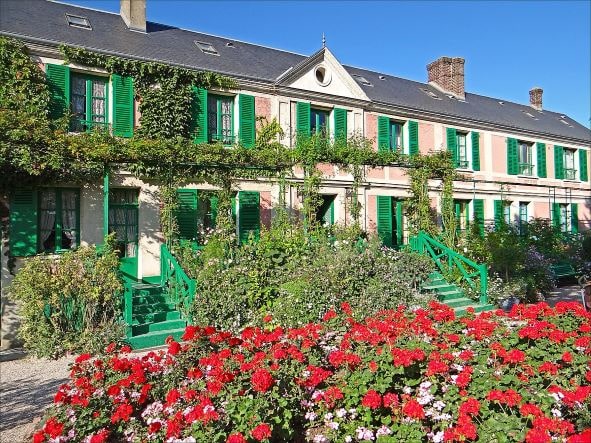
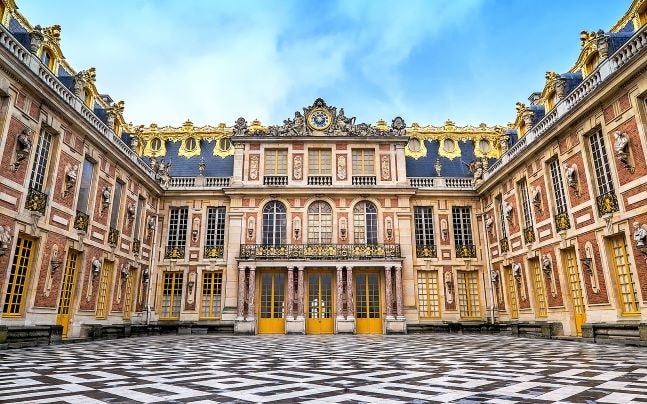
If Versailles or Giverny is elsewhere in your stay, plan those on their own terms with the official Versailles planning page (https://en.chateauversailles.fr/plan-your-visit) and the official Monet Foundation page (https://fondation-monet.com/en/giverny-2/). They are excellent examples of why some Paris-area days deserve a clean calendar. The same principle applies inside the city. A focused shopping day is not lesser than a museum day or a palace day. It is simply a different kind of premium planning problem.
This matters on shorter stays in particular. If you only have three or four meaningful Paris days, combining too many fixed-ticket priorities with too many shopping ambitions is how the city starts to feel over-managed. Keep the shopping day legible. Let it be about fittings, discovery, handoffs, and an evening that still feels intact. Then let your art, palace, and excursion days run on different rails.
FAQ
Should I start a Paris shopping day in Le Marais or on Avenue Montaigne?
Start on Avenue Montaigne if the day includes appointments, serious purchasing, or anything that depends on timing. Start in Le Marais only when the entire day is meant to be a loose browse and you are intentionally skipping the more structured luxury morning.
Is it realistic to do Avenue Montaigne, Le Marais, and Saint-Germain-des-Prés in one day?
Yes, but only if the route has a clear order and one mid-day reset. The winning version is Montaigne first, Le Marais second, Saint-Germain last. The failing version is the one with no parcel strategy, no seated pause, and no willingness to cut the third district if timing slips.
When is a chauffeur actually worth it for Paris shopping?
A chauffeur is worth it when the day is bag-heavy, appointment-heavy, celebration-sensitive, or hotel-dependent. If the morning creates real parcels and the evening matters, vehicle support can save both time and mood. It is not worth it for a simple one-district afternoon that works better on foot.
Do I need a private shopping guide for Le Marais?
Not always. A guide helps when you want translation, targeted introductions, or a precise buying brief. But a relaxed Le Marais browse can be better without one if you are happy walking, carrying little, and discovering places at your own pace.
What should I cut first if the day is getting too full?
Cut the optional third district first. Do not cut lunch, coffee, or the parcel handoff that keeps the evening intact. The cleanest sacrifice is usually the extra browse you added for ambition, not the reset that keeps everyone pleasant.
Is Saint-Germain-des-Prés really a better finish than a better-known luxury district?
For this specific route, yes. Saint-Germain-des-Prés works well at the end because it offers a calmer tempo, easier decompression, and a smoother transition to dinner or the hotel. A famous district is not automatically the best late-day district.
Can this route work for families or small groups, not just couples?
Yes, especially if the group has mixed goals and someone may need a different pace. The route still works because it front-loads precision and back-loads flexibility. Families and small groups simply need a stricter parcel plan and clearer expectations about how long Le Marais browsing will remain enjoyable.
What is the simplest white-glove alternative if I do not want a full shopping day?
The simplest alternative is a Left Bank-only afternoon around Saint-Germain-des-Prés or one department store, followed by coffee and an easy return to the hotel. It keeps the pleasure of Paris shopping without the cross-city complexity that makes a fuller route worth planning so carefully.
If you’re interested in any private tours of Paris, please reach out to us.



 So if you are looking for the absolute best in Paris & surroundings with authentic local fully-licensed native guides whose English you can actually understand and with an exclusive and amazingly fun itinerary