When a Chauffeur Changes a Paris Museum Day and When It Does Not

Updated
The verdict: use the chauffeur threshold, not the luxury reflex
A chauffeur changes a Paris museum day when the plan creates a true cross-city museum hop; it does not automatically improve a day built around the Louvre, Musée d’Orsay, and Rodin. In real Paris conditions, the value comes from avoiding route breaks, weather exposure, late-day fatigue, and awkward returns to a distant hotel, not from placing a car outside every entrance. The clearest exception is the compact Seine-and-Left-Bank museum arc: if you are moving from the Louvre across Pont Royal or the Tuileries edge toward Orsay, then onward toward rue de Varenne and Rodin, a guide-led walking sequence often feels calmer than a chauffeured one.
The Paris-specific thesis is simple: a car earns its place when it protects the order of the collections from distance, family stamina, formal lunch timing, or a far hotel base; it does not rescue a museum day that is trying to absorb too many masterpieces. The Louvre-to-Orsay transfer logic is the first test, because it reveals the difference between a route that looks premium on paper and one that actually feels lighter in Paris.
The non-obvious cue is that a glamorous Right Bank base can make the museum day less efficient. A palace-area hotel near avenue Montaigne or rue du Faubourg Saint-Honoré may be excellent for shopping, dining, and evening returns, yet it can pull a Left Bank art day west and north at exactly the moments when you want to stay close to the river. For many travelers, the best upgrade is not the car itself; it is a museum sequence that stops forcing the hotel, the lunch, and the second collection to fight each other.
That is why Orange Donut Tours treats the chauffeur as a threshold decision. First, design the museum order, the guide rhythm, the lunch break, the walking load, and the end point. Then decide whether a chauffeur will genuinely improve the day. For a private route with car support only where it serves the experience, see the luxury chauffeured Paris private tour.
The Paris museum-day matrix: where the car changes the experience
The best way to decide is to separate museum days into three categories: clear chauffeur value, conditional value, and walking-led wins. This is not a status question. It is a routing question, and the answer changes with hotel base, collection depth, group stamina, lunch expectations, and whether the day needs to end polished for dinner.
Use this matrix before adding any service layer. If your plan lands in the walking-led column, a private guide and carefully chosen entry sequence will usually improve the day more than a car. If it lands in the clear-value column, a chauffeur can keep the day from becoming a series of taxi decisions, missed resets, and overlong pavement stretches.
Clear chauffeur value
- A Louvre morning followed by a far-west or far-east art stop, such as a specialist museum outside the central Seine corridor.
- A museum day tied to a formal lunch, a shopping pickup, an older-parent pace, or a return to an 8th arrondissement hotel before evening plans.
- A family or multigenerational day where short transfer rests matter because standing inside the collections already consumes the legs.
- A day that starts or ends with luggage, airport timing, a cruise transfer, or a train-station handoff.
Conditional chauffeur value
- Louvre plus Rodin, if the day includes a formal lunch, wet weather, older travelers, or a far hotel return.
- Musée d’Orsay plus a specialist stop across town, if the second site is not naturally linked by the Seine or a short Left Bank walk.
- Orangerie plus Rodin, if the end point is not Saint-Germain, Invalides, or a nearby dinner address.
- A museum-and-shopping day where the car is useful after the art, not necessarily between the art stops.
Walking-led wins
- Louvre to Musée d’Orsay, especially when the route uses the Tuileries, Pont Royal, or the river edge with a guide controlling pace.
- Musée d’Orsay to Rodin, when the group is comfortable with a measured Left Bank walk or a very short vehicle hop arranged only if needed.
- Louvre plus Orangerie, because the Tuileries connection is part of the natural route rather than a transfer problem.
- One deep Louvre visit followed by lunch, a Seine hour, or a hotel pause, because the collection itself is the demanding part.
The firm editorial call: do not add a chauffeur to make a crowded museum day look more refined. Add it when the geography is genuinely pulling the day apart. In Paris, the car should solve a distance or energy problem that the guide cannot solve by sequencing alone.
The Louvre-to-Orsay transfer logic: why the famous pair is usually not a chauffeur problem
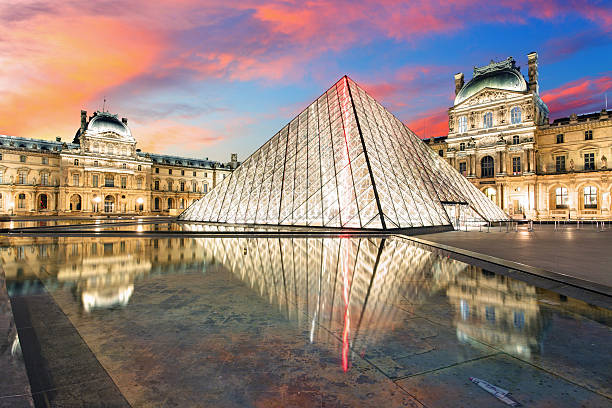
The Louvre-to-Orsay transfer logic is the most useful test because the two museums sit across the Seine, not across the city. From the Louvre side, the river crossing via Pont Royal or the Tuileries-side footbridge can be more coherent than summoning a car, waiting for positioning, entering traffic, and approaching the Left Bank from a less elegant angle. The walking connection also gives the mind a needed pause after the density of the Louvre.
This is why a private guide can matter more than a chauffeur for this pairing. The guide can decide which wing of the Louvre to emphasize, where to slow down, when to leave before attention drops, and how to use the river crossing as a transition rather than a commute. A car can reduce steps, but it cannot decide whether the Italian paintings, French sculpture, or Near Eastern rooms deserve the deeper share of the morning. For travelers who want the Louvre itself curated, the better investment is usually the Louvre private tour before any transport upgrade.
There are exceptions. A chauffeur can make sense between the Louvre and Orsay if the group includes limited mobility, if weather turns the river crossing into an ordeal, if the day is attached to a formal lunch with little margin, or if the exit point from the Louvre is poorly aligned with the next museum entrance. But those are specific conditions, not a default rule.
For current venue logistics, confirm practical details directly with the museums rather than relying on a fixed itinerary template. Use the official Louvre visitor information (https://www.louvre.fr/en/visit/hours-admission), the official Musée d’Orsay visitor information (https://www.musee-orsay.fr/en/visit), and the official Musée Rodin visitor information (https://www.musee-rodin.fr/en/plan-your-visit/plan-your-visit-musee-rodin) when checking access, entry conditions, or closures before finalizing the day.
The mistake is assuming that the shorter transfer is always the easier one by car. In central Paris, a car can create a new waiting moment: finding the vehicle, crossing the pavement, reorienting the group, settling in, and getting out again. If the route is already naturally connected by the river, that wait can make the day feel longer, not easier.
Museum pairings where a chauffeur earns its keep
A chauffeur earns its cost when the museum pairing creates a real route split. The best examples are not the famous neighboring museums; they are the days that combine one central collection with a second site outside the compact Louvre-Orsay-Rodin corridor, then ask the group to arrive composed for lunch, a hotel change, or an evening plan.
Consider a Louvre morning followed by a specialist west-side museum, an architecture stop, a private shopping appointment, or a return to an 8th arrondissement hotel. Without a car, the afternoon can become a blur of Metro choices, taxis, curbside waiting, and repeated decisions. With the right chauffeur support, the transition becomes a seated pause: coats off, water available, children or parents off their feet, and the guide able to reframe the next collection before arrival.
Rodin can also tip the answer when it is not simply the next gentle stop after Orsay. If Rodin follows the Louvre and then the day ends near Invalides, Saint-Germain, or a Left Bank dinner, walking and a short arranged transfer may be enough. If Rodin is squeezed between a Right Bank hotel, a formal lunch, and a later Seine or Eiffel Tower moment, the chauffeur may be the difference between a graceful sequence and a day that keeps asking the group to rebuild momentum.
For families, the car becomes valuable when it prevents mood collapse between museums. Children can often manage a well-guided Louvre visit and a lighter second stop; they struggle when the adult plan inserts a messy transfer, a hungry wait, and another security line without a real pause. The chauffeur does not make children love more art. It can, however, preserve the conditions under which the second museum still has a chance.
For older parents, the threshold appears earlier. Standing inside the Louvre is already a physical commitment. Add stairs, galleries, stone floors, restroom detours, and the mental effort of following a guide, and the body has worked hard before the second museum begins. A car after the first collection can be less about luxury than about making the next hour possible without rushing or apologizing.
The chauffeur is strongest when it replaces repeated small frictions, not when it decorates a route that is already clean. If the day has two or three true route breaks, use it. If the museums are neighbors in Paris terms, spend the planning energy on order, entry, guide focus, and the lunch pause.
When is a walking-led Paris museum day better than a chauffeured one?
A walking-led museum day is better when the route is compact, the guide can make the transition meaningful, and the car would interrupt rather than relieve the experience. This is especially true for Louvre to Orsay, Orsay to Rodin, Louvre to Orangerie, or a Louvre morning followed by a Seine-side reset.
Walking is not always the less premium choice in Paris. The right walk can reduce decision fatigue, keep the guide in conversation with the group, and let the day breathe between collections. The Tuileries edge, the view across the Seine toward the old railway station of Orsay, and the short Left Bank approach toward rue de Solférino can make the route feel coherent. A car, by contrast, can turn a short connection into a stop-start logistical performance.
The walking-led choice is also better when the intellectual sequence matters more than the transfer. A guide can use the move from the Louvre to Orsay to connect monarchy, revolution, academic painting, modernity, and the changing city. That transition is not filler. It is the bridge between collections. In a car, the same transfer may become a pause in which everyone checks phones and mentally leaves the art behind.
There is another practical reason to avoid overusing the car: Paris museum entrances are not designed as private-drive fantasy sets. Some approaches are excellent, some are constrained, and some require the group to walk from a legal stopping point anyway. When the vehicle cannot actually deliver a shorter or calmer approach, the upgrade becomes more symbolic than useful.
For a deeper museum-order decision, the adjacent guide on Louvre, Musée d’Orsay or Rodin first is the more relevant next read than a broad transport guide. The core question is not whether the car is comfortable. It is whether the car improves the order in which your attention meets the art.
How your hotel base changes the chauffeur threshold
Your hotel base changes the chauffeur threshold because Paris museum days rarely begin and end at the museum door. The same Louvre-Orsay-Rodin plan feels different from Saint-Germain, the 1st arrondissement, Le Marais, the 8th, or a hotel near the Eiffel Tower. The car decision should follow those edges, not just the museum names.
From Saint-Germain or the Left Bank, the central art corridor is naturally forgiving. Orsay, Rodin, Invalides, and many dinner addresses sit in a sequence that can be guided on foot with selective short transfers. A chauffeur may still help in rain, with older travelers, or for a formal evening, but it is rarely the first lever to pull. The route is already doing some of the work.
From the 1st arrondissement, especially near the Louvre, the answer depends on the second half of the day. Louvre to Orangerie, Orsay, or a Seine break is still compact. Louvre to a far-west museum, a shopping appointment, or a return to an 8th arrondissement hotel may justify a chauffeur after the museum rather than from the first minute. In other words, the car may belong to the afternoon, not the whole day.
From the 8th arrondissement, the correction is counterintuitive: the prestigious base can make the museum day more fragmented. Avenue Montaigne, the Champs-Élysées area, and rue du Faubourg Saint-Honoré are convenient for fashion, palace hotels, and certain evenings, but they are not always the cleanest base for a Left Bank art sequence. A chauffeur can help with the hotel edge, yet it cannot make a scattered plan feel intimate. For more on the base decision itself, read where to stay in Paris for a luxury first visit.
From Le Marais, a chauffeur can help when the museum day pushes west, but it is not needed for every cultural plan. The area can pair well with a single major museum and a neighborhood-led afternoon, especially if the group values boutiques, private food stops, or architecture as much as another collection. The risk is trying to make Le Marais, the Louvre, Orsay, Rodin, and an 8th arrondissement dinner all behave like one tidy line. They do not.
The best hotel-based rule is to ask where the day must finish. If the group needs to arrive refreshed for a fine-dining reservation, a family celebration, or a formal evening, the late transfer matters more than the morning transfer. Many Paris days do not need a chauffeur at 9:00; they need the right vehicle at 16:30.
What Paris does to bodies, attention, and the evening mood
Paris museum planning is not just about distances; it is about what the city does to the body before, between, and after the collections. Stone floors, gallery standing, stair decisions, security lines, river crossings, cobbles, weather exposure, and the simple density of central Paris all accumulate. A route that looks elegant in a document can feel heavy by the time the second museum begins.
The body consequence is clearest after the Louvre. Even a curated visit asks travelers to stand, pivot, climb, wait, look up, look down, and absorb a great deal of visual information. Add a windy Seine crossing, a late lunch, and another large collection, and the day can become physically flat before it becomes intellectually complete. A chauffeur can reduce the pavement load, but it cannot reduce the standing load inside the museums.
The mood consequence is different. The right route makes the day feel shorter because each move has a purpose: gallery, air, lunch, second lens, pause, dinner. The wrong route makes Paris feel like an obstacle course of entries, exits, curbs, and half-finished conversations. A car can calm the mood when it removes uncertainty. It can flatten the mood when it turns a beautiful short walk into another enclosed transfer.
This is why a museum day for couples often benefits from a different decision than a museum day for families. Couples may value the quiet continuity of a guided walk from the Louvre toward Orsay, especially if the river becomes part of the day. Families may need a chauffeured break after the first collection so children do not associate the second museum with another forced march. Both can be premium decisions; they simply serve different pressure points.
Celebration travelers should be even more selective. If the museum day precedes a major dinner, proposal, anniversary, or private cruise, the goal is not to win the most art. The goal is to keep the group present enough to enjoy the evening. In that case, a chauffeur may be valuable at the exit and return points, while the museum sequence itself stays disciplined and light.
The spend judgment: what a chauffeur buys and what it cannot buy
A chauffeur buys privacy between stops, seated recovery, luggage control, easier hotel returns, and fewer small decisions under pressure. It can also make a day feel more composed when the group includes older relatives, children, formal clothing, shopping bags, or weather-sensitive plans. Those benefits are real when the route is asking for them.
A chauffeur does not reduce museum fatigue if the day tries to cover too many collections. That sentence matters because many expensive Paris plans fail by mistaking transport comfort for attention capacity. A car can move you from the Louvre to Musée d’Orsay to Rodin to a fourth stop, but it cannot make each collection land with the clarity it deserves.
Premium spend earns its cost when it protects the experience from the city’s edges: a distant hotel, a hard dinner time, a cross-town specialist museum, rain, heat, mobility needs, or a group that needs a private reset. Premium spend does not earn its cost when the route already works on foot and the vehicle adds waiting, curb negotiation, or a sense that the day is being overmanaged.
The better money allocation is often mixed. Spend on the private guide, timed planning, and the right museum focus first. Add a chauffeur for the parts of the day where the route genuinely pulls apart. In Paris, the most polished museum days often use restraint: one serious collection, one lighter counterpoint, one good break, and a return plan that does not require improvisation at the worst hour.
The cut-first rule is equally important: when the day feels overpacked, cut the third collection before you cut lunch, air, or the guide’s interpretive time. A rushed Rodin after an overlong Louvre and Orsay is not a better art day; it is a more expensive blur.
How Orange Donut Tours designs the day around sequence first
Orange Donut Tours designs a private museum day around the sequence first, then adds a chauffeur only when the vehicle protects that sequence. The starting question is not “Do you want a car?” It is “What should the day ask of your attention, your legs, your lunch window, and your evening?” Once that is clear, the car decision usually becomes obvious.
For a first-time art day, the design may be Louvre first, then a carefully chosen second lens such as Musée d’Orsay or Rodin, with the afternoon adjusted around stamina. For a returning traveler, the day may skip the obvious pairing and use a specialist museum, a neighborhood walk, or a private food-and-wine pause instead. For families, the plan may prioritize one major collection and one tactile or outdoor counterpoint. For older parents, it may place the chauffeur at the exit from the demanding museum rather than at the hotel door.
The value of a private planner is the refusal to sell the car as always better. Sometimes the recommendation is to keep the route walking-led, shorten the museum ambition, and use the guide to make the transitions meaningful. Sometimes the recommendation is to bring in the chauffeur because the group’s hotel, dinner, mobility, or celebration context makes the route fragile without it.
If your Paris museum day needs that kind of sequencing judgment, share the museums, hotel base, group profile, and evening plans. Orange Donut Tours can shape the day around the art first and the transport second. Inquire now
The museum pairings that deserve restraint
The pairings that deserve restraint are often the ones travelers most want to force. Louvre plus Orsay can be excellent, but only if the Louvre is curated rather than treated as a complete conquest. Orsay plus Rodin can be elegant, but only if the group has enough appetite left for sculpture, garden time, and another interpretive lens. Louvre plus Orangerie can be lovely, but it should not become a reason to add two more sites because the map looks convenient.
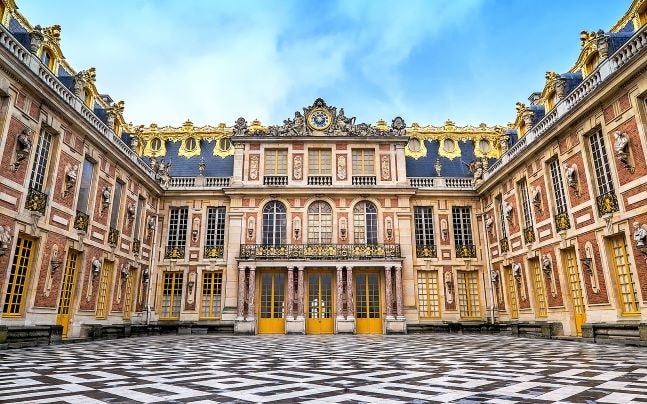
The Louvre is the most common source of overreach. It can absorb a morning, a day, or a lifetime, depending on how it is handled. A private museum day should not pretend otherwise. The stronger plan is to decide what the Louvre is doing in your trip: orientation, masterpiece focus, royal palace context, family-friendly highlights, art-historical depth, or a specific collector’s interest. Without that decision, every later transfer becomes a recovery from a morning that lacked boundaries.
Musée d’Orsay deserves its own clarity. It is not merely the convenient second museum after the Louvre. For many travelers, Orsay is emotionally easier to love because the scale, the former station architecture, and the Impressionist arc can feel more immediately legible. That makes it a strong second stop for some groups, but it also means it can be wasted if placed after a Louvre visit that ran too long.
Rodin is the classic lighter counterpoint, but it is not a universal rescue. The garden can be a relief, the scale is more forgiving, and the transition from indoor looking to sculpture and air can help. Yet Rodin after two heavy collections can still feel like one more obligation. If the day is already tired, cut Rodin first and keep it for another afternoon, especially if your hotel or dinner plan gives the 7th arrondissement a better natural place later.
The restraint rule is this: pair one demanding museum with one contrasting experience, not two demanding museums with a symbolic pause. The chauffeur may make the movement easier, but the day still needs a shape that a human attention span can survive.
When the museum day should become a Champagne or day-trip day instead
Sometimes the chauffeur question is a signal that the day is trying to be two different trips. If the plan combines a major museum morning, a formal lunch, a long transfer, and a far-flung second experience, it may be cleaner to separate the ambitions. Paris rewards focus. Champagne rewards a full day. Mixing the two often weakens both.
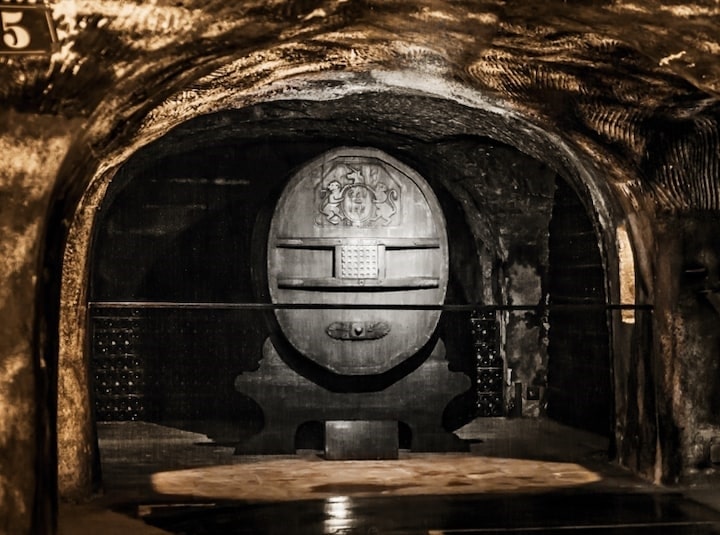
This matters for food-and-wine travelers who are tempted to attach a museum morning to Reims, cellar visits, or a celebratory countryside afternoon. Champagne Taittinger visits in Reims and Veuve Clicquot cellar visits are not casual add-ons after a Louvre morning; they are structured experiences that deserve proper timing, transfer comfort, and a day that does not begin already depleted. You can review Champagne Taittinger visits in Reims (https://www.taittinger.com/en/visits-reims) and Veuve Clicquot cellar visits (https://www.veuveclicquot.com/en-int/visitus.html) directly when shaping a cellar-focused day.
A chauffeur-led Champagne day can be a superb use of private transport because the value is obvious: distance, return comfort, cellar timing, lunch pacing, and a smoother re-entry to Paris. That is a different threshold from a central Louvre-to-Orsay transfer. The car is not decoration there; it is the spine of the day.
If the deeper wish is wine, celebration, and a change of rhythm, consider moving the museum to a separate morning and giving Champagne its own space through the Champagne private tour. The trip will feel more generous because each day has one job. You avoid turning the Louvre into a prelude you rush through and Champagne into a reward you reach too late.
The same logic applies to Versailles, Giverny, Normandy, or any day outside Paris. A chauffeur may be essential for those routes, but that does not mean the same service automatically improves a central museum pairing. The threshold changes when the geography changes.
A practical sequence for the most common Paris museum days
For a first Paris museum day, begin with the collection that most needs guidance, then choose the second stop by energy rather than by fame. In practice, that often means a focused Louvre morning, a real pause, and either Orsay, Rodin, Orangerie, or no second museum at all. The chauffeur decision comes after that sequence is honest.
For Louvre plus Orsay, keep the route walking-led unless mobility, weather, or hotel constraints say otherwise. Use the river crossing as the reset. Keep lunch close enough that the day does not scatter. Do not let the car tempt you into adding Rodin automatically.
For Louvre plus Rodin, decide whether the gap between them is a transfer or a pause. If the group needs lunch, a seated break, or a hotel edge, the chauffeur may help. If the day is guided through the Seine and Left Bank with an unhurried lunch, walking and a short arranged hop may be cleaner.
For Orsay plus Rodin, the car is usually conditional. The pairing can be graceful on the Left Bank, especially for travelers staying in Saint-Germain or ending near Invalides. A chauffeur becomes more relevant if the group starts in the 8th, ends across town, or needs to manage older-parent stamina.
For Louvre plus a far specialist museum, the chauffeur is usually justified. The day has a real cross-city museum hop, and the seated transition can preserve the second stop. This is the scenario the threshold was built for: without the car, the transfer becomes a tax on attention; with it, the group can arrive with enough concentration to make the specialist collection worthwhile.
FAQ
Is a chauffeur worth it for a Louvre and Musée d’Orsay day?
Usually not for the transfer itself. The Louvre and Musée d’Orsay are close enough that a guided river crossing can be more coherent than a chauffeured hop, unless mobility, weather, lunch timing, or hotel logistics create a specific need for car support.
When does a chauffeur make the biggest difference on a Paris museum day?
It makes the biggest difference when the route truly crosses Paris, when the group includes older travelers or children, when the day has luggage or a formal evening, or when a distant hotel base would otherwise create repeated taxi decisions.
Does a chauffeur prevent museum fatigue?
No. A chauffeur can reduce transfer fatigue, but it does not reduce the mental and physical fatigue of covering too many collections. The better fix is to curate the museum list and give the day a clearer sequence.
Is a walking-led museum day still premium?
Yes. In central Paris, a walking-led day can be the more premium choice when the museums are naturally linked by the Seine, the Tuileries, or the Left Bank, because the guide can make the transition part of the interpretation rather than a transport break.
How does the hotel location change the answer?
A Left Bank or Saint-Germain base often makes Orsay, Rodin, and nearby dinner plans easier without a full-day chauffeur. An 8th arrondissement or far-west base can make the car more useful, especially for the return or for a museum day that ends before a formal evening.
Should families add a chauffeur to every Paris museum day?
No. Families should add a chauffeur when the transfer break genuinely helps children recover between stops. A one-museum day with a good guide, lunch, and a lighter afternoon may be better than a chauffeured plan that tries to cover three collections.
What should I cut first if the museum day feels too full?
Cut the third collection first. Keep the guide focus, lunch, air, and a realistic end point. A shorter museum day with two well-chosen experiences usually feels richer than a long chauffeured day that turns the final stop into an obligation.
Can Orange Donut Tours combine a chauffeur with a private museum guide?
Yes. The best approach is to design the museum sequence first and add a chauffeur only where it improves the route, stamina, or return logistics. That keeps the service attached to the experience rather than the other way around.
If you’re interested in any private tours of Paris, please reach out to us.


 So if you are looking for the absolute best in Paris & surroundings with authentic local fully-licensed native guides whose English you can actually understand and with an exclusive and amazingly fun itinerary













