Paris After Versailles: Where the Return Belongs Before Dinner

Updated
Verdict: after Versailles, the return belongs either at your hotel, in Saint-Germain, or at one brief Trocadéro viewpoint before dinner; anything fuller is usually a false economy. That verdict works because the Versailles return window is late-afternoon decision pressure, not spare Paris time: you are coming out of palace rooms, gardens, transport logistics, and a city re-entry that can split the group between Left Bank, Right Bank, and Seine-side stations. The clean exception is a celebration evening with a deliberately late dinner and a chauffeured transfer, where one short Eiffel-facing stop can feel ceremonial rather than strained. The thesis is simple: in Paris after Versailles, the city should become smaller before it becomes beautiful again.
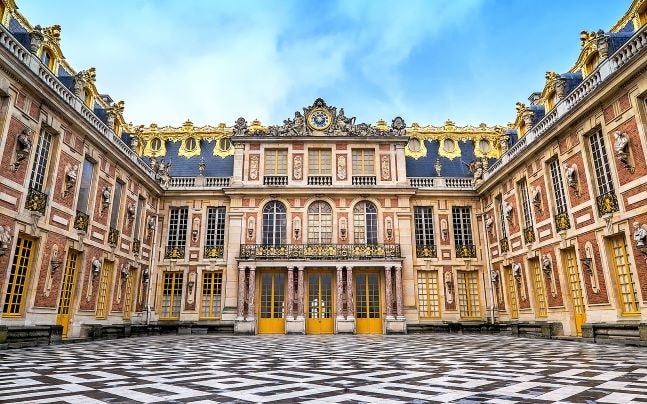
The overlooked hinge is not the palace itself; it is the moment you re-enter Paris with tired feet, a dinner reservation somewhere across town, and a group suddenly deciding whether to chase one more view. If you return by RER C, the train does not deliver one neutral Paris: it threads you through stops such as Champ de Mars–Tour Eiffel, Invalides, Musée d’Orsay, and Saint-Michel Notre-Dame, each of which pulls the evening toward a different mood. That is why a private Versailles day should be planned with the return already in mind, not treated as a blank rectangle after the palace. For the palace-side plan, see Versailles private guided tour from Paris; for the day-before version of the same restraint, see Paris Before Versailles.
Use the official Versailles planning page (https://en.chateauversailles.fr/plan-your-visit) for practical visit information before you lock the day, but use local judgment for the return. Official logistics can tell you how to prepare for the estate; they cannot tell you whether your group will still want a second cultural chapter after the Hall of Mirrors, the gardens, a transfer, and the emotional scale of the place. Orange Donut Tours’ editorial answer is deliberately restrained: preserve dinner, choose one Paris landing point, and stop adding cleverness where calm would serve the evening better.
What to do after Versailles before dinner: the priority ladder
The best after-Versailles plan is a ladder, not a list: empty evening first, local reset second, one viewpoint third, and a full second tour almost never. This ranking matters because Versailles is not a compact museum morning. It is a palace, a garden estate, a travel leg, and a concentration test in one day. By the time you are back in Paris, the choice is not “what else can we see?” but “what leaves us still pleased to be together at dinner?”
First priority: nothing scheduled. Choose this when dinner matters, when your hotel is not near the return route, when children or older parents are in the group, or when the day includes the gardens as more than a quick glance. “Nothing” does not mean wasting Paris. It means returning to the hotel, changing shoes, letting the palace settle, and arriving at dinner without the flat, dutiful mood that comes from over-obedient sightseeing.
Second priority: Saint-Germain or a nearby Left Bank landing. Choose this when dinner is on the Left Bank, when you want a short walk that can end quickly, or when the group needs a place with cafés, galleries, bookshop energy, and a lower sense of performance than a monument stop. Saint-Germain works because it compresses the decision: you can stroll around Saint-Sulpice, pause near Boulevard Saint-Germain, or drift toward the river without committing to a new attraction.
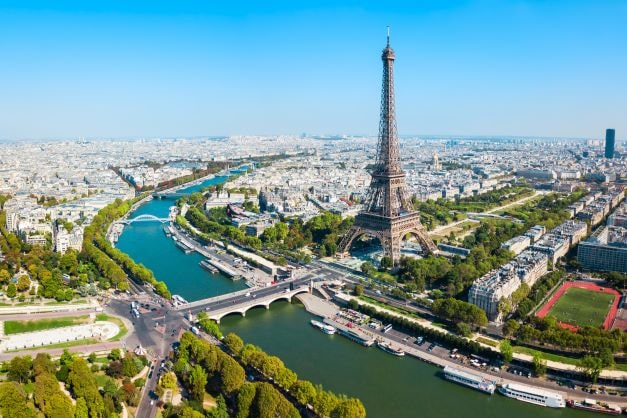
Third priority: Trocadéro as a short viewpoint. Choose this only when the Eiffel Tower view is emotionally important and you can treat it as a stop, not a neighborhood plan. Trocadéro is often overvalued after Versailles because it looks like the obvious Paris finale. It can be lovely, but it adds exposure, photo pressure, and onward-routing decisions at exactly the moment a tired group needs fewer choices.
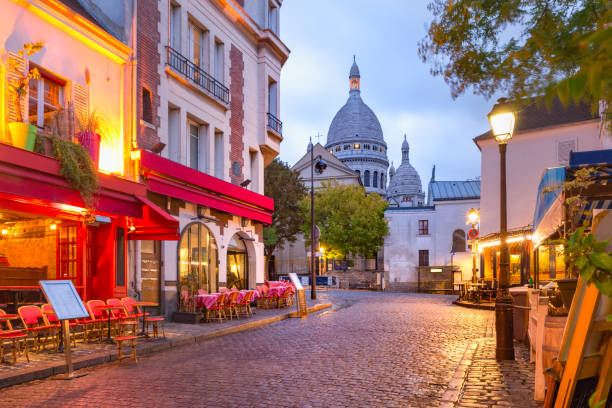
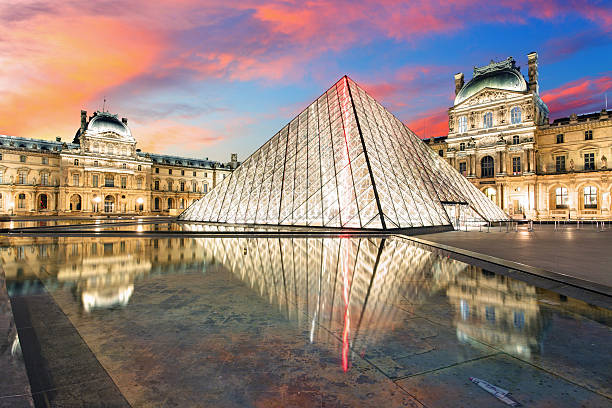
Last priority: a second full cultural plan. Skip it unless this is a highly energetic adult group, dinner is late, and the second stop is genuinely more important than arriving rested. The Louvre, Montmartre, serious shopping, or a major food crawl after Versailles can look efficient on paper and feel joyless in practice. Cut the museum first, then the shopping errand, then the “quick” cross-city detour that depends on everyone still being game.
This priority ladder is intentionally stricter than a generic Paris itinerary. A Versailles day asks the body to stand, absorb visual density, move across stone, gravel, staircases, security points, estate paths, platforms, and city pavements. It also asks the mood to keep switching registers: royal scale, guide context, garden air, train or car re-entry, hotel decision, dinner readiness. The smooth evening is the one that removes one of those switches. The strained evening is the one that adds three more and calls it a bonus.
When the evening after Versailles should be deliberately unscheduled
The evening after Versailles should be deliberately unscheduled when dinner is the real event, the group includes mixed stamina levels, or the palace day has already used your cultural appetite. This is the required editorial no: do not fill the return simply because the calendar shows available hours. In a private, tailor-made Paris stay, restraint can be the more polished choice than squeezing in another famous address.
Keep the evening empty if you have a tasting menu, a celebration dinner, or a first dinner in Paris that you actually care about. Paris rewards attention at the table. Arriving after a rushed Trocadéro stop, a last-minute boutique sprint, or a “quick museum room” can turn a dinner you planned for months into a recovery meal. The consequence is not only tired feet. It is a flattened conversation, a delayed start, and the faint irritation of having converted a beautiful day into a schedule to survive.
Keep it empty if the Versailles day includes more than the palace interior. The gardens, the estate edges, and any meaningful pause outside the main rooms change the energy calculation. Even when the route is elegantly guided, the body still registers the scale. Wide avenues invite longer walking than travelers notice in the moment; stone courtyards and gravel paths are less forgiving than city sidewalks; and the return through western Paris does not erase that load. A chauffeur can remove navigation, but it cannot make the body forget the estate.
Keep it empty with children, teenagers who have already been generous with attention, older parents, or a multigenerational group where one person’s stamina sets the tone for everyone else. The post-Versailles mistake that most often spoils the mood is not choosing the “wrong” attraction. It is asking the group to vote on a second plan when everyone is too polite to admit they are done. The more affluent the trip, the more important this becomes: premium service should reduce negotiation, not create a new round of it before dinner.
Keep it empty if your hotel is on the far side of the city from your dinner. A guest staying in the 8th with dinner in Saint-Germain, or staying near the Left Bank with dinner in Le Marais, should not add a third point unless that stop is the emotional reason for the evening. Paris cross-city transfers can quietly consume a short stay because each hop feels manageable alone. The trouble comes from stacking them: return from Versailles, hotel, viewpoint, dinner, taxi back. That is not a relaxed evening; it is four handoffs disguised as one plan.
The cut-first rule is simple: after Versailles, cut anything that requires timed entry, a queue, a security check, a serious walk uphill, or a long onward transfer. That rule removes most museum add-ons, most shopping errands, and most “we can just pop over there” suggestions. It also protects couples from the mood-killing mistake of turning a rare Paris dinner into a reward for completing errands. The more elegant move is to let the palace day end as a palace day.
Saint-Germain versus Trocadéro after the return: mood, distance, and dinner consequences
Saint-Germain is usually the better tired-return neighborhood; Trocadéro is the better short visual payoff. The difference is not that one is more Parisian than the other. The difference is what each place asks from you after Versailles. Saint-Germain lets the evening soften. Trocadéro asks the evening to perform.
Saint-Germain works especially well if dinner is on the Left Bank, if your hotel is near the 6th or 7th, or if the group wants a low-commitment hour before changing clothes. It gives you a humane set of exits. Around Saint-Sulpice, Odéon, rue de Buci, the Luxembourg edge, or the river side near the Institut de France, you can walk for ten minutes or forty without changing the nature of the plan. You are not locked into a monument sequence. You can stop at a café, buy a small gift, return to the hotel, or simply let the day move from royal scale to neighborhood scale.
The local consequence is important. Saint-Germain does not require a dramatic crossing to feel complete. If you come in through a Left Bank rail stop or arrive by car from Versailles, you can keep the evening on the same side of the Seine, avoid a north-south argument across the city, and keep dinner within a shorter mental radius. Pont Royal, Pont du Carrousel, and the stretch around Musée d’Orsay are beautiful, but after Versailles they are not there to launch another route. They are there to keep the evening legible.
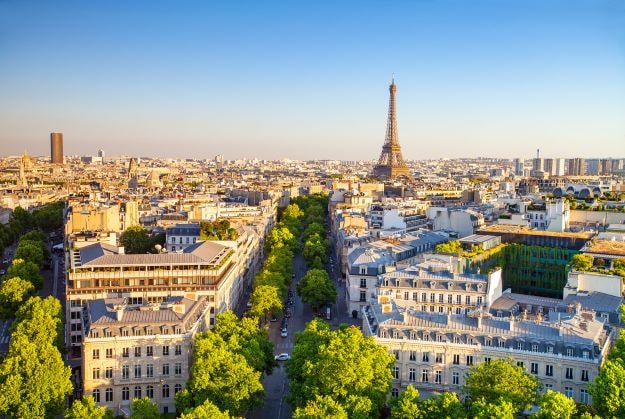
Trocadéro belongs when one Eiffel view will make the day feel emotionally finished. It is strongest for first-time visitors, celebration travelers, and couples who want a photograph that signals “Paris” without committing to the Eiffel Tower itself. It is also useful if your hotel or dinner is already in the 7th, 8th, or western side of the city. In that case, Trocadéro can be a short punctuation mark rather than a detour.
The correction is that Trocadéro is not automatically the luxurious choice after Versailles. Its famous view can create a small burst of energy, but the area can also introduce exposure, steps, crowds of attention, and the awkward question of what happens next. Walk down toward the Seine and you have added slope and a river crossing. Continue toward the Champ de Mars and you have turned a viewpoint into a longer walk. Head back toward Avenue Kléber or a car pickup and the stop may feel more like a photo errand than an evening. For a tired group, that distinction matters.
Saint-Germain preserves mood by lowering the stakes. Trocadéro can preserve mood only if you keep it brief. This is where couples should be honest with themselves. A slow Left Bank reset can make the day feel intimate because it gives you room to talk again after a highly guided morning. A forced Eiffel stop can make the same couple feel managed, observed, and late. The view is not the problem. The problem is treating the view as if it comes without energy cost.
Neighborhoods that handle a tired Versailles return well
The neighborhoods that handle a tired Versailles return well are the ones that shorten decisions, not necessarily the ones with the most famous sights. Choose the landing point by where dinner and the hotel already are, then by whether the group needs silence, a view, or a very small walk.
- Saint-Germain: best for couples, food-and-wine travelers, and Left Bank dinners. It handles fatigue because the evening can contract gracefully: café, short stroll, hotel, dinner. The area around Saint-Sulpice and Boulevard Saint-Germain gives enough Paris texture without requiring a formal attraction. Avoid it as an add-on if your dinner is far into the Right Bank and you would only be using the neighborhood as decorative filler.
- Invalides and the 7th: best when your hotel, driver pickup, or dinner is already nearby. This part of Paris can be practical after Versailles because it keeps you west and central rather than sending you deep across town. The mistake is assuming that proximity to the Eiffel Tower means you should add the Tower. After Versailles, the 7th often works better as a quiet return corridor than as a monument hunt.
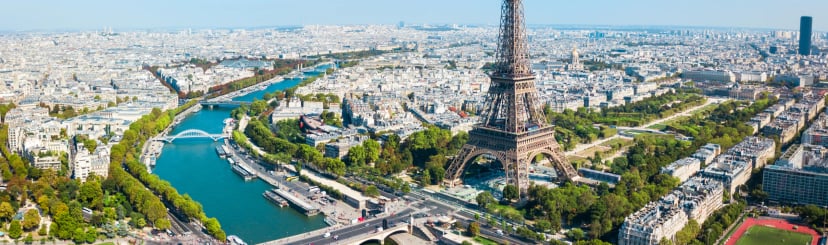
- Trocadéro and Passy: best for one Eiffel-facing moment, especially when the rest of the evening is already west of the river. Treat it as a viewpoint with a defined exit. It is a poor choice if you are hoping for a relaxed neighborhood wander, because the famous terrace naturally pulls people into photos, movement, and decisions about the next angle.
- The 8th and palace-hotel edge: best when your room or dinner is there. Returning to the 8th can be comfortable because the hotel reset is easy and service standards are high, but the district is less forgiving for casual wandering after a palace day. Broad avenues, traffic crossings, and the scale around the Champs-Élysées can make a “little walk” feel more formal than restorative.
- Le Marais: best only if dinner or the hotel is already there. Le Marais is rewarding on its own day, but after Versailles it often asks too much from the return. The lanes, boutiques, and historic density are pleasures when you arrive with appetite; they become another layer of choice when everyone is already choosing dinner, shoes, and transport.
The practical test is this: can the group leave the post-Versailles stop after fifteen minutes without feeling that the plan failed? Saint-Germain passes that test. Trocadéro passes only if the view was the point. Le Marais, Montmartre, and a museum generally do not pass, because they tempt you into “while we are here” thinking. After Versailles, the strongest neighborhood is the one that lets you stop without guilt.
How a chauffeur changes the Versailles return but not the energy math
A chauffeur changes the return by removing navigation, station decisions, pickup uncertainty, and some walking; it does not turn a palace day into a fresh evening. This is where premium spend needs a clear judgment. Paying for a private transfer or chauffeured support can be very worthwhile when the group includes older travelers, children, celebration clothes, mobility concerns, or a dinner reservation that should not be left to improvisation. It can also make the return feel calmer because the day has one accountable handoff instead of a chain of public-transport decisions.
The value is most obvious at the edges. A chauffeured return can collect the group after the estate without asking everyone to reorient themselves, manage tickets, read platforms, or debate whether the train stop should be Invalides, Musée d’Orsay, or Saint-Michel Notre-Dame. It can bring you directly to the hotel, a Left Bank restaurant area, or a western viewpoint. It can hold the evening together for a family where one child is done, for grandparents who have already stood enough, or for a couple traveling for an anniversary who wants the day to feel cared for rather than improvised. For travelers designing a broader comfort-led Paris plan, luxury chauffeured Paris private touring can be the difference between a day that looks good on paper and one that stays composed in motion.
The limit is just as important. A private transfer cannot make a second full cultural plan feel restful after a palace day. Premium spend does not help when the underlying plan is too dense; it only moves the tiredness in a nicer vehicle. A driver can shorten the walk from Versailles to Paris, but not the cognitive load of absorbing a palace, the social load of keeping a group aligned, or the dinner consequences of arriving overstimulated. This is why the chauffeur should be used to simplify the return, not to justify a bigger evening.
The best chauffeured after-Versailles pattern is direct return, hotel pause, then dinner. The second-best is Versailles to one brief viewpoint, then hotel or dinner, with the exit already decided. The weakest is Versailles to viewpoint, viewpoint to shopping, shopping to hotel, hotel to dinner. That version may sound luxurious because each leg is private. In reality, it multiplies interruptions. The car becomes a patch for a plan that should have been cut.
Private guidance changes the day in a more meaningful way when it shapes the palace itself and the return plan together. A good guide can calibrate the estate, avoid interpretive overload, and keep the group from spending all its attention before Paris even resumes. That is the natural moment to involve Orange Donut Tours: when you want a guided Versailles day with the return intentionally kept light, not when you want to bolt a second tour onto a tired evening. Inquire now.
The one reset that can earn its place
The one reset that can earn its place after Versailles is a short, low-stakes pause that replaces sightseeing rather than extends it. For some travelers, that is Saint-Germain. For others, it is the hotel lounge, a bath, a change of shoes, or a brief Seine-side hour. The defining feature is not scenery; it is reversibility. You should be able to stop, leave, or shorten the plan without losing the evening’s purpose.
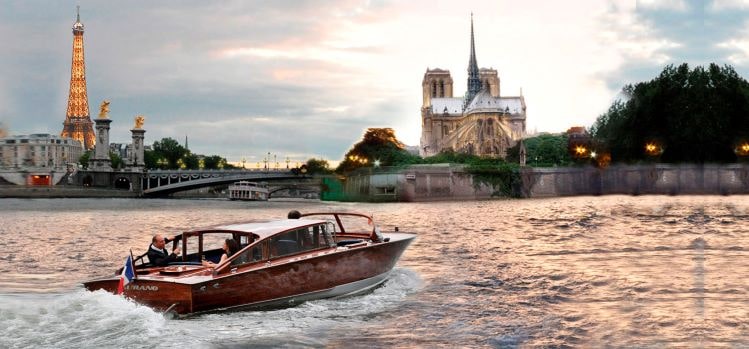
A Seine reset can work if it is already aligned with dinner timing and does not create a new transfer problem. The river helps because it gives movement without demanding another interpretive performance. After a palace day, travelers often need atmosphere more than information. A short private river hour can let the day decompress while Paris passes in one readable line: bridges, embankments, Left Bank and Right Bank edges, then dinner. It is not the same as starting a new city tour. It is a softer transition from Versailles scale to dinner scale. When the river is the right fit, keep it short and designed around the evening route rather than treating it as an extra attraction; see a private Seine cruise in Paris for the kind of experience that should replace wandering, not follow it.
A hotel reset is underrated because it looks unambitious. For comfort-first travelers, it is often the highest-value hour of the day. It lets everyone change shoes, charge phones, return purchases or outerwear, and stop performing enjoyment for a moment. It also restores choice. At dinner, people can taste, talk, and notice the room because the hour before dinner did not demand a new set of decisions.
Saint-Germain earns its place when it functions like a neighborhood reset rather than a mini-itinerary. A short loop around Saint-Sulpice, a pause near the Luxembourg side, or a simple walk toward the river can give Paris back to the group without asking for more study. The best version has no fixed endpoint beyond dinner. The weaker version tries to turn Saint-Germain into a checklist of cafés, churches, galleries, and boutiques. After Versailles, the neighborhood’s value is not how much it contains. It is how little of it you need.
Trocadéro earns its place only as a controlled viewpoint. Use it for the view, the photograph, the shared moment, and the exit. Do not combine it with an Eiffel Tower visit, a long Champ de Mars walk, and a cross-city dinner unless that is the primary celebration plan. The official Eiffel Tower site can help with Tower logistics when the Tower is the actual objective, but after Versailles the more useful question is whether the Tower belongs that day at all. For many travelers, the answer is no: see it, do not climb it, and leave the deeper Tower visit for a day with fresher legs.
Dinner decides more than the map does
Dinner should decide the return plan more than the map does because the evening’s success is measured at the table. This is especially true for food-and-wine travelers, couples, and celebration groups who have planned Paris around a few high-quality meals rather than around endless coverage. A Versailles day can coexist beautifully with dinner, but only if dinner is treated as the next main event rather than the final obligation after sightseeing.
If dinner is in Saint-Germain, land gently on the Left Bank or go directly to the hotel if the hotel is nearby. Avoid Trocadéro unless the view is essential and the route remains simple. A dinner on the Left Bank does not need a Right Bank prelude after Versailles. The appeal is continuity: palace, return, softer neighborhood, dinner. The city feels calm because the plan stops asking you to cross it.
If dinner is in the 7th or 8th, a short Trocadéro viewpoint can work, but the exit must be clean. The risk is not the stop itself; the risk is allowing the stop to become a debate. Decide before the day whether it is a ten-minute view, a drink nearby, or no stop at all. The group should not be making that decision at the terrace while someone is hungry, someone wants photos, and someone is calculating the ride to dinner.
If dinner is in Le Marais, the best plan is usually direct hotel return or direct dinner-area arrival, not a western viewpoint. Le Marais has its own evening rhythm, and reaching it after Versailles already asks for a longer transfer. Adding Trocadéro before it creates a west-to-east sweep that can feel efficient only because the map has been shrunk on a phone. In real city conditions, it inserts one more handoff before the part of the evening you actually booked.
If dinner is late and the group is energetic, you may allow one controlled add-on. The strongest candidates are a Saint-Germain stroll, a river hour designed around the route, or a Trocadéro viewpoint. The wrong candidates are timed-entry museums, a serious shopping agenda, Montmartre stairs, or any plan that depends on “we will see how everyone feels” while also having a reservation to make. Indecision is not flexibility when the day is already long. It is a tax on the group.
This is also where the nearby Champagne comparison belongs. If what you really want is a wine-country day with cellar visits, make that a separate day rather than trying to squeeze a wine mood onto the Versailles return. Champagne Taittinger visits in Reims (https://www.taittinger.com/en/visits-reims) are an example of a destination experience with their own timing, travel rhythm, and appetite. They do not belong as an analogy for “one more thing” after Versailles. Paris is more generous when each day has one central identity.
Traveler-fit clusters: choose the return by who is actually traveling
The right after-Versailles return changes by traveler type, but the winning pattern is always narrow. Choose the lightest plan that still gives the group a sense of occasion.
- Couples: choose Saint-Germain, the hotel reset, or one Trocadéro view. The mood-preserving decision is to remove logistics before dinner. The mood-killing mistake is turning the return into a performance of romance: too many photos, too many transfers, and too little time to feel like yourselves again.
- Families: choose direct hotel return unless dinner is very casual and very close. Children may seem energized at the palace exit and unravel during the transfer. Teenagers may tolerate Versailles well and resist the add-on because it feels like the day will never end. A private return helps, but the better gift is a shorter evening.
- Older parents or mixed-stamina groups: choose hotel first, then dinner. If a view is essential, make it a drive-by or a very brief stop with seating and pickup considered in advance. Do not judge the plan by the strongest walker. Judge it by the person whose fatigue will reshape the group mood.
- Food-and-wine travelers: choose the dinner neighborhood and keep the pre-dinner plan minimal. Saint-Germain works when the meal is Left Bank; the 8th works when the room is there; Le Marais works only if that is the dinner area. Protect appetite, attention, and conversation.
- Celebration travelers: choose one ceremonial gesture, not a sequence. A chauffeured return and a Trocadéro view can feel memorable if dinner is late and nearby. A river hour can feel more graceful if it is private, short, and aligned with the restaurant route. The celebration weakens when the evening becomes a chain of proof points.
- Culture-heavy travelers: choose one interpretive day, not two. Versailles deserves the mental space to remain distinct. Adding a major museum after it can blur both experiences. For art-focused pacing elsewhere in the stay, use a dedicated plan such as a private Paris art day without museum fatigue.
These clusters are not about limiting Paris. They are about keeping the day legible. A private itinerary becomes stronger when every element has a job. Versailles supplies scale, history, and ceremony. The return should supply recovery, orientation, or one clean visual close. Dinner should supply the evening. When the return tries to do all three, it usually weakens the part the traveler cared about most.
The after-Versailles plan we would actually build
The after-Versailles plan we would actually build starts by naming dinner, then hotel, then the one allowed pre-dinner move. It does not start with attractions. This is the practical order that keeps a premium Paris stay from becoming a chain of impressive but tiring fragments.
For a Left Bank dinner, return from Versailles to the hotel or Saint-Germain. Build in time to change, then allow a short neighborhood walk if the group still wants air. Keep the walk bounded by Saint-Sulpice, Odéon, Boulevard Saint-Germain, or the river edge. Do not add the Eiffel Tower unless the dinner is much later and the group explicitly values the view more than ease.
For a western Paris dinner, return by chauffeur if the budget supports it, and allow Trocadéro only as a brief stop. The stop should be defined before the day begins: one viewpoint, then hotel or dinner. If the group is already tired, skip it. A celebration does not become less special because you saved the view for another day. It becomes better if everyone reaches dinner ready to enjoy it.
For a Right Bank dinner east of the Louvre, keep the return plain. Go to the hotel, then dinner, or go directly toward the dinner neighborhood if that is more sensible. Resist the urge to “use” the west side of Paris simply because Versailles brings you back through it. The map may tempt you into Trocadéro, the 8th, or the river, but the route must serve the dinner, not the other way around.
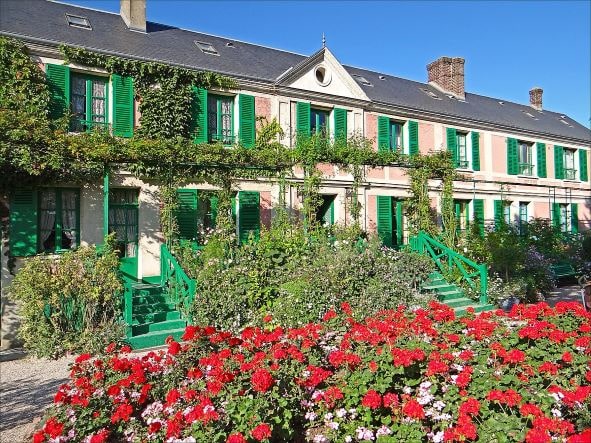
For travelers deciding whether Versailles should be in the trip at all, keep that separate from the return question. Versailles, Champagne, Giverny, and Normandy each change a Paris stay in different ways; the choice belongs earlier in planning. Compare those options in which private day trip from Paris fits your style. Once Versailles is chosen, the return-side answer becomes narrower: one reset, one short viewpoint, or nothing at all.
The firm editorial call is this: if dinner is important, the hotel reset beats the clever add-on. If a view is essential, Trocadéro beats a museum. If the group needs atmosphere without effort, Saint-Germain beats a cross-city chase. And if anyone in the group is already bargaining for a shorter evening before you leave Versailles, listen immediately. The best after-Versailles plan is the one that does not need rescuing at 7 p.m.
FAQ
What should we do in Paris after Versailles before dinner?
Choose one of three plans: return to the hotel, spend a short time in Saint-Germain, or make one brief Trocadéro viewpoint stop. Do not add a full second tour unless dinner is late, the group is unusually energetic, and the add-on is more important than arriving rested.
Is Saint-Germain or Trocadéro better after Versailles?
Saint-Germain is better for a tired return, a Left Bank dinner, or a low-pressure hour before the evening. Trocadéro is better only when one Eiffel Tower view is emotionally important and the stop can stay brief.
When should the evening after Versailles be empty?
Keep the evening empty when dinner is the priority, the group includes children or older parents, the palace day includes meaningful garden time, or the hotel and dinner are already in different parts of Paris.
Is a chauffeur worth it after Versailles?
A chauffeur is worth it when it removes navigation, station decisions, walking, or timing anxiety for the return. It is not worth using a chauffeur to justify a crowded evening plan, because a private car cannot erase the fatigue of a palace day.
Should we book a Seine cruise after Versailles?
A short Seine cruise can work after Versailles if it replaces wandering and fits naturally before dinner. It is a poor fit if it adds another transfer, delays the hotel reset, or turns the evening into a sequence of obligations.
Can we visit another museum after Versailles?
Usually no. A major museum after Versailles is more likely to dilute both experiences than improve the day. Save the museum for a dedicated art day unless your group specifically prefers a culture-heavy evening and has a late dinner.
What is the biggest mistake after returning from Versailles?
The biggest mistake is treating the Versailles return window as free time to fill. It is really a transition period before dinner, and the best plans use it to reduce decisions, not add them.
Where should couples go after Versailles?
Couples should usually choose Saint-Germain, the hotel reset, or one short Trocadéro view. The most romantic choice is often the one that leaves enough energy for dinner, conversation, and a calm end to the day.
If you’re interested in any private tours of Paris, please reach out to us.



 So if you are looking for the absolute best in Paris & surroundings with authentic local fully-licensed native guides whose English you can actually understand and with an exclusive and amazingly fun itinerary













