Best Barcelona Tapas and Wine Tours for a Better First Night

Updated
The best Barcelona tapas and wine tour for a first night is a privately paced old-town-to-Eixample route, not a crowded crawl or a formal tasting menu. It works because the Gothic Quarter-to-Eixample transfer hinge lets you feel historic Barcelona, understand the city’s dining rhythm, and still end close to the hotels and calmer avenues where many comfort-first stays are based. The clearest exception is simple: if you arrive very late, jet-lagged, or already committed to a destination restaurant, book a shorter guided aperitif instead of forcing a full evening.
This is the Barcelona-specific thesis: your first dinner should teach you how the city eats without making your first night feel like a test of stamina. A good tapas and wine tour is not just about dishes; it is a soft orientation route that turns unfamiliar streets, late dining hours, wine choices, and neighborhood judgment into something you can use for the rest of the stay. For travelers planning private touring, the strongest version is usually a flexible route connected to a private Barcelona tapas tour, not a fixed group itinerary that treats every table, appetite, and walking pace as identical.
The first-night verdict: choose orientation over spectacle
The winning first-night plan is a guided tapas-and-wine evening that starts with controlled old-town atmosphere and finishes where your next day will feel easier. That usually means beginning around the Gothic Quarter or El Born for texture, then using the Gothic Quarter-to-Eixample transfer hinge to avoid ending too deep in late-night old-town noise. This is a better first night than chasing the “most famous” bar because the practical value comes from confidence: how to order, how to read an official menu, when to stand, when to sit, which wines suit Catalan food, and how to judge whether a place is built for locals, visitors, or both.
Choose this style if:
- You want dinner solved without committing your first night to one long tasting menu.
- You want a guide to translate local dining habits into useful choices for the rest of the trip.
- You are a couple, family, or small group with different appetites, walking speeds, or wine interests.
- You are staying in Eixample, Passeig de Gràcia, the Gothic Quarter, El Born, or near Plaça de Catalunya.
- You want the evening to feel social and local, but not chaotic.
Reconsider it if:
- Your flight lands so late that a full route would turn into fatigue management rather than pleasure.
- You dislike moving between several stops and would rather settle into one reserved dining room.
- You are traveling with very young children who will not tolerate late eating, standing, or changes of venue.
- You want a serious wine-country experience; in that case, save your wine ambitions for Penedès instead of pretending a city tapas night can replace cellar time.
The overvalued default to reconsider is “the busiest old-town tapas crawl.” Busy can look reassuring on a search results page, but in Barcelona it often means queue drag, narrow-street compression, rushed ordering, and a route that ends with everyone tired in the wrong place. A better first-night tour feels less like collecting bars and more like learning the city’s dining map: where old-town energy is useful, where Eixample comfort earns its place, and where a guide’s judgment saves you from spending your first evening reading menus in a doorway.
Why tapas and wine tours work so well on arrival night in Barcelona
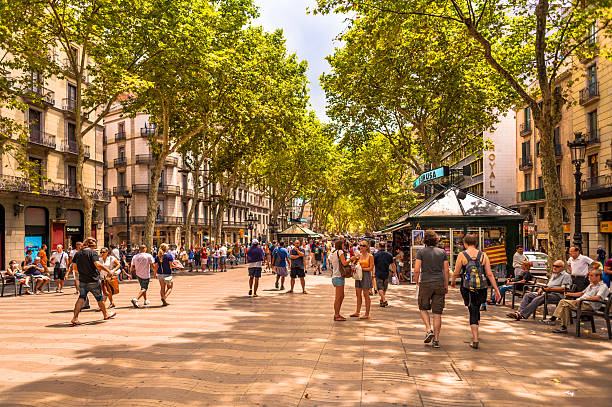
Tapas and wine tours work on arrival night because they solve three problems at once: dinner, orientation, and decision fatigue. Barcelona is not hard to enjoy, but it is easy to mis-sequence. Visitors often land, check in, walk too far down La Rambla, overcorrect into a formal restaurant, or wander into a bar that is convenient rather than good. A guided evening compresses the learning curve without turning your first night into a lecture.
The city rewards small decisions. Starting too deep in the Gothic Quarter can feel atmospheric at first and claustrophobic by the second stop. Starting too far up in Eixample can be comfortable but miss the old-town pulse that first-time visitors expect. Drifting toward the beach on night one can add distance, breeze, and a return transfer before you have your bearings. The smarter answer is not one neighborhood in isolation; it is a route with a beginning, a hinge, and an easy finish.
That is why private pacing matters. A couple celebrating an anniversary may want fewer stops, better wine conversation, and a quieter final table. A family may need earlier food, simpler transitions, and a guide who can keep teens interested without overexplaining every dish. A small group may need dietary screening before the evening begins, not awkward substitutions in front of the kitchen. The value is not “VIP” gloss; it is the ability to shape the night before small frictions become the memory of the night.
For travelers building a larger tailor-made stay, a first-night tapas plan also pairs well with a lighter arrival day. If you are coming from a cruise, an overnight flight, or a long transfer, keep the daytime route restrained and let the evening do the social work. Orange Donut Tours’ arrival-day planning in a white-glove first day in Barcelona is useful because it treats the first evening as part of the same energy budget, not as an unrelated dinner reservation.
Best Barcelona tapas and wine tours by first-night scenario
The best tour style depends on what kind of first night you are trying to protect. The mistake is booking by neighborhood name alone. Book by the evening consequence: how much you want to walk, how much food confidence you need, how quiet the final hour should be, and whether you want the night to launch a romantic stay, a family trip, or a food-and-wine itinerary.
For a better first night after a long flight: old town first, Eixample finish
The best arrival-flight version is a two-zone route that uses the old town for character and Eixample for composure. Begin with a short walk through the Gothic Quarter or El Born while energy is still fresh, then shift toward the wider streets and calmer hotel returns around Eixample. This route avoids the common first-night mistake of ending in the deepest part of the old town after everyone has already eaten, drunk, and lost patience with cobbles, crowds, or unclear taxi pickup points.
The consequence is physical. Barcelona’s center is walkable, but block-scale walking accumulates faster than visitors expect after a transatlantic flight or a cruise boarding day. Narrow lanes slow groups down. Late crowds make it harder to pause. A private guide can keep the route compact, choose stops with enough breathing room, and end the evening where the return feels obvious. That makes the night feel shorter in the best way: you have seen and tasted enough, but you do not feel trapped inside an overlong plan.
For couples: fewer stops, better wine, quieter final table
The best couples’ tapas and wine tour is not the one with the most venues; it is the one with the best final hour. A romantic first night usually benefits from two or three strong stops, a guide who can calibrate conversation, and a last table that does not feel like a feeding schedule. The evening should create confidence and intimacy, not force you to keep moving because an itinerary promised five tastings.
This is where Barcelona differs from cities where one dramatic dinner is the obvious first-night answer. A formal fine-dining meal can be wonderful later in the trip, especially if you are planning around the Michelin Guide: Barcelona starred list (https://guide.michelin.com/us/en/catalunya/barcelona/restaurants/all-starred), an official menu (https://www.disfrutarbarcelona.com/en/menu), or a restaurant reservations page (https://enigmaconcept.es/reserva/). But on night one, a long tasting menu often asks too much of the body clock. You may be technically seated in a better room while missing the thing you needed most: a relaxed way into Barcelona.
For families and multigenerational groups: earlier food and simpler transitions
The best family version is a private route with earlier eating, predictable walking, and flexible portions. Children and older relatives rarely object to tapas itself; they object to waiting, standing too long, or moving through streets that become louder as the evening deepens. A guide who can read the group’s energy is more valuable than one more tasting stop.
Families should not force a late Spanish dinner rhythm on the first night just to feel local. Eat earlier, keep the route compact, and let the guide explain what is typical without making the children live the most demanding version of it. If the family trip includes Gaudí the next morning, this matters even more: a first night that runs too late can flatten the next day before it starts. For a broader family pacing lens, pair the evening with a comfort-first Barcelona plan with kids rather than treating dinner as separate from the next morning’s attention span.
For food-and-wine travelers: city tasting now, wine country later
The best food-and-wine first night is a city tasting that admits its limits. A Barcelona tapas and wine tour can introduce Catalan flavors, local ordering logic, vermouth culture, cava context, and the difference between a tourist-facing tapas display and a more serious kitchen. It should not pretend to replace a winery day. That distinction keeps the evening honest.
If wine is a major reason for the trip, use the first night to understand what you enjoy with food, then save deeper wine time for Penedès or a private cellar-led day outside the city. This prevents a common planning error: trying to make one urban evening carry the weight of a full wine-country experience. A city tapas night is best for confidence and pleasure; a winery day is best for production context, landscape, and unhurried tasting.
For celebration travelers: upgrade the sequencing, not the number of courses
The best celebration version is a private tapas-and-wine evening with a polished final setting, not a maximalist route. Birthdays, anniversaries, and reunion trips often go wrong when the host tries to make the evening feel special by adding too much: more stops, more pairings, more dessert, more transfers. Barcelona rewards the opposite. Make the opening easy, the middle social, and the finish calm enough for the occasion to breathe.
Premium spend changes the night when it buys privacy, a better guide, pre-screened dietary planning, a quieter final reservation, or a route that ends close to your hotel. Premium spend does not help when it is spent on adding extra tastings after the group is already full or on a showy final venue that forces a long late-night transfer back across the city. If the trip includes a larger occasion day, keep the first night warm rather than overproduced and use a private Barcelona celebration day plan to decide where the bigger spend belongs.
The route hinge that makes or breaks the evening
The Gothic Quarter-to-Eixample transfer hinge is the small routing choice that often decides whether a first-night tapas tour feels energizing or tiring. The Gothic Quarter gives you lanes, history, plazas, and the sensation of being inside old Barcelona. Eixample gives you wider pavements, clearer hotel returns, less old-town compression, and easier onward planning for Gaudí days. A good first-night route uses both without asking you to zigzag between them repeatedly.
This hinge matters because Barcelona’s first-time geography can deceive visitors. Plaça de Catalunya makes the old town and Eixample feel adjacent, and they are. But the body experiences the transition differently after dinner. Moving from a narrow lane near the cathedral toward the broader grid above Gran Via can feel like leaving the night’s intensity behind. Moving the other direction late, from a calm Eixample table back into a crowded old-town pocket, can make the evening feel longer, noisier, and less controlled.
A guide’s job is not simply to know good places. It is to decide when the old town is adding life and when it is adding friction. The Gothic Quarter can be excellent for the first stop because curiosity is high and a short walk feels rewarding. It can be poor as the final zone for travelers who want an easy return, especially if the group includes older parents, tired children, or anyone who dislikes late-night navigation through dense lanes. El Born can provide a smoother middle ground, but even there the route needs discipline; too many lateral moves between old-town pockets can turn a delicious evening into a slow shuffle.
The body consequence is real. Barcelona is flatter than Lisbon or Granada, but that does not mean the first night is effortless. Heat, hard paving, standing conversations, uneven old-town surfaces, and the stop-start rhythm of crowded streets all add load. A tapas tour with four compact stops can feel lighter than a single long walk to the “perfect” restaurant because the body gets pauses, food, and orientation in the right order. A route that ignores the hinge can do the opposite: it turns a pleasant meal into a series of small transfer resets.
The mood consequence is just as important. A well-routed first night makes Barcelona feel legible. You understand where the old city sits, why Eixample becomes a comfort base, and how to choose dinner later without panic. A poorly routed night makes the city feel more crowded than it is. The same traveler can wake up either excited for Gaudí or already suspicious of the schedule, depending on whether the first evening ended with ease or drift.
What to skip on the first night
Skip the high-pressure greatest-hits crawl on your first night. It sounds efficient, but it often creates the wrong kind of momentum: too many stops, too much standing, too much old-town density, and not enough time to understand what you are eating or why the route is shaped that way. The first night should reduce uncertainty, not turn dinner into a checklist.
Also skip the idea that La Boqueria plus random tapas equals a thoughtful arrival dinner. La Boqueria can be useful in the right morning plan, and the market question deserves its own pacing logic, but it is rarely the best anchor for a polished first night. If markets interest you, treat them as a daytime choice and read the difference between Boqueria, Santa Caterina, and Sant Antoni in a Barcelona market morning without tapas fatigue. At night, market logic and first-night dinner logic are not the same.
Do not overvalue a beachfront dinner on arrival night either. Barceloneta has a place in a first stay, but the beach-versus-center tradeoff is sharper at night than it looks on a map. If you are staying centrally, a beach dinner can add a late return and a less useful orientation route. It may be lovely in the right weather and with the right reservation, but it does not teach the city as efficiently as a tapas-and-wine route through the historic center and Eixample edge.
Finally, avoid making Sagrada Família or Park Güell logistics part of the same evening. Those are daytime planning decisions, and both deserve direct ticket checks before you build a Gaudí day: use Sagrada Família official tickets (https://sagradafamilia.org/en/tickets-individuals) and Park Güell official tickets (https://parkguell.barcelona/en/buy-tickets) when confirming entry details. On night one, trying to combine major sight logistics with dinner planning usually adds mental clutter. Keep the evening narrow: food confidence, neighborhood orientation, and a clean return.
Private tour, small group, or self-guided tapas night?
A private tapas and wine tour is the best fit when the evening has to serve the trip, not just dinner. Group tours can work for sociable travelers who want a lower-commitment introduction, and self-guided nights can work for confident diners with time to research. But for couples, families, celebration travelers, and comfort-first visitors, the private format earns its cost when it prevents the first night from becoming a trial-and-error exercise.
Private tapas and wine tour: Best when you want the route adjusted to your hotel, appetite, walking tolerance, wine interests, dietary needs, and next-day schedule. It is especially strong for short stays because the guide can make the evening double as a local briefing.
Small group tapas tour: Best when budget and social energy matter more than customization. The tradeoff is that the pace will be set for the group, not for your arrival fatigue or family dynamics.
Self-guided tapas night: Best when you already know Barcelona, enjoy improvising, and are comfortable reading menus, judging room energy, and walking away from a poor fit. It is weakest on the first night when everyone is hungry and the group expects one person to make every decision.
The practical difference appears at the first friction point. A private guide can shorten a route when the flight catches up with you, change the order when a street feels too dense, explain why a bar is worth waiting for or not, and keep the wine conversation at the right level. A fixed tour cannot easily do that. A self-guided plan can be enjoyable, but the planner in the group often spends the evening checking maps and second-guessing choices instead of relaxing.
For short stays, the private format is most defensible. If you have only two or three nights, the first dinner has more responsibility: it sets the tone, teaches the dining rhythm, and reduces the risk of wasting the second night on a poor reservation. That is where a tailored evening connects naturally to private tours in Barcelona as a broader planning choice rather than a one-off food activity.
How to pair the tapas night with Gaudí days, markets, and wine country
The first-night tapas tour works best when it is allowed to remain narrow. It should not absorb every food, wine, and sightseeing ambition you have for Barcelona. Use it to orient, then let the next days carry the bigger themes: Gaudí, markets, Montjuïc, coastal time, or wine country.
If Sagrada Família is scheduled the next morning, keep the tapas night especially clean. Do not add flamenco, a late beach transfer, or a final cocktail just because everyone is excited. Sagrada Família rewards attention, and the next day can feel diminished if the first night ends too late. If your Gaudí day includes Park Güell as well, this matters even more because the hillside routing and entry timing create their own demands.
If markets matter to you, separate them from the first-night tour. A market morning lets you see ingredients, neighborhood shopping patterns, and the difference between browsing and eating. A tapas night lets you understand how those ingredients become an evening rhythm. Combining both into one food-heavy arrival stretch can create tapas fatigue before the trip has properly started.
If wine is a major theme, treat the first night as a palate-setting dinner and save the more ambitious wine plan for a later day. Penedès belongs on a different energy curve: daylight, transfers, cellar pacing, and a guide who can connect cava or still wines to the landscape rather than trying to explain everything between tapas stops. This keeps the city evening relaxed and gives wine country enough room to justify itself.
If flamenco is tempting, make the call based on arrival energy rather than cultural ambition. Tapas plus flamenco can work beautifully after a Gaudí day when the evening has been deliberately shaped for it, but on the first night it can also become too much sitting, too much timing pressure, and too late a return. For that more performance-led evening, use Barcelona tapas and flamenco after Gaudí as a separate planning question rather than folding every night-out idea into arrival day.
How much structure should a premium tapas and wine evening have?
A premium first-night tapas and wine evening should have enough structure to remove friction and enough flexibility to avoid feeling staged. The route should have a planned beginning, a preferred middle, and a sensible finish, but not a rigid promise that every group must eat the same way. This is especially true in Barcelona, where the difference between a good evening and a tiring one often comes from when the guide chooses to stop moving.
Good structure starts before the tour. Dietary needs, wine preferences, mobility limits, hotel location, and arrival timing should be known in advance. That does not mean the night becomes fussy; it means the guide is not solving avoidable problems in public. For a private group, the best planning question is not “How many tapas will we get?” It is “What should the evening accomplish before we go back to the hotel?”
The answer may be different by traveler. A couple may want a more intimate progression and a final table that could become the evening’s anchor. A family may want food early and commentary in smaller doses. A multigenerational group may need seating more often and a route that avoids unnecessary backtracking. Food-and-wine travelers may want a guide who can speak intelligently about Catalan food without pretending every pour is a masterclass.
This is also where premium spend has limits. Paying more for a knowledgeable private guide, better pre-planning, and a route tailored to your hotel can change the evening substantially. Paying more simply to label the night “gourmet” does not guarantee a better first night if the route is too long, the timing too late, or the final stop too far from where you need to be. In Barcelona, the first-night luxury is not excess; it is not having to negotiate the city while hungry.
A first-night tapas plan that actually feels better the next morning
The best first-night tapas plan should make the next morning easier. That is the hidden test. You should wake up with a clearer sense of Barcelona’s center, a few practical dining instincts, and enough energy for the day you came to see. If you wake up with only a list of dishes and sore feet, the evening may have been enjoyable but it did not do the larger job.
A strong plan usually runs in three movements. The first movement is welcome: an atmospheric but controlled start, enough food to take the edge off, and a guide who establishes how the evening will work. The second is interpretation: why certain dishes appear, how local wine choices pair, how Barcelona’s restaurant geography differs between old town, Eixample, Gràcia, Barceloneta, and the more polished hotel corridors. The third is release: a calmer final stop or clear return that lets the group feel they have arrived rather than endured.
The cut-first rule is firm: if the itinerary is getting overpacked, cut the extra stop, not the guide. The additional stop may look like more value, but the guide is the part that turns the night into usable knowledge. This is especially true for short stays, celebration trips, and families where one tired person can change the group’s mood. Better to leave wanting one more Barcelona night than to spend the first one proving you can keep going.
If your stay is only two or three nights, a first-night tapas tour can also help decide what not to do. You may discover that Eixample is the right evening base, that you want one market morning rather than two food experiences, or that a formal restaurant belongs later in the trip. The night becomes a planning tool because the guide can turn reactions into adjustments. That is why a well-run private tapas evening is commercially sensible for Orange Donut Tours guests: it helps the rest of the itinerary become more personal, not just more full.
For a short Barcelona stay, the highest-value evening is often the one that removes tomorrow’s uncertainty. A tailored tapas-and-wine route can be planned around your arrival time, hotel base, appetite, dietary needs, and the next day’s touring so the first night feels local without becoming a stamina test. Inquire now
FAQ
Are tapas and wine tours in Barcelona worth it on the first night?
Yes, a tapas and wine tour is often worth it on the first night because it solves dinner, orientation, and local dining confidence at once. It is most worthwhile when the route is private or carefully paced around your hotel, arrival energy, and next-day plans.
What is the best area for a first-night tapas tour in Barcelona?
The best first-night area is usually a controlled route between the Gothic Quarter or El Born and Eixample. The old town gives atmosphere, while Eixample gives easier returns, wider streets, and a calmer finish for many premium hotel stays.
Should I book a private tapas tour or join a group tapas tour?
Book a private tapas tour if you want the evening adjusted to your pace, dietary needs, wine interests, hotel location, and arrival fatigue. A group tour can work for sociable travelers, but it is less forgiving when the first night needs flexibility.
Is a tapas and wine tour better than a fine-dining reservation on arrival night?
For many travelers, yes. A tapas and wine tour is usually better on arrival night because it is more flexible, more orienting, and less demanding than a long formal meal. Save fine dining for a later night when your body clock and appetite are more settled.
Can families do a Barcelona tapas and wine tour?
Yes, families can do a Barcelona tapas tour if the timing is earlier, the route is compact, and the guide can adjust food choices and commentary. A private format is usually much better for families than a fixed late-night group crawl.
How many stops should a first-night tapas tour include?
Two to four well-chosen stops are usually enough for a first night. More stops can look generous on paper, but after travel fatigue sets in, extra movement often reduces comfort more than it improves the food experience.
Should a first-night tapas tour include Barceloneta or the beach?
Usually not, unless you are staying near the waterfront or have a specific seaside reservation. For most first-night plans, the beach adds a return transfer and teaches less about the central dining map than an old-town-to-Eixample route.
What should I do if my flight arrives late?
If your flight arrives late, book a shorter guided aperitif or a single well-planned dinner rather than a full tapas route. A first-night food tour should make Barcelona feel easier, not force you through a long evening when the group is already tired.
If you’re interested in any private tours of Barcelona, please reach out to us.














 So if you are looking for the absolute best in Barcelona & surroundings with authentic local fully-licensed native guides whose English you can actually understand and with an exclusive and amazingly fun itinerary













