How to Spend Your First Day in Barcelona After a Cruise or Overnight Flight: A White-Glove Arrival Plan for a Luxury Stay
Updated
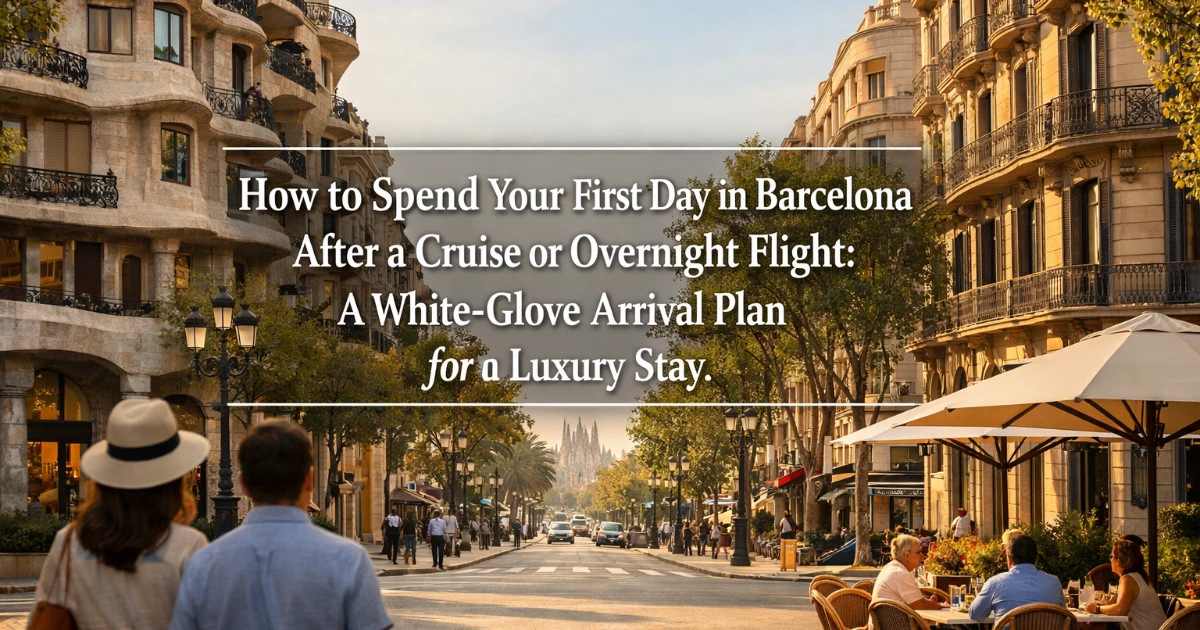
The best first day in Barcelona after a cruise or overnight flight is usually not a greatest-hits sweep. It is a flat, hotel-matched soft landing: stay around lower Passeig de Gràcia near Casa Batlló if you are sleeping in Eixample, or stay by the water if your hotel is near Barceloneta or Port Vell. That works because Barcelona changes character quickly at route hinges. Broad, forgiving blocks can become stop-start medieval lanes, hill logistics, or timed-entry pressure in one overambitious turn. The clearest exception is the traveler already staying by the sea. That person should let the day breathe along the waterfront rather than commuting inland just to say the trip began with a famous facade.
Our view is simple: in Barcelona, arrival-day success is decided less by which sight you choose than by whether you stay on the flat grid or at the water long enough for your body to catch up. This is not timid planning. It is the move that keeps the city feeling lucid instead of noisy, and it protects the day when Barcelona’s bigger interiors and more demanding routes will actually reward your attention.
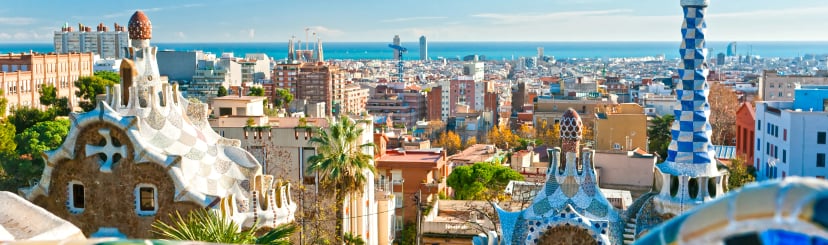
For travelers arranging Barcelona airport arrivals or Barcelona cruise arrivals, the point of day one is not to win on sight count. It is to avoid spending tomorrow recovering from today. Counterintuitively, the beach is not the universal soft landing either. If your hotel is on Passeig de Gràcia, a detour to Barceloneta can drain more energy than a calm urban glide through Eixample. And if you are tempted to prove you have arrived by stacking Gaudí immediately, Park Güell is the famous Barcelona stop you should almost never force onto an exhausted arrival day.
Three arrival shapes that actually work
- Most forgiving: an Eixample glide for hotels on or just off Passeig de Gràcia, with a shower, a proper lunch, a short walk around lower Passeig de Gràcia near Casa Batlló, and dinner close to bed.
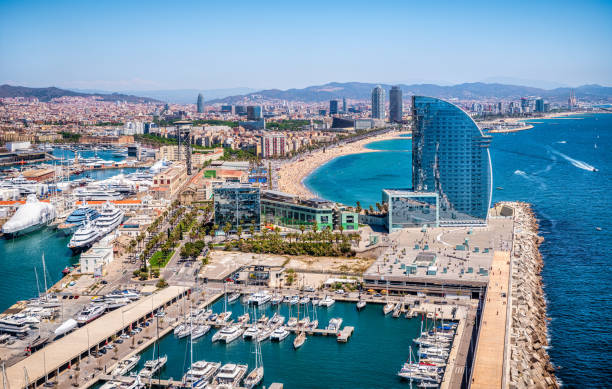
- Best seaward exception: a Port Vell or Barceloneta route for hotels near the waterfront, with a marina-edge stroll, a long lunch, and no inland push toward the Gothic Quarter until you know you still want it.
- The plan to cut first: any arrival day that tries to combine Sagrada Família, Park Güell, and old town in one sweep. That is not efficient; it is how travelers turn day one into recovery day two.
The choice really turns on three variables: how you arrived, where you are sleeping, and whether the first route stays flat enough to remain reversible. Cruise versus flight matters, but hotel on Passeig de Gràcia versus hotel near Barceloneta matters just as much. Once you know those two things, the third rule follows: keep the first afternoon on the grid or by the water, and do not cash in your best sights while your energy is still uncertain.
What should you do in Barcelona on the first day after a cruise or overnight flight? Start flat.
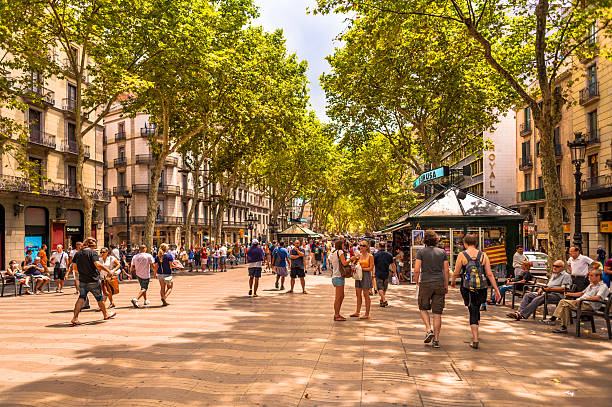
You should begin with the flattest, least decision-heavy version of Barcelona that matches where you are sleeping. Flat-first neighborhood sequencing is the whole idea. For many first-time visitors in upscale hotels, that means Eixample first and old town later. The logic is practical: Eixample gives you wide pavements, predictable turns, elegant streets that still feel distinctly Barcelona, and easy retreat to the room if the body suddenly drops. A short loop between lower Passeig de Gràcia, Rambla de Catalunya, and the Plaça de Catalunya side of the grid can feel rich without feeling complicated. The city can feel beautifully manageable here, especially around Passeig de Gràcia and Rambla de Catalunya, because the blocks read clearly and the walking rhythm stays even.
This is why lower Passeig de Gràcia near Casa Batlló is such a useful opening cue. It gives you grandeur without forcing commitment. You can absorb the architectural drama, browse lightly, take coffee or lunch nearby, and keep the hotel within easy reach. On an arrival day, that matters more than squeezing in an interior with a ticket time. The right first Barcelona afternoon should feel reversible. If you lose energy after forty minutes, the plan should still count as a success rather than a failure.
Travelers often hear “Barcelona is walkable” and translate that into “Barcelona is forgiving.” Those are not the same thing. The city is easy to enjoy when you keep your first hours on the flat grid or the open waterfront. It becomes more taxing when you add queues, hard sunlight, irregular paving, entrance logistics, or a second neighborhood that demands a reset in mood and orientation. The arrival-day question is therefore not “What can I fit in?” but “Which version of the city lets me still feel like myself at 7 p.m.?”
If your hotel zone is still undecided, it is worth understanding the tradeoffs in where to stay in Barcelona. But even after the hotel is fixed, the first-day rule remains the same: protect the first route, then let the rest of the trip expand around it. Barcelona is a city that becomes more beautiful as your energy improves. There is no prize for meeting it at your lowest point with your most ambitious plan.
Cruise arrival and overnight-flight arrival are different bodies, so treat them differently
A cruise arrival and an overnight-flight arrival should not be planned as though they create the same traveler. Cruise guests are often more spatially alert than air arrivals, even when they are tired. They have usually had breakfast, have had a slower morning rhythm, and are less likely to feel that peculiar red-eye fog that turns basic choices into friction. Their problem is often luggage sequencing, terminal transitions, and the temptation to overestimate stamina because they do not feel wrecked yet.
Overnight-flight arrivals are different. Even travelers who function well after a long-haul often hit a decision slump in Barcelona around the moment they should be enjoying themselves most. Appetite can be off, sunlight can feel harsher than expected, and the mind is more vulnerable to the false promise of one more stop. That is when a “quick” diversion to Sagrada Família or a taxi out to Park Güell stops being a highlight and starts becoming a test of cooperation. An arrival day after a flight should therefore be designed as a single coherent loop with a clear retreat point, not as a sequence of achievements.
Cruise passengers can usually carry a slightly longer lunch and one more visual layer, especially if disembarkation was orderly and the hotel is straightforward. An airport arrival usually needs more slack. The difference matters for couples debating whether to stay awake, for families hoping children can “push through,” and for small celebratory groups tempted to start big because the trip feels special. Barcelona is generous when you pace it to the arrival state in front of you. It becomes punishing when you pace it to the version of yourself you hope will show up later.
The city also affects the body differently depending on how you arrived. After a flight, repeated starts and stops are often worse than raw distance. Wide Eixample blocks can feel effortless, but the moment you switch into older stone lanes, queue for entry, or add a hill-bound transfer, the cost shows up in shoulders, calves, and concentration. After a cruise, you may tolerate more meandering, but you still pay for every “small” complication that makes luggage handling, check-in timing, or bathroom access less predictable. Comfort-first planning in Barcelona is not coddling. It is understanding where fatigue really appears.
The mood consequence is just as real. A clean arrival route makes Barcelona feel generous, elegant, and easy to re-enter after dinner. A cluttered first afternoon makes the same city feel crowded, louder than it is, and strangely farther apart than the map suggests. This is why the first day matters beyond itself. If you flatten the mood on day one, you do not simply lose one afternoon. You often lose the confidence that should carry you into the second day.
Hotel on Passeig de Gràcia versus hotel near Barceloneta changes the plan more than arrival time does
The most useful Barcelona arrival decision is often not cruise versus flight but hotel on Passeig de Gràcia versus hotel near Barceloneta. The hotel position determines whether the soft landing should stay urban or turn seaward. Travelers underestimate this because both zones look central on a map and both are associated with a desirable version of the city. In reality, they ask different things of you when you are not yet fully yourself.
If your hotel is on Passeig de Gràcia or in the surrounding Eixample blocks, your arrival plan should stay urban, linear, and local. Check in or drop bags, eat properly, and give yourself a short circuit that can end the moment the battery drops. This is the setting where a handsome avenue is not just scenery but a practical asset. Lower Passeig de Gràcia near Casa Batlló can feel ceremonious without being effortful. You get scale, detail, and the sense that you are in Barcelona already, but you avoid the inward collapse into denser navigation too soon.
If your hotel is near Barceloneta, Port Vell, or the closer seafront side of the city, the opposite is usually true. Do not taxi inland to manufacture an Eixample arrival just because you have seen it in photos. Let the water do the work. A stroll on the marina edge, the broader lines around the port, or a lunch that keeps you looking out rather than threading through traffic can be exactly what the first afternoon needs. Barcelona’s seaward edge can soften the nervous system faster than a sightseeing agenda can.
This is where many first-time visitors make a costly category mistake. They assume the “real” city starts once they have walked through the Gothic Quarter. Not on arrival day. If you are staying by the sea, the “real” success is reaching evening with your mood intact. If you are staying in Eixample, the “real” success is not wasting energy crossing town for an experience your own neighborhood is better positioned to deliver more gently. Hotel alignment is not a small optimization. It is the hinge that decides whether day one feels composed or vaguely scattered.
There is also a spending consequence. Travelers sometimes pay for a more elaborate arrival afternoon because they think a premium plan should look fuller. In Barcelona, fuller is often worse. A hotel on Passeig de Gràcia benefits from proximity and immediate elegance; a hotel near Barceloneta benefits from marine space and visual decompression. Neither automatically benefits from adding a second major district before the room, the meal, and the body have settled. What earns its cost is not more content. It is better alignment.
The Port Vell to Gothic Quarter handoff is where graceful arrivals go wrong
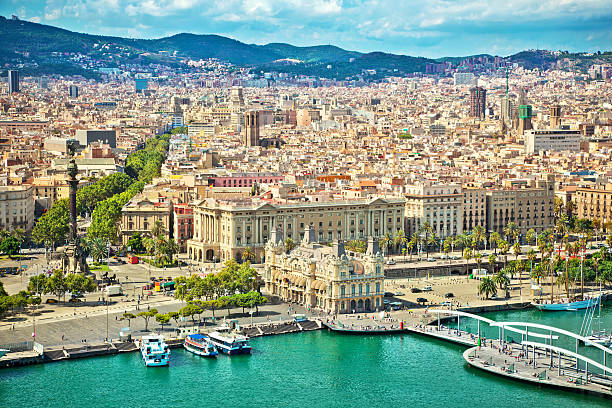
The Port Vell to Gothic Quarter handoff is the threshold to watch. Crossing it too early can turn a graceful arrival into old-town fatigue. On the waterfront side, movement feels open, legible, and rhythmically simple. The minute you decide to press inland from the Passeig de Colom and marina side toward Via Laietana or the deeper Gothic lanes, the experience changes. The streets narrow, the navigation asks more of you, the crowd pattern becomes less predictable, and every short stop starts to cost more because you are already working harder to stay oriented.
This is why “we’ll just pop into the Gothic Quarter for a bit” is one of the most dangerous arrival-day sentences in Barcelona. If you are fresh, that handoff can feel romantic. If you are tired, it often feels like the day has suddenly become granular. There is more to notice, but there is also more to manage. The energy leak is not dramatic enough to warn you immediately. It shows up thirty minutes later, when everyone is less patient, nobody quite agrees on the next move, and the return to the hotel feels longer than it is.
The practical answer is not to avoid the Gothic Quarter forever. It is to earn it later in the first day, if at all, and only from the easiest edge. A gentle look from the Port Vell side, a limited walk toward the old fabric, or a short taste rather than a full immersion can work for some cruise arrivals. But the moment the plan starts to depend on threading deeper inland, doubling back, or attaching another district afterward, the cost rises fast. Barcelona’s medieval core is not going anywhere. Your arrival-day energy is.
The same principle explains why old town often feels harder than the map suggests. It is not just the paving or the crowd. It is the cognitive load. You make more tiny decisions there: left or right, continue or turn back, keep going to El Born or retreat, pause for a drink or save it. On a fully charged day, that is pleasurable texture. On an arrival day, it can become decision drag. Travelers who stay on the flat grid or the waterfront first are not missing the city. They are meeting it in the order that keeps curiosity alive.
For guests who know they love atmosphere and cannot resist the old city, moderation works better than bravado. Touch the edge, then leave. Do not make the Gothic Quarter prove its worth on the same afternoon you are still waiting to feel human. If deep old-town wandering is high on your list, that is exactly why it deserves a later day, a better hour, and a steadier mind. Barcelona gives back more when you stop trying to extract everything at once.
Save Gaudí heavy-hitters for the day they deserve
You should save Barcelona’s Gaudí heavy-hitters for a better day, even if they are the reason you booked the trip. A tired arrival window is a poor setting for the city’s most visited icons because those visits ask for more than presence. They ask for timing, patience, clear attention, and enough energy to appreciate what you are actually seeing. If you flatten yourself getting there, the reward lands smaller than it should.
Sagrada Família is the easier temptation because it feels central to the Barcelona story and seems close enough to slot in. But a truly satisfying visit usually deserves a deliberate entry time, not a squeezed-in arrival gamble. If you want to secure a later visit, book Sagrada Família official tickets (https://sagradafamilia.org/en/tickets-individuals) for the morning or a clear-headed later afternoon and let arrival day remain lighter. The basilica is too important to your trip to be approached half-awake and slightly resentful of the line, the timing, or the transit you needed to reach it.
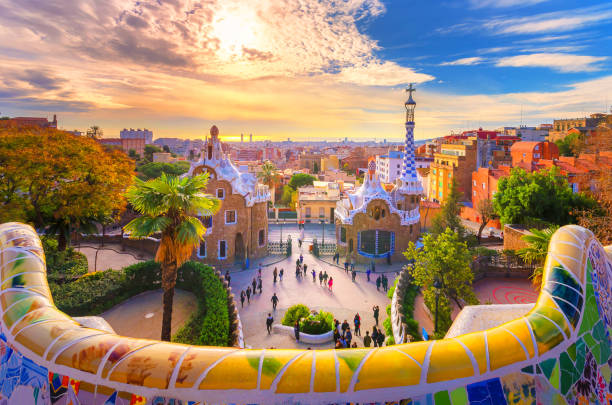
Park Güell is the stronger editorial no. It is the famous stop that almost never earns its place on an exhausted first day. Even travelers who enjoy walking often underestimate what the visit demands in heat, gradient, attention, and time discipline. If it matters to you, book Park Güell official tickets (https://parkguell.barcelona/en/buy-tickets) for a later morning and treat the arrival afternoon as the protection plan that makes that visit better. The problem with forcing Park Güell early is not that it is bad. It is that it steals quality from the rest of the trip.
If the trip starts to feel overpacked, cut Park Güell from day one before you cut lunch, rest, or an easy walk near the hotel. Cut a ticketed interior before you cut recoverability. Cut the cross-city hop before you cut the chance of enjoying dinner. Those are not small edits. They are the differences between a first day that quietly strengthens the stay and one that forces you to negotiate fatigue at every turn.
When you are ready for a real Gaudí day, build it properly. The better logic is covered in a dedicated Gaudí day without queue burnout. Arrival day should not impersonate that plan. It should protect it. This is the real luxury judgment: some experiences become more valuable when they are delayed by twenty-four hours.
What private pickups and upgraded logistics actually change
Private pickups and upgraded logistics matter most when they remove transitions, not when they merely add polish. They earn their cost when they absorb luggage, uncertain room-readiness, a long transfer from ship or airport, and the need to move directly into one calm route without negotiating taxi lines or fragmented decisions. They also matter more for multigenerational groups, celebration travelers who want the evening preserved, and families who know the first unnecessary complication can echo through the whole stay.
In Barcelona, this is especially true when the arrival involves both movement and restraint: airport to Eixample with bags and a lunch stop before check-in, cruise terminal to a Passeig de Gràcia hotel without losing the day to handoffs, or seafront arrival with older parents who can enjoy the city but do not need experimentation on the first afternoon. In those situations, a protected transfer and a deliberately gentle first loop can preserve not just today’s comfort but tomorrow’s ambition. That is where a chauffeured Barcelona day or a tailored arrival service earns real value.
If your plan includes only one neighborhood, a very nearby hotel, and no serious transfer friction after check-in, spend more carefully. If your hotel sits on lower Passeig de Gràcia near Casa Batlló and your plan is simply check-in, a late lunch, and a short stroll, paying for a chauffeur to shadow every block does not help enough to earn its cost. Barcelona has places where premium spend changes the experience, but it also has places where proximity and simplicity do the job better than a larger vehicle plan.
The same restraint applies to first-night upgrades. An upgraded arrival dinner across town does not materially improve the arrival if what you really need is a shower, a short walk, and a meal you can reach without negotiation. Luxury is not always farther, longer, or harder to secure. On day one, it is often the freedom to stop early without feeling that the evening has failed. Travelers who understand this get more from Barcelona because they stop asking the first day to perform as the symbolic center of the trip.
Where premium service does help decisively is in stitching the whole stay together. If your first day is well protected, then day two can carry the Gaudí commitments, the old-town depth, or the longer food-and-wine route without the residue of exhaustion. That is the real conversion moment in arrival planning. A private pickup, a curated first loop, and luggage handled cleanly are not about indulging one afternoon. They are about keeping the trip on schedule with the version of yourself who came to enjoy it.
If that is the problem you want solved rather than improvised, Inquire now. A white-glove arrival plan is most useful on short Barcelona stays, because it prevents day one from spilling into day two and turning your best sightseeing window into a recovery window.
A first-day outline that keeps Barcelona feeling generous tomorrow
The best first-day outline is short, zone-specific, and willing to end early. That is the whole shape. You do not need a heroic list. You need a route with a beginning, a pause, and an off-ramp. The goal is to arrive at dinner still interested in Barcelona rather than proud that you endured it.
If you arrived by overnight flight and your hotel is in Eixample
Go straight to the hotel zone, prioritize whatever makes you feel restored fastest, and keep the first walk on the flatter Eixample axis. A real meal matters more than a famous sight. So does daylight, but only in a form that does not demand timing pressure. Think shower, lunch, a controlled walk around Passeig de Gràcia or Rambla de Catalunya, and maybe a single visual flourish rather than an interior commitment. If you have enough energy afterward, you may edge toward a second street or a calm aperitif. If you do not, stop. The plan has already worked.
If you arrived by cruise and your hotel is near the water
Use the port-side logic instead. Let the first afternoon unfold along the marine edge, with Port Vell or Barceloneta absorbing the transition from ship to city. You may have enough energy for a longer lunch and a bit more strolling than an air arrival, but resist converting that into an inland march. On this kind of day, staying on the Passeig de Colom side of the port or easing out toward Passeig de Joan de Borbó makes better use of your energy than trying to prove the trip has properly started only once you are inland. The waterfront is not a consolation prize. It is the correct setting for a day when your senses are open but your patience may still be narrower than usual.
If you arrived by cruise or flight and your room is not ready
This is where many bad Barcelona first days are born. Do not try to solve a missing room with a larger sightseeing agenda. Solve it with comfort: luggage handled, lunch placed near the eventual hotel zone, one easy walk, and a clear return. Travelers often believe they should use the “dead time” for more city. In practice, the absence of a room makes recoverability more important, not less. The less reversible the plan, the worse the no-room window feels.
If you are traveling with children, older parents, or a celebratory small group
Reduce transitions even more aggressively. Families and multigenerational groups do well in Barcelona when the first route keeps bathrooms, seats, and retreat options obvious. Celebration travelers do better when the arrival dinner is emotionally easy to reach. Do not spend your most delicate afternoon on a plan that depends on unanimous enthusiasm. A close, polished meal beats a destination dinner that requires one more taxi, one more walk, and one more act of patience from the person with the least energy.
This is also the right day to keep dining local to the hotel instead of chasing a full food agenda across town. Save the elaborate culinary route for when you can enjoy it properly. If your stay includes a more ambitious lunch, tasting progression, or neighborhood-led dining day, plan that separately through Barcelona food-and-wine day planning. Arrival night should be delicious if possible, but it should be easy above all.
The travelers who get Barcelona right on day one are not the ones who achieve the most. They are the ones who make tomorrow stronger. They keep the route flat first, let the hotel zone lead, respect the Port Vell to Gothic Quarter threshold, and refuse to spend their lowest-energy window on Gaudí at full intensity. That is what preserves the trip’s tone. It keeps Barcelona feeling expansive instead of demanding, and it lets the city’s real high points land at their proper size.
FAQ
Should I visit Sagrada Família on my first day in Barcelona?
Usually no. Sagrada Família is better when you can commit to a deliberate entry time and arrive with enough focus to enjoy it. On an arrival day, it is usually smarter to reserve it for a later morning or a clearer later afternoon.
Is Park Güell a good first-day stop after a cruise or overnight flight?
Almost never. Park Güell asks more of tired travelers than it first appears to, especially in terms of timing, slope, exposure, and overall energy. It is one of the easiest famous stops to move to a better day.
What is the best neighborhood for a soft landing on day one?
The best neighborhood is the one that matches your hotel. For many first-time luxury stays, that means Eixample around Passeig de Gràcia. If you are staying near Barceloneta or Port Vell, the seafront is usually the better first move.
Does a cruise arrival change the right first-day plan?
Yes. Cruise arrivals are often more physically functional than overnight-flight arrivals, so they can sometimes handle a longer lunch or a slightly fuller stroll. But they still benefit from simple luggage handling, a matched hotel-zone route, and restraint about going inland too early.
Can I do the Gothic Quarter on my arrival day?
You can touch the edge of it if you are feeling good, but deep wandering is rarely the best arrival-day choice. The Port Vell to Gothic Quarter handoff is where many calm first days become tiring and fragmented.
Is a chauffeur worth it on the first day in Barcelona?
It is worth it when it removes real friction such as luggage transitions, uncertain check-in timing, airport or cruise transfers, or multigenerational coordination. It is less valuable when your hotel, meal, and first walk all sit within the same easy zone.
Should I go to the beach on my first day in Barcelona?
Only if the beach or seafront matches where you are staying. Barceloneta is a good arrival-day route for waterfront hotels, but it is not automatically the right answer for an Eixample stay.
What should dinner look like on arrival night?
Dinner should be close, easy, and restorative. Arrival night is not the time to prove range or endurance. The best meal is often the one that still leaves you glad you are in Barcelona and ready for a stronger second day.
If you’re interested in any private tours of Barcelona, please reach out to us.












 So if you are looking for the absolute best in Barcelona & surroundings with authentic local fully-licensed native guides whose English you can actually understand and with an exclusive and amazingly fun itinerary













