Barcelona When the Gothic Quarter Needs a Guide and a Driver Should Wait Outside

Updated
The right split: guide inside, driver at the perimeter
The best Barcelona plan is simple: use a specialist guide inside the Gothic Quarter, then have the driver wait outside, often around the cathedral-area pickup edge rather than trying to follow you through the lanes. That works in real city conditions because Barcelona Cathedral, Plaça del Rei, Carrer del Bisbe, El Call, and the Roman-wall fragments near Plaça Nova are understood by walking, turning, pausing, and looking back; a car cannot turn those fragments into a clearer story. The clearest exception is a traveler who cannot stand or walk on uneven stone for long; then the answer is a shorter guided old-town walk, not a chauffeur trying to solve the lanes. In Barcelona, the old town’s best private version is not more vehicle time; it is fewer, better streets and a well-timed collection when the medieval core stops helping the day.
This is the practical difference between a polished old-town morning and a frustrating one. The guide should own the Gothic Quarter. The driver should own the transfers into and out of it. When that division is respected, a private day can include old stones, family attention spans, shopping returns, lunch geography, and dinner energy without pretending that a car can glide through streets designed for feet. Travelers who want the old town as the historical anchor can start with Orange Donut Tours’ Gothic Quarter and Old Town private tour and then add chauffeured movement only where it changes the rest of the day.
The planning mistake is usually not walking too much; it is walking without a hinge. Guests begin in the Gothic Quarter, drift to El Born, add La Rambla because it is there, look at a map and decide Passeig de Gràcia is “close enough,” then discover that the day has become a chain of standing time. A driver parked intelligently outside the old town prevents that drift from becoming the whole afternoon. A driver inserted into the old town itself usually creates the opposite: waiting, one-way compromises, curb confusion, and more talk about logistics than history.
Do you need a guide in Barcelona’s Gothic Quarter if you also have a driver?
Yes, if the Gothic Quarter is meant to be more than a pretty passage between lunch and the next site. The driver makes the day smoother around the quarter; the guide makes the quarter intelligible. That distinction matters because Barcelona’s old town is not a single grand monument with a clear entrance, a reception desk, and an obvious route. It is a tight sequence of civic, Roman, medieval, mercantile, religious, and modern restoration layers packed into streets that can feel either magical or muddled depending on how they are read.
- Guide-led walking is the right choice when you care about Barcelona Cathedral, Plaça del Rei, the Roman walls, El Call, civic power around Plaça de Sant Jaume, and why the quarter does not tell its story in chronological order.
- A waiting driver is the right upgrade when the old-town walk is followed by Passeig de Gràcia, Sagrada Família, Montjuïc, a hotel reset, a cruise-port move, or a dinner that should not begin with tired feet.
- A driver-only old-town plan is the weak choice when the pitch is “see the Gothic Quarter by car.” The lanes that matter most are not improved by sitting behind glass, and the stops become awkward because the vehicle has to orbit instead of participate.
- A shorter guided walk is the smarter exception for older parents, very young children, mobility-sensitive guests, or anyone arriving after an overnight flight who can enjoy one excellent hour but not a two-hour standing route.
- The cut-first rule is simple: if the day is getting heavy, cut the extra old-town wandering before you cut the guide. The guide turns fewer streets into a better visit; unguided wandering turns more streets into blur.
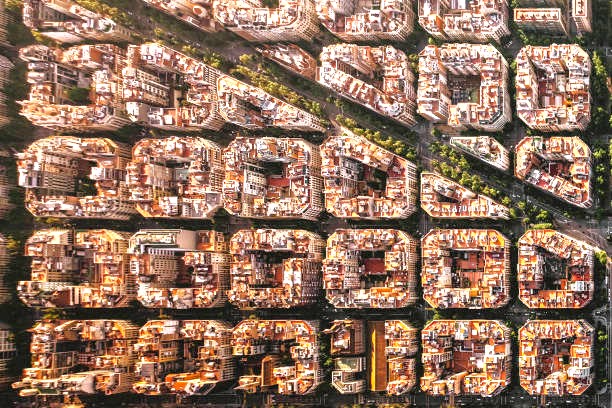
The car is not a substitute for interpretation, and the guide is not a substitute for recovery. A premium private day uses both without asking either one to do the other’s job. That is especially true in Barcelona because the city changes character abruptly at the old-town edges. Within a few minutes you can move from the dense medieval streets around the cathedral to the disciplined Eixample grid, from shadowed stone to Passeig de Gràcia storefronts, from quiet Roman fragments to a wide avenue where a car suddenly becomes useful again.
A mildly counterintuitive correction belongs here: the more comfortable the vehicle, the less you should try to prove its value inside the Gothic Quarter. A nicer car does not become a better old-town vehicle. It earns its place by waiting cleanly at the perimeter, storing coats or bags, carrying a tired child, and removing the transition from old town to the next district. The guide earns the interior by deciding which few corners matter, how long to stand in them, and when to leave before the quarter has flattened into stone-on-stone repetition.
Where the car cannot help: the narrow-lane core is walking territory
The car cannot help in the core streets where the Gothic Quarter actually becomes worth visiting. Walking is non-negotiable inside the historical core. A chauffeur does not improve the narrow-lane core. Those sentences are not anti-luxury; they are the difference between spending well and spending theatrically. The private car can bring you near the old town, collect you after the walk, and connect you to the next part of the day, but it cannot make Carrer del Bisbe, Plaça del Rei, El Call, the lanes behind Barcelona Cathedral, or the Roman-wall edges more legible from the curb.
Premium spend does not earn its cost when it is spent on car time inside the Gothic Quarter rather than on a better guide, a cleaner pickup, or a smarter cut. Inside the old town, a vehicle tends to produce three problems. First, it interrupts the walk exactly where the story needs continuity. Second, it creates little curb negotiations that feel minor on paper but drain patience in a family or multi-generation group. Third, it tempts the planner to include too many fragments because the day appears “covered,” even though every meaningful stop still requires standing, stepping over stone, regrouping, and reorienting.
Barcelona’s Gothic Quarter works on the body in a specific way. The walking distances are not enormous, but the effort is cumulative: uneven stone underfoot, frequent stops, short sightlines, small turns, narrow passages where a group compresses, and the mental work of following a story that does not unfold in a straight line. A traveler may not feel exhausted after ten minutes; they feel it after the fifth pause, the second backtrack, the third attempt to keep everyone together, and the moment someone realizes dinner shoes were a poor choice for medieval paving.
The quarter also contains a subtle historical trap. Some corners feel ancient because they are ancient, while other beloved views have been shaped by later restoration, civic staging, or the city’s long habit of turning fragments into a more legible heritage scene. A guide prevents the Gothic Quarter from becoming either pure romance or pure debunking. The point is not to puncture the atmosphere. The point is to help travelers understand why Barcelona can show Roman stone, medieval power, Jewish memory, cathedral life, and later urban storytelling within a few blocks without turning the morning into a footnote lecture.
The route should therefore resist the driver’s gravitational pull. Do not keep asking, “Where can the car meet us next?” Ask, “Which old-town corners actually deserve a pause, and where should the car be when the walk is finished?” That question produces a calmer day. It keeps the guide from rushing, lets the group listen, and prevents the driver from becoming a moving anxiety marker. In the Gothic Quarter, the best vehicle management is often invisible until the moment it is needed.
Where pickup saves energy after the Gothic Quarter
Pickup saves energy when it happens after the historical core has done its job, not every time the group turns a corner. The useful driver position is usually outside the maze: close enough to prevent a draining exit walk, far enough to avoid forcing the guide to bend the route around traffic. The cathedral-area pickup edge is the most useful mental model for many first-time visitors because it shows where car logic starts and ends. You walk to understand the quarter; you are collected when the quarter has stopped adding value.
- The cathedral-area pickup edge works when the old-town walk centers on Barcelona Cathedral, Plaça Nova, Carrer del Bisbe, and Plaça del Rei, then needs a smooth move toward Eixample, Passeig de Gràcia, Sagrada Família, or a hotel.
- Via Laietana works as a practical border when the walk continues toward El Born, Santa Caterina, or Santa Maria del Mar. It is not the romantic heart of the experience, but it is a useful seam between old-town walking and onward movement.
- Passeig de Colom or the lower edge makes more sense when the old-town story descends toward the maritime quarter, Port Vell, or Drassanes rather than returning north through the cathedral streets.
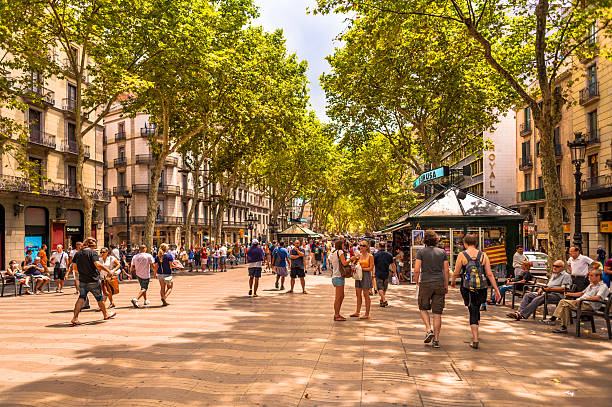
- Plaça Catalunya and the upper La Rambla edge can be useful when the day is returning to Passeig de Gràcia, but they should not become an excuse to turn La Rambla into a default add-on.
The pickup point should be chosen for what happens next. If lunch is in Eixample, the car should save the legs for the meal, not force the group to work across the border streets when attention is already falling. If the next stop is Sagrada Família, the driver turns a potentially dull transfer into a clean reset. If the afternoon is shopping on Passeig de Gràcia, the pickup avoids arriving already tired at the part of the city that demands a different kind of attention: wider streets, boutiques, architecture, and decision-making rather than dense historical listening.
This is the strongest argument for the chauffeured Barcelona private tour as a companion to, not a replacement for, the walking guide. The chauffeur changes the day when Barcelona shifts zones: old town to Eixample, hotel to port, Gaudí site to dinner, Montjuïc to Passeig de Gràcia. The chauffeur does not change the old-town lane itself. A planner who accepts that boundary will buy fewer wasted minutes and more comfort where it counts.
The exact pickup point should remain flexible because Barcelona is a living city, not a diagram. Local events, traffic controls, hotel location, group size, and the guide’s route can all alter the best edge. What should not change is the principle: keep the guided walk coherent and the vehicle just outside the story. The driver should feel like relief at the end, not a second itinerary competing for attention.
The route hinge around Barcelona Cathedral
Barcelona Cathedral is the cleanest hinge for deciding how much of the Gothic Quarter deserves the morning. It is not just a landmark; it is a planning instrument. When a private route uses the cathedral area intelligently, the guide can connect Plaça Nova, Roman-wall fragments, cathedral power, Carrer del Bisbe, Plaça del Rei, and Plaça de Sant Jaume without making the traveler feel as if every lane must be collected. When the route uses the cathedral only as a photo stop, the quarter usually expands in all directions and loses its discipline.
The cathedral area also exposes a common difference between first-time expectation and real old-town value. Many travelers imagine the Gothic Quarter as a sequence of grand medieval façades. In practice, the strongest moments are often smaller: a reused stone, a turn that suddenly opens into a civic square, a lane that explains how close sacred, royal, municipal, and commercial power were allowed to sit. The guide’s job is to make those small moments decisive. The driver’s job is to wait until the small moments have accumulated enough meaning.
El Call, the former Jewish quarter, is a good example of why a guide matters more than a vehicle. Its significance is not served by being driven past an edge or dropped nearby with a vague instruction to “wander.” The area is compact, historically delicate, and easy to reduce to a label unless someone frames what is visible, what is absent, and why the absence matters. If the group wants a deeper Jewish-history emphasis, the morning should be shorter and more precise, not padded with unrelated lanes just because they are nearby.
There is also a pacing consequence. Around the cathedral, stopping too often makes the morning feel longer than it is; moving too quickly makes the history feel decorative. A strong private guide reads the group. A couple with a serious history interest may welcome denser explanation at Plaça del Rei. A family may need the same story broken into shorter stops. Older parents may need places to pause before the guide continues into tighter lanes. The driver outside the core gives the guide permission to end on time instead of stretching the walk just because everyone still has to cross the city on foot afterward.
The best cathedral-area route has a quiet exit plan. The guide should know where the story resolves before the group’s energy falls. The driver should know where the group is likely to emerge, but should not dictate the historical order. That is the difference between a private route and a string of coordinates.
How to avoid old-town fatigue before dinner
Old-town fatigue before dinner is avoided by ending the Gothic Quarter before it becomes a scavenger hunt. This is especially important for travelers who have a serious restaurant reservation, a tasting menu, a celebration evening, or a late-night Barcelona plan. The risk is not that the Gothic Quarter is too far from dinner. The risk is that the day’s texture becomes too dense: history stops, shop windows, uneven paving, a lunch detour, an unplanned El Born loop, then a transfer that happens only after everyone has already lost their appetite for another decision.
Barcelona affects the trip mood as much as the feet. A well-ended old-town morning leaves the evening with shape: the group feels that they understood something, left while still interested, and arrived at the next setting with enough energy to enjoy it. An overextended old-town afternoon makes the trip feel shorter, not fuller. People remember the last half-hour of indecision more than the first hour of excellent guiding. They arrive at dinner slightly flat, not because the city disappointed them, but because the plan never gave the day a clean second act.
For food-and-wine travelers, the driver’s job is often emotional as well as practical. If the evening is built around a restaurant from the Michelin Guide: Barcelona starred list (https://guide.michelin.com/us/en/catalunya/barcelona/restaurants/all-starred), the afternoon should not be treated as unused space to fill with more old-town lanes. It should be treated as preparation. A perimeter pickup can return guests to the hotel, move them toward Eixample, or place them near a calm aperitif without asking them to re-navigate the center in dress shoes. For a broader dinner-focused sequence, the related guide on Sagrada Família, El Born and late-dinner pacing helps place the evening after a major sight rather than after old-town drift.
The dinner rule is blunt: if you care about the meal, do not spend the late afternoon proving how much more of the Gothic Quarter you can cover. The old town is strongest when it is selected. Add El Born only if it gives the day a clear second layer: Santa Maria del Mar, a food stop, the Picasso area, or a purposeful walk toward a specific dinner geography. Do not add it because it appears adjacent on the map. Adjacent is not the same as easy when a group has been standing for hours.
The famous add-on to cut first, when the day already includes the Gothic Quarter, a Gaudí interior, and a serious dinner, is Park Güell. It is not because Park Güell lacks merit; it is because its hill position, timed-entry logic, and transfer shape make it a poor late add-on to an already dense old-town day. When Park Güell is the priority, plan around official Park Güell tickets (https://parkguell.barcelona/en/buy-tickets) and give it its own place. Do not wedge it after a cathedral-to-El Born walk and before a meal that matters.
How to sequence Gothic Quarter, El Born, Passeig de Gràcia and timed Gaudí entries
The cleanest sequence is usually Gothic Quarter first, driver at the edge, then one different Barcelona setting rather than another old-town layer. That second setting may be El Born for deeper medieval and mercantile context, Passeig de Gràcia for design and Eixample scale, Sagrada Família for a major Gaudí interior, or the hotel for a reset before dinner. The mistake is trying to make all of them feel equally important in one day. Barcelona rewards contrast, but it punishes unfiltered contrast.
- Gothic Quarter then El Born suits travelers who want Roman, medieval, Jewish, mercantile, and church history in one old-city arc. It should be guided and selective. If the morning has already included Plaça del Rei and El Call, El Born should add Santa Maria del Mar, market or food context, or a clear museum reason, not another hour of anonymous lanes.
- Gothic Quarter then Passeig de Gràcia suits first-time visitors who need the city to open up after dense history. The driver becomes useful here because the shift from medieval street grain to Eixample grid is part of the relief. Arrive with enough energy to notice façades, shops, and wide-block rhythm rather than treating the avenue as a tired transfer corridor.
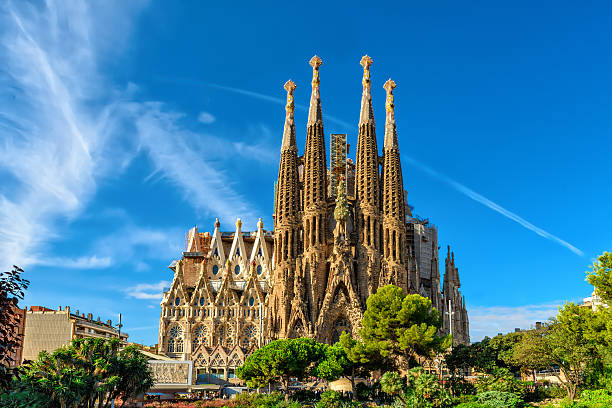
- Gothic Quarter then Sagrada Família can work if the timed entry is respected. Use official Sagrada Família tickets (https://sagradafamilia.org/en/tickets-individuals) as the fixed point, then build backward. Do not assume a chauffeur can fix a tight ticket window if the old-town walk has run long.
- Gothic Quarter then hotel reset is the most underrated choice before a serious dinner, a celebration night, or a family evening. It looks less ambitious on paper and often feels more generous in the city.
For a first-time private day that includes several Barcelona signatures, the best answer is often a curated whole-day route such as Best of Barcelona private tour, but even there the old town should not be treated as a drive-by. Pair it with a guide-led walk, one major contrast, and a driver who connects the pieces. The car should make the day feel shorter and calmer; it should not license a longer wish list.
When travelers ask whether El Born is “worth adding,” the answer depends on what it is replacing. El Born is an excellent companion if the day’s old-town theme is medieval, maritime, mercantile, or food-led. It is less useful if the group is already fatigued and simply wants more atmosphere. In that case, the driver should collect the group at a sensible edge and move them to a new energy: Passeig de Gràcia, a hotel, or a lunch setting with chairs and air.
The broader old-town planning question overlaps with another Barcelona decision: whether the day should be Gothic Quarter, El Born, or Montjuïc after Gaudí. That wider comparison is handled separately in the Barcelona old-town fatigue guide. Here, the narrower answer remains firm: once the Gothic Quarter is chosen, pay for the guide inside and make the driver useful at the border.
Starting from Passeig de Gràcia does not solve the old town by itself
Starting from Passeig de Gràcia is convenient, but it does not make the Gothic Quarter a chauffeured experience. This is another counterintuitive Barcelona point. Many comfort-focused travelers stay in or near the Eixample because the blocks are wider, hotel access is easier, dining returns are smoother, and the city feels more breathable than the old-town core. That is often a very good base decision. It does not mean the vehicle should try to accompany the old-town visit once you have reached the perimeter.
The Eixample-to-Gothic transfer is exactly where a driver can be valuable. It removes the dull part of the approach, avoids starting the morning with navigation friction, and keeps the group fresh for the guide. But once the walk begins, the city changes scale. The old town asks for attention to turns and layers; Passeig de Gràcia asks for width, architecture, and outward looking. Confusing those two scales is why some private days feel strangely expensive but not especially smooth.
A polished start might look like this: leave the hotel near Passeig de Gràcia by car, meet the guide at a logical edge, walk the cathedral area and selected Gothic Quarter lanes, cross only as far as the route warrants, then have the driver collect the group for lunch, Gaudí, or the hotel. That is not less ambitious than a door-to-door fantasy. It is more exact. The traveler spends attention where Barcelona is most rewarding, and spends vehicle time where Barcelona’s geography actually rewards it.
The glamorous mistake is to assume that because the hotel is elegant and the car is ready, the old town will behave like a museum campus. It will not. The Gothic Quarter’s charm is inseparable from its resistance to vehicle logic. Treat that resistance as a planning fact, and the day gets easier.
Who should shorten the walk rather than upgrade the car
The travelers who should shorten the walk are not settling for less; they are preserving the part of the Gothic Quarter they can genuinely enjoy. A shorter guided route with a clean pickup is better than a longer old-town plan padded by vehicle promises that cannot be kept inside the lanes. This applies most clearly to multi-generation families, older parents, guests with recent injuries, travelers arriving after a long flight, and celebration groups who need the evening to remain sociable.
- Families with children should keep the old-town explanation episodic. A guide can use the Roman walls, cathedral area, and one or two civic squares as anchors, then leave before the children begin associating history with standing still.
- Older parents should avoid routes that treat every nearby lane as essential. Select the cathedral-area core, agree on a pickup edge, and use the vehicle for the transfer back to hotel, lunch, or a wide-street afternoon.
- Cruise or airport-arrival travelers should be especially careful. Luggage, sleep loss, and a fixed next movement make old-town sprawl feel more expensive than it looks. A guide-led hour and a driver-held exit can be ideal.
- Food-and-wine travelers should not let the Gothic Quarter consume the day before a long dinner. Choose the historical core, avoid late shopping drift, and let the driver create the pause between daytime learning and evening appetite.
The wrong fit for this guide-and-driver split is the traveler who wants no walking at all but still expects to “do” the Gothic Quarter properly. That is not a private-tour problem; it is a mismatch between the place and the expectation. In that case, choose a different Barcelona emphasis: an Eixample architecture drive with guided stops, Montjuïc viewpoints, a coastal lunch route, or a Gaudí day where the driver can genuinely change comfort between sites. The Gothic Quarter can be shortened, but it should not be fictionalized as a drive-through experience.
There is also a wrong-fit version for energetic travelers: trying to turn the guide into a pace-setter for an urban workout. The old town is not better because you have covered more ground. It is better when the guide has chosen the right few blocks and the driver has removed the uninteresting exit. Even strong walkers can end up with a weaker day if they spend all their walking budget before the part of Barcelona they care about most.
What to pay for, and what to refuse
Pay for judgment before you pay for motion. In the Gothic Quarter, judgment means a guide who can select, compress, and translate the old town without making every street sound equally important. Around the Gothic Quarter, judgment means a driver who is positioned for the next real move, not a vehicle forced into a decorative role. The best private day is therefore not guide versus driver. It is guide inside, driver outside, and a planner who knows where the border matters.
Pay for a guide who can explain why the Roman wall near Plaça Nova, the cathedral precinct, Plaça del Rei, El Call, and Plaça de Sant Jaume belong in the same morning without making the group feel lectured at every corner. Pay for a driver when the next move crosses the city’s scale: from old town to Passeig de Gràcia, old town to Sagrada Família, old town to Montjuïc, old town to port, old town to a hotel reset. Pay for timed entries and restaurant geography when those fixed points shape the day. Refuse any plan that sells the old-town core as if the vehicle itself will improve it.
This is where premium service becomes practical rather than ornamental. A private day can adapt the route to a couple’s history interest, a family’s attention span, a small group’s walking rhythm, or a celebration traveler’s dinner timing. The guide can slow the story without losing the route. The driver can hold the exit without pressuring the walk. The result feels more personal because each professional is used where Barcelona lets them be useful.
For a short stay, the highest-value upgrade is usually not adding another site; it is making the hinge between old town and the rest of the day feel effortless. Orange Donut Tours can design that split as a guided Gothic Quarter walk with chauffeured perimeter logistics, or as a broader private day that keeps the driver outside the lanes and useful for the transfers that follow. Inquire now
FAQ
Can a driver take me through Barcelona’s Gothic Quarter?
A driver can bring you close to the Gothic Quarter and collect you afterward, but the meaningful core is a walking experience. The narrow lanes, cathedral-area stops, Roman-wall fragments, and small civic squares are not improved by trying to see them from a car.
Do I need a guide for the Gothic Quarter if I only have limited time?
Yes, limited time is one of the best reasons to use a guide. A guide can turn a shorter walk around Barcelona Cathedral, Plaça del Rei, El Call, and the Roman-wall edges into a coherent visit instead of a rushed wander.
Where should the driver wait during a private Gothic Quarter tour?
The driver should usually wait at a practical perimeter edge rather than inside the route. Depending on the walk and the next stop, that may mean the cathedral-area pickup edge, Via Laietana, the lower maritime edge, or the Plaça Catalunya side.
Is the Gothic Quarter a good choice for older parents?
It can be, provided the route is shortened and guided carefully. Choose fewer stops, avoid unnecessary backtracking, agree on a pickup edge before the walk begins, and do not rely on a chauffeur to remove the need for walking inside the historic core.
Should we add El Born after the Gothic Quarter?
Add El Born if it gives the day a clear second purpose, such as Santa Maria del Mar, medieval mercantile history, food context, or a specific museum plan. Skip it if the group is already tired and would benefit more from a driver pickup, lunch, or a hotel pause.
How long should a private Gothic Quarter walk be?
For many discerning travelers, a focused private walk of roughly one to two hours is more useful than a long old-town sweep. The right length depends on mobility, weather, children, dinner plans, and whether the day also includes El Born, Gaudí, or Passeig de Gràcia.
How do we avoid old-town fatigue before dinner?
End the Gothic Quarter before it becomes aimless wandering, avoid adding El Born by default, and use a driver pickup to create a real pause before the evening. If dinner is important, the afternoon should prepare the group for it rather than consume all remaining energy.
Is a chauffeur worth it for the Gothic Quarter?
A chauffeur is worth it around the Gothic Quarter, not inside it. The value is in hotel pickup, perimeter collection, luggage or comfort support, and transfers to Passeig de Gràcia, Sagrada Família, Montjuïc, the port, or dinner after the guided walk.
If you’re interested in any private tours of Barcelona, please reach out to us.








 So if you are looking for the absolute best in Barcelona & surroundings with authentic local fully-licensed native guides whose English you can actually understand and with an exclusive and amazingly fun itinerary













