Barcelona with Kids for a Tailor-Made First Trip: A Comfort-First Plan Around Gaudí, the Gothic Quarter and Barceloneta

Updated
The verdict: build the first family day around one Gaudí icon, not all of them
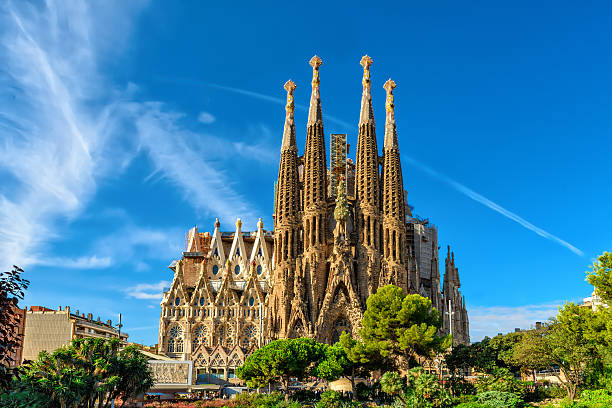
The calmest first Barcelona day with kids is one headline Gaudí stop before lunch, then a short pass through the Gothic Quarter, then a real decompression window at the Ciutadella Park edge near El Born before you head to Barceloneta late in the day. That order wins because Barcelona punishes mistimed icons. Sagrada Família and Park Güell timing with children before lunch is the hinge: one mistimed icon can collapse the rest of the family day by stealing from lunch, the beach, and everyone’s patience.
The honest exception is families who are determined to do both Sagrada Família and Park Güell on the same day. You can have two headline Gaudí stops, or you can add Barceloneta and keep children cheerful; most families do not get all three without flattening the rest of the day. My thesis is simple: Barcelona with kids works when you plan by energy zones rather than by how close the dots look on a map.
The first corrective call is this: the classic family combo of Sagrada Família, Park Güell, the Gothic Quarter, and Barceloneta is too much for one day. Cut something before the city cuts it for you. A second corrective call is less obvious but just as important: the Gothic Quarter is usually better as a short texture stop than as the emotional center of a family day, especially if you are carrying a stroller, beach bag, and the expectation of a happy late afternoon. If you are still deciding where to base yourselves, start with where to stay in Barcelona for a first visit and then shape your touring day around the children, not around the postcard sequence.
A ranked ladder for what actually fits a first Barcelona trip with kids
The fastest way to plan this well is to rank day shapes by how much strain they put on the family, not by how many famous names they collect. For most first trips, the winner is not the most ambitious version. It is the version that gives adults one serious Barcelona highlight, gives children one clear reward, and keeps one unhurried hour in reserve.
Here is the ladder I would use for a first Barcelona family day.
- Best overall: Sagrada Família in the morning, a short Gothic Quarter or Born edge walk, then the Ciutadella Park edge near El Born, then Barceloneta late.
- Best if architecture matters more than sand: Sagrada Família and Park Güell on the same day, with lunch and a slow neighborhood finish, but no beach.
- Best for beach-forward families or very young children: one light city stop in the morning, then Ciutadella Park and Barceloneta, with Gaudí saved for another day.
The ranking matters because each step down the ladder adds either waiting, climbing, or appetite risk. The first plan works because it spaces the hard parts apart. The second plan works only if the children tolerate transfers and adults are happy to spend the day in architecture mode. The third plan can be the right answer for toddlers, jet-lagged arrivals, or families who know that beach time is not filler for their children but the emotional center of the day.
The main cut-first rule is also clear. If the beach matters, cut Park Güell before you cut the Ciutadella Park pause. That pause is not wasted time; it is the hinge that keeps the old town from feeling like one long queue. Conversely, if Gaudí is the non-negotiable reason you came, cut Barceloneta before you cut Sagrada Família. Trying to preserve every highlight is how families end up doing the least enjoyable version of all of them.
Queue avoidance starts with the meal clock, not the ticket clock
The most important family timing rule in Barcelona is that queue avoidance is really meal protection. Parents often think the issue is only whether they can get the earliest or most coveted entry. The real question is whether the chosen slot still leaves the family properly fed before patience runs out. With children, a beautifully timed entrance that lands too close to hunger can be worse than a slightly less ideal slot that preserves a stable lunch.
This is why Sagrada Família and Park Güell timing with children before lunch matters so much. One mistimed icon can collapse the rest of the family day. If the entry is too late, adults start bargaining with the clock, children feel the strain first, and everything after the icon gets demoted: the Gothic Quarter becomes a rush, the Ciutadella Park break gets squeezed, and Barceloneta becomes something you are trying to rescue rather than enjoy. Barcelona rewards families who protect lunch and snacks as seriously as they protect tickets.
The useful habit is simple. Book the first practical timed entry you can actually reach without a frantic morning, carry one serious snack, and define in advance where the proper meal will happen. Families who skip that decision often drift into the worst pattern: a long attraction, then a long search, then a tired walk into old town with no one in the right mood for it. The city itself has not failed them. The sequencing has.
There is a second benefit to this meal-first logic. It keeps adults from overbuying add-ons in the hope of making a sight feel bigger. Children usually remember clarity more than duration. One well-timed interior, one bite at the right moment, and one generous late-afternoon payoff will usually beat a longer, more expensive morning that leaves everyone brittle by early afternoon.
What to cut first when the day starts slipping
When the day begins to slip, the first thing to cut is usually coverage, not the pause. Parents understandably want to preserve the famous names they promised, but the better family judgment is often to keep the decompression window and shorten the sightseeing. In this Barcelona route, that usually means trimming the Gothic Quarter to its essentials, or downgrading Barceloneta from a full beach operation to a promenade, before you sacrifice the Ciutadella Park edge near El Born.
The second cut depends on the day’s true priority. If the point of the day is architecture, cut the beach first. If the point is giving children a rewarding finish, cut Park Güell first. What you should almost never cut last is food timing. Skipping or delaying the meal to squeeze in one more neighborhood is the classic family error here, because it compounds rather than solves the schedule problem.
A good cut order protects both body and mood. Keep the headline win, keep the meal, keep one place where children can move freely, and then decide how much old town or waterfront you can still enjoy with grace. The wrong cut order protects adult ambition and leaves children with the memory of waiting, walking, and being told that the fun part is still coming.
This is also where private planning earns trust. Not because someone can magically stop the day from slipping, but because an experienced local planner knows which pieces can shrink without making the whole route feel pointless. In Barcelona, that judgment is worth more than squeezing one more stop onto the map.
Sagrada Família or Park Güell first? For most first trips, Sagrada Família wins
For a first trip with children, Sagrada Família usually deserves the morning slot ahead of Park Güell. The reason is not simply that it is famous. It is that the visit has a clearer shape, a stronger visual payoff once you are inside, more shelter from weather once the entry process is finished, and a more predictable sense of completion for children who need to know when a visit has ended.
Park Güell can look easier in theory because it is outdoors, but in practice families often spend more energy before they ever feel rewarded. The approach is hillier, the visit feels more open-ended, and the temptation to wander beyond the part children actually care about can drag the morning. Sagrada Família, by contrast, has a defined arc: arrive, enter, look up, absorb the interior, and leave feeling that you genuinely saw something singular. For first-time visitors, that clarity matters.
Buy Sagrada Família official tickets (https://sagradafamilia.org/en/tickets-individuals) before you commit the rest of the day. That timed entry is the hinge around which snacks, transfers, and the beach decision should revolve. If your family wants help matching entry times to child stamina, bathroom breaks, and the pace of the rest of the route, skip-the-line planning in Barcelona is one of the few upgrades that earns its keep quickly. This is also where a guide can materially improve comprehension for school-age children: one well-told interior visit is more memorable than a rushed architecture marathon.
The deeper reason Sagrada Família wins is emotional. Children often respond well to the instant visual drama inside, while adults feel they have already “banked” Barcelona before lunch. That changes the entire afternoon. It makes a shorter Gothic Quarter pass feel sufficient rather than compromised, and it makes the later beach stop feel like a reward instead of a desperate recovery move.
When Park Güell should replace Sagrada Família in the morning
Park Güell should take the morning lead only under narrower conditions: children who need open air more than interiors, returning visitors who have already seen Sagrada Família, families with older kids who like roaming viewpoints, or travelers who are explicitly building a Gaudí-heavy day with no intention of touching the beach. In those cases, the morning can belong to Park Güell, but the rest of the day still needs discipline.
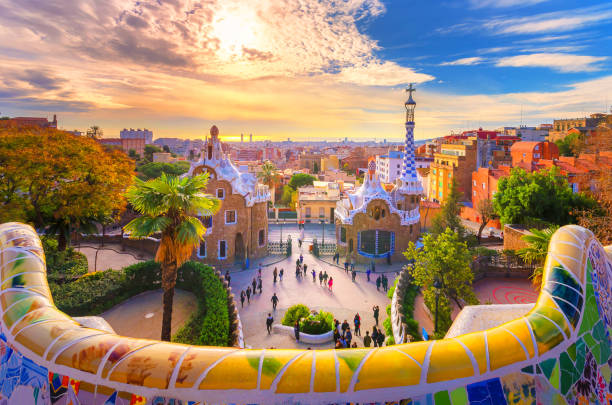
The mistake is assuming that an outdoor site automatically means a low-pressure start. It does not. Park Güell still rewards timed planning, and the wrong arrival turns the site into a long prelude rather than a clean visit. If you go this route, treat it as the main event and keep the rest of the day lighter: perhaps a late lunch, a measured stroll in Eixample or El Born, and then dinner without another major sight. Buy Park Güell official tickets (https://parkguell.barcelona/en/buy-tickets) in advance and confirm current entry options before you lock the rest of the plan.
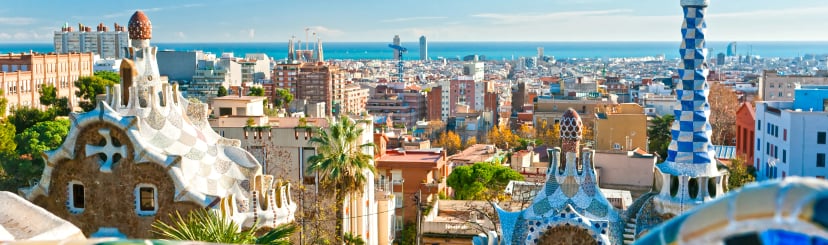
This is also where parents sometimes let the map mislead them. Sagrada Família and Park Güell both belong to the Gaudí story, but they do not behave like one easy walk-and-see pairing with children. Even short transfers feel longer when you are loading a stroller, managing a bathroom request, or negotiating hunger. Families who want the architecture explained coherently rather than as two disconnected stops often do better with a Gaudí-focused private tour on a separate day from Barceloneta.
If you choose Park Güell first, the honest follow-through is to accept that the beach probably becomes a token stroll, not a full late-afternoon payoff. That can still be a good day. It is just a different day from the one most first-time families actually imagine when they say they want Gaudí, old town atmosphere, and sand.
The Gothic Quarter should be a dose, not a half-day
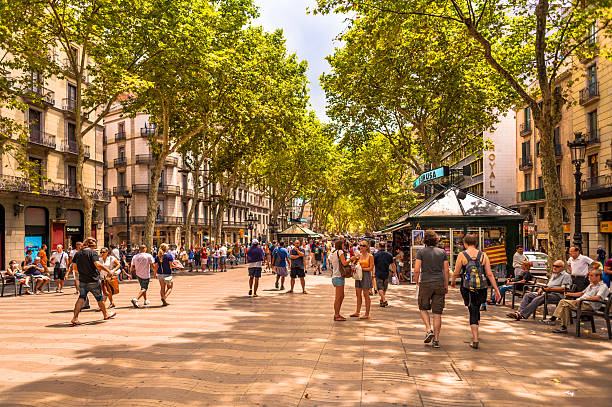
With children, the Gothic Quarter is usually best used in a short, deliberate measure. The appeal is real: stone lanes, shade, church facades, fragments of Roman Barcelona, little pockets of drama around Plaça Sant Jaume and Carrer del Bisbe. But its value on a first family trip is usually atmospheric and contextual, not cumulative. Once the children understand that they are in the old city, another forty minutes of similar lanes rarely multiplies the experience in proportion to the effort.
This is the part many adults over-prioritize because it feels central, storied, and photogenic. For families, though, the Gothic Quarter often asks more than it gives if you make it the middle of a long day. The walking is stop-start. The surfaces are not where a heavy stroller rolls happily. Crowd compression in the narrowest passages makes snack negotiations and bathroom detours feel larger than they should. The return on effort is highest when you take the quarter in a short, guided slice rather than as a long, drifting exploration.
The practical answer is to walk the Gothic Quarter after your headline morning stop but before children are fully spent. That usually means treating it as a bridge, not a destination. Enter with intent, see what you came to see, and then leave while the atmosphere still feels vivid. Families who want more old-town depth without turning the day into a march can also look at a Gothic Quarter and Old Town private tour for another morning or another trip segment, when the beach is not competing for energy.
The mood consequence is important here. A short Gothic Quarter pass preserves the romance adults hoped for. A long one can make the children feel that Barcelona is all lanes and no payoff. Once that feeling sets in, even a beautiful late afternoon at the water has to work harder to recover the day.
The reset that saves the route: Ciutadella Park edge near El Born
The best decompression point between old-town touring and Barceloneta is the Ciutadella Park edge near El Born. Not the whole park as a grand project, and not an aimless detour, but the specific edge where El Born loosens into green space and the family can breathe again. This micro-location matters more than it sounds. It breaks the sensory rhythm of stone streets and tourist flow before you commit to the exposed, beachward part of the afternoon.
Why that edge? Because it behaves like a hinge. Coming from the Gothic Quarter or Born side, you can step out of denser lanes near Passeig del Born or the Arc de Triomf side, let children move, let adults sit for a moment, and then decide honestly whether you still have the appetite for Barceloneta. The Ciutadella Park edge near El Born is one of those Barcelona route decisions that looks small on paper but changes the day materially. It is the difference between “we still have enough in the tank” and “why are we forcing this?”
This is also where the trip stops feeling like a ticketed sequence and starts feeling humane again. Parents can hand out a snack, children can run rather than queue, and the next leg becomes a conscious choice instead of a default. If you skip this buffer, the walk or transfer to Barceloneta can feel like yet another task layered onto an already full schedule. If you keep it, Barceloneta lands as the day’s easy chapter rather than as a rescue mission.
This is not a fussy local detail. The right reset point prevents a premium day from becoming an all-queue slog. Families who think only in major sight names miss that. Good family planning in Barcelona is often made in these in-between decisions: where you exhale, where you eat, and where you stop insisting that every famous district deserves equal time.
Barceloneta works best as a reward, not as a morning commitment
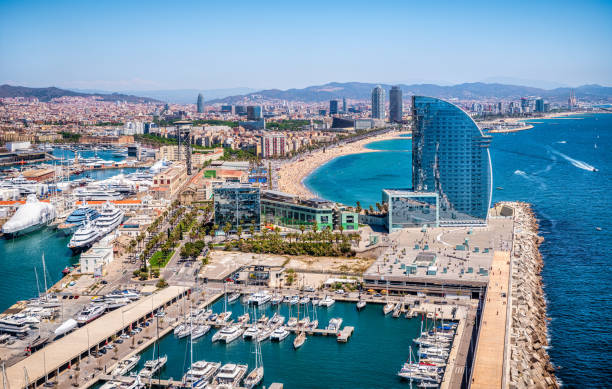
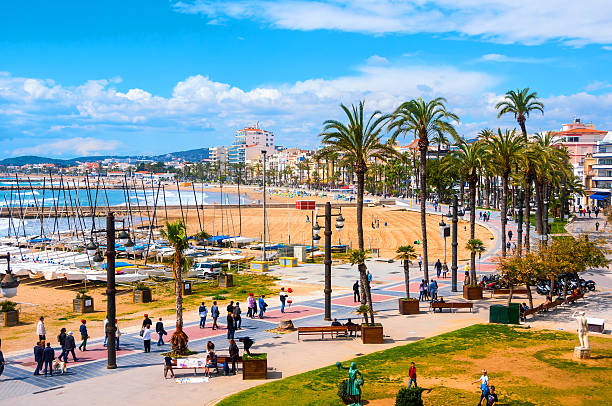
For most first-time families, Barceloneta belongs late in the day. That is the sequence that lets it feel restorative rather than logistically expensive. Put it in the morning and you create a competing agenda before you have earned your city visit. Put it after one Gaudí icon and a short old-town segment and it becomes the reward that closes the loop.
Meal timing is the hidden variable here. Barcelona’s eating rhythm often runs later than visiting children prefer, and Barceloneta is not where you want to discover that everyone is already too hungry. The seafront and the approach along Passeig de Joan de Borbó can be lively and enjoyable, but that same exposure can make a late, slow lunch feel harder with tired children than it does in the calmer streets around Born or Eixample. In practical terms, many families do better with a proper meal before the sand and a lighter treat later, rather than promising that the beach itself will somehow solve hunger.
This is another reason the Ciutadella Park pause matters. It gives you a decision point. If the children are fading, Barceloneta can become a promenade, carousel of views, and toes-in-the-sand stop rather than a full beach operation. If the children still have energy, you can lean in and let the afternoon turn playful. Both versions count. What fails is the all-or-nothing mindset that says Barceloneta only “works” if you do a full beach production every time.
The return-leg logic also needs honesty. Beach time feels easy in the moment, but the trip home after sand, sun, and a long day is rarely the simplest part. Children get heavy, belongings multiply, and adults suddenly remember that the city is not over just because the sightseeing is. This is where staying in a calmer, more functional base can matter, and where a family that started the day too aggressively often feels the cost twice: once at the beach, and again on the way back.
Weather changes the meaning of Barceloneta faster than parents sometimes expect. On hotter days, the beach earns its keep as a late-afternoon reward and you should shorten the Gothic Quarter without guilt. On cooler or windier days, Barceloneta may still be worth including, but as a waterfront walk and mood shift rather than as a full sand commitment. That flexibility is part of planning well, not a compromise. Families who treat the beach as a binary yes-or-no often either overcommit to it or cut it too early, when the smarter answer is simply to scale the beach to the weather and the energy still available.
Barcelona with kids by age and stroller tolerance
The best version of this first-trip plan changes significantly by age. Barcelona does not ask every family for the same compromise. A toddler day, a primary-school day, and a teen day can all include Gaudí, the Gothic Quarter, and Barceloneta, but they should not use the same ratio.
For ages roughly zero to four, especially with a stroller, keep the city part cleaner and shorter. Sagrada Família can still work well because the visit has a defined beginning and end, but the Gothic Quarter should be brief and selective. The stroller reality is not that old town is impossible; it is that repeated turns, uneven thresholds, pedestrian traffic, and spontaneous stops make it slower than adults expect. In this band, the Ciutadella Park edge near El Born becomes even more valuable because children need movement more than another church facade. Barceloneta may be best as promenade time and a shallow sand stop rather than a full beach setup.
For ages five to nine, this plan is at its strongest. Children in this band can often appreciate one major Gaudí visit, enjoy a short old-town walk if it is framed well, and then truly cash in on the park-to-beach stretch. They are old enough to understand the sequence and young enough that the late-afternoon reward still matters a great deal. This is also the age band most vulnerable to queue drag and delayed meals, so the structure matters more, not less.
For ages ten to fourteen, you can expand selectively. Older children may tolerate Park Güell better, may enjoy viewpoint logic, and may complain less about transfers. Even so, do not confuse greater endurance with infinite appetite for stacked highlights. Teens can still sour on a day that feels like adults chasing coverage. The better move is usually to deepen one interest, whether that is architecture, the old city, or time by the water, rather than trying to prove they can handle everything.
For teens and older mixed-age groups, the equation flips slightly. If the beach is not emotionally essential, an architecture-weighted day becomes more realistic. If younger siblings are involved, plan to the youngest regular bottleneck, not to the oldest best-case behavior. That sounds obvious, but it is where many multi-child family days quietly go wrong.
What Barcelona does to the body, and to the mood
Barcelona is tiring in a very specific family way. It is not usually the dramatic up-and-down punishment of a hill city, but it accumulates fatigue through repeated micro-frictions: queue standing, block walking, stroller loading, cobbled slowdowns in the Gothic Quarter, hill exposure at Park Güell, then the extra weight of beach gear and sandy return legs. Children seldom unravel because of one heroic climb. They wear down through ten small drains that adults barely notice while they are still excited.
That body consequence is why one mistimed icon can collapse the rest of the day. A late entrance at Sagrada Família does not just cost thirty or forty minutes on a schedule. It pulls lunch later, makes the Gothic Quarter feel longer, shortens the park pause, and turns Barceloneta into a rushed consolation prize. Once the day becomes sequentially late, every child-specific need arrives under worse conditions: hunger comes in denser streets, boredom comes in lines, and tiredness appears when you still need one more transfer.
The mood consequence is equally real. Barcelona feels shorter, calmer, and more generous when children know the enjoyable part is still ahead and adults know the major cultural visit is already secured. That is why one good morning icon can improve the entire tone of the day. The reverse is also true. If adults spend the afternoon trying to compensate for a rushed morning by forcing old-town coverage or racing to the beach, the city starts to feel like homework with sunshine.
A family day should not need an evening recovery strategy. When the sequence is right, you arrive at dinner with everyone still recognizably themselves. When the sequence is wrong, the city has already spent tomorrow’s goodwill as well. That is why the case for cutting before you think you have to is so strong.
Where paying more changes the day, and where it does not
Paying more helps when it removes seams. A knowledgeable private guide can turn Sagrada Família from a line-and-echo chamber into a clear, child-readable visit. Timed-entry planning saves families from the worst version of anticipation. A good driver helps most when your day spans a morning icon, an old-town segment, and a final waterfront finish, because loading children and bags into two or three tactical transfers is often where adult patience gets spent.
Paying more also helps when your family’s bottleneck is not money but coordination. Children who need earlier food, grandparents who need fewer standing stretches, and parents who want the confidence of a day shaped around real stamina all benefit from a route that has already been thought through. This is where chauffeured Barcelona touring can be genuinely useful: not because Barcelona is impossible without it, but because the city’s stop-start family logistics are exactly where a vehicle saves the most energy.
But premium spend does not make everything sensible. Extra transfer spend does not make two headline Gaudí stops and the beach sensible for one family day. A driver cannot shrink security lines, shorten museum attention spans, or persuade a hungry six-year-old that a late lunch is part of the cultural experience. This is the blunt judgment many families need to hear before they overspend on the wrong fix.
There is also a more subtle value call. You do not need to pay for maximum service at every stage of the trip. Where premium spend does not earn its cost is when it is used to defend an overloaded plan instead of improving a realistic one. Spend to make the good version easier. Do not spend to force the impossible version to limp across the finish line.
When to turn this into a tailor-made private day
A tailor-made Barcelona day starts paying off when the family’s weak point is not sightseeing interest but the seam between interests. One child wants sand, one parent wants Gaudí, another adult wants some history, and everyone needs meals at a different rhythm. That is the exact point where a customized route becomes more than a nice extra. It becomes the tool that translates queue pressure and child stamina into a day that still feels like a vacation.
The useful version is not simply “add more.” It is more selective than that. It means booking the right timed entry first, deciding whether the Gothic Quarter is a bridge or a separate day, choosing whether the Ciutadella Park edge near El Born is a ten-minute breather or a longer play stop, and being honest about whether Barceloneta is the day’s finale or tomorrow’s plan. Families who want that kind of route logic can look at a tailor-made Barcelona day or build the broader picture through a wider best-of-Barcelona private tour only if the children can actually absorb a broader scope.
The point is not to make Barcelona feel managed. It is to remove the planning mistakes that children experience more sharply than adults do. When the day has been shaped around real appetite, transfer tolerance, and one meaningful cultural win, Barcelona feels generous. When it has been shaped around fear of missing out, it feels expensive and oddly rushed. If your goal is a first trip that still leaves room for pleasure by late afternoon, Inquire now.
FAQ
Is Sagrada Família or Park Güell better for a first Barcelona trip with kids?
For most first trips, Sagrada Família is the stronger morning choice because the visit has a clearer beginning, payoff, and finish. Park Güell works better when your children need open air more than an interior or when you are willing to make that morning the main event and skip the beach.
Can you do Sagrada Família, Park Güell, the Gothic Quarter, and Barceloneta in one day?
Most families should not try. That classic combo is too much for one day because the strain comes from the joins between the sights as much as from the sights themselves. Cut Park Güell first if the beach matters, or cut Barceloneta first if the day is really about Gaudí.
Is the Gothic Quarter stroller friendly?
It is manageable in a short dose, but it is rarely the easiest part of a stroller day. The issue is not one single obstacle; it is the repeated slowing from narrow lanes, crowd compression, irregular thresholds, and constant stopping. Treat it as a short atmospheric walk rather than the backbone of the day.
Where should families pause between the Gothic Quarter and Barceloneta?
The Ciutadella Park edge near El Born is the best pause because it breaks the rhythm of old-town walking without sending you too far off route. It is the ideal place to decide whether the children still have enough appetite for a real Barceloneta finish.
When should we eat if our children do not like late lunches?
Build the day around an early serious snack and a proper meal before the beach or before the longest exposed part of the afternoon. Do not assume that Barceloneta will solve hunger on arrival. Families with younger children usually do better eating before the seafront rather than waiting for a later beach meal.
Does a private driver make Barcelona easier with children?
Yes, but only when it is solving the right problem. A driver is most valuable when your day includes several tactical transfers or different generations with different walking limits. It does not make an overloaded plan wise, and it does not erase lines, bathroom stops, or tiredness.
Which neighborhood base helps most on a first family trip?
Many families are happier sleeping in the more functional parts of Eixample than in the tightest old-town lanes, especially if they are using a stroller or care about easier returns after long days. The old quarter may feel more atmospheric, but atmosphere can be overvalued if it complicates naps, car access, and the late return from Barceloneta.
If you’re interested in any private tours of Barcelona, please reach out to us.









 So if you are looking for the absolute best in Barcelona & surroundings with authentic local fully-licensed native guides whose English you can actually understand and with an exclusive and amazingly fun itinerary













