Can Sagrada Família and the Picasso Museum Share One Barcelona Day? A Two-Reservation Sequence That Protects the Evening

Updated
Yes—but the dependable order is Sagrada Família first and the Picasso Museum second. The pairing works when it is treated as one reservation system: a morning Basilica entry, a protected cross-city move, a real lunch, and an early-to-mid-afternoon museum slot. In Barcelona, the decisive element is not the short distance on a map but the Eixample-to-El Born transition: broad blocks and workable vehicle access around Sagrada Família narrow into Carrer de Montcada, where the final approach to the museum is on foot. The clearest exception is any ticket combination that leaves less than 75 minutes for transfer alone, less than about two hours and fifteen minutes for transfer plus a seated meal, or places the second visit too close to a fixed dinner. In those cases, put the reservations on different days.
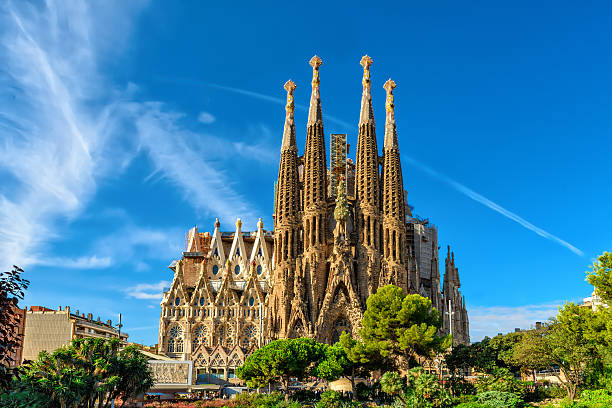
This is not really a two-attraction itinerary. It is a handoff from Gaudí’s monumental Eixample to Picasso’s medieval palace setting, and the quality of that handoff determines whether the day feels composed or overbooked. Book the Basilica as the first anchor, then position the museum late enough to absorb exit time, traffic, lunch service, and the walk from the old-town edge. A private Sagrada Família visit can deepen the first half without changing that logic.
One non-obvious correction matters immediately: a chauffeur does not turn the Picasso Museum into a curbside attraction. Individual visitors enter Sagrada Família from the Nativity-façade side on Carrer de la Marina, while the Picasso Museum’s timed-entry control is on Carrer de Montcada. Those two addresses belong to very different street systems. A car can remove the exposed cross-city portion, but it cannot eliminate the final old-town walk, and trying to schedule a door-to-door handoff is how a seemingly generous buffer disappears.
The sequence in one view: three scenarios, one clear default
The strongest default is a morning Sagrada Família slot followed by a Picasso Museum slot roughly four and a quarter to four and three-quarter hours later when lunch is included. That spacing is wide enough to make the day feel like two distinct visits rather than one continuous admission process.
- Best-balanced sequence: enter Sagrada Família in the morning, allow a measured visit and exit, move toward El Born, sit down for an early lunch, take a short contextual walk, and enter the Picasso Museum in the early or middle afternoon. This usually leaves a clean interval before dinner for a hotel return, shopping, drinks, or simply no further plan.
- Reverse-order exception: visit the Picasso Museum first only when its morning availability is clearly better, the available Basilica slot still leaves a meaningful post-visit evening, and your dinner or hotel geography favors Eixample, Gràcia, or the upper city. It is a workable exception, not the planning default.
- Split-day decision: separate the reservations when the only available windows force a rushed lunch, a transfer with no recovery margin, a late finish before an important dinner, or more standing and walking than one member of the group can comfortably absorb.
The firm editorial judgment is that Sagrada Família first wins for a first visit. Ending in El Born gives the day a natural release: the urban scale becomes smaller, the final museum is intellectually focused rather than physically monumental, and the evening can continue nearby or pause without another mandatory cross-city move. Reversing the order can look elegant on paper because the Picasso Museum is compact and central, but it often creates an unnecessary old-town-to-Eixample crossing followed by a second journey to dinner or the hotel.
The usual overvalued add-on is another interior between the two reservations. Sant Pau, Casa Batlló, Palau de la Música, or a full Gothic Quarter walk may each deserve time elsewhere, but none belongs in the middle of this two-ticket day. The first thing to cut is the third paid sight. Keep the bridge between Gaudí and Picasso interpretive, edible, and short.
Which Barcelona reservation should be booked first?
Book the day in this order: confirm that both venues operate on your chosen date, choose the Sagrada Família slot, then buy the Picasso Museum entry that fits the required gap. The Basilica should control the clock because its ticket type can change the visit’s shape, not because anyone can promise that it is always the scarcer reservation.
Start with Sagrada Família official tickets (https://sagradafamilia.org/en/tickets-individuals). Decide before purchase whether the visit is Basilica-only, guided, or includes a tower, because that choice affects how much time must be protected after entry. A tower component, a private explanation, slower photography, or a traveler who wants to study the façades before and after the interior can all expand the block. Do not buy a Picasso slot first and then hope the more consequential Basilica format will squeeze around it.
Next, consult the Picasso Museum’s official ticket and opening calendar (https://museupicassobcn.cat/en/plan-your-visit/buy-tickets-and-opening-hours). Treat the time printed on that reservation as a real boundary and review the museum’s current entry instructions before the visit. Operational details can change, so recheck them shortly before arrival rather than relying on a screenshot saved months earlier.
For a day with lunch, use a starting formula rather than a vague promise:
- Basilica visit and clear departure: allow about one hour and forty-five minutes from the Sagrada Família ticket time before assuming the group is genuinely ready to move. Shorter visits are possible, but building the schedule around the shortest plausible visit is poor risk management.
- Exit, vehicle or metro movement, and old-town approach: protect at least seventy-five minutes from the planned Sagrada departure to the Picasso entry. This includes regrouping, finding the vehicle or station, the cross-city segment, and the walk to Carrer de Montcada.
- Seated lunch: add seventy-five to ninety minutes, more if wine, several courses, young children, dietary conversations, or a celebration are part of the meal.
- Resulting ticket gap: the Picasso reservation will usually sit about four hours and fifteen minutes to four hours and forty-five minutes after the Sagrada Família entry. That is not wasted time; it is the structure that keeps the second reservation and the evening intact.
Without lunch, do not compress the entries much below three hours apart. A nine-thirty Basilica ticket and a noon Picasso ticket may look possible if one compares only transit times, but the schedule assumes an unusually short first visit, immediate departure, no wrong-side pickup, no station hesitation, and no need for water or a restroom. A better pairing would place the museum later and use any surplus for a quiet coffee or a brief orientation in El Born.
The Picasso Museum private tour is most valuable when the guide is briefed on what happened in the morning. Gaudí and Picasso should not be presented as two unrelated famous names. The day becomes more coherent when the guide can connect Barcelona’s turn-of-the-century ambition, the young Picasso’s formation in the city, and the very different ways architecture and painting respond to modernity.
Why the Eixample-to-El Born transition makes or breaks the pairing
The transfer works best as a one-way descent in urban scale: leave the Basilica’s open perimeter, cross the Eixample grid, and arrive at the edge of the old city before walking into El Born. The mistake is to treat the two doors as if they were connected by a single predictable taxi duration.
At Sagrada Família, the official access information places individual entry on the Nativity-façade side at Carrer de la Marina; check the official Sagrada Família access page (https://sagradafamilia.org/en/schedules-how-to-get) before departure. That detail matters for a private pickup. “Meet at Sagrada Família” is not a sufficient instruction for a group emerging from a large, busy perimeter. Agree on a specific side and a realistic regrouping point before entering. Otherwise, ten minutes can be lost walking around a block while the driver circles or waits where stopping is impractical.
At the other end, the Picasso Museum occupies a sequence of historic buildings on Carrer de Montcada rather than a freestanding modern complex with a forecourt. The museum stands at Montcada 15–23, with Jaume I and the surrounding bus corridors serving as useful public-transport references. For a car, the useful destination is the most sensible old-town edge available that day, not the museum threshold. Depending on access, traffic, and the vehicle, that may mean approaching from the Via Laietana, Carrer Princesa, Passeig de Picasso, or Pla de Palau side and completing the last section on foot.
This is where Barcelona acts on the body. The transfer may include standing after a long interior, crossing several Eixample blocks, descending into a metro, changing platforms, climbing back to street level, then negotiating paving and pedestrian traffic in El Born. In warm weather, the exposed perimeter around the Basilica and the final old-town approach add heat load; in rain, the narrow streets slow groups carrying umbrellas. None of this is extreme, but the accumulated micro-effort is exactly what makes the second visit feel flat when the schedule has no margin.
The city also acts on the mood. A protected transfer feels like a change of chapter: monumental light gives way to lunch, street scale, and the quieter concentration of a museum. A compressed transfer feels administrative. Travelers stop looking at Barcelona and start looking at clocks, vehicle icons, and admission confirmations. The point of the buffer is not simply punctuality. It is to prevent the logistics from becoming the memory of the day.
When a car helps
A taxi or chauffeured vehicle helps most for couples dressed for a polished lunch, families carrying day bags, older parents, guests sensitive to heat, and small groups whose pace becomes uneven in stations. It reduces the longest exposed segment and allows the guide to use the drive as a narrative bridge rather than a navigation exercise. It is also useful when the hotel is outside the direct arc and luggage, mobility equipment, or a midday change of clothing must be managed.
A car does not guarantee a fixed travel time, a legal stop at the exact door, or a faster final few blocks. Barcelona’s old-town access conditions and traffic can change the best drop point. The most useful chauffeur is not the one who promises impossible proximity; it is the one who coordinates the meeting side at Sagrada Família, chooses a sensible edge for El Born, and communicates the last walking segment clearly. For a fuller judgment, see when a chauffeur changes a Barcelona Gaudí day.
When the metro is better
The metro is attractive when traffic is slow, the group travels lightly, and everyone is comfortable with a transfer and station walking. One practical pattern takes L5 from Sagrada Família to Verdaguer, changes to L4 for Jaume I, and then continues to Montcada on foot; verify live service before setting out. The advantage is consistency of route rather than luxury. The disadvantages are platform movement, stairs or lifts that may not align with the quickest path, crowding, and the fact that the final walk remains.
Do not combine a metro transfer with a lunch reservation that begins only minutes after the planned Sagrada exit. The first visit has no guaranteed “out the door” minute, and a group of four does not move through a station like one local commuter. Build the same seventy-five-minute transfer protection even when the train journey itself appears much shorter.
When walking the whole way is the wrong upgrade
A full walk can be rewarding for active travelers in mild weather, especially with a guide who uses Passeig de Sant Joan, Arc de Triomf, and the edge of the old city to explain Barcelona’s expansion beyond the medieval core. But it should replace part of the lunch or transfer block only when the tickets are generously spaced. It is not automatically more authentic, and it is rarely the best use of energy before another standing-heavy cultural visit.
The counterintuitive choice is to walk less between these two sites and save the pleasurable walking for after the Picasso Museum, when the clock has released you. Carrer de Montcada, Santa Maria del Mar, Passeig del Born, and the edge of Parc de la Ciutadella are better enjoyed without an admission time pulling the group forward.
A model two-reservation day that still leaves an evening
A well-built example uses a roughly ten o’clock Sagrada Família entry and a Picasso Museum entry around quarter to three. The exact clock times must follow the actual tickets, but the order of operations should remain stable.
- Before the Basilica: meet with tickets, identification, and any required audio setup already organized. Use the Carrer de la Marina side specified for individual entry and avoid scheduling a long exterior lecture before the timed admission. The exterior can be introduced concisely, with additional façade context after the interior if the group wants it.
- Inside Sagrada Família: keep the interpretation selective. The nave, light, structural logic, and one clear reading of the Nativity and Passion façades are more valuable than trying to decode every symbol. A private guide should edit, not merely add information.
- Clear departure: allow the group to use facilities, collect itself, and reach the agreed pickup or station point. This is a real stage of the day, not invisible time.
- Cross toward El Born: transfer before lunch when possible. Once the group is on the old-town side, the Picasso reservation becomes easier to protect because the remaining movement is short and legible.
- Lunch: book a confirmed early seating on the edge of El Born or near Santa Caterina rather than a long tasting experience. The meal should restore attention, not become a third headline event.
- Pre-museum margin: finish lunch with at least twenty to thirty minutes available for the walk to Carrer de Montcada, ticket checks, a restroom if needed, and any small navigational correction.
- Picasso Museum: enter in the early-to-mid-afternoon and keep the visit focused on the formative Barcelona years, the development of technique, and a limited number of later dialogues. Do not turn the second cultural anchor into a completeness test.
- Afterward: leave a genuine blank. The group can return to the hotel, stay in El Born, walk toward the waterfront, or move to dinner without having to complete another attraction.
Using sample times, that could mean a 10:00 Basilica entry, a planned clear departure around 11:45, arrival on the old-town side around 12:30, lunch from approximately 13:00 to 14:15, and a Picasso entry around 14:45. A focused museum visit might finish with ample time before an evening reservation. The numbers are planning allowances, not promises about queue length, traffic, or how long any individual will choose to spend inside.
A common mistake is booking the Picasso Museum at 13:00 because the map suggests a short transfer. That time may work only by sacrificing lunch, shortening the Basilica, or accepting a stressful handoff. Another mistake is placing the museum so late that the day technically succeeds but the evening becomes a continuation of touring. The title question is not merely whether both doors can be entered. It is whether the guests still feel available for Barcelona after the second door closes.
For travelers with an important dinner, work backward from the desired hotel or aperitif time. If the plan requires being back at the hotel by 18:00, aim to finish the museum by roughly 16:30 so there is room for the walk out of El Born, a vehicle, changing, and a pause. A dinner close to El Born can tolerate a later finish than a dinner in upper Eixample, Gràcia, or beyond the center. Evening geography is part of the ticket decision.
How much buffer do you need between Sagrada Família and the Picasso Museum?
The minimum useful buffer depends on what the interval must contain. For transfer only, protect at least seventy-five minutes from the planned moment you are clear of Sagrada Família to the Picasso admission. For transfer plus a seated lunch, protect at least two hours and fifteen minutes, with two and a half hours being the more comfortable target.
Those are planning thresholds, not predicted journey times. A direct car ride may be much shorter, and a metro journey may run smoothly, but the usable interval must also absorb the parts that booking screens omit: exiting the Basilica, regrouping, reaching the pickup, walking from the old-town edge, finding the museum control point, and arriving without using the final permitted minutes as the plan.
- Solo traveler or fast-moving couple, no lunch: seventy-five minutes after clear departure is the lower bound. Ninety minutes is calmer and creates room for coffee or a short look at Santa Maria del Mar from outside.
- Couple or small group with a seated lunch: two hours and fifteen minutes after clear departure is the minimum. Two hours and thirty to forty-five minutes allows service variation and preserves conversation.
- Family with younger children: add at least thirty minutes beyond the adult plan. Restrooms, food decisions, slower transitions, and the need to sit are not inefficiencies; they are the conditions under which the second visit remains enjoyable.
- Older parents or mobility-sensitive guests: plan a direct vehicle segment where appropriate and add time for the final walk. A shorter geographic route does not necessarily mean a shorter bodily route.
- Tower ticket, serious architecture interest, or detailed photography: extend the first block before calculating the transfer. Do not borrow time from lunch or the museum margin to fund a longer Basilica visit.
- Celebration lunch or wine-led meal: separate the attractions or place the meal after the Picasso Museum. A reservation-led cultural day and a leisurely culinary event compete for the same unhurried middle.
One practical test is whether the plan survives a thirty-minute delay without changing its character. If a thirty-minute slip removes lunch, forces a taxi sprint, or makes the group enter the Picasso Museum anxious, the schedule is too tight. If the same slip merely shortens a coffee or an exterior walk, the schedule is resilient.
What belongs between the visits?
Between Sagrada Família and the Picasso Museum, include one meal, one transfer, and at most one short piece of urban context. Anything more turns the interval into a third tour.
The best lunch geography
Transfer toward El Born before sitting down when the group has enough energy. Lunch on the old-town edge converts the remaining risk from a cross-city movement into a short walk. The area around Santa Caterina, Carrer Princesa, Passeig del Born, and the approaches to Santa Maria del Mar gives several possible directions without requiring the group to burrow deep into the Gothic Quarter. Confirm opening and service times directly with the chosen restaurant, especially for an early seating.
Lunch in Eixample is better for travelers who need a calmer room, easier vehicle access, or a familiar route back to a nearby hotel. In that case, keep the meal within a manageable distance of the Basilica, depart with a firm time, and use a car to reach the old-town edge. The tradeoff is that the largest movement remains after lunch, when energy and punctuality may both be softer.
A long tasting menu does not belong here. Even when the reservation times technically fit, a multi-course lunch changes the group’s pace, concentration, and willingness to stand in a museum. Food-and-wine travelers should make a firm choice: either keep lunch concise and let art lead the day, or move the serious meal to the evening and allow time to change and reset.
The one context stop that earns its place
A twenty-minute exterior thread can make the pairing feel intentional. Depending on the transfer, a guide might use Passeig de Sant Joan and Arc de Triomf to explain the nineteenth-century city beyond the old walls, or use Santa Maria del Mar and Carrer de Montcada to establish the mercantile Barcelona into which the Picasso Museum is inserted. The stop should explain the transition, not advertise another attraction.
Do not add a full church interior, market tasting, design-shopping loop, or Gothic Quarter maze before the museum. El Born’s atmosphere is seductive precisely because it can absorb time without announcing that it has done so. Narrow streets, shop windows, and a wrong turn around Carrer Princesa can consume the margin that a broad Eixample map made look generous.
The cut-first rule
Cut the third admission before you cut lunch or the arrival margin. A second Gaudí interior, Sant Pau, Palau de la Música, or a temporary exhibition elsewhere is the wrong sacrifice test. Two strong, well-explained visits with a composed middle will be remembered more clearly than three admissions connected by hurried transport.
After the museum, options can reopen. Travelers who still have energy can follow what to do after the Picasso Museum; travelers with a major dinner can leave El Born immediately. The important distinction is that post-museum choices are optional. Nothing else should be holding a ticket over the group.
Who enjoys this pairing, and who usually does not?
This two-reservation day suits first-time visitors who want one essential Gaudí interior and one art museum, understand that lunch must be disciplined, and prefer a strong evening to an exhaustive checklist. It is especially successful for couples, small private groups, and families with older children who can engage with two distinct visual languages.
Couples and celebration travelers should use the museum finish as the handoff to the evening rather than adding another sight. Ending in El Born can support an aperitif or an early return to the hotel, but a major dinner elsewhere still needs transport and changing time. The day should finish earlier than ordinary sightseeing instinct suggests.
Families should shorten interpretation at both venues and lengthen the middle. At Sagrada Família, choose a few visible ideas rather than a catalogue of symbols. At the Picasso Museum, focus on the young artist, changing technique, and a handful of works. The child-friendly upgrade is not more entertainment between visits; it is a proper meal, a seat, and permission to leave the museum before attention collapses.
Older parents and comfort-sensitive travelers can enjoy the pair when the transfer is vehicle-supported and the final old-town walk is acknowledged in advance. The plan becomes a poor fit when anyone expects true door-to-door access at both sites, needs frequent hotel breaks, or finds two visits with substantial standing in one day tiring. In those cases, separate the reservations and give each neighborhood its own half-day.
Serious art or architecture travelers should also consider splitting. The pair is designed for focused understanding, not exhaustive study. Someone who wants towers, every façade, the Basilica museum, a long exterior discussion, and an unhurried Picasso collection visit will resent the clock. More expertise does not always make combination better; sometimes it reveals why each subject deserves more space.
Food-and-wine travelers should not pretend that a serious lunch is merely a buffer. If the meal is one of the trip’s anchors, give it the middle of a different day or place it after the museum with no later cultural booking. The day works when lunch restores the senses, not when it asks them to perform a second tasting syllabus before Picasso.
Where private guiding and premium service earn their cost
Premium service earns its cost by coordinating the handoffs: matching the guide’s start to the correct Sagrada entrance, calibrating interpretation to the group, arranging the practical move toward El Born, selecting lunch geography that supports the second reservation, and deciding in real time whether a contextual walk should be shortened. It does not earn its cost by pretending the city has no traffic, no pedestrian streets, or no ticket rules.
A single guide across both anchors creates the strongest intellectual return. The guide can begin with Gaudí’s structural and spiritual project, use the Eixample crossing to explain the city Picasso knew, and then enter the museum with a clear question rather than a generic biography. This continuity is particularly valuable on a short stay, when two disconnected specialists can produce excellent individual visits but no coherent day.
A chauffeur earns value when the group’s comfort, clothing, mobility, or timing makes the exposed cross-city segment costly. It can also hold items that should not be carried through both visits and offer a controlled departure after the museum. Yet it should be booked with realistic access instructions: pickup at an agreed point near Sagrada Família, drop at an appropriate El Born edge, and a plan for the final walk.
Skip-the-line access or a chauffeur cannot fix incompatible ticket windows or old-town access limits. This is where premium spend does not help and does not earn its cost. Paying more cannot turn a 45-minute gap into a composed transfer, force lunch service to accelerate, or place a vehicle at the Picasso Museum door. The correct upgrade is better sequencing, not a more expensive promise.
For a short Barcelona stay, the commercial value of a private day is adaptation: one guide who can connect Gaudí and Picasso while adjusting the route to the actual entry slots, the group’s walking speed, the weather, and the dinner address. A tailor-made Barcelona day is the appropriate format when the tickets must be treated as fixed anchors rather than attractions dropped into a standard itinerary. Inquire now
When the two reservations should be on different days
Separate Sagrada Família and the Picasso Museum when preserving depth, comfort, or the evening matters more than proving that both can fit. The plan breaks at predictable thresholds.
- The only slots are too close: if the museum time leaves less than seventy-five minutes after the planned Basilica departure, do not rely on a fast taxi or short visit to rescue it.
- Lunch has to be rushed: if transfer and a seated meal receive less than about two hours and fifteen minutes after clearing Sagrada Família, the schedule is asking restaurant service and city movement to behave perfectly.
- The second visit crowds dinner: if the likely museum finish leaves less than ninety minutes before a fixed dinner outside El Born, split the day. A celebration evening should not begin with guests checking traffic from Carrer de Montcada.
- The Basilica visit is expanded: tower access, extensive façade study, worship interests, or a slow private tour turn the first anchor into a half-day. Let it be one.
- The Picasso Museum is a primary trip purpose: travelers studying the formative years, the collection’s palace setting, or Picasso’s Barcelona connections should not arrive after a full monumental morning and a timed lunch.
- The group needs a hotel reset: young children, older parents, jet lag, heat sensitivity, or formal evening plans may make a midday return more valuable than the efficiency of combining reservations.
- The day is attached to arrival, departure, or cruise logistics: luggage, delayed transport, check-in, and fixed port or station times introduce a third clock. Two cultural reservations are enough without another non-negotiable movement.
The best split is not necessarily one attraction per full day. Sagrada Família can anchor an Eixample morning with a long lunch and a hotel pause; the Picasso Museum can anchor a separate El Born half-day with Santa Maria del Mar, a short medieval context walk, or an evening nearby. Splitting often creates more neighborhood coherence, not less efficiency.
There is also no failure in booking the pair and later deciding to release one if the available windows become hostile to the trip. A high-quality itinerary is not measured by the number of reservations retained. It is measured by whether the important experiences arrive with enough attention to register.
FAQ
Can you visit Sagrada Família and the Picasso Museum on the same day?
Yes. The most reliable plan is Sagrada Família in the morning and the Picasso Museum in the early-to-mid-afternoon, with enough time for the cross-city transfer and lunch. Treat the two entries as linked reservations rather than separate items on a general itinerary.
Which should I book first, Sagrada Família or the Picasso Museum?
Book Sagrada Família first after checking that both venues are open on the chosen date. Its ticket type and visit format have the greater effect on the day’s timing. Then select a Picasso Museum slot that sits about three hours later without lunch or roughly four and a quarter to four and three-quarter hours later with a seated lunch.
How much time should I leave between Sagrada Família and the Picasso Museum?
Leave at least seventy-five minutes from the planned Sagrada Família departure to the Picasso entry for transfer alone. For transfer plus a seated lunch, leave at least two hours and fifteen minutes, with two and a half hours being more comfortable for most private groups.
Is it better to take a taxi, private car, or metro between the two?
A taxi or private car is usually best for families, older parents, dressed-up couples, and groups carrying bags. The metro can be efficient for light, mobile travelers who are comfortable with a line change and station walking. Neither option removes the final walk into Carrer de Montcada, and a chauffeur should plan to use an accessible edge of El Born rather than promise a curbside museum drop.
Should lunch be in Eixample or El Born?
El Born or its outer edge is the stronger default because the major transfer is completed before the meal and the remaining walk to the museum is short. Eixample lunch is better when the group needs easier vehicle access, a quieter room, or proximity to the hotel, but it leaves the cross-city move until later.
What should we see between Sagrada Família and the Picasso Museum?
Keep the interval to lunch and one short context thread. A guide might use Passeig de Sant Joan and Arc de Triomf, or Santa Maria del Mar and Carrer de Montcada, to connect the city’s modern expansion with its older mercantile core. Do not add another paid interior.
When should Sagrada Família and the Picasso Museum be on separate days?
Split them when the available slots leave less than seventy-five minutes for transfer, less than about two hours and fifteen minutes for transfer plus lunch, or too little time before a fixed dinner. Also split them for tower-heavy Basilica visits, serious Picasso study, mobility-sensitive groups, or anyone who needs a hotel pause.
Does skip-the-line access make a tight sequence safe?
No. Timed admission can reduce uncertainty at the venue, but it cannot solve incompatible reservation windows, restaurant pacing, traffic, regrouping, or the old-town walk. The schedule still needs a real buffer.
The booking rule to keep: secure Sagrada Família first, place the Picasso Museum far enough into the afternoon to protect lunch and the transition, and leave the post-museum period unreserved. That is how two major Barcelona visits share one day without taking the evening with them.
If you’re interested in any private tours of Barcelona, please reach out to us.








 So if you are looking for the absolute best in Barcelona & surroundings with authentic local fully-licensed native guides whose English you can actually understand and with an exclusive and amazingly fun itinerary













