From Sant Pau del Camp to MNAC: Barcelona’s Romanesque Art Day Beyond Gaudí

Updated
Verdict: the smartest Barcelona Romanesque art day beyond Gaudí starts at Sant Pau del Camp and ends at MNAC, not the other way round. It works in real city conditions because Sant Pau sits just off the old-city tourist stream near the Raval edge, below the Gothic Quarter-to-Eixample transfer hinge, and MNAC then gives the museum-scale answer to what a small medieval church cannot: why Catalonia’s most powerful apses are now in Barcelona rather than in their Pyrenean valleys. The clearest exception is a first visit with only one full day in the city; in that case, do not sacrifice the Gaudí interiors you came for. This is a specialist day for art-minded repeat visitors, sacred-art travelers, and private groups who want Barcelona’s medieval intelligence without another checklist.
Barcelona’s Romanesque story is not a list of old churches. It is a relocation story: a living urban monastery teaches proportion, stone, silence, and use, while MNAC explains why so many mural cycles had to leave the walls that first gave them meaning. That is why this route belongs in a tailor-made stay rather than a mass “beyond Gaudí” roundup. It asks you to read one surviving building, then read the museum as an archive of rescue, loss, and Catalan self-definition. If you are shaping a private art day, begin with the broader service frame at private tours in Barcelona, then narrow the day sharply around this church-to-museum arc.
The mistake to avoid is treating MNAC as a scenic Montjuïc add-on after whatever else is nearby. MNAC is not just “the big museum on the hill” here; it is the second half of the argument. Sant Pau del Camp gives you the human scale of Romanesque architecture in the middle of Barcelona. MNAC enlarges that scale into a regional story of Pyrenean churches, removed paintings, reconstructed apses, and the uneasy truth that preservation sometimes means displacement. Together they make a day that is quieter than Gaudí but not smaller.
The ranked ladder for a Romanesque art day beyond Gaudí
The winning order is simple: Sant Pau del Camp first, MNAC second, Montjuïc descent last, and Gaudí ticketed icons on another day. This ranking is not about prestige. It is about comprehension, walking load, and avoiding the kind of transfer pattern that makes a sophisticated day feel broken into errands.
1. Sant Pau del Camp first: the scale setter
Sant Pau del Camp should be the opening note because it is small enough to train the eye before MNAC overwhelms it. The church sits in the Raval, at Carrer de Sant Pau 99, close enough to La Rambla to be tempting but far enough from the Gothic Quarter’s usual lanes to feel like a deliberate choice. Its value is not that it competes with the Cathedral, Santa Maria del Mar, or the Sagrada Família. Its value is that it lets you stand inside a Romanesque structure and understand the grammar: compact volume, stone mass, apses, cloister rhythm, and the sense that sacred art once belonged to a building’s body rather than to a museum wall.
2. MNAC second: the argument
MNAC should follow because its Romanesque rooms explain the great Barcelona paradox: many of the works that define Catalan Romanesque art are no longer in the mountain churches for which they were made. They were detached, transported, conserved, studied, and installed in museum settings that evoke the original architecture without pretending to be the original place. When you enter those rooms after Sant Pau del Camp, the museum becomes legible. You do not simply admire glowing color and hieratic figures; you understand the rupture between church, landscape, village, and collection.
3. Montjuïc descent last: the release
The day should end with the descent from Montjuïc, because the body needs a clear exit after the museum’s density. The hill gives Barcelona back to you gradually: the Palau Nacional terrace, the axis of Avinguda de la Reina Maria Cristina, the drop toward Plaça d’Espanya, and the choice between an easy vehicle pickup or a measured walk down. If you want a wider decision on how art, views, and gardens compete on the hill, use the Montjuïc choice guide as a separate planning layer; for this article, MNAC is the point and the descent is the decompression.
4. Gaudí ticketed icons: keep them off this day unless the trip is very short
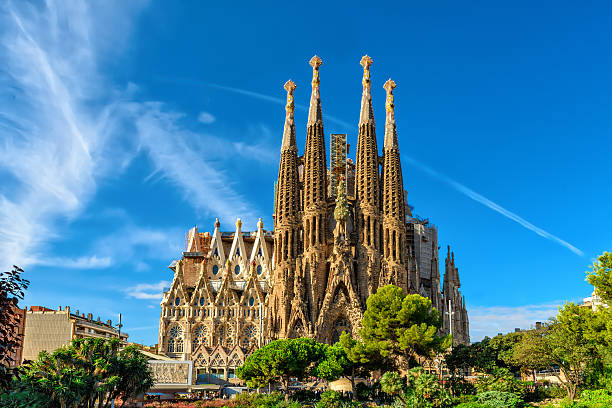
The counterintuitive correction is that a famous Gaudí add-on is overvalued on this specific day. The official Sagrada Família tickets question is important when that basilica is the point, but Sagrada Família official tickets (https://sagradafamilia.org/en/tickets-individuals) and Park Güell official tickets (https://parkguell.barcelona/en/buy-tickets) belong to a dedicated Gaudí sequence, not to a Romanesque day that needs concentration. Adding either one may look efficient on a map or in a luxury itinerary, but it changes the day’s mental rhythm from medieval reading to reservation chasing. The result is usually not “more Barcelona.” It is a weaker version of two better days.
Why Sant Pau del Camp should come before MNAC
Sant Pau del Camp should come before MNAC because it teaches the scale of Romanesque space before the museum teaches the scale of Romanesque survival. Travelers often reverse this out of habit: big museum in the morning, smaller church as an afterthought. That is the wrong instinct here. A small church after MNAC can feel slight. A small church before MNAC becomes the key that unlocks the museum.
The church’s setting matters. Sant Pau del Camp is in the Raval, not in the polished Eixample grid and not inside the densest Gothic Quarter visitor current. Arriving there from a hotel near Passeig de Gràcia, the Cathedral, or Plaça de Catalunya changes the day immediately: you are not following the default north-south Gaudí path, and you are not drifting through old-town lanes without a point. You are crossing toward a surviving medieval pocket on the old city’s rougher western edge, near Paral·lel and the Sant Antoni side of the center. That micro-shift gives the day its seriousness. It says: this is not a filler stop between better-known monuments.
Inside, the point is restraint. Sant Pau del Camp is associated with the old Benedictine monastery and is one of Barcelona’s notable Romanesque survivals. The church, with its apses and compact plan, and the cloister with its paired columns and unusual arches, give you a close-range lesson in how Romanesque architecture feels before it is turned into a slide in an art-history lecture. You notice the body before the image: the lower light, the stone thickness, the need to slow down, the way a cloister makes time circular rather than linear.
That matters for discerning travelers because MNAC’s Romanesque rooms can otherwise blur. The first apse is thrilling, the second impressive, the third harder to place, and by the fourth many visitors are simply saying “beautiful” without reading. Sant Pau del Camp prevents that. It gives you a spatial memory to carry uphill. When you later stand before the great painted apses at MNAC, you can ask more precise questions: where would the congregation have stood, what did the apse do liturgically, how did image and architecture work together, and what is lost when the image survives but the village church does not travel with it?
There is also a pacing reason. Sant Pau del Camp is a compact beginning, not a stamina drain. It fits a morning that can still include a thoughtful lunch and a serious museum visit. It is especially useful for couples and small groups who dislike starting the day with a large institutional threshold. A private guide can use the site to calibrate vocabulary without sounding academic: apse, nave, cloister, tympanum, monastery, removal, reconstruction. By the time the group reaches MNAC, the museum’s language is no longer foreign.
Do not overbuild the morning around Sant Pau. The nearest temptation is to add Palau Güell because it is close, or to fold in a full Gothic Quarter walk because you are already in the old city orbit. That is the first place the day begins to lose its shape. If the trip also needs Barcino walls, Santa Maria del Mar, or El Born, place those in a separate Roman-and-medieval layer such as a focused Roman and medieval layers day. For this route, Sant Pau is not a gateway to “all old Barcelona.” It is the scale setter for MNAC.
Why the apses are at MNAC, not all still in situ
The apses are at MNAC because Catalonia’s Romanesque mural paintings became vulnerable to the early twentieth-century art market, and the museum story begins with both rescue and removal. This is the central fact many casual Barcelona guides soften too much. The works are not simply “from churches.” Many were detached from church walls, transferred to Barcelona, and reinstalled in museum environments that suggest their original settings.
The Museu Nacional’s own account of the story of the paintings removal (https://www.museunacional.cat/mesromanic/en/story-of-the-paintings-removal/) is useful because it makes the stakes clear. After the sale and removal of Romanesque paintings from Santa Maria de Mur, other Catalan mural cycles were considered at risk. Between 1919 and 1923, paintings were acquired, removed from their original walls, transferred to Barcelona, and prepared for museum display. The technique often used was strappo, which extracts the pictorial layer from the wall surface. That method preserved paint that might otherwise have been sold, exported, neglected, or damaged, but it also separated image from architecture.
This is why MNAC is so powerful and so complicated. Its Romanesque rooms are not a neutral treasure chest. They are a constructed environment shaped by conservation urgency, art-market pressure, Catalan scholarship, and museum design. The wooden apses and architectural reconstructions help visitors understand how the paintings related to curved surfaces, sanctuary space, and liturgical focus. They do not make the works in situ. A trustworthy guide should say that plainly, because implying that all works remain in their original settings misunderstands the collection.
Sant Climent de Taüll is the most famous case for many visitors, but it should not be treated as a single celebrity image. The point is the system. Pyrenean churches and other medieval sites once held painted programs that wrapped architecture with theology, hierarchy, warning, and consolation. MNAC lets you compare those programs in a way no mountain route could do in one Barcelona day. The cost of that comparison is context: village, valley, approach, and worshipping community are absent. The reward is preservation, proximity, and the ability to read across multiple ensembles.
For art travelers, this is where the day becomes more than “beyond Gaudí.” Gaudí’s Barcelona often teaches modern invention through buildings still rooted in their urban sites. MNAC’s Romanesque rooms teach something more unsettled: how a culture builds a canon from fragments, removals, scholarship, and display. If you have already seen the Sagrada Família, Casa Batlló, or La Pedrera, this day changes the city’s timeline. Barcelona stops being a late nineteenth- and early twentieth-century phenomenon and becomes the capital of a much older Catalan visual argument.
The practical consequence is that you should not rush the Romanesque rooms as a prelude to the rest of MNAC. Many visitors enter MNAC intending to cover Romanesque, Gothic, Renaissance, Baroque, Modernisme, rooftop views, and perhaps the temporary exhibition in one sweep. That is how a major museum turns into a blur. For this route, give the Romanesque collection the priority. Add later sections only if the group still has energy, and decide that before you climb the hill, not when everyone is already standing in the galleries with tired feet.
How to sequence Sant Pau del Camp, MNAC and the Montjuïc descent
The cleanest sequence is a focused Sant Pau del Camp morning, a short transfer or well-placed lunch, an MNAC Romanesque visit, and a deliberate descent from Montjuïc before evening commitments. The day fails when travelers underestimate the hill, overestimate how much museum concentration they have, or leave the descent vague.
Start by placing Sant Pau del Camp before lunch or as the first serious stop after a gentle hotel departure. From the Gothic Quarter, the approach can be made on foot if the group likes urban texture, but it is not the same mood as a postcard old-town stroll. You move toward the Raval, along or near Carrer de Sant Pau, with La Rambla’s current close by but not controlling the route. From an Eixample hotel, a taxi or driver drop avoids turning the start into a navigation exercise. For a celebration trip or older travelers, that small transfer is not indulgence; it saves attention for the building.
Then resist the urge to drift. Lunch should either sit near the Raval-Sant Antoni-Poble-sec axis or be used as a clean bridge toward Montjuïc. A long detour to Barceloneta, Gràcia, or the top of Passeig de Gràcia breaks the day’s spine. If you want the museum to land, the meal should refresh the group without changing the subject. A simple, well-timed lunch near Sant Antoni or Poble-sec can work better than a destination restaurant across town because it reduces the number of mental resets before MNAC.
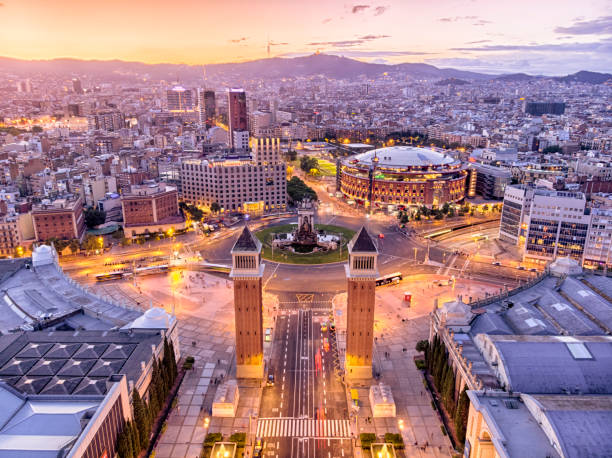
Reaching MNAC is the day’s main route decision. The museum sits on Montjuïc in the Palau Nacional, reached most classically from Plaça d’Espanya and Avinguda de la Reina Maria Cristina, with escalators and stairs rising toward the building. On a mild day, that ascent can feel ceremonial. In heat, after lunch, or with older parents, it can feel like the city is taxing the day just as the art is about to become demanding. A private vehicle or taxi to the museum entrance may be the more elegant choice, especially if the group has a serious dinner later.
Barcelona does specific things to the body on this route. Raval pavements and crossings require attention; Sant Pau asks for standing and close looking; MNAC adds marble, gallery distance, and the slow fatigue of looking upward into apses; Montjuïc adds slope even when escalators help. None of this is extreme, but it accumulates. The traveler consequence is simple: a plan that looks like a neat half-day on a map can feel like two different physical days if you add unnecessary walking, hill-climbing, and a late dinner with no pause.
The descent is not an afterthought. Ending MNAC with a vague “we’ll see the views” plan often leads to dithering on the terrace, then a tired shuffle down toward Plaça d’Espanya or an awkward hunt for a ride. Decide in advance whether the descent is scenic or logistical. Scenic means you accept the walk down the Avinguda de la Reina Maria Cristina axis and let the city widen in front of you. Logistical means your driver meets you at or near the museum so the day ends cleanly and the evening stays usable.
The mood consequence is just as important as the physical one. If you descend with time, the day feels spacious: medieval stone in the morning, monumental museum rooms in the afternoon, Barcelona unfolding below at the end. If you descend late and hungry, the same route feels like a march. For couples or celebration travelers, that difference matters. This is not a day that should finish with everyone negotiating where to eat on a curb near Plaça d’Espanya.
What to skip when the Romanesque day starts to swell
The first cut is any famous site that changes the subject from Romanesque art to Barcelona greatest hits. My explicit editorial no is this: do not force Sagrada Família, Park Güell, Palau Güell, the Picasso Museum, and MNAC into one “efficient” cultural day. It is not efficient if every stop weakens the reason you chose the day in the first place.
Skip the same-day Gaudí interior unless the trip is so short that this is your only Barcelona day and you accept that the Romanesque thread will become secondary. Sagrada Família is too absorbing to behave as a side stop, and Park Güell adds hill logic, timed-entry pressure, and a very different visual language. If either one is important, build a dedicated Gaudí day around it. If you try to attach it to Sant Pau and MNAC, you will spend the day changing interpretive channels: monastery, taxi, Modernisme, lunch, hill, museum, descent. That is not depth. It is channel surfing with better architecture.
Skip the full Gothic Quarter walk for the same reason. The Gothic Quarter can be superb with a guide, especially around Roman walls, civic power, El Call, and the Cathedral precinct, but it pulls the day toward urban history rather than collection-led art. A few connecting streets are fine. A full old-town circuit before MNAC is usually too much standing, too much stone, and too much interpretive overlap. By the time you reach the museum, the apses have to fight through fatigue.
Skip trying to see every MNAC section. The Romanesque rooms deserve priority because they are the reason for the day. The Gothic collection can be a meaningful extension if your group still has focus. Modernisme can be saved for another Barcelona story, especially if you already have Eixample architecture elsewhere in the itinerary. The museum’s breadth is impressive, but breadth is not the same as a good private day.
Premium spend helps when it buys expertise, pacing, and clean movement between settings. It helps if a specialist guide connects Sant Pau’s architecture to MNAC’s displaced mural cycles, if a driver removes the Montjuïc climb for a traveler who would otherwise arrive depleted, or if the day is timed around a significant dinner rather than improvised. Premium spend does not help if it is used to buy a longer car loop between famous Gaudí exteriors; on this Romanesque day, that looks impressive on paper but does not materially improve the art, the route, or the group’s understanding.
For small private groups, the most common hidden failure is not cost. It is democratic over-inclusion. One person wants Gaudí, another wants the sea, another wants a market, and the Romanesque theme becomes the compromise nobody fully receives. Keep the day narrow. Barcelona has enough strong material for separate days; the craft is knowing which day not to contaminate.
Where a specialist private guide earns the day
A specialist private guide earns this day by connecting two settings that do not explain each other automatically. Sant Pau del Camp is a living architectural remnant in the city. MNAC is a museum installation shaped by removal, conservation, and display. Without interpretation, travelers can enjoy both and still miss the reason they belong together.
The guide’s first job is to prevent decorative looking. In Sant Pau, that means moving beyond “old” and “atmospheric” toward structure, monastic use, proportion, cloister logic, and the city around the site. In MNAC, it means giving the group a route through the Romanesque rooms that does not exhaust them: which apses to pause before, which fragments to compare, when to talk about strappo, when to let the image work, and when to move on. A good private guide knows that too much iconographic detail can flatten the experience just as surely as too little context.
The guide’s second job is to handle the ethical layer with clarity. The paintings were preserved through removal, and removal has consequences. Some original walls retained remnants; some churches now use copies, reconstructions, or other forms of presentation; some works live in museum conditions because fragility, history, and ownership make return complex. This is not a simple story of rescue heroes or museum theft. It is a story of art markets, rural heritage, Catalan institutions, conservation technique, and the fact that medieval images were never meant to be portable in the way paintings on canvas are portable.
The guide’s third job is pacing. This is where private touring is not just a luxury label. The same route works differently for an art historian couple, a family with older teens, a multigenerational group, or travelers pairing MNAC with a serious dinner. The best plan changes the number of apses, the length of the Sant Pau stop, the lunch location, and the Montjuïc descent according to the people in front of the guide. For a guide whose work is primarily Gaudí highlights, this subject can become thin quickly. For a medieval-art or Catalan-history specialist, it becomes one of the most rewarding days in the city.
Orange Donut Tours can build this as a focused church-to-museum day with the right guide, driver logic where it matters, and enough restraint to keep the evening from being flattened by overplanning. Start with the topic, your hotel location, dinner ambitions, and the group’s museum appetite; the route should be designed around those constraints rather than copied from a generic city itinerary. For a tailored version of this Sant Pau del Camp to MNAC day, Inquire now.
If you already know you want interpretation rather than a checklist, the more specific next step is a private guide in Barcelona who can hold the thread across church, collection, transfer, and descent. That guide choice matters more here than a more expensive vehicle category, a longer museum ticket bundle, or an extra monument squeezed into the morning.
Lunch, dinner and the evening after MNAC
The meal plan should support the Romanesque day rather than compete with it. Barcelona’s dining scene can easily pull attention away from the route, especially for food-and-wine travelers who are also tracking reservations. The smart move is to decide whether dinner is a soft landing, a serious tasting menu, or a celebratory finish, and then time the Montjuïc descent accordingly.
For a soft landing, finish MNAC with enough margin to return to the hotel before dinner, especially if you are staying in Eixample or near Passeig de Gràcia. This is the best choice for travelers who want the day to feel intellectually rich but not socially depleted. The museum has already done the heavy lifting. A relaxed dinner afterward lets the images settle rather than immediately replacing them with another performance.
For a serious tasting-menu evening, keep the daytime narrower. Do not add extra MNAC sections, a rooftop linger, a market stop, and a long transfer before dinner. Use direct sources when planning the evening: the Michelin Guide: Barcelona starred list (https://guide.michelin.com/us/en/catalunya/barcelona/restaurants/all-starred) for current restaurant recognition, a restaurant’s official menu (https://www.disfrutarbarcelona.com/en/menu) for the actual dining format, and its reservations page (https://enigmaconcept.es/reserva/) for booking conditions rather than hearsay. Those pages should not control the Romanesque route, but they should shape how late and how intensely you plan the museum afternoon.
For celebration travelers, the best evening is often not the most elaborate one. MNAC plus a demanding dinner can be excellent if the group has real art stamina and the restaurant is the evening’s centerpiece. But for many couples, an easier Eixample or Sant Antoni dinner after a hotel pause will feel more elegant than a four-hour gastronomic commitment that begins with everyone already footsore. The Orange Donut Tours fine-dining perspective is useful here because the restaurant decision should be made in relation to the day’s movement, not as a detached trophy booking; compare the dining layer separately with the Barcelona fine-dining shortlist.
The highest-value dinner geography after MNAC is usually not the waterfront. Barceloneta can be wonderful on the right day, but after Montjuïc it often adds a cross-city move when the group is ready to simplify. Eixample is easier for many high-end stays, Sant Antoni can make sense if dinner sits near the day’s earlier geography, and Poble-sec can work for a more local-feeling evening if the group is comfortable with a less polished finish. The point is not that one neighborhood always wins. The point is that the evening should not undo the route’s calm.
Who should choose this day, and who should not
This day is best for repeat visitors, art travelers, sacred-art travelers, and private groups who want Barcelona to become older, quieter, and more intellectually layered than the standard Gaudí arc. It is also a strong choice for couples who prefer one deep subject to a full-day sampler, and for families with older teens who respond better to a story of rescue and displacement than to another decorative building tour.
It is not the best choice for a first-time visitor with only one full sightseeing day. Barcelona’s Gaudí interiors are not overrated in that situation; they are central. If you have not seen the Sagrada Família and will not have another chance on this trip, do not pretend that MNAC can replace it. MNAC offers a different Barcelona, not a substitute Barcelona. The condition that flips the answer is trip length: with three or more days, this Romanesque day becomes a sophisticated counterweight; with one day, it can become an admirable but misplaced sacrifice.
It is also not ideal for travelers who dislike museums unless the guide is unusually good at making collections spatial and human. Sant Pau del Camp alone is not enough to justify the day, and MNAC’s Romanesque rooms demand attention. If a group’s museum tolerance is low, consider a lighter medieval route, a Gothic Quarter specialist walk, or a Montjuïc views-and-gardens afternoon instead. The mistake is not choosing a lighter day. The mistake is booking a collection-led day and then rushing the collection.
For older parents or mobility-conscious travelers, the day can work well if movement is managed. The key is not to pretend Montjuïc is flat. Use a clean drop at Sant Pau, avoid unnecessary old-town wandering, consider a direct vehicle to MNAC, and decide whether the descent is a walk or a pickup. This is where comfort planning changes the trip without diluting the subject. It keeps the art from becoming associated with stairs, slope, and the feeling of being late.
For food-and-wine travelers, the day is strongest when lunch and dinner are given roles. Lunch is the hinge. Dinner is the afterimage. If lunch becomes a long destination meal, MNAC shrinks. If dinner becomes too ambitious after an overbuilt museum afternoon, the evening loses ease. Barcelona rewards appetite, but this specific day rewards restraint.
The final planning rule
The final planning rule is to treat Sant Pau del Camp and MNAC as one argument in two places. The church gives you the body of Romanesque architecture. The museum gives you the fate of Romanesque painting. Montjuïc gives you the exit. Everything else should prove that it belongs, and most famous add-ons do not.
That is what makes the day commercially valuable for a private, tailor-made stay: not VIP gloss, but better judgment. A tailored route can choose the right guide, trim the museum to the works that matter, place lunch where it supports the transfer, decide whether a driver earns its cost, and finish the hill in a way that leaves the evening intact. The day should feel shorter than its content, not longer than its map.
When planned well, this is one of Barcelona’s most persuasive alternatives to another Gaudí day. It does not ask travelers to reject Gaudí. It asks them to stop letting Gaudí explain every century of the city. Sant Pau del Camp and MNAC show a Barcelona of monastic space, mountain churches, removed apses, conservation choices, and Catalan memory. For the right traveler, that is not a detour from the city’s greatness. It is the day that makes the city deeper.
FAQ
Is MNAC worth it for Romanesque art if I am not a medieval specialist?
Yes, MNAC is worth it if you visit with a clear route through the Romanesque rooms and do not try to cover the whole museum at the same depth. The collection is unusually strong because it lets you compare major mural cycles, apses, panels, and sculpture in one place. Without context, however, the rooms can blur, which is why Sant Pau del Camp first and a specialist guide both help.
Why are the Romanesque apses at MNAC rather than in the churches?
Many Romanesque mural paintings now at MNAC were removed from their original church walls in the early twentieth century after Catalan authorities judged them at risk from sale, export, or loss. They were transferred to Barcelona and displayed in museum settings that evoke church architecture. That preserved the paintings, but it also means visitors should not assume all works remain in situ.
Should Sant Pau del Camp or MNAC come first?
Sant Pau del Camp should usually come first because it gives you the architectural scale before MNAC gives you the collection story. Seeing the small Romanesque church first helps the museum’s reconstructed apses make sense. Reversing the order can make Sant Pau feel like an afterthought rather than the key to the day.
Can I add Sagrada Família or Park Güell to the same day?
You can add one only if the trip is very short and you accept that the Romanesque day will become secondary. For a stronger private itinerary, keep Sagrada Família and Park Güell on a dedicated Gaudí day. Their timed-entry logic, crowds, hills, and visual language compete with the quieter church-to-museum arc from Sant Pau del Camp to MNAC.
How much time should I allow for Sant Pau del Camp and MNAC?
Allow a serious half-day to most of a day once transfers, lunch, MNAC, and the Montjuïc descent are included. Sant Pau del Camp itself is compact, but MNAC’s Romanesque rooms deserve unhurried attention. Art travelers should not treat MNAC as a quick scenic stop on the hill.
Is this route good for older parents or limited-mobility travelers?
It can be good if movement is planned carefully. The main issues are standing time, old-city pavement, museum fatigue, and the Montjuïc slope. A direct vehicle to MNAC, a clear pickup after the visit, and fewer add-on stops can make the day far more comfortable.
Where should I end after MNAC?
End either with a planned descent toward Plaça d’Espanya or with a vehicle pickup near the museum. The best choice depends on energy, weather, dinner location, and hotel geography. Do not leave the descent vague, because Montjuïc is where an otherwise elegant day can become tiring.
Does a private guide really matter for this day?
Yes, a private guide matters more here than for many standard sightseeing routes. The value is not just navigation; it is connecting Sant Pau del Camp’s architecture with MNAC’s displaced mural cycles, explaining why the apses are in the museum, and pacing the collection so the day remains clear rather than encyclopedic.
If you’re interested in any private tours of Barcelona, please reach out to us.








 So if you are looking for the absolute best in Barcelona & surroundings with authentic local fully-licensed native guides whose English you can actually understand and with an exclusive and amazingly fun itinerary













