The Barcelona Market Morning: Boqueria, Santa Caterina or Sant Antoni Without Tapas Fatigue

Updated
Choose one Barcelona market morning, not three: Boqueria if this is your first Barcelona visit and you want the famous market framed intelligently; Santa Caterina if the rest of the day belongs in the Gothic Quarter, El Born or the Picasso Museum area; Sant Antoni if you want a calmer, more local-feeling food morning that will not spoil a serious dinner. This works in real city conditions because Barcelona’s morning food stops sit close enough to tempt over-planning, yet far enough across the old-town edge, La Rambla and the Eixample grid to make every extra stop cost appetite, attention and walking energy. The clearest exception is a traveler with no important dinner plan: if the market is the day’s main food event, Boqueria plus one carefully chosen nearby stop can still earn its place.
The point of a Barcelona market morning is not to collect tastings until lunch becomes inevitable. It is to choose the market that shapes the rest of the day cleanly: La Boqueria for spectacle and first-time context off La Rambla, Santa Caterina as an old-town hinge between the Gothic Quarter and El Born, or Sant Antoni when you want breathing room before a late reservation. The market you choose should decide what you cut, not what you add.
The practical verdict before you build the day:
- Boqueria wins when the morning already includes La Rambla, the lower Gothic Quarter, Plaça Reial, or a first Barcelona orientation that needs one famous anchor. It is still worth it when treated as a guided edit, not as a grazing marathon.
- Santa Caterina is the smarter old-town choice when you want market texture without letting the market dominate the morning. Its location makes the day flow toward El Born, the Cathedral area, and a more coherent heritage walk.
- Sant Antoni is the appetite-preserving choice when dinner matters, the group dislikes dense crowds, or you are staying around Eixample and do not need another La Rambla crossing.
- The wrong fit is a three-market crawl before lunch, tapas and dinner. Premium tastings do not help if the day stacks market bites, lunch, tapas and dinner without a break.
A market morning can sit beautifully inside a private Barcelona food route, but only if the route edits the day. If you are already considering a dedicated Barcelona tapas and wine private tour, let the market morning do a different job: provide context, ingredients, timing and neighborhood shape. Do not turn the morning into a preview version of the same evening.
The mistake to avoid: treating every Barcelona food stop as additive
The first planning error is assuming that a market bite, a second market bite, a vermouth stop, lunch, tapas and dinner all improve the day. They usually compete with one another. Barcelona makes this especially easy to misjudge because food landmarks sit inside attractive walking territory: La Boqueria beside La Rambla, Santa Caterina near the Cathedral and El Born, Sant Antoni at the edge of Eixample and the old city. On a map, they look stackable. In the body, they are not.
The consequence shows up later, not during the first bite. A family that overdoes Boqueria at 10:30 may still enjoy the Gothic Quarter, but lunch becomes vague, teenagers become impatient, and the evening reservation starts to feel like an obligation rather than the point of the day. A couple planning a fine dinner may think they are being efficient by sampling widely in the morning, then discover that the palate is tired before the best course arrives. A small celebration group can lose the sense of occasion if the day becomes a string of standing snacks instead of a composed rhythm.
The counterintuitive correction is this: Boqueria is not the automatic best market for a premium Barcelona morning. It is the best-known market, and it can be excellent, but the fame is only valuable when you use it for orientation, ingredient context and a sharply edited route. If the morning already has high sensory load — La Rambla, the Gothic Quarter, shopping, photography, children, heat, or a late dinner — Santa Caterina or Sant Antoni may produce a better day even if Boqueria produces the more recognizable photo.
There is also a route consequence. Moving from Sant Antoni to Boqueria means crossing into the Ramblas orbit; moving from Boqueria to Santa Caterina pushes you across old-town lanes that can slow a group more than the distance suggests; adding all three often turns the morning into navigation rather than taste. The attractive mistake is “just one more stop.” The better rule is to choose the market that gives the rest of the day its cleanest shape.
How to choose between Boqueria, Santa Caterina and Sant Antoni
Choose by the day you are protecting, not by which market sounds most famous. The decision criteria are simple: where your morning begins, what you need to preserve for dinner, how much crowd density your group enjoys, and whether the market should be the main event or a supporting hinge.
Use these scenarios rather than a best-market ranking:
- You are first-time visitors with one classic Barcelona morning: choose Boqueria, but keep it short and guided. Pair it with the lower Gothic Quarter or a La Rambla orientation, then stop adding food.
- You want the market to connect neighborhoods: choose Santa Caterina. It sits naturally between the Cathedral area, El Born, Via Laietana and the quieter old-town lanes that many visitors blur together.
- You care most about dinner appetite: choose Sant Antoni. It gives you market texture without pushing you into the densest tourist rhythm of La Rambla.
- You are traveling with older parents or younger children: choose the market that minimizes crowd compression and backtracking from your hotel, not the market with the longest reputation.
- You are staying in Eixample: Sant Antoni or Boqueria can work, but Santa Caterina only makes sense if the old town is already the day’s center.
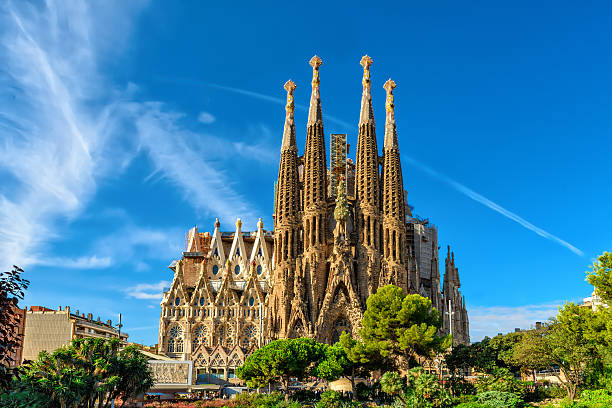
- You have Sagrada Família or Park Güell later: keep the market morning lighter than you think. Official timed-entry planning matters more than squeezing in a second food stop, so use the Sagrada Família official tickets (https://sagradafamilia.org/en/tickets-individuals) page or Park Güell official tickets (https://parkguell.barcelona/en/buy-tickets) page when you are coordinating the day.
The market should also match your hotel geography. A guest staying near Passeig de Gràcia may find Sant Antoni pleasantly efficient if the plan is to return to Eixample before dinner. A guest staying in the Gothic Quarter may find Santa Caterina cleaner than forcing a La Rambla start. A Barceloneta stay can make Boqueria feel like a detour unless the old town is already on the morning route. The same market can be excellent or clumsy depending on whether it creates a natural loop or a transfer reset.
For a broader food-and-wine day, the market question belongs inside a larger restraint strategy. Our separate guide to planning a curated Barcelona food-and-wine day covers the full lunch, wine and dinner arc; this article stays narrower because the morning decision is where many otherwise elegant days become too heavy.
When Boqueria is still worth it
Boqueria is still worth it when it is your first Barcelona market, your morning already belongs near La Rambla, and you are willing to let a guide edit the experience tightly. Its value is not that it is the easiest market to graze endlessly. Its value is that it gives immediate visual and culinary orientation: produce, seafood, cured meats, sweets, counter culture, and the old relationship between Barcelona’s public markets and everyday shopping.
The strongest Boqueria morning begins with a limit. Think of it as a 35-to-60-minute market chapter, not a full breakfast-to-lunch campaign. The guide’s job is to choose the lanes, explain what matters, read the group’s appetite, and prevent the market from becoming a standing buffet. That restraint is what makes Boqueria feel worthwhile rather than exhausting.
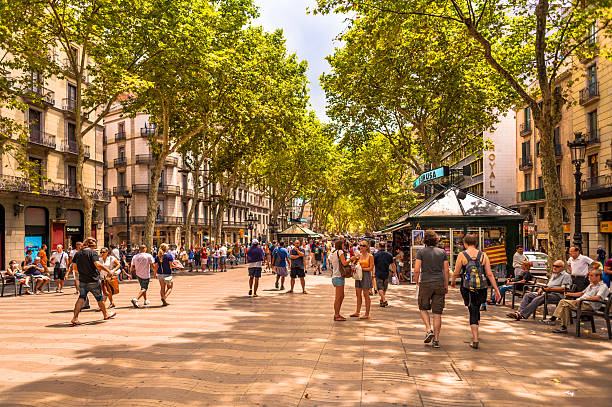
Boqueria works especially well if the rest of the morning includes the lower Gothic Quarter, Plaça Reial, the Liceu area, or a short old-town orientation. The micro-location matters: from the market edge, it is tempting to drift down La Rambla or cut into the Gothic Quarter, but both directions can swallow time. Without a planned exit, the group often spends too long in the busiest part of the city and then wonders why the day feels less polished than expected.
There is a mood consequence too. Boqueria can energize a first morning because the color, noise and density say “Barcelona” immediately. But that same intensity can flatten the afternoon if it is followed by more crowds, more standing, and more unstructured tasting. The market itself is not the problem. The problem is treating its sensory charge as something you should keep amplifying all day.
Boqueria is the wrong choice if the traveler’s main complaint is crowd density, if the day already includes a major Gaudí interior, or if dinner is the food highlight of the trip. It can also be an overvalued base for comfort-first visitors staying well north in Eixample unless La Rambla or the Gothic Quarter is already part of the plan. In those cases, paying for premium tastings inside or around Boqueria will not solve the underlying issue: the route is too loud for the day you are trying to preserve.
Why Santa Caterina is often the better old-town market
Santa Caterina is often the best market choice when the market needs to connect the day rather than dominate it. Treat Santa Caterina as an old-town hinge: it sits between the Cathedral area, the edge of the Gothic Quarter, Via Laietana and El Born, so it can turn a potentially blurry heritage walk into a cleaner route.
This is where the market earns its place for discerning travelers. A morning can begin with the Cathedral area, move through the narrower streets around the old-town edge, pause at Santa Caterina for food context, and continue toward El Born without forcing a separate La Rambla detour. That shape matters more than a market ranking because it reduces decision fatigue. The group understands where the old city changes character instead of simply accumulating streets, snacks and photos.
Santa Caterina is particularly useful for travelers who want food without losing the morning to food. It gives enough market texture to talk about Catalan ingredients, seasonal shopping and neighborhood life, but it does not need to become the headline. That makes it a strong fit before the Picasso Museum area, a Gothic Quarter heritage route, or an El Born design-and-history morning. If your group is already considering a private Gothic Quarter and Old Town route, Santa Caterina can become the culinary pause that keeps the route human, not a second itinerary competing for attention.
The consequence on foot is real. The old town is not difficult in a mountain sense, but it is tiring in a stop-start way: narrow lanes, uneven surfaces, visual distractions, short crossings, and the constant need to regroup. Santa Caterina reduces the need to push back across La Rambla after you have already committed to the Cathedral-El Born side of the city. For families or multi-generational groups, that can be the difference between a morning that feels intimate and one that feels like repeated herding.
Santa Caterina is not the right choice if the traveler truly wants the famous Barcelona market moment. It is also not ideal if the day is centered on Eixample, Sagrada Família, Park Güell or Montjuïc and the old town is only a token add-on. The market’s strength is its hinge function. Remove that route logic and it becomes just another stop.
When Sant Antoni is the smarter morning for dinner-focused travelers
Sant Antoni is the smarter choice when you want the morning to feel local, spacious and appetite-aware. It is especially strong for travelers who have a meaningful dinner later, dislike shoulder-to-shoulder market wandering, or are staying around Eixample and want to avoid beginning the day in the densest part of the old city.
The market’s practical advantage is pacing. Sant Antoni gives the day a gentler start and makes it easier to keep lunch modest. Instead of pushing a group toward La Rambla, it lets the morning sit closer to the Eixample-Sant Antoni-Poble-sec edge, depending on the route. That matters if the afternoon includes a hotel pause, shopping around Eixample, or a later food-and-wine plan. The point is not that Sant Antoni is “better” than Boqueria. The point is that it asks less of the day.
For comfort-first travelers, this can change the whole texture of the trip. A Sant Antoni morning can be built around fewer tastings, more explanation, and a clean exit. It tends to suit couples who want dinner to remain the emotional center of the day, parents who need a calmer food stop, and repeat visitors who no longer need the La Rambla proof point. It also works well when a group wants Barcelona to feel lived-in rather than staged for the first-time gaze.
The body consequence is appetite plus legs. Barcelona does not require the same kind of climbing as Lisbon or Granada, but it wears travelers down through block-scale walking, warm light, old-town compression, standing stops, and transfers between very different urban textures. A morning that starts with too much tasting, then crosses into sightseeing, then adds lunch, then returns for tapas, makes the body feel as though the day has no pause. Sant Antoni helps avoid that because it is easier to keep the market as a contained chapter.
The wrong fit is a traveler who will feel disappointed without seeing Boqueria. First-time visitors sometimes need the famous anchor, and there is nothing wrong with that. But if the group has already seen the classic sights or is planning a dinner-led evening, Sant Antoni is often the more mature choice. It makes the day feel shorter, calmer and more intentional.
How to avoid tapas fatigue before dinner
To avoid tapas fatigue before dinner, make the market morning replace either a tapas route or a full lunch, not precede both. This is the clearest cut-first rule for Barcelona food planning: if dinner matters, stop forcing a market crawl, lunch, tapas and a tasting-menu-level evening into one day.
A useful market morning has one of three jobs. It can be a light food-context stop before sightseeing. It can be the main casual meal of the day. Or it can be the first chapter of a guided food route that ends before the afternoon gets heavy. It should not be all three. When travelers say they want “a little of everything,” the better editorial answer is usually “yes, but not on the same day.”
Here is the practical sequencing logic. If Boqueria is the morning anchor, keep the rest of the food day lighter and let dinner breathe. If Santa Caterina supports an old-town route, use it as a pause between history and El Born rather than a reason to add another market. If Sant Antoni is chosen because dinner matters, then do not sabotage that choice with an elaborate lunch. The market decision has to carry consequences, or it is just decorative planning.
This is where private planning earns its value. A private food route should edit the day, not keep adding tastings. It can calibrate appetite, choose the right market for the route, slow the group before the afternoon, and preserve the evening’s purpose. For a short stay, that kind of editing can matter more than finding one more excellent bite: Inquire now to shape a Barcelona food morning that fits the dinner, the hotel and the people traveling with you.
Extra spend helps when it buys better judgment: a guide who can read the group, avoid dead-end wandering, coordinate the market with timed sights, and keep the day from becoming a checklist. Extra spend does not help when it simply upgrades the number or price of tastings inside an already overfull day. The premium move is not always more food. In Barcelona, it is often the confidence to leave room.
Pairing a market morning with Gaudí, the old town or a hotel pause
A market morning should pair with one major day shape: old town, Gaudí or a hotel reset. It should not be asked to support all three. This is where many first-time Barcelona plans become inefficient: they start with a market, add the Gothic Quarter, jump to Sagrada Família, consider Park Güell, and still expect a polished food evening.
If the day includes Sagrada Família, the cleanest market choice depends on where you are starting and whether the basilica is the morning or afternoon anchor. A Boqueria-first morning followed by Sagrada Família can work if the market is short and the transfer is deliberate. But if you linger in La Rambla and the Gothic Quarter, the basilica becomes a second peak after the group has already spent its fresh attention. For a smoother Gaudí day, it may be better to treat the market as a separate morning or use a lighter Sant Antoni stop before returning toward Eixample.
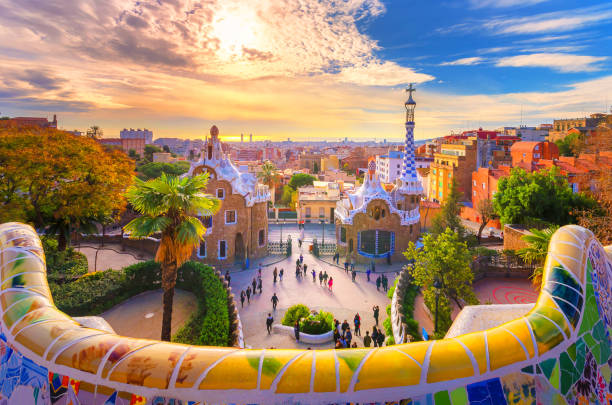
If the day includes Park Güell, be even more conservative. Park Güell asks for a different kind of movement: hillside approach, timed entry planning, outdoor exposure, and route discipline. A heavy market morning before Park Güell can leave travelers less tolerant of slopes, heat and transfer time. This is why a market-plus-Park Güell day should usually choose fewer tastings and a clearer hotel or car transition. For the larger Gaudí sequencing question, the dedicated guide on Sagrada Família, Park Güell or Passeig de Gràcia first is the better planning companion.
If the day is old-town focused, Santa Caterina usually makes the cleanest sense. The market can sit between the Cathedral side and El Born, giving the morning a hinge instead of a loop. Boqueria works when La Rambla is intentionally part of the story. Sant Antoni works when the old town is not the center, or when you want to approach the day from a quieter edge.
If dinner is the high point, build a hotel pause into the afternoon. This is not wasted time. It changes the trip mood. A short return to Eixample, a shower, a change of shoes, or simply an hour without more tasting can make the evening feel chosen rather than endured. Barcelona rewards travelers who understand that late meals need space around them.
What to cut when the Barcelona day is getting too full
Cut the second market first, then the extra tapas stop, then the unfocused lunch. Those cuts protect the experience more effectively than trimming five minutes from every stop. A Barcelona food day loses quality when the edits are too timid.
Do not cut the guide’s context if the market is unfamiliar. A market without context can become a blur of beautiful counters and uncertain choices. Instead, cut repetition. If you have already had seafood context in Boqueria, you do not need to chase another seafood counter elsewhere that morning. If Santa Caterina has explained neighborhood market life, do not add Sant Antoni only to prove you found the more local option. If Sant Antoni was selected to preserve dinner, do not undo that decision with a second casual food crawl.
Cutting also depends on who is traveling. Families should cut standing tastings before they cut a sit-down pause. Older parents should cut route complexity before they cut the market entirely. Couples on a celebration trip should cut the snack that makes dinner less special. Small groups should cut anything that requires repeated regrouping in narrow lanes. The right deletion is the one that protects the mood you actually came for.
There is one exception: if the market is the main food event and dinner will be light, then a slightly fuller Boqueria or Sant Antoni morning can be satisfying. But that should be the plan, not an accident. A market morning should replace, not precede, a tapas route when the day is already food-led.
Where each market fits in a private Barcelona route
In a private route, each market should be assigned a job before the day begins. Boqueria is the high-recognition first-time anchor. Santa Caterina is the old-town connector. Sant Antoni is the appetite-preserving, calmer morning. The guide’s craft is not merely knowing what to taste; it is knowing when to stop.
Boqueria belongs in a route that needs a quick, vivid introduction to Barcelona food culture and then moves on. It can pair with a lower Gothic Quarter walk, a short La Rambla explanation, or a first-day city orientation. But it should not be the base for a long morning if the group is already planning a full evening. The route needs a firm exit.
Santa Caterina belongs in a route that wants the old city to make sense. Its value rises when the guide uses it to explain the movement between the Gothic Quarter and El Born, rather than treating it as an isolated tasting stop. It is a market for narrative shape: Cathedral edge, market pause, El Born continuation. That is why Santa Caterina as an old-town hinge is such a useful planning phrase.
Sant Antoni belongs in a route that needs quiet confidence. It works for repeat visitors, Eixample-based stays, dinner-led days, and travelers who want a market without the performance of chasing the most famous name. It can also support a broader neighborhood morning with a more local cadence, especially if the group wants to see Barcelona beyond the obvious old-town spine. For that kind of neighborhood-led day, a Barcelona like a Local private tour can be a better fit than a classic highlights route.
The private-tour value is clearest with mixed groups. One person may want photos, another wants wine context, another worries about walking, and another is saving appetite for dinner. A fixed market crawl treats those as minor preferences. A tailored route treats them as the structure of the day.
A market morning without tapas fatigue: three clean sample rhythms
The best Barcelona market morning has a clean rhythm, not a long list of stops. These sample shapes keep the decision narrow while showing how the three markets behave inside a real day.
Boqueria for first-time orientation
Start near La Rambla, enter Boqueria with a tight plan, taste selectively, and use the market to explain Barcelona’s public-market culture. Continue into the lower Gothic Quarter or toward Plaça Reial, then stop adding food. Lunch should be light or intentionally delayed. This is the best rhythm for first-time visitors who would regret missing Boqueria but do not want the market to consume the day.
Santa Caterina for the old-town hinge
Begin around the Cathedral side or a Gothic Quarter route, use Santa Caterina as the food pause, then continue toward El Born. This shape suits travelers who want heritage, food and neighborhood texture in one morning without crossing back and forth across La Rambla. It is especially useful before a Picasso Museum area plan or an El Born afternoon.
Sant Antoni for dinner preservation
Begin later or more gently, keep the tasting brief, and let the morning remain spacious. Pair Sant Antoni with a modest neighborhood walk, a return toward Eixample, or a hotel pause before a dinner-led evening. This rhythm suits couples, comfort-first travelers and anyone who knows the evening meal is the day’s real food event.
These sample rhythms are deliberately restrained. A Barcelona food plan becomes more elegant when each part knows its role. The market should not compete with the old town, Gaudí, lunch and dinner all at once.
Final planning answer: which Barcelona market morning should you choose?
Choose Boqueria if your Barcelona morning needs the famous market and you can keep it edited. Choose Santa Caterina if the old town and El Born are the real shape of the day. Choose Sant Antoni if dinner appetite, calmer pacing and Eixample convenience matter more than checking off the most famous market.
The firm editorial call is that Santa Caterina is the most underrated choice for a polished first-stay morning when the old town is already on the plan, while Sant Antoni is often the better choice for food-and-wine travelers who care about the evening. Boqueria remains worth seeing, but it is not worth overbuilding the day around unless the market itself is the main event.
Barcelona is generous with food, but a generous city still needs an edited plan. The morning market should make the rest of the day easier to enjoy: fewer crossings, fewer duplicate tastings, a clearer old-town route, and enough appetite left for the meal that matters. For travelers balancing markets with an evening plan, the related guide to tapas and flamenco after Gaudí is useful because it treats the evening as something to place carefully, not as a default add-on.
FAQ
Which Barcelona market is best for a first visit?
Boqueria is usually best for a first visit if you want the famous Barcelona market moment, but it should be kept short and purposeful. If your morning is more about the Gothic Quarter and El Born, Santa Caterina may create a better route.
Is Boqueria too touristy to be worth visiting?
Boqueria can still be worth visiting, but not as an unstructured grazing stop. It works best with a clear purpose: first-time orientation, ingredient context, and a firm exit before the market overwhelms the rest of the day.
When is Santa Caterina better than Boqueria?
Santa Caterina is better when the day is centered on the Cathedral area, the Gothic Quarter or El Born. It functions as an old-town hinge, so it reduces backtracking and gives the morning a smoother neighborhood shape.
When should I choose Sant Antoni market?
Choose Sant Antoni when dinner matters, when your group prefers a calmer morning, or when you are staying around Eixample and do not need to start the day in the La Rambla corridor. It is the strongest choice for preserving appetite.
Can I visit Boqueria, Santa Caterina and Sant Antoni in one morning?
You can, but it is usually the wrong plan for a premium Barcelona day. Visiting all three turns the morning into a market crawl and often reduces appetite, patience and attention before lunch or dinner.
Should a Barcelona market morning replace a tapas tour?
It should replace a tapas route when the day is already food-led or when you have an important dinner later. If you do both, the market should be lighter and more contextual, not another full tasting sequence.
How do I avoid food fatigue before a late Barcelona dinner?
Limit the morning to one market, avoid a heavy lunch, and build in an afternoon pause. The most important decision is what to leave out: usually the second market, the extra tapas stop, or the unfocused snack crawl.
Can a private guide make a market morning better?
Yes, especially when the guide edits the route rather than adding more food. The value is in choosing the right market, pacing the tastings, avoiding backtracking, and keeping the evening meal worth looking forward to.
If you’re interested in any private tours of Barcelona, please reach out to us.








 So if you are looking for the absolute best in Barcelona & surroundings with authentic local fully-licensed native guides whose English you can actually understand and with an exclusive and amazingly fun itinerary













