Three Generations in Barcelona: One Gaudí Interior, Montjuïc and a Seaside Finish

Updated
Verdict: the best one-day Barcelona plan for three generations is one Gaudí interior—Sagrada Família for most first-time groups—followed by a selective, chauffeured visit to Montjuïc and an unhurried finish at Port Vell or the near side of Barceloneta. It works because Barcelona’s fatigue is created less by headline distances than by long Eixample blocks, timed entries, hill changes and repeated regrouping; limiting the day to one major interior and one hill keeps everyone in the same story. The exception is a family for whom Park Güell is the shared wish: in that case, Park Güell should replace Montjuïc, not be added to it.
The article’s thesis is that a multigenerational Barcelona day succeeds by changing the kind of attention required at each stage. A visually immediate interior is followed by a seated meal, a hill experienced through selective stops, and a waterfront hour with no obligation to “complete” anything. That sequence is more valuable than assigning one attraction to children, another to parents and another to grandparents. It respects differences without turning the family into three parallel itineraries.
The first hidden risk appears at the Gothic Quarter-to-Eixample transfer hinge. A group can finish a rewarding old-city walk near Plaça del Rei, then lose momentum searching medieval lanes for a vehicle, crossing to Via Laietana, waiting for everyone to reassemble and finally discovering that “two blocks” in the Eixample grid is a more serious walk than it looked on a phone. The better move is to decide the pickup edge before the walk begins—often toward Via Laietana or Plaça d’Urquinaona—and let the guide finish the story where the vehicle can realistically take over.
This is why private planning matters naturally rather than ceremonially. The useful upgrade is not having a car visible at every minute; it is coordinating a guide, a correctly timed interior, a driver at the route hinges and a lunch that does not become a second project. Orange Donut Tours’ private tours in Barcelona can be shaped around the family’s actual walking tolerance, attention span, food priorities and hotel geography instead of forcing a standard “best of” circuit.
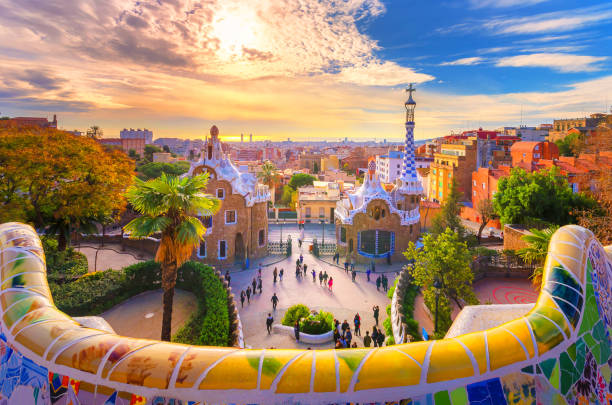
The counterintuitive correction is to stop treating more Gaudí as a better first day. Our editorial no is simple: do not add Park Güell to this route. It creates a second hill, another fixed appointment and another round of entry management before Montjuïc has even begun. Check Park Güell official tickets (https://parkguell.barcelona/en/buy-tickets) for the conditions on your date, but use that information to plan a separate visit or a clean substitution. A family that chooses Park Güell should release Montjuïc rather than attempt both.
The ranked ladder for a three-generation Barcelona day
The day should be ranked by what keeps the group together, not by the fame of each stop. When the plan is under pressure, protect the first item, then the second, and cut from the bottom.
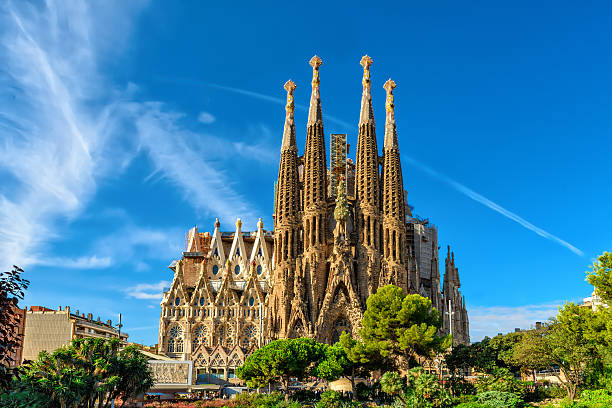
- 1. One Gaudí interior as the shared-interest anchor. This is the common visual experience everyone can discuss later, even when their architectural knowledge differs. For a first visit, Sagrada Família usually earns the slot because its scale and light communicate immediately; it does not require the group to share a specialist interest in domestic design.
- 2. The right movement relief at the right moment. Walking is still the best way to understand the Gothic Quarter and selected Eixample details, but a vehicle becomes valuable when the route turns from a timed interior toward Montjuïc. Paying for transport is justified when it removes a transfer reset, not when it simply circles while the group walks.
- 3. One deliberate recovery interval. A proper seated lunch or calm pause is part of the route architecture. It should reduce standing, give everyone a chance to adjust the afternoon and prevent the group from arriving on Montjuïc already negotiating whether to continue.
- 4. A seaside finish with permission to stop early. Port Vell or the near Barceloneta waterfront gives the day a different texture without demanding another monument. It is the first element to shorten if dinner, weather or energy requires it, because its value lies in flexibility rather than completion.
This ladder also clarifies the cut-first rule. If the Sagrada Família entry runs late, lunch takes longer or Montjuïc weather is less inviting, cut the length of the waterfront finish before cutting the meal or adding speed to the hill. If the group wakes tired, remove the Gothic Quarter prologue before reducing the main interior to a rushed photo stop. The hierarchy protects the shared moments that give the day coherence.
It also prevents a familiar multigenerational mistake: over-scheduling because different people have different interests. Variety does not require more reservations. It requires a change in pace and sensory mode. One interior, one meal, one hill and one open-ended waterfront segment create more variety than two interiors, a market dash, a rooftop, a hilltop park and a beach transfer compressed into the same day.
Choose one Gaudí interior as the shared-interest anchor
Sagrada Família is the strongest default because it gives a mixed-interest family one unmistakable Barcelona experience without requiring a second Gaudí interior to make the day feel complete. Its role is not to “cover” Gaudí; its role is to provide a common reference point before the route changes character.
Why Sagrada Família usually wins
Three-generation groups rarely differ only by age. They differ by how long they enjoy standing, how much context they want, whether they notice structural ideas or surface detail, how they respond to crowds and whether a timed visit makes them anxious. Sagrada Família handles those differences better than a specialist-heavy sequence because its interior can be read at several levels at once: as a civic symbol, a work in progress, a study in structure, a religious space and an extraordinary manipulation of daylight.
The traveler consequence is important. A guide can give the historically curious members depth while allowing others to understand the building through a few strong visual ideas rather than a lecture at every column. The group can stay physically together without being required to process the same amount of information. That is what makes the basilica a true shared-interest anchor, not merely the most famous booking.
Book through Sagrada Família official tickets (https://sagradafamilia.org/en/tickets-individuals) or have the visit arranged through a trusted operator, and check the current entry conditions before the day. Avoid building the schedule around remembered opening hours, assumed ticket categories or a screenshot from an old itinerary. The useful certainty is the confirmed entry itself; everything around it should retain some margin.
Do not automatically add a tower, rooftop-style supplement or second Gaudí house. A tower may be worthwhile for a group that actively wants it, but it changes the visit from one common interior into a more segmented experience. If even one part of the group would rather remain below, the day begins dividing at the exact moment it should be consolidating. For this route, the interior is enough.
When Casa Batlló or La Pedrera is the better choice
Sagrada Família is not mandatory. Casa Batlló can replace it when the family wants a more compact, decorative encounter on Passeig de Gràcia and values color, craft and domestic imagination more than basilica scale. La Pedrera can replace it when the group is especially interested in architecture as a lived system and is comfortable with the visit’s vertical elements. The key word is replace. Choosing a house does not create room for Sagrada Família later in the same day.
The best interior also depends on hotel geography. A family staying near Passeig de Gràcia may gain a calmer morning by walking to one of the houses, then meeting the driver for Montjuïc. A family based near the Gothic Quarter may prefer a short old-city prologue followed by the transfer to Sagrada Família. The broader comparison in choosing one Gaudí interior is useful, but the multigenerational rule remains narrower: select the place that produces the most shared attention with the fewest secondary decisions.
The visit design matters more than the premium ticket category
A higher ticket category cannot repair a badly placed visit. The major gains come from arriving with the group briefed, knowing where the guide and vehicle will separate, allowing time for the perimeter around the site and resisting the urge to attach another appointment immediately afterward. Around Sagrada Família, the surrounding blocks can feel busier and longer than anticipated when everyone exits at once and starts making separate decisions about restrooms, photographs, shopping or coffee.
Agree on the next step before entry. Either the group goes directly to a reserved lunch, or it has one defined pause and then departs. “We will decide outside” sounds flexible but often creates twenty minutes of standing and competing suggestions. In a three-generation day, decision fatigue is as real as walking fatigue. The itinerary should remove low-value choices so the family can keep high-value choices—how deeply to explore Montjuïc, how long to stay by the sea and what kind of evening they want.
Do not force the Gothic Quarter into the route unless it is already underfoot
The Gothic Quarter belongs only as a short prologue when the hotel, morning meeting point or family interests make it efficient. It should not become a second headline visit before the Gaudí interior.
If the family is staying in or beside the old city, a focused walk of roughly an hour can establish Barcelona’s earlier layers before the day moves into Modernisme. Plaça del Rei, the Cathedral surroundings and one or two Roman or medieval cues are enough to create contrast. The guide’s job is to make the district legible, not to empty a full old-town inventory into the morning.
The route should end at a practical edge. A driver cannot improve the narrow lanes around the Cathedral by following the group at walking speed, and trying to arrange an exact pickup inside the medieval fabric usually creates more phone calls than comfort. The cleaner handover is toward Via Laietana, Plaça d’Urquinaona or another agreed access point suited to the day’s traffic and the group’s next destination. The exact location should be confirmed for the date, but the principle is stable: the guide owns the lanes; the driver owns the cross-city transition.
If the hotel is in Eixample, skip the Gothic Quarter that morning. Crossing downtown simply to collect a short old-city walk, then reversing toward Sagrada Família, spends energy on movement rather than meaning. Save the Gothic Quarter for another half-day or an evening context walk. A narrow plan becomes more credible when it admits that a famous district does not always belong.
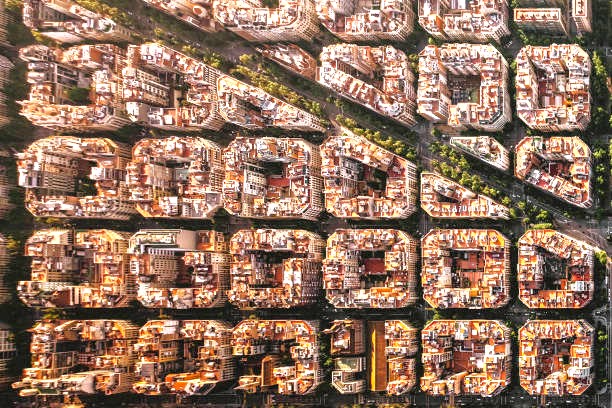
This is also where block-scale walking is commonly underestimated. Eixample’s chamfered grid is elegant and navigable, but its long blocks make “nearby” a deceptive word, especially after a cobbled old-city hour. Add hard pavement, entry standing and the stop-start rhythm of regrouping, and the body registers more load than the distance map suggests. The problem is not that Barcelona is impossibly strenuous; it is that small increments accumulate before the hill appears.
For families starting in the Gothic Quarter, the transfer hinge should therefore be treated as a scheduled event. Everyone knows the final walking point, the driver knows the pickup edge, and the next reservation is not so tight that one slow street crossing turns into anxiety. That small piece of choreography produces more comfort than a more expensive vehicle dispatched without a route plan.
Where the chauffeur matters: Montjuïc, not the medieval lanes
A chauffeur earns the cost on the move from Eixample or the old-city edge to Montjuïc, on the hill itself and on the descent toward the sea. This is the part of Barcelona where different mobility profiles can otherwise pull the family apart.
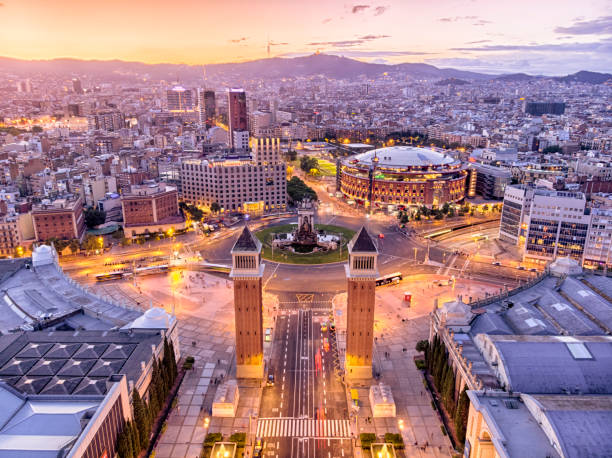
Montjuïc is not one compact attraction. It is a broad hillside of museum buildings, gardens, viewpoints, Olympic-era spaces, historic layers and roads that do not line up neatly with the way visitors imagine the hill from a map. Plaça d’Espanya and Avinguda de la Reina Maria Cristina create a ceremonial approach to the Palau Nacional, while the Olympic Ring, Miró side, castle area and Miramar edge occupy different parts of the hill. Trying to “walk Montjuïc” as a single continuous attraction is the wrong mental model for this day.
Choose one Montjuïc lens before the car starts climbing
The default lens for three generations should be city geography and open air. Use the ascent to explain the 1929 exhibition axis, stop selectively for a broad view or garden interval, and let the group understand how Barcelona meets the sea. This creates contrast after the Gaudí interior without demanding another long interior or a museum-level attention span.
An art-led family can choose one focused museum or foundation stop, but then the waterfront portion should shrink and the lunch should remain simple. A design-led group may prefer a shorter stop around the Mies van der Rohe Pavilion area and the Palau Nacional axis. A group that mainly wants air, photographs and conversation should not be made to enter a museum merely because the driver has reached the hill. The correct Montjuïc is the version that changes the day’s mode.
For a deeper choice between art, views and gardens, use choosing what belongs on Montjuïc. The point here is more decisive: select one lens and leave the rest visible but unclaimed. Driving past the Olympic Ring or seeing the Palau Nacional from the approach can be context; it does not have to become another stop.
The city’s physical load becomes obvious on the hill
Barcelona makes the body work through accumulation: long flat blocks in Eixample, hard surfaces, standing at controlled entries, repeated curb crossings, then a sudden change in gradient on Montjuïc. A family may look energetic at lunch and still find that one extra viewpoint requires more climbing than anyone expected. The chauffeur’s value is not eliminating all walking. It is preventing the group from spending its remaining energy on the least meaningful slopes and return climbs.
A good driver-and-guide team stages the hill so nobody is asked to descend for a view and then climb back to the vehicle without knowing that was the plan. They also avoid the opposite mistake of turning Montjuïc into a drive-by panorama with no time to stand still. One or two properly chosen stops feel generous; five quick exits feel like a transport demonstration.
Exact access points, road restrictions and drop-off possibilities can change, so the route should be confirmed close to the visit. That is not a reason to avoid Montjuïc; it is a reason to use local operational judgment rather than a rigid map trace. The driver should know the family’s walking ceiling, the guide should know which story can be told from the vehicle and everyone should know which stop is optional if the morning runs long.
This is the moment a private route prevents the family from splitting
Without coordinated transport, the strongest walkers may continue uphill while others wait for a taxi or choose to skip the next stop. The family remains nominally on the same itinerary but experiences different afternoons. With the vehicle placed at the right point, the group can stay together, step out for the same view and descend toward the waterfront before energy differences become a negotiation.
This is where a chauffeured Barcelona private tour is most defensible: not as a status symbol, but as the mechanism that preserves one common day. When the route needs a guide who can shorten a stop without making it feel truncated, a driver who can reposition while the family is looking at the city, and a seaside finish aligned with dinner, Inquire now.
How to plan Barcelona for three generations without split energy
Prevent split energy by designing around shared tolerances and changing modes before attention collapses. Do not assume the oldest traveler wants the least walking or the youngest traveler wants the least history; those assumptions are often wrong and can be quietly patronizing.
Ask instead what each person finds tiring. One traveler may walk for hours but dislike standing in a queue. Another may enjoy a long interior but need a predictable meal time. Someone else may be physically strong but disengage when every stop asks for the same kind of concentration. The route should respond to those differences without announcing that one person is the “difficult” member of the group.
Change the mode before changing the people
The sequence works because each stage asks for something different. The Gaudí interior rewards looking and listening. Lunch rewards conversation and recovery. Montjuïc rewards orientation and selective movement. The sea rewards no performance at all. When the family changes mode together, it is less likely to divide into the people who still want to tour and the people who want to escape the tour.
A common mistake is to schedule a second interior after lunch because it appears restful. In practice, another controlled entry often adds standing, audio fatigue and the pressure to “get value” from the reservation. Open air is not automatically easier, but a chauffeured hill with one chosen stop gives the group more control than another ticketed interior.
Use one localized choice, not a separate itinerary
Flexibility is useful when it happens within the same place. On Montjuïc, one member might take the shortest route to the viewpoint while others spend ten extra minutes in a garden; the vehicle and meeting point remain the same. At Port Vell, some can continue toward the water while others sit with a drink nearby. These are small, reversible differences that do not require separate cars, guides or cross-city reunions.
By contrast, sending part of the family to Park Güell while others go to Montjuïc looks accommodating on paper but sacrifices the shared story of the day. The afternoon becomes an exercise in messages, location pins and dinner-time comparisons. A multigenerational trip can include separate interests across the stay; this particular day should remain the common day.
Make lunch do logistical work
Lunch should sit between the interior and the hill and should be chosen for seating, service rhythm and route logic before culinary ambition. Eixample or the lower approach toward Montjuïc usually makes more sense than a detour to a famous market or a premature beach lunch. A market crawl asks the family to stand, choose repeatedly, protect belongings and negotiate who wants what. That can be enjoyable on another morning; here it delays the recovery the route actually needs.
Allow enough time for the meal to feel like a break, but do not let it become a three-hour centerpiece unless dinner is intentionally light. Food-and-wine travelers can still eat extremely well; the planning distinction is between a meal that supports the afternoon and a meal that becomes the afternoon. For a celebration, a longer lunch can work if Montjuïc is reduced to one viewpoint and the seaside finish becomes an aperitif rather than a walk.
The guide should use the end of lunch as a real decision point. Ask whether the group wants the fuller hill version, the concise view-and-descent version or a direct move toward the sea. Because the major interior is already complete, shortening Montjuïc does not make the day feel failed. That psychological freedom matters: nobody has to defend their energy level by arguing against a must-see.
The seaside finish should feel optional, not scheduled
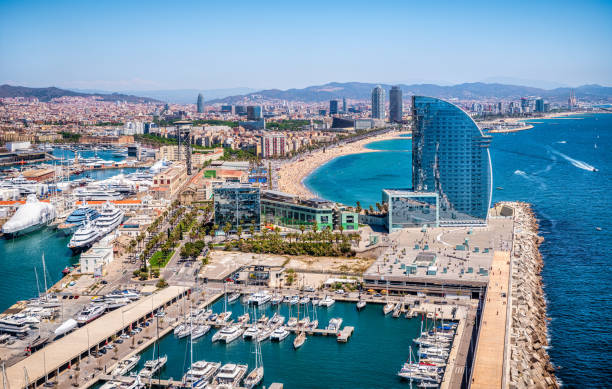
The best seaside ending is an easy waterfront hour with a clean exit, not a final attraction or a compulsory beach walk. Port Vell is the strongest default because it provides maritime scale and open air while keeping the group closer to central hotels and multiple dinner directions.
Port Vell is the best default
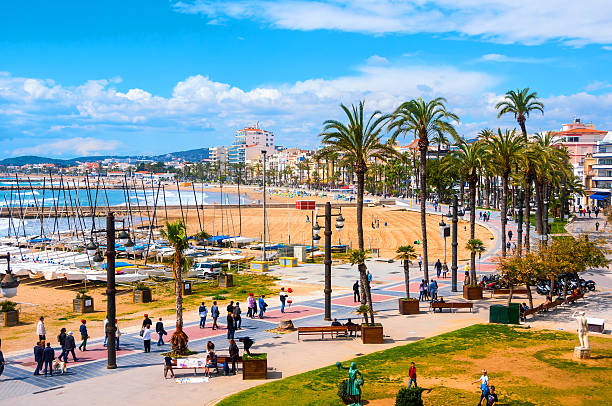
A finish around Moll de la Fusta, Rambla de Mar or the Port Vell edge allows the family to decide in real time how much movement remains. The sea is present, boats and harbor geometry change the visual field, and the group can pause without feeling that it has failed to reach the “real beach.” This is especially useful after descending from Montjuïc, because the day continues in the same geographic story rather than jumping to an unrelated final district.
Port Vell also makes the return easier to control. A group can end near the old city, continue toward Barceloneta, meet the driver, or move to dinner without committing to the far end of the beachfront. The waterfront is still urban, which is precisely why it works at the end of a substantial touring day.
Use Barceloneta when the beach itself is a family priority
Choose the near Barceloneta side when at least part of the group genuinely wants sand, the promenade or a longer sea-air interval. Do not choose it merely because “Barcelona has a beach.” The neighborhood’s tight street grid, exposed promenade and distance along the waterfront can turn a symbolic seaside finish into another walk with a difficult return.
The overvalued default is pushing all the way toward the most photogenic far-end address because it looks impressive on an itinerary. That can add vehicle waiting, wind exposure and a longer transfer back to Eixample just when the family wants fewer moving parts. A nearer harbor or beach-edge finish often feels more generous because it leaves energy for conversation rather than spending it on reaching a pin.
Why the waterfront changes the mood
Barcelona’s timed interiors and route hinges can make a family feel processed even when every visit is excellent. The waterfront reverses that mood because there is no required interpretation and no final room to reach. People begin talking about what they noticed rather than what comes next. The day feels shorter and calmer not because less happened, but because the final segment restores choice.
That mood consequence is also why a boat ride is not automatically an upgrade. A fixed departure, boarding process and weather dependence can reintroduce the same appointment pressure the route has just released. A private boat can be superb for a celebration when it is the evening’s main event, but it should replace the open-ended waterfront finish, not sit on top of it.
Spend for coordination, not for a more impressive checklist
The best premium spend goes to guide quality, correct ticketing, route-aware transport and meal coordination. Those purchases change how the family moves and how much of the day it can enjoy together.
What earns its cost
A private guide earns the cost at Sagrada Família because interpretation can be adjusted in real time. The guide can deepen the visit for architecture lovers, keep the main ideas clear for first-time visitors and notice when the group needs to move rather than continue standing. The same guide can turn the Montjuïc ascent into context, so the car time is part of the day rather than dead space.
A chauffeur earns the cost from the old-city edge or Eixample to Montjuïc and from the hill to the waterfront. The vehicle should be sized for comfortable entry, not merely legal capacity, and the driver should receive the actual route brief rather than a list of attractions. The premium is coordination: knowing when to wait, when to reposition and which stop disappears if the family chooses a longer lunch.
Advance planning also earns its cost when it prevents incompatible reservations. The Gaudí entry, lunch and any serious dinner should not be booked as isolated victories. Their geography and likely duration need to work together. A private planner should leave enough flexibility that one delay does not force the group to choose between eating and keeping the hill.
What does not earn its cost
Premium spend does not help when it is used to buy a second Gaudí interior, a rooftop add-on that only part of the group wants, or a far-flung waterfront address chosen for appearance rather than the return. None of those purchases repairs an overfilled sequence.
A full-day vehicle also does not add much while the guide is inside the Gothic Quarter’s pedestrian fabric. Nor can a premium label erase official entry controls at a major monument. The useful promise is not that every line disappears; it is that the family arrives prepared, enters with the correct booking and does not lose the next hour to avoidable confusion.
The most expensive lunch is not necessarily the best lunch for this route. A long tasting format can be wonderful, but it may consume the exact recovery-and-movement window needed for Montjuïc. Put the most serious meal at dinner or on another day unless the meal itself is the family’s shared-interest anchor.
Decide whether dinner or the waterfront owns the final hours
A seaside finish can lead to three different evenings, and the afternoon should be calibrated accordingly. For a casual family dinner, stay near the waterfront or return to a familiar neighborhood with minimal ceremony. For a celebration dinner, keep the waterfront to a concise aperitif-length pause and allow time to return to the hotel. For a tasting menu, do not arrive after a full beach walk, drinks and a late transfer; the dinner is already another long-form experience.
Use the Michelin Guide: Barcelona starred list (https://guide.michelin.com/us/en/catalunya/barcelona/restaurants/all-starred) as a current discovery tool, then check the restaurant’s official menu and reservations page for the format and conditions that actually matter to your family. A starred address is not automatically the right multigenerational choice. Menu length, dietary fit, seating rhythm, start time and return geography matter more than prestige alone.
For families staying in Eixample, the cleanest evening often returns there rather than forcing dinner on the beach. Eixample’s hotel concentration, broader streets and range of dining styles can make the end of the day feel composed. The seaside has already done its job; dinner does not need to prove that the family remained near the water.
A practical sequence that can survive real conditions
Plan the route as roughly six to eight hours including lunch, depending on the hotel, the chosen interior and whether the Gothic Quarter prologue is included. The purpose of the range is not to make the day vague; it is to prevent a private day from becoming a public timetable with no room for the family itself.
- Optional early prologue: a focused Gothic Quarter walk only when it begins near the hotel or meeting point. End at a pre-agreed vehicle edge rather than deep inside the lanes.
- Late-morning anchor: one Gaudí interior, usually Sagrada Família, with a clear plan for the exit and no second timed attraction attached.
- Midday recovery: a seated lunch positioned for the move toward Montjuïc, with enough time to reassess the afternoon without turning the meal into the whole day.
- Afternoon hill: one Montjuïc lens—views, gardens or one art stop—using the driver to eliminate low-value climbing and repeated transfers.
- Seaside close: Port Vell by default, near Barceloneta when the beach itself matters, and a shorter finish when dinner is the evening’s main event.
The sequence is deliberately asymmetric. The morning has the fixed commitment, the afternoon has adjustable depth and the final hour has the easiest exit. That is the opposite of the usual checklist day, which becomes more rigid as energy falls. It is also why this route works for couples traveling with parents, families traveling with adult children, grandparents with teenagers, and celebration groups whose ages matter less than their desire to stay together.
The final measure of success is not whether every person names the same favorite stop. It is whether nobody had to leave the common day in order to enjoy Barcelona at a humane pace. One Gaudí interior gives the family a shared image, Montjuïc gives it perspective, and the sea gives it room to become a family trip again rather than a sequence of reservations.
FAQ
What is the best Gaudí interior for three generations in Barcelona?
Sagrada Família is the best default for a first-time multigenerational group because its scale, light and story offer several levels of engagement at once. Casa Batlló or La Pedrera can replace it when the family prefers a more compact house-scale visit, but the day should still contain only one major Gaudí interior.
Can Park Güell and Montjuïc fit into the same multigenerational day?
They can be forced into one day, but they should not be. Both introduce hill logistics and Park Güell adds another fixed entry, so the better rule is one hill: choose Park Güell when it is the family’s shared wish, or choose Montjuïc when variety, views and a smoother seaside descent matter more.
Is a chauffeur necessary for the whole day?
No. Walking is more useful inside the Gothic Quarter and for selected Eixample details. The chauffeur matters most at the pickup edge between districts, on Montjuïc’s dispersed hillside and on the descent to the waterfront, where coordinated movement can keep different walking tolerances from splitting the group.
Should the Gothic Quarter be included before Sagrada Família?
Include it only when the family starts nearby and can keep the walk focused. A short prologue ending near Via Laietana or Plaça d’Urquinaona can work well; a full old-city tour before a timed Gaudí interior usually adds too much standing and creates a rushed transfer.
How much walking should three generations expect on this route?
Expect moderate walking with more accumulated load than the map suggests because of long Eixample blocks, hard pavement, entry standing and Montjuïc gradients. The route should be tailored to the group’s least flexible mobility requirement, while still giving stronger walkers small optional extensions at the same stop.
Where is the best seaside finish after Montjuïc?
Port Vell is the best default because it offers harbor air, visual openness and easier exits toward central hotels or dinner. Choose the near Barceloneta waterfront when the beach itself is a priority. For more context, see where Barceloneta belongs in a first stay.
Can a serious tasting-menu dinner follow this day?
Yes, provided the waterfront finish is shortened and the family has time to return to the hotel before dinner. Treat the meal as the evening’s main event, confirm the current menu and booking conditions directly, and avoid adding a second major attraction after Montjuïc.
What should be cut first if the day runs late?
Shorten the seaside walk first, then remove the optional Gothic Quarter prologue if necessary. Do not rush the shared Gaudí interior, sacrifice lunch or add speed to Montjuïc simply to preserve every line on the itinerary.
If you’re interested in any private tours of Barcelona, please reach out to us.








 So if you are looking for the absolute best in Barcelona & surroundings with authentic local fully-licensed native guides whose English you can actually understand and with an exclusive and amazingly fun itinerary













