Barcelona for One Architecture Day Without Repeating Gaudí: Sant Pau, Mies and Montjuïc

Updated
Route verdict: Sant Pau first, Mies as the hinge, Montjuïc for the finish
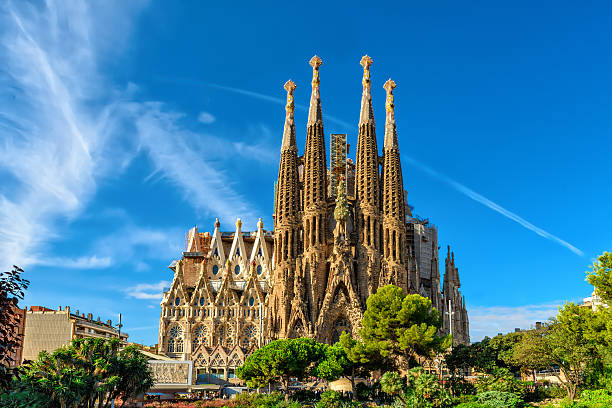
The strongest one-day Barcelona architecture route without repeating Gaudí is Sant Pau in the morning, the Mies Pavilion as the modern counterpoint after lunch, and Montjuïc as the finish. It works in real city conditions because Sant Pau rewards fresh attention, Mies is compact enough to sharpen rather than exhaust the day, and Montjuïc lets the route open into light, scale, and views instead of dragging you back into another interior. The clearest exception is a first visit where you have not yet seen the basilica; then make Sagrada Família the fixed anchor, use Sagrada Família official tickets (https://sagradafamilia.org/en/tickets-individuals), and save this Sant Pau to Montjuïc sequence for the second architecture day.
The thesis is simple: this is not a greatest-hits route, but a controlled architectural progression from civic Modernisme to radical modernism to the city-stage of Montjuïc. The non-obvious routing cue is that Sant Pau is not merely “near Sagrada Família.” It sits at the upper end of Avinguda Gaudí, beside the Sant Pau | Dos de Maig metro area and Carrer de Sant Antoni Maria Claret, so starting there keeps the first movement deliberate instead of forcing a cross-city reset before your eyes have warmed up. From there, the day can descend through the Eixample story, turn west toward the Mies Pavilion, and end on the 1929 exhibition hill.
The counterintuitive correction is that Passeig de Gràcia is not the best emotional base for this particular day, even though it is the city’s most obvious architecture promenade. Begin there and the facades tempt you into Casa Batlló or La Pedrera before the day has a thesis. Begin at Sant Pau and the story is cleaner: Barcelona as a city that built hospitals like garden cities, then argued with ornament, then staged modernity on Montjuïc. Travelers who want an Eixample-focused private walk can still fold in the grid intelligently through Eixample Private Tour, but the day should not become a Passeig de Gràcia shopping-and-facade drift.
- Choose this route if you have already given Gaudí one serious slot, want a second-day architecture plan, and prefer a clear design arc over another timed-ticket chain.
- Shorten this route if you are traveling with older parents, younger children, or a group that reads interiors slowly; Sant Pau plus one Montjuïc finish is better than Sant Pau, Mies, Miró, MNAC, and a late dinner all competing for attention.
- Change the route if Sagrada Família is still unseen. In that case, the basilica should win the architecture day, and this non-Gaudí sequence should move to another morning.
- Cut first any extra Gaudí interior, not Sant Pau or Mies. The whole value of the day is that it lets Barcelona breathe beyond the usual organic vocabulary.
Why Sant Pau belongs in the morning, not as a spare hour after Sagrada Família
Sant Pau belongs in the morning because it is large, layered, and slower to understand than many visitors expect. The Recinte Modernista de Sant Pau is not a single “look up, take the photo, leave” building. It is a campus of pavilions, tiled passages, garden spacing, ceramic detail, sculpture, brick, and institutional planning, and its official visit structure reflects that it is a site to be entered and paced rather than treated as a facade stop; check the official Sant Pau visit page (https://santpaubarcelona.org/en/visita/visita-lliure/) before fixing the day around it. Put it late and it becomes decorative. Put it first and it becomes the opening chapter.
The traveler consequence is immediate. Morning attention can distinguish between a decorative ceiling, a ventilation decision, a garden axis, and a hospital-planning idea. Late-afternoon attention tends to flatten all of that into “beautiful tiles.” For architecture travelers, the distinction matters because Sant Pau is where Barcelona’s Modernisme stops feeling like a handful of famous houses and starts reading as a civic project. You see ornament doing public work: lifting morale, organizing movement, dignifying recovery, and letting the outdoors become part of the institution. That is a richer beginning than another facade glance on the way to lunch.
The route also works better physically from Sant Pau. The upper Eixample edge around Sant Pau is less theatrically commercial than Passeig de Gràcia, which helps the day start with concentration rather than window displays. From the hospital complex, Avinguda Gaudí offers a direct visual and urban line toward Sagrada Família, but the point of this article is restraint: you can acknowledge the basilica’s pull without entering it again. That restraint is not anti-Gaudí; it is how you keep the day from collapsing into the same Barcelona conversation you already had.
For couples and small groups, Sant Pau is also a better morning social space. The garden courts and pavilion-to-pavilion rhythm give people small pauses to absorb, compare, and disagree. A private guide can use those pauses to connect Domènech i Montaner’s institutional Modernisme with the Eixample’s geometry without turning the morning into a lecture. For families, the campus rhythm is more forgiving than a single crowded interior, because attention can reset between buildings. For comfort-first travelers, the practical value is that you can front-load the most complex site before heat, lunch, and transfer fatigue start deciding what you actually hear.
The mistake is to treat Sant Pau as a convenient add-on after a Sagrada Família ticket window. It is close enough to be tempting, especially along Avinguda Gaudí, but proximity is not the same as coherence. Sagrada Família absorbs spiritual, technical, symbolic, and crowd-management energy. Sant Pau asks for civic and material attention. Doing the basilica first and then asking Sant Pau to “fit” often leaves the hospital complex feeling like an elegant afterthought, which is precisely the wrong hierarchy for a day designed without repeating Gaudí.
The Sant Pau to Montjuïc architecture day in four acts
The cleanest Sant Pau to Montjuïc route has four acts: Sant Pau for civic Modernisme, an Eixample transition for urban context, the Mies Pavilion for the modern turn, and Montjuïc for the finish. This structure prevents the day from feeling like disconnected sites. It also gives each stop a job, which is the difference between a specialist architecture day and a list of buildings with transfers between them.
Act one: Sant Pau as the morning thesis
Start at Sant Pau with enough space to read the campus, not just admire it. The first decision is not how many pavilions to “cover,” but how to make the site intelligible. A strong visit should notice the repeated materials, the way garden spaces organize the experience, the relationship between medicine and dignity, and the way Modernisme here becomes infrastructural rather than domestic. That is why this stop earns the morning: the architecture is not only surface. It is a system.
Do not rush the underground or connector moments if they are part of your visit flow, because they help explain why Sant Pau is not merely a collection of photogenic buildings. The contrast between decorative exterior language and practical institutional movement is the point. When travelers skip that logic, they often leave with a beautiful but vague impression. When they understand it, Sant Pau becomes the piece that makes the rest of the day feel necessary.
Act two: the Eixample seam, not an Eixample sprawl
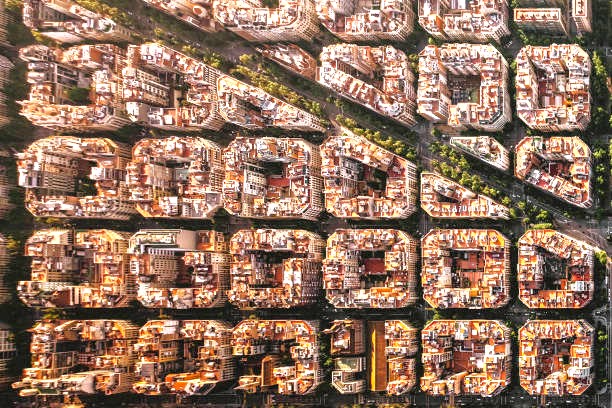
After Sant Pau, use the Eixample as connective tissue, not as a second itinerary. This is the place for a measured walk, a short transfer, or a guided explanation of the grid, chamfered corners, and how the district’s scale changes the body. The Eixample is orderly, but its blocks are bigger than many visitors expect. A route that looks tidy on a map can still produce a slow accumulation of crossings, sun exposure, and decision fatigue.
This is where many architecture days lose discipline. One person wants to “just see” Passeig de Gràcia. Another wants a design store. Someone remembers Casa Amatller. A driver is waiting. Lunch is not fixed. Suddenly the modernist-to-modern arc has turned into a series of opportunistic stops. The better move is to let the Eixample explain the city, then keep moving. If shopping or collecting is genuinely part of the trip, give it its own route with a clearer buying logic, such as Barcelona for design buyers after the museums.
Act three: Mies Pavilion as the deliberate interruption
The Mies Pavilion works best when it feels like a deliberate interruption after Sant Pau, not a small sight you squeezed in because it is famous among architects. The pavilion’s official history identifies it with Ludwig Mies van der Rohe and Lilly Reich and the 1929 International Exhibition on Montjuïc; the official Mies Pavilion visitor information (https://miesbcn.com/the-pavilion/general-information/) is the practical page to check before building the day around it. Its scale is modest compared with Sant Pau, but that is the point. After a campus of brick, tile, gardens, and applied meaning, Mies gives you planes, reflection, stone, glass, water, proportion, and a different idea of authority.
That contrast is why Mies should not be visited too early. Seen before Sant Pau, it can feel almost too distilled, especially for travelers who are not already fluent in modernism. Seen after Sant Pau, it becomes a hinge. You have just spent the morning in a world where architecture persuades through craft, symbolism, and public generosity. Then Mies asks how little a building can do, how materials can carry intensity without ornament, and how space can be composed as movement rather than enclosure. This is the modern counterpoint the day needs.
For private touring, this is also the moment where guiding earns its keep. A good guide does not simply recite “less is more.” The guide slows the eye, connects the pavilion to the exhibition landscape around it, explains why the reconstruction matters without overburdening the stop, and decides whether the group needs more time in silence or more comparative context. Some travelers want the Barcelona chair and the polished stone story. Others need the pavilion positioned against Sant Pau to understand why it feels so severe. The value lies in calibrating that explanation to the group, not in making the stop longer than it wants to be.
Act four: Montjuïc as the release valve
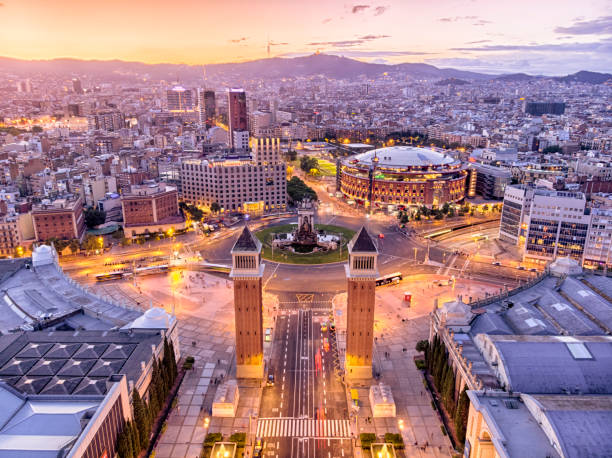
Montjuïc changes the finish because it gives the day air, distance, and a final shift in scale. The area around Plaça d’Espanya, Avinguda de Francesc Ferrer i Guàrdia, the Mies Pavilion, Avinguda Reina Maria Cristina, and the Palau Nacional terraces is not a compact old-town stroll. It is a hillside exhibition landscape. That matters because the body reads it differently: wider spaces, more exposure, more slopes, longer visual axes, and fewer casual “just around the corner” comforts.
Use Montjuïc as a finish, not a bucket to fill. After Mies, you can choose a Palau Nacional terrace moment, a Fundació Joan Miró extension, a garden-led descent, or a chauffeur-supported return toward the hotel. What you should not do is treat every Montjuïc institution as available just because it appears near the same hill on a map. The hill is generous, but it is not frictionless. A short distance with steps and sun can feel longer than an Eixample walk of the same length.
The best architectural finish depends on what the group still has the energy to read. If they want the 1929 urban stage, stay around Mies, the exhibition axis, and the Palau Nacional exterior. If they want modern Catalan art and a building that talks to landscape differently, consider the Fundació Joan Miró and check the Fundació Joan Miró visit page (https://www.fmirobcn.org/en/visit-us/plan-your-visit/) before assuming it can be added casually. If they want dinner energy intact, keep the finish visual and brief, then leave Montjuïc before the day becomes a climb disguised as a cultural finale.
When Mies is the right modern counterpoint, and when it feels too small
Mies is the right counterpoint when the day needs a clean break from ornament, not when the group is simply trying to maximize entries. This stop suits travelers who enjoy design vocabulary, collectors who notice materials, architects and architecture-adjacent visitors, couples who like quieter moments, and small groups who appreciate contrast. It is less successful for travelers who measure value by duration, room count, or the number of objects seen.
The pavilion can feel small if you arrive with museum expectations. There are no galleries to conquer, no sequence of masterpieces, and no dramatic queue that signals importance. Its authority comes from proportion, surfaces, reflections, the relationship between inside and outside, and the tension between apparent simplicity and material richness. That can be thrilling, but only if the day prepares the eye for it. Sant Pau does that preparation well because it gives you the opposite kind of richness first.
The timing consequence is important. Mies works beautifully after lunch when the group needs precision rather than volume. It is compact enough not to swallow the afternoon, but serious enough to keep the day from feeling like it peaked in the morning. This is why it pairs better with Sant Pau than with another full Modernisme interior. It gives the route a new grammar. You are not seeing “one more beautiful building”; you are changing the question from how architecture decorates civic life to how architecture defines space with almost surgical restraint.
There is also a mood consequence. After Sant Pau, a long, crowded, decorative interior can make the afternoon feel heavy. Mies, by contrast, can make the day feel shorter than it is because it asks for concentration in a compact field. Travelers leave with a crisp comparison rather than a blur of ceilings. That crispness is valuable for celebration travelers and food-and-wine travelers who still want to arrive at the evening with curiosity, not only relief.
The wrong fit is a group that needs constant narrative drama. Mies does not perform in that way. A guide can enrich the stop, but a guide should not inflate it into something it is not. If the group wants grandeur, Montjuïc can supply scale after Mies. If the group wants story, Sant Pau has already done that work. The pavilion’s job is to sharpen the middle of the day, not to dominate it.
How Montjuïc changes the finish of a non-Gaudí architecture day
Montjuïc turns the day from an architecture crawl into a city composition. The hill’s value is not only that it contains museums and views. Its value is that it changes your relationship to Barcelona: the Eixample grid, the port edge, the exhibition terraces, the slope toward Poble-sec, and the ceremonial approach from Plaça d’Espanya all become visible as urban decisions rather than background scenery.
This is why a Montjuïc finish should be chosen, not accumulated. After Mies, the strongest options are distinct:
- The architectural finish stays close to the Mies Pavilion, the 1929 exhibition axis, and the Palau Nacional exterior. Choose this when you want the clearest design progression and a finish that still belongs to the architecture thesis.
- The art-and-architecture finish adds Fundació Joan Miró, especially for travelers interested in Josep Lluís Sert, twentieth-century Catalan art, and a museum that uses terraces, courtyards, and light as part of the experience.
- The view-and-return finish keeps the late afternoon short: a terrace, a hillside viewpoint, and a planned return before the group begins negotiating tired legs, taxis, and dinner timing.
- The private Montjuïc finish works when a guide and vehicle connect the hill’s pieces without asking everyone to climb, descend, and reorient repeatedly; that is where Montjuïc Private Tour becomes a practical extension rather than a generic add-on.
Each version changes the evening. The architectural finish leaves the day clean and relatively contained. The art-and-architecture finish is richer but risks turning a design route into a two-museum day. The view-and-return finish is the most comfortable for a serious dinner afterward. The private Montjuïc finish is best for families, older parents, and small celebration groups who want the hill’s payoff without spending the last hour on stairs, exposed paths, or uncertainty over pickup points.
The body consequence is real. Barcelona often feels easy because the Eixample is legible, but legibility is not the same as lightness. Block-scale walking adds up; transfer resets interrupt attention; Montjuïc introduces slopes, terraces, and open sun; and the descent toward Poble-sec can feel casual until tired legs make it the only part of the day anyone remembers. A better plan admits that the city has texture. It uses that texture to shape the route rather than pretending every site is equally easy to append.
The mood consequence is just as important. End with one clear Montjuïc idea and the day feels expansive, almost cinematic. End by forcing one more institution and the mood flattens into duty. For discerning travelers, the memorable version is often the one that stops before the hill becomes work. The goal is to finish with Barcelona widening in front of you, not with everyone silently calculating how far the hotel is.
The cut line: when not to add another Gaudí interior
Do not add another Gaudí interior when the day’s purpose is to see Barcelona’s architecture beyond Gaudí. That sounds obvious, but it is the mistake that most often weakens this route. Casa Batlló and La Pedrera are not minor stops. They bring their own ticket logic, visitor flow, interpretive language, and emotional volume. Add either one casually and the day starts orbiting Gaudí again.
Save Casa Batlló or La Pedrera for another day when the trip has a dedicated Gaudí question: which single interior deserves the slot, how to compare domestic Modernisme with Sagrada Família, or how to build a more complete Gaudí route without queue burnout. The better place for that decision is a Gaudí-focused plan such as Barcelona with one Gaudí interior or, for travelers who want the full private context, Complete Gaudí. In this article’s route, another Gaudí interior is not an upgrade; it is a thesis leak.
The exception is a very short Barcelona stay where this is also the only possible architecture day and someone in the group would genuinely regret missing a major Gaudí interior. In that case, be honest: you are no longer planning “Sant Pau, Mies and Montjuïc without repeating Gaudí.” You are planning a mixed architecture day with a Gaudí anchor and a non-Gaudí supplement. That can be a fine trip choice, but it is a different article and a different rhythm.
Premium spend does not help when the plan simply piles interiors on top of one another; expert guiding cannot make too many interiors feel coherent if the day lacks a design thesis. Paying more can improve pickup timing, reduce walking strain, customize explanations, and make transitions smoother. It cannot turn Sant Pau, Sagrada Família, Casa Batlló, La Pedrera, Mies, and Montjuïc into one elegant idea. The luxury move here is restraint.
The cut-first rule is therefore firm: if the day is getting crowded, cut the extra Gaudí interior before cutting Mies or before reducing Sant Pau to a token stop. Without Mies, the route risks becoming another Modernisme-only morning with a hill finish. Without Sant Pau, the route loses its civic depth. Without the extra Gaudí interior, the route becomes what it promised to be: a Barcelona architecture day that lets another century of design speak.
What paying more actually changes on this route
Paying more changes comfort, sequence, and interpretation; it does not change the basic capacity of a day. A private architecture guide can connect Sant Pau’s Modernisme, the Eixample’s urban logic, the Mies Pavilion’s modernism, and Montjuïc’s exhibition landscape so the route feels like one conversation. A driver can help when the group includes older parents, heat-sensitive travelers, dressier celebration plans, or anyone who would rather spend energy on buildings than on negotiating transfers.
Where the spend earns its place is in the transitions. A guide can decide how much of Avinguda Gaudí to use, when to acknowledge Sagrada Família without being pulled into it, how to prevent the Eixample from becoming a facade checklist, and whether Montjuïc should end with Palau Nacional, Fundació Joan Miró, or a shorter viewpoint. A driver can prevent the Sant Pau-to-Mies movement from becoming the dullest part of the day. Together, they keep the route from splintering.
Where the spend does not earn its place is in overpacking. A chauffeured day that tries to cover too many interiors can feel more efficient and still feel conceptually muddled. The vehicle may remove walking, but it also makes it easier to say yes to one stop too many. For this route, the better brief is not “fit in more.” It is “make Sant Pau to Montjuïc feel inevitable.” That is the kind of brief Orange Donut Tours can shape into a private architecture day with the right guide, the right pace, and the right cut lines. Inquire now
How to plan a Barcelona architecture day beyond Gaudí without making it feel scattered
A Barcelona architecture day beyond Gaudí feels coherent when every stop answers the same question from a different angle. For this route, the question is how Barcelona moved from richly crafted civic Modernisme to modernist abstraction to a hillside stage for public culture. Sant Pau answers with institutional beauty and garden planning. The Eixample answers with urban form. Mies answers with reduction and material precision. Montjuïc answers with scale, skyline, and the city’s exhibition memory.
That is also why this article sits apart from a broader design-century route. A route focused on Eixample, Sant Antoni, and Mies can be excellent when the question is design culture, shops, and twentieth-century urban texture; see Barcelona’s Design Century for that adjacent lens. The route here is narrower and more architectural: Sant Pau to Mies to Montjuïc, with the hill changing the ending instead of Sant Antoni changing the middle.
Keep lunch quiet and geographically useful. This is not the day for a destination meal that yanks the route into the Gothic Quarter, the waterfront, or Gràcia. A long lunch can work if the afternoon is deliberately short, but it should not break the design arc. The better lunch brief is simple: a calm pause between Sant Pau and Mies, close enough to the westward movement that the group does not feel as if the day has restarted. Food-and-wine travelers can still have a strong dinner; they do not need lunch to carry the trip’s culinary ambition.
For a couple, the best version often has Sant Pau at a contemplative pace, Mies as a quiet pivot, and Montjuïc as a view-led finish before a serious dinner. For a family, the best version shortens interpretation at Mies and uses Montjuïc as a physical release rather than a second museum-heavy stretch. For design travelers, the best version gives Mies more silence and makes the Sant Pau comparison sharper. For celebration travelers, the best version plans the return before the group’s clothes, shoes, or evening reservation start dictating the mood.
The final planning test is this: could you explain the day in one sentence without naming every stop? If the answer is yes, the route is probably coherent. If the explanation becomes “we see Sant Pau, then maybe a Gaudí house, then Mies, then perhaps Miró, then the castle, then dinner somewhere,” the day is already losing shape. The strongest Sant Pau to Montjuïc architecture day is not the one with the most famous names. It is the one where the final view from the hill makes the morning’s choices feel connected.
FAQ
Can Sant Pau, the Mies Pavilion, and Montjuïc fit in one architecture day?
Yes, Sant Pau, the Mies Pavilion, and a chosen Montjuïc finish can fit in one day if you do not add another major Gaudí interior. The route works best when Sant Pau gets the morning, Mies stays compact, and Montjuïc is treated as a selected finish rather than a whole second itinerary.
Is Sant Pau worth visiting if I have already seen Sagrada Família?
Yes, Sant Pau is worth visiting after Sagrada Família because it shows a different use of Modernisme: civic, institutional, garden-based, and less dominated by one singular author. It is especially valuable for travelers who want Barcelona architecture beyond the usual Gaudí sequence.
Should I add Casa Batlló or La Pedrera to this non-Gaudí architecture day?
No, not unless this is your only possible architecture day in Barcelona and you would regret missing a Gaudí house. For the cleaner version of this route, save Casa Batlló or La Pedrera for another day and let Sant Pau, Mies, and Montjuïc hold the thesis.
When is the Mies Pavilion the right modern counterpoint?
The Mies Pavilion is the right counterpoint after Sant Pau, when your eye has already absorbed ornament, craft, and civic Modernisme. Its compact scale and modernist restraint make it a strong pivot before Montjuïc, especially for design-aware travelers.
Is the Mies Pavilion too small for private touring?
The Mies Pavilion can feel too small if you judge it by duration or number of rooms. It is not too small when the guide frames it as a precise architectural hinge between Sant Pau’s rich Modernisme and Montjuïc’s larger exhibition landscape.
What is the best Montjuïc finish after Mies?
The best Montjuïc finish after Mies is either the architectural axis around the pavilion and Palau Nacional, a carefully chosen Fundació Joan Miró extension, or a shorter view-led return. The right choice depends on whether the group still wants interpretation, art, or simply space and air.
Do I need a chauffeur for a Sant Pau to Montjuïc architecture day?
You do not always need a chauffeur, but one can improve the day for older parents, heat-sensitive travelers, small celebration groups, or anyone trying to preserve energy for dinner. A chauffeur helps transitions; it does not justify adding too many interiors.
Is this a good first-time Barcelona architecture itinerary?
It is a good first-time itinerary only if you already have a separate Gaudí plan or have seen Sagrada Família before. For a true first visit with one architecture day, Sagrada Família should usually take priority, and Sant Pau to Montjuïc should become the second-day architecture route.
If you’re interested in any private tours of Barcelona, please reach out to us.








 So if you are looking for the absolute best in Barcelona & surroundings with authentic local fully-licensed native guides whose English you can actually understand and with an exclusive and amazingly fun itinerary













