When Football Sets the Barcelona Weekend: Match Changes, Stadium Visits and Gaudí Bookings

Updated
Plan the football commitment first, but only to the level that is actually confirmed
A Barcelona weekend built around FC Barcelona should not be treated as a normal city break with one more attraction added to the calendar. The football commitment can change the usable shape of the stay: the day, kickoff, venue, admission conditions and stadium-visit operation are separate dependencies. Until each relevant dependency is confirmed, the sensible plan is to protect the football window without allowing it to control every Sagrada Família, Park Güell or Modernisme reservation.
For a time-constrained executive stay, the practical answer is to work with two calendars at once. The first is the confirmed calendar: travel, hotel, any football admission already issued under clear terms, and architecture entries whose conditions are understood. The second is the protected calendar: the day or range in which a provisional fixture may settle, plus enough flexibility around it to absorb a different kickoff or approach. Reservations with restrictive change policies belong on the confirmed calendar only after the football risk has been measured.
This distinction matters because a fixture appearing on a season list is not the same thing as a final operating brief. A listed opponent and nominal date may still sit beside “date and time to be announced.” A confirmed kickoff does not by itself establish that every member of the group has usable admission. A match at Spotify Camp Nou does not make an ordinary museum product interchangeable with a match-day stadium product. And a plan that works for Les Corts should not be copied unchanged to a Montjuïc approach.
The most reliable sequence is therefore: verify the official fixture status; verify the actual venue; verify the football product held by each traveler; identify the architecture bookings that cannot be moved easily; then build the guided city program around those facts. This is more disciplined than postponing all sightseeing, and safer than locking a dense Gaudí day against an unsettled Sunday.
The official schedule shows why a published weekend can still be operationally unsettled
A dated example makes the distinction concrete. Checked on 28 September 2026, the FC Barcelona first-team schedule listed FC Barcelona v Real Madrid at Spotify Camp Nou on Sunday 25 October 2026 at 21:00. The same official page showed later home league entries against Alavés on 1 November and Villarreal on 22 November with the date and time still to be announced and kickoff marked TBA. The page also states that its times are in peninsular Spain time.
The 25 October match had moved beyond the broad weekend stage. On 21 September 2026, LALIGA announced the Matchday 10 schedule, covering the ten league matches to be played from Friday 23 through Monday 26 October. That official competition announcement is the kind of source that converts a placeholder weekend into a usable kickoff. It still does not remove the need to check the club page, admission documents and any later operational notice, but it changes what can responsibly be booked around the match.
The planning consequence is not that every TBA fixture will move dramatically. It is that the traveler should not spend nonrefundable architecture inventory as though a nominal Sunday were already a fixed Sunday evening. A match can settle into an afternoon, evening or another day in the competition window. Even when the date remains, the difference between an early and late kickoff changes whether Sagrada Família belongs that morning, the previous day or after departure.
Use a provisional fixture as a boundary, not as a false appointment. Protect the likely match day from the kind of reservation that would be costly or impossible to change. Place more adaptable neighborhood walking, exterior architecture, shopping appointments with understood terms, or a hotel-based working period near that boundary. Put fixed-entry monuments where the confirmed calendar can support them.
Four statuses that should never be collapsed into one
The phrase “the football is booked” is often too vague to guide a Barcelona itinerary. For planning purposes, separate four statuses and record them for every traveler in the party.
- Fixture listed: the opponent and a nominal date or competition round appear on an official schedule, but kickoff may still be TBA. This establishes interest and a likely protected window, not a fixed city program.
- Kickoff and venue confirmed: the official club and competition channels show the day, time and ground. This is the point at which transfers and the surrounding sightseeing sequence can be designed with much greater confidence.
- Admission position understood: each traveler knows what has actually been purchased or allocated, whose name or account it sits under, what delivery or access steps remain, and what conditions apply. A link beside a fixture is not a promise that suitable seats are available, adjacent or transferable.
- Stadium visit separately confirmed: any museum, experience or match-day tour is checked as its own product with its own date, session, inclusions and exchange conditions. Match attendance does not automatically include a stadium visit, and a stadium visit does not confer match admission.
This record is especially useful for an executive group whose members may arrive on different flights or hold different football products. It prevents one person’s confirmed seat from being mistaken for group confirmation. It also reveals when the city program is being asked to compensate for an unresolved football purchase. No guide, planner or transfer provider can responsibly promise admission, stadium access or encounters with players that are not established by the official product.
Once those statuses are visible, the architecture decision becomes clearer. A fully confirmed evening match can coexist with a well-timed morning interior. A TBA home fixture may justify holding one full day lightly while using the other for the most restrictive Gaudí entry. A stadium visit without a match may be placed like any other timed attraction, provided its operating details have been rechecked. The status, not the enthusiasm, determines the booking order.
The booking order begins with the least flexible commitment, not the most famous name
Barcelona’s most recognisable attractions are not equally difficult to resequence. The correct order depends on change terms, geography, entry duration, group size and the consequences of a late arrival. Fame alone is a poor guide.
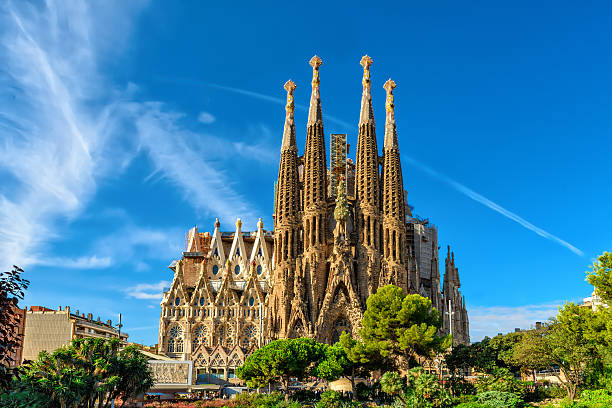
Sagrada Família is usually the critical architecture dependency because admission is tied to a specific date and time. The official Sagrada Família conditions of sale require the purchaser to select a specific visit date and time. They state that, once the purchase is completed, characteristics such as the day or time may not be modified except in expressly provided cases, and the general policy does not accept changes or returns outside specified exceptions. That makes an ill-timed booking materially different from an exterior stop that can slide by an hour.
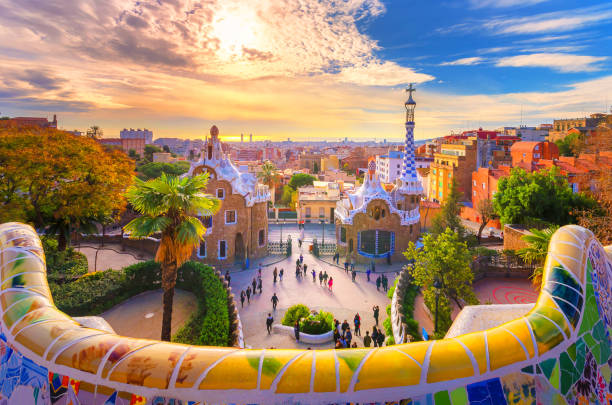
Park Güell also works through timed access, but its location creates a different operational problem. It is not simply another central Eixample interior. The hill and the journey to or from the monumental area can consume the flexibility that a football day needs, particularly for a group that moves at different speeds. The article on planning Barcelona when Park Güell sets the clock gives the deeper hill-and-ticket logic; for a football weekend, the relevant point is that Park Güell should not be placed casually between an uncertain kickoff and a venue transfer.
Casa Batlló and La Pedrera sit in the Passeig de Gràcia corridor and can be easier to combine with an Eixample walk, lunch or hotel than Park Güell. That geographic convenience does not make their entry conditions irrelevant, but it can make the surrounding hours more recoverable. An executive staying in or near the Eixample may prefer one strong interior there rather than a multi-stop Gaudí circuit that leaves no room for football changes.
The booking order should therefore be decided by exposure. Ask which reservation would be lost if the fixture moved; which transfer would become unrealistic if the venue changed; which visit is central enough to preserve; and which exterior or district can become the fallback. For many short stays, the answer is to protect one major Gaudí interior, keep one architecture sequence flexible, and decline the temptation to prepay every celebrated address before the football anchor has matured.
Match attendance and a stadium visit are different operating days
Football travelers often use “Camp Nou” to describe three distinct intentions: attending a match, seeing the stadium environment, and visiting the museum or a structured experience. Those intentions may share a place name, but they do not share one admission system or one operating pattern.
The official Barça Stadium Tour and Museum page presents the Match Day Tour Spotify Camp Nou, the Spotify Camp Nou Experience and museum products separately. At the time checked, the Match Day Tour was described as a guided behind-the-scenes route including a pitch walk and access to main competition areas, while the stadium experience and museum products had their own sessions and inclusions. The same page identified several products, including the Match Day Tour and Spotify Camp Nou Experience, as products that could not be exchanged through the listed change service.
The operational lesson is straightforward: do not buy or schedule a museum-style visit on the assumption that match day expands access. Match operations can instead narrow, redirect or reshape what is available. Nor should a match ticket be read as permission to arrive whenever a daytime visitor might. The correct arrival guidance comes from the match admission information and official communications for that date.
A stadium visit on a non-match day is a sightseeing commitment. It can be compared with Sagrada Família, a museum appointment or a design-focused walk. A match-day tour is a football-specific product attached to a more complex operating environment. Match attendance is the largest crowd movement and should be treated as an event window extending before and after kickoff, not as a ninety-minute block in an otherwise normal day.
This distinction changes the architecture plan. A traveler attending a late match may have time for one significant morning visit, but the day should not be filled to the point that lunch delay, entry queues, group separation or a transport notice threaten arrival. A traveler taking a daytime stadium experience without a match may be able to continue into Les Corts, Pedralbes or the Eixample, but only after the exact session and finishing conditions are known. A traveler merely interested in club history may choose the museum component and preserve another day for the city’s architecture.
It also changes what can be promised. A private itinerary can coordinate confirmed products, interpret the city around them and reduce unnecessary movement. It cannot convert one product into another, guarantee inventory or create access that the club has not sold. That boundary is part of good planning, not a lack of ambition.
Les Corts and Montjuïc require different transfer logic
Venue confirmation matters because Barcelona has no single standard “stadium transfer.” Les Corts and Montjuïc sit in different urban systems, and the sightseeing that pairs well with one can be clumsy with the other.
When the confirmed venue is in Les Corts
Spotify Camp Nou is in Les Corts, west of the central Eixample. The approach can be integrated with the upper Diagonal, Pedralbes or a westbound movement from Passeig de Gràcia, but crowd conditions still make the final segment date-specific. A route that ends in the western Eixample before the football window usually has less directional conflict than one that finishes at the waterfront, Park Güell or deep in the old city.
For a late Les Corts kickoff, a Sagrada Família morning can work when the entry is early enough and the remainder of the day is deliberately reduced. The group might continue through the Eixample for an architectural explanation and lunch, then separate for rest or work before reconvening for the stadium approach. The important point is not to add Park Güell merely because it also belongs to the Gaudí canon. Its hill geography points away from the cleanest westbound sequence and adds another timed dependency.
A Passeig de Gràcia interior can be a more compatible companion, especially for travelers based nearby. One building, not two, is often enough on match day. The broader comparison in choosing one Gaudí interior when time is tight is useful when the football window has already claimed the afternoon or evening.
When the operative venue or major football activity is on Montjuïc
Montjuïc is a hill, not a single doorstep. A plan must account for the particular facility, the ascent and descent, pedestrian management, vehicle restrictions, crowd routing and the fact that apparently short map distances can involve elevation or indirect access. The old city, Sant Antoni, Plaça d’Espanya and the lower Montjuïc cultural zone can be more compatible than a same-day sequence beginning at Park Güell.
If the football commitment is on Montjuïc, the temptation is to combine it with every nearby cultural institution. That can still overload the day. MNAC, the Mies van der Rohe Pavilion, the Olympic landscape, gardens and viewpoints each ask for attention. A match crowd changes the value of lingering on the hill and may alter how the group should descend. Choose one interpretive thread before the football window, not a catalogue of adjacent sites.
Montjuïc is also less forgiving of assumptions about pickup. A vehicle cannot be treated as a guaranteed curbside escape from the exact gate at the exact final whistle. The practical arrangement is a pre-agreed meeting logic with a fallback point, informed by official traffic and access information for the day. For mixed mobility or a group likely to split, the separate guide to Montjuïc’s shared anchors and rejoining points provides useful context.
Why the two plans cannot be kept as identical backups
Les Corts tends to reward a westward Eixample sequence. Montjuïc tends to reward a south-western or lower-hill sequence and a more explicit ascent plan. If the venue is uncertain, do not preassign every earlier stop as though both approaches have the same transfer cost. Keep the football day’s sightseeing geographically modest until the ground is confirmed, then choose the compatible half of the city.
This is where route judgment has real value. The issue is not simply the number of kilometres. It is the interaction of timed entry, crowd direction, elevation, vehicle access, group cohesion and the consequences of missing an admission window. A shorter-looking route may be operationally worse if it crosses the city against the match flow or leaves no recovery time.
Sagrada Família should be placed against the football risk, not automatically before it
Because Sagrada Família is both important and restrictive, travelers often assume it belongs on the morning of the match. Sometimes it does. Sometimes that is the most exposed position in the whole weekend.
A confirmed 21:00 kickoff at a confirmed Les Corts venue leaves a different amount of usable day than a provisional Sunday fixture. With the late kickoff, an early or mid-morning basilica entry can be reasonable, followed by a contained Eixample program and a substantial gap before the stadium approach. With a TBA fixture, the same booking may collide with an eventual afternoon kickoff or force the group to cross the city under pressure.
The basilica also deserves more than logistical survival. Executives on a short stay may be tempted to compress the nave, towers, Sant Pau and Park Güell into a single pre-match sweep. That reduces the city to a checklist and makes any delay expensive. A better use of the morning is one carefully interpreted interior and one adjacent or directional continuation. The article on whether Sagrada Família, Park Güell or Passeig de Gràcia should come first helps place the main Gaudí commitment in a wider city sequence.
If towers are being considered, treat them as an additional dependency rather than a decorative upgrade. The group must be willing and able to follow the access conditions, and any operational suspension may change the shape of the visit. When football already imposes a hard arrival objective, a nave-focused visit can be the more robust choice. That is an editorial route judgment, not a claim that every traveler should skip the towers.
The same principle applies to guided interpretation. A private guide can make a shorter architecture sequence intellectually complete by connecting structure, liturgy, urban growth and the Eixample without requiring multiple paid interiors. This is particularly relevant when the group’s real constraint is not money but the narrow amount of alert, unhurried time available before a major football commitment.
Do not use the match as an excuse to accept a poor Sagrada Família time. If the only remaining entry creates a fragile cross-city race, place the basilica on another day or make it the centerpiece of a football-free fallback. The cost of preserving one major interior is usually lower than the cost of losing both the architecture visit and a calm stadium arrival.
Three weekend patterns and how they should be booked
A confirmed Sunday evening match at Spotify Camp Nou
Suppose the official club and competition pages show a Sunday 21:00 kickoff at Spotify Camp Nou, and the group’s admission position is understood. The football commitment is now a fixed late-day anchor in Les Corts. The strongest architecture reservation normally belongs on Saturday or Sunday morning, depending on arrival and energy.
Saturday can carry the denser cultural work: Sagrada Família with Sant Pau, or Sagrada Família followed by a selective Eixample sequence. Sunday should be lighter. One interior on Passeig de Gràcia, an Eixample walk, lunch and a long uncommitted interval before the match may be more valuable than another distant highlight. If the group has Friday evening as well, use it for neighborhood orientation rather than spending the first hours in a rigid admission chain.
The stadium approach should be planned from where the group will actually be, not from the hotel in the abstract. If travelers separate after lunch, record the meeting point, the latest sensible departure and the fallback if one person is delayed. Build the return as its own movement, especially when an early Monday departure makes post-match drift costly.
A Sunday home fixture with kickoff still TBA
Here the Sunday should remain protected, but not empty. Saturday receives the reservation that would be hardest to lose, often Sagrada Família. Sunday carries flexible content: exterior Modernisme, a guided Eixample walk, a neighborhood sequence close to the hotel, or work and rest that can contract when the kickoff appears.
Do not place two restrictive admissions on Sunday merely because both currently show availability. If the kickoff settles early, both may become unusable; if it settles late, the group can always add an available flexible experience or enjoy the city at a more humane pace. The asymmetry matters: leaving space may cost little, while losing prepaid entries can cost money and the central cultural purpose of the stay.
For a three-day stay, Monday morning can serve as a limited recovery position only when departure time genuinely allows it. It should not become the unspoken solution for every unresolved booking. Airport or rail transfers, luggage and post-match fatigue are real constraints. The wider three-day Barcelona itinerary framework can help identify which city commitments deserve the protected non-football day.
A stadium visit without match attendance
When the football component is a museum, stadium experience or official match-day tour rather than match attendance, book it as the exact product it is. Record the session, language, inclusions, exchange conditions and expected finish. Then compare it with the architecture reservations as another timed dependency.
A Les Corts stadium visit can pair with Pedralbes, upper Diagonal or a selective Eixample return. It need not consume the whole day, but it should not be represented as a casual stop if the product has a fixed session. If the purpose is club history rather than access to every possible space, allow the official product description to define expectations.
The advantage is that a non-match stadium visit usually avoids the full crowd window of attendance. The disadvantage is that travelers sometimes overfill the rest of the day because they underestimate how long check-in, orientation, the visit itself and onward movement may feel. One substantial architecture interior later in the day can be enough.
A football plan that loses its operational foundation
If kickoff, venue, admission or stadium access no longer supports the intended plan, do not build a day around disappointment. Convert the protected time into a complete architecture sequence rather than a collection of leftovers. A strong fallback should be valuable even to someone who never planned to attend football.
This is the moment to choose one of three coherent arcs: Sagrada Família and Sant Pau for structure, sacred space and Modernisme institutions; Passeig de Gràcia and the Eixample for bourgeois interiors, urban form and applied arts; or Montjuïc for twentieth-century architecture, art and the city’s Olympic transformation. The fallback is not “anything still available.” It is a prepared second version of Barcelona.
A football-free architecture fallback should be designed before it is needed
The best fallback is close enough to activate quickly, rich enough to justify the day and independent of assumptions about stadium access. It also needs an entry strategy: some interiors may still require advance purchase, while exterior and district interpretation can carry the plan when inventory is limited.
Sagrada Família and Sant Pau
This sequence works when the basilica admission is already secure or can be obtained on acceptable terms. It gives the day a strong intellectual arc: Gaudí’s structural and symbolic project followed by Domènech i Montaner’s hospital complex and a broader discussion of Modernisme as civic, institutional and technical culture. The sites are close enough to avoid turning the fallback into a transfer exercise.
Passeig de Gràcia and the Eixample
This is often the most adaptable option for an executive stay based centrally. Choose one interior, then use façades, chamfered corners, courtyards and the Cerdà plan to create depth without requiring a chain of entries. The day can expand into design, shopping or a later cultural appointment, or contract if football is reinstated at short notice.
Montjuïc without a match obligation
Without a football crowd window, Montjuïc can be read more slowly. A focused combination of the Mies van der Rohe Pavilion, Olympic urbanism, gardens or an art collection can become the main subject rather than scenery around a stadium transfer. The route should still respect elevation and operating hours, but it regains interpretive freedom.
Prepare the fallback in writing before travel. Note the preferred first choice, one lower-dependency alternative, the booking cut-off and the meeting logic. This avoids the common failure in which a group spends the newly free morning debating options, then discovers that the best remaining entries are no longer available.
Transport planning should follow the venue and the crowd, rather than a one-size-fits-all formula
Public transport, walking and private vehicles can all be useful, but their value changes by venue, time and group. A central hotel does not eliminate the need to plan the final approach. A vehicle does not eliminate walking near a controlled venue. Metro access does not guarantee that the most obvious station is the best choice at the moment the group travels.
The official TMB service status and alerts page publishes service information and allows users to receive planned-disruption alerts by email or through the TMB app. TMB also describes transport recommendations for city events. Check it when the match plan is confirmed and again near travel, particularly if the itinerary depends on a specific line, station or connection.
For a small executive group, transport coordination earns its place when it solves a defined problem: travelers are starting from different meetings; one member has limited walking tolerance; luggage is involved; the venue approach differs from the day’s architecture route; or an early departure makes the return consequential. It should not become a promise of door-to-gate movement where traffic controls or crowd management make that unrealistic.
The useful brief includes the confirmed venue, admission gate or access information when available, group size, mobility needs, starting point, desired arrival window, reconvening rule and fallback meeting point. For Montjuïc, add elevation and controlled-access assumptions. For Les Corts, add the westbound approach and the possibility that the last segment is better handled on foot or by public transport according to the day’s official guidance.
When several executives are combining work and leisure, group coordination matters as much as the vehicle. One late meeting can delay everyone if the plan requires a single departure. A split approach with a clear stadium rendezvous may be more robust, provided each traveler can navigate it and admission is individualised correctly. A bespoke guide day can then finish at a rational handoff point rather than pretending the guide, driver and match admission are one continuous product.
The recheck protocol is part of the itinerary
A football-led Barcelona plan should include named verification moments. “We will check later” is not operational enough. Assign the source, the trigger and the decision that follows.
- When the season or competition list first appears: record the likely date range, but label it provisional. Protect the likely football day without buying restrictive sightseeing against it.
- When LALIGA or the relevant competition confirms the kickoff: compare the announcement with the FC Barcelona schedule. Convert the protected window into a specific match-day plan only when day, time and venue align on authoritative channels.
- When football admission is issued or updated: verify the holder, delivery method, access instructions and any group dependencies. Do not infer adjacency, transferability or hospitality inclusions.
- When a stadium visit is purchased: save the exact product name, session, language, inclusions and change terms. Recheck the official product page because match-day and ordinary visit operations are not interchangeable.
- Before buying Sagrada Família: test the proposed time against the current football risk. Accept the fixed entry only when the day can support it without relying on an optimistic transfer.
- Several days before travel: review the club schedule, competition source, stadium product, Sagrada Família documents and TMB notices. Reissue the group itinerary with one source of truth.
- On the day: check for venue access, stadium operation and transport changes. Use the agreed fallback if a change invalidates the original sequence.
The four recheck triggers are explicit: kickoff, venue, stadium access and transport. A change in any one of them can justify resequencing the city day. A kickoff change may move Sagrada Família. A venue change may reverse the preferred geography. A stadium-access change may remove a tour or alter arrival. A transport change may require a different meeting point or earlier departure.
The evergreen part of the plan is the hierarchy, not the exact timetable. Keep one major architecture commitment, one flexible district sequence and one complete football-free fallback. That structure survives season changes better than an itinerary built around a single published screenshot.
What private coordination can change once the facts are confirmed
The natural point for bespoke planning is after the football arrangements have become specific enough to act on. At that stage, a guide and coordinator can resequence the remaining city commitments around the actual venue and kickoff, align a short architecture program with the group’s attention and mobility, and define where guided touring ends and independent match attendance begins.
For executive groups, this is less about adding more stops than removing contradictions. The Sagrada Família entry should not compete with the stadium arrival. The day’s final architecture district should point toward the venue rather than away from it. Different arrival times should not leave one traveler holding information that the rest of the group needs. The guide brief should identify the non-negotiable cultural purpose of the stay so that a fixture change does not reduce Barcelona to transit and waiting.
The guide to planning a Barcelona day for executive private groups develops that wider coordination problem. For direct planning options, explore Orange Donut Tours’ private Barcelona tours after the match facts are known.
Practical handoff
Before the weekend is locked, place the latest official fixture page, the competition announcement if available, the football admission record, the stadium-product confirmation, the Sagrada Família booking terms and the relevant TMB notice in one shared file. Mark every item as confirmed, provisional or conditional. Then choose the architecture reservation that must survive and prepare the fallback that will replace football cleanly if necessary.
Once kickoff, venue and football access are confirmed, the remaining work is precise: resequence the guided city commitments, choose the correct Les Corts or Montjuïc approach, set the group rendezvous and remove any Gaudí booking that depends on an unrealistic transfer. For that final coordination, Inquire now.
If you’re interested in any private tours of Barcelona, please reach out to us.







 So if you are looking for the absolute best in Barcelona & surroundings with authentic local fully-licensed native guides whose English you can actually understand and with an exclusive and amazingly fun itinerary