Barcelona When Park Güell Sets the Clock: Hills, Ticket Windows and the Gaudí Stops to Skip

Updated
Verdict: Park Güell sets the clock, so build the day around its timed entry and hillside access, then protect Sagrada Família as the one Gaudí interior that should not feel rushed. This works in real Barcelona conditions because Park Güell is not an Eixample house museum: it sits above Gràcia and Travessera de Dalt, asks for a deliberate approach, and can drain the body before the day has properly begun. The exception is simple: if Park Güell is available only at an awkward hour, move it to another day rather than forcing a cross-town dash.
The useful question is not “How many Gaudí stops can I collect?” It is “Which stop deserves the freshest attention once Park Güell has taken control of the route?” In our view, Sagrada Família stays, Passeig de Gràcia usually stays as an exterior-led sequence, and the Casa Milà interior is the Gaudí stop most likely to be cut when the day already has hill fatigue. That judgment is not anti-La Pedrera; it is pro-trip. A Barcelona day with Park Güell, Sagrada Família and two Eixample interiors often looks elegant on paper and feels flattened by the time you reach Carrer de Provença.
For travelers planning a private Gaudí day, this is the distinction that matters. Park Güell is an outdoor, sloped, ticket-windowed anchor on the city’s northern rise; Sagrada Família is the interpretive center of the day; Passeig de Gràcia is the street-level bridge that lets you see more without spending another heavy entry slot. If you want a fully guided arc built around that logic, Orange Donut Tours can shape it through a Complete Gaudí private tour rather than treating every famous building as equal.
Why Park Güell is the scheduling constraint, not just another Gaudí stop
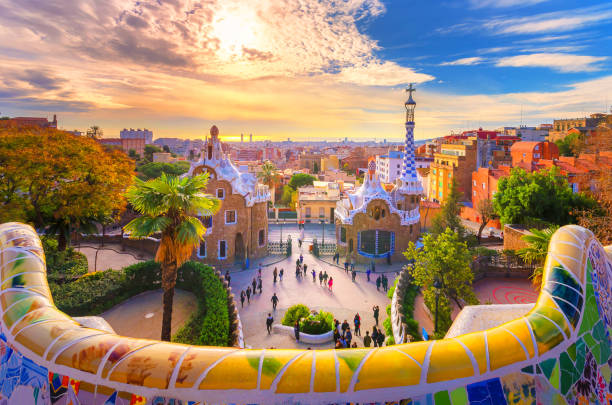
Park Güell controls the day because it combines timed access, outdoor exposure, and a hillside approach in a way the Eixample interiors do not. With Casa Batlló or Casa Milà, you are on Passeig de Gràcia or just off it, close to wide pavements, taxis, cafés and the grid logic of the Eixample. With Park Güell, the movement itself becomes part of the visit. The approach from Lesseps reads differently from a taxi drop near the Carmel side, and the return toward Gràcia or back down toward the Eixample is not a neutral transfer.
This is the first planning correction: do not treat Park Güell as the “easy outdoor one” simply because it is not a basilica interior. The park can be gentler mentally than a dense museum visit, but physically it asks more from the day. The staircases, terraces, sun exposure, uneven surfaces, viewpoint pauses and entry timing make it a stronger anchor than many travelers expect. Park Güell hillside access is the part that often disappears from generic itineraries, and it is exactly where comfort-first planning begins.
There is also a mood consequence. If Park Güell is placed badly, the day starts to feel like logistics with monuments attached: car, climb, entry window, photo terrace, exit, transfer, queue, interior, transfer again. If it is placed well, the park becomes the one deliberate high point before the route narrows into Gaudí’s city architecture. The difference is not just fewer steps; it is a calmer day in which Sagrada Família still feels like a culmination, not a second obligation.
The official planning layer matters here because both major sites use entry controls. Check Park Güell official tickets (https://parkguell.barcelona/en/buy-tickets) and Sagrada Família official tickets (https://sagradafamilia.org/en/tickets-individuals) before treating any suggested sequence as fixed. The point is not to game ticket windows. The point is to avoid building a beautiful plan around a slot that turns the rest of the day into a chase.
The early decision: pair Park Güell with Sagrada Família only when the middle of the day stays clean
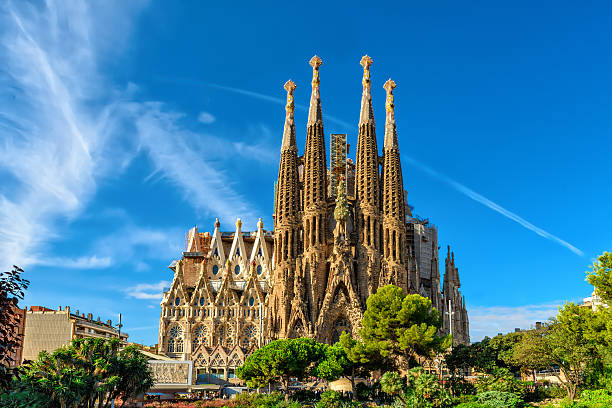
Park Güell and Sagrada Família can absolutely share a day, but only if the transfer between them is treated as a protected hinge rather than dead time. The mistake is to squeeze an Eixample interior, a long lunch, or a shopping pause into the middle because the map suggests the sites are “near enough.” They are not far in city terms, but they ask for different kinds of attention. Park Güell is a hillside outdoor experience; Sagrada Família rewards slower interpretation, façade context, nave time and a few minutes outside to understand how the building occupies Carrer de Mallorca, Carrer de la Marina and the surrounding blocks.
For a first-time visitor, the cleanest pairing is usually Park Güell plus Sagrada Família, with Passeig de Gràcia handled as a lighter exterior or late-afternoon urban sequence. That gives the day two true anchors and one flexible connector. The connector matters because Passeig de Gràcia is not merely “more Gaudí.” It is where the Eixample’s straight-line confidence, chamfered corners and apartment-block scale make Gaudí’s façades intelligible. Seeing Casa Batlló, Casa Amatller, Casa Lleó Morera and then La Pedrera from the street can add context without the cognitive load of another full interior.
Use the ticket windows to choose one of these scenario shapes, not to chase every available slot:
- If Park Güell is early: start high, keep the visit unhurried, then descend toward Sagrada Família with enough buffer that the basilica does not feel like a deadline. This is often the most coherent rhythm for travelers who want the body to do the climbing before lunch.
- If Sagrada Família is early: let the basilica own the freshest attention, then treat Park Güell as an outdoor afternoon with a controlled transfer. This works when the group can handle the hill later and does not need a long hotel reset before dinner.
- If both windows land close together: keep the route to those two monuments and stop pretending there is room for a serious Eixample interior. The day may still be excellent, but it is no longer a “complete Gaudí” day in the productive sense.
- If Park Güell is only available late: consider moving it to a separate hillside morning, especially in warmer months or with older parents, children, or anyone who dislikes walking uphill after a full day of sightseeing.
The middle of the day is where many polished itineraries break. A private guide can keep the narrative alive during the transfer from the Carmel hillside toward Sagrada Família, but even excellent guiding cannot make a rushed lunch, a late entry, and a cross-town detour feel effortless. If you want to compare this with the broader “which should come first” question, the adjacent planning guide on whether Sagrada Família, Park Güell or Passeig de Gràcia should come first is useful; this article assumes Park Güell is already the hard stop and asks what should be cut around it.
Why Park Güell feels different from Eixample interiors
Park Güell differs from the Eixample interiors because it is a landscape visit before it is an architecture visit. You are reading Gaudí through paths, viaducts, terraces, stone, ceramics, city views and the slope of the Carmel hillside. At Casa Batlló or Casa Milà, you are reading him through domestic space, light wells, stairwells, courtyards, roof forms and the ambitions of bourgeois Barcelona. Those are different bodies of attention, and putting too many of them back-to-back turns distinction into blur.
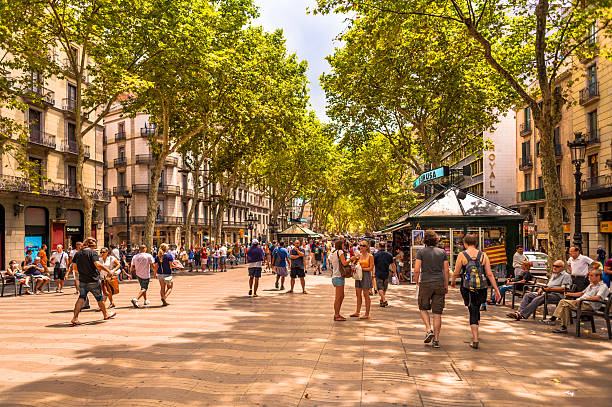
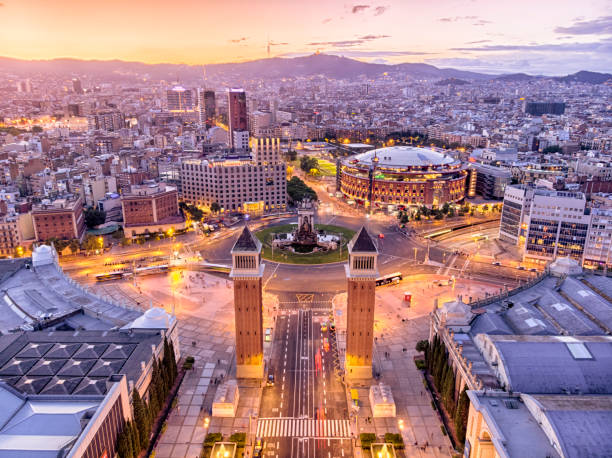
In the Eixample, the city helps you. Passeig de Gràcia is broad, legible and well supplied with taxis. The blocks around Carrer d’Aragó, Carrer de Provença and Rambla de Catalunya give you frequent chances to pause without leaving the route. Even when a building is crowded, the surrounding street grid offers release. You can step outside, recalibrate, look at the façade, and understand the building in relation to the neighboring Modernisme façades.
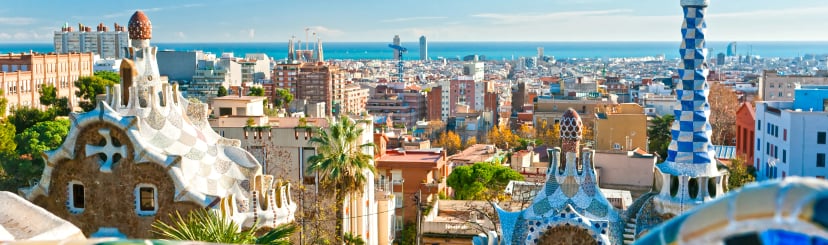
Park Güell asks the city to do something else. It pulls you upward and outward. The scale is not block-by-block but slope-by-slope. The reward is not only the monumental zone; it is the moment when Barcelona opens below you and the Eixample grid becomes visible as a pattern rather than a walking surface. That is why it can be so memorable, and also why it should not be treated as a casual add-on after a full interior morning.
This distinction should shape what you skip. If you already have Park Güell, you do not need another Gaudí stop just because it has a roof terrace. If you already have Sagrada Família, you do not need another full interpretive interior unless your group is specifically architecture-driven. The more useful plan is to preserve contrast: hillside landscape, basilica interior, then a street-level Eixample pass that lets the city breathe again.
Which Gaudí stops should you skip when Park Güell sets the clock?
When Park Güell and Sagrada Família already own the day, cut the Casa Milà interior first unless La Pedrera is a personal priority. This is the clearest editorial call. Casa Milà is fascinating, but its interior and roof sequence often lands badly after the park because it asks for more vertical movement, more interpretive attention and another managed entry on a day that has already spent its best focus. Keep the façade on Passeig de Gràcia and Carrer de Provença; save the interior for a second architecture day or for travelers who came to Barcelona specifically for domestic Modernisme.
Casa Batlló is not automatically “better” in an abstract ranking; it is simply more likely to justify an interior slot for first-time visitors who want one Eixample house experience. Its position near the Manzana de la Discòrdia makes it easier to fold into a Passeig de Gràcia walk, and the surrounding façades add immediate context. Even then, it should not be forced after both Park Güell and Sagrada Família if the day is already running late or the group is visibly fading.
The Gaudí House Museum inside or near the Park Güell orbit is another stop to treat carefully. It can interest devoted Gaudí travelers, but it is rarely the best use of energy for first-timers who still have Sagrada Família ahead. The problem is not that it lacks interest; the problem is sequence. A small house-museum add-on can turn a crisp Park Güell visit into a longer hillside stay, which then compresses the basilica and pushes the Eixample into tired hours.
Do not cut Passeig de Gràcia as a district just because you are cutting an interior. The street is often the elegant compromise: you see Casa Batlló, La Pedrera and the Eixample setting without buying another timed commitment. That distinction matters for comfort-first travelers. Cutting an entry is not the same as abandoning architecture. It is often the way to keep architecture legible.
There is one exception. If your group includes serious architecture travelers who would rather study buildings than preserve dinner energy, Casa Milà can stay and Park Güell can become shorter or move to another day. But for couples on a first visit, multigenerational families, celebration travelers, and small groups with mixed interests, the better cut is usually the extra interior, not the basilica and not the hillside.
The route logic: stay high, descend cleanly, then let the Eixample do less
The strongest Park Güell-led day avoids repeated vertical and psychological resets. If you begin at Park Güell, start with the understanding that the body has already done real work before the main city day begins. Then descend cleanly toward Sagrada Família or toward a short reset, rather than zigzagging between Gràcia, the Gothic Quarter, the waterfront and back to the Eixample. Barcelona rewards tight arcs more than ambitious star-shaped routing.
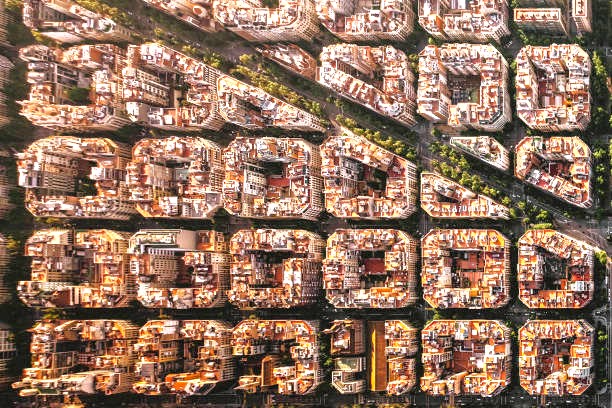
The practical consequence is easiest to see on the map. Park Güell sits above Gràcia; Sagrada Família sits farther down in the Eixample’s northeast; Passeig de Gràcia runs through the Eixample’s more polished central spine. Linking those three in a controlled north-to-south arc can feel coherent. Adding the Gothic Quarter between them, or inserting Barceloneta because someone wants sea air, breaks the logic. You may still see more neighborhoods, but the day feels shorter in the wrong way: more arrivals, less absorption.
With a chauffeur, the Park Güell transfer becomes much smoother, especially for families, older travelers or guests staying outside the Eixample. A good driver cannot remove every step, but can reduce the dead minutes around the hillside and prevent a hot, distracted walk from becoming the memory of the morning. For this specific day, a chauffeured Barcelona day earns its cost when it protects the Park Güell approach and the Sagrada Família arrival, not when it is used to chase one more stop.
Premium spend has limits. Paid access cannot fix hill fatigue or a badly placed cross-town transfer. It can improve privacy, interpretation, pacing and vehicle comfort; it cannot make Park Güell flat, make late-afternoon energy fresh again, or turn an overpacked Gaudí checklist into a relaxed day. This is where a private planner should be willing to say no.
The city does something physical to the body on this route. The climb or gradual rise toward Park Güell loads the calves; sun and viewpoint pauses slow the pace; the descent can feel easy until you realize the group still has a basilica interior, security procedures, façade context and another urban walk ahead. By late afternoon, the difference between “one more interior” and “an exterior pass with a café stop near Rambla de Catalunya” is not a small luxury preference. It is the difference between curiosity and compliance.
When to pair Park Güell with Sagrada Família, and when to split them
Pair Park Güell with Sagrada Família when you have a clean half-day-plus arc, a group that handles walking well, and no serious evening commitment that needs everyone fresh. Split them when the only available windows create a rushed transfer, when heat or mobility is a concern, or when Sagrada Família is the emotional center of the whole Barcelona stay. The basilica should not feel like the place you reached after spending all your patience elsewhere.
For many first-time travelers, the best version is a Park Güell morning, a controlled transfer, Sagrada Família late morning or early afternoon, then a lighter Eixample or hotel reset. That shape lets the day climb first and interpret second. It also leaves enough space for lunch to be something other than a logistical patch. In Barcelona, a poorly placed lunch can be the hidden reason a Gaudí day fails: too close to a ticket window, too far from the next site, or too heavy before a basilica visit that asks for attention upward.
If Sagrada Família must come first, the day can still work. In that case, treat Park Güell as the later outdoor release and avoid adding another full Eixample interior after it. The risk is not that the park disappoints; the risk is that the day becomes front-loaded with awe and back-loaded with effort. This is a better fit for adults who enjoy walking and for travelers staying near the Eixample, not for a multigenerational group trying to keep everyone engaged through dinner.
Split the sites when Park Güell’s available slot falls deep in the afternoon and the group has a serious dinner, a performance, or a celebration evening. A late Park Güell visit can be beautiful, but the return down the hillside and across the city can flatten the mood if the day has already been full. The trip starts to feel as though every reservation is extracting a tax from the next one.
If the stay is short, the split decision is harder. In a two-day Barcelona visit, pairing may be necessary. In a three-day stay, the wiser move is often to let Sagrada Família anchor the Gaudí day and place Park Güell at the beginning of a separate hillside morning with Gràcia or Montjuïc logic. The route can then connect to the broader ideas in a private Barcelona hillside day without forcing every Gaudí landmark into one itinerary.
What to keep on Passeig de Gràcia after the main two anchors
After Park Güell and Sagrada Família, keep Passeig de Gràcia light unless your group has specifically asked for one Eixample interior. The street is valuable because it can flex. It can be a 40-minute exterior architecture walk, a short design-and-café pause, or one carefully chosen interior. It should not automatically become a second half-day.
The most useful Passeig de Gràcia sequence begins by treating the street as urban context. Start with the Manzana de la Discòrdia to understand that Gaudí was not working in isolation. Casa Batlló gains meaning beside Casa Amatller and Casa Lleó Morera; La Pedrera gains meaning when you approach it as an apartment building reshaping a corner of the Eixample rather than as an isolated attraction. This is also where the Eixample’s comfort helps: wide sidewalks, easier taxi access, and the possibility of ending near a hotel rather than dragging everyone back across the old city.
If you keep one interior, choose it because it changes the day, not because it completes a list. Casa Batlló is the stronger single Eixample interior for many first-timers who want color, domestic imagination and a compact central location. Casa Milà is the better choice for travelers who care about structure, roofscape, urban form and Gaudí’s apartment-building experiment. But after Park Güell, the Casa Milà roof can feel less like a revelation and more like another elevated surface. That is why it is the cut-first stop in this specific itinerary.
For travelers who want a Gaudí day centered on Sagrada Família with deeper interpretation, a dedicated Sagrada Família private tour can be the better premium move than spreading attention across three ticketed sites. Spend the guiding energy where the building is most complex. Let Passeig de Gràcia carry the afterword.
How a guide-led route protects the main experience by cutting the weakest extra stop
The strongest private Gaudí day is often defined by what the guide refuses to add. A good route does not merely unlock facts; it protects sequence, energy and attention. When Park Güell has a fixed window and Sagrada Família is the day’s interpretive core, the weakest extra stop is the one that adds a managed entry without changing the story enough to justify the fatigue. Most often, that is Casa Milà interior on the same day.
This is where private touring earns its place without turning the article into a brochure. The value is not just a person speaking well inside a monument. It is the editorial discipline to say, “We will see La Pedrera from the street today, and we will not spend the group’s last strong hour inside it.” It is the ability to use the transfer from Park Güell to explain the city’s expansion, the Gràcia edge, the Eixample grid and the basilica’s urban setting, so that skipping an extra interior feels like a better-designed day rather than a loss.
The same logic matters for families and small groups. Teenagers may enjoy Park Güell’s space and Sagrada Família’s scale but turn resistant in the third audio-guided interior. Older parents may handle the basilica beautifully but find the Park Güell approach and a roof terrace too much in one day. Celebration travelers may care less about architectural completeness and more about arriving at dinner with the day still feeling special. The route should notice that before fatigue makes the decision for you.
For short stays, the private advantage is not seeing more; it is spending less of the day on the wrong “more.” When you want the Gaudí day shaped around tickets, hills, lunch, hotel location and the one stop worth cutting, Inquire now.
The cut-first rule for hill fatigue
When the day already has hill fatigue, cut the next vertical, ticketed or enclosed Gaudí stop before you cut the street-level Eixample context. This rule is simple and surprisingly protective. After Park Güell, the body has already dealt with slope and open-air movement. After Sagrada Família, the mind has already dealt with scale, symbolism, crowds and upward looking. The next heavy stop should have to earn its place.
What should not be cut first is a short, well-paced look at Passeig de Gràcia. That street-level pass helps the day make sense. It shows how Gaudí sits inside Modernisme, how private wealth shaped the Eixample, and how different the city feels from the Gothic Quarter. It also gives the group options: café, hotel return, shopping pause, or a gentle walk down toward Plaça de Catalunya if energy remains.
What should be cut first is the stop that turns a strong day into a dutiful one. That may be Casa Milà interior, the Gaudí House Museum, or a second paid Eixample house. It may also be the unnecessary detour to the old city between monuments. The exact cut depends on ticket windows and hotel location, but the principle stays the same: preserve contrast and remove repetition.
The mood consequence is real. A well-cut Gaudí day ends with people still talking about what they saw. An overpacked one ends with everyone negotiating the next bathroom, taxi, reservation or seat. The monuments are the same; the memory is not. Barcelona is particularly sensitive to this because the city can shift quickly from grand avenues to tight old-town lanes, from hillside sun to basilica crowds, from easy café pause to traffic-heavy transfer. The route either uses those shifts or lets them wear the group down.
A Park Güell-led Gaudí day, in practical order
The best working order is not a rigid itinerary; it is a set of guardrails that protect the two main experiences. Start with the immovable Park Güell window, place Sagrada Família where the group will still have full attention, then let Passeig de Gràcia absorb the remaining energy. Do not plan the day backward from a desire to include every famous name.
- Guardrail one: allow Park Güell to be a real visit, not a photo errand. If the ticket window is early, arrive with enough buffer that the hillside approach does not begin in anxiety.
- Guardrail two: do not place lunch so far from the next monument that it becomes a third transfer. Eixample or Sagrada Família-adjacent planning usually beats a scenic but inconvenient old-town lunch on this specific day.
- Guardrail three: protect Sagrada Família from being the rushed second act. The basilica needs exterior context and interior stillness, even for travelers who normally prefer brisk touring.
- Guardrail four: use Passeig de Gràcia as a release valve. It can expand if the group is energized and contract if the hill has done its work.
- Guardrail five: do not treat a chauffeur as permission to overpack. Use the vehicle to remove bad friction, not to multiply obligations.
If your hotel is in the Eixample, the day is easier to finish gracefully. A return near Rambla de Catalunya or Passeig de Gràcia can feel like a soft landing. If your hotel is in the Gothic Quarter, the final transfer matters more; the charm of the old town does not help when the group is tired and the streets feel tight after a day of controlled entries. This is one reason Eixample comfort can beat old-town atmosphere for a Gaudí-heavy first stay.
If the day is part of a broader Barcelona plan, keep the next morning lighter. Do not follow a Park Güell-led Gaudí day with another heavy hill sequence unless the group actively wants that rhythm. Sant Pau, Palau de la Música or a Modernisme route can belong beautifully on another day, but only if it is not being used to compensate for cutting an interior here. For a deeper non-overlapping architecture day, the related guide to Modernisme without Gaudí overload is the cleaner place to continue.
Who should override this advice
Override this advice if your group is architecture-first and happiest when the day is intellectually dense. Some travelers come to Barcelona precisely to study Gaudí’s domestic interiors, structural experiments and roofscapes. For them, cutting Casa Milà may be the wrong economy. A serious architecture traveler may prefer Sagrada Família plus Casa Milà, with Park Güell moved or shortened, because the Eixample building adds a specific chapter they do not want to miss.
Also override it when Park Güell is the emotional priority. Families with children who want space, photographers who care about the city view, and travelers returning to Barcelona after already seeing Sagrada Família may choose to let the park have more time and reduce the basilica or Eixample component. That is a legitimate flip, but it should be chosen deliberately, not because the ticket window happened to be available.
Do not override it simply because the trip is expensive. Premium planning is not about adding more paid stops until the day looks substantial. It is about knowing where the next paid stop improves the experience and where it only proves you were able to reserve it. In this Park Güell-led plan, the strongest day often has fewer interiors, better transitions and one clear interpretive peak.
FAQ
Should Park Güell be before or after Sagrada Família?
Park Güell should usually come before Sagrada Família if you have a clean morning window and want to handle the hill while the group is fresh. Put Sagrada Família first when the basilica is the emotional priority or when Park Güell is only available later without creating a rushed transfer.
Can you visit Park Güell and Sagrada Família in one day?
Yes, Park Güell and Sagrada Família can work well in one day if you keep the middle of the day clean and avoid adding too many Eixample interiors. The pairing becomes weaker when ticket windows sit too close together or when the group has limited tolerance for hills and crowds.
Which Gaudí stop should be skipped if the day is too full?
When Park Güell and Sagrada Família already anchor the day, the Casa Milà interior is usually the first Gaudí stop to skip. Keep La Pedrera as an exterior on Passeig de Gràcia and save the interior for a second architecture-focused day if it matters to you.
Is Casa Batlló or Casa Milà better after Park Güell?
Casa Batlló is usually the better single Eixample interior after Park Güell for first-time visitors because it is compact, central and easy to connect to a Passeig de Gràcia walk. Casa Milà is better for travelers who specifically care about structure, roofscape and Gaudí’s apartment-building experiment.
Does a chauffeur make Park Güell easier?
A chauffeur can make Park Güell easier by smoothing the approach, reducing dead transfer time and helping the day descend cleanly toward Sagrada Família or the Eixample. It does not remove the need to walk inside the park or solve the fatigue caused by an overpacked route.
Should you add the Gaudí House Museum to Park Güell?
Add the Gaudí House Museum only if your group has a specific interest in Gaudí biography and enough time before the next major stop. For most first-time Park Güell plus Sagrada Família days, it is better to keep the park visit focused and preserve energy for the basilica.
Is Passeig de Gràcia still worth it if you skip a Gaudí interior?
Yes, Passeig de Gràcia is still worth it as a street-level architecture sequence. Seeing Casa Batlló, La Pedrera and neighboring Modernisme façades from the exterior can add context without forcing another timed, tiring interior.
What is the biggest mistake in planning Park Güell with other Gaudí sites?
The biggest mistake is treating Park Güell as a light add-on instead of a hillside anchor with its own timing and energy cost. Once Park Güell sets the clock, the rest of the day should protect Sagrada Família and cut the weakest extra stop.
If you’re interested in any private tours of Barcelona, please reach out to us.








 So if you are looking for the absolute best in Barcelona & surroundings with authentic local fully-licensed native guides whose English you can actually understand and with an exclusive and amazingly fun itinerary













