Girona or Montserrat from Barcelona? Choose by Cultural Depth, Terrain and Time

Updated
Choose Girona when the priority is layered urban history, especially the evidence of medieval Jewish life held within an old-city setting. Choose Montserrat when sacred culture and mountain geography need to be experienced together. The decisive condition is not fame; it is whether your group can comfortably handle the terrain and whether the day can absorb the transport and access dependencies. Girona gives more time on site but still involves steep, uneven streets. Montserrat requires a longer, multi-stage journey and some sacred-site access is capacity-dependent. Treat them as separate full-day choices rather than compressing both into one rushed circuit.
Begin with the cultural question
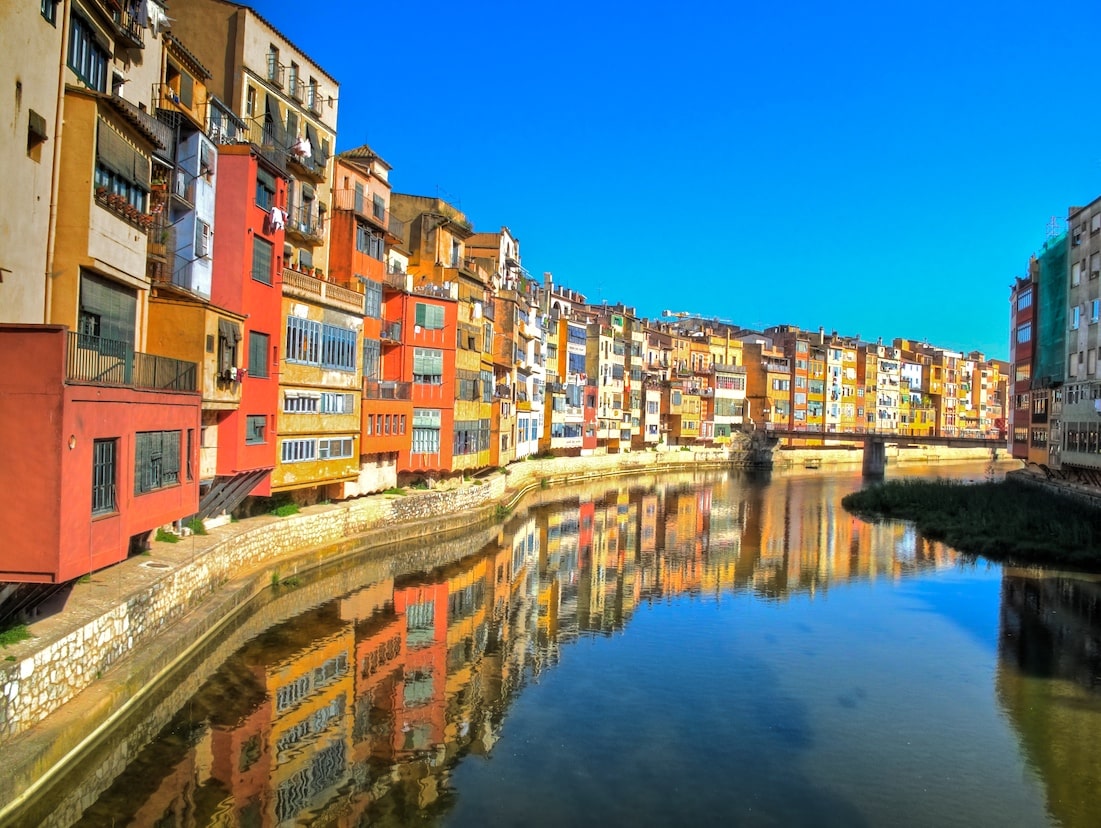
Girona is the stronger choice for travelers who want cultural evidence that can be read in sequence: streets, topography and a museum collection reinforcing one another. The Museum of Jewish History presents an eleven-gallery route using documentary, archaeological and pictorial material, including objects from Girona, to explain the daily life, culture and history of medieval Jewish communities. That matters because the day is not reduced to atmospheric lanes. The surviving urban setting gains meaning through objects, records and interpretation.
For a deeper heritage comparison, compare Girona with Besalú by what Jewish heritage survives. Girona generally suits the traveler who wants to stay with one historical problem for several hours rather than alternate between landscape, worship and transport.
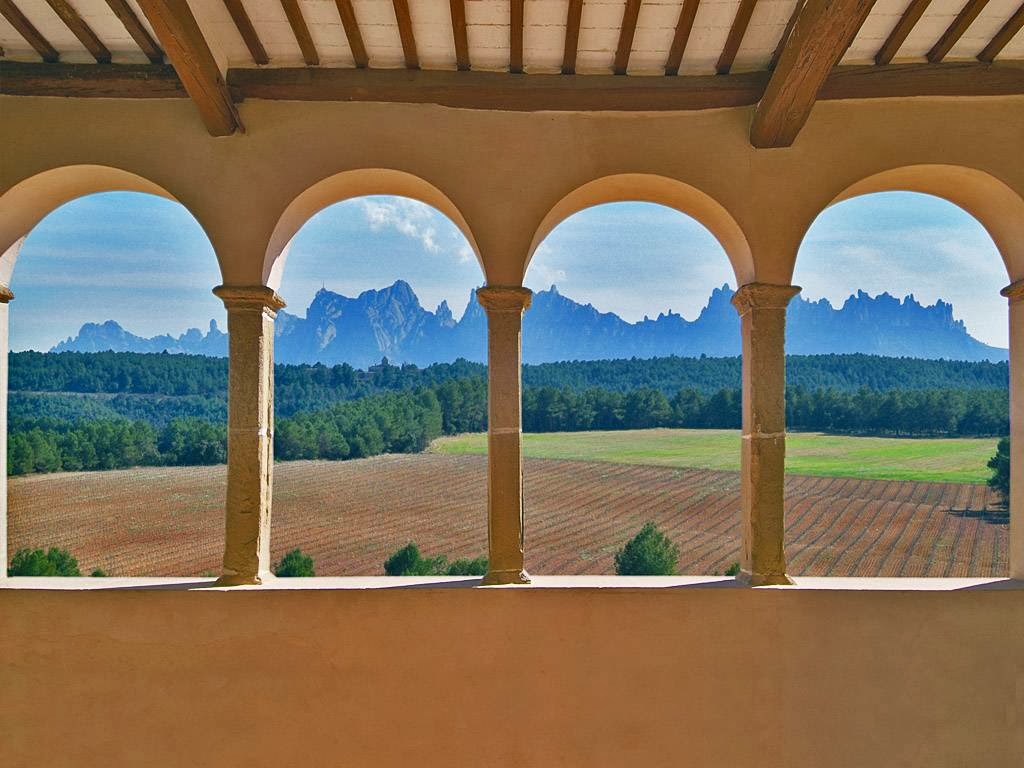
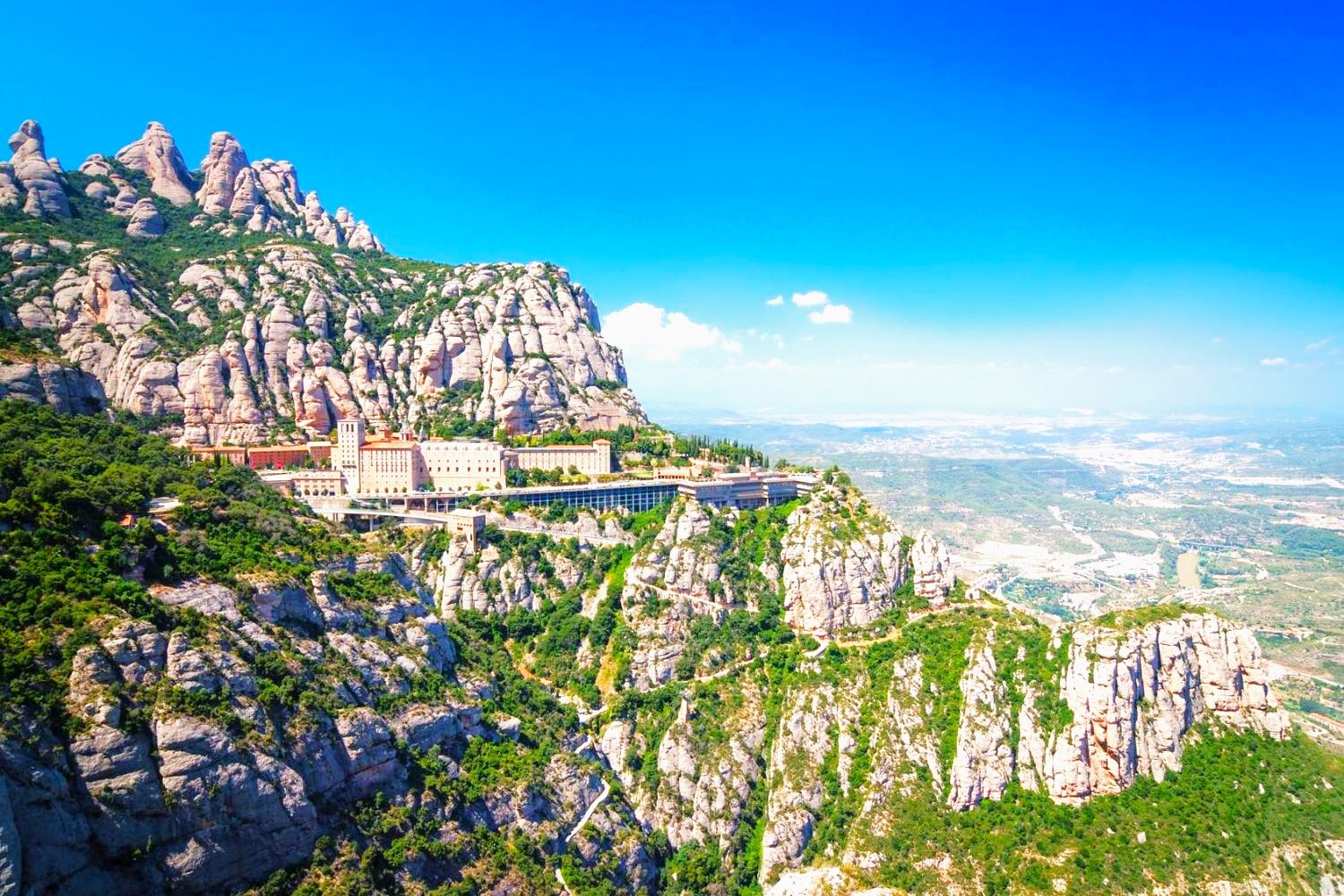
Montserrat answers a different question: how does a sacred institution belong to a mountain? The official All Montserrat Aeri package combines the Basilica and Throne area, the museum, mountain funicular access and the ascent by train and cable car. The cultural experience is therefore inseparable from arrival, elevation and landscape. It works best when the monastery is treated as part of a larger religious and geographic composition rather than a single interior to be checked off. Decide what Montserrat is really for before fixing the day’s emphasis.
The calendar cost starts at the Barcelona departure point
As of November 18, 2026, Renfe’s Barcelona route guidance states that trains can reach Girona from Barcelona Sants in 38 minutes. The same guidance directs Montserrat visitors to the R5 from Plaça Espanya. The official All Montserrat Aeri information gives a journey time of about 1 hour 30 minutes each way from Plaça Espanya when using the FGC train to Aeri de Montserrat and the cable car.
Those figures shape the whole day. Girona’s shorter rail leg preserves time for the museum, the old city and an unhurried meal. Montserrat begins with roughly three hours of round-trip travel, with additional time needed for waiting and movement within the mountain complex. A Barcelona hotel’s location also matters because Sants and Plaça Espanya are different starting points; an early departure is easier when the chosen station fits the rest of the morning.
- Girona offers more schedule flexibility. The faster rail journey leaves more room for interpretation and a larger buffer before a same-evening Barcelona commitment.
- Montserrat asks more of the day. The longer approach is worthwhile when the ascent and mountain setting are central to the reason for going.
- Combining both is a poor trade. They operate as separate excursions from different Barcelona departure systems. Joining them would replace cultural depth with transit and contingency.
Travelers still comparing the wider field can use the broader Barcelona day-trip comparison before committing to either.
Walking and accessibility can reverse the cultural preference
Girona is an urban destination, but that does not make its historic core easy. As of November 18, 2026, the museum’s accessibility guidance states that the approach is on foot over uneven cobbles with an 8% to 12% slope. It also warns of narrow streets, steep gradients and stairs in the quarter. Parts of the museum require staff-assisted lift access, while the mikveh is not wheelchair-accessible.
The consequence is practical: a traveler can value Girona’s history and still find the route physically unsuitable. Balance impairment, pain on descents, limited walking endurance or reliance on a wheelchair all require more than a shorter train journey. A viable Girona day may need a reduced old-city circuit, a clear meeting point and acceptance that the mikveh cannot be included for a wheelchair user.
Montserrat’s challenge is different. The official package details include the FGC train, cable car and mountain funicular access, but state that the cable car is not adapted for people with reduced mobility. That particular rail-and-cable-car plan may therefore fail at the transfer that makes the ascent possible. Plan Montserrat with limited mobility by comparing the rack railway, cable car and private road rather than assuming every mountain approach offers the same access.
Capacity and fixed entries matter more at Montserrat
As of November 18, 2026, the official All Montserrat Aeri information says access to the Basilica and Throne area is subject to capacity and does not include queue priority. The package may bundle transport and several mountain components, but it does not turn admission to those sacred spaces into a guaranteed, immediate entry. A traveler whose main purpose is the Basilica or Throne area should build the day around that uncertainty rather than treating it as a minor detail.
Girona’s main scheduling risk is the physical pace of the old city, which can be slower than its fast train suggests. On the Aeri itinerary, Montserrat’s timing depends on the Plaça Espanya departure, FGC service, cable-car transfer, movement within the complex and capacity at the sacred spaces. That chain is manageable when the day has room. It is poorly matched to a tightly timed Sagrada Família, Park Güell or formal evening commitment back in Barcelona.
Private planning becomes useful when cultural priorities, walking limits and a hard return time pull in different directions. A guide can narrow Girona to the material that answers the group’s historical question, while private transport can simplify a Montserrat departure or return without removing the mountain’s own access limits. The material benefit is coordination: choosing the right emphasis, avoiding an unsuitable ascent and leaving a realistic margin for the evening. Review private touring options in Barcelona or, when those constraints are already shaping the trip, inquire now.
Where Girona makes the stronger case
Girona is usually the better day for travelers who want sustained historical interpretation, prefer a compact urban destination and value having more discretionary time after arrival. Its strongest case is not simply that the train is faster. The cultural material can remain coherent from the museum galleries into the surrounding quarter, allowing one subject to become richer rather than repeatedly changing modes.
It also fits better when the Barcelona evening matters. A shorter scheduled rail journey does not eliminate delays, but it gives the itinerary more recoverable time than Montserrat’s roughly three-hour round-trip travel estimate. Reconsider Girona when uneven cobbles, sustained slopes or stairs would dominate the experience; when the mikveh is essential for a wheelchair user; or when the group’s real interest is devotional culture and mountain geography rather than the documentary and urban evidence of medieval life.
Where Montserrat makes the stronger case
Montserrat is the better choice when the mountain is part of the cultural meaning, not scenery added to a monastery visit. The approach, elevation and movement between sacred and museum spaces create a day with a stronger geographic identity than Girona. It also suits a group that actively wants variation: rail travel, ascent, sacred space, a collection and mountain movement within one excursion.
That variety is a strength only when the group is comfortable with transitions. Reconsider Montserrat when roughly three hours of round-trip travel would crowd the day; when the cable car is unsuitable for a traveler with reduced mobility; when immediate sacred-site access is non-negotiable; or when a same-evening Barcelona reservation leaves no meaningful recovery margin.
Road travel changes coordination, not the underlying choice
A road-based journey can reduce the number of public-transport handoffs, particularly for Montserrat, but it does not guarantee smooth travel or remove access conditions at the destination. As of November 18, 2026, the Catalan Traffic Service provides live information on congestion, roadworks, lane controls, weather effects and incidents, searchable by road, municipality and region, with a continuous traffic map and camera feeds.
Use road transport when it materially improves the hotel departure, mobility plan or return deadline, not as a reason to force a culturally weaker choice. Girona remains the urban-history day even when reached by car. Montserrat remains the sacred mountain day even when the ascent begins from a vehicle.
Before you commit the day
One final operational check is enough: shortly before departure, confirm current rail and access details on the linked Renfe, Montserrat and Girona pages; when traveling by road, check the Catalan Traffic Service for the specific route and date.
For history-led travelers, Girona usually delivers more interpretive depth per hour. For travelers whose purpose is the relationship between monastery and mountain, Montserrat justifies the longer day. Once cultural purpose, terrain and return-time risk point in the same direction, the choice is settled.
If you’re interested in any private tours of Barcelona, please reach out to us.








 So if you are looking for the absolute best in Barcelona & surroundings with authentic local fully-licensed native guides whose English you can actually understand and with an exclusive and amazingly fun itinerary













