Barcelona With a Late Sagrada Família Entry: Sant Pau, Eixample Lunch or a Hotel Reset

Updated
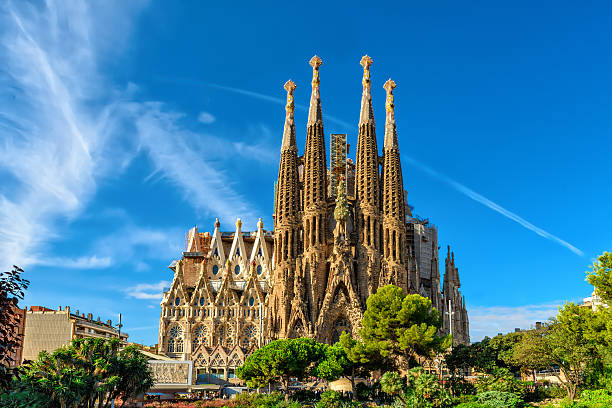
The best plan before a late Sagrada Família entry is usually Sant Pau, an unhurried Eixample lunch, and then either the Sant Pau-to-Sagrada Família approach or a hotel reset before the basilica. In real Barcelona conditions, the timed entry becomes the day’s hinge: the earlier hours should either build Modernisme context or protect the attention you need inside the basilica. The clearest exception is a travel party already carrying jet lag, heat load, or church-and-museum fatigue; for them, Eixample lunch and a room reset beat another interior, even a brilliant one.
The thesis is deliberately narrow: a late Sagrada Família slot works best when the city’s grid, meal rhythm, and Modernisme geography make the basilica feel approached rather than squeezed in. Avinguda de Gaudí, the diagonal pedestrian axis between Sant Pau and Sagrada Família, is the useful local clue here. It looks like an easy connector on a map, but the decision is not only distance; it is whether that approach sharpens the day or turns the basilica into the third thing everyone is trying to absorb.
Before you build around the slot, verify the exact time and ticket category on Sagrada Família official tickets (https://sagradafamilia.org/en/tickets-individuals). The counterintuitive correction is that this is not the same puzzle as Park Güell official tickets (https://parkguell.barcelona/en/buy-tickets). Park Güell often forces a hill-and-transfer decision; a late Sagrada Família entry asks whether the hours before the basilica should add context or leave room in the mind.
Late Sagrada Família entry: Sant Pau, Eixample lunch, or hotel reset?
Use the option that protects the basilica’s impact, not the one that merely fills time. The comparison criteria are fourfold: how much architectural context the group wants before Sagrada Família, how many interiors they can absorb in one day, how cleanly lunch can happen inside the Eixample grid, and whether a hotel return restores energy or wastes movement.
Default winner: Sant Pau plus Eixample lunch, then a short pause before entry.
- Choose this when architecture is the reason for the day, everyone slept well, and the late Sagrada Família entry sits far enough after lunch that Sant Pau can be unrushed.
- The payoff is a clear Modernisme arc: Lluís Domènech i Montaner’s civic, garden-led hospital complex before Gaudí’s sacred interior.
- The risk is saturation. If the group starts comparing tilework, brick, sculpture, and symbolism too early, Sagrada Família can feel like the last exam of the day.
Runner-up: Eixample lunch only, with a light exterior walk.
- Choose this when the party has already seen another Gaudí interior, has children or older parents in the mix, or wants the basilica to be the first serious interior of the day.
- The Eixample does enough work if you use its blocks, corners, and facades as context rather than treating lunch as dead time.
- The drawback is that architecture lovers may feel they missed a rare pairing, especially because Sant Pau sits so close to the basilica.
Wrong fit: forcing Sant Pau because it is nearby.
- Short distance does not automatically make the pairing right. The Sant Pau-to-Sagrada Família approach is useful only when it leaves the group more alert, not merely more accomplished.
- Skip Sant Pau if the day already includes another ticketed interior, a formal dinner, a long transfer, or a family member who is silently done with guided interpretation.
- Do not add Park Güell to this same pre-entry block. It is too different in geography and mood to be treated as a casual warm-up.
The ticket window should decide whether you build context or preserve energy
A late basilica slot is not spare time; it is the organizing constraint for the whole day. Once Sagrada Família has a fixed entry, the earlier route should serve one of two purposes: build enough context that the basilica is easier to read, or protect enough energy that the basilica can still land as the main event.
Think of the slot as a promise to your future self. If the ticket is late, the morning should not become a scavenger hunt through every famous Barcelona surface. It should answer one question: will you understand Sagrada Família better because of what came before, or will you enjoy it more because less came before? That question is more useful than asking how many sites fit between breakfast and entry.
This is where many polished Barcelona plans go wrong. They treat the hours before the ticket as a chance to “do more Gaudí,” then arrive at Carrer de Mallorca or Carrer de la Marina with full camera rolls and low attention. Sagrada Família is not a monument that rewards being wedged in after a greatest-hits loop. Its exterior facades, interior light, museum spaces, and exit rhythm already ask for concentration. The better question is not “what else can fit?” but “what will make the timed entry feel inevitable?”
Sant Pau helps when it makes the city’s architectural language legible before the basilica. Eixample lunch helps when it slows the tempo without pulling you into the Gothic Quarter or the waterfront. A hotel reset helps when the day needs quiet more than it needs another story. If the trip is short and the timed ticket is one of the few immovable pieces, this is exactly the kind of routing problem that belongs in a custom plan rather than a generic day list. Orange Donut Tours’ planning work is especially useful when the Sagrada Família slot has to coordinate with hotel geography, meals, and group stamina.
The main mistake to prevent is front-loading the day with famous places that create the wrong kind of fatigue. Passeig de Gràcia can be tempting because Casa Batlló and La Pedrera sit in a handsome corridor with good hotels and shopping. But if you tour those interiors before a late basilica entry, the day can become a decorative blur: facade, staircase, roofline, symbolism, repeat. Save one of those interiors for another day unless the group has an unusual appetite for architectural detail and a guide who can edit the story hard.
When Sant Pau works before Sagrada Família
Sant Pau works before Sagrada Família when it functions as a prologue, not as a second headline competing for the same energy. The Recinte Modernista de Sant Pau is close enough to make the pairing elegant, but it only earns its place when the group wants architecture in layers and can leave before every pavilion has been exhausted.
The best version is not a maximalist visit. Confirm current formats through the official Sant Pau self-guided visit (https://santpaubarcelona.org/en/visita/visita-lliure/) information, then treat the complex as a disciplined context stop: garden setting, restored pavilions, ceramic and brick language, and the idea of a hospital built as a humane city within the city. That prepares travelers to notice how Sagrada Família turns structure, light, and symbolism toward a different purpose. Sant Pau is not Gaudí, which is precisely why it can help.
The Sant Pau pairing suits first-time visitors who do not want their Barcelona architecture day reduced to a single name. It also suits couples and small groups who enjoy a quieter build before the basilica, and families with older children who can handle one serious pre-entry stop if lunch follows quickly. It is especially strong for travelers who already suspect that Modernisme is more than decorative exuberance. Sant Pau gives them a civic, medical, garden-facing version of the movement before Sagrada Família pulls the day toward theology, structure, and spectacle.
The best Sant Pau version also has a leaving rule before you enter. Decide in advance that the complex is there to introduce the day, not to complete a scholarly survey. Once the group has understood the garden-city idea, the material language, and the contrast with Gaudí’s basilica, you have enough. Staying longer because the site is rewarding can be the exact choice that weakens the later visit.
There is a practical reason this pairing often feels calmer than a Passeig de Gràcia morning. Sant Pau sits northeast of the basilica, so the movement can narrow toward the ticketed visit instead of bouncing between hotel districts, boutiques, and taxi stands. The approach along Avinguda de Gaudí has café terraces, benches, and a gradually intensifying view of the basilica. Used well, it creates anticipation. Used badly, it becomes another exposed walk at the moment when the group should be drinking water, checking the entry time, and deciding whether a pause is wiser than a photo stop.
Sant Pau should be skipped before Sagrada Família when the group is already tired, when the Sagrada Família entry is only late by a small margin after lunch, when the weather makes open courtyards draining, or when travelers have already toured Casa Batlló, La Pedrera, or another dense interior earlier in the trip. The fact that Sant Pau is nearby does not make it low-cost in attention. If your group is traveling with older parents, architecture-resistant teenagers, or anyone who needs a clean afternoon rhythm, Sant Pau can become the thing that makes the basilica feel longer than it is.
For travelers who want Sant Pau to be more than a prelude, it belongs in a separate Modernisme route rather than this tight pre-entry plan. A deeper version can connect Sant Pau, Eixample, and another modernista interior without making Sagrada Família carry the whole day; that is the better role for a Modernisme day without Gaudí overload.
The Sant Pau-to-Sagrada Família approach is short, but it still has consequences
The Sant Pau-to-Sagrada Família approach is useful because it turns movement into orientation; it is risky because travelers underestimate the attention it still consumes. On a map, the route looks almost too convenient to question. In a real afternoon, the consequence depends on weather, walking pace, photography stops, and whether the group is using the walk to arrive or to keep touring.
The key local hinge is Avinguda de Gaudí. It cuts diagonally through the Eixample grid from the Sant Pau side toward the basilica, interrupting the otherwise rational block pattern. That diagonal gives the walk a sense of ceremony: you leave the hospital complex, pass café terraces and neighborhood life, and the basilica’s towers become harder to ignore. For architecture-minded travelers, this is one of the few pre-entry walks that can genuinely improve the visit because it makes Sagrada Família feel situated rather than isolated.
But the city still acts on the body. Barcelona is not doing Lisbon-style hill punishment here; it is doing block-scale accumulation, bright crossings, curb cuts, traffic noise, and the slow drag of everyone stopping for a slightly different view. In warm months, the Eixample’s broad streets can hold heat, and shade is not continuous. In a multigenerational group, one person may be energized by the diagonal view while another is already counting how long they will stand inside the basilica. That split is the real planning problem.
The best use of the approach is controlled. Walk it if the group is alert, the weather is kind, and the schedule leaves a buffer before entry. Use a café pause if people need water, restrooms, or a mental change of tempo. Take a car or taxi if the walk would convert useful anticipation into friction. The point is not to prove that the distance is manageable. The point is to arrive at the basilica with the group still interested in being guided.
The mood consequence matters as much as the physical one. When the approach is paced well, the day feels shorter than it is because each move narrows toward the ticket. When it is overfilled, the same geography makes the group feel trapped in an architecture marathon: Sant Pau, diagonal walk, exterior photos, security, interior, museum, shop, exit. The basilica should not inherit the mood of a checklist. It should inherit curiosity.
When Eixample lunch is enough before a late Sagrada Família entry
Eixample lunch is enough when the group needs restoration more than another ticketed stop. This is the right answer for travelers who want Sagrada Família to be their first major interior of the day, for families who need a dependable meal rhythm, and for couples who would rather have a polished lunch than stack interpretation before the basilica.
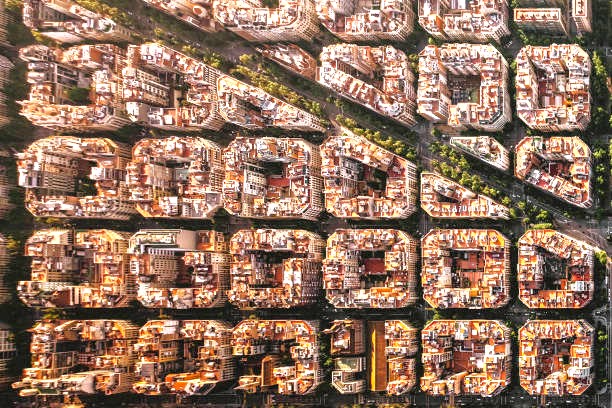
The Eixample does not have to be passive. Its blocks, chamfered corners, and repeated facades provide a quiet architectural primer even without entering another site. A guide can use a short exterior route around Passeig de Sant Joan, Carrer de Provença, Carrer de Mallorca, or the quieter edges of Dreta de l’Eixample to explain the logic of the district without turning the pre-entry hours into a seminar. That is often more useful than adding a paid interior simply because the calendar has space.
Lunch also solves a Barcelona-specific timing problem. Travelers used to earlier meal patterns may try to keep moving through the middle of the day, then discover that the late basilica slot catches them at the exact moment their focus drops. A proper Eixample lunch creates a reset inside the same geography as the visit. It avoids the drag of going down to the Gothic Quarter for atmosphere, crossing toward Barceloneta for sea air, and then returning inland for the ticket. Those moves can be lovely on another day. Before Sagrada Família, they often steal more from the main visit than they give.
The lunch-only plan is especially good for food-and-wine travelers who have a serious dinner later. Do not make lunch a heavy tasting-menu event before the basilica unless the whole point of the day is dining. A long, formal meal can flatten the afternoon in exactly the way another museum can. Choose a meal that feels adult and local enough to mark the day, but not so elaborate that Sagrada Família becomes an obligation afterward. For a broader food-led day, use a separate plan rather than asking this pre-entry window to do everything.
Eixample lunch is also the cleanest option when the hotel is nearby. If you are based around Passeig de Gràcia, Rambla de Catalunya, Avinguda Diagonal, or the Dreta de l’Eixample, lunch can lead naturally to a room pause or a short guided exterior walk. If your hotel is in the Gothic Quarter or Barceloneta, the calculation changes. A round-trip reset across town may eat the very calm you are trying to preserve. In that case, use lunch and a café pause near the basilica instead of chasing the room.
For design-minded travelers, an Eixample-focused private route can be enough context without entering Sant Pau. The trick is editing: a few blocks, a few facades, a clear line from city planning to Modernisme, then lunch. That is a natural role for an Eixample private tour when the Sagrada Família ticket already owns the afternoon.
When a hotel reset beats another interior
A hotel reset beats another interior when the Sagrada Família visit has to remain the emotional and intellectual high point of the day. This is not a retreat from culture; it is a decision to stop spending the group’s focus before the main ticket.
The reset is most useful for first-day travelers after an overnight flight, cruise guests adapting to hotel check-in, families with children, older parents, celebration travelers dressing for dinner later, and anyone whose Barcelona day already includes heat, shopping, or a formal meal. In those cases, the body does not need another pavilion, facade, or museum room. It needs water, quiet, a change of shoes, and perhaps twenty minutes without interpretation. The luxury move is not always a better entrance; sometimes it is knowing when to remove an entrance from the plan.
Hotel geography decides whether the reset is worth it. From a hotel in the central Eixample, the return can be clean: lunch, room, short transfer, entry. From a hotel deep in the Gothic Quarter, El Born, Barceloneta, or up toward Gràcia, the reset may become a two-transfer interruption. A chauffeur can reduce some friction, but it cannot make cross-city movement disappear. If the hotel return is likely to create clock-watching, choose a calmer pause near Sagrada Família instead.
This is also where the day’s mood can be saved. A group that returns to the basilica after a reset often enters with less private irritation: fewer bags, fewer complaints about shoes, fewer silent calculations about dinner. A group that forces one more interior can arrive with the brittle politeness that comes from over-scheduling. The difference may not show on the itinerary, but it shows in how people listen to the guide, how long they want to stay with details, and whether the visit becomes a shared memory rather than a duty completed.
There is also a social advantage to the reset that planners often miss. The room gives people permission to stop performing interest. Someone can sit down, someone can change a shirt, someone can check on dinner, and no one has to pretend that another explanation is exactly what they wanted. By the time the group regathers, the basilica has a cleaner emotional stage.
There is one exception. If the hotel reset means leaving a beautiful, coherent Eixample route and spending the afternoon in traffic, it can be the wrong kind of comfort. In that case, the better reset is local: a proper lunch, a shaded café pause, fewer exterior stops, and a firm arrival buffer. Comfort is not measured by whether the group touched the room; it is measured by whether they reach the basilica ready.
What to cut first when the day starts to swell
The first thing to cut is the extra Gaudí interior, not the buffer before Sagrada Família. A late basilica entry tempts travelers to build a full architecture day around it, but the stronger plan usually removes one famous stop so the timed visit can breathe.
Cut Casa Batlló or La Pedrera before you cut lunch. Cut a Park Güell add-on before you cut the Sagrada Família arrival buffer. Cut a detour to the Gothic Quarter before you cut the short pause that keeps the group patient at security and entry. These are not judgments against those places; they are judgments about this specific time-slot problem. The basilica is too demanding to receive the leftovers of a packed day.
The second cut is the scenic transfer that looks harmless. A quick drive to Barceloneta for sea air, a pass through the old town, or a shopping stop along Passeig de Gràcia can all sound light. In practice, each move creates a new reassembly point: finding the car, waiting at a crossing, managing bags, changing temperature, restarting the guide’s thread. Barcelona’s city center is close enough that people underestimate these small resets. The cost is not only minutes. It is attention.
The third cut is interpretive ambition. If Sant Pau stays in the plan, let it be edited. If lunch includes architecture context, keep it exterior and selective. If the hotel reset stays, do not turn the transfer back to Sagrada Família into a second tour. A private day is not better because it has more content. It is better when the right content arrives in the right condition.
Travelers planning a larger Gaudí arc can still do it beautifully, but the late Sagrada Família ticket should not be forced to carry every comparison. Put Park Güell, Passeig de Gràcia, and the basilica into a separate framework when the day has the time and stamina for it; a guide such as Sagrada Família, Park Güell or Passeig de Gràcia first solves that broader ordering question better than this narrow pre-entry plan.
Spending for timing is different from spending for stamina
Premium planning changes this day when it buys editing, route discipline, and a calmer arrival at the timed entry. It does not help when it merely adds more access before a group has the energy to use it well.
A guide is valuable before a late Sagrada Família entry when they can connect Sant Pau to the basilica without over-teaching, choose whether the Sant Pau-to-Sagrada Família approach should be walked or shortened, coordinate lunch around the ticket, and notice when a hotel reset has become wiser than another facade. That is not brochure luxury. It is the practical craft of keeping the main visit alive.
Premium spend does not help when it is spent only on one more ticketed interior before the basilica; it buys neither focus nor a better experience if the group is already saturated. Skip-the-line access does not fix arriving mentally tired for the basilica. It can reduce one kind of waiting, but it cannot restore curiosity, patience, or the ability to notice why the space is extraordinary.
This is the natural place for a private route to earn its cost. Orange Donut Tours can coordinate architecture context, timed entry, lunch, and rest so the basilica remains the day’s high point rather than the last obligation. A focused Sagrada Família private tour can be paired with lighter Eixample context, while Complete Gaudí belongs only when the rest of the day is edited around it. For a short stay where this one slot has to do a lot of work, Inquire now.
A calm sequence for the hours before the basilica
The cleanest sequence is to decide the energy level first, then choose the route. Do not start with a list of attractions. Start with the condition in which you want to enter Sagrada Família.
If the group is fresh and architecture-led, begin with Sant Pau, keep the visit focused, move into Eixample lunch, then use the Sant Pau-to-Sagrada Família approach only if it still feels like anticipation. If the group is mixed in age or patience, skip the Sant Pau interior and use Eixample lunch plus a short exterior route. If the group is tired, make lunch the last public activity before a hotel or café reset, then return directly to the basilica.
Arrival should be treated as part of the visit, not the logistics before it. Plan to reach the Sagrada Família area with enough margin to handle security, group pace, restrooms, and the inevitable exterior pause. The Nativity and Passion sides pull people in different directions, and the streets around the basilica can feel more crowded than the Eixample blocks that led you there. A guide can turn that threshold into orientation; a rushed group experiences it as noise.
After the basilica, resist solving the evening too early. Some groups will want a serious dinner, others will want a shorter Eixample meal, and some will be happier going back to the hotel before emerging again. If dinner is also fixed, use a separate after-visit plan such as Barcelona between Sagrada Família and a late dinner rather than letting the pre-entry hours and the evening compete for the same energy.
The firm editorial call is this: if you have a late Sagrada Família entry and you are unsure whether to add Sant Pau, choose lunch and a reset unless architecture is clearly the day’s reason. Sant Pau is the best prelude when the group wants it. Eixample lunch is the safer plan when the basilica must stand alone. A hotel reset is the superior choice when the day’s success depends on arriving clear-headed rather than well-covered.
FAQ
Is Sant Pau worth visiting before a late Sagrada Família entry?
Yes, Sant Pau is worth visiting before a late Sagrada Família entry when architecture is the day’s focus and the group is fresh enough for two serious stops. Skip it if the basilica needs to be the first major interior of the day.
How should I plan lunch before a late Sagrada Família ticket?
Plan lunch in Eixample rather than far across town. The best lunch before Sagrada Família restores energy, keeps you near the basilica, and does not become so long or formal that the timed entry feels like an obligation.
Is the walk from Sant Pau to Sagrada Família a good idea?
The walk is a good idea when the group is alert and the weather is comfortable. The Sant Pau-to-Sagrada Família approach along Avinguda de Gaudí can build anticipation, but it should be shortened or replaced by a transfer if it would drain the group before entry.
Should I visit Park Güell before a late Sagrada Família slot?
Usually no. Park Güell creates a different hill-and-transfer problem, so it is better placed in another part of the trip unless there is no other way to see it. Do not treat it as a casual warm-up for Sagrada Família.
When is Eixample lunch enough before Sagrada Família?
Eixample lunch is enough when travelers want Sagrada Família to be the day’s first major interior, when the group is mixed in age or stamina, or when a serious dinner later means the afternoon should stay lighter.
When should I choose a hotel reset before Sagrada Família?
Choose a hotel reset when the group is tired, recently arrived, traveling with children or older parents, or dressing for a later celebration dinner. The reset is best when the hotel is close enough that returning does not create more movement than it solves.
Does a private guide help with a late Sagrada Família entry?
Yes, a private guide helps most when they edit the day, coordinate the timed entry, explain the architecture without overloading the group, and decide whether Sant Pau, Eixample lunch, or a reset best protects the basilica visit.
What should I cut first if the day before Sagrada Família feels overplanned?
Cut the extra Gaudí interior first, then cut any cross-town scenic detour. Keep lunch, a realistic arrival buffer, and enough quiet before the basilica so the timed entry remains the main event.
If you’re interested in any private tours of Barcelona, please reach out to us.








 So if you are looking for the absolute best in Barcelona & surroundings with authentic local fully-licensed native guides whose English you can actually understand and with an exclusive and amazingly fun itinerary













