Barcelona for a Photosensitive Traveler: Sagrada Família Light, Eixample Shade and a Shared Gaudí Day

Updated
Build the day around light transitions, not landmark count
The most workable shared architecture day in Barcelona is not the usual Sagrada Família-plus-Park Güell sprint. Make the Sagrada Família nave the only fixed-time anchor, treat extended façade viewing as optional, cross the Eixample in short shaded segments, and hold a verified indoor fallback for the moment when another exterior stop would add more strain than value. The planning unit is not the number of buildings. It is the sequence of bright street, entrance control, changing interior light, quieter recovery space, and the next transfer.
That shift matters because Sagrada Família is both the essential architectural experience and the day’s most complex light environment. The Basilica’s own official ticket page says that the colours inside change over the course of the day. That is part of the building’s artistic power, but it also means that “indoors” should not be treated as a single, predictable exposure category. Before confirming the day, verify the chosen entry time, the likely route through the nave, where a traveler may pause, which exit is easiest to reach, and whether stepping out would end the visit. The published information supports the changing-light claim; it does not replace a direct check on seating or exit arrangements.
A photosensitive traveler may be able to enjoy detailed architecture, sculpture, models, and spoken interpretation while still finding glare, stained-glass intensity, sudden darkness-to-brightness changes, open plazas, or a slow outdoor queue difficult. Photosensitivity is not the same thing as low vision, and this plan should not assume that the traveler needs visual description or tactile substitution. Families seeking that different form of access should use a separate low-vision architecture plan. Here, the task is to preserve shared architectural depth while reducing unnecessary exposure and making exits socially easy.
This is route-planning guidance, not medical advice and not a promise of symptom prevention. The traveler’s own experience remains the decisive evidence. RNIB notes that useful tints and filters vary from person to person and advises testing aids across indoor and outdoor conditions rather than relying on a generic recommendation. Its light-sensitivity guidance is a useful reminder that a Barcelona plan should be built around the individual’s known tolerances, not around a universal idea of what should feel comfortable.
Start with a personal exposure brief the whole family can follow
A successful shared day begins with a brief that is operational rather than clinical. The family does not need to discuss diagnoses with every venue or guide. It does need a common language for decisions: which transitions are hardest, how long the traveler can usually remain in open sun, whether reflective paving or coloured interior light is more disruptive, whether a dim room after a bright street requires extra adaptation time, and what signal means “leave now” without debate. The purpose is to prevent the traveler from having to renegotiate the plan while already overloaded.
Use three exposure categories that are meaningful to the individual. “Comfortable” might include a shaded pavement, a softly lit café interior, or a familiar pair of protective glasses. “Manageable for a short period” might include the Nativity façade from across Carrer de Mallorca, a security queue, or a bright crossing. “Avoid or shorten” might include a long open plaza, waiting on the sunny side of a block, or a second stained-glass interior immediately after the Basilica. These are not objective ratings of Barcelona sites. They are family planning labels that convert personal knowledge into route choices.
The same brief should identify recovery conditions. Some travelers need a genuinely darker interior; others mainly need stable light, a seat, lower visual contrast, or relief from heat. A “bailout” is therefore not automatically the nearest building. It is a pre-checked place that matches the traveler’s preferred recovery conditions and can be reached without another long exposed walk. Include the expected distance from the vehicle or entrance, the possibility of waiting indoors, toilet access, and whether the rest of the family can rejoin without turning the pause into a public negotiation.
For families with children, grandparents, or several adults, assign simple roles before the first stop. One person holds booking confirmations and speaks to staff. One stays with the photosensitive traveler during any route change. Another can take children or keen photographers to a façade viewpoint and return at a fixed time. This division protects the group from the common mistake of making the affected traveler responsible for everyone else’s disappointment. The day remains shared because the anchors and interpretation are shared, even when ten or fifteen minutes of viewing differ.
Choose the Sagrada Família nave as the shared architectural anchor
The nave is the right anchor because it concentrates Gaudí’s structural, spatial, symbolic, and material ideas in one place. A family can discuss branching columns, the changing geometry of vaults, the contrast between the eastern and western stained glass, and the relationship between construction history and contemporary completion without requiring a long exterior circuit. The building’s intellectual payoff is high enough to justify careful preparation, while its timed entry makes the rest of the day easier to organize around one known commitment.
For this audience, a nave-only plan is usually easier to control than adding the towers. The Basilica’s FAQ says the building is accessible except for the towers, and tower access introduces elevators, height, tighter circulation, and a less flexible exit sequence. That does not mean every photosensitive traveler should avoid them; it means the towers should not be bundled into the day by habit. The related guide to the nave-versus-towers decision helps separate architectural payoff from the extra access and exposure demands.
The official ticket page asks visitors to arrive for their booked time and describes an approximate one-hour visit, with shorter and longer audio options. Use those figures as booking context, not as a required endurance target. A private family plan can decide in advance that forty focused minutes in the nave is a complete visit if the light becomes difficult. The architecture does not become more meaningful merely because the group remains until every audio track is finished. The most important interpretive material can be front-loaded: structure first, then stained-glass orientation, then one symbolic detail chosen by the family.
Book the entry at a time that fits the traveler’s known pattern rather than chasing a supposedly perfect photographic hour. Because the colours change over the day, no slot can be described honestly as uniformly gentle. Morning and afternoon produce different effects, while weather, season, construction conditions, and the visitor route can alter the experience. The sound planning question is: at what time can the family arrive without rushing, complete security, adapt at the threshold, and leave with enough energy for a short Eixample sequence?
Map the exposure before the Basilica door
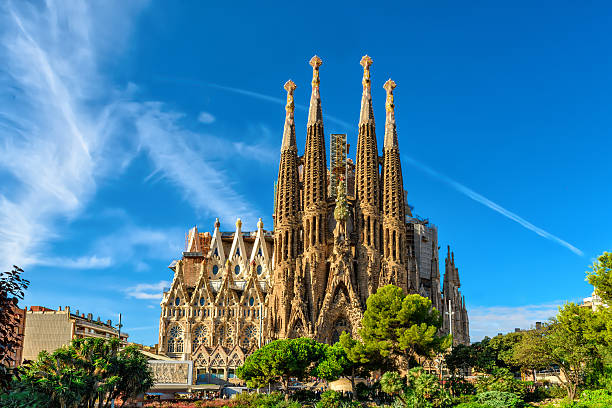
The difficult part of a Sagrada Família visit may occur before the nave. The surrounding streets offer famous views but limited control: wide intersections, pale paving, reflective façades, moving traffic, and large numbers of visitors can turn a short approach into the day’s most exposed interval. The Nativity and Passion sides also encourage people to linger outdoors. Treat each façade as a separate optional module rather than as a compulsory lap around the block.
The Basilica’s official FAQ says advance-ticket holders can enter without waiting, while also confirming that bags and personal items are checked at the entrance. The practical reading is that a timed booking removes one kind of queue but not every pause. Security, crowd flow, ticket checks, and a brief hold at the threshold can still occur. Ask where the booked entrance is operating, which side of the block receives the least direct exposure at the chosen time, and whether a companion may complete any ticket conversation while the traveler waits in shade nearby.
A shaded pickup point should be defined by an exact corner or doorway, not by “near Sagrada Família.” The basilica occupies an entire block, and a vehicle stopping on the wrong side can create an avoidable crossing or a bright walk around two façades. The same precision matters after the visit. Decide whether the vehicle will meet the group beside the exit in use, on a quieter adjacent street, or at a pre-agreed Eixample corner. Barcelona traffic rules, temporary works, and security management can change curb access, so the operating point should be confirmed close to the day.
Transfer timing should include adaptation time, not only drive time. A traveler leaving coloured interior light may need a calm minute before stepping onto a bright pavement. Build that minute into the meeting plan so the driver or other companions are not calling from a different corner. A useful sequence is: exit, pause in the nearest permissible sheltered area, confirm that the vehicle is in position, then move. The family member who wants one last photograph can take it after the traveler is settled, rather than holding the whole group in the open.
Check Barcelona’s daily UV forecast as one operational input. The Catalan Meteorological Service publishes maximum and forecast UVI values for Barcelona and classifies them from low through extreme on its official UVI page. UVI does not describe every form of visual discomfort and should not be used as a symptom forecast. It can still help the family distinguish a mild-looking but high-exposure day from one in which outdoor pauses may be easier to keep brief.
Plan the nave as a sequence of controllable choices
Inside Sagrada Família, the strongest preparation is not to predict exactly how the light will feel. It is to preserve choices. At the entrance, identify the nearest route out, the direction of any quieter side space open to visitors, and the staff point to approach if the traveler needs assistance. Confirm whether seats are available on the public route and whether they may be used at that moment. Seating, temporary closures, liturgical activity, and crowd management can change, so none should be represented as guaranteed unless the Basilica confirms them for the visit.
Begin interpretation away from the most intense coloured light if the traveler prefers gradual adaptation. The guide can establish the structural logic first: columns divide and branch like load-bearing trees; the ceiling reads as a constructed canopy; changes in stone and geometry reveal both engineering and chronology. This gives the family a shared intellectual framework before turning toward the glass. If the traveler wants only brief exposure to the strongest colour, the group already understands what the light is doing architecturally rather than treating the windows as a decorative finale.
The eastern and western sides should be approached as different conditions, not as two boxes to tick. Depending on time and weather, one side may produce a stronger wash of colour or a sharper contrast with adjacent stone. A guide can describe the symbolic program while the traveler stands at a more stable angle, and companions can step closer for a minute before regrouping. Shared interpretation does not require identical sightlines every second. It requires a common subject, a clear rejoining point, and no penalty for choosing the less exposed position.
Agree on a minimum viable visit before entry. For example: understand the column system, compare one pair of window zones, identify one façade-to-interior relationship, and leave. Everything beyond that is optional. This matters because the group can exit with a sense of completion rather than failure if conditions are difficult. A long architecture day often deteriorates when a family treats the first shortened stop as a debt that must be repaid by adding another landmark later.
Also decide what happens if the traveler needs to leave before the rest of the family. Re-entry may not be permitted, so do not assume that a brief step outside is reversible. The safer shared plan is often for one companion to leave too, while the others complete a clearly limited ten-minute circuit and meet at the vehicle or indoor fallback. Verify the current exit and re-entry policy directly; the planning principle is to make separation short, specific, and free of guilt.
Give façade enthusiasts a shared anchor, not an open-ended wait
Companions who can remain outside longer do not need to lose the façades. They need a bounded way to see them. Choose one exterior subject before arrival: the Nativity façade’s dense natural and devotional carving, the Passion façade’s severe geometry and sculptural drama, or the building’s changing mass from a diagonal viewpoint. Ten attentive minutes with a clear question is often more rewarding than a slow circuit undertaken because every side appears on a checklist.
The shared anchor can be a detail that works both indoors and outdoors. The family might follow how branching and growth imagery moves from the Nativity side into the nave, how light distinguishes different theological narratives, or how the visible construction process changes the idea of a finished monument. The photosensitive traveler can discuss the same theme from inside or from a shaded viewpoint while companions gather a closer exterior view. When they rejoin, each person contributes evidence to one conversation instead of reporting on separate attractions.
Set the rejoining point before anyone separates. It should be sheltered, easy to describe, and reachable without circling the block. Avoid “by the main entrance,” because entrance operations can differ and crowds obscure sightlines. A vehicle, a specific indoor reception point confirmed by staff, or a named corner with reliable cover is better. Give the exterior group a hard return time and make the next move automatic if they are late: the traveler and companion proceed to the fallback, and the others join there.
Children and teenagers often respond well to a defined visual task. Ask them to find one animal, one geometric contrast, or one sign of ongoing construction, then bring that observation back to the group. Adults interested in photography can select one frame rather than wait for changing light. These limits are not about diminishing the building. They protect the shared day from turning one person’s façade study into another person’s prolonged exposure.
Use the Eixample as a recovery corridor with architectural content
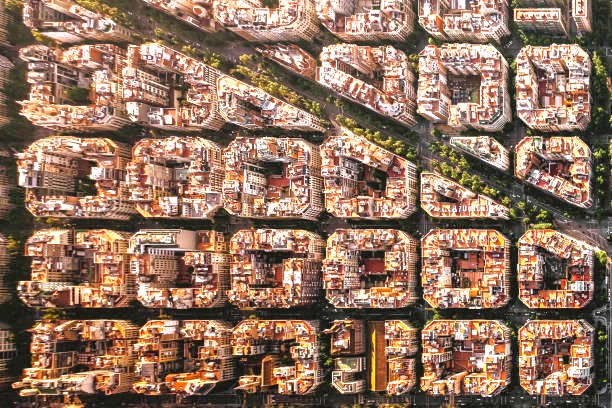
The Eixample should not be treated merely as the space between Sagrada Família and the next icon. Its grid, chamfered corners, planted streets, apartment entrances, shop interiors, and Modernisme details allow the family to keep reading Barcelona while adjusting the exposure level every few minutes. This is especially useful after the Basilica, when a second major ticketed interior may be too much but returning immediately to the hotel would feel like an unnecessary end to the day.
Shade in the Eixample is conditional. A tree-lined block can feel protected, then open suddenly at a broad chamfered intersection. The sunny side changes with season and hour, and a route that looks short on a map may require several bright crossings. Plan block by block, not neighborhood by neighborhood. The guide to how Cerda’s Eixample geometry shapes the street provides the urban context; for this day, that geometry becomes an exposure-management tool as well as a historical subject.
A productive Eixample segment can be very small: one shaded block, one vestibule or lobby that is genuinely open to the public, one close reading of ironwork or ceramic detail, and an indoor pause. The guide should know which elements can be interpreted from the shaded side of the street. A bay window, sgraffito façade, ventilation courtyard, or chamfered corner can illustrate Barcelona’s domestic modernity without requiring the group to stand directly opposite the building in full sun.
Do not promise that a café, hotel lobby, shop, or church will function as a recovery space unless access has been checked. Businesses may be busy, private, closed between services, or brightly lit inside. Select at least two legitimate options and confirm opening conditions. The best fallback is one the group can use without needing to buy time through a long meal or explain a personal condition to multiple staff members.
Movement can be shortened further with a coordinated vehicle, but transport should solve a specific problem: the exposed gap between the Basilica, a shaded Eixample stop, and the next interior. Door-to-door service is not automatically better if the curb is in direct sun or if traffic makes the traveler wait beside the road. The useful arrangement is a confirmed pickup side, an air-conditioned or otherwise suitable cabin prepared to the traveler’s preference, and a driver who can accept a changed destination without a public discussion.
Make Sant Pau the principal alternative, not a mandatory second monument
Recinte Modernista de Sant Pau is the most coherent architectural alternative near Sagrada Família because it continues the Modernisme story without repeating Gaudí. Lluís Domènech i Montaner’s hospital complex opens a different conversation about pavilions, gardens, hygiene, ornament, civic patronage, and the relationship between beauty and care. Its proximity also means the family can decide after the Basilica whether to continue, rather than committing to a cross-city transfer.
Sant Pau is not a uniformly indoor refuge. Its visitor route combines interiors, exterior paths, garden spaces, and transitions between pavilions. For a photosensitive traveler, that can be either an advantage or a problem: there are more opportunities to shorten or redirect the visit, but also repeated changes between indoor and outdoor light. Treat it as an adaptable alternative only after confirming the day’s route and identifying which interior components are open.
The venue’s official visit-planning page publishes seasonal self-guided hours, a last-entry cutoff, and a warning that the route may change. It also lists ramps, lifts, two loan wheelchairs, rest areas in interior and exterior spaces, accessible toilets, and other access provisions. Those facts support operational flexibility, but they do not establish that every room is low-light or that every rest area suits a particular traveler. Ask specifically about brightness, route length, seating location, and the fastest way from the entrance to an appropriate interior pause.
There are three sensible uses of Sant Pau. It can replace an extended exterior Sagrada Família study; it can serve as a short second chapter focused on one pavilion and the site plan; or it can become the bailout when the family wants to stay together indoors for a while. The third use requires care, because reaching the complex still involves outdoor movement and some of the route is open-air. A vehicle transfer or a carefully selected shaded walk may be preferable depending on the day.
Keep the interpretation narrow. Compare how Gaudí and Domènech i Montaner use structure, colour, craft, and nature, then stop. Trying to “complete” Sant Pau after a demanding Basilica visit can convert a flexible alternative into another endurance test. Families wanting a fuller Modernisme day on a different date can use a Sant Pau, Eixample and Palau de la Musica route as a separate planning framework.
Keep Park Güell optional because its exposure is harder to control
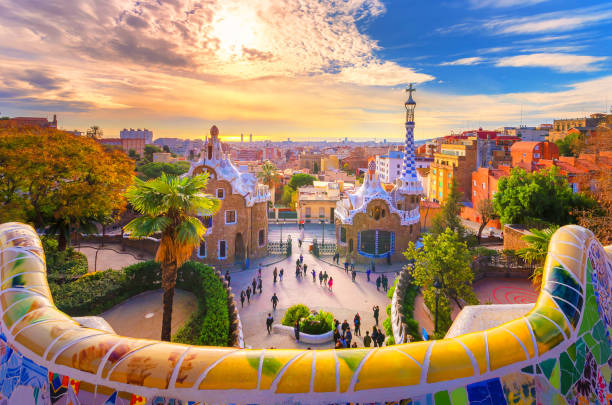
Park Güell is often paired with Sagrada Família, but it is a weak automatic choice for this specific day. Its architectural and landscape value is substantial, yet the experience depends on outdoor movement, slopes, open viewpoints, timed access, and transfers between vehicle drop points and the monumental zone. Shade exists, but it is not a continuous controlled environment. A traveler who has already managed the Basilica’s shifting interior light may face a second, less reversible exposure sequence.
The decision should turn on the traveler’s known tolerance, the forecast, and whether Park Güell is a personal priority. When it is essential, place it on a different morning or make it the day’s only major exterior commitment. When it is merely “what people do after Sagrada Família,” omit it. A shared Gaudí day can be architecturally complete through the Basilica, a focused façade discussion, and Eixample domestic Modernisme.
Families traveling in hot or bright months should also consult the high-summer Barcelona planning guide, while still using the individual exposure brief described here. Season changes the probability of strong sun and heat; it does not determine how a particular traveler will respond. Cloud cover can reduce direct sunlight yet leave glare and abrupt interior transitions relevant.
If companions are determined to see Park Güell, use a split-day strategy rather than sending the photosensitive traveler to wait nearby. One part of the family can visit on another date while the traveler chooses an equally meaningful interior, private appointment, or rest period. The goal is not identical attendance at every landmark. It is a trip in which the affected traveler receives genuine Barcelona content rather than being repeatedly parked outside the group’s main experience.
Design a bailout route before it is needed
A bailout route should answer four questions in advance: where the traveler goes, how they get there, who goes with them, and where the family reunites. “We can always find a café” is not a route. Around Sagrada Família and Sant Pau, busy streets and tourist demand can make an improvised interior noisy, full, or visually harsh. Select a primary and secondary option, confirm that they are open during the planned window, and record the exact entrance.
The most useful bailout after Sagrada Família is often a lower-exposure interior in the Eixample or a direct return to the accommodation, depending on the traveler’s needs. “Lower exposure” is a comparative route judgment, not a guarantee. It means fewer open crossings, more stable light, seating, and a simple exit. A museum or celebrated building is not automatically suitable; some interiors are bright, mirrored, densely visited, or reached through sunny courtyards.
Sant Pau can serve as a cultural bailout only when its current route offers an appropriate interior near the entrance. Otherwise, it is better considered an alternative visit, not an emergency refuge. A hotel can be the right destination when it provides the traveler’s known recovery conditions, but the article does not assume that every family is staying nearby or that a bedroom pause is always desirable. The fallback should match the actual itinerary and accommodation location.
For a family that wants to remain together, choose an interior where the guide can continue a quieter form of interpretation: a map of the Eixample, images of Modernisme details, discussion of Sagrada Família’s construction phases, or a comparison between Gaudí and Domènech i Montaner. This keeps the pause culturally connected without demanding more visual exposure. It also avoids the social signal that the day has “stopped” because one person needed a change.
If the family separates, set a short reunion window and a second contact method. Mobile reception, battery life, and crowd noise can complicate a simple call. The guide or lead companion should hold all location details, and the driver should receive instructions from one person only. Discreet coordination is valuable here because it turns a potentially stressful retreat into a routine route adjustment.
A full shared-day sequence that preserves flexibility
The following sequence is a planning model, not a fixed timetable. Exact hours depend on the booked entry, season, accommodation, traffic, and the traveler’s preferred exposure window. Its value lies in the order: one important timed interior, one low-commitment urban chapter, and one optional second site that can be shortened or removed without collapsing the day.
Before departure: confirm conditions and roles
Check the Barcelona UVI forecast, weather, current Sagrada Família entry instructions, bag rules, pickup feasibility, and the operational status of the intended Sant Pau route. Confirm the traveler’s preferred glasses, hat, or other personally chosen aids without suggesting new equipment. Review the three exposure categories, the exit signal, the primary indoor fallback, and the exact person who will accompany the traveler if the group divides.
Carry booking confirmations on more than one device, minimize unnecessary bags to simplify security, and avoid a departure time that turns ordinary traffic into a rushed arrival. The family should reach the area with enough margin to use the chosen shaded waiting point, but not so early that the margin becomes a long outdoor hold. A nearby vehicle can absorb uncertainty better than standing beside the entrance.
First anchor: Sagrada Família with a minimum viable visit
Approach the booked entrance directly. Skip the exterior circuit before entry unless the traveler actively wants it and conditions feel manageable. Inside, identify the exit and any confirmed seating, then establish the structural story before moving toward the strongest coloured-light zones. Complete the pre-agreed core: columns and vaults, one stained-glass comparison, and one symbolic or construction detail.
If conditions remain comfortable, add a short second viewpoint or museum element that is open and easy to exit. If not, leave immediately without trying to compensate. A companion who wants one façade view can take a brief, pre-timed look while the traveler reaches the vehicle or sheltered meeting point with another adult.
Middle chapter: a shaded Eixample reading
Travel to a pre-selected shaded block rather than beginning an undefined walk. Use the street itself as content: the chamfered corner, the relationship between apartment façade and sidewalk, one craft detail, and the changing scale from basilica precinct to residential city. Step into the verified indoor pause before the group feels it is necessary. Early recovery usually preserves more options than waiting for a crisis.
Lunch can occur here if the family has an appropriate reserved setting, but food should not become the only escape mechanism. A long, brightly lit dining room may add its own strain. Choose the meal for stable conditions, manageable sound, seating, and an easy departure. Keep the next decision open until after the traveler has settled.
Optional second chapter: Sant Pau or a lower-exposure interior
Continue to Sant Pau only if the traveler wants another architectural experience and the current route has been checked. Focus on one pavilion, one garden relationship, and one comparison with Sagrada Família. If the exterior transitions are likely to be too demanding, substitute the pre-selected lower-exposure interior or end the guided portion while the day still feels coherent.
The companions who want more exterior architecture can use the remaining time for a short independent view, then rejoin at the agreed location. Do not add Park Güell, a rooftop, or Passeig de Gràcia façades simply because the afternoon is “free.” Free time is useful precisely because it allows the day to respond to real exposure rather than to the original wish list.
Shorter versions for different tolerance and family patterns
A two-hour version can be complete. Use direct transfer to Sagrada Família, enter on time, spend roughly forty to sixty minutes on the nave depending on comfort, and leave for a nearby indoor pause. The family shares the main architecture, one companion may take a five-minute façade look, and everyone reunites without a second formal stop. This version suits travelers who can manage one major transition but do not want the day built around repeated recovery calculations.
A half-day version adds one shaded Eixample segment and an indoor lunch or pause. The value is contrast: sacred monumental Modernisme followed by the lived city of apartment blocks, chamfers, craft, and street trees. Sant Pau remains a reserve rather than a promise. This is often the strongest family format because it gives children, architecture enthusiasts, and the photosensitive traveler enough substance without making the entire afternoon dependent on conditions.
A split-interest version keeps Sagrada Família shared and divides afterward. The traveler and one companion continue through a low-exposure Eixample route or return to the accommodation, while others visit Park Güell or study façades. The group reunites later at a confirmed indoor location. This works only when the traveler’s alternative contains genuine interest and companionship; it should not feel like a holding pattern while everyone else receives the “real” Barcelona.
A high-confidence version can include Sagrada Família, a short Eixample study, and Sant Pau, but only when the traveler knows that several transitions are manageable and all operational details have been checked. Even then, the second site stays optional. Flexibility is not indecision. It is the mechanism that lets the whole family pursue depth without converting a variable condition into a public test of endurance.
Adjust the shared plan for children, teenagers and older relatives
With young children, reduce waiting and keep the interpretive task concrete. One adult handles security and tickets; another stays with the photosensitive traveler and child in the chosen sheltered position. Inside, use a short architectural hunt—tree columns, colour direction, one animal or plant form—then leave before attention and exposure both deteriorate. A stroller, toilet needs, and snack timing can create extra outdoor pauses, so those logistics belong in the same route brief.
Teenagers may want photographs, independence, or a faster exterior circuit. Give them a defined time and meeting point rather than asking them to suppress that interest. They can document one façade or construction detail and bring it back to the family conversation. The plan works when autonomy has boundaries; it fails when the group waits in a bright location for an undefined photo session.
Older relatives may have their own mobility, hearing, heat, or seating needs. Do not let the photosensitivity plan obscure them. A shaded route with repeated curb changes may still be difficult for someone who walks slowly, and a dark recovery interior may complicate another person’s adaptation. Choose the compromise at the family level: shorter distances, stable seating, clear speech, and one priority building often serve several needs simultaneously.
For autistic adults or family members who need predictability, the overlap is logistical rather than diagnostic. A clear route, exit signal, and rejoining point can support both travelers, but sensory predictability involves different considerations and should not be collapsed into photosensitivity. The companion guide to a sensory-predictable architecture day addresses that distinct planning task.
What to verify with venues and the guide
Ask Sagrada Família for the current entrance in use, the expected security process, whether any interior seating is available to ordinary visitors, the nearest public exit from the planned route, and the consequence of leaving early. Ask whether a companion may wait in a sheltered position while another presents the booking, and whether any temporary construction or liturgical activity changes circulation. Do not ask staff to guarantee that the light will be comfortable; ask for the operational facts that let the traveler decide.
For Sant Pau, confirm which pavilions and exterior paths are included on the date, where the nearest interior rest area lies from the entrance, whether lifts or ramps are affected by temporary changes, and how quickly the visitor can leave from the chosen point. The official page states that the route may change, so a map saved months earlier should not be treated as current. Also verify opening hours and last entry close to publication or travel because these are volatile operational details.
Ask the guide to describe the route in transitions, not only minutes: vehicle to shade, shade to security, security to nave, nave to exit, exit to pickup, pickup to indoor pause. Confirm that the guide can front-load interpretation, shorten a stop without resistance, and continue the architectural discussion in a lower-exposure setting. A guide who knows the art but cannot revise the sequence may be less useful here than one who can protect both depth and choice.
Ask the transport provider for exact curb plans and a communication protocol. The driver should know which family member gives instructions, what alternate interior is approved, and that a destination change may occur with little notice. This is not a request for medical supervision. It is ordinary route coordination made more precise because waiting on the wrong side of a block has a material consequence.
Finally, recheck only what can change. The evidence set used here was verified on November 1, 2026. Its editorial policy calls for an annual recheck, or sooner after a substantive page update or source correction. For an actual visit, entry instructions, opening hours, visitor routes, curb access, weather, and UVI should still be checked close to the date. The architectural logic of the plan is evergreen; the operating details are not.
The practical handoff: one anchor, two fallbacks, no forced finale
A family can now turn this guide into a one-page operating plan. Record the Sagrada Família slot, direct entrance and exit questions, exact shaded waiting point, pickup corner, first indoor fallback, second fallback, Sant Pau decision rule, and the family’s separation signal. Add the minimum viable visit and the hard return time for anyone viewing a façade longer. That page is more useful than a dense itinerary because it tells everyone what happens when conditions change.
The day succeeds when the photosensitive traveler shares Barcelona’s most important architectural ideas without being made responsible for the group’s pace, while companions retain bounded opportunities for façades and photography. Sagrada Família provides the common subject; the Eixample provides flexible urban texture; Sant Pau provides an alternative chapter; and a lower-exposure interior or direct return provides a dignified exit. Nothing depends on completing all four.
Private pacing becomes materially useful at the point where small route decisions have large consequences: the correct entrance, a shaded hold instead of an exposed queue, a vehicle on the right side of the block, interpretation that moves indoors, and a second site quietly removed without reopening the whole family debate. Families seeking that level of coordination can review Barcelona private tours and use the exposure brief as the starting document rather than as an afterthought.
For a tailor-made plan, provide the traveler’s known transition preferences, the family’s must-see architectural subject, the date and likely entry window, mobility considerations, and the preferred fallback conditions. That is enough to design a shared day without making medical claims or promising a symptom-free experience. Inquire now
If you’re interested in any private tours of Barcelona, please reach out to us.
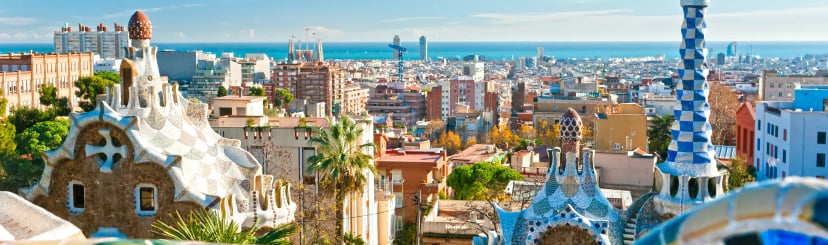







 So if you are looking for the absolute best in Barcelona & surroundings with authentic local fully-licensed native guides whose English you can actually understand and with an exclusive and amazingly fun itinerary