Barcelona to a Cadaqués Hotel With Luggage: Dalí House Slots, Mountain Roads and Check-In Buffers

Updated
The plan looks elegant on a map: check out in Barcelona, see Dalí in Figueres, continue to the Salvador Dalí House in Portlligat, and reach a Cadaqués hotel in time to settle in. It often fails for a less dramatic reason than distance. A Barcelona departure slips because the luggage is not ready at the vehicle. The Theatre-Museum takes longer than expected. The Portlligat booking requires an early ticket-collection margin. Then the final mountain approach runs slowly, the vehicle cannot reach the hotel door, and the arrival becomes a parking-and-porter problem just as reception hours matter most.
That is why this journey should be designed as a one-way hotel transfer with one possible cultural commitment, not as a day trip onto which luggage and check-in have been added. The direct route, the Figueres route and the Portlligat route each solve a different problem. None is automatically superior. The correct choice depends on which fixed obligation cannot move: a timed art admission, a hotel-access window, a comfortable arrival, or the wish to use the transfer day for serious Dalí context.
The central planning mistake is to count only driving and visiting time. The real schedule also contains loading, parking, walking from the vehicle, ticket collection, security or entry formalities, a meal decision, the final road into Cadaqués, and the last handoff between vehicle and hotel. Luggage turns each transition into an operational event. A route can be geographically efficient and still be fragile because too many of those events depend on one another.
For travelers building a broader Barcelona-and-coast journey, the transfer belongs inside the accommodation strategy rather than in a list of attractions. The Barcelona and Costa Brava split-stay brief explains the larger question of when moving hotels is worth the effort. This guide addresses the narrower, harder version: how to reach a Cadaqués hotel with bags while deciding whether Figueres or Portlligat deserves the limited margin on the way.
Begin with the arrival that cannot be improvised
Before choosing an art stop, define the hotel arrival in practical terms. “Check-in from three” is not enough. Ask for the latest staffed arrival time, whether the property needs an estimated arrival, where the vehicle should stop, whether the hotel door is reachable by car, which parking arrangement applies, and how large suitcases cross the distance between parking and reception. In an old coastal town, the answer may involve a public car park, a short walk, a hotel-owned space, a meeting point, or a luggage collection arranged by phone.
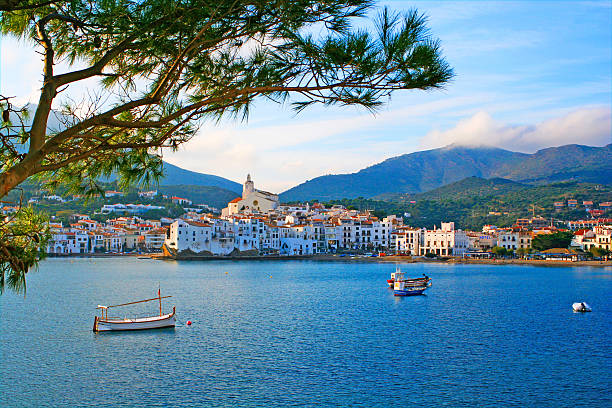
Cadaqués old-town access is not one uniform condition. A hotel near an approach road has a different handoff from a property reached through narrow lanes or stepped streets. The useful unit of planning is therefore not “arrival in Cadaqués”; it is “bags and travelers inside this particular hotel.” Record the hotel’s exact instructions in writing, including a local telephone or messaging contact that will be answered on the day. A driver knowing the town is valuable, but the hotel remains the authority on its own current access and porter procedure.
The official Cadaqués visitor page identifies a paid Saba car park at the entrance roundabout and describes the road toward Portlligat, about 1.5 kilometres away, turning left from there. It also lists parking in Portlligat and other local parking areas. Those facts help orient the approach, but they do not prove that a particular hotel can receive a vehicle or that a space will be available when you arrive. Use the official Cadaqués parking information as the town-level layer, then obtain the property-level handoff separately.
Tramuntana Hotel illustrates why hotel-specific instructions matter. The property says it has parking spaces very close by and asks guests with large suitcases to call or send a WhatsApp message so luggage can be collected from where the vehicle is parked. That is a useful example of an old-town solution, not a rule for every Cadaqués hotel. The hotel’s own arrival information should be read as evidence that the last few hundred metres may require coordination even after the long drive is complete.
Work backward from that final handoff. If reception needs contact before a certain hour, make that the route’s stop-loss point. If the vehicle must park before luggage is transferred, allow time for locating the correct car park and contacting the hotel. If anyone in the party has limited mobility, do not assume that a short map distance is an easy walk with cobbles, gradients or steps. The last segment is where a carefully planned art day can unravel, because it is the segment most often omitted from the schedule.
The three viable route shapes
There are three coherent ways to use the transfer day. The first is direct from Barcelona to Cadaqués, with no fixed cultural stop. The second adds the Dalí Theatre-Museum in Figueres before continuing to the coast. The third goes to Portlligat for the Salvador Dalí House before the hotel handoff in Cadaqués. A fourth idea—doing both principal Dalí sites—should be treated as a conditional exception requiring favorable calendars and generous margins, not as the baseline itinerary.
Direct: protect the move and arrive with usable time
The direct plan is appropriate when the transfer itself is the day’s main obligation. It suits a late Barcelona checkout, an early hotel-access preference, a party that does not want luggage waiting through a museum visit, or travelers who already have a substantial art program elsewhere. Direct does not mean rushed. It creates room for a measured departure, a comfort stop, traffic variation, the mountain approach and the hotel’s parking procedure without turning every delay into a threat.
Its main advantage is not merely a shorter itinerary. It preserves decision space. If traffic is light and the group is energetic, a non-ticketed pause can remain possible. If loading takes longer, weather changes, or someone is unwell, the route still works. A fixed admission removes that flexibility. For time-constrained travelers, flexibility can be more valuable than adding one more named site, particularly when arrival in Cadaqués is part of the experience rather than a bed at the end of a touring day.
The direct route is also the correct fallback for every more ambitious version. Decide in advance which deadline activates it. Examples include leaving Barcelona beyond the agreed cutoff, a road incident materially increasing the live estimate, a delayed bag release, or a hotel request for earlier contact. A fallback only protects the day when it is chosen before the group is emotionally committed to the stop.
Via Figueres: the more substantial museum commitment
Figueres works when the Dalí Theatre-Museum is the transfer day’s cultural priority and the party can accept a structured visit followed by a second road stage. The museum is in the city center, while the arrival and parking problem belongs outside the galleries. The Dalí Foundation’s visitor information says a general visit commonly takes about one and a half to two hours and notes that the museum sits in a traffic-restricted central area. It directs drivers approaching by the AP-7 toward exit 3. See the Foundation’s official visitor FAQ for the current operational wording.
Those one and a half to two hours are not the complete Figueres stop. Add the time to leave the motorway, reach suitable parking, walk to the museum, manage any entry process, regroup, return to the vehicle and depart the city center. A meal before or after the visit is another deliberate block, not a detail that can be absorbed invisibly. The transfer remains viable when those components are named and bounded. It becomes brittle when only the gallery time appears in the plan.
Figueres has one major scheduling advantage over Portlligat: it lies earlier in the northbound journey, before the final coastal approach. If the museum visit ends on time, the remainder is a straightforward commitment to the hotel. Its disadvantage is scale. The Theatre-Museum invites attention, and art-focused travelers can easily exceed a nominal visit length. A serious visit should not be sold to the schedule as a quick look merely because it occurs on a transfer day.
Choose Figueres when the group wants the broad, theatrical Dalí statement and is willing to let that be the single major stop. For a deeper comparison of the artistic payoff and geography, use the guide to choosing Figueres, Girona or Cadaqués when Dalí sets the day. That page treats the excursion as an art decision; here, the extra test is whether the visit leaves enough margin for luggage and a remote hotel arrival.
Via Portlligat: the narrowest admission window
Portlligat is the more intimate choice and the more exacting one operationally. The Salvador Dalí House is close to Cadaqués in destination terms, yet it is not a casual final stop. The official booking information says the visit must be reserved, that groups of up to eight enter every ten minutes, and that tickets must be collected thirty minutes before the booked time. Those conditions make the arrival target earlier than the printed admission time. Consult the official Salvador Dalí House booking page close to travel.
The house therefore sets two clocks: the admission slot and the ticket-collection deadline. A plan that aims to park at the stated entry time is already late by design. A sound route targets arrival before the collection deadline, with separate allowance for finding the correct parking area, walking to the ticket point and handling bags or passengers who cannot move quickly. Because entries are small and closely sequenced, the operation has less tolerance than a large museum with continuous circulation.
Portlligat is best chosen when the house is the non-negotiable art commitment and the rest of the transfer is made subordinate to it. That usually means an early, disciplined Barcelona departure; luggage already staged; no competing timed stop; and a hotel informed that final arrival depends on the house visit. The reward is a visit tied directly to Dalí’s working and domestic environment, but the route must earn that reward by protecting the slot.
Season matters because published calendars and opening patterns can change. A winter journey should not inherit assumptions from a spring or summer plan. The winter Dalí planning guide is the useful alternative when house-museum availability, shorter daylight or seasonal operations alter the cultural choice.
Figueres and Portlligat are different kinds of commitment
The most useful distinction is not “big museum versus small house.” It is the way each stop consumes margin. Figueres consumes duration: the galleries can absorb attention, and the city-center arrival adds walking and parking. Portlligat consumes punctuality: a small timed entry and advance ticket collection create a hard edge. One can overrun because the visit is rich; the other can fail before it begins because the approach was planned too tightly.
That distinction should determine the buffer. For Figueres, protect the departure time from the museum. Agree on what the visit includes, whether a shop stop is part of it, where the group regathers, and whether lunch occurs in Figueres or later. For Portlligat, protect the arrival time to the house. Set a vehicle departure from Barcelona that is based on a conservative live estimate, add an incident margin, and treat the ticket-collection requirement as the real appointment.
The stops also create different luggage questions. In Figueres, bags ordinarily remain with the transfer vehicle while travelers are away for a substantial museum visit. The plan should specify secure luggage custody and avoid casual unloading in the center. In Portlligat, the vehicle is much closer to the destination phase, but the party still needs to know whether luggage remains in the vehicle during the house visit or is first handed to the hotel. The latter sounds efficient but can add another access procedure before a timed admission.
For most one-way transfers, unload at the hotel only when doing so reduces risk rather than adding a new deadline. If the hotel is ready, easily reached and able to accept bags without delay, a pre-visit drop may be sensible. If access requires parking, calling, waiting for collection and then retracing the approach to Portlligat, keep the sequence simpler: visit first, then complete one final hotel handoff. The right answer is property-specific, which is why the hotel instructions must be obtained before the route is booked.
There is also a difference in how disappointment should be managed. If Figueres must be cut because departure is late, the transfer can still produce a good Cadaqués arrival. If a Portlligat slot is missed, the loss feels sharper because the booking was specific and capacity is limited. Do not answer that emotional pressure by speeding the final road or gambling on an exception at the entrance. Treat the slot rules as real and preserve the safe arrival.
Luggage creates two handoffs, not one
The visible luggage task is loading in Barcelona. The less visible one is separating bags from travelers in Cadaqués. Both need named responsibility. At origin, confirm how the vehicle reaches the hotel, where it may wait, whether the property assists with bags, and whether every suitcase is present before departure. At destination, confirm where the vehicle stops, who contacts the hotel, who remains with the luggage, and how the travelers reach reception. A transfer coordinator should be able to describe both handoffs without using the phrase “we will work it out there.”
Barcelona loading can be the first source of delay because hotel entrances, one-way streets, pedestrian priority and temporary stopping conditions vary. The remedy is simple but disciplined: luggage ready before vehicle arrival, bills settled, keys returned, passports and medication kept in hand baggage, and a bag count agreed. An art booking should never depend on an optimistic assumption that checkout and loading will take only a few minutes.
During a cultural stop, the route needs a clear luggage-custody standard. Bags should be out of public view in a properly secured vehicle, with the vehicle managed according to the transport provider’s operating practice. Do not build an itinerary that requires suitcases to be carried into the Theatre-Museum or down to the Dalí House unless the venue has explicitly confirmed an appropriate facility. The transfer vehicle is part of the luggage plan, not merely the means of covering distance.
The final handoff is especially important for travelers with multiple large cases, formal clothing, art purchases, mobility aids or children’s equipment. “Five minutes from parking” may be easy for two adults with cabin bags and unreasonable for a family with several wheeled cases. Ask the hotel to describe surface, slope, steps and assistance. A map cannot show whether the route is practical while pulling luggage, and a driver cannot promise access that local restrictions or physical width do not allow.
The official town parking page and the hotel’s own directions should be read together. The town source tells you the broad parking geography; the property tells you which piece of that geography is relevant. This is the same principle that applies on other coastal transfers. The sibling guide on reaching a Costa Brava hotel via Girona with luggage is useful for comparing how an attractive old center can add a second access problem to an otherwise sensible route.
Do not assume that “private transfer” automatically resolves the last metre. A suitable vehicle, a professional driver and luggage capacity solve the long movement. They do not change the width of an old lane, a pedestrian restriction or the hotel’s porter hours. Premium service is meaningful here only when the transport and hotel instructions have been coordinated in advance: correct vehicle size, correct meeting point, direct contact and a defined response if the planned drop-off is unavailable.
Buffers should protect events, not average drive times
A single blanket buffer is less useful than four smaller ones attached to specific risks. The first covers Barcelona checkout and loading. The second covers entry to the chosen art site. The third covers the final road and any live traffic incident. The fourth covers parking and the hotel handoff. When all four are buried inside one vague “extra hour,” no one knows which part may be spent and which part must remain untouched.
The departure buffer
Set the vehicle time after the travelers’ realistic readiness time, not at the moment they hope to begin checkout. For a timed Portlligat visit, the group should be in the vehicle with the bag count complete at departure. For Figueres, a modest delay may be recoverable by shortening the visit, but that trade should be explicit. If the museum is the purpose of the stop, leaving late and then racing through it defeats the reason for adding it.
The admission buffer
Portlligat’s stated thirty-minute ticket-collection requirement belongs inside the appointment, not outside it. Add walking and parking before that. Figueres needs a different margin: enough time to park, walk into the restricted center and reach the museum without turning the first galleries into recovery from a rushed arrival. Exact entry practices can change, so the booking confirmation and official visitor page should govern over any inherited itinerary note.
The road buffer
Do not use a route estimate captured weeks earlier as the day’s operating truth. The Servei Català de Trànsit says its Continuous Traffic Map shows current incidents, traffic density, congestion, roadworks, weather information, cameras, variable-message signs and road names. Check the official Catalan continuous traffic map before departure and again before leaving Figueres if that stop is included. Navigation gives an estimate; the traffic source helps explain what may be changing it.
The final approach to Cadaqués should retain its own margin because motorway cruising and a mountain road are not equivalent scheduling units. The group may also need a comfort stop before the winding section. A plan that spends every minute in Figueres and then treats the coast road as fixed is vulnerable even when no major incident occurs. The buffer is not permission to add another stop. It belongs to the arrival.
The hotel buffer
Keep enough time after reaching town to execute the actual access instructions. Parking, unloading, contacting reception, moving bags and completing check-in can form a substantial final sequence. If the hotel has a firm staffing limit, the route should aim well before it. The last safe arrival target is not the last theoretical minute at which a key might be issued.
A worked timing method for Portlligat
Use arithmetic based on live information rather than copying a universal departure time. Suppose a house admission is printed for 10:00. The official collection rule makes 09:30 the latest collection point. If the parking-to-ticket process is budgeted at twenty minutes, set 09:10 as the target arrival. On the morning, take the current Barcelona-to-Portlligat navigation estimate, add the chosen road contingency and a comfort-stop allowance, then subtract that total from 09:10. If the live estimate were two hours and forty-five minutes and the protected additions total fifty minutes, the departure would be 05:35. Those figures are illustrative; the method is the point.
Now add the origin buffer before 05:35. The vehicle arrival, checkout completion and bag loading must occur earlier. This backward calculation may reveal that the chosen slot demands an impractical morning. That is valuable information. Change the slot, choose Figueres, or go direct rather than pretending the margin will appear on the road.
When both Dalí stops genuinely fit
Figueres plus Portlligat can work only when the published calendars line up, Barcelona departure is early, the museum visit is tightly defined, the Portlligat slot is reserved with its collection margin, luggage custody is settled, and the hotel accepts the resulting arrival. It also requires the group to prefer a concentrated art day over a relaxed transfer. Missing any one of those conditions does not make the day impossible, but it makes the plan dependent on recovery from delay.
The geographically sensible order is generally Figueres first and Portlligat second, because Portlligat lies near the final destination. Yet that order creates a chain: a slow museum arrival compresses the museum; an overlong museum visit threatens the house; a late house visit compresses the hotel handoff. The schedule has three consecutive points at which time cannot be recovered without sacrificing something important.
Do not solve that chain by reducing both visits to symbolic appearances. The Theatre-Museum’s stated general duration already indicates that it is not a brief roadside stop, while the house uses small timed groups. Travelers choosing both should know exactly what they are accepting: an early start, disciplined transitions, limited meal flexibility and little tolerance for shopping or spontaneous wandering. The combined day is defensible for a strongly Dalí-focused party, not merely because two sites appear along the same broad route.
A useful test is to ask which stop the travelers would preserve if the Barcelona departure were forty-five minutes late. If no one can answer, the route has not been prioritized. Select one primary site and identify the other as conditional. Then communicate the cutoff in advance. This protects the guide or driver from having to negotiate expectations on the roadside and protects the hotel from an unexplained late arrival.
Failure modes and the calm fallback for each
- Barcelona departure is late. Compare the actual departure with the written cutoff. For a Portlligat booking, recalculate against the ticket-collection deadline, not the admission time. For Figueres, decide whether a shortened museum visit still has value. When it does not, go direct and keep the hotel arrival intact.
- Traffic changes materially after departure. Use live road information and ask what can still be completed without consuming the hotel margin. The first reduction should be an optional pause or secondary stop. If the fixed art admission is no longer credible, do not answer by unsafe driving or by assuming the venue will overlook lateness.
- The Portlligat ticket window is at risk. Contact the venue using the information on the booking confirmation if appropriate, but plan on the published rule rather than a discretionary exception. If admission is lost, continue to Cadaqués or adopt a non-timed local plan after check-in. Do not add a hurried Figueres detour as compensation.
- The Figueres visit overruns. Use the pre-agreed gallery departure time. If the group elects to stay longer, state the consequence plainly: later hotel arrival, loss of Portlligat, or both. Avoid letting lunch, shopping and museum time each expand independently.
- The hotel cannot receive the vehicle at the expected point. Follow the property’s alternate parking or meeting instructions. One person should contact the hotel while another remains with the luggage. Do not unload into a lane until the onward movement of the bags is known.
- Parking near the intended handoff is unavailable. Move to the named backup car park rather than circulating indefinitely in narrow streets. The route brief should contain that backup and the hotel phone number. A five-minute search can become a much longer arrival problem when every traveler assumes someone else has the instructions.
- A traveler is affected by the winding final road. Reduce stops before the mountain approach, allow a comfort break, and avoid arriving depleted. The road is unavoidable; unnecessary schedule pressure is not. A direct route may be the more considerate art decision when the alternative leaves the traveler unable to enjoy either the house or the town.
- The cultural site is unavailable on the travel date. Do not substitute an unverified opening assumption. Reframe the transfer around the hotel arrival, or choose another confirmed stop that does not create a new timed chain. Availability should be checked at booking and again when final documents are issued.
The best fallback is usually subtraction, not rerouting. Cadaqués is already the destination, and Portlligat is adjacent to that destination in trip logic. Adding Girona, a long lunch or another museum after a failed slot may restore the number of activities but not the quality of the transfer. A calm arrival, secure luggage and time to understand the hotel’s setting can be the successful outcome.
There is one broader alternative: change the overnight structure rather than overloading the transfer. Travelers who want an unhurried Figueres visit, substantial interpretation and a relaxed meal may be better served by giving the Dalí program its own day or by placing an overnight elsewhere. That is a trip-design decision, not a same-day rescue. It should be made before deposits and timed admissions create sunk-cost pressure.
The recheck triggers that matter
This topic is evergreen in structure but operationally live in three places: admission rules, road conditions and hotel access. Recheck the Portlligat booking page and the confirmation for the current collection requirement, entry time and any date-specific instructions. Recheck the Dalí Foundation visitor information for museum access guidance. Recheck live roads on the day. Reconfirm the hotel handoff shortly before travel, especially if the property has changed reception hours, parking arrangements or messaging procedures.
Do not confuse publication stability with journey stability. The logic of working backward from the hotel remains sound for years; the exact slot, road incident and parking instruction can change within hours. A route document should therefore show both durable decisions and live fields. Durable decisions include which site is primary and which delay activates the direct fallback. Live fields include the admission confirmation, vehicle meeting time, road status, hotel contact and final drop point.
A useful final verification note is one page long. It should state the date, traveler names, bag count, Barcelona collection address, vehicle time, primary art booking, ticket-collection deadline, parking plan, hotel address, hotel contact, latest agreed arrival, and the cutoff for abandoning the optional stop. Keep official links beside the relevant items rather than in a general reading list. The person operating the day should not have to search through correspondence while the vehicle is moving.
What private coordination changes
This route merits private coordination when one-way luggage movement, a timed art commitment and a remote hotel arrival must align. The value is not ceremonial. It is having one operating plan that connects Barcelona loading, secure luggage custody, admission documents, live road review, a realistic cutoff and the Cadaqués handoff. Without that integration, each supplier may perform correctly while the day as a whole still fails.
A driver solves vehicle movement and luggage capacity. An art guide solves interpretation and visit pacing. The hotel solves its own access. The booking holder controls the admission confirmation. Coordination is the act of joining those responsibilities and identifying who makes the decision when time is lost. For a simple direct transfer, that layer may be light. For Figueres plus Portlligat, it is the difference between an itinerary and an operation.
The service should also be proportionate. Travelers do not need a sales performance around every bag movement. They need accurate timing, a vehicle suited to the party and luggage, clear communication, and a willingness to remove a stop when the conditions no longer support it. The relevant Orange Donut Tours context is private Barcelona touring and transfer planning when the cultural program and the one-way move need to be designed together.
The handoff brief to finalize before departure
- Choose the route in one sentence. Direct to Cadaqués, Figueres then hotel, or Portlligat then hotel. If both Dalí sites are proposed, name one as primary and one as conditional.
- Fix the hard times. Record vehicle-ready time, any admission time, the Portlligat ticket-collection time, the latest acceptable departure from the cultural stop, and the hotel’s agreed arrival window.
- Count the bags. Include oversized cases, strollers, mobility equipment and purchases expected to travel. Confirm the vehicle against the real load rather than the number of passengers alone.
- Write the parking sequence. Identify the primary and backup parking point for the art stop and the hotel. Note who remains with luggage when travelers separate from the vehicle.
- Confirm the last metres. Ask whether the vehicle reaches the door, whether staff collect bags, whether there are steps or steep surfaces, and which phone or messaging contact is active on arrival.
- Define the cutoff. State the delay at which the optional stop is removed. Make the rule before departure, when no one is yet defending a reservation or an imagined perfect day.
- Recheck the live items. Review tickets and venue instructions before travel, traffic on the day, and hotel access shortly before arrival. Keep the direct route available throughout.
The final decision should feel clear rather than ambitious. Choose Figueres when the Theatre-Museum is worth structuring the transfer around. Choose Portlligat when the house slot is the defining commitment and an early departure is acceptable. Choose direct when hotel arrival, traveler stamina or luggage complexity deserves the margin. The strongest plan is the one that still works after a delayed checkout, a slower road or a parking change—not the one that looks fullest before the vehicle leaves Barcelona.
For a coordinated one-way plan that connects luggage, Dalí admissions, road contingencies and the Cadaqués hotel handoff, Inquire now.
If you’re interested in any private tours of Barcelona, please reach out to us.











 So if you are looking for the absolute best in Barcelona & surroundings with authentic local fully-licensed native guides whose English you can actually understand and with an exclusive and amazingly fun itinerary