Barcelona in Shoulder Season for a Tailor-Made Private Stay: Gaudí Interiors, Montjuïc Light and a Coast Day in the Right Place

Updated
For a tailor-made private stay, shoulder season is usually the strongest moment to build Barcelona around indoor Gaudí depth, one timed Montjuïc light passage, and a coast day only after the city has had a full day first. It works because real Barcelona is not a warm-weather checklist: Sagrada Família rewards quiet interior attention, Park Güell and Montjuïc are exposed, Eixample shortens the awkward jumps, and the Eixample-to-Montjuïc light reset can turn a dense sightseeing day into a coherent evening. The clearest exception is a one-full-day stay, when the coast steals too much from Barcelona itself. The useful thesis is this: in shoulder season, the best private route is not more sights in milder weather, but better sequencing between interiors, slopes, light and sea.
Shoulder season is not automatically better for every Barcelona stay. A traveler who mainly wants long beach afternoons, late-night street energy and a simple hotel-to-water rhythm may prefer summer despite the exposure. The shoulder-season advantage appears for travelers who care about guided interiors, softer walking blocks, controlled outdoor time and a day-trip threshold that does not flatten the city portion of the stay. That is why seasonal Barcelona private planning should start with route logic, not a weather chart.
Is shoulder season the best time for a private Barcelona itinerary?
Yes, shoulder season is often the best fit when Barcelona is being planned as a private, high-comfort city stay rather than a generic sightseeing sprint. The reason is not that the city becomes empty. It does not. The reason is that the route can shift away from heat-defense sequencing and toward depth: Sagrada Família can carry more interpretive weight, Passeig de Gràcia can be read as an architectural spine rather than a transit corridor, Park Güell can be placed more cautiously, and Montjuïc can become a late-day change of scale instead of a midday hill problem.
The first correction is counterintuitive: the most atmospheric hotel base is not always the best seasonal base. In spring and autumn shoulder weeks, the Gothic Quarter can feel romantic in the evening, but it can complicate a private day that needs Sagrada Família, Eixample, Montjuïc and possibly a chauffeured coast departure. Narrow streets, corner pickups, uneven old-town walking and morning congestion around the old center can make a beautifully placed room feel less useful than an Eixample address near Passeig de Gràcia, Rambla de Catalunya or the upper side of the grid. The traveler consequence is simple: fewer small resets before the day has even begun.
That does not make Eixample the only correct base. A couple staying in El Born for restaurants and evening wandering may still be happy, and a family near Barceloneta may value a beach-facing pause. But for this specific shoulder-season question, Eixample changes the day more than it first appears to. It keeps Gaudí interiors, major avenues and a Montjuïc transfer in a cleaner arc. It also prevents the morning from beginning with a tight old-town extraction before the guide can even start shaping the story.
The decision criteria should be visible before the itinerary is built: indoor depth first, exposed beauty only when it earns the moment, old-town walking in a controlled dose, Montjuïc when the light changes the emotional register, and the coast only after Barcelona itself has been given enough room. That framework keeps the stay from becoming a pile of famous names.
This is also the moment to decide what the day is allowed to refuse. A shoulder-season private plan should not carry summer’s defensive habits and winter’s museum appetite at the same time. If the morning is devoted to Sagrada Família and Eixample, the afternoon should not automatically inherit Park Güell, the Gothic Quarter, Montjuïc and a beach drink. The stronger route chooses one outdoor climax and gives it the right light, legs and return path.
Three route shapes and one no-coast rule for Barcelona shoulder season
The strongest shoulder-season plan is usually one of three city-led shapes, plus one short-stay rule that prevents overpacking. These are not interchangeable itineraries; they are different answers to how much Barcelona the stay can absorb before the sea starts to help rather than distract.
- Interior-first Gaudí and old-town day: Best for a first full day, especially for couples, families and travelers who want the city to feel legible before adding distance. This route gives Sagrada Família its proper interior attention, uses Eixample as the connective spine, and keeps Gothic Quarter or El Born walking to a digestible window rather than a wandering marathon.
- Eixample-to-Montjuïc light day: Best when the stay already includes Gaudí depth and needs one outward shift without leaving the city. The Eixample-to-Montjuïc light reset works because the city suddenly changes from gridded façades and Modernisme detail to port, hill, gardens and skyline. It is not just a view stop; it changes the pace of the day.
- Coast day after a complete Barcelona day: Best after one complete Gaudí-and-old-town day, not before. Costa Brava belongs when the traveler has already understood the city and is ready for sea air, villages, coves or a long lunch rhythm without feeling that Barcelona was shortchanged.
- No-coast short stay: Best when there is only one full day in Barcelona. A single day should not force Gaudí, Montjuïc and the coast into one itinerary. The right cut is the coast first, then any extra hill or beach add-on that weakens the city story.
The mistake to avoid is treating shoulder season as permission to add everything. Softer temperatures do not erase travel time, timed entries, hill exposure, family attention limits or the physical drag of moving repeatedly between distant zones. A private plan earns its value when it decides what not to force.
Lunch placement matters more than many travelers expect. A long lunch too early can dull Sagrada Família interpretation if the church is pushed later, while a late lunch after Park Güell can turn the old town into an endurance walk. In shoulder season, the elegant answer is often a compact pause inside the city before Montjuïc, or a deliberately unhurried lunch only on a true coast day. Mixing both styles in one day is where the plan starts to lose shape.
Gaudí in shoulder season: interiors first, exposed sites second
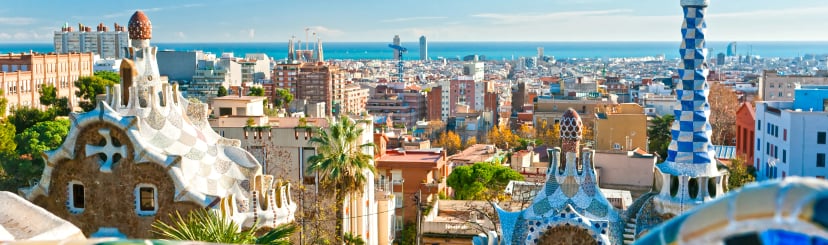
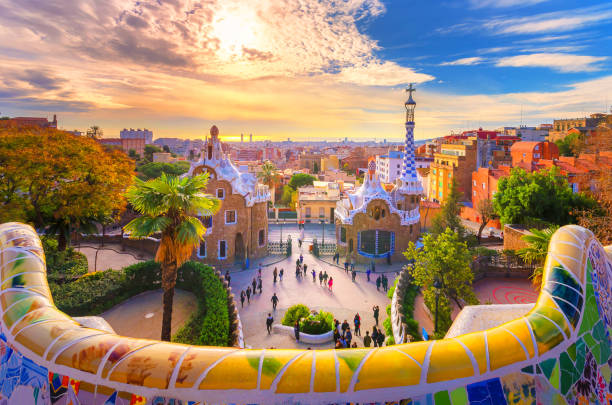
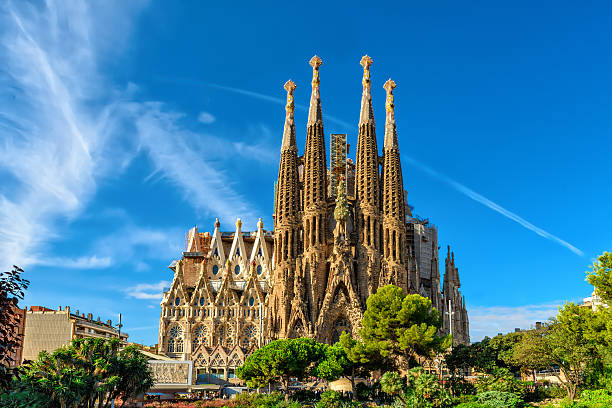
The central Gaudí distinction in shoulder season is Sagrada Família interior depth versus Park Güell exposure. Those are not two equal items on a checklist. Sagrada Família is a place where guided time can deepen the experience even when the city outside is busy, because the emotional work happens through scale, structure, light, symbolism and the way the interior changes as the eye adjusts. Park Güell, by contrast, is a brilliant outdoor site that asks the body to deal with slopes, sun, wind, timed entry pressure and the open-air rhythm above Gràcia.
For a private stay, that difference should control the morning. Sagrada Família usually deserves the cleaner mental window, especially for first-time visitors. The guide can slow the pace before the façades become visual noise, connect Nativity and Passion details without turning the visit into a lecture, and keep the interior from being reduced to a photo stop. Travelers who want the deeper Gaudí route can align this with a Complete Gaudí private tour, but the point is not to collect every Gaudí address. The point is to choose the moment when attention is highest.
Park Güell belongs when exposure will not dominate the memory. Shoulder season helps because the site can feel less punishing than a hard summer afternoon, but it does not remove the hill logic. A family with younger children, an older parent who dislikes uneven paths, or a couple planning a refined dinner that evening should be careful about placing Park Güell after too much old-town walking. The body remembers the sequence more than the itinerary title does.
Use official ticket pages for narrow operational details rather than relying on inherited assumptions. Confirm Sagrada Família entry options through Sagrada Família official tickets (https://sagradafamilia.org/en/tickets-individuals), and check Park Güell official tickets (https://parkguell.barcelona/en/buy-tickets) when a timed Park Güell visit is essential to the route. The editorial judgment remains separate from the ticket check: the interior-first Gaudí day is stronger because it protects attention, not because any ticket page says so.
A smart shoulder-season Gaudí day can include Passeig de Gràcia, but it should not become a door-to-door Modernisme crawl unless that is the explicit goal. Casa Batlló, Casa Milà and the Eixample façades are tempting because they sit on an elegant avenue, yet the traveler consequence of overloading them is real: by the time the route reaches old-town lanes or Montjuïc light, the day can feel architecturally rich but emotionally flat. A private guide can make the avenue work as connective interpretation instead of another long stop.
The popular mistake is to treat Park Güell as the proof that the Gaudí day was complete. It may be the right choice, but it is not always the best second move. Some travelers get more from pairing Sagrada Família with Eixample façades and a quieter Modernisme thread than from adding another timed, exposed site. That is especially true for travelers who dislike hills, travelers with photography fatigue, and families whose attention is better spent on one masterpiece than three partial encounters.
Why an Eixample base changes the day more than a prettier old-town lobby
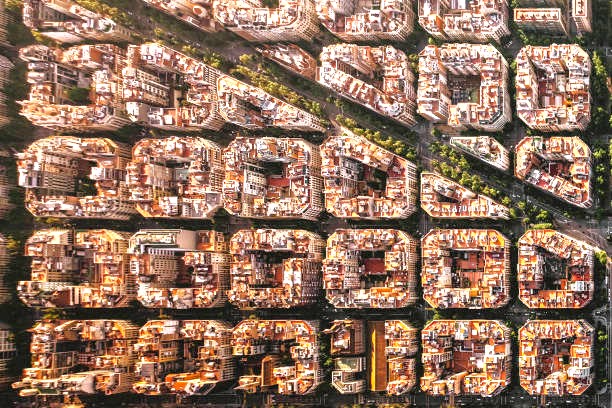
An Eixample hotel base often produces the smoothest shoulder-season routing because it sits between Gaudí depth, shopping streets, dinner returns and outward transfers. This is not a claim that Eixample has the most charm. It is a claim that the grid changes how the day behaves. When a private route needs Sagrada Família, Passeig de Gràcia, a controlled old-town walk and a possible Montjuïc finish, the hotel’s relationship to the grid matters more than a romantic description of the neighborhood.
The old center is wonderful when the plan is built around wandering. It is less forgiving when the day needs punctual starts, timed entries and a return that leaves everyone fresh enough for dinner. Gothic Quarter streets can make a chauffeured pickup feel less luxurious than expected because the vehicle may not meet the traveler exactly where the hotel door suggests. El Born can be excellent for evening energy, but morning extraction toward Sagrada Família or a coast departure can create small time leaks. Barceloneta gives sea proximity, yet it can pull the stay toward beach logic before the city has been properly read.
Eixample is especially useful in shoulder season because the day may move between indoor and outdoor moods. A morning near Sagrada Família, a mid-route pause along Passeig de Gràcia or Rambla de Catalunya, and a later move toward Plaça d’Espanya, Miramar or the Montjuïc side all feel more coherent from the grid than from a deep old-town base. This is where where to stay in Barcelona becomes a routing decision rather than a style question.
Consider the difference between beginning near Diagonal or Passeig de Gràcia and beginning deep near Plaça Sant Jaume. The first can move toward Sagrada Família with a straightforward city rhythm and later fold back into Eixample or Montjuïc. The second may be charming, but it often asks the group to leave the prettiest part of the hotel setting before the tour’s logic begins. For travelers who value calm starts, that departure ritual is not a detail.
There is also a quiet mood consequence. A Barcelona day that begins with a clean hotel meet, moves through architecture without repeated backtracking, and returns to a calm base before dinner feels shorter than it is. A day that begins with a corner pickup, adds a rushed site transfer, climbs outdoors, then tries to recover at the beach can feel longer than the map suggests. The difference is not luxury language; it is how many times the traveler has to reassemble themselves during the day.
Montjuïc belongs when light and legs still cooperate
Montjuïc is best used as a late-day change of scale, not as a filler stop between Gaudí and dinner. The hill gives Barcelona a different register: port, gardens, museums, stadium edges, city views and the sensation of leaving the Eixample grid without leaving the city. In shoulder season, that shift can be beautiful because the light has more texture and the body is not necessarily fighting summer exposure. But Montjuïc still needs respect. It is a hill, not a scenic button.
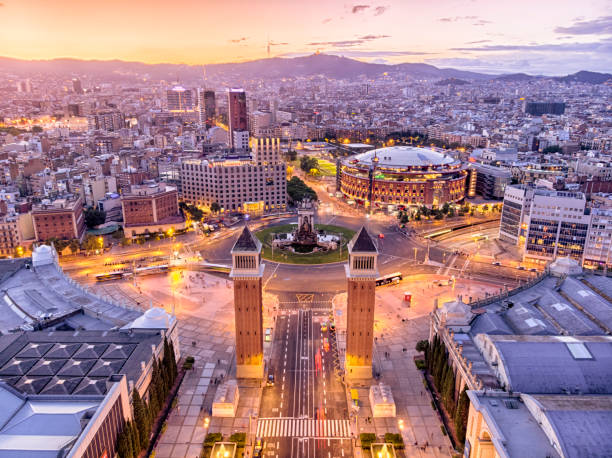
The Eixample-to-Montjuïc light reset works when the earlier part of the day has been controlled. After Sagrada Família and a measured Eixample passage, Montjuïc can give the traveler a sense of release: the city opens, the port appears, and the day stops feeling like a sequence of interiors and façades. A private route might use Plaça d’Espanya as the gateway, the MNAC side for scale, the Miramar area for sea-facing perspective, or the Fundació Joan Miró area when the art context belongs. The exact route depends on energy, but the principle is constant: reach Montjuïc before the group is too tired to notice why it matters.
Montjuïc is also where private guide pacing can beat more vehicle time. A chauffeur can solve the climb, help with a clean drop-off and spare the group an unnecessary uphill push. But the guide decides whether the hill becomes a shapeless viewpoint run or a coherent late-day passage. Without that judgment, travelers may spend money on movement while missing the reason the hill belonged in the plan.
Barcelona does something specific to the body over a long private day. The city’s elegant blocks invite more walking than visitors expect, old-town lanes slow the stride, Park Güell and Montjuïc add gradients, and repeated transfers create attention fatigue even when everyone is seated. Shoulder season reduces some outdoor strain, but it does not remove the cumulative effect. The plan should not ask travelers to be equally alert inside Sagrada Família, on a Park Güell path, in the Gothic Quarter, on Montjuïc and at a late dinner.
The hill also changes the evening plan. A Montjuïc finish can send travelers back toward Eixample or a dinner neighborhood with a sense of spaciousness; a badly timed Montjuïc stop can leave everyone returning late, hungry and less interested in the restaurant they carefully reserved. The difference is not only how far the vehicle drives. It is whether the day’s last visual memory feels expansive or like one more obligation.
For travelers focused on art, gardens or hilltop perspective, a dedicated Montjuïc private tour can make more sense than a compressed add-on. For first-timers, the hill should usually follow the core Gaudí-and-city logic rather than compete with it. The best use of Montjuïc is not maximum coverage; it is the moment when the city suddenly feels larger and calmer.
When the coast day earns its place, and when it steals from Barcelona
A coast day belongs in a shoulder-season Barcelona stay only after one complete Gaudí-and-old-town day has already happened. That is the clean threshold. Before that point, the sea usually steals from Barcelona. After that point, it can improve the stay by changing the air, the pace and the emotional texture without leaving the traveler with a sense that the city was skimmed.
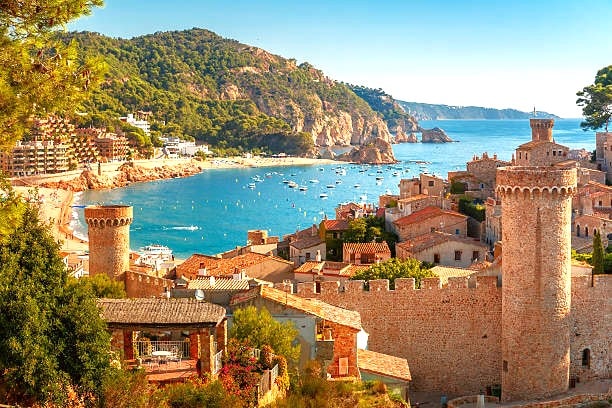
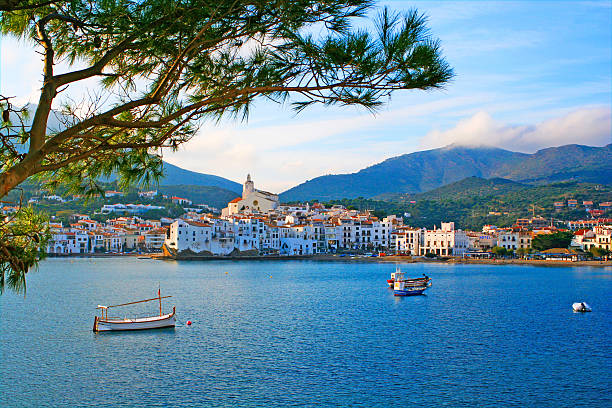
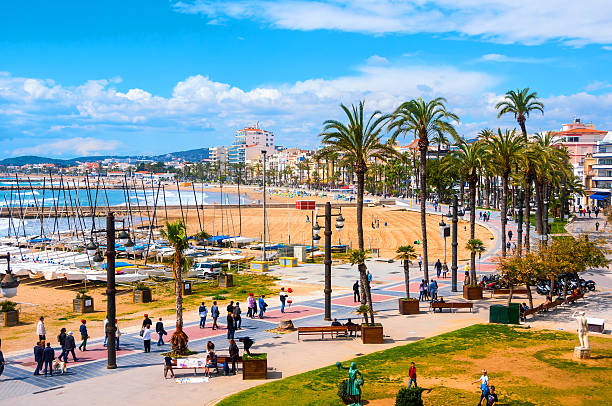
Costa Brava is the coast choice when the traveler wants a true day away rather than a beach-adjacent pause. The reward is not just water; it is the feeling of a different Catalan rhythm, with smaller coastal settlements, cliff edges, coves and a lunch pace that does not belong inside the Eixample grid. But that reward costs time and attention. A private Costa Brava private tour should be placed when the stay can absorb a full outward day and a later return without weakening the next morning.
The shoulder-season advantage for the coast is subtle. The day may feel less like a beach escape and more like a sea-air reset after dense cultural routing. That is excellent for couples after a Gaudí-and-old-town day, families who need an open-air change after interiors, and celebration travelers who want the stay to breathe before a special dinner. It is less successful for travelers with only two nights, a late arrival, an early departure or a fixed dining plan that makes the return feel tense.
Do not treat Costa Brava as a weather hedge. In shoulder season the coast can be atmospheric without being beach-perfect, and that is part of its value for the right traveler. But if the group’s dream is swimming, sunbathing and guaranteed heat, the season may disappoint. If the dream is open air after architectural density, sea-facing lunch, coastal walking in measured doses and a clean break from city tempo, the shoulder-season coast day can be excellent.
The cut-first rule is firm: if the Barcelona stay has only one full day, cut the coast before cutting Sagrada Família, Eixample context or a controlled old-town passage. If the stay has two full days, the coast is still not automatic; it must compete with Montjuïc, a deeper Gaudí day, a food-and-wine day or simply a less compressed city rhythm. If the stay has three or more full days, the coast becomes much easier to justify, especially after the first day has made Barcelona feel complete.
The mood consequence is as important as the logistics. A well-placed coast day can make the trip feel generous because the traveler leaves the city after understanding it. A poorly placed coast day can make the city feel like a layover before the scenic part. That is the wrong hierarchy for a Barcelona stay. The sea should widen the trip, not rescue an itinerary that rushed its main city.
Private pacing versus chauffeur support: what actually improves the stay
In shoulder season, private guide pacing often matters more than chauffeur support because the decisive moments are not all solved by a vehicle. A chauffeur is valuable for hills, luggage, cruise arrivals, older travelers, families with low tolerance for transfer friction, and coast or Montjuïc routing. But a chauffeur cannot make Sagrada Família land emotionally, cannot decide when Park Güell exposure will exhaust the group, and cannot turn a dense Eixample walk into a coherent story.
Premium spend does not make a rushed Gaudí, Montjuïc and coast day feel calm if the traveler only has one full day in Barcelona. That sentence matters because affluent travelers are often offered more service when what they actually need is a harder edit. The right private plan spends on interpretation, timed flow, route restraint and the selective use of a vehicle where the city’s terrain or distance justifies it. It does not spend its way out of a bad sequence.
A chauffeured day can be excellent when the route includes Sagrada Família, Park Güell and Montjuïc, or when a traveler needs to avoid hill fatigue. It can also be excellent for a Costa Brava day, where the point is not only comfort but control over stops, return rhythm and the ability to avoid turning the day into public-transport logistics. Travelers comparing vehicle support can use a luxury chauffeured Barcelona private tour as a service frame, but the itinerary still needs editorial discipline.
Where the private guide earns more than the vehicle is in the transitions. Leaving Sagrada Família too quickly can make the visit feel spectacular but thin. Staying too long at Park Güell can drain the old-town portion. Treating Montjuïc as a viewpoint checklist can flatten its late-day value. Adding the coast too early can make Barcelona feel unfinished. These are not transport problems. They are sequencing problems.
For families, the guide’s pacing also protects attention. A child may tolerate Sagrada Família when the story is visual, concise and broken into moments; the same child may unravel if the day then climbs, queues, transfers and stands again. For couples, the pacing protects the evening. For older parents, it protects dignity by reducing unnecessary standing, uneven surfaces and repeated explanations in noisy places. For food-and-wine travelers, it protects appetite and timing so the day does not arrive at dinner already spent.
A shoulder-season sequence that keeps Barcelona from feeling overpacked
The cleanest private sequence is city first, hill or deeper neighborhood second, coast only when the stay has enough room. This is the opposite of the traveler instinct to grab every famous name while the weather feels manageable. Shoulder season should make the route more selective, not more crowded with ambition.
For two nights with one full day, build around Sagrada Família, Eixample and one controlled old-town or Montjuïc layer. Do not add Costa Brava. Do not make Park Güell mandatory unless it is central to the traveler’s Gaudí priorities and the group can handle the exposure. This stay should feel complete inside the city, not apologetic about what was missed. For travelers still deciding whether the trip has enough room, how many days in Barcelona is the better planning question before any coast day is added.
For three nights with two full days, give the first day to Gaudí depth and old-town context, then use the second day for Montjuïc, a food-and-wine route, design-and-shopping, or the coast depending on the traveler’s priorities. A Costa Brava day can work, but it should not be the default simply because the season is comfortable. If the first day has been too light on Barcelona, keep the second day in the city. If the first day has already given the group a satisfying city arc, the coast can feel like an earned expansion.
For four nights or more, the shoulder-season route has room to breathe. One day can hold Sagrada Família, Eixample and old-town context. Another can use Montjuïc or a deeper neighborhood route. A coast day can then sit in the itinerary without forcing a late return before the only major city day. This is the version that often feels most tailor-made: not because it is longer, but because every outdoor and indoor block has a reason to be where it is.
For arrival-day planning, be conservative. A cruise arrival or overnight flight should not be treated as a normal sightseeing day just because the temperature is kind. Barcelona rewards alertness, and Gaudí interiors are too valuable to spend when the traveler is half-present. Use arrival day for a soft Eixample, old-town or waterfront orientation; save Sagrada Família depth for a clearer mind. That one decision can change the entire stay.
For food-and-wine travelers, the same principle applies. A tasting-menu evening should not follow the most mobile version of the day. Keep the morning interpretive, the afternoon open or scenic, and the transfer back to the hotel uncomplicated. The private route then supports the meal rather than arriving with the group already negotiated through too many sites.
Orange Donut Tours can shape this as a private Barcelona stay that uses shoulder season for depth, light and coast timing without forcing every wish into one hot-weather route. Inquire now.
FAQ
What is the best shoulder-season Barcelona itinerary for a private stay?
The best shoulder-season Barcelona itinerary usually starts with Sagrada Família and Eixample depth, adds a controlled old-town walk or Montjuïc light passage, and saves the coast for after one complete city day. The right plan depends less on the month than on how much exposure, hill walking and transfer time the group can absorb.
Should I visit Sagrada Família or Park Güell first in shoulder season?
Sagrada Família should usually come first for a first-time private stay because it rewards focused interior attention. Park Güell is more exposed and hill-dependent, so it is better placed when the group has enough energy and the day does not still need a heavy old-town or Montjuïc block.
Is Montjuïc worth adding to a shoulder-season Barcelona trip?
Montjuïc is worth adding when it becomes a late-day shift in scale rather than a rushed extra stop. It works best after a controlled Gaudí or Eixample route, when the light, port views and hilltop perspective make the city feel larger without requiring a full day outside Barcelona.
When should a Costa Brava day be added to a Barcelona stay?
A Costa Brava day should be added after at least one complete Barcelona day with Gaudí and old-town context. It improves the stay when it feels like a sea-air expansion, but it steals from the city when it is placed before Barcelona has had enough time to feel complete.
Is Eixample a better hotel base than the Gothic Quarter for shoulder season?
Eixample is often the better operational base for shoulder-season private touring because it connects more cleanly to Sagrada Família, Passeig de Gràcia, Montjuïc transfers and outward day trips. The Gothic Quarter can be more atmospheric in the evening, but it may add friction to timed starts and vehicle pickups.
Do I need a chauffeur for Barcelona in shoulder season?
A chauffeur helps when the route includes hills, Park Güell, Montjuïc, older travelers, family fatigue or a coast day. It is less important for every Eixample or old-town movement. In many shoulder-season plans, guide pacing matters more because the biggest risk is not distance alone but a rushed sequence.
Is shoulder season automatically better than summer for Barcelona?
No. Shoulder season is better for many private cultural stays, especially those built around Gaudí interiors, walking comfort and careful outdoor timing. Summer may still suit travelers who mainly want beach time, late-night atmosphere and a simpler sea-facing rhythm.
Can one full day include Gaudí, Montjuïc and the coast?
One full day can technically touch Gaudí, Montjuïc and the coast, but it will not feel calm or well judged. For a one-day Barcelona stay, cut the coast first and let the city day feel complete.
If you’re interested in any private tours of Barcelona, please reach out to us.








 So if you are looking for the absolute best in Barcelona & surroundings with authentic local fully-licensed native guides whose English you can actually understand and with an exclusive and amazingly fun itinerary













