Planning a Bespoke Barcelona Day for Executive Private Groups: Gaudí, the Gothic Quarter and Montjuïc Without Agenda Drift

Updated
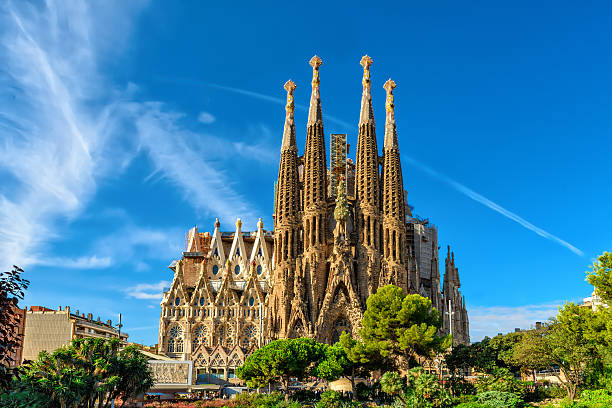
The best executive-group Barcelona day is usually one Gaudí anchor, one contextual neighborhood walk, and Montjuïc only if it plays a clear final role. That works because Barcelona’s premium-looking routes can lose coherence at the Sagrada Família-to-Gothic Quarter reset before Montjuïc: a timed basilica entry, a speech that runs long, and a transfer toward the old city can turn a polished plan into a sequence of recoveries. The clearest exception is a group with a full day, controlled pickups, no formal lunch speech, and enough appetite for movement; that group can carry three zones if each zone has a job. The thesis is simple: in Barcelona, an executive agenda feels bespoke when the day is edited around entry windows, district edges, and group stamina rather than built around every famous name.
This is not a general Barcelona itinerary and it is not a pitch to see less for its own sake. It is a planning guide for executive assistants, incentive planners, private group leads, and senior hosts deciding how to combine Sagrada Família, the Gothic Quarter, and Montjuïc without letting the agenda drift. Orange Donut Tours’ corporate group private tour planning is most valuable when the brief includes moving parts: hotel pickups in Eixample or Passeig de Gràcia, timed Gaudí entry, small speeches, different walking speeds, and an evening commitment that should not be flattened by a day that tried to prove too much.
The executive verdict: one anchor beats three headline zones unless the day has a protected rhythm
For most executive private groups, the winning structure is one anchor plus one neighborhood, with Montjuïc as an optional decompression finish. The anchor is usually Sagrada Família, because it gives the day a legitimate cultural center and a timed appointment that disciplines the morning. The neighborhood is usually the Gothic Quarter, but only as a context walk, not as a full old-town dive. Montjuïc then works when it offers air, views, and a calmer close after the density of Gaudí stonework and medieval streets.
The mistake is assuming that a larger budget makes Sagrada Família, Park Güell, the Gothic Quarter, and Montjuïc fit elegantly into a compressed half-day. It does not. A larger budget does not solve agenda drift if timed Gaudí entry windows, speeches and transfers are all packed into the same half-day. It can improve vehicle comfort, guide continuity, pickup control, and the quality of route decisions, but it cannot make a late-running group arrive at a timed monument with the emotional pace of an unhurried private day.
The counterintuitive correction is that Passeig de Gràcia can be a brilliant base and still a distracting first stop for an executive group. Its avenue scale, Casa Batlló and La Pedrera facades, and hotel convenience make it tempting to “just add ten minutes” before Sagrada Família. For a leisure couple, that may be harmless. For a group with badges, greetings, lift delays, and one principal who joins at the last minute, it can consume the exact buffer needed for the basilica entry. In this article’s planning problem, the glamorous extra is often the first thing to cut.
Use the three-zone plan only when all three conditions are true:
- The Gaudí entry is fixed early enough that late arrivals do not compress the rest of the day.
- The Gothic Quarter is framed as a curated context walk, not a maximal old-town survey.
- Montjuïc is used as a viewpoint or breathing-space close, not as another dense content zone.
Use the one-anchor plan when the group has a formal lunch, a welcome speech, a tight return for meetings, uneven stamina, or principals arriving from different hotels. This is the moment to choose Sagrada Família plus the Gothic Quarter, or Sagrada Família plus Montjuïc, rather than sampling three headline zones shallowly. A private guide can still make the day feel complete, but completeness comes from sequence and interpretation, not from adding every district on the map.
Why executive Barcelona days drift after the first timed entry
Executive Barcelona days drift because the first timed entry creates a false sense of control. Sagrada Família appears to solve the morning: a fixed entry, an obvious cultural centerpiece, and a guide with a clear opening narrative. Yet the moment after that visit is the dangerous hinge. The group has already absorbed a major site, the host may want a short address, someone may need a comfort stop, and the vehicle transfer toward the Gothic Quarter or Montjuïc begins to feel like open time. It is not open time; it is the first place the day can lose its shape.
Official ticketing for Sagrada Família makes the planning point visible: this is not an attraction to treat casually in a group plan, and entry should be checked directly through the Sagrada Família official tickets (https://sagradafamilia.org/en/tickets-individuals) page or coordinated through the tour plan. The operational consequence is not merely “buy tickets.” It is that the group’s first hour needs backward planning from the entry window: pickup timing, guide introduction, late-arrival policy, security pacing, and the post-visit regroup point.
The cleanest executive sequence is rarely “see the basilica, then decide.” It is “finish the basilica with the next reset already designed.” If the next zone is the Gothic Quarter, the transfer should be purposeful: from the monumental, light-filled geometry of Eixample into the tighter stone fabric near the Cathedral of Barcelona, Plaça del Rei, and the old Roman grid. If the next zone is Montjuïc, the transfer should change the group’s physical tempo: away from interior concentration and toward viewpoint, air, and a less text-heavy close. The guide’s role is to make that shift feel intentional rather than like a commute.
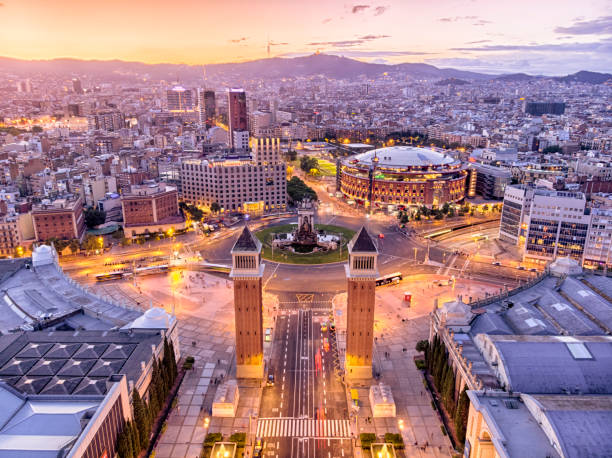
For groups beginning in Eixample or around Passeig de Gràcia, convenience can either help or hurt. A pickup from an Eixample hotel before the first Gaudí stop reduces early friction because the group is already near the city’s Modernisme spine. A pickup from Passeig de Gràcia can add a brief visual frame if the guide uses the avenue as context from the vehicle or a short curbside orientation. It becomes a problem when the planner treats the area as a bonus walking stop before the timed entry. The first part of the day should preserve punctuality, not collect previews.
The city also works on the body in ways that matter more for executive groups than for private families. Barcelona’s central zones can feel deceptively compact, but a day moving from Sagrada Família to the Gothic Quarter and then to Montjuïc asks the body to switch surfaces, light, noise, and incline. Eixample’s long blocks and broad crossings are easy to read but not always quick in a group. The Gothic Quarter compresses movement into narrow lanes, stopping points, and slower regrouping. Montjuïc adds slopes, terraces, and vehicle-dependent repositioning. The issue is not whether guests are fit; it is whether the day keeps asking them to reassemble momentum.
Scenario planning: how to choose the right Barcelona day shape for an executive group
The fastest way to prevent drift is to choose the day shape before choosing every stop. For executive groups, the decision is not “Gaudí, Gothic Quarter, or Montjuïc?” It is which of those three should carry the day’s meaning, which should provide context, and which should offer release. The same three names can produce a polished day or a fragmented one depending on the hierarchy.
Scenario 1: Sagrada Família plus a Gothic Quarter context walk
This is the strongest executive plan when the group needs a culturally specific day that still returns people with enough energy for dinner, meetings, or evening hosting. Sagrada Família provides the set-piece; the Gothic Quarter explains Barcelona’s older civic and religious layers without forcing a deep old-town crawl. The walk should be edited around a few high-value anchors rather than every lane: the Cathedral area, Plaça del Rei, a Roman-wall cue where it helps the story, and a controlled passage away from the busiest La Rambla edges.
Scenario 2: Sagrada Família plus Montjuïc
This suits groups that need visual payoff with less old-town congestion. It also works when the host wants a calmer finish, a viewpoint, or a place where guests can absorb Barcelona’s shape after the intensity of Gaudí. The tradeoff is that the city’s medieval context becomes lighter. That is acceptable for incentive groups whose brief is “memorable and smooth,” less ideal for a board-level group expecting a layered historical conversation.
Scenario 3: Sagrada Família, Gothic Quarter, and Montjuïc in one full day
This is possible when the day is genuinely a full day and when lunch is treated as part of the rhythm, not a floating interruption. The group needs a disciplined morning, a controlled old-town walk, and Montjuïc positioned as the final viewpoint reset rather than a late content dump. This is where tailor-made Barcelona private tour design matters most: the itinerary is not built by adding attractions, but by assigning each district a specific job.
Scenario 4: Gothic Quarter plus Montjuïc, with Gaudí only as exterior context
This is the right exception when timed Gaudí tickets are impractical, the group has already visited the basilica, or the day needs more flexibility because of arrivals, speeches, or a late morning start. You lose the interior drama of Sagrada Família, but you gain a more fluid day. In an executive context, flexibility may be more valuable than the famous appointment if the group’s schedule is already fragile.
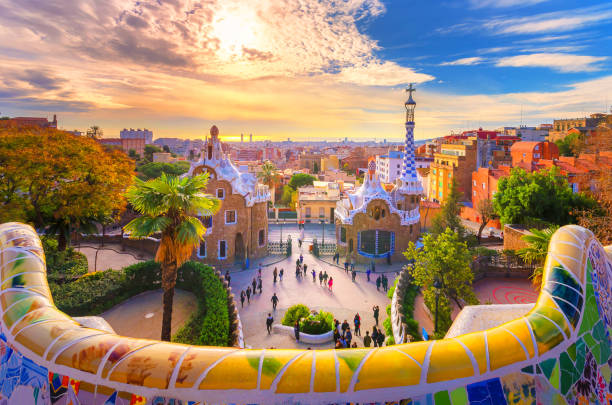
The firm editorial call: do not build a shallow half-day around Sagrada Família, Park Güell, the Gothic Quarter, and Montjuïc. If Park Güell belongs in the brief, treat it as another timed, movement-heavy Gaudí commitment and verify its entry planning through the official Park Güell tickets (https://parkguell.barcelona/en/buy-tickets) page or the tour plan. For this specific executive day, Park Güell is usually the add-on to stop forcing first. It is rewarding in the right Gaudí-focused itinerary, but it adds hill logistics and another separated zone; it rarely improves a corporate day already trying to hold Sagrada Família, the Gothic Quarter, and Montjuïc together.
How timed Gaudí entries affect speeches, transfers and late arrivals
A timed Gaudí entry should control the first half of the day, not merely sit inside it. The planner’s job is to decide what happens before, during, and after the entry if someone is late, a welcome remark expands, or a vehicle loop takes longer than expected. The group should never discover the day’s contingency plan while standing outside the basilica.
For executive groups, the pressure points are predictable. Guests gather slowly at hotel level, especially in larger properties where lifts, badges, and security greetings add minutes. Hosts often want a short opening comment, and “short” can become fifteen minutes once a senior principal begins acknowledging clients or teams. Photos happen because the exterior of Sagrada Família invites them. A comfort stop becomes a regrouping exercise. None of these is a failure; they are normal group behavior. The failure is pretending they will not happen.
The best solution is to avoid speeches immediately before a fixed entry. Give the guide a brief welcome moment at pickup or after the first site, and keep formal remarks away from the narrow window that leads into the monument. If the host needs a speaking moment, place it after the Gaudí visit in a controlled pause, or at lunch, or at Montjuïc when the day can absorb it. The content of the speech may be important, but its placement decides whether the cultural program breathes.
Late arrivals need a rule before the day begins. In a family itinerary, the guide can often soften the rhythm around one missing person. In an executive group, waiting for one principal can punish everyone else and compromise the timed entry. A better plan is to define a cutoff: the main group moves, the late arrival joins at the next clear point, and the guide or assistant knows exactly where that point is. This is not harsh; it is respectful of the group’s collective time.
Transfers also need an assigned purpose. A vehicle from Sagrada Família to the Gothic Quarter is not just a convenience; it is a decompression interval and a narrative bridge from Gaudí’s Eixample to the older city. A vehicle from the Gothic Quarter to Montjuïc is not just transport; it is the difference between ending the day in compressed lanes or giving the group a last view over the port, the city grid, and the hill. When the transfer is treated as dead time, the agenda feels longer. When it is interpreted lightly and timed realistically, the day feels shorter and more coherent.
For groups that want a deeper Gaudí emphasis, compare this executive framework with a private Gaudí day without queue burnout. The difference matters: a Gaudí-first leisure or cultural day can justify multiple Gaudí locations. An executive group day usually needs Gaudí to anchor the day, not dominate every transfer.
The Gothic Quarter is stronger as context than as a full old-town dive
The Gothic Quarter earns its place when it clarifies Barcelona’s older layers without swallowing the afternoon. For executive groups, it is usually better as a context walk than a complete old-town exploration. The group does not need every alley, every legend, or every adjacent district; it needs a controlled passage that explains why Barcelona is not only Gaudí and why the modern city sits on older civic, Roman, religious, and mercantile structures.
The practical reason is movement. The Gothic Quarter does not behave like Eixample. Its lanes narrow, sound intensifies, sightlines shorten, and groups stretch unevenly as people pause for photos, windows, and crossings. A guide can manage this, but the planner should not ask the district to carry too much. A thirty-person executive group does not experience Carrer del Bisbe, Plaça Sant Jaume, or the Cathedral area the same way two guests do. Every stop needs enough space to gather, enough clarity to hear, and enough reason to justify the pause.
The content reason is attention. After Sagrada Família, the group has already taken in a major interpretive load. The Gothic Quarter should therefore answer one question: what did Barcelona look and feel like before the Eixample expanded the city and Gaudí became the shorthand? That can be done beautifully through selected anchors. It does not require an old-town marathon. A curated walk can move from the Cathedral precinct to Plaça del Rei, touch the Roman-wall logic where it sharpens the story, and avoid the impulse to fold in El Born, the waterfront, and every historic lane unless the day has been designed for that depth.
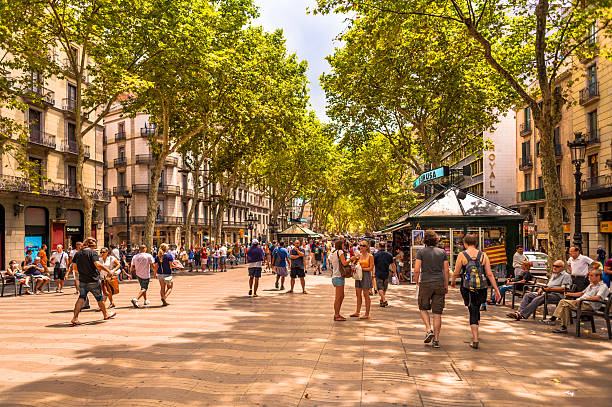
The wrong version of the Gothic Quarter is the “since we’re here” version. Since we’re here, add the market. Since we’re here, cross toward El Born. Since we’re here, pause for shopping. Since we’re here, loop by La Rambla. That language is how drift enters a premium day. In executive planning, proximity is not the same as fit. If a stop does not serve the group’s story, comfort, or timing, it may be close and still be wrong.
There is also a mood consequence. A Gothic Quarter walk that is edited feels like a reveal: the day moves from the architecture of one visionary to the civic texture of an older city. A Gothic Quarter walk that is overextended can make the day feel smaller, not richer, because guests spend too long in lanes where the group is strung out, voices fragment, and the host starts checking time. The right old-town segment leaves people curious; the wrong one leaves them eager for a chair.
Groups that want the old city to be the star should consider a dedicated Gothic-focused route instead of using it as a middle chapter. Orange Donut Tours’ Gothic Quarter and Old Town private tour can support that kind of depth. For the executive day described here, however, the Gothic Quarter usually performs best as the context layer between a Gaudí anchor and a Montjuïc close.
Why Montjuïc works as a final viewpoint reset, not another dense chapter
Montjuïc belongs in this plan when the group needs a change of altitude, air, and emotional tempo. It should not be treated as a late-day checklist of museums, Olympic sites, gardens, and castle views unless the entire day has been built around the hill. In the Sagrada Família-Gothic Quarter-Montjuïc sequence, Montjuïc’s best job is to let the group reassemble after the intensity of the city center.
The hill changes the day because Barcelona’s geography becomes legible there. After Eixample’s grid and the Gothic Quarter’s tight lanes, a viewpoint from Montjuïc can make the city feel coherent again: the port below, the central city stretching away, the coastline pulling the eye, and the hill itself creating a quieter edge to the day. For executive groups, that visual reset has value because it gives the host a graceful close. The final memory is not another narrow stop or a rushed transfer; it is a broader view of the city they have just moved through.
Montjuïc also solves a common problem after old-town concentration. By late afternoon, even experienced travelers can become quiet in the wrong way. They are not necessarily bored; they are processing, warm, and tired of regrouping. A viewpoint stop can change the group’s posture. People spread out slightly, conversation becomes easier, and the guide can reduce the density of commentary. This is not empty scenic filler. It is a deliberate shift in mood that keeps the day from ending in interpretive fatigue.
The mobility tradeoff is real. Montjuïc is a hill, not a flat add-on. The right plan uses vehicle positioning, selected viewpoints, and a realistic expectation of walking. The wrong plan treats Montjuïc as something to “walk through” after a full Gaudí and old-town sequence. For executive guests in business dress, formal shoes, or post-meeting schedules, that is where a premium plan can start to feel careless. A chauffeured element may earn its cost here because it changes arrival, slope exposure, and the energy required to finish well.
The cut-first rule is clear: if the day is running late after the Gothic Quarter, cut Montjuïc depth before cutting the coherence of the day. Keep one viewpoint or one short hill moment, not a sprawling late program. If timing has become tight enough that Montjuïc would be only a drive-by with a rushed photo, send the group back with a clean finish instead. A missed overextension is better than a completed agenda that feels flattened.
For groups making Montjuïc a meaningful part of the day, Orange Donut Tours’ Montjuïc private tour can give the hill its own shape. For this executive plan, though, Montjuïc is strongest when it closes the loop: Gaudí for focus, the Gothic Quarter for context, Montjuïc for release.
Hotel base and pickup logic: Eixample convenience beats old-town atmosphere for this brief
For executive groups, Eixample or Passeig de Gràcia is usually a stronger operating base than the Gothic Quarter. This is not because the old city lacks atmosphere; it is because the first hour of a group day rewards legibility, vehicle access, hotel coordination, and proximity to the Gaudí spine. The base changes whether the day starts with convenience, context, or spectacle.
An Eixample pickup before Sagrada Família keeps the morning disciplined. The guide can meet the group where the city’s modern expansion already supports the story, then move toward the basilica without asking guests to navigate old-town lanes at the start. If the hotel is near Passeig de Gràcia, the avenue can provide a light Modernisme frame without becoming a full stop. The group can understand the city’s late-nineteenth-century expansion, see why Gaudí belongs to a broader urban story, and still protect the timed entry.
A Gothic Quarter base can work for a leisure stay, especially for guests who value atmosphere and evening wandering. For an executive group day, it can complicate the morning. Vehicle access may be less straightforward, group assembly can be slower, and the old-town energy that feels charming at night can feel inefficient when the day starts with punctuality pressure. This is one of Barcelona’s understated planning truths: the most atmospheric base is not always the best executive operating base.
Beach-area bases create a different tradeoff. They can be excellent for incentive mood, sea air, and post-program leisure, but they are not automatically better for a Gaudí-Gothic-Montjuïc day. A beach or Barceloneta-adjacent start may add a transfer before the real cultural sequence begins, and that can matter if the group has a fixed Sagrada Família entry. The choice is not about which hotel area is more desirable; it is about what the first hour must accomplish.
For readers still deciding where the group or principals should stay, this guide to Eixample, the Gothic Quarter and Gràcia gives a broader stay-base comparison. In the narrower executive route discussed here, the planning bias is stronger: choose the base that protects the first timed anchor and simplifies group movement.
Where premium spend earns its place, and where it simply cannot fix the plan
Premium spend earns its place when it removes coordination drag, improves comfort between zones, and allows the guide to adapt without losing the day’s structure. It does not earn its cost when it is used to justify an overstuffed plan. The difference is important because executive groups often have the budget to add services, but budget alone does not create a better day.
A private guide earns value by controlling transitions. The best guide is not merely explaining Gaudí or the Gothic Quarter; they are reading the group’s pace, tightening or loosening commentary, choosing where to stop, and protecting the day from the “one more thing” impulse. In the Sagrada Família-to-Gothic Quarter reset before Montjuïc, the guide should know whether the group needs a direct transfer, a short interpretive bridge, a comfort pause, or a cut. That judgment is the difference between a bespoke day and an expensive itinerary.
A vehicle earns value when it changes the body load and the return quality. In Barcelona, a chauffeured component can matter between separated zones, especially when Montjuïc is included or when guests are in formal shoes after a meeting. It can reduce heat exposure, simplify regrouping, and keep the day from becoming a sequence of taxis or long walks. But it does not remove the need to edit. A vehicle can connect Sagrada Família, the Gothic Quarter, and Montjuïc; it cannot make a crowded old-town walk shorter once the group is already overextended.
Timed-entry coordination earns value when it is paired with realistic buffers. Paying for planning support, guide expertise, and ticket coordination can prevent the most common failures. Yet the group still needs a hard decision about what happens if the first speech runs long. Without that decision, even strong services become reactive. A premium day is not one with no constraints; it is one where the constraints are acknowledged before guests feel them.
The upgrade that is often overvalued is adding another famous stop because the group can afford it. Park Güell, another Gaudí interior, or a deeper Montjuïc program may be excellent in a different brief. In this brief, the first upgrade should be coherence: cleaner pickup, stronger guide continuity, smarter transfer timing, and a shorter list of stops. The first cut should be the stop that adds a separate zone without changing the day’s main story.
This is why a bespoke plan can be more commercially sensible than a maximal plan. The group lead is not buying another attraction; they are buying fewer awkward pauses, fewer time apologies, and a day that respects the host’s authority. When a short-stay executive group has hotel pickups, timed entries, speeches, and uneven stamina, Orange Donut Tours can design the route around the moments where drift usually begins. Inquire now
A practical sequencing model for Gaudí, the Gothic Quarter and Montjuïc
The most reliable sequencing model starts with the fixed cultural anchor, then moves to context, then ends with release. In plain terms: Sagrada Família first, Gothic Quarter second, Montjuïc last. This is not the only possible order, but it is the order that most often prevents executive agenda drift because it respects attention, mobility, and the city’s physical texture.
Morning: Sagrada Família as the anchor
Start with Sagrada Família when the group can arrive cleanly and the guide can set a precise interpretive frame. The basilica gives the day weight before business interruptions and fatigue accumulate. It also prevents a later-day problem: guests arriving at the city’s most demanding visual and interpretive site after old-town walking, lunch, and speeches. If the group is time-poor, put the most important timed experience before the day begins absorbing delays.
Do not overdecorate the morning. A brief Passeig de Gràcia orientation can be useful if it fits naturally from the hotel base, but it should not threaten the entry. Do not add Park Güell before Sagrada Família in this executive structure unless the entire day is redefined as a Gaudí day. The morning should establish control, not test it.
Midday: the Gothic Quarter as the context chapter
Use the Gothic Quarter to shift the city narrative from Modernisme to older Barcelona. The best version is selective: Cathedral precinct, Plaça del Rei, Roman-wall logic where appropriate, and a few carefully chosen streets that let the guide explain civic and medieval continuity. The old town does not need to become a scavenger hunt. It needs to give the group a second layer of Barcelona without making the day feel crowded.
Lunch or a speaking moment should be placed with care. If the speech matters, give it breathing room rather than wedging it between a walking segment and the next vehicle. If lunch is formal, keep the Gothic Quarter walk shorter. If lunch is lighter or more flexible, the walk can hold slightly more interpretation. The route should not pretend that lunch is neutral; for executive groups, lunch often changes the day more than another attraction does.
Afternoon: Montjuïc as the viewpoint finish
Use Montjuïc when the day needs to widen again. The hill can close the story by showing the group the city they have just crossed: the Eixample grid, the older center, the port edge, and the sea beyond. It should not become a second museum day or a rushed inventory of the hill’s institutions. A short, deliberate Montjuïc finish can feel more complete than a longer, unfocused one.
The final transfer matters because it affects how the group remembers the day. Ending from Montjuïc can return guests to the hotel with a sense of spaciousness. Ending from a congested old-town edge can make the day feel shorter in the wrong way, as if the city closed in rather than opened out. This is the mood consequence planners often underestimate: the last physical environment colors the perceived quality of the whole route.
What to cut first when the Barcelona agenda starts to swell
Cut the extra separated zone before cutting the main story. If the plan already includes Sagrada Família, the Gothic Quarter, and Montjuïc, the first thing to remove is usually Park Güell, a second Gaudí interior, a shopping detour, or an old-town extension into El Born. These may be excellent choices in another itinerary, but they compete with the specific goal of an executive day that feels culturally precise and operationally smooth.
Cut the pre-entry flourish if the Sagrada Família window is tight. The host may love the idea of a Passeig de Gràcia photo moment or a short exterior Gaudí comparison before the basilica. If the group has any risk of late assembly, that flourish should move to the guide’s commentary from the vehicle or disappear. A beautiful extra that causes a late entry is not an upgrade.
Cut the full Gothic Quarter dive when the group has a formal lunch speech. A formal meal with remarks changes the day’s tempo and reduces the attention available afterward. In that case, the old-town chapter should be shorter and sharper. A context walk can still be strong; a complete old-town exploration will likely feel too heavy between Gaudí and Montjuïc.
Cut Montjuïc depth if the group is physically fading. Keep a single viewpoint or remove the hill entirely. The hill should finish the day with air, not prove endurance. If guests are quiet because they are satisfied and reflective, Montjuïc can be ideal. If they are quiet because they are hot, hungry, or tired of regrouping, a long hill program will punish the route.
Cut any stop that requires the guide to say, “We’ll just be quick.” That phrase is a warning sign in group planning. Quick stops are rarely quick when there are principals, assistants, photos, comfort breaks, and vehicles to reposition. A strong executive itinerary includes fewer stops with better transitions. It does not rely on guests behaving like a two-person scouting trip.
How bespoke private planning prevents the quiet failures guests notice
Bespoke planning prevents the failures that rarely appear on a public itinerary but strongly affect the perceived quality of the day. Guests may not know why the plan works, but they feel it when pickup timing is calm, the guide does not overtalk after a major monument, the old town is edited, and the final viewpoint arrives before the group is depleted. They also feel it when the host never has to apologize for the schedule.
The quiet failures are often small. A group starts five minutes late, then loses ten more to greetings. A speech happens before a timed entry and expands. The transfer from Sagrada Família to the Gothic Quarter is treated as dead time, so guests mentally leave the tour and re-enter it with less focus. The old-town walk includes too many tight corners. Montjuïc is added because it looks elegant on paper, but it comes after the group has already run out of attention. None of these errors is dramatic alone. Together, they make a premium day feel generic.
A private plan can prevent this by deciding what each zone must do. Sagrada Família must anchor the day. The Gothic Quarter must provide context. Montjuïc must change the tempo. Eixample and Passeig de Gràcia must support the opening rather than compete with it. The guide must understand when to narrate, when to pause, and when to cut. The vehicle must serve the route rather than become an excuse to add more distance.
Orange Donut Tours’ broader private tours in Barcelona can be shaped around different guest types, but the executive version has a sharper standard. It must protect the host’s credibility as much as the guests’ comfort. A beautiful site list is not enough. The day needs to feel as if someone has already thought through what happens when the group behaves like a real group.
FAQ
Can an executive group see Sagrada Família, the Gothic Quarter and Montjuïc in one day?
Yes, but only if it is treated as a full, edited day with Sagrada Família as the timed anchor, the Gothic Quarter as a curated context walk, and Montjuïc as a viewpoint finish. It should not be compressed into a shallow half-day with extra stops.
Should Sagrada Família come first for a private executive group?
Usually yes. Putting Sagrada Família first protects the timed entry, gives the day a strong cultural anchor, and reduces the risk that speeches, lunch, or fatigue weaken the most important visit.
Is the Gothic Quarter worth including for corporate or incentive travelers?
Yes, when it is framed as context rather than a full old-town dive. A selective Gothic Quarter walk helps guests understand older Barcelona without overloading a day already anchored by Gaudí.
When should an executive group skip Montjuïc?
Skip Montjuïc when the day is already running late, the group has a tight evening return, or the hill would become a rushed photo stop. Montjuïc works best when it gives the day air and perspective, not when it adds pressure.
Is Park Güell a good addition to this executive Barcelona route?
Park Güell is better for a dedicated Gaudí day than for a tight executive route combining Sagrada Família, the Gothic Quarter and Montjuïc. It adds another separated zone and should be cut first when the schedule is fragile.
Where should an executive group be based for this route?
Eixample or Passeig de Gràcia is usually the most practical base because it supports smoother pickup before the first Gaudí stop. The Gothic Quarter can be atmospheric, but it may complicate vehicle access and group assembly.
Does a chauffeur solve the main Barcelona group-planning problem?
A chauffeur can improve transfers, comfort and Montjuïc access, but it does not solve an overstuffed itinerary. The main planning problem is agenda discipline: timed entries, speeches, walking load and the number of zones must still be edited.
What is the safest structure for a short executive Barcelona day?
The safest short structure is one anchor plus one neighborhood: Sagrada Família with a concise Gothic Quarter context walk, or Sagrada Família with a light Montjuïc finish. Trying to sample all three headline zones in a short window usually weakens the day.
If you’re interested in any private tours of Barcelona, please reach out to us.







 So if you are looking for the absolute best in Barcelona & surroundings with authentic local fully-licensed native guides whose English you can actually understand and with an exclusive and amazingly fun itinerary