If Wind Suspends Barcelona’s Towers and Cable Cars: A Ground-Level Architecture Plan That Still Works

Updated
The failure to plan for is not bad weather; it is a day with no second shape
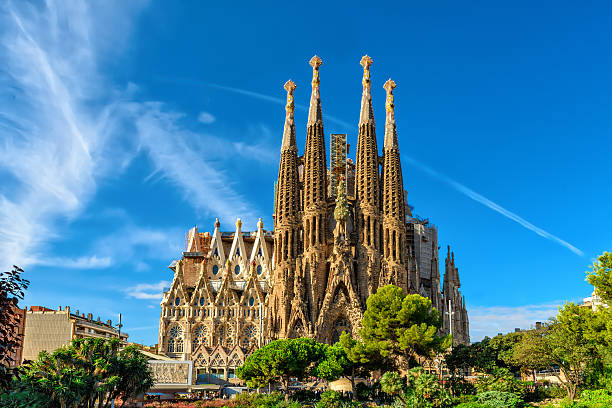
You arrive at Sagrada Família with a tower supplement attached to a fixed Temple entry. The nave remains open, but staff suspend the tower because conditions are adverse. Later, the Montjuïc cable car also stops operating. Two of the day’s most anticipated vertical experiences have disappeared, and neither decision can responsibly be reversed by pointing to a mild-looking street or a forecast icon. The common reaction is to improvise: add an unrelated interior, chase a panoramic viewpoint elsewhere, or cross the city in search of any attraction with availability. That salvages hours, but it usually abandons the reason an architecture-focused traveler chose the day in the first place.
A better plan treats the tower and cable car as removable viewing devices within one larger argument about Barcelona. The fixed core is the city’s architecture at three scales: structure inside a building, the organization of a civic complex, and the geometry of streets and topography. Sagrada Família supplies the first scale even without a tower. The Recinte Modernista de Sant Pau and the Eixample supply the second and third at or near ground level. Montjuïc remains an optional branch when its sites and access are operating safely; it is not the only place where the story can conclude.
This distinction matters most for time-constrained visitors who already have immovable Sagrada Família and Montjuïc commitments. Their problem is not finding “something indoors.” It is deciding what remains fixed, what can be exchanged, and what must be checked again before movement begins. An exposed component may close while the parent venue continues. A transport system may suspend while the district remains reachable by another method. Conversely, an official strong-wind alert may make a technically reachable park, garden, or high place a poor choice. Those are different operating states, and they require different responses.
The route below therefore has a vertical branch and a ground branch from the outset. When everything operates, the vertical elements add perspective. When one or both suspend, the ground branch expands and preserves the same architectural inquiry. The result is not a consolation itinerary. It is a day whose evidence changes without changing its subject.
What the official wind information can tell you—and what it cannot
The most important planning fact is also the least satisfying: the official operating pages cited here do not publish a numerical wind-speed cutoff that a traveler can use to predict whether Sagrada Família’s towers or the Montjuïc cable car will run. That absence is consequential. It means a general forecast, a hotel concierge’s impression, or even an official regional warning threshold cannot be converted into a venue-closure rule.
Sagrada Família’s official rules and conditions of sale state that tower access is selected as an addition during the purchase process. They also state that adverse weather can close the towers and that, in that case, the tower portion is refunded while the Temple portion is not. The practical reading is precise: the tower and the Temple are related parts of one booking, but they do not have identical operating exposure or refund consequences. A tower suspension should therefore trigger a change in interpretation and timing, not an assumption that the entire Sagrada Família visit has vanished.
Meteocat’s official dangerous-weather framework gives Barcelonès wind-warning thresholds based on maximum gusts: above 72 km/h for the lower threshold and above 108 km/h for the higher threshold. These figures describe regional warning conditions. They are not published closure thresholds for either attraction. A forecast below 72 km/h does not guarantee operation, and a forecast or warning at a stated level does not tell you the exact minute a venue will suspend, reopen, or restrict one component. Local exposure, operating protocols, observed gusts, and real-time decisions still matter.
Catalonia’s Civil Protection guidance adds a different layer. Its strong-wind safety advice recommends avoiding high and exposed places and avoiding parks, gardens, and wooded areas during strong wind; it also directs the public to consult forecasts and alert information before travel. This advice changes the fallback logic. If only a particular vertical system is suspended and no broader safety advice affects the area, a ground route may remain sensible. If official guidance warns against exposed hills or gardens, replacing a cable car with a long outdoor walk across Montjuïc is not a clever workaround. It repeats the exposure in a less controlled form.
The Montjuïc operator’s general conditions of service say that an incident or service suspension entitles the passenger to a refund of the fare or alternative transport to complete the journey. The page does not state a wind-speed cutoff. That tells you what remedy may follow a suspension, but not whether the cable car will be operating at a future hour. It also means that “the cable car is down” should not be paraphrased as “Montjuïc is closed.” The status of the transport link, the status of individual sites, road or public-transport access, and the wider weather advisory must be checked separately.
For planning purposes, treat four information streams as independent until official sources connect them: the Sagrada Família tower status, the Temple status, the Montjuïc cable-car status, and the current weather or Civil Protection context. Add a fifth stream for any timed venue you intend to use as a substitute. A resilient day is built not by guessing which system will fail, but by ensuring that no single system owns the day’s meaning.
Fix the architectural question before fixing the route
The day needs a question broad enough to survive a suspension and specific enough to prevent random substitutions. A useful one is: how does Barcelona make structure, circulation, light, and civic order legible at the scale of a building, a campus, a street block, and a hill?
Sagrada Família answers through columns, vaults, façades, thresholds, and the relationship between concentrated loads and an apparently branching interior. A tower adds proximity to high-level construction and a changed view of the city, but the nave remains the principal spatial argument. Sant Pau answers through an ensemble: individual pavilions, internal streets, gardens, and a coordinated civic setting rather than a single monumental room. The Eixample answers through repetition and variation—chamfered corners, street widths, continuous façades, entrances, shopfronts, and glimpses toward block interiors. Montjuïc answers through topography, terraces, institutions, and the deliberate staging of approach and view.
These are not interchangeable examples, but they belong to one sequence. The vertical attractions intensify the reading of height and urban position. They do not create the sequence from nothing. This is why a tower closure should not be “replaced” by another tower and a cable-car suspension should not automatically send you in search of another ride. The stronger substitute is evidence that completes the same question at a less exposed scale.
Travelers deciding in advance whether a tower is essential should read the separate tower-versus-nave analysis. For this wind-ready plan, the operating assumption is different: the Temple entry is the anchor, the tower is a conditional enhancement, and the rest of the day must be valuable under either outcome.
Build the day around one fixed anchor and two removable branches
Begin by classifying every commitment, because the route cannot be stabilized until its dependencies are visible.
- Fixed anchor: the Sagrada Família Temple entry, provided the Temple itself is operating. It has a specific admission time and retains substantial architectural value if the tower closes.
- Attached vertical branch: Sagrada Família tower access. It depends on weather and operating decisions, and its closure does not automatically cancel the Temple visit.
- Independent vertical branch: the Montjuïc cable car. It has its own operating status and remedy conditions. Its suspension does not by itself establish the status of every Montjuïc site.
- Ground-level thematic branch: Sant Pau plus a deliberate Eixample reading. This branch should be planned before the day, not invented after a closure. It is the main store of architectural depth.
- Conditional Montjuïc ground branch: selected architecture or urban-design sites reached without the cable car, but only when official conditions and local access make the hill appropriate.
- Sheltered central branch: a preselected interior or compact Eixample sequence for periods when strong-wind advice makes exposed hills, gardens, and long open-air transitions unsuitable.
The ordering depends on the Sagrada Família time. If the entry is in the morning, Sagrada and nearby Sant Pau naturally form the first half of the day, with the Eixample or Montjuïc chosen after the latest status check. If the Sagrada entry is late, use the ground branch first but keep enough margin that a slower visit, transport disruption, or security queue does not threaten the fixed admission. A late Sagrada Família entry reverses the order but not the logic: place flexible material before the fixed slot and avoid a distant commitment that cannot be abandoned cleanly.
Do not attach the day to two fragile reservations at opposite ends of the city without a release rule. A fixed Sagrada slot plus a nonrefundable, tightly timed Montjuïc interior can be workable in settled conditions, but it gives a same-day pivot very little room. The wind-ready version either keeps the second booking flexible, chooses an exterior-led Eixample segment, or secures coordination capable of checking status and changing the sequence before the group begins the cross-city movement.
If the Sagrada Família tower closes, deepen the Temple rather than rushing away
The loss of the tower may release part of the schedule, but not always as much as travelers imagine. The normal pace of the Temple, the exterior reading, and the transfer to the next district still shape the visit. The first operational mistake is to see the tower suspension notice and immediately compress the nave in order to “make up” the lost experience elsewhere.
Instead, reassign the tower’s interpretive purpose. The tower would have offered elevation, close contact with upper fabric, constrained circulation, and a view back to the city. At ground level, pursue the same concerns through different evidence.
Read verticality from below
Inside the nave, examine how vertical lines gather, divide, and redirect attention. The relevant question is not merely how high the space feels, but how the building makes support visible while dissolving the visual weight of support. Follow the transition from column to branching form, compare the density of structure near major crossings, and notice how changing light alters the apparent solidity of stone. These observations are not a substitute for being high in a tower; they are the building’s primary spatial language.
Use the exterior to recover distance and profile
A tower visit puts the traveler inside the high-level fabric. A ground circuit restores the opposite scale: the whole mass against surrounding streets. Read one façade closely, then step back far enough to understand how portals, sculptural fields, rising elements, construction zones, and adjacent urban blocks compete for attention. The point is not to circle every side mechanically. It is to compare near detail with long profile and to ask how an immense sacred project occupies an ordinary street grid.
Carry the structural question to Sant Pau
The Avinguda de Gaudí connection makes Sant Pau the most coherent expansion after Sagrada Família. The municipal Modernisme Route’s official Sant Pau entry describes an ensemble of pavilions, internal streets, and gardens and places it within Barcelona’s wider Modernisme itinerary. That is exactly why it works here. Sagrada concentrates a vast program into a singular basilica; Sant Pau distributes a civic program across a coordinated complex. One is read through vertical continuity and symbolic density, the other through spacing, repetition, routes, and relationships among buildings.
On an ordinary operational day, the gardens and open passages help reveal the campus plan. Under strong-wind advice, however, the grounds cannot be assumed to be the safest or most useful part of the visit. Check the site’s current status, follow staff directions, and privilege accessible interior material if outdoor areas are restricted. “Ground-level” means free of the failed tower or cable-car dependency; it does not mean immune to weather.
For travelers who want the structural thread to remain explicit across several Gaudí sites, the guide to Gaudí’s visible structural methods provides a deeper companion argument. In the present route, use that lens selectively: enough to connect what the nave demonstrates to what the city’s other buildings and urban spaces do differently, without turning a disruption day into an exhausting survey.
If the Montjuïc cable car suspends, first identify what has actually been lost
The cable car performs three functions at once: transport, aerial experience, and orientation. A suspension removes all three from the planned sequence, but it does not follow that each must be recreated. The operational question is whether Montjuïc remains a sensible district to visit; the editorial question is whether its architecture still adds something that the ground branch cannot.
Separate three cases.
The cable car is suspended, but broader conditions and sites permit a hill visit
In this state, reach only the Montjuïc commitment that materially advances the architecture narrative. Use an available ground transport option, confirm the destination’s opening status, and allow more transfer time than the cable-car plan required. Do not attempt to imitate the aerial route by chaining multiple overlooks. The lost panorama is acknowledged rather than reproduced.
A focused Montjuïc stop can still examine how architecture works with slope, terrace, axis, and institutional setting. The strongest choice depends on the day’s existing content. After Sagrada and Sant Pau, a concise modern or urban-design counterpoint may be more useful than another richly ornamented interior. the one-day architecture route linking Sant Pau, Mies, and Montjuïc explains how to prevent the hill from becoming a miscellaneous collection of landmarks.
The cable car is suspended and official advice discourages exposed high places, parks, or gardens
Drop the hill branch. Reaching Montjuïc by road does not neutralize the exposure after arrival, and replacing the cable car with an outdoor ascent conflicts with the purpose of a safety-led pivot. Keep the day in the Sagrada–Sant Pau–Eixample field, where transfers can be shorter and the architectural argument can move between interiors, sheltered thresholds, and compact street observations.
The cable car status is uncertain close to departure
Do not travel toward the system merely to discover whether it is running unless the surrounding Montjuïc program is worthwhile without it. Check the operator’s service information and the status of the intended site before leaving the current district. If confirmation remains unavailable, choose the ground branch and preserve the possibility of Montjuïc for another period. For a time-constrained traveler, uncertainty itself has a cost: it consumes the margin needed to honor the fixed Sagrada entry or a later commitment.
Barcelona travelers should also distinguish the aerial Telefèric de Montjuïc from other access systems serving the hill. The operator conditions cited here concern the cable car. Any funicular, replacement service, municipal bus, taxi, or road route has a separate live status and may solve a different part of the journey. Never treat the availability of one as proof that another is running, and never treat transport availability as proof that an exposed destination is advisable.
The distinction between a transport suspension and a district closure is especially important because Barcelona’s hill itineraries can become transfer-heavy. A private vehicle or taxi can solve the movement gap only when roads and the destination remain appropriate; it cannot make exposed spaces safe, reopen a venue, or guarantee that a delayed system will resume. Transport is therefore a conditional tool, not the fallback’s organizing idea.
The ground-level route: one narrative, not a pile of replacements
The most resilient full-day sequence is Sagrada Família, Sant Pau, a selected Eixample transect, and either a confirmed Montjuïc architectural stop or a sheltered central conclusion. It works because each segment answers a different part of the same question.
Segment one: Sagrada Família as concentrated structure
Keep the Temple entry at its booked time. If the tower operates, take it and preserve the later ground route in abbreviated form. If the tower closes, expand the nave and exterior reading rather than adding a new distant attraction. Before leaving, decide whether the day now needs more interior evidence, more urban scale, or a contrast in architectural period. That decision determines how much time Sant Pau and the Eixample receive.
What should remain constant is the interpretive core: structure is not an engineering footnote at Sagrada Família; it is part of the building’s visible and symbolic experience. The ground route succeeds when it carries that attention to other forms of organization rather than merely collecting famous façades.
Segment two: Sant Pau as distributed civic order
Move along the Sagrada–Sant Pau axis and let the approach do part of the work. The basilica gradually becomes a distant urban marker while Sant Pau’s frontage and complex take over the field of view. This is a useful shift from singular monument to ensemble.
At Sant Pau, compare the roles of repetition and difference. Pavilions belong to one campus, yet they are not anonymous copies. Circulation is not hidden inside one corridor system; it is expressed across the complex. Ornament, material, light, and landscape participate in a medical and civic program rather than in a basilica’s liturgical sequence. Even when only part of the outdoor setting is appropriate, the ensemble offers a strong conceptual answer to the loss of a tower: architectural meaning can be produced through relationships across a site, not only through height.
Check admission and any same-day restrictions directly before treating Sant Pau as guaranteed. Its value in the fallback should not tempt you to invent a new fixed dependency. A traveler who has not booked it can still read the urban relationship between the two complexes and continue into the Eixample, but interior access materially deepens the comparison.
Segment three: the Eixample as architecture between monuments
The Eixample is where the plan proves that the day was never dependent on rides. Choose a transect rather than wandering toward whichever façade appears next. One effective line moves from the Sagrada–Sant Pau area toward a central Eixample axis, using several ordinary blocks before one or two canonical Modernisme façades. The ordinary fabric matters: repeated balconies, entrance halls glimpsed from the street, chamfered corners, service access, trees, traffic, and retail adaptation show how architectural ideas are absorbed, compromised, and maintained across a living district.
Two versions are especially useful. An urban-form version uses Passeig de Sant Joan, Avinguda Diagonal, and ordinary connecting blocks to compare boulevard scale, chamfers, corner buildings, and the way a diagonal avenue cuts across the grid. An applied-arts version ends on Passeig de Gràcia, where Casa Amatller, Casa Batlló, and Casa Lleó Morera can be read as neighboring but competing statements rather than as three isolated photo stops. The first version is better when the day already contains abundant ornament; the second is better when the tower closure has removed close-range material detail from the plan.
Neither version requires a last-minute interior. Add Casa Batlló, Casa Milà, or another house only when entry is confirmed and its interior question is clear. Otherwise, the exterior comparison remains the flexible asset: it can contract around weather, traffic, fatigue, or the need to reach a later commitment without sacrificing the route’s argument.
At a chamfered intersection, stop long enough to read what the cut corners do to sightlines and crossing space. Along a continuous block, compare the public unity of the street wall with the individual claims made by doorways and façades. Where an entrance view is legitimately available, look for the transition from public pavement to semi-private vestibule and toward the interior of the block. This is the urban counterpart to Sagrada Família’s threshold sequence and Sant Pau’s internal streets.
The deeper history of the district’s plan, courtyards, and social ambitions is developed in the guide to Cerdà’s Barcelona in plan and street. For this operational day, the Eixample serves a narrower purpose: it is architecture available through sequence and observation, with fewer single points of failure than an elevated attraction. It also gives the planner control over duration. Two blocks can fill a short gap; a carefully chosen cross-district walk can carry an hour or more.
Wind still affects comfort and street safety. Avoid standing beneath visibly unstable objects, temporary structures, or tree canopies when official advice or local conditions make that unwise. The route should use broad urban observation, sheltered passages where appropriate, and short transfers rather than insisting on a continuous outdoor walk. The ground branch is flexible precisely because its pieces can be shortened or separated.
Segment four A: Montjuïc by ground access, when conditions permit
Choose this ending only after a fresh status check. The goal is not to recover the cable-car ride; it is to add topography and twentieth-century institutional planning to a day that has already covered sacred structure, a Modernisme campus, and the Eixample grid. Keep the stop compact. A single architectural focus, reached directly and left directly, is more coherent than an improvised sweep of viewpoints and gardens.
At the lower part of Montjuïc, a confirmed visit to the Barcelona Pavilion associated with Mies van der Rohe or to CaixaForum Barcelona in the former Casaramona complex can provide a ground-access architectural counterpoint without depending on the aerial cable car. They do not recreate the lost panorama. Their value is different: one sharpens the reading of modern space, surface, and proportion; the other can extend the Modernisme story into an industrial complex and adaptive cultural use. Current opening, admission, and weather-related access still require direct confirmation.
Travelers comparing art, views, and landscape on the hill can use the Montjuïc choice guide to identify which purpose deserves the remaining time. On a wind-affected day, however, the answer is constrained by operations and safety before preference. An art or architecture interior may remain viable when exposed gardens do not; an open viewpoint may be the first element to abandon even if it was originally the emotional highlight.
Segment four B: a sheltered central conclusion, when the hill is a poor choice
Keep the final segment within a compact part of the Eixample or move to one confirmed interior that contributes a genuine counterpoint. The best substitute is not automatically another Gaudí house. After the basilica and Sant Pau, a different period or spatial problem may produce more information: civic performance architecture, early modern domestic planning, or the transition from Modernisme to the cleaner institutional language that later appears around Montjuïc.
Use only a venue whose current admission can be confirmed without risking the fixed commitments that remain. Palau de la Música Catalana can be a coherent sheltered conclusion when an appropriate visit is actually available: it shifts the day from sacred and medical Modernisme to civic performance space without abandoning the period’s integrated arts. A confirmed Eixample house interior can work as well, but it should answer a specific question about domestic planning, materials, or patronage rather than serve as a famous-name consolation.
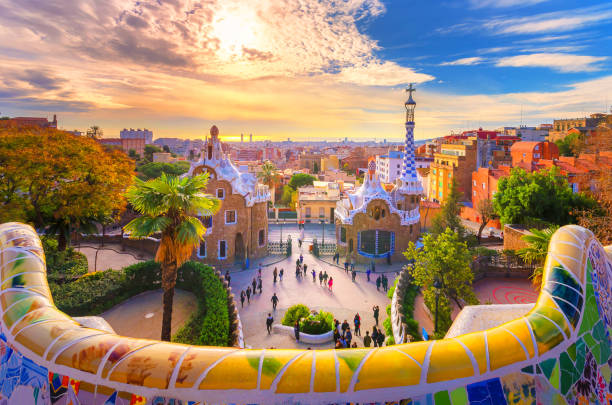
Park Güell is not an automatic backup for a closed tower or cable car. It adds a hillside, substantial outdoor exposure, and its own access dependency; official strong-wind advice concerning parks and exposed places may make it precisely the wrong direction. Consider it only when its current access is confirmed, the weather context is suitable, and it improves the architecture narrative more than the compact ground branch.
When no appropriate interior is available, the Eixample itself is sufficient. End with a controlled comparison of three scales: the basilica’s interior forest, Sant Pau’s campus, and the city block. That conclusion is intellectually complete even without a panoramic finale.
Reservation dependencies: know which part of the booking can change
Wind readiness depends less on having many alternatives than on understanding the terms of the commitments already held. Before the day, record each booking as a parent admission, an add-on, a separate transport product, or an independent timed entry.
- Sagrada Família Temple and tower: treat the Temple as the parent admission and the tower as the weather-sensitive addition described in the official sales conditions. Preserve the Temple visit unless the venue communicates a broader closure.
- Montjuïc cable car: treat it as a separate transport experience with its own service status and suspension remedy. Do not infer the operating status of a museum, pavilion, castle, road, or the whole hill from the cable car alone.
- Sant Pau or another fallback interior: verify its current opening and admission terms directly. Do not assume that a same-day purchase, exchange, or late arrival will be accepted merely because the visit is part of a contingency plan.
- Meals and evening commitments: protect their location and arrival time when they are fixed. A fallback that ends far from the original route can create a second failure even after the architecture day has been saved.
The practical tool is a one-page dependency note, not a minute-by-minute schedule. For every commitment, record the booked time, the latest sensible departure from the previous district, what happens if one component closes, where the official status is published, and the ground alternative that requires no new reservation. The note should make a same-day decision possible in under a few minutes.
Avoid building the fallback around speculative availability. A famous interior with limited timed admissions is not a dependable rescue unless a space has been confirmed. Exterior-led Eixample analysis, the Sagrada–Sant Pau urban axis, and a shortened district sequence are more reliable because their value is not concentrated in one new transaction. This is also why the day should not be crowded with multiple nonrefundable entries. Operational resilience comes from preserving choice.
For visitors fitting the architecture day into a wider stay, the three-day Barcelona itinerary can help move a displaced Montjuïc or interior commitment to another day rather than forcing it into an already unstable sequence. The purpose is support, not expansion: a fallback works best when one element can migrate elsewhere without making the whole trip feel incomplete.
Use three operating states, not a binary open-or-closed rule
A reliable decision can be made by identifying the day’s state shortly before each major move.
State one: local component suspension
One vertical component is suspended, but the parent venue, surrounding district, transport network, and official safety context remain suitable. Examples include a Sagrada Família tower closure while the Temple continues, or a cable-car suspension while a specific Montjuïc site remains open and safely reachable by ground transport.
In this state, retain the district and change the scale of observation. Expand the Temple, Sant Pau, or Eixample segment. For Montjuïc, go only if the selected destination independently justifies the transfer. The fallback is a route adjustment, not a citywide retreat.
State two: strong-wind context with exposure restrictions
Official weather and Civil Protection information makes high, exposed, wooded, garden, or park settings inappropriate even if some services have not yet announced closure. In this state, remove the tower and hill logic from the plan and minimize open-air transitions. Use confirmed interiors, sheltered thresholds, and short urban readings. Do not wait for every operator to close before responding to broader safety advice.
The architecture narrative changes emphasis from altitude and topography to enclosure, load, circulation, and urban fabric. Sagrada Família and Sant Pau can still provide depth if their accessible areas are operating, while a compact Eixample segment can connect them. If either venue issues additional restrictions, obey those notices and compress further.
State three: broad disruption or unresolved status
Multiple alerts, transport problems, or unconfirmed venue operations make cross-city movement unreliable. In this state, protect the fixed admission that is definitely operating and stay geographically close to it. If the Sagrada Temple entry is the only confirmed commitment, center the day on the basilica, the Sant Pau axis, and nearby Eixample streets. If a later fixed entry is elsewhere, choose the fallback near that destination instead.
This state is where a prewritten release rule is most valuable. For example: if the cable-car status and the chosen Montjuïc site cannot both be confirmed before leaving Sant Pau, do not cross the city for the hill branch. Or: if official strong-wind advice remains active at the midday check, replace all elevated and garden elements with the central branch. The rule prevents emotional attachment to a highlight from consuming the remaining day.
None of these states can be assigned from a weather app alone. Use the official venue pages, operator service information, Meteocat, Civil Protection alerts, and any relevant municipal transport notices. The forecast explains risk; the operator communicates operation; the venue communicates access; Civil Protection communicates public safety context. Each answers a different question.
Timing the rechecks so the information can still change the route
A status check is useful only when it occurs before an irreversible movement or missed admission. For a typical architecture day, use four decision moments.
- The evening before: review official weather and Civil Protection information, confirm the booked admissions, and make sure the ground branch is geographically realistic. Do not pre-cancel solely because a general forecast appears windy.
- Before leaving the hotel or first location: check Sagrada Família communications, the cable-car service status, Meteocat, Civil Protection, and any transport alert relevant to the first transfer. Establish the likely operating state, while accepting that it can change.
- Immediately after the Sagrada visit: reassess the cable car, Montjuïc destination, and current safety context before committing to the cross-city leg. This is the most important pivot point because Sant Pau and the Eixample remain close enough to absorb the afternoon.
- Before the final branch: confirm the exact site, route, and evening arrival consequence. A late reopening is not automatically worth pursuing if it creates a rushed or fragile end to the day.
Recheck after any substantive page update, direct venue message, source correction, new weather warning, change in alert status, or transport notice. The source pages cited in this guide were checked on August 31, 2026, but operational pages are more volatile than the architectural logic of the fallback. For editorial maintenance, review the source set at least annually and sooner after a substantive update or correction. For travel, the live facts must come from the current official source.
Keep screenshots or booking references for the products already purchased, but do not treat a saved page as live operating information. If a venue sends a direct message about access, that communication takes precedence over a generalized expectation. If sources conflict, choose the more conservative route until the operator or venue clarifies.
What bespoke sequencing changes for a fixed, high-value day
Private coordination is relevant here only because the day contains a fixed admission, volatile vertical systems, and geographically separated alternatives. Its value is not ceremonial service. It is the ability to preserve the architectural thread while someone checks live status, releases a failed branch, confirms the next admission, and redirects movement before the group spends its margin on the wrong side of the city.
A well-briefed guide can also keep the intellectual continuity intact. If the tower closes, the interpretation moves from elevated access to the nave’s structural legibility and the basilica’s urban profile. If the cable car suspends, the guide can decide whether Montjuïc still contributes enough by ground access or whether Sant Pau and the Eixample should carry the afternoon. A driver is useful only when direct movement materially reduces cross-city friction and conditions remain appropriate; walking remains preferable for the close reading of the Sagrada–Sant Pau axis and selected Eixample blocks.
The commercial next step is a tailor-made Barcelona private tour built with both branches stated in advance. The useful brief is concrete: fixed Sagrada time, tower add-on status, Montjuïc commitment, mobility needs, evening location, and the point at which the hill branch should be released. That is bespoke sequencing in operational terms, not a promise that weather can be controlled.
The handoff for the morning of the visit
Start with the booked Sagrada Família Temple entry and assume the tower is conditional until the venue confirms operation. Keep Sant Pau and an Eixample transect ready as the main ground-level continuation. Treat the cable car, the Montjuïc destination, and the wider wind advisory as three separate checks. Go to the hill only when the destination remains worthwhile without the aerial ride and current official advice supports the exposure and access involved.
If the tower closes, stay longer with the basilica’s nave, façades, and urban profile, then move the structural question to Sant Pau. If the cable car closes but the hill remains suitable, reach one selected architectural focus by ground transport and abandon the idea of reproducing the panorama. If official advice discourages high places, parks, or gardens, remain in the Sagrada–Sant Pau–Eixample field and finish with a sheltered interior or a compact block reading. If multiple statuses cannot be confirmed, protect the fixed admission and reduce geographic ambition.
The final check is not “Is it windy?” It is: what is operating, what is advised, what remains booked, and which branch preserves the day’s architectural purpose with the least new dependency? Once those four answers are clear, a suspension changes the route rather than erasing it.
For travelers whose Sagrada Família and Montjuïc commitments must be reconciled in real time, a tailor-made sequence can be designed with the release points, ground alternatives, and status checks written into the day from the beginning. Inquire now
If you’re interested in any private tours of Barcelona, please reach out to us.








 So if you are looking for the absolute best in Barcelona & surroundings with authentic local fully-licensed native guides whose English you can actually understand and with an exclusive and amazingly fun itinerary













