Winter Dalí Visits From Barcelona: House-Museum Calendars, Coastal Light and Alternatives

Updated
A Barcelona departure on 6 January, one on 20 January and one on 20 February may all be described as a winter Dalí excursion, yet they do not offer the same body of evidence. In the currently published operating pattern, the first date can fall before the principal house closures, the second falls inside the period when both Dalí houses are closed, and the third can restore Portlligat while Púbol remains unavailable. The change is not a minor scheduling inconvenience. It determines whether the day can examine Dalí through a lived and worked-in interior, through a residence conceived for Gala, or through the deliberately public, theatrical world of the Dalí Theatre-Museum in Figueres.
For a returning Catalonia visitor, that distinction should come before the route map. A winter day should not begin with the ambition to “do the Dalí triangle.” It should begin with a more exact promise: to understand the working house and its coast, to study Gala and the constructed intimacy of Púbol, or to read the artist’s public self-invention in Figueres. Once that promise is clear, the live calendars, the available entry format and the coastal conditions can confirm whether the proposed date supports it.
A winter Dalí day begins with the operating period
Calendar snapshot verified 13 September 2026: the Foundation’s Salvador Dalí House-Museum page lists Portlligat as closed from 7 January through 11 February. Outside that closure, its published winter pattern for January to March and November to December is Tuesday through Sunday, 10:30 to 18:00, subject to exceptional dates and any later revision. This is the current publication, not a promise that every future winter will repeat the same reopening date.
The Foundation’s Gala Dalí Castle page lists Púbol as closed from 7 January through 27 February and reopening on 28 February, with a published Tuesday-through-Sunday winter schedule and reservations recommended. Again, the useful fact is conditional: Púbol has a longer winter closure than Portlligat in the present calendar. A traveler should not generalize that date to another year without checking the live page.
The Dalí Theatre-Museum page currently publishes Tuesday-through-Sunday winter hours of 10:30 to 18:00. It also lists exceptional closure on 1 January and 25 December, with an early close on 24 December, and recommends reservations rather than describing them as universally mandatory. That makes Figueres the most durable winter anchor of the three, but not an all-dates guarantee: Monday, year-end exceptions and later operational notices still matter.
Read together, those pages divide winter into several materially different periods:
- Before 7 January: all three institutions may be in their published operating period, but the exact date, weekday, exceptional closures and bookable entry format still need confirmation.
- 7 January through 11 February: both domestic sites are listed as closed. A Dalí day can still be substantial in Figueres, but it cannot honestly be sold to oneself as a house-museum day.
- 12 February through 27 February: Portlligat may return while Púbol remains closed. This is the first present-calendar window in which the working house can again become the day’s primary evidence.
- From 28 February: both houses may be available under the published calendar, subject to weekday, exceptional notices, reservation availability and the conditions of the specific date.
- On Mondays: the current Tuesday-through-Sunday pattern makes the entire Dalí triangle a poor foundation for the day unless the exact date is listed as an exceptional opening. A different cultural plan is usually more coherent than driving north and hoping for an exception.
This timeline is the central winter planning fact. It prevents two common mistakes: assuming that “winter opening hours” mean uninterrupted winter access, and treating the existence of an opening hour as equivalent to a confirmed place inside a small historic house. The calendar establishes whether a site is scheduled to operate. The reservation interface and the institution’s current visit information establish whether the desired entry format is actually available.
What changes when a house is closed
Portlligat, Púbol and Figueres are often grouped as a single Dalí circuit, but they do not preserve interchangeable versions of the same story. Each location answers a different art-historical question. Losing one therefore changes the intellectual shape of the day, not just the number of stops.
Portlligat is evidence of work, accumulation and place. The house developed through joined fishermen’s dwellings rather than as one symmetrical architectural statement. Its value lies in the conjunction of studio, domestic rooms, objects, framed views and the bay outside. The setting allows a visitor to ask how Dalí organized looking and working, how an interior could direct attention toward the Empordà landscape, and how repeated occupation turned modest structures into a highly personal environment. The coast is not decorative context added after the art; it is part of the evidence.
Púbol is evidence of a relationship staged through architecture. The castle belongs to the Dalí-Gala story in a different way: as a residence made for Gala, with distance, ritual and self-fashioning built into its meaning. It supports questions about authorship, gift, access, privacy and the transformation of an old structure into a charged personal realm. A visitor who substitutes Portlligat for Púbol has not simply chosen another house. The emphasis shifts from a long-developed working home to a designed retreat bound to Gala’s position within the partnership.
Figueres is evidence of public self-construction. The Theatre-Museum is not merely a building holding a broad collection. It is an artist-shaped environment that asks the visitor to move through theatrical scale, visual reversals, installations, painting, objects and architectural staging. It is the strongest place to examine how Dalí wanted a public to encounter “Dalí” as a total proposition. That makes it a meaningful alternative when a house cannot be visited, but not a replica of the missing domestic setting.
The practical implication is simple to state and important to preserve: Figueres can replace the day, but it cannot reproduce the absent house. When Portlligat is closed, the visitor loses the direct relationship among studio, rooms, bay and coastal light. When Púbol is closed, the visitor loses the specific spatial evidence of Gala’s residence and the couple’s deliberately constructed distance. Figueres compensates with breadth, concentration and a public environment of exceptional interpretive density. It changes the question from “How did this life and work inhabit a place?” to “How did Dalí construct an encounter with his own art and persona?”
Travelers still choosing among destinations rather than dealing with a fixed winter date can first compare Figueres, Girona and Cadaqués as Dalí-day destinations. This winter guide starts one step later: after Dalí has already been chosen, but before the calendar has confirmed which kind of Dalí evidence is genuinely available.
Portlligat: the house is the anchor, not an add-on to Cadaqués
A viable Portlligat day requires three confirmations in the right order. First, the house must be in its operating period. Second, the live booking system must show an entry that fits the day. Third, the route must place the house and its immediate landscape within useful daylight, with enough margin that the final approach is not treated as a race against a fixed admission.
The second confirmation is easily underestimated. At Portlligat, the Foundation’s current admission policy states that every visitor must reserve a date and time in advance. It instructs visitors to retrieve their admission document 30 minutes before the booked entry; missing that collection deadline can cancel the purchase, with any later admission dependent on availability. The house receives limited groups at ten-minute intervals. The indoor route is self-guided, although House-Museum staff accompany visitors through the interior. Those rules make a late arrival a material risk rather than a small loss of browsing time.
The live page also distinguishes admission to the House and Olive Grove from Olive Grove-only access. That distinction is crucial for a winter plan: access to the outdoor area is not access to the domestic and studio interior. When the house is the reason for the excursion, verify that the selected reservation explicitly includes it. Before committing a Barcelona departure, also confirm the offered language or interpretive provision where relevant and the current terms. Do not infer any of these details from last year’s visit or from a third-party summary.
The interpretive reward is strongest when the house remains the center of the excursion. Cadaqués can add settlement history, a meal and a broader reading of the coast, but those elements should support rather than squeeze the house. An itinerary that assigns Portlligat the narrowest possible slot, then tries to collect Figueres as well, risks turning the very place that justified the distance into a hurried interior followed by an anxious departure.
Winter light sharpens this point. The lower sun and shorter day can make the relation between openings, white surfaces, water and rock particularly legible, yet there is less margin for a late arrival. A sensible sequence preserves daylight before or after the interior rather than scheduling the coast as an incidental view from a vehicle. This is an editorial judgment, not a claim that one hour is universally superior: cloud, wind, the chosen entry and the traveler’s priorities all affect the result. The durable principle is that Portlligat should be experienced as a house in a landscape, not as an isolated room reservation.
If the house is closed, visiting only the exterior area does not deliver the same inquiry. That can still be worthwhile for someone independently committed to Cadaqués, Cap de Creus or the geography behind Dalí’s imagery. It is usually a weak reason to make the entire round trip from Barcelona when the stated objective is domestic and studio evidence. In that case, either change the day’s question to the coast itself, choose Figueres, or move the Dalí excursion to a date when the interior can be confirmed.
Púbol: a longer closure and a different kind of intimacy
Púbol’s current closure through 27 February creates a common late-winter asymmetry: Portlligat can be available while Gala Dalí Castle is still closed. That matters especially to repeat visitors who are not seeking a broad introduction but a closer reading of Gala’s role, the couple’s spatial arrangements and the use of architecture as a form of relationship.
Because Púbol is inland, it is less dependent on preserving coastal daylight than Portlligat. That does not make its logistics trivial. The current Gala Dalí Castle calendar publishes 10:30 to 17:00 for 1–6 January, 28 February–13 March and 2 November–31 December, always subject to its listed exceptional dates and later revisions. The live page still needs to confirm the exact opening window, offered entry and reservation conditions for the chosen day.
The standard interior route is described as self-guided and one-way. The Foundation also advertises guided formats on selected dates and in varying languages; a full guided visit requires advance booking. That is why “Púbol is open” is not a complete operational answer. A traveler must decide whether the ordinary self-guided route serves the purpose or whether an available guided format is important, then secure the relevant entry. Reservations are recommended, and a confirmed place removes an avoidable uncertainty from a route that may include another institution.
Púbol can pair conceptually with Figueres after reopening. The castle presents a private, relational environment; the Theatre-Museum presents the public, artist-directed monument. The contrast is more useful than a checklist mentality because it lets the visitor compare two distinct modes of self-fashioning. Geographically, the inland sequence also avoids making the coast a compulsory third point. It can therefore be more resilient on a short winter day, provided the actual opening windows align and the visit is not compressed into a race between reservations.
It should not be treated as a lesser Portlligat. The visitor who primarily wants the working studio, the bay and the visual logic of the coast should wait for Portlligat. The visitor whose real subject is Gala, ritualized privacy and the architectural expression of the relationship may reasonably defer until Púbol is open, even if Figueres and Portlligat are available earlier.
Figueres is a serious winter alternative, not a consolation prize
During the dual-house closure from 7 January through 11 February, Figueres becomes the principal Dalí destination that can sustain a dedicated excursion from Barcelona on its own published operating days. The best response is not to imitate the missing triangle by adding unrelated mileage. It is to use the time that the houses would have consumed to read the Theatre-Museum at the depth its design warrants.
A shallow visit treats the museum as a container and moves rapidly from recognized image to recognized image. A stronger winter visit treats the building itself as part of the artist’s proposition. How does the former theatre condition the sense of spectacle? Where does a work depend on distance, angle or a change in scale? How do painting, object, architecture and optical effect interrupt the expectation of a conventional chronological museum? What does the visitor learn from the friction between technical control and deliberate excess? These questions produce a coherent day without pretending that the museum supplies a studio or domestic life.
Figueres also offers a broader basis for revising a visitor’s idea of Dalí. The Foundation’s Theatre-Museum account describes a collection of more than 1,500 pieces across painting, drawing, sculpture, printmaking, stereoscopic work, installation, holography and photography. It distinguishes the former-theatre ensemble, converted according to Dalí’s own criteria and intended as a single linked art object, from later extensions that include temporary-display rooms and the Dalí-Jewels area. That structure gives the winter fallback real collection depth: first read the artist-designed theatre as an environment, then use the extensions to widen the evidence rather than treating every room as equivalent.
Someone who knows only the most reproduced motifs can use this concentration to examine continuities across media, the discipline beneath the performance, and the way historical references are absorbed into an intensely personal visual system. Specialist interpretation can be valuable when the aim is not identification but connection: relating a theatrical installation to earlier painting, distinguishing biography from artist-created mythology, and keeping the museum’s sensory abundance from flattening every work into the same category of spectacle.
The current published recommendation to reserve deserves respect even though it is not phrased as an absolute requirement. A winter day from Barcelona has fixed travel costs in time; leaving the central institution to chance is rarely a sensible exchange. Confirming the entry also makes it possible to decide whether Figueres should stand alone or share the day with another place.
One option is Girona, where the second half of the day changes subject rather than pretending to add more Dalí. The result can be a deliberate contrast between the Theatre-Museum’s authored theatricality and Girona’s urban, religious and Jewish historical layers. Travelers considering that structure can see how Figueres can share a cultural day with Girona. The pairing is strongest when both halves retain enough time to have an argument of their own.
Another option is to keep Figueres concentrated and return to Barcelona without a second headline stop. That may sound less ambitious, but it often produces more actual looking. It also leaves room for a later house visit on another date, when Portlligat or Púbol can be read on its own terms rather than rushed as an attachment to a museum already rich enough for several hours of attention.
Coastal light, the final approach and the return to Barcelona
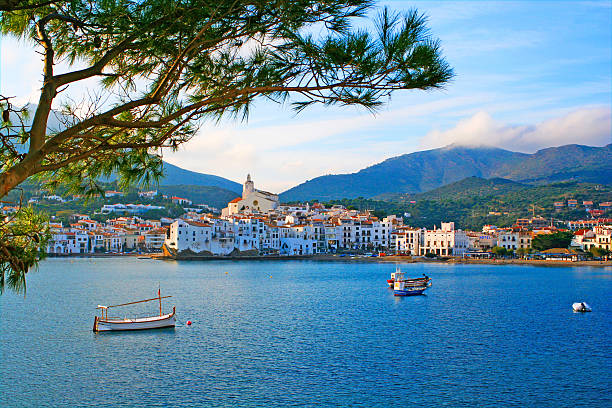
Portlligat is the site at which winter operations and interpretation most clearly meet. The coast contributes to the meaning of the house, while the road and the shortened day constrain how it can be experienced. The operational task is not merely to calculate a driving time. It is to preserve enough flexibility that a timed admission, the last approach, a weather change and the return to Barcelona do not compete with one another.
The long-distance portion toward the Empordà and the final approach to Cadaqués are different planning environments. The last section should not be treated as a simple continuation of high-capacity road travel. Curves, local traffic, weather and the transition into the settlement can all make a narrow estimate fragile. A planner does not need to dramatize the road; it is enough to refuse false precision. The coastal day should carry a real arrival margin rather than an itinerary whose success depends on every segment performing at its fastest plausible pace.
Cadaqués’ official parking information gives a useful orientation point. At the entrance roundabout, it directs drivers right toward the paid Saba car park and left toward the road to Portlligat, which it places 1.5 kilometres away; it describes the Portlligat car park as free. Those facts help with route logic, but they do not guarantee a space, a drop-off condition or an effortless final walk on a particular day. Parking information should be rechecked with any current local notice, especially when weather or access conditions have changed.
Winter daylight should be allocated, not merely admired in advance. A late entry can still be valid if the traveler’s priority is the interior and the day’s actual light supports the approach. What should be avoided is building a plan that reaches the coast only as useful visibility disappears, then counting an after-dark drive past the bay as equivalent to seeing the house in relation to its setting. The lower winter sun may produce subtle, angled light; cloud may remove that effect entirely. The route should therefore protect the opportunity rather than promise a particular atmosphere.
Wind deserves a similarly disciplined response. The Empordà is associated with the tramuntana, but regional reputation is not an operational forecast. The official Generalitat Meteocat warning page identifies warning categories for wind, sea state, rainfall intensity and accumulated rainfall, and directs drivers to exercise caution and consult traffic incidents. These are the appropriate triggers for a route review. A breezy forecast does not automatically cancel the day; an official warning, a significant access notice or a combination of adverse conditions may justify changing the sequence or abandoning the coast.
Sea-state information matters even for a land-based visit because it changes the comfort and judgment of exposed coastal pauses. Rainfall intensity and accumulation matter because they can reduce road predictability and make parking or short outdoor transitions less pleasant. Wind can affect walking comfort, doors, exposed viewpoints and the concentration required on the final drive. None of these claims means that the museum closes whenever conditions are imperfect. It means the house reservation should sit inside a route that can respond to official information.
The return buffer is the other half of the winter plan. A fixed evening commitment in Barcelona should not be attached to the fastest possible drive home. The useful question is not “What time will we be back if nothing varies?” but “What return range still permits the planned evening if the final visit runs to its allotted end, the road is slower and the group needs one proper stop?” For travelers who value an unhurried cultural day, the answer may be to keep the evening simple rather than forcing the coast to fit a precise dining arrival.
A Barcelona–Costa Brava split stay changes this calculation substantially. Sleeping nearer the coast can turn Portlligat from a long winter out-and-back into a morning or early-afternoon visit with more control over light and less pressure on the return. That is not automatically better for every trip, but it is worth considering when Dalí and the Empordà are central rather than incidental. The broader planning tradeoff is explored in a Barcelona–Costa Brava split-stay brief.
Build the sequence around one confirmed anchor
The most reliable planning method is to choose one institution as the non-negotiable anchor, then test every additional stop against it. A Portlligat day begins with a confirmed Portlligat entry and adequate daylight. A Púbol–Figueres day begins with the tighter combination of their live opening windows. A Figueres day begins with a museum reservation and then decides whether any second subject improves the day.
Before payment or commitment, verify five separate things: that the site is scheduled to open on the exact date; that no exceptional closure or altered hour applies; that the desired entry format is available; that the reservation conditions fit the plan; and that the route still has a credible fallback. Do not create overlapping admissions on the assumption that one can simply be abandoned unless the current terms clearly permit that choice.
Interpretation inside the Dalí sites also has an operational boundary. The Foundation’s admission policies state that guiding by someone outside the institution requires prior authorization. A properly coordinated private day therefore distinguishes between route planning, contextual framing and whatever interior interpretive format has actually been authorized or supplied by the museum. This is especially important at Portlligat, where a limited-group house entry cannot simply be converted into a private guided visit on arrival.
This is where private planning has a material purpose. The value is not the mere presence of a vehicle. It is the reconciliation of live Foundation calendars, a capacity-sensitive house entry, the coastal forecast, road margin, authorized interpretation and an alternative that preserves the visitor’s real art-historical objective. For a tailored sequence built around the current house availability and conditions, Inquire now.
For travelers whose winter date points firmly toward Figueres, the relevant next step is to review the private Figueres touring option. The useful brief should state whether the aim is a first substantial Dalí overview, a specialist reading of the Theatre-Museum as an artist-authored environment, or a comparison with a house to be visited on another day. That instruction changes the pace and the interpretation far more than adding a generic list of stops.
Four workable winter shapes
1. Portlligat as the single essential house
Choose this shape when the working environment and its coastal setting are the reason for leaving Barcelona. The date must fall outside the current closure, on an operating weekday, with an actual entry available. The sequence should reserve enough daylight for the relation between house and bay, then use Cadaqués only to the extent that it supports the same inquiry.
The advantage is coherence. The traveler can attend to how the house grew, how views are framed, how the studio relates to domestic circulation and how the surrounding terrain enters Dalí’s visual imagination. The cost is opportunity: a winter round trip to the coast consumes the margin that might otherwise support a second major museum. That is not inefficiency when Portlligat is the subject. It is the honest consequence of choosing depth and place over collection-counting.
Do not select this shape on a date when only an exterior pause is possible unless the coast itself is an equal objective. A closed door changes the trip from house study to landscape pilgrimage. Some travelers may welcome that shift, but it should be named before departure rather than discovered after a long approach.
2. Figueres as the complete answer during the dual-house closure
From 7 January through 11 February under the present calendar, a Figueres-centered day is the most defensible Dalí excursion on an operating date. Treat the Theatre-Museum as a complete project, not the opening act before an improvised detour. Confirm the museum entry, define two or three interpretive themes and allow the building’s spatial effects to determine the pace.
A useful set of themes might include Dalí’s manipulation of spectatorship, the relation between meticulous technique and theatrical display, and the construction of public identity through an environment rather than a conventional retrospective hang. These themes do not require a “greatest hits” loop. They encourage slower comparison across rooms and media while leaving biographical claims subordinate to what the works and the designed setting can actually support.
If the traveler wants a second place, Girona is more coherent than a closed-house exterior because it openly changes the subject. The day then becomes a two-part Catalan cultural excursion rather than a diluted attempt to complete the Dalí triangle. A specialist returning visitor may also prefer to stop after Figueres and keep the rest of the afternoon light, especially when the museum is the day’s principal intellectual work.
3. Portlligat after 11 February, with Púbol still closed
The period from 12 through 27 February creates a precise choice. Portlligat may be available, giving access to domestic and studio evidence, while Púbol remains outside its published season. Travelers interested primarily in Gala should not let the reopening of one house obscure the continued absence of the other. Those interested in the working home can use this period well, subject to a live entry and the coast forecast.
Figueres can technically be considered alongside Portlligat, but the two should not be treated as equal anchors unless the visitor accepts a compressed day and the actual admissions align. The museum rewards sustained attention; the house and coast reward unhurried arrival and daylight. Trying to maximize site count can therefore destroy the contrast that makes the two places worth combining. A better specialist plan often chooses one as primary and treats the second as optional only if the timings remain generous.
4. Púbol and Figueres after the later reopening
From 28 February under the current publication, Púbol can return to the route. This is the most intellectually productive two-site winter combination for travelers focused on the difference between private construction and public spectacle. It avoids making the coast obligatory, while still comparing two environments that Dalí helped shape around distinct human and symbolic purposes.
The sequence should be tested against the exact hours and available entries rather than assumed from geography. Púbol’s reservation recommendation, Figueres’ museum entry and any exceptional date must be reconciled before departure. The goal is not to finish both institutions as quickly as possible. It is to preserve enough time at the castle to read its relation to Gala and enough time in Figueres to experience the Theatre-Museum as more than a corridor of famous images.
When the right answer is to defer
Winter is not inherently the wrong season for Dalí. It can offer focused museum time, angled coastal light and a quieter rhythm. Deferral becomes rational when the available day cannot deliver the evidence the traveler is commissioning the excursion to see.
- Defer for Portlligat when the working house is the central objective but the date falls inside its closure, no suitable entry remains, or official weather and access information makes the coast an unreasonable commitment.
- Defer for Púbol when Gala’s residence is the actual subject and the trip falls before its published reopening. Portlligat and Figueres are valuable, but they answer different questions.
- Change the day, not just the route when the proposed date is Monday or an exceptional closure and the traveler does not want a non-Dalí substitute.
- Stay with Figueres when the houses are unavailable but the visitor’s interest can shift honestly toward collection breadth, artistic self-presentation and the museum as a total environment.
- Abandon the long round trip when the only remaining plan is an exterior glance at a closed house and the coast has no independent importance for the traveler.
Deferral is not a failure of planning. It is the decision that protects the subject. Repeat visitors often have more to gain from a later, properly aligned house visit than from using a fixed day to collect place names without the interiors that give those places meaning.
A recheck protocol that matches the actual risks
The source pages in this guide were verified on 13 September 2026. Recheck them after any substantive page update or correction. A traveler should use a stricter trip-level protocol because opening calendars, exceptional dates, reservations, weather and access can change on a much shorter horizon.
- When assigning the day: open all relevant Foundation pages and confirm the exact date against the current calendar. Record which site is the anchor and what the day becomes if that site is unavailable.
- When the entry is bookable: confirm the live format, time and terms rather than relying on general opening hours. For a house, a published day of operation is not the same as a secured place.
- About a week before travel: revisit the institution page for exceptional notices, confirm that the reservation remains as expected and review the broad weather pattern. This is a planning check, not a claim that seven days provides a definitive coast forecast.
- Within 24 to 48 hours: consult official Meteocat warnings and current traffic information, especially for a Portlligat route. Reassess daylight placement and the return buffer if wind or rain is becoming significant.
- On the morning: check for a last operational notice, a changed warning or an access incident before leaving Barcelona. If conditions have materially changed, use the predetermined fallback rather than improvising after reaching the road.
The recheck triggers are concrete: a Foundation calendar revision, a newly posted exceptional closure, loss or alteration of the reserved entry, an official wind or rain warning, a traffic incident affecting the approach, or a local access notice. General nervousness about winter is not a trigger. Neither is the hope that a published closure might be ignored on arrival.
The strongest evergreen fallback is Figueres on one of its operating days, because it remains fully relevant to Dalí while changing the evidentiary focus. If Figueres is also unavailable, do not fabricate a substitute “Dalí experience” from distant associations. Use Barcelona for a different, honestly framed modern-art day. One possible pivot is to compare Picasso, Miró and Montjuïc as a Barcelona art-day alternative. The intellectual continuity is modern art and Catalonia, not a claim that another artist replaces Dalí.
The practical handoff
Before committing a winter day, write the intended outcome in one sentence. “We want Dalí’s working house in its coastal setting” points to Portlligat and makes closure or poor access decisive. “We want to understand Gala’s residence and the couple’s spatial mythology” points to Púbol and may justify waiting until the later reopening. “We want the fullest available encounter with Dalí’s public artistic world” points to Figueres and can work even during the dual-house closure.
Then confirm, in this order: the exact date and weekday; the live Foundation calendar; any exceptional closure; the actual bookable entry format; the amount of useful daylight around the coastal portion; the official weather and traffic picture; the return margin; and the fallback that still serves the stated question. Keep the proof of the reservation accessible, but do not let a confirmed entry override a serious official warning or access change.
A well-built winter Dalí excursion is not the one that names the most points on the map. It is the one in which the available interior, the landscape and the route all support the same inquiry. When those elements do not align, Figueres can provide a different but substantial answer, and deferral can be the more exact choice.
If you’re interested in any private tours of Barcelona, please reach out to us.










 So if you are looking for the absolute best in Barcelona & surroundings with authentic local fully-licensed native guides whose English you can actually understand and with an exclusive and amazingly fun itinerary