Barcelona for a Dalí-Focused Day: Figueres, Girona or Cadaqués When Art Decides the Distance

Updated
Choose Figueres alone when Dalí is the point of the day; add Girona only when Jewish heritage and medieval urban texture are nearly as important as the museum; save Cadaqués for a longer, earlier-starting day. That verdict holds in real Barcelona conditions because the Figueres museum commitment claims the main time and attention block before any scenic add-on has earned a place. The clearest exception is the traveler whose Dalí imagination is Portlligat light, sea rock and studio atmosphere rather than a concentrated museum encounter: that traveler should design a Cadaqués day from the start, not attach it after Girona.
In Catalonia, the right Dalí day is not the one with the most pins on a map; it is the one that lets one artistic geography set the distance before lunch, coast atmosphere or a Barcelona dinner tries to rewrite the day.
The anchor is the Dalí Theatre-Museum (https://www.salvador-dali.org/en/visit/dali-theatre-museum/) in Figueres. The non-obvious planning cue is that the museum is not a quick room near a convenient scenic overlook; the useful block begins with the arrival around Plaça Gala i Salvador Dalí, continues through an intense, standing-heavy building, and needs a few quiet minutes afterward before anyone can judge whether Girona, the coast or the Barcelona return still deserves the afternoon. For many private travelers, the cleanest route begins with a dedicated Figueres private day and only then tests the add-on.
The route hinge is the Figueres museum commitment
The Figueres museum commitment should decide the day before Girona or Cadaqués enters the conversation. A Dalí-focused day is unusual because the museum is not merely one stop in a northern Catalonia loop; it is the reason the loop exists, and it is dense enough to make weak add-ons feel decorative rather than satisfying. The strongest plan treats Figueres as the primary intellectual and sensory event, then asks one practical question: after that level of art, does the afternoon need heritage structure, sea air or a shorter return?
This is where many ambitious Barcelona plans go wrong. Girona looks close enough on a map to feel automatic, and Cadaqués looks emotionally irresistible because it seems to complete the Dalí story. Yet those two choices solve different problems. Girona adds legible history, lunch rhythm and a walkable old city. Cadaqués adds atmosphere, distance and a more weather-sensitive coastal mood. The counterintuitive correction is simple: the famous coast is often the less efficient upgrade after Figueres, while Girona can be the richer pairing because it keeps the day on a more coherent inland arc.
What a guide should actually do in Figueres
A strong guide in Figueres should edit, translate and sequence rather than turn the museum into a full biography lecture. The Theatre-Museum is a built argument: Dalí’s staging, the old theatre frame, the courtyard, the theatrical sightlines and the density of objects all make the building feel closer to an authored environment than a neutral gallery. The guiding challenge is to make that environment legible without draining its strangeness.
The most useful interpretation starts before the group is tired. It explains why the museum’s physical setting matters, identifies a small number of works or spaces that can carry the day, and gives travelers permission not to understand every symbol at equal depth. This is especially important for comfort-first visitors who enjoy serious art but dislike feeling trapped inside a maze of references. The goal is not to make Dalí smaller; it is to make the encounter sharper.
Good guiding also protects the post-museum moment. Many guests leave the building visually saturated and immediately get asked to decide lunch, Girona, Cadaqués or a shop stop. That is the wrong moment for an overcomplicated pivot. A better guide gives the group a pause, reads the energy honestly, and then confirms whether the day still wants a second chapter. The best itinerary is sometimes adjusted after Figueres because the museum has done more work than expected.
Three ways to build a Dalí day from Barcelona
Use the route as a filter, not as a wish list. For a first Dalí-led private day, Figueres alone is the clean default; Figueres plus Girona is the cultural runner-up; the wrong fit is forcing Girona and Cadaqués into the same standard day because the map makes all three names feel temptingly close. A private guide can sharpen the museum, and a chauffeur can smooth the road sequence, but the art still has to leave space for the afternoon to mean something.
Figueres alone: best for art depth, couples who dislike rushed returns, travelers with a serious Barcelona dinner, families who need a measured pace, and repeat visitors who would rather understand one place than collect three.
Figueres plus Girona: best when medieval Girona, the Call, cathedral-side lanes and the Onyar river crossings matter almost as much as Dalí. This is the strongest pairing when Jewish heritage and urban history should share the day.
Figueres plus Cadaqués: best when Portlligat and the coast are the emotional reason for the trip. It needs a longer day, fewer extras, careful meal choices and a relaxed evening plan back in Barcelona.
Do not force: Figueres, Girona and Cadaqués together as a comfortable private day from Barcelona. That version looks impressive on paper and usually feels thinned out in the car.
For travelers still comparing northern Catalonia against Montserrat, Penedès or the broader Costa Brava, the wider private day trips outside Barcelona menu is useful, but this article deliberately narrows the question: once Dalí is the reason to leave Barcelona, the afternoon must serve the art rather than compete with it.
When Figueres should stand alone
Figueres should stand alone when Dalí is not a theme but the appointment. The Theatre-Museum asks for attention in a way that differs from Barcelona’s Gaudí interiors: it is theatrical, symbolic, crowded with visual signals and easy to under-read when the next stop is already pressing. A guide who can slow the building down, explain why the former theatre matters, and choose the rooms that matter most to your group often gives the day more value than another hour in the car.
Standing alone does not mean emptying the afternoon. It means giving Figueres enough room for arrival, the museum, a pause, lunch or coffee, and an unforced return to Barcelona. It also suits groups with different art stamina. One guest can stay with the guide for deeper context while another decompresses before the drive back. Families with teenagers, older parents and celebration travelers usually read this version as more considerate because nobody has to pretend that a second city is a reward after a dense museum morning.
This version also works for travelers who have already scheduled a major Gaudí day in Barcelona and do not need another long architectural or old-town sequence immediately afterward. It gives the trip a distinct art chapter without making the whole stay feel like a chain of ticketed interiors. The result is a day that can hold real interpretation and still return with enough quiet for the city to feel welcoming again.
The cut is especially important when the evening matters. A tasting-menu dinner, a private celebration meal, or a fixed restaurant reservation in Eixample should not sit behind a late, overextended return. Check the restaurant’s official menu and timing expectations before letting a coastal detour consume the day. A Dalí day should not include Girona or Cadaqués when the museum, the group’s energy and the Barcelona evening would all be reduced by the extra distance.
When Girona earns the pairing
Girona earns the pairing when the day needs a second cultural chapter rather than a scenic encore. The city works with Figueres because it adds a different kind of intelligence: medieval streets, Jewish heritage, cathedral approaches, stone steps, river edges and a compact old city that rewards guiding. The Museum of Jewish History (https://www.girona.cat/call/eng/museu.php) gives the Call a grounded interpretive center, which matters because the Jewish quarter can otherwise blur into pretty lanes without enough context.
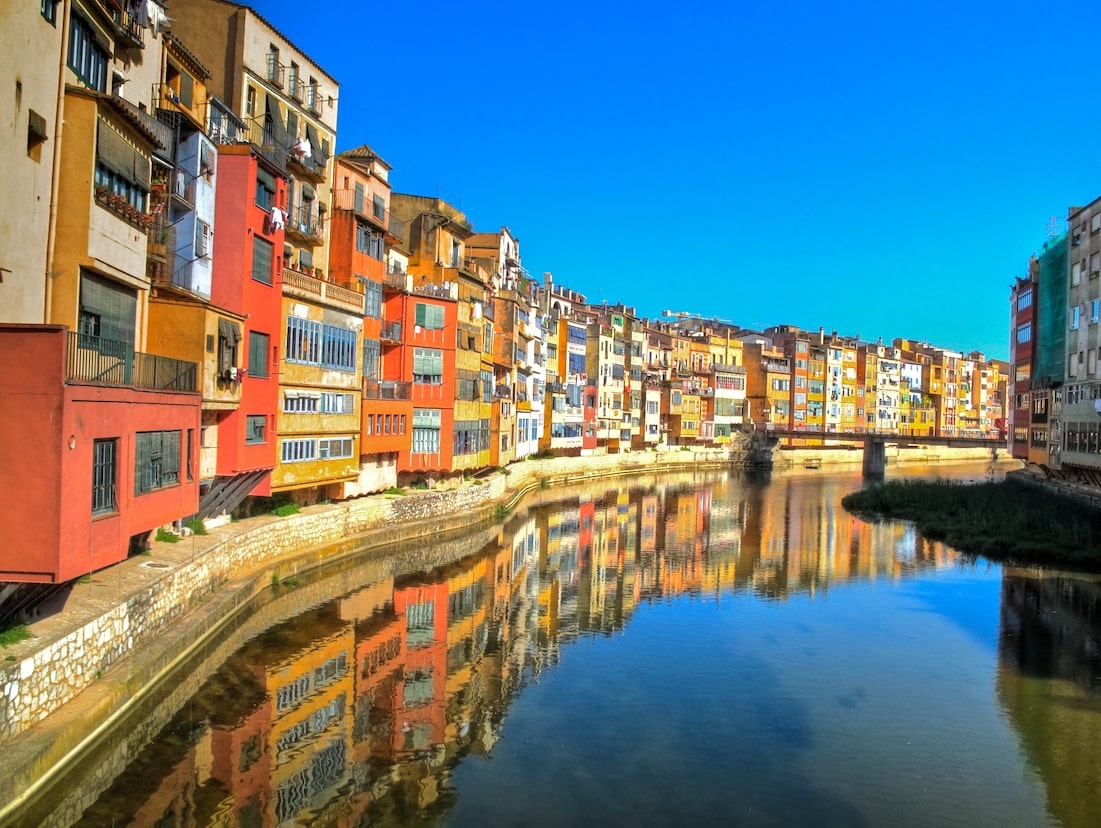
The practical consequence is better pacing after the museum. Girona allows a lunch break and a focused walk through the Barri Vell, along Carrer de la Força, over the Onyar bridges or toward Pont de Pedra without committing the group to a coastal road. The guide can connect the Jewish heritage layer, medieval city-making and Catalan identity without trying to make Dalí carry the entire day. This is why a curated Girona private tour belongs beside Figueres when heritage is a real priority, not just a convenient extra.
Girona also gives the guide a humane way to change scale. After the visual excess of Figueres, the old city offers streets, doorways, river color and layered history that the eye can read at walking pace. That contrast is valuable when the group needs a second subject but not another museum-like intensity.
The honest limitation is that Girona is still a second city. It should not be added for travelers who only have mild curiosity after the museum or for groups that become impatient when a day shifts from art to stone lanes. Girona works when the Call, the cathedral precinct and the old city are meaningful in their own right. It is not an afterthought to justify the drive north; it is a deliberate second subject.
When Cadaqués needs a longer day
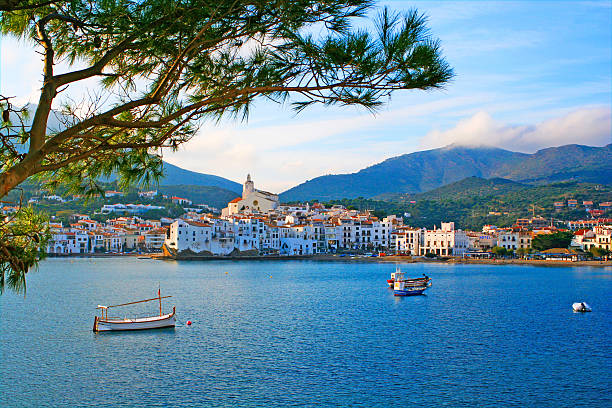
Cadaqués needs a longer day because the coast changes the shape of the route, not just the scenery. Portlligat and the village do not behave like a quick postcard after Figueres. The road toward Cadaqués introduces curves, arrival logistics, sea-light temptation, and the desire to linger. The Salvador Dalí House-Museum in Portlligat (https://www.salvador-dali.org/en/visit/salvador-dali-house-museum/) points to a more intimate Dalí story, but it also asks for a different kind of day than the Theatre-Museum: more atmosphere, more margin and less pressure to see another city.
The right Cadaqués version usually means Figueres plus the coast, not Figueres plus Girona plus the coast. It is for travelers who care about Dalí’s landscape, the relationship between Portlligat and the rocky Cap de Creus edge, and the feeling of arriving at a place where the artist’s world was lived rather than displayed. It can be deeply rewarding, but the reward comes from giving the coast enough time to breathe. A rushed Cadaqués stop after museum concentration often becomes a photo errand, and that is an expensive way to miss the point.
Cadaqués is also the version most affected by weather, daylight and appetite. A long lunch can be wonderful when the day is built around the coast; it can become a problem when it steals the return window to Barcelona. The village’s charm is not improved by counting minutes. When Cadaqués is the answer, the route should start early, keep the museum interpretation selective, and refuse secondary stops that do not support the coastal Dalí story.
How the Barcelona return changes the choice
The Barcelona return is the test that separates a premium-feeling Dalí day from a punishing one. A plan that looks balanced at noon can feel very different when the car re-enters the metropolitan edge, crosses toward Eixample hotels, or has to thread a Gothic Quarter drop-off near narrower evening streets. The last hour matters because it shapes whether guests arrive ready for dinner, need silence, or feel that the day ended in transfer drag.
Figueres alone gives the cleanest return. Figueres plus Girona gives a full but coherent return if the old-city walk stays focused. Figueres plus Cadaqués needs the most caution because the coastal satisfaction is bought with a later and more variable re-entry to Barcelona. A chauffeur can remove parking and wayfinding stress, but the body still registers time in motion. The difference between arriving back with a little appetite and arriving back flattened is the difference between a well-designed private day and a maximal route that merely used a better car.
Hotel geography changes the final feel. Eixample and Passeig de Gràcia returns are usually easier to absorb than old-town returns because the last movement is wider, clearer and closer to many dining plans. A Barceloneta or Gothic Quarter evening can still work, but it should be chosen because it suits the mood after the day, not because the itinerary forgot that Barcelona has its own evening friction. This is the closing threshold: the return to Barcelona decides whether the art day lands elegantly or asks too much at the end.
Why road logic beats map logic
Road logic beats map logic because northern Catalonia is not a flat diagram of equal options. Figueres and Girona sit naturally on the inland movement from Barcelona, while Cadaqués pulls the day toward the coast and the Cap de Creus side. That does not make Cadaqués inferior; it makes it a different promise. The more the route bends away from the inland corridor, the more the day needs to pay back that movement with time on the coast rather than a hurried look.
Rail can be elegant for independent travelers, but it does not automatically solve a private Dalí day. Barcelona Sants, Figueres-Vilafant, the transfer into the museum area, and the timing of a guide all create small resets that matter when the day also includes Girona or the coast. A chauffeur-led route is not only about door-to-door comfort; it keeps the day in one continuous rhythm, especially when the group includes older parents, children, art collectors, or guests who dislike station logistics.
The mistake is assuming that the fastest-looking segment is the most comfortable one. A station transfer can feel efficient on paper and still break the mood of a museum day. A car can feel indulgent on paper and still be the more disciplined choice when it lets the guide control arrival, lunch, old-city walking and the final return. The right transport is the one that preserves attention, not the one that wins a theoretical race.
What the day does to the body
A Dalí day from Barcelona is not physically hard in the mountain-hike sense, but it does accumulate standing, stone walking, vehicle time and attention fatigue. The Theatre-Museum keeps guests on their feet and engaged; Girona adds old-stone walking, steps, uneven lanes and river crossings; Cadaqués adds coastal movement, car curves and the bodily effect of a longer road day. The consequence is not abstract comfort. It changes what the group can enjoy after lunch and how much interpretation they can absorb.
This matters most for older parents, art-serious couples and families who split their energy unevenly. The strongest private day designs moments where the body can catch up with the mind: a pause after the museum, a lunch that does not overrun, a Girona walk with a clear turn-back point, or a Cadaqués visit that does not demand a race from Portlligat to the village and back. In Barcelona, block-scale walking can be deceptively tiring after a day out; even a short stroll from a hotel to dinner feels longer when the day has already included museum standing and northern roads.
Premium spend does not help when the core mistake is an overlong art-and-coast plan; a chauffeur can reduce friction, but it cannot make Figueres, Girona and Cadaqués feel easy in one standard day. Paying well helps when it buys a better guide, cleaner sequencing, a calmer vehicle, smarter drop-offs and the confidence to cut. It does not suspend distance, daylight or attention span.
What the day does to the mood
The mood of the day changes depending on which distance you choose. Figueres alone makes the day feel concentrated and adult: you leave Barcelona for one reason, understand it well, and return with enough space for the evening to remain your own. Figueres plus Girona makes the day feel layered: art in the morning, heritage in the afternoon, a change from surreal intensity to medieval structure. Figueres plus Cadaqués makes the day feel romantic and elemental, but only when it is allowed to be expansive.
The wrong mood appears when the route argues with itself. Girona after Figueres can feel intelligent; Girona after Figueres before Cadaqués can feel like a checklist. Cadaqués after a rushed museum can feel scenic but oddly hollow, because the coast is being asked to compensate for a museum visit that was not fully digested. A private day should leave guests with one clear emotional aftertaste: Dalí understood, Girona connected, or Portlligat felt. When all three compete, the day gets louder and less memorable.
This is also where repeat visitors to Barcelona often make better choices than first-timers. They are less anxious about filling every hour away from the city and more willing to let one Catalan route do its work. The best version of the day may look smaller than the most ambitious version, yet it often feels more generous because the guide has room to answer questions, adjust pace and protect the transition back to dinner.
How private design changes the day
Private design is most valuable when the day is built around the art commitment before the scenic add-on is chosen. The guide’s role is not to recite a generic Dalí biography. It is to translate the museum into a route of attention: what to see first, when to slow down, what can be skipped without loss, and how to connect Figueres to Girona or Cadaqués without pretending that every Dalí-adjacent place belongs in one day.
The chauffeur’s role is equally practical. A driver reduces the strain of Barcelona departure, museum arrival, parking decisions, luggage if the day is part of a transfer, and the final return. That matters for comfort-first travelers and small groups who do not want a cultural day punctuated by logistics. Orange Donut Tours designs these days around the route choice rather than selling distance for its own sake: art depth first, then the one add-on that earns its place. Inquire now
Small groups also reveal the cost of compromise faster than large ones. In a couple, one person’s museum saturation changes the whole afternoon. In a family, a teenager’s patience or an older parent’s knees can determine whether Girona feels rich or excessive. In a celebration group, the person being celebrated should not spend the final hour calculating whether everyone is still enjoying the plan. A private Dalí day works best when the route is honest about the group’s weakest energy point, not only its strongest curiosity.
For travelers deciding between a fixed route and a custom day, tailor-made Barcelona planning is most useful when the group has a specific constraint: a serious dinner, a birthday meal, children with limited museum stamina, older parents, a cruise schedule, a luggage transfer, or a repeat-visitor interest in Jewish heritage. The value is not more stops; it is the right stop being allowed to matter.
The stop to cut first
The first stop to cut is the one that changes the day’s subject after the subject has already been chosen. When Dalí is the point, do not cut museum time to save a rushed coastal view. When Jewish Girona is the point of the pairing, do not add Cadaqués because it is famous. When Cadaqués is the emotional reason, do not add Girona just because the route passes through northern Catalonia. The discipline is not minimalism; it is respect for what each place needs.
For short Barcelona stays, the smartest cut is often the scenic add-on rather than the cultural core. A traveler staying three nights in Barcelona with one planned day outside the city may feel pressure to make that day represent all of Catalonia. That pressure creates the wrong itinerary. The broader day-trip comparison in Barcelona private day-trip choices is helpful when Dalí is only one possible theme; once Dalí has won, the route should narrow.
This cut-first rule is also the clearest commercial honesty in the article. Extra budget should not be used to rescue a confused plan. It should be used to make the chosen plan smoother, better interpreted and less vulnerable to late-day fatigue. A private Dalí day earns its cost when it protects attention, not when it chases a longer list.
The same rule protects travelers from the most seductive map mistake: adding a famous name because it seems too close to ignore. In a premium day, proximity is not the same as fit. The right stop is the one that improves the conversation in the car afterward, not the one that makes the route look more complete on an itinerary PDF, especially after a dense museum morning.
A clean sequence for each version
The Figueres-alone sequence should leave Barcelona with enough margin to arrive calmly, visit the museum with context, pause afterward, choose a measured lunch or coffee, and return before the evening has been consumed. The guide should treat the museum as a designed experience rather than a maze of surprises. The car should be used to remove transfer stress, not to encourage an unnecessary second destination.
The Figueres-plus-Girona sequence should put Dalí first, then move to Girona for lunch and a guided old-city arc. The strongest walk has a deliberate spine: the Call, Carrer de la Força, a cathedral-side context point, the Onyar edge, and a clear decision about how much uphill walking belongs before the return. For a deeper version of that specific pairing, the detailed Figueres and Girona cultural arc explains how Dalí, Jewish heritage and lunch can share one day without becoming a general excursion.
The Figueres-plus-Cadaqués sequence should accept a longer day from the beginning. It should keep the museum focused, leave enough room for Portlligat, treat Cadaqués as atmosphere rather than a quick check, and simplify dinner back in Barcelona. The worst version of the sequence tries to improve the day by adding another named place. The better version improves it by making fewer moves and letting the coast slow the tempo.
Who should choose Girona over Cadaqués, and who should reverse it?
Choose Girona over Cadaqués when the group cares about history, Jewish heritage, stone-city texture, and a day that still feels culturally full without stretching the evening too far. Girona also suits travelers who value guided interpretation: the Call, the Museum of Jewish History, the cathedral precinct and the Onyar crossings all become more meaningful when someone can connect them rather than merely point them out. It is the better second chapter for travelers who enjoy context more than atmosphere.
Choose Cadaqués over Girona when the coast is not decoration but the point. Dalí travelers who want to understand Portlligat, studio life, light, rock and the emotional geography of the Costa Brava should not apologize for choosing the longer day. They should simply refuse to overload it. Cadaqués is not the best add-on for a short-stay traveler with a hard dinner reservation; it is the better choice for a repeat visitor who accepts distance because the coastal Dalí story matters.
The middle case is the traveler who says they want “a bit of everything.” That phrase usually signals a route that needs editing. A bit of Figueres, a bit of Girona and a bit of Cadaqués will not feel like a richer Dalí day; it will feel like a day that never lets the subject settle. The right question is not which place is prettiest, but which second subject your group will still care about after the museum.
Short stays, repeat visitors and celebration travelers
Short stays should be more selective than long stays, not more ambitious. A traveler with only a few Barcelona nights often feels pressure to use one day trip for art, history, coast and dinner bragging rights. That pressure is understandable and usually unhelpful. When the stay is short, Figueres alone or Figueres plus Girona normally gives a clearer memory than a longer route that returns too late to enjoy Barcelona itself.
Repeat visitors can afford a more specialized choice. Someone who already knows Barcelona’s Gaudí landmarks, Montjuïc, the Gothic Quarter and the usual first-stay rhythm may find the Cadaqués version more meaningful because the day does not need to prove general value. It can be a coastal Dalí pilgrimage with fewer compromises. Repeat visitors are also better candidates for Girona when Jewish heritage or medieval urban history has become a specific interest rather than an add-on.
Celebration travelers should decide which part of the day carries the celebration. A birthday or anniversary can center on the art, a Girona lunch, a Portlligat coast moment or a Barcelona dinner, but it should not make all four compete. The most elegant celebration route often looks restrained: one serious cultural anchor, one carefully placed meal, and a return that lets guests change, breathe and arrive at the evening as participants rather than survivors.
The Barcelona base and dinner question
Barcelona hotel geography should shape the final version more than many visitors expect. An Eixample base near Passeig de Gràcia absorbs a northern return more gracefully because the last leg is broad, central and dinner-friendly. A Gothic Quarter base can be wonderful for atmosphere, but late returns into tighter streets and evening pedestrian flow make the day feel more complicated. Barceloneta adds sea mood, yet it is not automatically a natural landing point after a Costa Brava return.
Dinner ambition should also be decided before the route is finalized. A relaxed tapas evening can follow Figueres plus Girona. A major tasting dinner asks for a shorter return, less lunch sprawl and more hotel margin. A celebration meal deserves guests who arrive curious and hungry, not quiet and road-worn. This is why the Barcelona return is not an afterthought; it is part of the route design from the beginning.
The most elegant private version often ends with restraint. Figueres alone can return early enough for a polished Eixample dinner. Figueres plus Girona can end with a lighter Barcelona evening. Figueres plus Cadaqués should usually be followed by a simpler dinner plan or a hotel-adjacent reservation. The art decides the distance, but dinner decides how forgiving the ending must be.
Lunch belongs to the chosen distance
Lunch should follow the route choice rather than rescue it. On a Figueres-alone day, lunch can be unhurried because the return to Barcelona remains protected. On a Figueres-plus-Girona day, lunch should support the pivot from museum intensity to old-city walking. On a Figueres-plus-Cadaqués day, lunch must be placed with discipline because a leisurely coastal meal can consume the daylight and return margin that made the coast worthwhile in the first place.
This is especially relevant for food-and-wine travelers. The right lunch can make the day feel generous, but the wrong lunch can flatten it. A heavy meal before Girona’s Barri Vell makes the steps and stone lanes feel longer. A long lunch before Portlligat can turn the studio visit into a timing problem. A serious dinner back in Barcelona should be treated like a fixed cultural appointment: read the official menu, confirm the rhythm of the evening, and design the day so guests arrive with appetite rather than obligation.
The private advantage is not access to a secret formula; it is judgment about when to stop eating, when to keep moving, and when to make lunch the soft center of the route. Travelers celebrating a birthday or anniversary often do better with a beautiful but contained lunch and a calmer dinner than with two ambitious meals wrapped around a long art day. The route should leave one meal as the star, not ask both lunch and dinner to compete with Dalí.
FAQ
Is Figueres worth a day trip from Barcelona for Dalí?
Yes, Figueres is worth a day trip from Barcelona when the Dalí Theatre-Museum is the main reason for leaving the city. It is strongest as a focused art day, not as a hurried stop inside a broader sightseeing loop.
Can Figueres and Girona be visited comfortably in one day?
Yes, Figueres and Girona can work comfortably in one private day when Dalí is visited first and Girona is treated as a focused heritage pairing. The day becomes strained when Girona is expanded too far or when Cadaqués is added on top.
Can Figueres, Girona and Cadaqués all fit in one comfortable day from Barcelona?
No, Figueres, Girona and Cadaqués should not be planned as one comfortable standard day from Barcelona. A chauffeur can reduce logistical stress, but the combination still overextends museum attention, road time and the return window.
Is Cadaqués better than Girona for a Dalí-focused day?
Cadaqués is better when Portlligat, coast atmosphere and Dalí’s lived landscape matter more than medieval heritage. Girona is better when Jewish history, the Barri Vell and a more coherent cultural pairing matter more than sea air.
Should the Dalí museum come before Girona or after Girona?
The Dalí museum should usually come before Girona because it is the reason for the day and the most attention-heavy stop. Girona works better afterward as a change of texture, lunch rhythm and heritage context.
Does a private chauffeur make Cadaqués easy?
A private chauffeur makes Cadaqués smoother, but not short. It removes parking, navigation and road-management stress, yet the coastal distance still requires an earlier start, a simpler schedule and a softer Barcelona evening.
What should we skip on a Dalí day from Barcelona?
Skip the extra destination that does not serve the main choice. Skip Girona when the coast is the real reason for the day, skip Cadaqués when Jewish heritage is the priority, and skip both when Figueres deserves the full focus.
Where should the day end back in Barcelona?
The day should end where the evening can stay easy. Eixample and Passeig de Gràcia returns usually absorb the day best, while old-town or beach-side plans need more margin after Girona or Cadaqués.
If you’re interested in any private tours of Barcelona, please reach out to us.








 So if you are looking for the absolute best in Barcelona & surroundings with authentic local fully-licensed native guides whose English you can actually understand and with an exclusive and amazingly fun itinerary













