Barcelona–Costa Brava Split-Stay Brief for a Tailor-Made Luxury Catalonia Trip

Updated
Use the third-night Barcelona threshold: if you have at least three Barcelona nights and a real second Catalonia day to spend, Costa Brava can earn an overnight; with two Barcelona nights, keep it as a private day or leave it out. This verdict works because Barcelona’s essentials are not compact: Sagrada Família official tickets (https://sagradafamilia.org/en/tickets-individuals) turn the basilica into a fixed planning commitment, Park Güell sits uphill from the Eixample grid, and a coastal run usually has to turn at Girona before it becomes sea time. The clearest exception is a returning traveler who has already seen the Gaudí core and wants a quieter Catalonia finish more than another Barcelona evening.
The article-specific thesis is simple: a Barcelona–Costa Brava split is not about adding prettier scenery; it is about whether moving rooms buys calmer timing at the Girona-to-coast routing hinge without stealing the Barcelona day that justified the trip. If that hinge improves your days, split. If it only adds a hotel change, stay in Barcelona and treat the coast as a designed excursion. Orange Donut Tours can build either route, but the better luxury choice is often restraint rather than movement.
If you are still deciding among coastal, mountain, wine-country and Girona options, use the broader private day-trip chooser first. This brief assumes the narrower question is already on the table: should Costa Brava be a day from Barcelona, a one-night reset, or cut so the city stays strong?
The three scenarios that actually decide the Barcelona–Costa Brava split
The split is worth considering only when it changes the rhythm of the trip, not when it merely adds another attractive place name. For a luxury Catalonia itinerary, the useful comparison is not “Barcelona versus the coast.” It is how much Barcelona you lose, how much coastal time you gain, and whether the hotel move makes the party feel steadier or more scattered.
- Private Costa Brava day from Barcelona: best when this is a first Barcelona visit, when you have three city nights, or when nobody wants to repack. It lets you pair Girona with one coastal lunch, keep your Eixample room, and return to a familiar evening instead of negotiating another check-in.
- One-night Costa Brava reset: best when you have four or more nights in Catalonia, have already protected Sagrada Família, Park Güell and at least one old-town route, and want a slower coastal evening or morning. The overnight earns its place when sea air, a late lunch, and a quiet next morning matter more than one more Barcelona dinner.
- Skip Costa Brava and deepen Barcelona: best with only two Barcelona nights, a first trip anchored by Gaudí, older parents who dislike transfer resets, or children who unravel after late returns. In that case, the coast is not “missing out”; it is the piece that would make the core visit thinner.
The counterintuitive correction is that a beach-facing Barcelona base is often the weak upgrade for this decision. Barceloneta can look like the natural bridge to Costa Brava, but for Gaudí days it often adds cross-city shuttling; an Eixample departure morning usually serves the split better because Passeig de Gràcia, Sagrada Família and the main northbound departure logic sit closer to the city’s practical center. For the in-city version of that lodging question, compare this with the Barcelona hotel-base split guide.
When is Costa Brava worth an overnight instead of a long private day?
Costa Brava is worth an overnight when the coast gives you usable evening and morning time, not just a later return. A long private day can already deliver a strong Catalonia contrast: Girona’s old-stone center, Onyar bridges, a carefully placed coastal lunch, and a scenic village or shoreline stop before the drive back to Barcelona. An overnight has to do more than extend that day. It needs to remove the return pressure, make lunch unhurried, and let the next morning feel coastal rather than logistical.
A useful way to test the overnight is to ask what happens between lunch and dinner. If the answer is “we keep moving because we have not reached the hotel,” the split is weak. If the answer is “we arrive with enough time to settle, change pace, and let dinner belong to the coast,” the split is doing real work. The coast has to change the tempo of the day. Merely sleeping there after a full day of moving is not enough.
The strongest overnight case is a four- or five-night Catalonia plan where Barcelona has already had its rightful share. For example, a couple returning to Barcelona might spend two nights in Eixample for Gaudí and food, a third city night for the Gothic Quarter or Montjuïc, then move north for one quieter Costa Brava night. In that sequence, the move feels like a closing chapter. It does not interrupt the city’s main story.
The weakest overnight case is the two-night Barcelona stay that tries to squeeze in the coast because the hotel looks irresistible. Costa Brava should not be added as an overnight when it weakens the core Barcelona first visit. A luxury coastal hotel does not rescue a rushed one-night add-on if the traveler loses the main Barcelona day they came for. That is the sentence to keep in mind when the property images are doing too much of the decision-making.
Premium spend does help when it changes timing, privacy, and route control. A driver-guided coastal day can start earlier from Eixample, keep luggage out of the conversation, sequence Girona before or after the coast depending on your energy, and avoid the party sitting in a rental-car debate at the worst moment of the day. Premium spend does not help if the itinerary itself is too short; a more expensive hotel, a longer tasting lunch, or a faster transfer cannot create a Barcelona day that has been removed.
For most first visits with three Barcelona nights, the sharper answer is a private day rather than a split stay. The goal is to touch the coast with judgment: one real coastal setting, one lunch with air and view, and one historic hinge through Girona if the group wants substance before sea. That is where a private Costa Brava tour can be more valuable than a hotel move, because the guide and routing support turn the excursion into a designed Catalonia day instead of a long scenic errand.
How a split stay changes Gaudí, Gothic Quarter and food-and-wine pacing
A coastal overnight changes Barcelona pacing by pulling one prime city day out of the calendar. That matters because the key Barcelona pieces do not sit in one neat walking loop. Sagrada Família has its own booking logic, Park Güell needs an uphill transfer and an outdoor energy budget, Passeig de Gràcia rewards a slower look at façades and interiors, and the Gothic Quarter works best when it is not treated as an exhausted late-afternoon leftover.
The first item to protect is the Gaudí day. If the split pushes Sagrada Família into a departure morning or a late return day, the itinerary is already showing strain. Sagrada Família needs enough mental room for context, not just an entry slot. Park Güell also deserves a separate timing decision because Park Güell official tickets (https://parkguell.barcelona/en/buy-tickets) are tied to a visit plan, and the site sits above the flattest hotel districts rather than beside the basilica. When the coast forces those two landmarks into a compressed pairing with a hotel move, the result feels efficient on paper and brittle in real life.
A better sequence is Barcelona first, coast later. Let the first full day carry Sagrada Família, Passeig de Gràcia and the necessary Gaudí context, or use a dedicated private Gaudí sequencing guide to decide which piece belongs first. Put the Gothic Quarter or El Born on a different day when narrow streets, cathedral approaches, Plaça del Rei and the edge of El Call can be read with curiosity rather than crossed while watching the clock. Then consider Costa Brava only after those city foundations are secure.
Food-and-wine pacing also shifts. Barcelona evenings are part of the city value, especially for travelers who care about restaurants, wine bars, and a late meal that does not follow a long highway return. If a coastal overnight steals the one Barcelona night that was supposed to carry your best dinner, the trade may be worse than it looks. If, however, the coast replaces a filler evening and gives you a relaxed lunch plus a soft next morning, it can improve the mood of the whole trip.
The planner’s cut-first rule is this: cut the coastal overnight before you cut the best Barcelona meal, the dedicated Gaudí slot, or the only unhurried old-town walk. The coast is wonderful when it relieves the itinerary; it becomes overvalued when it turns Sagrada Família, the Gothic Quarter and dinner into a checklist of things to finish before leaving.
The Girona-to-coast routing hinge is the real decision point
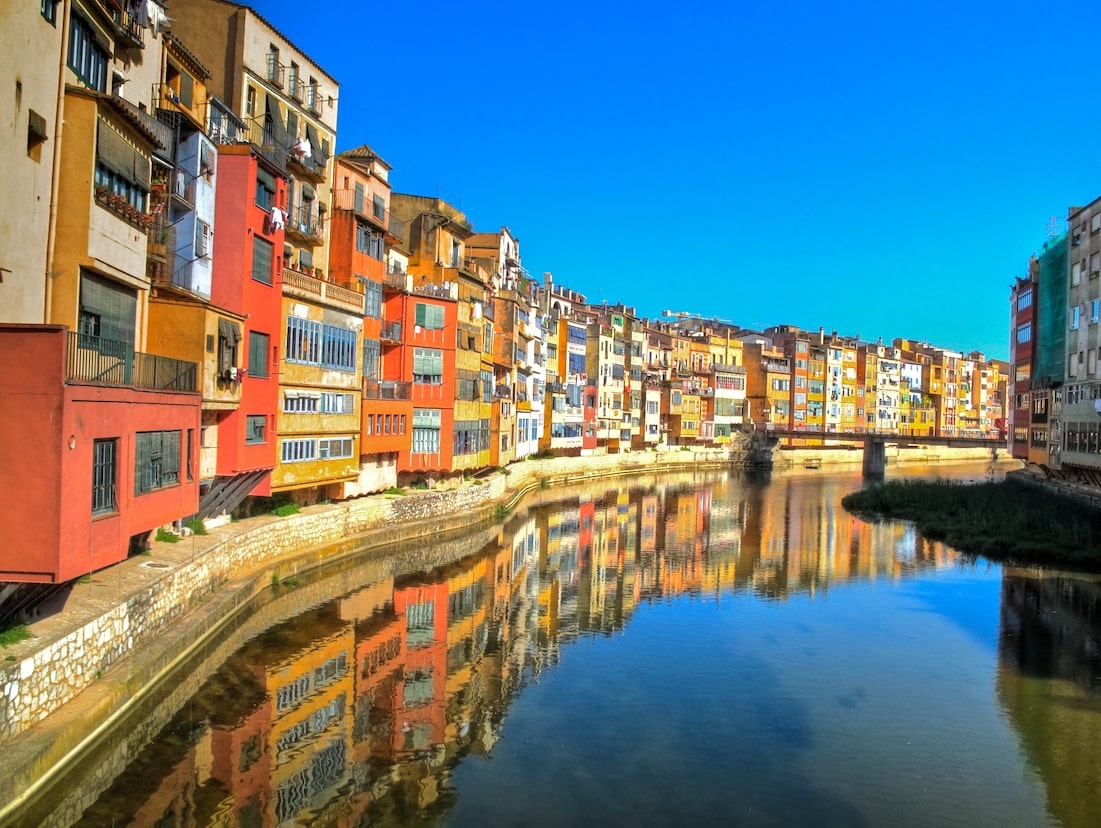
The Girona-to-coast routing hinge decides whether Costa Brava feels like a real Catalonia chapter or a scenic overreach. Girona is not just a bonus stop on the way to the sea. It is the point where the day changes character: old-stone lanes, Onyar river crossings, the cathedral approach and the Jewish Quarter give the route cultural weight before the coastline asks for a slower lunch and more visual space.
For a private day, the hinge usually works best as a disciplined sequence. Leave Barcelona from Eixample, use Girona for context while the group is fresh, then continue toward one coastal setting rather than trying to sample the entire shoreline. That might mean one village, one viewpoint, and one lunch, with the rest cut deliberately. The mistake is to treat Costa Brava as a string of small stops. Every extra village adds parking, walking, heat exposure, and another decision about whether the view is worth the time. The day begins to feel shorter even as the route becomes longer.
For an overnight, the same hinge can become useful in a different way. Girona can take the cultural weight of the transfer day, leaving the late afternoon and evening for the coast. The next morning can then be coastal without the psychological pressure of driving back immediately after lunch. This is the case where moving hotels can remove friction rather than create it. The overnight is buying sequence, not status.
The route also exposes a luxury-travel truth that is easy to miss: privacy matters most at the transitions. A private guide adds value in Girona because the old town can blur if you cross it as a pretty stop between drives. Chauffeured routing adds value when the party has luggage, when lunch timing matters, or when the return to Barcelona would otherwise flatten the evening. The value is less about being pampered and more about not spending your best attention on navigation, parking, restaurant timing, or whether to continue to the next cove.
Be especially careful with celebration trips and family groups. A couple celebrating an anniversary may welcome the hotel move if the coastal evening is the point. A multigenerational family may experience the same move as a reset tax: suitcases, room assignments, children asking when the beach starts, grandparents waiting in a lobby, and everyone losing the calm that was supposed to be the reason for going north. The geography is the same; the traveler consequence is not.
Luggage, coastal lunches and the Eixample departure morning
The smoothest Barcelona-to-Costa Brava plans treat luggage and lunch as design decisions, not afterthoughts. An Eixample departure morning is the practical anchor: it keeps the party near the city’s hotel core, reduces the need to cross from a beach base back through the center, and gives a private driver or guide a cleaner start before the day turns toward Girona and the coast.
Hotel position inside Barcelona also matters more than travelers expect. A Gothic Quarter hotel can be wonderful for evening atmosphere, but early luggage movement through old-town edges, taxi access around narrow streets, and the need to cross toward the northbound route can make the morning feel busier. A Barceloneta room may sound coastal, yet it can pull the group away from the Gaudí and Eixample logic that defines the first city days. A central Eixample base near Passeig de Gràcia or Rambla de Catalunya is less theatrical, but for a Costa Brava departure it often behaves better.
If Costa Brava remains a day trip, luggage should usually stay behind in Barcelona. That single choice protects the day. The group can leave with light bags, return to the same room, and use the coastal lunch as the main reset rather than a prelude to check-in. A private route can then be designed around the right ratio: enough Girona to make the day feel grounded, enough coast to make it feel different, and no filler stop added simply because it appears nearby on a map.
If Costa Brava becomes a one-night stay, luggage has to be managed as part of the experience. The wrong version is a morning of packing, a rushed Gaudí visit, a late departure, a long transfer, and a hotel arrival that leaves no appetite for the coast. The right version starts with the hotel move as the day’s first logistical act. Driver support, luggage handling, and a route that does not backtrack can make the transfer feel purposeful. That is one of the moments where chauffeured Barcelona support earns its keep, especially for small groups, older parents, celebration travelers, and families who do not want the first argument of the day to be about bags.
The lunch decision is just as important. A coastal lunch can be the reason to go north, but it can also become the reason the day fails. If lunch is too late, too long, or placed after too many stops, the return feels heavy. If lunch is the centerpiece and the route is built around it, the day has shape. Food-and-wine travelers should think of Costa Brava as a lunch-led excursion unless they have enough nights to make the hotel stay part of the dining rhythm. For city-based dining priorities, the Barcelona food-and-wine day guide helps decide whether the better meal belongs on Passeig de Gràcia, in El Born, or on the coast.
The same logic applies to the return. A late arrival back into Barcelona is easier when the group returns to a room and neighborhood they already know. It is harder when the return is followed by another new hotel, an unfamiliar dinner plan, or a forced walk through the old town after everyone has already spent the day outside. The right private route should leave the coast before the mood turns from satisfied to depleted.
This is the natural threshold for bespoke support: when the coast is desirable but the overnight is not yet clearly justified, custom routing can preserve the trip without forcing a hotel change. A private day can leave from Eixample, pivot at Girona, make lunch the coastal anchor, and return before the group feels that the entire day became a transfer. To test whether your Catalonia plan should be a day route, a one-night split, or a city-deepening plan, Inquire now.
What Barcelona and the coast do to the body and the trip mood
Barcelona is not a hard city, but it is deceptively tiring when the itinerary is packed. The Eixample grid looks simple, yet the block scale is broad enough that repeated “short” walks add up. The Gothic Quarter narrows the stride and slows groups at crossings, corners and lanes. Park Güell adds slope and outdoor exposure. Barceloneta adds sea air and casual energy, but it can also add center-to-beach transfers when the trip is really about Gaudí and old-town context. When Costa Brava is added on top of that, the body feels the combined effect: earlier starts, later returns, more time seated in vehicles, and more small transitions than the itinerary summary admits.
The coast changes the body differently. It can lower the pace if the plan is honest: one lunch, one shoreline, one walk, and enough time not to chase. It can raise the fatigue if the route becomes a tasting menu of villages. The body does not remember that each stop was beautiful; it remembers getting in and out of the vehicle, finding shade, waiting for the slowest walker, and realizing the return to Barcelona still lies ahead. For older parents and families, that cumulative drag matters more than the difference between one more viewpoint and one less.
The mood consequence is just as important. A well-placed private Costa Brava day can make Barcelona feel larger without making the trip feel fragmented. It gives the travelers a sea-breeze contrast, then returns them to their known hotel, known dinner plan, and known evening rhythm. A poorly placed overnight can make the trip feel shorter: Barcelona becomes the place you are leaving before you have settled, and the coast becomes the place you reach too late to enjoy. That is why the split should be judged by mood, not just by map coverage.
For returning travelers, the mood math can flip. If Sagrada Família, Park Güell and the Gothic Quarter are already familiar, Barcelona may not need to carry every night. In that case, a Costa Brava overnight can feel like an elegant decompression after a concentrated city start. It is not the same recommendation for a first-timer with two nights. The same coastline can be a luxury finish in one itinerary and a planning mistake in another.
A practical luxury Catalonia sequence: day trip, one night or skip?
The cleanest sequence is to decide the coast after you have protected the city’s non-negotiables. The following scenarios are not rigid itineraries; they are planning guardrails that prevent a beautiful coastal idea from weakening the Catalonia trip it is meant to improve.
Two Barcelona nights: skip the overnight and stop forcing the coast
With two Barcelona nights, the coastal overnight should almost always be cut. The city needs its first full day for Sagrada Família, Passeig de Gràcia, Park Güell or a carefully chosen Gaudí route. It also needs at least one old-town or food-focused window so the trip does not feel like a single monument day with a transfer attached. A Costa Brava day may still be possible for returning travelers, but a one-night split usually means sacrificing the very Barcelona depth the trip required.
Three Barcelona nights: use Costa Brava as a private day, not a hotel move
With three Barcelona nights, a private Costa Brava day can work beautifully if the other two days are well sequenced. Place Gaudí first, keep the Gothic Quarter or El Born separate, then use the coast as the contrast day. This is the point where private routing has more value than a hotel change. You can include Girona, a coastal lunch, and a measured return without asking everyone to repack. If the group is unsure whether Costa Brava, Sitges, Montserrat or wine country is the better contrast, the answer belongs in day-trip design rather than a split-stay decision.
Four Barcelona-area nights: the answer depends on what the fourth night is meant to fix
With four nights, the coast becomes a real choice. If the fourth night is meant to create a calmer finish, a one-night Costa Brava stay can make sense after the main Barcelona work is done. If the fourth night is needed because the city plan already feels full, keep all four in Barcelona and use a private day route north. The key question is not “Can we fit it?” but “What does the fourth night improve?” If it improves lunch timing, coastal evening mood, and next-morning ease, split. If it only adds a more photogenic hotel, stay put.
Five or more Catalonia nights: split only after choosing the Barcelona core
With five or more nights, a split is easier to justify, but it still needs discipline. Three nights in Barcelona followed by one or two nights on Costa Brava can work well for couples, food-and-wine travelers, and returning visitors. Families may prefer four Barcelona nights with one private coastal day so that room routines, naps, and dinner rhythm stay predictable. Celebration travelers can go either way: one coastal night can feel special if the whole route is built around it, while an in-city celebration may be stronger if dining, architecture and private guiding matter more than sea views.
The mistake at five nights is to add too many Catalonia pieces because the calendar looks generous. More nights do not automatically make more stops wise. A Barcelona–Costa Brava split works best when it has one job: a city-to-coast contrast that reduces pressure. When it becomes Girona, multiple villages, a major lunch, a hotel change, a beach morning, and a rushed return for another city commitment, the itinerary has lost the very spaciousness it was trying to buy.
Private touring judgment: where customization changes the outcome
Customization changes the outcome when it reduces decision fatigue at the exact points where independent planning gets clumsy. The Barcelona–Costa Brava question has three of those points: the city departure, the Girona-to-coast routing hinge, and the return or hotel-arrival moment. Each one can be made smoother by a guide, driver, or private planner who understands that the goal is not maximum coverage but a clean emotional arc.
On a day route, customization can decide whether Girona comes before the coast, whether lunch should be the day’s centerpiece, how much old-town walking is realistic, and when to turn back. It can also help decide whether Costa Brava is the correct coast at all. Some travelers want a shorter sea-air reset rather than a deeper Catalonia day; in that case, a Sitges or nearby coastal option may be the better answer. The point is not to push the farthest route. It is to match distance to the role the coast is supposed to play.
On an overnight, customization matters because the hotel move can either feel graceful or oddly disruptive. A good plan avoids putting a major Barcelona ticketed site on the same morning as the coastal transfer unless there is a specific reason and enough margin. It uses luggage handling, driver timing, and guide handoff to keep the transfer from becoming the day’s dominant memory. It also refuses the tempting extra stop when the group’s real wish is to arrive, settle, and hear the sea before dinner.
For a fully tailored version of the city-and-coast plan, Orange Donut Tours can connect the Barcelona core, Girona context, coastal lunch, chauffeured movement and hotel decision into one sequence rather than separate bookings. Start from the broader tailor-made Barcelona planning path if the trip includes multiple private days, a celebration, older parents, children, or restaurant-led pacing.
There is one more exception worth naming. If the purpose of the trip is a coastal celebration rather than a Barcelona-first cultural stay, the overnight can become the anchor and Barcelona can shrink by design. That is a different brief. For this article’s brief, Barcelona remains the core and Costa Brava must justify the space it takes from that core.
The final editorial call for a Barcelona–Costa Brava split stay
The best choice for a high-end first Catalonia trip is usually three nights in Barcelona with Costa Brava as a private day if the city basics are already protected. The best choice for returning travelers, couples, and food-and-wine guests with four or more nights can be a one-night Costa Brava finish. The not-worth-it choice is the rushed coastal overnight that makes Sagrada Família, the Gothic Quarter and a serious Barcelona meal compete for leftover time.
Barcelona rewards depth more than nervous expansion. Costa Brava rewards time more than ambition. Put those two truths together and the decision becomes clearer: keep the city intact, let Girona function as the hinge only when it improves the day, and use the coast as a release rather than an obligation.
FAQ
Is Costa Brava worth an overnight from Barcelona?
Costa Brava is worth an overnight when you have at least four Catalonia nights, have already protected the main Barcelona sights, and want a coastal evening or morning enough to justify changing hotels. With two Barcelona nights, the overnight usually weakens the trip.
How many nights in Barcelona should I book before adding Costa Brava?
Book at least three Barcelona nights before seriously considering Costa Brava as a day route, and usually four or more Catalonia nights before making it a one-night split. The third-night Barcelona threshold prevents the coast from stealing the city’s essential pacing.
Should Costa Brava be a day trip or a one-night stay?
Choose a private day trip if this is your first Barcelona visit, if luggage simplicity matters, or if you want Girona plus a coastal lunch without repacking. Choose one night if the coastal evening and next morning are central to the trip mood.
Does Girona need to be included on the way to Costa Brava?
Girona is not mandatory, but it often gives the day cultural structure before the coast. The Girona-to-coast routing hinge is especially useful when you want the excursion to feel like Catalonia, not just a long drive to lunch.
Where should Sagrada Família fit if we split Barcelona and Costa Brava?
Sagrada Família should sit before the coastal move, preferably on a day with enough space for context and no hotel-change pressure. If the split pushes it into a rushed departure morning, the split is probably too aggressive.
Does a luxury coastal hotel make a rushed one-night Costa Brava add-on worthwhile?
No. A luxury coastal hotel does not rescue a rushed one-night add-on if it removes the main Barcelona day, the best dinner, or the only calm Gaudí slot. The hotel should improve the sequence, not compensate for a broken one.
Is Costa Brava better for couples, families or small groups?
Couples and returning travelers often get the most from a one-night coastal finish. Families and multigenerational groups often do better with a private day route because it avoids repacking, room logistics and the fatigue of another check-in.
Can Orange Donut Tours design the Barcelona and Costa Brava plan as one itinerary?
Yes. Orange Donut Tours can shape the Barcelona core, Girona hinge, coastal lunch, chauffeured support and hotel-change decision as one private plan, so the coast is added only when it strengthens the trip.
If you’re interested in any private tours of Barcelona, please reach out to us.















 So if you are looking for the absolute best in Barcelona & surroundings with authentic local fully-licensed native guides whose English you can actually understand and with an exclusive and amazingly fun itinerary