How to Plan a Curated Barcelona Food-and-Wine Day for a Michelin-Level Stay: Passeig de Gràcia, El Born or a Coastal Lunch Route?
Updated
The regret usually starts with the route, not the reservation
Choose Passeig de Gràcia as the backbone of a one-day Barcelona food-and-wine splurge unless the sea view is the emotional reason for the day or you want the more textured, less formal energy of El Born. That verdict works because Barcelona is unusually sensitive to neighborhood sequencing: the wrong lunch district can turn dinner into a second logistics project, while the right one lets you move from aperitif to serious meal without spending the city’s best appetite on taxis, heat, and indecision.
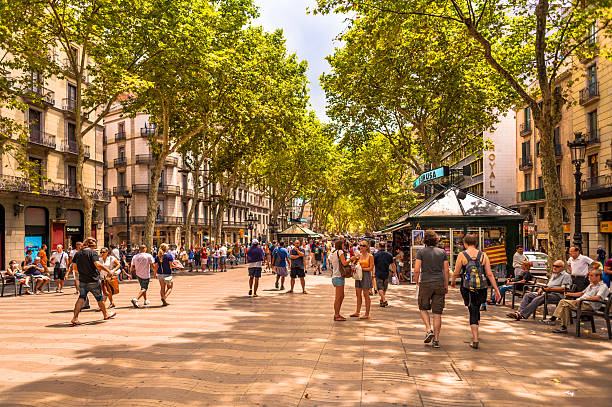
The decisive local proof sits one block off the boulevard, on the Passeig de Gràcia side streets behind Casa Batlló, where the city changes character fast. Step off the showier frontage toward Rambla de Catalunya and the grid becomes calmer, easier to cross, simpler for arrivals and departures, and much better suited to a polished lunch-to-dinner day than first-time visitors expect. In Barcelona, a premium culinary day succeeds less because you chased the most famous room and more because you protected the runway between meals.
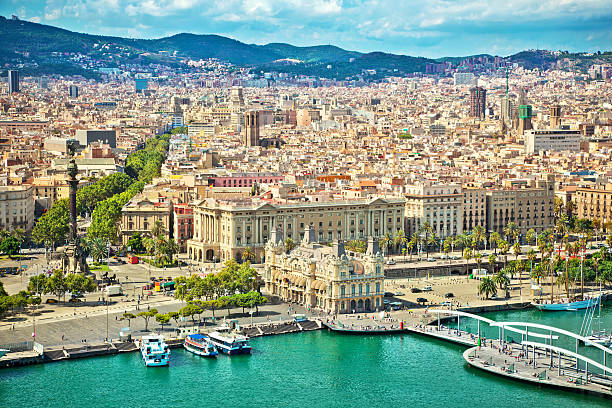
The clearest exception is easy to name. Pick El Born if you want one anchor meal wrapped in street life, wine bars, design shops, and a livelier sense of place than the Eixample gives you. Pick the coast only when lunch itself is the headline and you are happy to accept a looser, more exposed second half. What looks fashionable on a map is not always strong in practice; for a one-day premium food splurge, the Port Vell fringe and the front edge of Barceloneta often feel underpowered as an all-day spine, even when they work beautifully for lunch.
- Choose Passeig de Gràcia if you want the cleanest formal route, the easiest hotel pause, and the best odds that dinner still feels like the day’s peak.
- Choose El Born if you want one serious meal plus texture, movement, and a more social style of grazing between Santa Caterina and the Picasso corridor.
- Choose Barceloneta to Port Olímpic only if sea breeze, celebration lunch, or family-friendly ease matter more than a perfectly protected dinner runway.
Default winner: Passeig de Gràcia. Runner-up: El Born. Wrong fit for most Michelin-level one-day splurges: building the entire day around the coast and then trying to force a formal city-center dinner on top of it. If your hotel choice is still open, that larger neighborhood question overlaps with where to stay in Barcelona, but the food-day answer is narrower and more decisive.
Why Passeig de Gràcia wins most often for a Michelin-level stay
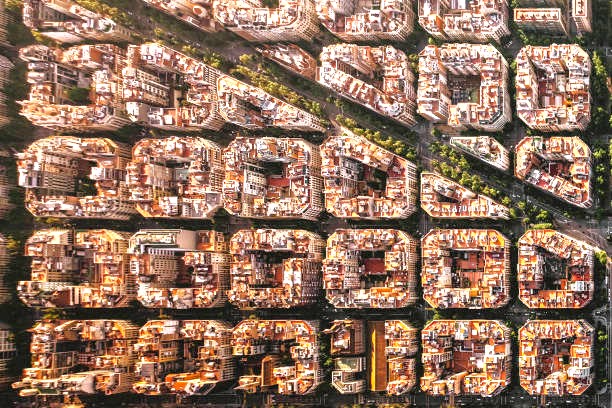
Passeig de Gràcia is the best answer when you want two polished food moments in one day without flattening the evening. The district is not only elegant; it is operationally forgiving. The Eixample grid gives you level walking, direct vehicle access, cleaner curbs for drop-off, and a higher chance that lunch, a rest, and dinner all happen in the same practical orbit instead of three separate moods.
That matters more in Barcelona than many visitors realize. On the grand boulevard itself, the day can feel public and performative. Yet the blocks behind Casa Batlló and along the quieter links toward Rambla de Catalunya and Consell de Cent behave very differently. They let you slip from a refined lunch room to a slow stroll, back to the hotel, then out again for dinner with minimal reset cost. A couple can keep the tone of the day intact. A family can retreat for a nap or wardrobe change without wasting an hour. A small celebration group can split for a break and reconvene without unraveling the plan.
This is also the route where premium dining choice and premium stay tend to reinforce each other instead of competing. If your hotel is in or near the Eixample, you can treat lunch and dinner as chapters of one experience rather than separate bookings that happen to share a date. The neighborhood absorbs delays well, and it is forgiving when one traveler wants shopping, another wants quiet, and another wants to sit with a glass of wine before dinner. The best version of Barcelona luxury is often not maximum movement; it is maximum continuity.
The counterintuitive correction is that you do not want to spend the whole day on the boulevard itself just because the address sounds grander. The smartest Eixample food day uses Passeig de Gràcia as the spine, then slips onto the calmer side streets, hotel lounges, and quieter corners that make the district workable. Staying on the busiest frontage too long can make the day feel public and effortful. Sliding one or two blocks off it makes the same district feel private enough for a Michelin-level stay.
That point matters for value as well as atmosphere. An expensive lunch in the wrong Eixample pocket can still feel overexposed if the room empties you back into heavy foot traffic and shopping crowds with nowhere gentle to drift afterward. A slightly less theatrical lunch on the right side street can support a much better day. For current high-end options, use our Barcelona fine-dining guide as a separate booking reference, then return to this question: can your chosen neighborhood still carry the whole day gracefully once the meal is over?
When El Born beats Passeig de Gràcia anyway
El Born is the better choice when you want one major meal and the city around it to feel vivid, social, and unmistakably old Barcelona. For many couples, this is the more seductive route: not because it is smoother, but because it delivers more texture per block. El Born between Santa Caterina and the Picasso corridor gives you market color, narrower medieval streets, better spontaneous stops, and an easier transition from wine bar conversation to dinner than the formal Eixample ever will.
The key is to use El Born as a textured route, not a formal marathon. The stretch around Santa Caterina can support a late-morning browse, a vermouth, or a selective bite. The Picasso corridor around Carrer de Montcada carries a different energy: denser, more visited, more compressed, and more likely to slow you down if you underestimate it. By the time you drift toward Passeig del Born, you have all the ingredients for a beautiful urban food day, but not always the clean appetite needed for two heavy restaurant commitments.
This is why El Born works best for travelers who value one serious dinner over a perfectly orchestrated lunch-and-dinner pair. The neighborhood invites improvisation. That is a strength until it becomes appetite theft. A glass here, a snack there, another stop because the lane looks irresistible, and suddenly the evening meal is something you attend out of principle rather than desire. If you want the city to seduce you a little and do not mind a less polished line between food moments, El Born wins. If you want ceremony, timing, and a true hotel pause, it usually loses.
Routing reinforces that answer. El Born between Santa Caterina and the Picasso corridor is wonderfully walkable in the sense that you can keep wandering, but it is less efficient in the sense that you rarely move in a straight line. A driver cannot magically remove the narrow-lane rhythm, and even short transfers can feel more interruptive because you are constantly crossing between hidden little streets, busier edges, and the pull of Via Laietana. That is charming on a lighter day. It is less charming when everyone is dressed for dinner and ready to be somewhere already.
There is also a mood distinction worth naming. El Born can be the more memorable route for chemistry, but it can also be the faster route to friction. The mood-preserving version is one anchor meal and light, selective grazing. The mood-killing version is treating the district like a checklist and trying to eat every time it flatters you. In El Born, restraint is not anti-fun; restraint is what lets dinner still matter.
When the Barceloneta to Port Olímpic lunch stretch is worth the detour
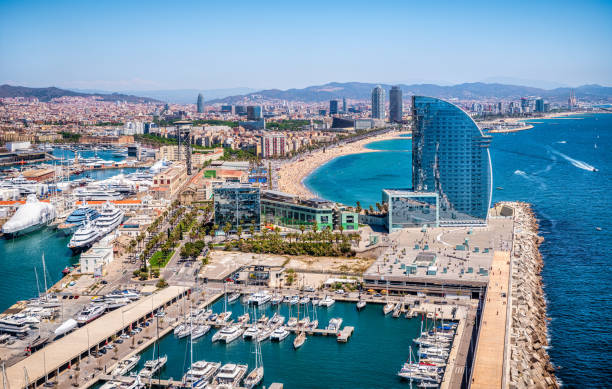
The Barceloneta to Port Olímpic lunch stretch earns its place when lunch is the event, not merely the lead-in. If you want sun, sea air, a celebratory midday table, or a route that works better for mixed ages than a tight medieval district, the coast can be excellent. Barceloneta has a looseness that suits reunion meals, multi-generational groups, and travelers who want Barcelona to feel physically open rather than tightly choreographed.
Still, the coast is a specialist answer, not the default one. Barceloneta’s tighter residential grid, the extra exposure to wind and sun, and the transition toward Port Olímpic all change the energy of the day. Lunch can feel easier there, especially when children need room or when a group wants a brighter midday mood. Dinner is another matter. Once you add the return inland, the wardrobe shift, and the psychological sense of leaving one version of Barcelona for another, the second half of the day often feels detached from the first.
This is where many expensive days quietly lose force. Travelers assume a sea-view lunch is automatically compatible with a major Eixample dinner, but the emotional cost is real. You can absolutely do it. The problem is that you often arrive at dinner feeling as if you have already had the day’s climax. That is why the fashionable seafront can feel underpowered for a one-day premium splurge. It is not poor value. It is simply stronger as a lunch destination than as the backbone of a fully curated culinary day.
If you do choose this route, commit to its logic. Make lunch long. Leave more breathing room before evening. Keep dinner either simpler, closer, or later in emotional importance. If you insist on combining a big coastal lunch with a formal city-center dinner, that is the moment when private transfers and firm advance planning begin to earn their cost. Without those, you are not choosing a glamorous day; you are choosing a split-screen day.
There is also an important difference between Barceloneta and the cleaner run toward Port Olímpic. Barceloneta can feel intimate, tightly gridded, and casually local once you are inside it. Port Olímpic gives you wider visual breathing room and often easier vehicle logic, but it can also make the day feel more exposed and less rooted. Travelers who imagine a seamless beach-to-Michelin arc are often picturing the mood of lunch, not the mechanics of the rest of the day. The mechanics are what decide whether the route feels celebratory or simply overextended.
How to plan a Barcelona food-and-wine day without wasting the lunch-to-dinner window
The simplest planning rule is this: decide first whether the day has one anchor meal or two. Most mistakes come from pretending you can improvise that answer later. In Barcelona, where lunch can stretch and dinner often starts later than many visitors expect, an unresolved middle of the day becomes a trap. You snack because the city is inviting, then you keep your dinner booking because it is prestigious, and neither meal lands as it should.
If the day has two anchors, one of them must be deliberately lighter in emotional and digestive weight. On a Passeig de Gràcia route, that often means a refined, controlled lunch, a proper pause, and dinner as the day’s high point. On an El Born route, it more often means a lighter sequence of bites earlier on, followed by one serious evening table. On a Barceloneta route, the smartest shape is usually a long lunch, a walk or rest, and a far simpler second food moment than travelers first imagine.
Do not confuse wine tasting with wine fatigue. A premium wine day in the city is not improved by drinking heavily at lunch and then trying to evaluate pairings at dinner. The same discipline applies to menu length. Before you build the whole day around a marquee reservation, check the restaurant’s style on its own terms. A top tasting room will often tell you plenty on the official site; Disfrutar’s official menu (https://www.disfrutarbarcelona.com/en/menu) is a useful example of why lunch pacing matters long before you sit down.
A practical way to think about the day is to assign one moment to appetite, one moment to atmosphere, and one moment to recovery. Appetite is the main meal you genuinely care about. Atmosphere is the neighborhood stretch, aperitif, or selective tapas stop that makes the day feel like Barcelona rather than like any luxury hotel city. Recovery is the non-negotiable gap that keeps the second half alive. Skip one of those categories and the day becomes lopsided. Skip recovery, and even very strong bookings can feel oddly flat.
And do not treat late dinner as something you can solve at five in the afternoon. If the evening booking is central, confirm current options from the Michelin Guide: Barcelona starred list (https://guide.michelin.com/us/en/catalunya/barcelona/restaurants/all-starred), then verify the individual restaurant’s own setup before you decide how much to eat earlier in the day. A high-demand room’s reservations page (https://enigmaconcept.es/reserva/) is a better planning tool than vague optimism.
When to add tapas, and when to save your appetite for a serious dinner
Add tapas only when tapas are one of the day’s main acts, not when they are social camouflage for poor pacing. In practical terms, that means tapas work best on an El Born route with one later dinner, on a lighter first day in the city, or as the central food experience for travelers who care more about variety and atmosphere than about a prolonged formal meal. Tapas are at their best when they replace something heavier, not when they stack on top of it.
Save your appetite when the evening is supposed to carry emotional weight. That is especially true for couples celebrating something, travelers booking a tasting menu, or anyone who wants dinner to feel composed instead of dutiful. In Barcelona, it is easy to mistake motion for appetite. A market visit, a wine bar stop, a plate to share, another because the terrace looks good, and suddenly you have spent your curiosity before you have spent your evening.
If the day starts to feel crowded, cut the extra tapas stop first, not the hotel pause before dinner. That is the most useful cut-first rule in this whole article. Rest, wardrobe reset, and a little quiet preserve far more pleasure than another clever bite at the wrong hour. For travelers who actually want tapas to be the star rather than the spoiler, a focused route such as a Barcelona tapas and wine route is usually smarter than trying to bolt tapas onto an already ambitious fine-dining day.
The same logic applies to market-led mornings. A market can sharpen the day, but only if it stays in its lane: a browse, a drink, maybe one selective taste, then out. Once a market stop turns into a rolling lunch, you need to admit that you have already chosen your anchor meal. Barcelona rewards honesty in appetite planning more than ambition.
Tapas also behave differently by neighborhood. In the Eixample they are usually a deliberate prelude or a light substitute. In El Born they can turn into the day itself before you notice. On the coast they are often least necessary of all, because a long lunch already supplies the social, leisurely, outdoor mood many travelers hoped tapas would create. Knowing which function you actually need keeps the day from becoming a blur of good but redundant food.
What Barcelona does to the body, and what it does to the evening
Barcelona is not a mountain city, but it still makes physical demands in ways travelers often underread. The Eixample gives you broad blocks and predictable crossings, yet the distances can feel longer than they look. El Born compresses everything visually while making every hundred meters slower through paving, browsing, crowd drag, and stop-start movement. Barceloneta adds sun, glare, and wind exposure, which are pleasant until they quietly drain you before the evening. None of this is dramatic on its own. The problem is cumulative fatigue.
The city also imposes transfer resets. Crossing from the Eixample into the old city is not hard, but the mood changes with it. Crossing back out can feel like beginning again. Moving from Barceloneta or Port Olímpic inland after a long lunch often carries a bigger energy cost than the map suggests, especially once showers, wardrobe changes, and traffic enter the picture. This is why one poorly chosen detour can flatten a day that looked elegant on paper.
Emotionally, the best Barcelona food days feel shorter than they are because the neighborhoods keep telling the same story. Passeig de Gràcia and its side streets preserve a composed tone. El Born sustains curiosity and conversation when you use it lightly. The coast can make the day feel celebratory but also complete too early. For couples, the most atmosphere-preserving decision is usually a protected gap between the last daylight drink and dinner. The most atmosphere-killing mistake is stuffing that gap with another attraction, another shopping mission, or one more “quick” food stop.
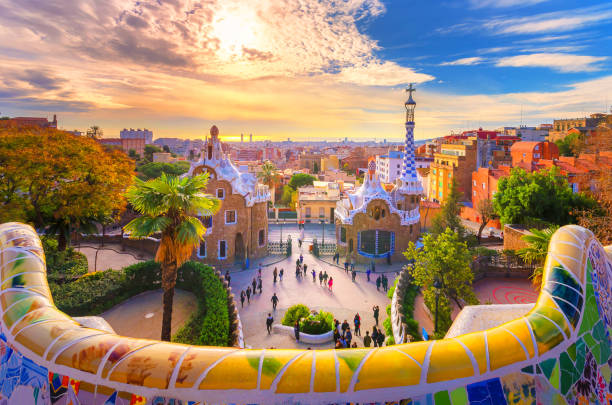
If you are also trying to see major sights, separate the ambition. Barcelona rewards thematic days. A Gaudí-heavy outing, for example, deserves its own logic rather than being sandwiched between lunch and dinner. If that pull is strong, move it elsewhere with our Gaudí day-planning guide and let the culinary day stay truly culinary.
One more practical consequence is dress energy. A city-center lunch and dinner day in the Eixample lets you hold the same visual tone for hours. El Born is more forgiving of softening that tone as you go. The coast tends to force a sharper reset because sea air, sun, and walking exposure make many travelers want a full restart before evening. That is not a small nuisance; it is one of the quiet reasons the coast so often loses to Passeig de Gràcia for a one-day splurge.
Where extra spend changes the day, and where it does not
Extra spend helps when it buys continuity: the right neighborhood hotel, a private transfer at the point of maximum friction, a guide who knows when to keep moving and when to leave you alone, or reservation strategy that makes the day feel pre-shaped rather than improvised. Those are the upgrades that change how the day feels in the body and how the evening survives.
Paying more for the table does not rescue a poorly sequenced neighborhood route.
That sentence is worth keeping in plain view because it is the error affluent travelers make most easily. A celebrated coastal lunch does not become a stronger idea because you pay for the best sea view and then race inland for dinner. A grander bottle at midday does not improve the second meal. A more expensive corner table in El Born does not create the hotel pause the district naturally resists. Spend changes the trip when it removes drag. It disappoints when it only decorates drag.
The strongest premium upgrades in this specific decision are surprisingly practical. Stay close to the neighborhood that will carry the day. Use a private car only where the route actually breaks, most often between coast and city-center evening plans. Choose private guiding if you want someone else to manage transitions, not because you need narration at every sip. Barcelona is a city where polish comes from editing, not from constant enhancement.
That also means there are moments when extra spend is unnecessary. You do not need private transport for a fully Eixample-based day unless mobility needs or weather make it attractive. You do not need a guide through every hour of a meal-centered route if what you really want is a smart handoff between lunch, neighborhood walk, and dinner. The premium judgment is not “more service everywhere.” It is “service exactly where the city would otherwise break the flow.”
When spend is misapplied, it can even make the day feel stiffer. A route with too many managed pieces can lose the easy confidence that makes Barcelona pleasurable. The goal is not to turn every movement into a production. The goal is to protect the key transitions so the day feels effortless from the traveler’s side.
How the right route changes for couples, families, and small celebration groups
Couples usually do best with either a Passeig de Gràcia formal route or an El Born one-anchor route, and the right answer depends on whether you are protecting elegance or chemistry. Passeig de Gràcia protects elegance. The day stays dressed, measured, and easy to re-enter after rest. El Born protects chemistry when what you want is shared discovery, a little looseness, and conversation that grows out of the neighborhood rather than out of perfect timing.
Families are different. A Michelin-level stay does not mean every meal has to behave like a tasting room. Barceloneta can work much better for family lunch because the physical openness lowers tension, children can recover more easily from sitting still, and the coast naturally tolerates a less formal rhythm. But that same strength is why families should be even more skeptical about forcing a second high-stakes dinner later. Often the premium move is to make lunch the splurge and let dinner be calm, nearby, and lower pressure.
Small celebration groups often imagine that more movement equals more festivity. Usually the opposite is true. The strongest group day is one where arrivals are easy, everyone can hear each other, and no one feels as if the schedule is punishing them for wanting another glass. That is why Passeig de Gràcia often beats both El Born and the coast for birthdays, anniversaries, and reunion lunches that continue into the evening. The city supports the group instead of testing it.
In all three cases, the deeper question is not “Which neighborhood is best?” but “What do you want the day to feel like at seven in the evening?” Barcelona answers honestly. If you want anticipation, choose the Eixample. If you want lived-in texture and can live with some drift, choose El Born. If you want midday joy and accept that the day may peak early, choose Barceloneta.
Travel style matters here as much as budget. Some travelers are happiest when the day narrows toward one high point. Others want the social feeling of multiple smaller pleasures. Barcelona can deliver both, but it punishes confusion between them. The more clearly you name your social style in advance, the less likely you are to spend generously on the wrong kind of day.
Should Penedès be part of this food-and-wine day?
No, not if the goal is one excellent Barcelona food-and-wine day inside the city. Penedès is not a garnish for an urban culinary plan; it is a different day with a different rhythm, different appetite, and a different measure of success. The mistake is not going there. The mistake is trying to splice vineyard tasting into a city dining day and pretending the result will feel seamless.
Penedès works when wine itself is the main story: cellar visits, vineyard air, the pace of moving between estates, and the chance to learn rather than merely pair. A Barcelona city food day works when neighborhood continuity is the story: the walk to lunch, the return to the hotel, the late-afternoon pause, the evening table. Those two narratives can both be excellent in the same trip. They rarely strengthen each other on the same date.
For travelers deciding between urban food focus and a winery outing, the practical difference is appetite management. In the city, you are protecting dinner. In Penedès, you are accepting that wine tasting occupies the center of gravity and the meal shapes itself around that. If vineyard time is truly important, give it room to breathe with a private Penedès wine day rather than shrinking it into an add-on.
This distinction becomes even more useful on shorter stays. Travelers sometimes try to merge Penedès with an arrival day, a departure day, or a supposedly lighter Barcelona day because it looks nearby on the map. Nearby is not the same as compatible. Once you factor in departure timing, cellar visits, tasting pace, and the simple pleasure of not watching the clock, wine country stops being the obvious “small add-on” and starts looking like what it is: a separate experience that deserves a separate energy level.
This is one of the clearest places where restraint reads as expertise. Barcelona has enough culinary depth that you do not need to prove seriousness by doing city dining and wine country at once. Separate them, and both days improve.
Book the day in the order that keeps dinner feeling like the peak
Start with the neighborhood spine, not the restaurant list. Once you know whether the day belongs to Passeig de Gràcia, El Born, or Barceloneta, the rest becomes easier to judge: where lunch belongs, whether a hotel break is realistic, whether tapas help or hurt, whether a transfer is optional or essential, and whether dinner should be formal, lighter, or simply nearby. Booking in reverse order makes Barcelona feel arbitrary; booking by route makes it feel curated.
The second move is to protect one quiet gap. That gap can be a hotel return, a calm aperitif, a short stroll through the Eixample grid, or even a private transfer that removes friction at the right moment. What it cannot be is a pile of secondary ambitions. A serious food day fails when every open hour gets filled. Barcelona rewards spare capacity because spare capacity is what lets anticipation rebuild.
Only after that should you lock the food pieces. Use the Michelin Guide and restaurant sites to confirm what kind of meal you are actually planning, then shape lunch and any intermediate stops around that reality. If you want the broader city context around the bookings, tailor-made Barcelona touring is the right next step because it lets you pair reservations, walking load, and evening plans instead of solving each piece in isolation. For travelers who already know they want a food-led day with smooth logistics, private guidance becomes most valuable exactly here, when design matters more than discovery.
This is the moment when a private route earns trust without feeling salesy. The value is not that someone can tell you where Barcelona eats well. The value is that someone can tell you which neighborhood shape preserves your evening, where a car meaningfully saves energy, when a market stop is a mistake, and how to keep lunch proportionate to the dinner you have already committed to. In a city with this much dining depth, the premium service is curation, not abundance.
That is also the point where the evening deserves protection. If you want help mapping the right Barcelona food-and-wine route around hotel location, lunch style, walking tolerance, and dinner ambition, Inquire now. The best curated day is not the one with the most famous names. It is the one that still feels generous by the time the final glass arrives.
For that reason, the strongest food day in Barcelona rarely looks crowded on paper. It looks edited, sometimes almost conservative. Then you live it and realize why it works: you never had to chase the city, the city kept opening in front of you. That is the difference between a day built around names and a day built around sequence.
FAQ
Which neighborhood is best for one Michelin-level food-and-wine day in Barcelona?
Passeig de Gràcia is the best default answer because it supports both polished lunch-to-dinner pacing and an easy hotel break. El Born is better when you want one anchor meal and more street texture. Barceloneta is better only when lunch by the water is the main point of the day.
Is El Born better than Passeig de Gràcia for tapas?
Yes, usually. El Born is stronger for selective grazing, wine-bar energy, and one major later meal. Passeig de Gràcia is stronger for travelers who want a more formal day shape and do not want tapas to compete with dinner.
Is Barceloneta worth it if dinner is in the Eixample?
It can be, but only if you accept that the day may feel split in two. Coastal lunch plus Eixample dinner usually needs more breathing room, and it often benefits from private transfers if the evening booking really matters.
Can I do a market stop, tapas, lunch, and a tasting-menu dinner in one day?
You can, but it is rarely the strongest use of Barcelona. Most travelers enjoy the day more when they choose one or two food peaks instead of four medium ones. If the dinner matters, trim the earlier eating first.
When should I save my appetite instead of adding tapas?
Save your appetite whenever the day includes a serious dinner, a formal pairing, or a long tasting menu. Add tapas only when they are meant to replace a larger meal or when the route is built around grazing rather than around a major evening table.
Should I combine Penedès with my city food day?
No. Penedès deserves its own day if wine country is a true priority. Combining it with a Barcelona lunch-to-dinner splurge usually weakens both experiences.
What is the most useful thing to cut if the day starts feeling overpacked?
Cut the extra tapas or market stop before you cut the quiet gap before dinner. The pause is what preserves appetite, mood, and the sense that the evening still has somewhere to go.
If you’re interested in any private tours of Barcelona, please reach out to us.










 So if you are looking for the absolute best in Barcelona & surroundings with authentic local fully-licensed native guides whose English you can actually understand and with an exclusive and amazingly fun itinerary