Where to Stay in Barcelona for a Tailor-Made First Visit: Eixample, Gothic Quarter or Gràcia?

Updated
Eixample is the best base for a tailor-made first visit to Barcelona, and the sweet spot is Passeig de Gràcia above Plaça Catalunya. It wins because that stretch makes Gaudí-heavy days easier to thread together, keeps guide and taxi pickups simple, and lets dinner run late without turning the trip back to the hotel into a second outing. The caveat is that travelers who care more about old-stone atmosphere than sleep quality, curb access, or easy returns may still prefer the Gothic Quarter, while Gràcia can beat both if neighborhood evenings matter more than sightseeing efficiency.
My thesis is simple: in Barcelona, your hotel choice decides whether the city feels like one continuous day or three separate mini-trips stitched together by transfers, slopes, and crowd bottlenecks. The first-time visitor who sleeps in the right place will feel that Barcelona is surprisingly fluid; the first-time visitor who sleeps in the wrong place will keep “arriving” in the city over and over again.
That is why I would default to Eixample before I default to romance. If Gaudí is central to the trip, if one dinner may stretch into midnight, if you want a polished arrival and painless departures for private guiding, or if you simply do not want to drag yourselves back through the densest evening crowds every night, Eixample keeps the whole visit better connected. If that is already the trip you are building, Complete Gaudí private tour is the natural next layer once the base is fixed.
The ranked ladder for a first Barcelona stay
1. Eixample: Best overall for first-time visitors, especially couples, families, celebration trips, food-and-wine travelers, and anyone who wants the city to run smoothly from breakfast through a late dinner. Broad sidewalks, easier car access, cleaner hotel arrival logic, and shorter Gaudí-day backtracking make it the default winner.
2. Gràcia: Best for travelers who want Barcelona to feel like a lived-in neighborhood after dark, who enjoy local squares and slower evenings, and who do not mind that some headline sights require more deliberate routing. It can be the most satisfying mood choice, but not the most efficient first base.
3. Gothic Quarter: Best only for travelers who knowingly accept noise, denser crowds, and trickier pickups in exchange for sleeping inside the oldest part of the city. The Gothic Quarter is the most overbooked district in Barcelona relative to how useful it is as a base for a first trip.
The key comparison is not “which area is prettiest.” It is which area preserves the most day shape. For a first visit, I would judge Barcelona bases by five things: how easily you can start a Gaudí morning, how annoying the return to the hotel becomes at midday or late at night, how good the evening choices feel within an easy walk, how cleanly a car can meet you, and how much crowd density you are willing to absorb before it starts to flatten the trip.
Here is the counterintuitive correction most planners need early: paying extra to sleep inside the Gothic Quarter rarely buys the kind of convenience people imagine. It buys atmosphere, yes, but atmosphere is not the same as useful access when your mornings start at Sagrada Família, your afternoon continues toward Passeig de Gràcia, and your dinner might finish in Eixample or El Born rather than beside your hotel.
Where should first-time visitors stay in Barcelona if Gaudí is the center of the trip?
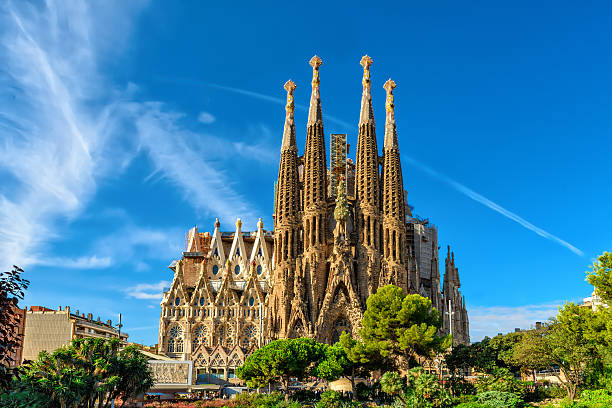
Eixample is the answer when Gaudí is the spine of the visit. This is the district that most reliably turns Barcelona into a city of clean lines rather than daily detours.
The best micro-location is Passeig de Gràcia above Plaça Catalunya because it sits on the hinge between old town access and the modernist spine. You can walk north into the architecture-rich part of Eixample without burning energy before the day starts; you can come back south toward the edge of the old center without feeling stranded; and late at night you are returning to streets with easier orientation, easier lighting, and cleaner drop-off points than the medieval core. That one stretch changes taxi dependence, return-to-hotel ease, and late dinner flexibility in a way many first-timers only understand after they have chosen badly.
Eixample is also the district where paying for the room itself often earns its keep. A quiet upper-floor room on a good Eixample block, or a hotel with dependable doorman service and clear curb access, can noticeably improve sleep, loading, and pickup flow. That matters when a private guide is meeting you in the morning, when grandparents or younger children are involved, or when you want to come back between visits without turning the reset into a miniature logistics exercise.
If you want a calmer Eixample expression, the blocks that drift toward Passeig de Sant Joan can feel noticeably gentler than the busiest retail sections, while still keeping you well connected. If you want the classic first-visit architecture corridor, the Provença and Passeig de Gràcia axis keeps Casa Milà, Casa Batlló, and your daily routing in cleaner alignment than most old-town addresses can.
The streets are broader, the block pattern is easier to read, and the mood at the end of the night is calmer in a very practical way. In the Gothic Quarter, a late dinner can still leave you with one more disorienting walk through tight lanes. In Eixample, a late dinner often ends with the pleasant feeling that the city is finished for the night and the hotel is simply there. That emotional difference sounds small on paper and becomes decisive by day two.
There is also a useful truth about first visits: Barcelona’s greatest hits do not sit inside one compact old core. They pull you between the old city, the Eixample grid, and the hills above Gràcia. Eixample handles that spread best. It does not eliminate movement, but it shortens the psychological distance between the parts of the city you are most likely to use. That is why the district works for such different trip styles: anniversary weekends, multigenerational stays, culinary trips with late reservations, and short first visits where two-and-a-half days must carry a lot.
For families, Eixample is the easiest answer among the three neighborhoods in this guide. You get simpler stroller movement, fewer points where crowds compress the sidewalk, more natural room for a child to walk beside you, and smoother loading for cars or taxis. For older travelers, the case is just as strong: fewer awkward stone-lane arrivals, less wandering to find a driver, and a better chance that a midday pause actually feels restorative rather than half-spent on the route back.
For food-and-wine travelers, Eixample is not just convenient; it is strategically forgiving. You can go serious at lunch, rest, then head back out without feeling that dinner requires a second wind. That matters in Barcelona because the city rewards appetite but punishes overpacking. A base in Eixample lets you enjoy one ambitious meal without sacrificing the next morning. When people imagine a celebratory first stay, they often picture the Gothic Quarter. In practice, many celebratory trips run more elegantly from Eixample because you can finish a long dinner and get home in a composed, upright mood instead of in a crowd-soaked one.
The neighborhood does not lack character; it simply expresses Barcelona differently. The appeal here is not medieval drama. It is the pleasure of ending up in the right place at the right time without heroic effort. That is the difference between a district that looks correct in photos and one that supports the whole trip. If you want that part of Barcelona interpreted properly rather than treated as a backdrop, Eixample private tour fits naturally once your hotel is set.
Who should avoid Eixample? Travelers who would regret not stepping out of the hotel directly into old lanes and church squares may find it a touch too composed. Some couples want a more theatrical sense of place from the lobby onward, and some repeat visitors genuinely enjoy staying somewhere less efficient. But that is a preference choice, not a first-trip planning rule. For first-time visitors, Eixample wins because it protects time, sleep, and shape.
When the Gothic Quarter earns the hassle — and when it does not
The Gothic Quarter only earns its complications when the atmosphere itself is the trip priority. If you want to open the door and feel plunged into the oldest fabric of Barcelona, and you are willing to trade away smooth pickups and quieter nights, then the Gothic core can still be emotionally right.
What it does best is immediate old-city immersion. Morning coffee feels cinematic. The last walk back can feel dramatic. For travelers who are happy to let the city be messy, dense, and full of after-hours movement, that can be thrilling. It is especially attractive to couples on short romantic stays who want their hotel surroundings to carry the mood, not just the route.
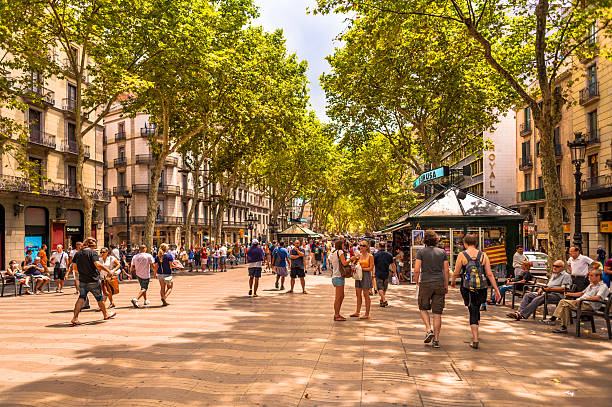
But the Gothic Quarter is the district most travelers romanticize before they test its mechanics. This is the famous area that is most overbooked relative to its usefulness as a base. The lanes are narrow, the hotel approach can involve a final suitcase drag over stone, and “nearby” on a map can still feel slow in reality when the route cuts through dense pedestrian traffic around La Rambla, Carrer Ferran, or the lanes near Plaça Reial. If your hotel sits deep in the core, the city can feel farther away at exactly the moments you want it to feel easy: the first morning, the pre-dinner change, and the last return.
The pickup problem is real. Drivers frequently do not meet you at the exact hotel door in the Gothic core, and even when the car gets close, the last stretch may be awkward. That matters more on tailor-made trips than people assume. A hotel base is not only about where you sleep. It is the loading point for guides, museum starts, airport transfers, and any mid-trip adjustment when weather, energy, or appetite changes. The Gothic Quarter makes spontaneity more expensive in effort.
Noise is also not a narrow complaint from light sleepers; it is part of the district’s operating system. The sound profile shifts from rolling suitcases and voices to late-night movement and then to early service activity. Some streets stay surprisingly calm, but many do not, and first-time visitors often underestimate how much sensory density they can absorb for three straight days before the romance becomes a tax. If your crowd tolerance is low, the Gothic Quarter should be your walking district, not your sleeping district.
There is a second correction here that helps planners immediately: some travelers who think they want the Gothic Quarter are actually happier on the El Born side of the old city. El Born can still feel historic and atmospheric, but on certain edges it offers cleaner dining options, slightly easier returns, and a different evening tone. The hinge is Via Laietana. Cross one way and you get the deeper medieval tangle of the Gothic core, especially the lanes west of Via Laietana toward Plaça Sant Jaume; cross the other and you may find a version of old Barcelona that suits dinner-goers better. That does not change the headline answer of this guide, but it explains why so many “Gothic or not?” debates are really about which side of that divide you imagine yourselves enjoying after dark.
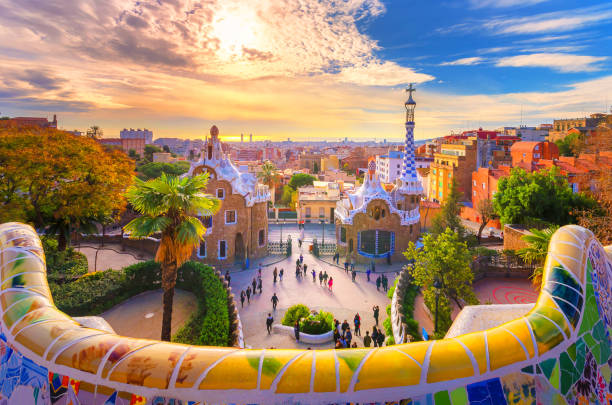
The Gothic Quarter is strongest for travelers who plan to spend more of the trip in the old city itself: the cathedral area, old lanes, the waterfront side of Ciutat Vella, and bars or restaurants they actively want to reach on foot at night. It is weaker for travelers who have already built the classic first-timer pattern: Sagrada Família, modernist houses, a timed Park Güell visit, one serious dinner, and perhaps a private car part of the day. That pattern keeps pulling you outward. The Gothic Quarter does not stop the day; it just adds more re-entry friction each time you come back.
Families with young children should usually avoid the deepest Gothic core. So should travelers with mobility concerns, anyone who needs a reliable calm evening after long sightseeing, and small groups that want seamless meetups without “Where exactly is the car?” phone calls. The district can still work beautifully for agile couples who stay up late and want atmosphere at the door. But it is a narrow success story, not the default first-trip recommendation.
If you know you are choosing the old town for mood rather than efficiency, make that a deliberate purchase, not a surprise. Book for quiet as aggressively as you book for charm, check how the hotel is actually reached, and understand that the prettiest lane is not automatically the best logistics. Travelers who want the history without the nightly return cost often do better exploring the old city deeply by day with Gothic Quarter & Old Town private tour and then sleeping elsewhere.
Gràcia wins on evening life — but only when the trip can accept a slower sightseeing rhythm
Gràcia is the runner-up because it can deliver the most satisfying evenings of the three, but it is not the automatic answer for a first trip heavy on headline sights. Stay here when neighborhood life matters more than frictionless access to every major stop.
What people love about Gràcia is easy to understand once they are in it. The scale feels human, the squares invite lingering rather than marching, and the district gives you a version of Barcelona that feels inhabited rather than staged for visitors. A dinner near Plaça del Sol or a slow walk home through side streets can give the trip the exact emotional texture many travelers hoped to find in the Gothic Quarter, but with less theatrical pressure and, often, more genuine ease once you are there.
This is where the Gothic Quarter core versus Gràcia evenings tradeoff becomes decisive. If your tolerance for crowds is low and your ideal night is conversation, wine, and a neighborhood square rather than a high-density old-city swirl, Gràcia can flip the answer. Some travelers sleep better, dine better, and feel more like themselves here. For repeat visitors, that is often enough to make Gràcia the clear winner.
For a first-time visitor, though, Gràcia asks for stronger self-knowledge. It is not far in a dramatic sense, but Barcelona’s top sights do not sit right on top of it in the way many maps imply. Park Güell is closer in spirit than the Gothic Quarter is, and the upper parts of the district can make that visit feel smartly placed. But classic first-time sightseeing tends to pull you back down and across the city: toward the central Eixample, the old core, and certain dining zones. That repeated up-and-down movement is not catastrophic, but it changes the rhythm of the trip.
Terrain matters here more than people expect. Gràcia is not a mountain district, yet parts of it subtly remind your body that Barcelona is not flat in the same way from neighborhood to neighborhood. Those mild climbs, the extra turn before a car pickup, or the longer finish after dinner can accumulate. Upper Gràcia and the direction of Travessera de Dalt sharpen that feeling more than the lower, more connected parts of the district. On a light planning day, they feel charming. On the day that already includes timed entry, heat, and a late meal, they feel like work.
That is why Gràcia is wrong for some first visits, especially short ones. If you have two or three nights, if you are trying to fit Sagrada Família, a Passeig de Gràcia architecture stretch, old-town wandering, and one ambitious dinner into a compact window, Gràcia is usually not the base I would pick. It asks too much from the connective tissue of the day. The district becomes more persuasive as the stay lengthens, as the trip gets slower, or as “we want to feel neighborhood Barcelona at night” moves to the top of the brief.
It is excellent for travelers who hate tourist-zone evenings, who like independent shops and a less dressed-up social scene, and who are willing to build the trip around fewer but more enjoyable transitions. It also works well for families who are already committed to a calmer tempo and who value squares, local dining, and a little breathing room over maximum centrality. Just do not mistake “pleasant to stay in” for “best located for everything.” Those are not the same judgment.
Gràcia can also be a strong choice for travelers who plan to let the trip breathe, perhaps pairing one major architectural day with one neighborhood day, one culinary evening, and one excursion beyond the center. The district suits people who enjoy the idea that the hotel area itself is part of the destination. If that sounds like you, Gràcia private tour is a better companion than a headline-chasing city loop.
How your base changes dining range, taxi use, pickups and the feel of the whole day
The best district is the one that wastes the least energy between the parts of the day you care about most. In Barcelona, that means the hotel changes more than sleep: it changes how hard lunch feels, whether a pre-dinner pause is realistic, what kind of restaurant you can say yes to, and whether the final return lands as a calm finish or as one last obstacle.
Eixample is the district that handles the full day best. You can start with architecture, continue toward another sight or a museum, come back to the hotel without resentment, then go out again for dinner. Because the blocks are clearer and the curb access is better, every move asks less of you. This matters on private trips because the elegant version of a day is rarely nonstop. It includes tactical pauses, route changes, weather adjustments, and the option to return without feeling that you have broken the day in half.
In the Gothic Quarter, midday resets are where many first visits quietly lose shape. The idea of “we’ll just drop by the hotel for a bit” sounds easy until that drop-by involves dense pedestrian lanes, a less direct return, and another emergence back into the crowd before dinner. The district rewards commitment: once you are in it, you often keep going rather than bouncing in and out. That can be fine for some travelers. It is less fine for families, older visitors, or anyone who wants the option of changing plans gracefully.
Gràcia changes the day differently. It does not compress the city center, but it makes the evenings more distinctive. If your happiest version of Barcelona ends in a neighborhood restaurant and a walk across small squares rather than a final sweep through the busiest old-town lanes, Gràcia can make the trip feel more personal. The tradeoff is that some daytime sightseeing flows require firmer sequencing. You do not get to be lazy about geography in the same way.
This is also where Barcelona acts on the body. The city’s friction is not dramatic like a hill town’s, yet it accumulates through heat, timed entries, partial climbs, slow-moving old-town lanes, and the stop-start nature of crowd navigation. A medieval district may look centrally placed on a map and still feel tiring because every return involves compression and reorientation. A neighborhood that seems slightly less romantic may feel easier simply because the walking is more linear, the pavements are broader, and the final 300 meters are not a maze. First-time visitors tend to plan to their enthusiasm. The city answers with knees, feet, and patience.
Barcelona also acts on mood. A bad base does not only add minutes; it makes the evening feel like an afterthought. By the time you have navigated the last transfer or the last lane, the appetite for one more glass of wine or a relaxed dessert is gone. A well-placed base preserves the night. You still have enough of yourselves left to enjoy it. This is why Gràcia can become magical for the right traveler and why Eixample wins so often for the broad field: both can give the evening room to exist, just in different ways. The Gothic Quarter, by contrast, can overdeliver on backdrop and underdeliver on emotional ease.
Dining is where the hotel choice becomes especially visible. The Michelin Guide: Barcelona starred list is useful not only for choosing a restaurant, but for understanding return patterns after a long meal. Barcelona’s stronger fine-dining geography often plays more naturally with Eixample than with a deep old-town base. That does not mean you must dine formally every night. It means the district gives you more permission to say yes to a serious dinner because getting home afterward is simpler.
If your evenings are a major part of the brief, the practical next read is our Barcelona fine-dining guide. But the planning order matters: choose the base first, then choose the ambitious dinners that base supports. Not the other way around.
Timed entries matter too. Before you lock lunch and dinner around the big two Gaudí sites, check the official Sagrada Família tickets and official Park Güell tickets pages. The point is not that your hotel must be next door to either site. The point is that when these anchors sit on the day, Eixample usually absorbs the in-between movement better than the Gothic Quarter, while Gràcia only improves the plan if you are consciously tilting the trip toward a more local evening rhythm.
If you are building the city around chauffeured or semi-chauffeured days, the verdict becomes even clearer. Barcelona is a city where the quality of the pickup point affects how premium the day actually feels. A district with clean curb access preserves elegance; a district with tricky meeting points erodes it. That is one reason some travelers who would otherwise love the Gothic Quarter ultimately have a smoother experience with chauffeured Barcelona touring from an Eixample hotel.
The expensive mistake to cut first
The first thing I would cut is the assumption that your hotel should buy atmosphere before it buys day shape. That single mistake drives a surprising number of disappointing first visits.
In practice, premium spend helps most when it secures one of three things: a quieter room, a cleaner arrival and pickup setup, or a micro-location that shortens the repeated movements of the trip. Premium spend helps far less when it only buys postcard adjacency. A beautiful old-town address can still leave you more tired, less flexible, and less inclined to go back out after a rest. For travelers who want the city to feel generous rather than effortful, that is a bad trade.
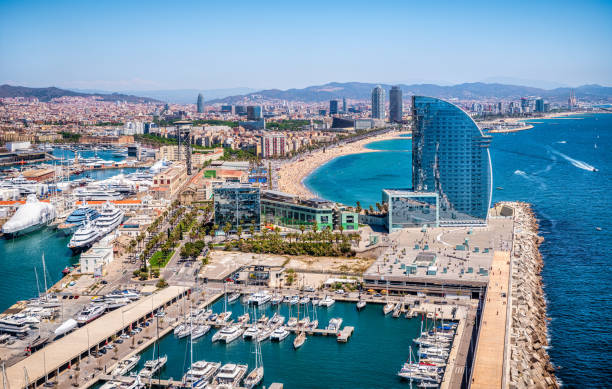
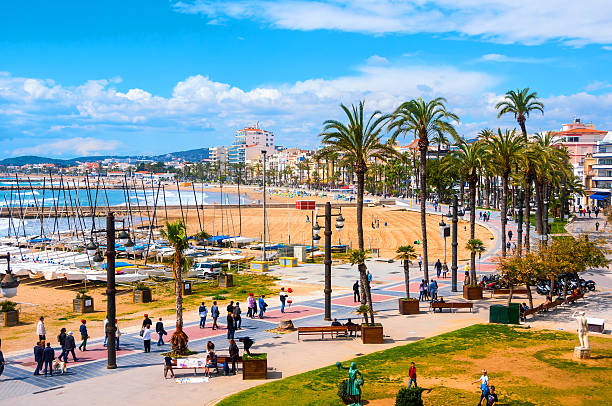
Paying more for a seafront stay does not materially improve a Gaudí-first trip. It may sound glamorous, and for some summer beach priorities it can be correct, but it usually adds distance to the parts of Barcelona first-time visitors actually organize around: Sagrada Família, Passeig de Gràcia, the old core, one or two serious meals, and perhaps a museum or shopping stretch. The sea is wonderful to visit. It is not the smartest first base when the trip brief is architecture-forward and city-centered.
If your budget has room for one meaningful upgrade, I would rather spend it on the right Eixample micro-location, or on room quality in a genuinely restful pocket of Gràcia, than on a more “dramatic” address in the deepest Gothic core. The best value is not the room with the most seductive map pin. It is the room that lets the city flow.
There is another cut-first move worth making: do not force every evening to happen in the neighborhood where you sleep. Barcelona works better when you let dinner pull you to the right part of the city and trust that the return will be manageable. That is exactly why Eixample is so strong. It tolerates variety. You can dine in Eixample, old town, or elsewhere and still end the night with dignity. Gràcia tolerates variety too, but asks you to be more intentional. The Gothic Quarter often makes the reverse mistake tempting: you stay nearby because going farther begins to feel slightly expensive in effort, and suddenly the city narrows around the hotel.
For readers still deciding between atmosphere and efficiency, here is the cleanest practical summary. Choose Eixample if this is your first Barcelona visit and you want the city to behave well. Choose Gràcia if your evenings matter more than your mornings and you genuinely want a neighborhood life rather than a checklist hub. Choose the Gothic Quarter only if the old-city setting is so central to your trip identity that you are comfortable paying for it in noise, pickups, and repeated crowd exposure.
Once that choice is made, the rest of the trip gets easier fast. It becomes simpler to choose the right pacing, to know whether a car is worth it, to decide how ambitious dinner should be, and to keep late-night backtracking from eating the mood. If you want help shaping Barcelona around the base that suits your group, Inquire now.
FAQ
Is Eixample or the Gothic Quarter better for a first trip to Barcelona?
Eixample is better for most first trips because it makes sightseeing flow more cleanly, gives you easier pickups, and usually delivers calmer returns after dinner. The Gothic Quarter is only better when sleeping inside the old-city atmosphere matters more to you than quieter nights and smoother logistics.
Is Gràcia too far for first-time visitors?
Gràcia is not too far in an absolute sense, but it is less efficient for classic first-time sightseeing than Eixample. It works best when you want neighborhood evenings and are willing to plan the days more deliberately.
What is the best micro-location in Barcelona for a first stay?
Passeig de Gràcia above Plaça Catalunya is the strongest micro-location for many first-time visitors because it links Eixample comfort with easy access toward the old center and supports late dinner returns especially well.
Is the Gothic Quarter too noisy to stay in?
For many travelers, yes. Some streets are quieter than others, but the district as a whole carries more nighttime movement, more crowd density, and more stone-lane noise than Eixample. Light sleepers should be cautious.
Should families stay in Eixample or Gràcia?
Eixample is usually the safer first answer for families because sidewalks are broader, pickups are easier, and the neighborhood handles midday returns better. Gràcia can work very well for families who prefer a slower, more local rhythm and do not need maximum sightseeing efficiency.
Is El Born better than the Gothic Quarter?
For some travelers, yes. El Born can offer old-city character with a different dining and evening feel, and on some edges it is easier to use than the deepest Gothic core. But if the question is simply “best base for a first trip,” Eixample still beats both more often.
Does a seafront hotel make sense for a first Barcelona visit?
It can make sense for beach-led summer priorities, but not usually for a Gaudí-first city trip. If architecture, old-town wandering, and strong dinners are the main brief, the seafront premium often works harder on the brochure than on the actual routing.
Which area is best for late dinners and easy returns?
Eixample is the strongest all-around choice for late dinners and easy returns because it combines good restaurant access with cleaner streets, better curb access, and a more straightforward route back to the hotel than the Gothic Quarter. Gràcia can be excellent for neighborhood dinners, but not as universally flexible.
If you’re interested in any private tours of Barcelona, please reach out to us.












 So if you are looking for the absolute best in Barcelona & surroundings with authentic local fully-licensed native guides whose English you can actually understand and with an exclusive and amazingly fun itinerary