Barcelona’s El Call or the Wider Gothic Quarter? A Discerning Private Heritage Day Without Old-Town Blur

Updated
Choose El Call as the spine of the day if Jewish heritage is a real reason for your Barcelona visit; choose the wider Gothic Quarter if this is your first Old Town walk and you need cathedral, Roman, civic, and medieval context in one coherent morning. That verdict works because the Plaça de Sant Jaume-to-Carrer de Sant Domènec del Call hinge is so compact that a general route can pass from political Barcelona into the former Jewish quarter in minutes, yet still miss the meaning of what changed at that threshold. The clearest exception is a short first visit: if you have only one heritage slot in Barcelona and no special Jewish-history interest, a broader Gothic Quarter private route will serve you better than a narrow El Call immersion.
The thesis is simple but easy to misplan: in Barcelona, El Call should be treated as a depth route, not a detour, because its value is not lane-counting but interpretation. A discerning private heritage day succeeds when it keeps the old town from becoming a sequence of handsome stone streets, links Barcelona Cathedral and Plaça de Sant Jaume to the Jewish quarter without flattening either, and leaves enough attention for the evidence that is no longer visually obvious. For travelers comparing tour focus, Orange Donut Tours can shape this around the dedicated ((link:/barcelona/private-tours/jewish-quarter|Jewish Quarter (El Call) Private Tour)) or fold the same layer into a more panoramic Gothic Quarter and Old Town private walk.
The decision in plain terms: El Call depth or Gothic Quarter breadth?
Pick El Call depth when your main regret would be leaving Barcelona with only a generic sense of “medieval lanes”; pick Gothic Quarter breadth when your main regret would be missing the civic and cathedral frame around those lanes. This is not a question of which area is more beautiful. It is a question of which kind of understanding you want to carry home.
Choose El Call as the lead route when:
- You want Jewish Barcelona to shape the day rather than appear as a brief aside between the cathedral and the old civic center.
- You are traveling with adults or older teenagers who enjoy interpretation, layered history, and the tension between what survives physically and what must be reconstructed through context.
- You have already done, or plan to do, a Gaudí-heavy day and want a completely different intellectual register inside the city.
- You prefer a compact route with fewer visual “headline” stops but more meaning per street corner.
Choose the wider Gothic Quarter when:
- This is your first time in Barcelona and you need Barcelona Cathedral, Roman walls, Plaça del Rei, Plaça de Sant Jaume, and El Call to relate to one another.
- Your group includes children, mixed-interest relatives, or celebration travelers who may resist a dense heritage focus after 45 minutes.
- You want a private guide to keep movement fluid, not to build a specialist seminar around one quarter.
- You have only a half day before lunch, a cruise transfer, or an evening commitment and need the route to feel complete without becoming heavy.
A deep El Call focus is the wrong fit when:
- You are hoping for a checklist of intact monuments. The Jewish-quarter story in Barcelona is powerful precisely because many of the most important explanations are interpretive rather than obvious at first glance.
- You want broad city orientation on day one. In that case, begin with the Gothic Quarter and let El Call appear as one serious layer inside it.
- You are already tired from Sagrada Família, Park Güell, and cross-city transfers. El Call rewards attention; it does not work well as a late-day filler.
This framework is the first mistake-prevention step. A private guide can make both routes excellent, but the guide cannot make a narrow heritage route feel broad, and cannot make a broad route feel specialist without cutting something. The more honest choice is to decide what you are protecting: depth, orientation, or energy.
How El Call differs from a general Gothic Quarter walk
El Call is not simply the “Jewish part” of the Gothic Quarter; it is a more concentrated interpretive layer inside a larger medieval and civic district. A general Gothic Quarter walk usually explains Barcelona’s Roman foundation, cathedral power, royal and municipal spaces, medieval trade, and the survival of old lanes beneath modern city movement. El Call asks a different question: how did a Jewish community live inside, contribute to, and then become violently displaced from this urban fabric?
That difference changes the pace. On a general route, the guide may use the corner near Plaça de Sant Jaume as a hinge and move quickly toward Carrer del Bisbe, Barcelona Cathedral, Plaça del Rei, or the Roman-wall fragments. On an El Call-led day, that same hinge becomes a pause point. Why is this threshold so close to the city’s political center? What does it mean when the most visible spaces are Christian or civic, while Jewish history requires a quieter reading of street names, property, pressure, and absence?
The traveler consequence is significant. A broad Gothic route gives you more landmarks and a more immediately satisfying sense of having “seen” the old town. El Call gives you fewer obvious visual payoffs but more interpretive return if your guide can make the compact geography intelligible. Without that interpretation, the area can feel disappointingly quick. With it, the lanes stop being atmospheric filler and become a structured argument about coexistence, proximity, commerce, vulnerability, and memory.
This is why the deepest El Call day should not be padded with random Old Town sights simply to make it feel bigger. It should use the broader Gothic Quarter selectively: Barcelona Cathedral for ecclesiastical power, Plaça de Sant Jaume for civic continuity, and the transition toward Carrer de Sant Domènec del Call to show how compressed the social geography becomes. A private route that keeps those relationships clear will feel fuller than a longer route that simply adds more streets.
The route hinge that prevents old-town blur
The Plaça de Sant Jaume-to-Carrer de Sant Domènec del Call hinge is the single most useful planning cue for this decision. It shows how quickly a traveler can move from Barcelona’s civic heart into a former Jewish-quarter setting, and how easily the Jewish layer disappears if the guide treats the movement as a scenic shortcut.
Plaça de Sant Jaume is not a decorative square in this context. It anchors the civic Barcelona that still feels public, legible, and official. Step away from it toward the Call, and the atmosphere changes faster than most first-time visitors expect: tighter lanes, shorter sight lines, more dependence on the guide’s voice, and less help from monumental facades. That small spatial change is the reason an El Call route can feel profound to one traveler and underwhelming to another. The first traveler has been prepared to read the hinge; the second only sees a narrower street.
The counterintuitive correction is that the most famous-looking Gothic Quarter streets are not always the most valuable ones for this topic. Carrer del Bisbe and cathedral-adjacent views may photograph better, but they can also pull the day back into a generalized Gothic mood. For Jewish heritage, the more meaningful work often happens where the visual cue is modest and the guide has to slow the group down just enough to explain what is present, what is debated, and what is gone.
That is also where private pacing earns its keep. A mixed group may need a short civic introduction at Plaça de Sant Jaume before entering El Call; a heritage-focused couple may prefer to spend that time inside the interpretive frame of the Jewish quarter; a family may need shorter stops and more frequent movement. The street hinge is the same. The day changes because the guide decides how much historical pressure to place on that transition.
When the wider Gothic Quarter is enough
A wider Gothic Quarter route is enough when you want a coherent first heritage walk and Jewish history is one layer of your curiosity, not the central reason for the day. This is not a lesser choice. For many first-time Barcelona visitors, it is the more satisfying one.
The wider route lets Barcelona Cathedral, Plaça del Rei, Plaça de Sant Jaume, Roman traces, and El Call sit in relation. That relation matters because El Call can feel too narrow when approached without context. If your group is new to the city, a guide can begin with how Roman Barcino, medieval institutions, ecclesiastical authority, and mercantile life sit close together. Then El Call becomes a meaningful layer within a larger urban system rather than a specialist enclave introduced too early.
This is the right call for celebration travelers, multi-generational families, and groups with uneven attention spans. It allows one person to engage with Jewish history while another enjoys the cathedral setting, the civic squares, and the physical logic of the old town. It also works well when the day needs to pair with lunch, a harbor transfer, or a later Gaudí visit. The route feels complete even if the El Call portion is concise.
The risk is superficiality. A weak broad route reduces El Call to “a few streets of the old Jewish quarter” and moves on. A strong broad route makes a deliberate promise: it will not cover every micro-location, but it will explain why the Jewish quarter belonged near the heart of medieval Barcelona and why its history cannot be understood only by looking for surviving monuments. That is the difference between breadth and blur.
When El Call should lead the day
El Call should lead the day when the traveler wants Barcelona’s Jewish history to shape the route’s questions, not merely decorate a general Old Town walk. This is especially true for heritage-focused couples, families with Jewish ancestry or curiosity, academically minded travelers, and visitors who have already planned major Gaudí sites elsewhere in the trip.
In an El Call-led route, the guide’s job is not to stretch a tiny area into a long walk. The job is to use compact geography to deepen the story. That means spending more time on transitions, names, communal life, restrictions, violence, conversion, memory, and the relationship between the Jewish quarter and nearby Christian and civic spaces. It also means being careful with what cannot be simplified. Not every evocative lane proves the same thing. Not every stone surface is a direct witness to the same episode.
This is where guide interpretation matters most. The visible fabric alone will not do the work for you. A guide has to separate secure historical context from romantic old-town atmosphere, point out why proximity to Barcelona Cathedral changes the reading of the quarter, and prevent the group from treating absence as emptiness. The most valuable moments are often not “look at this facade” moments. They are moments when the guide explains why a short walk from one street to another changes the social meaning of the space.
For travelers who value depth, this makes El Call unusually rewarding. You do not need a large footprint for a strong heritage day. You need a clear interpretive spine, enough patience to let compact streets carry complex meaning, and a guide who knows when to widen to the Gothic Quarter and when to return to the Jewish layer. That is why El Call as a depth route, not a detour, is the better choice when the subject itself is your priority.
What to cut first when the day starts getting overpacked
Cut extra Old Town wandering before you cut the interpretive pauses that make El Call meaningful. The common planning mistake is to add more lanes, more squares, and more “while we are nearby” stops until the day becomes visually rich but intellectually thin.
If Jewish heritage is the focus, do not force a full Barcelona Cathedral interior visit, a long Roman-wall explanation, a shopping drift toward Portal de l’Àngel, and a food crawl into the same heritage block. Each addition may seem harmless because the distances are short. The problem is not distance; it is attention. El Call needs enough quiet concentration for the story to land. Too many adjacent extras make the quarter feel like one more atmospheric pocket in a busy morning.
If broad Gothic orientation is the focus, cut the attempt to make El Call specialist. Give it a serious, bounded segment, then let the route breathe. A family or small group that wants first-time orientation will usually remember a clear 25- to 40-minute Jewish-quarter layer better than a dense hour of specialist material inserted into a route that also promises cathedral, Roman, and civic context.
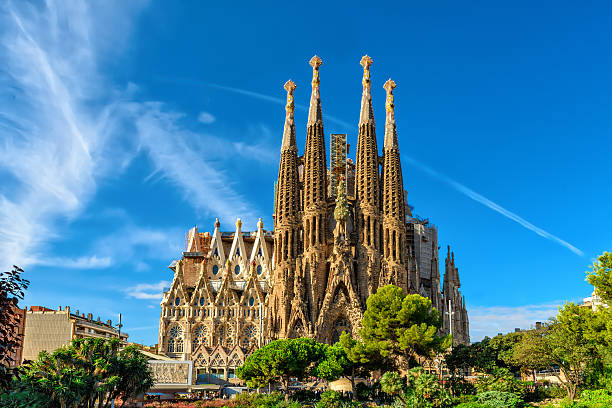
The cut-first rule is especially important after Gaudí-heavy days. Sagrada Família and Park Güell ask visitors to process scale, symbolism, color, timed entries, and sometimes transport friction. If the next day in the Gothic Quarter becomes another dense sequence of details, even excellent content can flatten. The better move is to reduce the number of stops and sharpen the logic between them. For planning around Gaudí entry days, see Orange Donut Tours’ guide to Sagrada Família, Park Güell or Passeig de Gràcia first so the heritage day is not carrying leftover fatigue.
Where guide interpretation changes the experience most
Guide interpretation changes the experience most at thresholds, absences, and competing narratives. El Call is not a route where every important idea appears as a large preserved site with a simple label. The best guiding turns compact streets into a disciplined reading of the city.
Thresholds matter because Barcelona’s old town changes register quickly. Plaça de Sant Jaume, the cathedral precinct, Carrer de Sant Domènec del Call, and the quieter turns around the former Jewish quarter are close enough to blur if you walk them without structure. A guide prevents that by naming each transition: civic center, ecclesiastical setting, Jewish-quarter memory, and later urban overlay. Once those categories are clear, the same short walk feels more intelligible.
Absence matters because heritage travelers often arrive hoping for visible continuity. Barcelona can frustrate that expectation. Some of what matters in El Call is no longer visible in a straightforward way, and some surviving cues require careful explanation. A lesser guide fills that gap with vague romance. A stronger guide says plainly what can be known, what should be treated with caution, and why the lack of obvious monumentality is itself part of the visitor experience.
Competing narratives matter because the Gothic Quarter is not a neutral backdrop. The cathedral, royal and civic spaces, later urban reinventions, and modern tourism all compete for attention. A private heritage guide can connect compact streets, cathedral context, and Jewish-quarter history without letting the old town blur together. For travelers trying to optimize a short stay around one focused private morning, Inquire now.
Comfort, walking load and why a chauffeur is the wrong upgrade here
The Gothic Quarter is a walking district, and a chauffeur is not useful inside its tight lanes; the premium value is guide interpretation and pacing. This is the clearest spend judgment for this article. Pay for the person who can shape the route, not for a vehicle that cannot meaningfully enter the parts of the day that matter.
That does not mean comfort is irrelevant. It means comfort is achieved differently. Good pacing chooses a sensible start point, avoids unnecessary backtracking between the cathedral side and El Call, keeps the group out of the densest pedestrian flow when possible, and builds in short pauses where the guide can speak without forcing everyone to stand in a moving crowd. For older parents or travelers with reduced stamina, the issue is not a long mileage count. It is cobbles, narrow lanes, repeated stopping, heat on exposed squares, and the mental load of staying together in a busy old town.
Barcelona does something particular to the body in this area: it makes short distances feel longer when attention is high and the group is constantly adjusting to pedestrians, uneven paving, shopfront interruptions, and sudden street turns. A route that looks tiny on a map can feel tiring if it is narrated without rhythm. A private guide can reduce that fatigue by alternating explanation and movement, choosing where to stand, and avoiding the false efficiency of cramming every nearby sight into one continuous lecture.
A chauffeur can still be helpful before or after the old town if the day includes a hotel transfer from the Eixample, a later hillier Gaudí site, Montjuïc, or a cross-city lunch. But inside El Call and the Gothic Quarter, the upgrade that earns its cost is not a car. It is a route that understands when to slow down, when to move, and when to leave a tempting extra stop out.
How to avoid old-town sameness after Gaudí-heavy days
To avoid old-town sameness after Gaudí-heavy days, change the kind of attention the day asks from you. Do not simply replace Modernisme facades with medieval lanes. Replace spectacle with interpretation, timed-ticket pressure with a calmer walk, and visual abundance with a narrower historical question.
This is where El Call can be a superb second or third heritage day. After Sagrada Família, Casa Batlló, La Pedrera, or Park Güell, many travelers have had enough of symbolic architecture explained at high intensity. A Jewish-quarter-led route offers a different cadence: smaller spaces, fewer grand reveals, more ethical and historical reflection. It feels less like another sightseeing block and more like a change in mental tempo.
The mood consequence is real. A broad, unfocused Old Town walk after a Gaudí day can make Barcelona feel like one continuous museum of surfaces: mosaics, facades, stone lanes, plazas, repeat. A focused El Call route keeps the day shorter in feeling because it gives the group one question to follow. What survives? What vanished? What did proximity to power mean? That clarity preserves attention for the evening better than adding another famous neighborhood simply because it is nearby.
If you still need broader context, use the Gothic Quarter as a frame rather than a rival. Begin with a concise civic and cathedral orientation, move into El Call while attention is fresh, and finish before the group begins hunting for novelty. For a different old-town choice that compares the Gothic Quarter with El Born and Montjuïc, the adjacent planning guide on building a high-end Barcelona day beyond Gaudí can help, but this article’s tighter answer remains: use El Call when you want the old town to feel more specific, not bigger.
How to sequence El Call with Barcelona Cathedral and Plaça de Sant Jaume
The best sequence usually places the civic and cathedral frame before or around El Call, not after it as a casual add-on. The reason is interpretive: El Call makes more sense when travelers understand how close Jewish Barcelona sat to the city’s visible centers of power.
A strong private route might begin near Plaça de Sant Jaume, use the square to establish civic continuity, move through the Plaça de Sant Jaume-to-Carrer de Sant Domènec del Call hinge, and then slow down inside El Call. From there, the guide can decide whether Barcelona Cathedral should be introduced before, during, or after the Jewish-quarter segment. The right choice depends on the group. Some travelers need the cathedral first as a visual anchor. Others prefer to delay it so the Jewish-quarter story is not immediately overshadowed by a larger monument.
For a broad Gothic Quarter route, Barcelona Cathedral often belongs closer to the center of the experience. It gives first-time visitors a recognizable anchor and helps them organize the city’s medieval layers. For an El Call-led route, the cathedral should not swallow the day. It should be used as context: a nearby center of ecclesiastical authority that helps explain the pressures, hierarchies, and urban relationships around the Jewish quarter.
The sequencing mistake is to treat the cathedral, Plaça de Sant Jaume, and El Call as independent stops. They are more useful as a triangle. Plaça de Sant Jaume shows civic authority; Barcelona Cathedral shows ecclesiastical power; El Call reveals a community whose history unfolded in close proximity to both. When the route keeps that triangle intact, travelers stop asking whether El Call is “big enough” for a private tour and start understanding why its compressed geography is the point.
What primary sources should and should not do for this route
Primary sources should support precise heritage claims; they should not replace a guide’s local judgment. For Barcelona’s Jewish quarter, official heritage and museum pages are useful for grounding the route, but the travel decision still depends on pacing, group fit, and how the guide connects compact streets to a larger historical frame.
For narrow factual support, the city’s heritage and museum ecosystem is the right layer to consult before or after the walk. The MUHBA El Call page (https://www.barcelona.cat/museuhistoria/en/heritages/muhba-el-call) is a useful official starting point for the museum-linked heritage context, and the Barcelona city Jewish Quarter page (https://www.barcelona.cat/en/what-to-do-in-bcn/get-to-know-the-city/the-jewish-quarter) helps confirm the quarter as a recognized city heritage area. These sources are valuable because they keep the article’s historical frame grounded without turning the day into a web-summary exercise.
They also clarify a planning truth: official heritage information can tell you what the place is, but it cannot decide how your family, couple, or small group should experience it. A private guide decides how much time to spend on the Call, when to widen toward the cathedral or civic squares, how to phrase contested or sensitive history, and how to keep the mood attentive rather than heavy. That judgment is not a footnote. It is the difference between a route that feels like a meaningful heritage day and one that feels like a set of old-town facts.
For Gaudí sites on adjacent days, use direct official ticket sources rather than hearsay or hotel-desk shortcuts. The Sagrada Família official tickets (https://sagradafamilia.org/en/tickets-individuals) page and Park Güell official tickets (https://parkguell.barcelona/en/buy-tickets) page are the appropriate places to confirm current entry details before building the wider trip. The relevance here is sequencing: if those sites are already timed and energy-intensive, your El Call or Gothic Quarter day should be edited, not expanded.
The best private format for couples, families and small groups
The best private format is a focused half day unless the group has a serious heritage interest and wants El Call to anchor a fuller scholarly route. Most discerning visitors do not need a long day in the Gothic Quarter. They need a clear route, a strong guide, and enough restraint to stop before the old town becomes repetitive.
For couples, an El Call-led morning can work beautifully when paired with an unhurried lunch or a lighter afternoon. The intimacy of the streets suits conversation, and the guide can move at a reflective pace without managing competing interests. The key is not to oversell romance or atmosphere. This is a heritage route. Its reward is the feeling that the city has become more legible and morally complex, not merely prettier.
For families, the wider Gothic Quarter is usually safer unless the children or teenagers have a specific reason to care about Jewish history. A private guide can still make El Call meaningful, but the route should use shorter explanations, clearer transitions, and fewer abstract pauses. The guide may connect street names, community life, cathedral proximity, and civic space in smaller pieces so that younger travelers do not experience the quarter as a lecture in narrow lanes.
For small groups, the decision depends on internal alignment. If half the group wants deep Jewish heritage and half wants a general Barcelona orientation, do not pretend one route can fully satisfy both. Build a hybrid: broader Gothic Quarter frame, serious El Call segment, and a clear finish. Orange Donut Tours’ tailor-made Barcelona private tours are useful precisely when the group needs that kind of editorial boundary rather than a pre-set walk that treats every interest as equal.
How much time El Call deserves in a private heritage day
El Call deserves enough time to be interpreted, but not so much time that the guide has to inflate every corner. For most visitors, the sweet spot is a serious segment within a half day; for heritage-focused travelers, it can become the organizing spine of the full morning.
A concise treatment can work when the wider Gothic Quarter is the real objective. In that case, El Call should not be a throwaway aside. It should be a disciplined segment with a beginning, a hinge, and a takeaway. The guide can introduce the former Jewish quarter from the civic frame, explain why the geography matters, and then move on before the group loses the larger route’s shape.
A deeper treatment works when the route is explicitly sold and understood as Jewish-quarter heritage. Then the guide can slow down around Carrer de Sant Domènec del Call, use nearby civic and cathedral context with more care, and discuss the limits of visible evidence. This format rewards travelers who enjoy nuance. It frustrates travelers who expect a steady stream of monuments, interiors, or photo stops.
The wrong amount of time is “a little extra because we are nearby.” That is how old-town blur begins. El Call should either be a purposeful layer in the broader Gothic Quarter or the day’s interpretive core. Anything in between risks making Jewish Barcelona feel like a minor curiosity rather than a serious heritage subject.
Where premium planning changes the outcome
Premium planning changes the outcome by choosing the right scope before the walk begins. It does not change the size of El Call, the narrowness of the lanes, or the fact that the old town must be experienced on foot.
The most valuable upgrade is pre-route judgment. A good private planner asks whether this is a first Barcelona visit, whether Gaudí days are already fixed, whether the group includes older parents or children, whether Jewish heritage is personal or general interest, and whether lunch or hotel return timing matters. Those answers determine whether El Call leads, supports, or is kept concise.
The second valuable upgrade is guide matching. Some guides excel at broad first-time orientation. Others are better at sensitive heritage interpretation. The difference matters in El Call because the guide must handle absence, memory, and urban change without overclaiming. A polished delivery is not enough. The guide needs enough historical discipline to make the compact route feel trustworthy.
The third valuable upgrade is restraint. A premium day is not the longest possible route. It is the route that protects the experience you actually came for. If your group wants Jewish heritage, do not dilute it with every nearby Gothic sight. If your group wants first-time Barcelona, do not narrow it so much that half the party feels stranded in specialist material. The luxury is not excess; it is accuracy.
A practical private-day shape that keeps the old town distinct
The most reliable private-day shape is a three-part route: civic frame, El Call depth, and selective Gothic closure. This format keeps the Jewish-quarter layer legible without pretending the rest of the Gothic Quarter is irrelevant.
Begin with the civic frame around Plaça de Sant Jaume. The guide should establish why the square matters, how public authority helps orient the old town, and why the transition toward El Call is not a random turn. This prevents the group from entering the Jewish quarter as though it were merely a picturesque side street.
Then give El Call the freshest attention of the morning. Move through the Plaça de Sant Jaume-to-Carrer de Sant Domènec del Call hinge, slow the pace, and let the guide explain the former Jewish quarter as a lived urban space rather than a checklist. This is where the route should be most focused. Avoid letting cathedral views or busier Gothic lanes pull the group away before the central interpretive work has happened.
Close selectively with Barcelona Cathedral context, Plaça del Rei or Roman traces only if they sharpen the story you have just built. The closing section should not feel like an unrelated mini-tour. It should answer the question the day opened: how does Jewish Barcelona sit inside the larger Gothic Quarter, and why does that relationship still matter to a traveler trying to understand the city?
When to pair this with food, wine or an evening plan
Pair this route with food or wine only after the heritage logic is protected. A short lunch nearby can make the day feel elegant; a full food crawl attached to El Call can scatter attention and turn a serious heritage walk into a general Old Town outing.
For couples and celebration travelers, the best pairing is usually a private morning followed by a reserved lunch or a hotel pause before the evening. The heritage route gives the day substance, while the later plan restores lightness. That rhythm works better than trying to make the guide stop for snacks throughout the Jewish-quarter segment, where frequent interruptions weaken the interpretive thread.
For food-and-wine travelers, El Call can sit before an El Born or Gothic-area lunch, but it should not become a tasting route unless that is the explicit design. Barcelona has excellent culinary reasons to build a separate food-focused day. Mixing too much into the heritage morning usually makes both experiences less precise.
For travelers who are considering a more culinary Barcelona itinerary, Orange Donut Tours’ guide to planning a curated Barcelona food-and-wine day is the better place to solve that question. Keep this day cleaner: guide, heritage, old-town context, then a meal that does not need to compete with the route.
FAQ
Is El Call worth a private tour in Barcelona?
Yes, El Call is worth a private tour if Jewish heritage is a real interest and you want interpretation rather than a quick pass through narrow streets. It is less compelling as a standalone focus for travelers who mainly want broad first-time orientation.
Should I choose El Call or the wider Gothic Quarter for a first visit?
Choose the wider Gothic Quarter for most first visits unless Jewish history is a priority. The broader route gives you Barcelona Cathedral, Plaça de Sant Jaume, Roman and medieval context, and a serious but bounded El Call layer.
How is El Call different from the Gothic Quarter?
El Call is the former Jewish quarter within the wider Gothic Quarter. The Gothic Quarter route is broader and more visual; an El Call route is narrower, more interpretive, and more dependent on a guide who can explain history that is not always obvious in the surviving streetscape.
Can El Call be combined with Barcelona Cathedral?
Yes, and it often should be. Barcelona Cathedral gives important ecclesiastical context, but on an El Call-led day it should support the Jewish-quarter story rather than dominate the route.
Is a chauffeur useful for the Gothic Quarter or El Call?
No, not inside the tight lanes. A chauffeur can help with hotel transfers or later cross-city plans, but the premium value inside El Call and the Gothic Quarter is guide interpretation, pacing, and route judgment.
How do I avoid old-town fatigue in Barcelona?
Avoid old-town fatigue by choosing one clear purpose for the walk. Either use the Gothic Quarter for broad orientation or let El Call lead a deeper heritage morning; do not keep adding nearby lanes and squares just because they are close.
Does El Call work after a Gaudí day?
Yes, El Call can work very well after a Gaudí day if the route is edited and reflective. It offers a different pace from Sagrada Família or Park Güell, but it should not be overloaded with unrelated Old Town extras.
What is the best private format for mixed-interest groups?
The best format is a hybrid Gothic Quarter route with a serious El Call segment. That gives heritage-focused travelers substance while keeping the broader group oriented through cathedral, civic, and medieval context.
The final planning call
The winning choice depends on whether you want Barcelona’s old town to become broader or sharper. If you are new to the city and want one confident heritage walk, choose the wider Gothic Quarter and insist that El Call be handled as a serious layer, not a passing mention. If Jewish Barcelona is the reason you are asking the question, let El Call lead and use the Gothic Quarter only where it clarifies the story.
That distinction prevents the day from becoming old-town blur. It also prevents the opposite mistake: turning a compact, interpretive quarter into an overlong route that promises more visible monumentality than the area should be asked to deliver. Barcelona rewards travelers who choose the right scale. In El Call, smaller can be deeper. In the wider Gothic Quarter, broader can be clearer. The private-day advantage is knowing which promise your group actually needs before you step from Plaça de Sant Jaume toward Carrer de Sant Domènec del Call.
If you’re interested in any private tours of Barcelona, please reach out to us.








 So if you are looking for the absolute best in Barcelona & surroundings with authentic local fully-licensed native guides whose English you can actually understand and with an exclusive and amazingly fun itinerary













