Barcelona in High Summer: Gaudí Interiors, Montjuïc Shade and a Late Seaside Reset

Updated
The strongest high-summer Barcelona plan is not a longer itinerary; it is a stricter order: Sagrada Família or another Gaudí interior early, Montjuïc only with a transfer plan and shaded pauses, then Barceloneta late if energy is fading. This works because Barcelona’s summer pressure is uneven. Timed interiors concentrate attention while open streets hold heat, Montjuïc adds slope between stops, and the sea can revive the evening faster than another uphill viewpoint. The clearest exception is a traveler whose main reason for coming is Park Güell or Tibidabo; then make that hill the first commitment and cut elsewhere. In high summer, Barcelona is won or lost at the hinge between Carrer de Mallorca, Plaça d’Espanya and the waterfront: route order matters more than the number of famous names on the page.
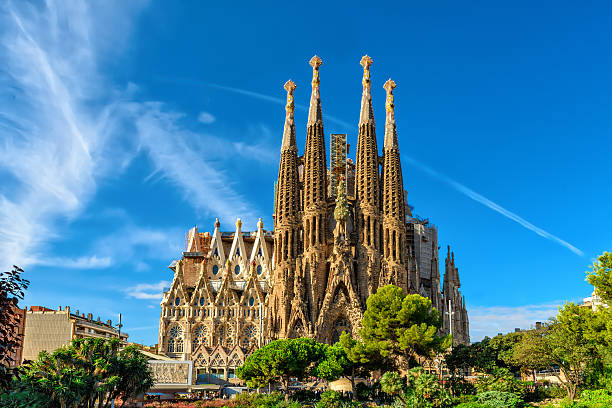
Use Sagrada Família official tickets (https://sagradafamilia.org/en/tickets-individuals) as the fixed point rather than as a loose preference. The basilica is not just a monument to “fit in”; it changes the day’s energy curve because its interior gives you scale, shade, sound control and a guided interpretive focus before the city starts to feel abrasive. The non-obvious correction is that the pretty diagonal of Avinguda de Gaudí toward Sant Pau is not always the clever summer connector after the basilica. It looks gentle on a map, but under high sun it can spend attention you still need for Montjuïc or the evening. For a day built around private timing rather than improvisation, Orange Donut Tours’ seasonal Barcelona private touring is most useful when the route is designed around these energy thresholds, not just the attraction list.
Use this high-summer route logic before adding anything else:
- First-timers with one private day: put Sagrada Família or another Gaudí interior first, keep Montjuïc selective, and let Barceloneta or seaside reset carry the late-day mood.
- Families and mixed-age groups: build a real return leg before children or older parents tire; do not leave the longest walk or steepest transfer for the end.
- Celebration travelers: keep the day elegant by cutting one hillside stop rather than arriving at dinner sun-dulled, late and overexplained.
- Repeat visitors: trade one famous exterior for a deeper interior or art stop; high summer rewards fewer, better-handled rooms.
- Travelers committed to Park Güell or Tibidabo: treat either one as the hill of the day, not as a casual extra after Montjuïc.
How should you sequence Barcelona in high summer?
The best high-summer sequence is early interior, controlled transfer, shaded or indoor middle, then sea-level release. That does not mean hiding indoors all day. It means using Barcelona’s strongest summer assets in the order that makes the body and the mood hold together: a major interior before heat fatigue, a hill only when the transport has been solved, and the waterfront when the day needs air instead of another explanation.
A useful private-day shape starts in Eixample, where Gaudí’s work and hotel logistics often align better than they do in the Gothic Quarter or Barceloneta. From Sagrada Família, the temptation is to keep adding Modernisme: Passeig de Gràcia, Casa Batlló, La Pedrera, Sant Pau. The wiser high-summer choice is to decide whether your day is a Gaudí day, a Montjuïc day with one Gaudí anchor, or a first-timer overview. Those are not the same itinerary. A private route can combine them, but only if it keeps each transition honest.
The high-summer mistake is to treat timed entry as the only hard constraint. A timed ticket can control the doorway; it does not control the walk to the doorway, the sun on the approach, the taxi delay at the wrong corner, or the emotional drag of asking a family to listen closely after the third hot transfer. Premium spend does not help if it is spent only on timed-entry access; timed-entry access does not solve heat fatigue if hillside transfers are stacked poorly. What earns its cost is route discipline: fewer exposed connectors, smarter pickup points, a guide who can compress context without flattening it, and a driver when the hill geometry makes walking admirable but unwise.
The preferred timing window inside a high-summer day is not a month; it is a rhythm. Aim for the most mentally demanding interior early, place the most exposed movement before or after the harshest part of the day, and leave a later sea-level option that can expand or shrink. Late June, July and August may all require this logic. August can add a local holiday rhythm around some restaurants, services or independent shops, so confirm the specifics when booking, but do not let month nuance distract from the larger rule: the day should not ask people to climb, queue, interpret and socialize at maximum intensity in one unbroken chain.
Why Gaudí interiors belong early or strategically
Gaudí interiors belong early because they demand attention before they reward you. Sagrada Família, Casa Batlló and La Pedrera are not passive sightseeing stops; they ask visitors to track structure, symbolism, craft and light while moving among many other people. In cooler seasons, you can sometimes place one of them later without losing the thread. In high summer, the same late interior can feel like a beautiful room arriving after the group has already spent its best listening energy on transfers, lunch decisions and exposed streets.
Sagrada Família is the cleanest first anchor for many first visits because its interior changes how people understand the rest of the city. It gives a vocabulary for stone, light, natural forms and unfinished ambition before they see Passeig de Gràcia or Park Güell. The consequence is practical, not just cultural: once the group has made sense of the basilica, a private guide can shorten later Gaudí explanations and avoid repeating the same biographical setup at each stop. That is where a Complete Gaudí private tour is more than “more Gaudí”; it can become a controlled sequence of attention.
Place Sagrada Família first when your group includes children who are fresh in the morning, older parents who prefer a clear start, or first-timers who would regret missing the city’s defining interior. Place Casa Batlló or La Pedrera first when your hotel is close to Passeig de Gràcia, when the group has already seen Sagrada Família on another day, or when the brief is design-heavy rather than basilica-heavy. Keep Sant Pau as a selective add-on, not a default continuation, unless Modernisme is the point of the morning. The walk from Sagrada Família toward Sant Pau can look charming, but charm is not the same as summer value when you still need to cross the city.
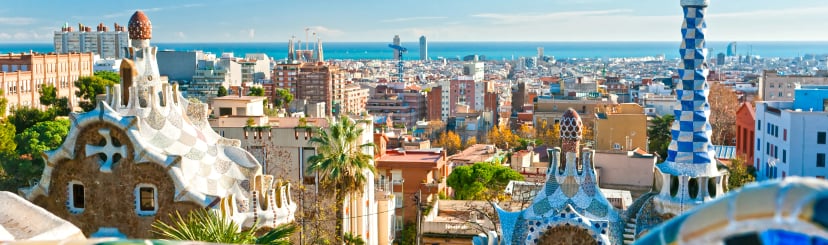
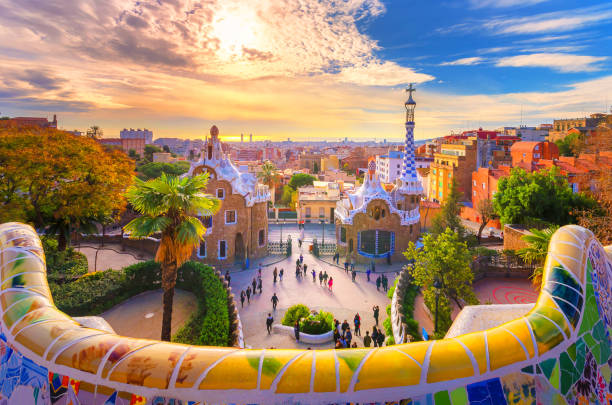
The counterintuitive cut is Park Güell when the day already includes Sagrada Família and Montjuïc. Park Güell is meaningful, photogenic and absolutely worth planning for the right traveler, but in high summer it becomes a hillside and exposure decision as much as a Gaudí decision. If you include it, consult Park Güell official tickets (https://parkguell.barcelona/en/buy-tickets) and make it a deliberate early or separate slot. Do not let it drift into the afternoon merely because it is famous. A famous stop that arrives after heat fatigue often produces less wonder than a calmer interior handled at the right time.
For families, the morning interior also solves a behavior problem. Younger children can handle symbolism and storytelling when the day still feels like a beginning. Teenagers are more likely to engage if the guide connects the building to engineering, patronage, city politics or visual riddles rather than treating it as a lecture. Older relatives usually appreciate the sense of completion early. The body consequence is simple: once feet are hot, shoulders are tired, and everyone has crossed several wide Eixample blocks, even brilliant architecture starts to feel like one more stop. The mood consequence follows quickly: the day feels shorter, calmer and more generous when the best explanation happens before the group begins negotiating its own fatigue.
Montjuïc shade only works when the transfer is planned
Montjuïc can be excellent in high summer, but only if you treat it as a hill district with gaps, not as a single walkable attraction. The name can make the area sound compact. In reality, a private day may be choosing among the MNAC terraces, Miró context, Olympic-era viewpoints, gardens, the castle road, Poble-sec approaches, and the descent toward the port. Those pieces are not all close in the way a tired traveler wants them to be close.
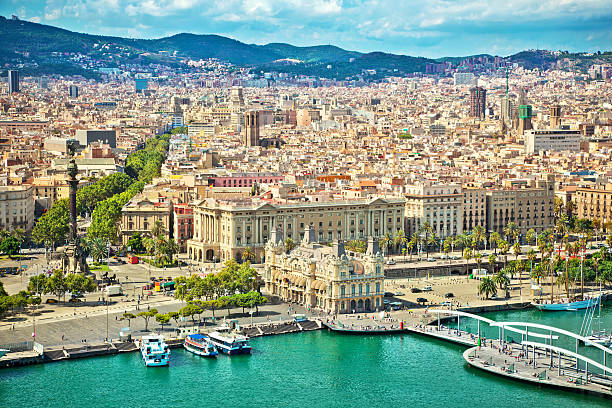
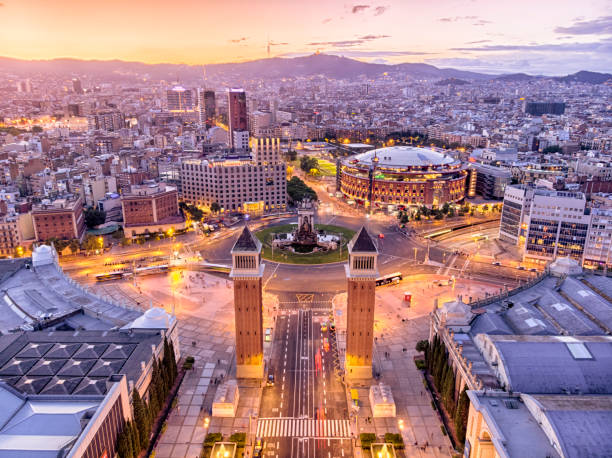
The Plaça d’Espanya side is the classic visual approach, and it can be persuasive: broad axis, monumental stairs, the Palau Nacional rising above, city views opening behind you. It is also exactly the sort of paved, exposed movement that feels noble in a guidebook and punishing at the wrong hour. The Paral·lel and Poble-sec side can make more logistical sense depending on the route, especially if the group is connecting from a lunch stop or a driver pickup. The point is not that one approach is universally better. The point is that Montjuïc should be entered and exited with intent.
A high-summer Montjuïc plan should choose one main purpose. If the purpose is art, make the museum or foundation the center and use the view as a short reward. If the purpose is city orientation, use the hill as a geography lesson, not a long garden march. If the purpose is shade and air, do not overload it with every terrace and monument. A Montjuïc private tour earns its place when the guide can turn the hill into a coherent chapter and the route avoids the false economy of walking between every point.
The strongest Montjuïc slot in high summer is usually after the first interior and before the late seaside release, with a meal, hotel pause or shaded break used as a buffer. It can also work as an early standalone if Gaudí is not the priority that day. The weakest slot is the “we will just add Montjuïc after Park Güell” version. That creates a hill-to-hill day with too much transfer heat and too many short bursts of interpretation. The group is technically seeing more Barcelona, but the day begins to flatten because every stop requires recovery before it can be enjoyed.
Montjuïc is also where private transport changes the substance of the visit. A driver does not make the art better, but can prevent the visit from being consumed by approaches, stairs and uncertain exits. The difference is especially visible for older parents, travelers using a cane, guests in dressier clothes, or families with a stroller that is easy on flat Eixample blocks but awkward on slopes and steps. The best pickup is not always the nearest theoretical point; it is the one that avoids making the whole group stand in exposed sun while the vehicle negotiates a difficult corner.
Do not overvalue the castle or the highest viewpoint if your evening matters. The city view is memorable, but high-summer fatigue is cumulative. If the day already includes a major Gaudí interior and a Montjuïc art or orientation stop, the highest add-on may cost more mood than it returns. Choose it for travelers who love military history, big panoramas or clear spatial storytelling. Reduce it for children under about eight, older guests with limited stamina, or couples trying to arrive at a serious dinner with appetite and patience intact.
When a Barceloneta or seaside reset beats one more sight
A late Barceloneta or seaside reset beats another sight when the day’s problem is no longer information; it is recovery. This is not a generic beach recommendation. It is a city-stay tactic: after Gaudí interiors, Montjuïc movement and Eixample transfers, the waterfront can make the rest of the evening feel possible again.
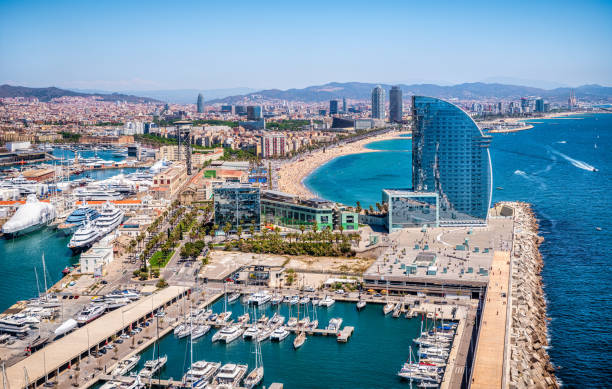
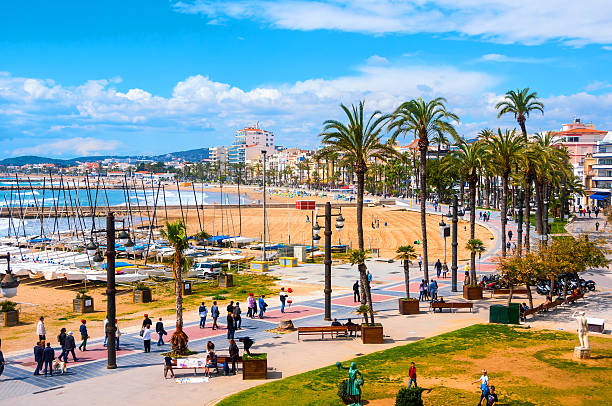
Barceloneta works best as a reset because it changes the body’s environment without asking for a new intellectual commitment. Sea air, a flatter promenade, a slower walk near Passeig Marítim, or a pause around Port Vell and Moll de la Fusta can do what another monument often cannot: lower the tempo. The traveler consequence is immediate. Children stop treating every doorway as a negotiation. Adults stop checking the schedule with suspicion. Older parents can sit without feeling they are “missing” the main attraction, because the reset is the attraction at that point in the day.
The important distinction is that Barceloneta is often better late than as the day’s base. Staying by the sea can sound relaxing, but for a first Barcelona stay built around Gaudí, Eixample and private touring, the beach edge can add repeated transfers. Eixample may feel less atmospheric on paper, yet it often gives a cleaner start for Sagrada Família, Passeig de Gràcia and a driver-led day. Barceloneta earns its place when it is used as an evening release, a lunch-to-walk transition, or a low-commitment end point. For a deeper look at the first-stay sea decision, see where Barceloneta belongs in a first stay.
The seaside reset is especially valuable before a food-and-wine evening. A group that has spent the late afternoon chasing one more viewpoint often arrives at dinner with a slightly scorched mood: quieter than planned, less curious about the menu, and more likely to shorten the evening. A group that has had a sea-level reset usually arrives feeling that the day has exhaled. That is why the waterfront can be the more premium choice even when it is less “important” on an attraction list.
Use the reset flexibly. For couples, it can be a short promenade and a drink before returning to the hotel. For families, it can be the promise that holds the afternoon together, especially with school-age children who need an end point that feels different from the day’s cultural stops. For grandparents and grandchildren, it can be the place where the day becomes shared again after the adults have had their architecture. For celebration travelers, it can keep the evening from feeling like a logistical recovery mission.
Skip the seaside reset only when the group is fresh, dinner is early, or the day’s main value is concentrated elsewhere. If the group has a second day with a true coast plan, you may not need Barceloneta late. If the hotel is far from the water and the evening is already set in another neighborhood, a short Eixample pause may be more sensible. But when the choice is between “one more sight” and sea air after a hill, choose the sea. In high summer, a calmer evening is often the best evidence that the day was well designed.
The cut-first rule: reduce Park Güell, skip Tibidabo when the hills are already heavy
The first thing to cut in a crowded high-summer Barcelona day is not the least famous stop; it is the stop that duplicates the day’s hardest physical demand. If your plan already includes Montjuïc, reduce Park Güell unless Gaudí’s landscape work is a defining priority. If your plan includes Sagrada Família, Park Güell and Montjuïc, skip Tibidabo. Do not stack Sagrada Família, Park Güell, Montjuïc and Tibidabo in one high-summer private day and expect the final hours to feel elegant.
Park Güell belongs when the group cares about Gaudí beyond the basilica, when children need an outdoor visual world rather than another interior, or when the day is designed around Gaudí with fewer non-Gaudí obligations. It should be reduced when the travelers have limited walking tolerance, when the afternoon must preserve dinner energy, when the stroller is part of the day, or when the group is already committed to Montjuïc. Its hillside setting is not a minor logistical note in July or August; it is part of the cost of the experience.
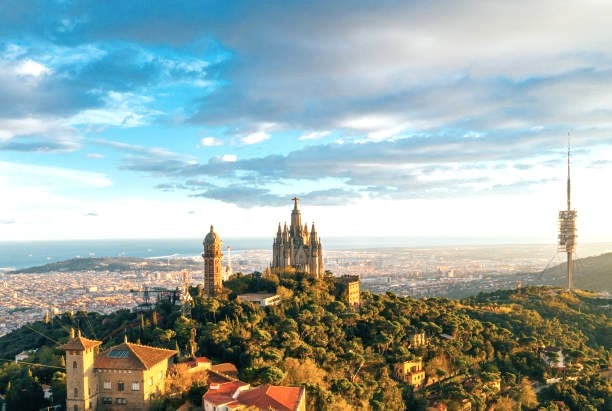
Tibidabo is an even narrower fit in high summer. It can be wonderful for the right family, view-seeker or repeat visitor, but it is rarely the missing piece in a first private day that already includes Gaudí interiors, Montjuïc and a waterfront reset. It sits apart from the city’s core touring rhythm. Adding it can turn a Barcelona day into a transport sequence with famous scenery attached. If a child has been promised Tibidabo, honor the promise and build around it. If it is on the list only because it appears in a search result or a hotel concierge suggestion, remove it first.
This is where a firm editorial judgment helps: in high summer, Park Güell and Tibidabo are not casual add-ons after Montjuïc. They are alternative hill commitments. Choose one hillside story, not three. Montjuïc gives city orientation, art and broad views. Park Güell gives Gaudí landscape and playful form. Tibidabo gives distance, panorama and family amusement. Each can be the right choice; the mistake is asking them to coexist in a single polished day.
Premium spend can improve comfort when it pays for a guide who edits, a driver who handles transfers, and a plan that respects the group’s real stamina. It does not buy back the mood of a day that has been overstacked. Paying for better access, better vehicles or better explanations will not make a poorly sequenced hill circuit feel light. In this city, value comes from subtraction as much as addition.
How a private guide and driver keep the day from becoming timed entries and hills
A private guide and driver earn their place in high summer when they turn fixed entries, hill geometry and late-day recovery into one coherent day. This is the natural point at which a private tour becomes more than narration. The guide watches attention; the driver protects transitions; the planner decides what not to force.
Without that discipline, the day can become a chain of individually good decisions that fail together. Sagrada Família official tickets are secured, Park Güell is timed, Montjuïc is added because it seems close enough, and Barceloneta is penciled in as a reward. Each piece is defensible. The combined route is the problem. The group spends the day moving from deadline to deadline, with every “must-see” stealing from the next.
With a private structure, the same interests can become a cleaner sequence. The guide can meet the group where the morning actually begins, not where a generic route says it should. The driver can avoid unnecessary returns across Eixample, reduce exposure around Plaça d’Espanya, and set up the late-day descent toward the sea. The guide can decide when to explain the 1992 Olympic layer on Montjuïc and when to let the view do enough work. That restraint matters. High summer punishes over-talking almost as much as over-walking.
For short stays, this is where Orange Donut Tours can compress the right parts of Barcelona without making the day feel compressed. A chauffeured Barcelona private tour is not necessary for every traveler or every hour, but it is often the cleanest solution when the day combines Sagrada Família, Montjuïc and a late seaside reset. If your Barcelona stay is brief and you want the day designed around timed interiors, hill transfers and dinner energy rather than a hot checklist, Inquire now.
The wrong private-tour brief is “show us everything.” The better brief is “protect the morning interior, make Montjuïc worthwhile without draining us, and keep a flexible seaside finish.” That gives the guide permission to edit. It also gives the group a standard for success that is more useful than a count of attractions. Did the basilica land? Did the hill add context rather than fatigue? Did the evening remain alive? Those are the measures that matter in high summer.
Families, older parents and mixed-speed groups need a different heat split
Families and mixed-speed groups should plan high-summer Barcelona by stamina band, not by attraction popularity. The same route can feel polished for adults and punishing for children if the return leg is vague. It can also feel respectful to older parents if transfers are solved and humiliating if every stop requires them to announce that they need a pause.
For children under six, keep the morning interior short, visual and story-led. Avoid stacking Sagrada Família, Park Güell and Montjuïc in one day unless there is a substantial break and private transport throughout. Strollers are manageable on many Eixample sidewalks, but they become a planning issue around slopes, stairs, crowded interiors and hill exits. A stroller-friendly day is not just a flat day; it is a day where the adults are not repeatedly folding, lifting and negotiating while everyone else waits.
For children roughly seven to twelve, Sagrada Família can be compelling if the guide makes it tactile and puzzle-like: columns as trees, light as a moving system, façades as different storytelling languages. Montjuïc can work if there is a clear purpose and a physical reward, such as a view or garden pause. The seaside reset is often the bargaining tool that keeps the cultural stops from feeling endless. The body consequence for this age band is restlessness before collapse; once it appears, adding one more formal stop rarely repairs the mood.
For teenagers, do not over-simplify the day. Give them a more adult frame: how Barcelona’s Eixample grid changed the city, why Gaudí’s patrons mattered, how Montjuïc shifted from exhibition space to Olympic symbolism, why the waterfront does not feel like the medieval center. Teenagers often resist being managed more than they resist touring. A route that explains why it is cutting Tibidabo or reducing Park Güell can produce more cooperation than a route that pretends nothing has been sacrificed.
For older parents or travelers with mobility limits, the decision is less about age and more about recovery time. A morning Sagrada Família visit followed by a chauffeured Montjuïc chapter can work beautifully. The same sights with uncertain taxis, long exposed approaches and a vague seaside finish can feel careless. Build in seated pauses before they are needed. Choose fewer viewpoint moments. Make the return to the hotel or dinner neighborhood explicit before the group starts asking about it.
A good mixed-age high-summer day should not ask every generation to enjoy the same thing for the same reason. Adults may want architecture. Children may want a visible change of scene. Grandparents may want confidence that the next move is not another surprise climb. The shared success is the sequence: a serious morning, a contained hill chapter, and a late Barceloneta or seaside reset that gives everyone a different reason to relax.
For a more family-specific version of the city’s first-visit tradeoffs, Orange Donut Tours’ Barcelona with kids planning guide pairs well with this high-summer routing logic. The key difference is that in high summer, the cut order becomes stricter: reduce the second hill before you reduce the reset.
Where to base the day: Eixample first, sea later
Eixample is usually the stronger operating base for this kind of high-summer day, while Barceloneta is usually the stronger late-day release. This is one of the planning choices that looks less romantic but performs better under real conditions.
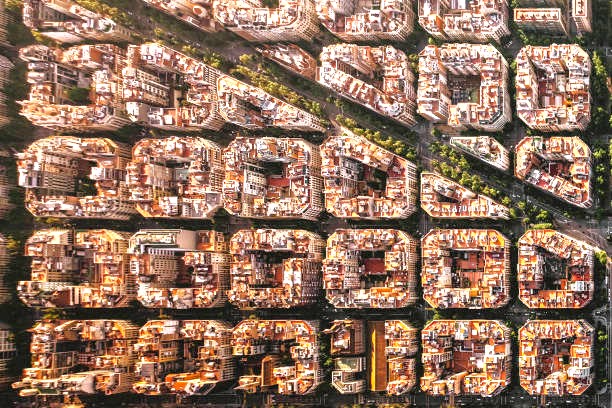
From Eixample, Sagrada Família, Passeig de Gràcia and many hotel pickup patterns are easier to stitch into a morning. The blocks are broad, the grid is legible, and a private guide can connect Modernisme context without making the group fight old-town density at the start. The tradeoff is that Eixample can feel less storybook than the Gothic Quarter and less breezy than the waterfront. In high summer, that tradeoff is often worth it because the day begins with cleaner geometry.
The Gothic Quarter can still be a wonderful base for travelers who prize atmosphere and evenings on foot, but it is not always the best launchpad for a Gaudí-and-Montjuïc day. Narrow streets can be atmospheric at night and awkward when a driver pickup, luggage, children or heat-sensitive travelers are involved. Barceloneta can be appealing for sea lovers, cruise-adjacent travelers or those who want the water outside the door, but it can pull the touring day away from the interior anchors. A beach base does not automatically create a cooler day if it adds more transfers to reach Sagrada Família and Montjuïc.
The most effective private-day plan often treats the hotel base and the emotional finish as different tools. Start where the morning can be controlled. End where the mood can soften. This is why Eixample-to-Montjuïc-to-Barceloneta can feel smoother than a loop that keeps returning to the hotel or chasing old-town atmosphere in the hottest part of the day.
Food-and-wine travelers should also think about appetite. A high-summer day that overuses hills can flatten the pleasure of dinner, even when the restaurant is excellent. A day that ends with sea air, a shower window and an easy transfer to dinner gives the evening a better chance. Celebration travelers should be especially strict here. The most expensive evening can still feel ordinary if the day has spent everyone’s patience.
A practical high-summer private day blueprint
A strong high-summer Barcelona day has a fixed morning, an edited middle and a flexible finish. The exact sites can change, but the architecture of the day should not. Begin with the interior that matters most, move across the city only when there is a reason, and end with a reset that can be shortened or expanded depending on the group’s condition.
Use this blueprint as a planning discipline, not as a rigid schedule:
- Early morning: Sagrada Família or another Gaudí interior, with the guide focusing on the interpretive material that will make later stops easier to understand.
- Late morning: one Eixample or Passeig de Gràcia continuation if it truly deepens the day; otherwise transfer toward lunch, hotel pause or Montjuïc.
- Middle of the day: shaded meal, hotel recovery, or a selective indoor stop. Avoid exposed “filler walking” just because the map looks efficient.
- Afternoon: Montjuïc only with a clear purpose and exit plan. Choose art, orientation, gardens or view; do not pretend all four are equally necessary.
- Late day: Barceloneta or seaside reset if the evening matters. Keep it low-commitment so the group can stay longer or leave earlier without feeling the plan has failed.
If the day is only a half day, choose Sagrada Família plus one controlled continuation. That might be Passeig de Gràcia, a short Eixample design thread, or a transfer to a single Montjuïc viewpoint if the group has already seen Gaudí. Do not attempt a half-day version of the full sequence. Half days succeed by clarity, not compression.
If the day is a full private day, the choice is between depth and spread. Depth might mean Sagrada Família, one additional Gaudí interior, lunch, and a seaside finish. Spread might mean Sagrada Família, a selective Montjuïc chapter, and Barceloneta. The first suits architecture lovers. The second suits first-timers who want the city to make geographic sense. Families often need a hybrid, with the second interior reduced and the reset protected.
If the day sits before a major dinner, performance, celebration or early departure, cut more aggressively. A private day should not spend the evening’s energy without permission. This is where many high-summer plans fail: the touring day is treated as separate from the night, even though the same bodies and moods carry into both. Barcelona rewards travelers who understand that the best evening may depend on what was not forced at five in the afternoon.
The final test is simple. If removing one stop makes the whole day feel calmer, remove it. If adding a driver for one hill transfer prevents two hours of heat management, add it. If the waterfront sounds “less cultural” but everyone will remember dinner better because of it, choose the waterfront. High summer does not make Barcelona less rewarding; it makes weak sequencing more visible.
FAQ
Should I visit Sagrada Família in the morning in high summer?
Yes, Sagrada Família is usually strongest early in high summer because the group has more attention, the interior can anchor the day before heat fatigue, and later Gaudí or Eixample context becomes easier to compress.
Can I do Sagrada Família, Park Güell, Montjuïc and Barceloneta in one summer day?
You can, but it is usually a poor comfort-first plan. In high summer, Sagrada Família plus Park Güell plus Montjuïc creates too much hill and transfer load before the seaside reset can do its work.
When should Park Güell be reduced or skipped in high summer?
Reduce or skip Park Güell when the day already includes Montjuïc, when travelers have limited stamina, when a stroller is involved, or when dinner energy matters more than adding another hillside Gaudí stop.
Is Tibidabo worth adding to a first private day in Barcelona?
Tibidabo is usually not worth adding to a first high-summer private day that already includes Gaudí and Montjuïc. It is better as a separate family or view-focused commitment, not a late extra.
Does a chauffeured Barcelona day solve high-summer heat?
A chauffeured day can reduce exposed transfers, hill fatigue and awkward pickup points, but it does not solve an overfilled itinerary. The route still needs editing, especially around Park Güell, Montjuïc and Tibidabo.
Is Barceloneta a good base or just a late-day reset?
For many first stays, Barceloneta is better as a late-day reset than as the operating base. Eixample usually starts Gaudí and private touring more cleanly, while Barceloneta helps the day soften near the end.
What is the best high-summer Barcelona plan for families?
The best family plan is a fresh morning interior, one controlled continuation, a real break, and a late sea-level reset. Do not stack multiple hills; reduce the second hill before cutting the recovery window.
How does high summer change a private Barcelona itinerary?
High summer changes the order, not just the clothing. Interiors should come early or strategically, Montjuïc needs a transfer plan, and a late seaside reset often protects the evening better than one more sight.
If you’re interested in any private tours of Barcelona, please reach out to us.








 So if you are looking for the absolute best in Barcelona & surroundings with authentic local fully-licensed native guides whose English you can actually understand and with an exclusive and amazingly fun itinerary