A Premium Barcelona Modernisme Day Without Gaudí Overload: Sant Pau, Eixample and Palau de la Música in One Private Route

Updated
Verdict: the best premium Barcelona Modernisme day without Gaudí overload starts with Sant Pau before the Eixample façade walk, continues through a tightly edited group of Eixample façades, and finishes at Palau de la Música. In real city conditions, that order works because Sant Pau gives the story civic scale before you reach the boulevard glamour, Avinguda de Gaudí creates a natural hinge toward the Sagrada Família edge without letting the basilica take over, and Palau becomes a finale rather than one more decorative stop. The clearest exception is simple: if Sagrada Família is your one non-negotiable interior, build a private Gaudí day instead and let this Domènech-led route stand on another day.
The thesis for this route is that Modernisme in Barcelona is more memorable when it is read as a civic corridor, not as a race between star buildings. Sant Pau shows how architecture treated health, light and public ambition; Eixample shows how that same visual language entered private façades and urban display; Palau de la Música shows how it became a performance space for Catalan identity. That is why this guide is not another Gaudí priority list. It is a specific way to see Barcelona’s Modernisme with expert context, smoother pacing and a day that still leaves room for dinner rather than architectural collapse. For travelers who want the Eixample portion led with a sharper design lens, Orange Donut Tours can fold this route into an Eixample private tour without turning the day into a lecture march.
The route hinge: Sant Pau before the Eixample façade walk
Sant Pau belongs first because it changes the scale of the day before the city starts competing for your attention. Starting at the Recinte Modernista de Sant Pau places you in a spacious hospital complex rather than on a shopping avenue, so the morning begins with courtyards, pavilions, brick, ceramic detail and a slower sense of purpose. The official Sant Pau site describes the complex as a Modernista site and World Heritage property, and it is the rare Barcelona monument where the open-air rhythm matters almost as much as the interiors: gardens, ward pavilions and sightlines do part of the storytelling before you read a single façade. The official Sant Pau site (https://santpaubarcelona.org/en/) is the best place to confirm current visit formats before you go.
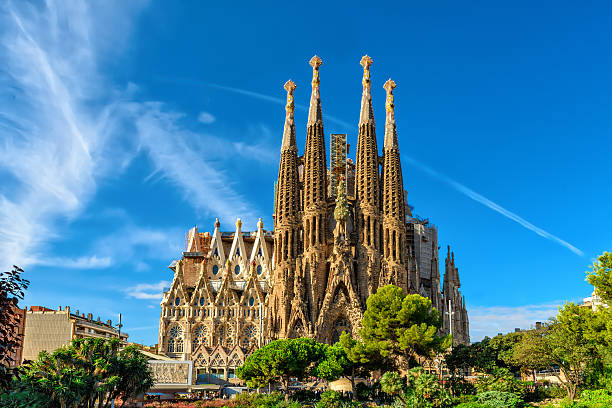
The non-obvious route advantage is the Sant Pau to Sagrada Família axis. From the Sant Pau side, Avinguda de Gaudí runs diagonally toward the basilica and breaks the orthogonal discipline of the Eixample grid just enough to give the walk a sense of release. You can acknowledge Sagrada Família from the approach, use it as a geographical hinge, and then continue into the Eixample story without surrendering the day to queues, towers, security lines or the emotional scale of Gaudí’s interior. This is the first mistake-prevention rule of the route: do not make the most famous building the boss of a day that is meant to broaden Barcelona beyond it.
This start also works for hotel logistics. Many premium stays cluster around the Eixample, Passeig de Gràcia, the Gothic Quarter edge or the waterfront, which means Sant Pau can feel slightly outside the obvious first move. That is exactly why it is useful. Beginning near Sant Pau | Dos de Maig or Guinardó | Hospital de Sant Pau gives the day a clear northern anchor, then the route moves back toward the center instead of ricocheting between central highlights. A private route that begins away from the densest core can feel calmer from the first hour, because the group is not already fighting the boulevard before the story has begun.
Why Sant Pau changes the Modernisme story
Sant Pau changes the story because it makes Modernisme feel like an urban and social project, not just a style of ornament. In a premium route, that matters because travelers often arrive in Barcelona already primed for spectacle: colorful mosaics, undulating stone, rooftop silhouettes, dramatic staircases. Sant Pau asks a better question. What happens when the same artistic ambition is applied to recovery, ventilation, hygiene, garden space and the dignity of patients? That question gives the rest of the day a deeper spine, especially for repeat visitors who have already “done Gaudí” and want the city to feel newly legible.
UNESCO groups Palau de la Música Catalana and Hospital de Sant Pau together as major works by Lluís Domènech i Montaner, and that pairing is useful for route design, not just for heritage status. The UNESCO entry (https://whc.unesco.org/en/list/804/) makes clear that the two sites belong in the same architectural conversation, yet they operate in opposite moods: Sant Pau is distributed, landscaped and almost campus-like; Palau is compressed, vertical and theatrical. Seeing Sant Pau first means Palau later reads as a culmination rather than a standalone jewel. The traveler consequence is practical as well as intellectual: you spend the first part of the day in a place with room to breathe before entering the denser Eixample and old-town edge.
Sant Pau also corrects a common misunderstanding of Modernisme. Many visitors read the movement through private houses because those buildings are easy to photograph from the street. Sant Pau shows a different register: a public institution designed to make light, air, craft and symbolic detail part of healing. That makes it a stronger morning anchor for travelers who like architecture but do not want a day of only façades. It gives the guide room to discuss patronage, medicine, urban growth and Catalan civic identity before the route reaches the commercial confidence of Passeig de Gràcia.
The cut that saves the day: no full Gaudí inventory
A premium Barcelona architecture day does not need to add every major Gaudí site. That sentence may sound counterintuitive in a city where Sagrada Família, Park Güell, Casa Batlló and La Pedrera dominate planning, but it is the difference between a coherent Modernisme day and an expensive blur. If you add a full Sagrada Família interior visit after Sant Pau, then try to layer Passeig de Gràcia façades and Palau de la Música on top, the day stops being about understanding Modernisme and becomes a test of stamina. The biggest loss is not just physical energy; it is interpretive attention.
The better editorial call is to choose the day you are actually taking. If your dream is Gaudí’s interior light, towers and sculptural theology, then follow a dedicated private Gaudí day and give it the protected timing it deserves. If your goal is “Modernisme without Gaudí overload,” keep Gaudí as a reference point rather than the itinerary’s gravitational center. Passing the Sagrada Família edge after Sant Pau is useful because it gives orientation and contrast; entering it on this particular route usually steals the best mental space of the day.
Park Güell is the other famous add-on to resist. It is superb on the right day, but it pulls the route away from this Sant Pau-Eixample-Palau corridor and changes the physical logic of the experience. The climb, the transfer, the open-air exposure and the separate ticket rhythm all work against the clean civic-to-boulevard-to-concert-hall arc. The same is true of Casa Batlló or La Pedrera interiors if they are added without cutting elsewhere. One carefully chosen interior can deepen a day; three interiors turn even excellent architecture into a sequence of thresholds, security checks and audio-visual overload.
How Eixample spacing affects pacing, especially in midday light
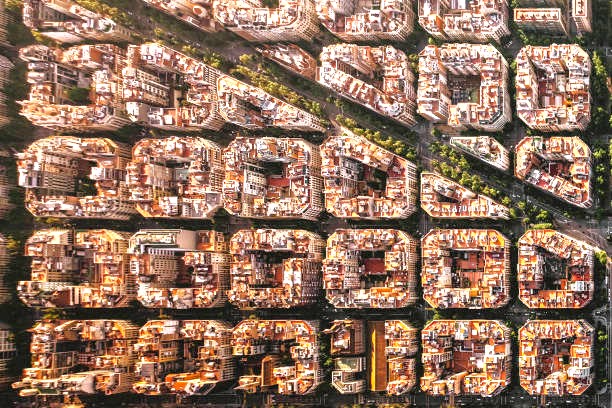
Eixample spacing makes or breaks this route because the district looks easy on a map and feels longer in the body. The grid is orderly, but its broad blocks, chamfered corners and long sightlines encourage travelers to underestimate distance. A façade walk from the Sagrada Família edge toward Passeig de Gràcia can be elegant when the guide edits the stops; it becomes draining when every “nearby” address is treated as equally necessary. Eixample blocks in midday light are not hard like a hill is hard. They are hard because the shade shifts, intersections repeat, traffic noise accumulates, and the visual reward can be spread across too many façades if nobody is making choices.
The pacing answer is to treat the Eixample as a curated passage, not a scavenger hunt. Choose a handful of façades and street moments that explain materials, patronage, urban expansion and domestic display. Let the guide connect names and ideas across the walk: Domènech i Montaner at Sant Pau, the bourgeois stage of Passeig de Gràcia, and the old-town threshold that leads to Palau. Do not ask the district to be both an architecture seminar and a shopping afternoon unless your group genuinely wants that hybrid. If design and retail are a serious secondary interest, it is better to split that angle into a separate day using the city’s design-and-shopping planning rather than diluting this route.
The most expensive error here is not walking too far; it is stopping too often. Every façade stop has a hidden cost: the group gathers, the guide frames the view, phones come out, traffic interrupts, and the route must restart. In the Eixample, those restarts accumulate. A premium plan should choose corners with purpose, use shaded sides when possible, and avoid crossing Passeig de Gràcia simply because another façade is visible. The discipline is editorial: fewer stops, stronger connections, better energy at Palau.
The one-day sequence: three acts, not ten stops
The strongest version of this private route has three acts: Sant Pau for civic Modernisme, Eixample for urban display, and Palau de la Música for the theatrical finale. That structure keeps the day narrow enough to retain meaning while still giving the traveler a complete arc. A guide can adjust the exact stops, but the order should not drift into a free-for-all of famous names. The more the day feels like “one more building,” the less premium it becomes.
A clean version looks like this:
- Morning: Sant Pau. Begin with the hospital complex, allowing enough time for the exterior rhythm, pavilions and selected interiors instead of rushing straight to photo points.
- Late morning: the Sant Pau to Eixample transition. Use Avinguda de Gaudí and the Sagrada Família edge as orientation, then keep moving rather than adding a full basilica visit.
- Midday: edited Eixample façades. Read the grid through chosen examples near Passeig de Gràcia, with shade, pauses and lunch timing treated as part of the plan.
- Afternoon: Palau de la Música. Finish at the concert hall or place it before a short old-town segment if ticket timing, heat or evening plans make that wiser.
This is also where a private guide earns the day. The value is not only in explaining capitals, mosaics or ironwork; it is in deciding what the group should not stop for. Couples often want a route that feels graceful rather than comprehensive. Families need the walk broken into shorter interpretive moments. Repeat visitors want the connections made explicit. Small groups need someone to prevent the fastest walker from turning the Eixample into a forced march. The architecture is the theme, but pacing is the product.
The route should also leave space for one real pause. In Barcelona, a “quick coffee” can easily become a poor substitute for recovery if it happens in the wrong place, standing near a busy crossing or wedged into the wrong side of a schedule. The better move is to place a calm break after the main Eixample explanation and before the old-town edge, when the group has absorbed enough context but has not yet entered Palau’s visual intensity. This keeps the concert hall from becoming the place where everyone realizes they should have rested an hour earlier.
Passeig de Gràcia should be edited, not worshipped
Passeig de Gràcia earns its place because it concentrates wealth, façades, branded retail, hotel life and Barcelona’s most visible Modernista self-presentation. It is also the easiest place to overvalue. The glamorous boulevard can make travelers feel they are “seeing Barcelona” while they are mostly moving between crowds, crossings and window displays. For a Modernisme route without Gaudí overload, Passeig de Gràcia is best used as a selective chapter: enough to understand the city’s bourgeois stage, not so much that Sant Pau and Palau lose their presence.
The stop selection matters more than the total number of façades. A guide might use the Manzana de la Discordia area to explain rivalry, patronage and stylistic contrast, then choose one or two additional street moments rather than chase every decorative surface. The consequence for the traveler is immediate: less zigzagging across traffic, fewer repeated photo stops, and more room to understand why the Eixample grid became a canvas for private ambition. If the group also wants boutiques, design stores or a long lunch near the boulevard, that can work, but it should be acknowledged as a different mood. For a fuller style-led day, the design-and-shopping guide to Passeig de Gràcia, El Born or Gràcia is the better planning frame.
There is also a subtle hotel-base issue. Travelers staying on or near Passeig de Gràcia can be tempted to start the day there because it feels convenient. For this route, that convenience is deceptive. Beginning on the boulevard makes Sant Pau feel like an excursion and Palau like a second transfer; beginning at Sant Pau lets the day flow back toward the center. If you are staying in the Gothic Quarter or near Plaça de Catalunya, the same logic still holds: take the early move to Sant Pau, then let the city come gradually back to you.
When should Palau de la Música come before or after an old-town segment?
Palau de la Música belongs after an old-town segment when the old town is being used lightly: a short texture pass along the edge from Plaça de Catalunya or Urquinaona, a glimpse of narrower streets, then a final architectural reveal. This works especially well when the group has already had lunch, the Eixample walk has been edited, and the Palau visit is the day’s last major interior. The micro-route from Passeig de Gràcia to Palau de la Música via the old-town edge avoids pointless backtracking: move down toward Plaça de Catalunya, skirt the Urquinaona side rather than plunging too deeply into the Gothic Quarter, and arrive near Carrer de Sant Pere Més Alt with the sense that the city has tightened around you.
Palau belongs before an old-town segment when ticket timing, heat, concert schedules or group energy make the interior the priority. The official Palau visits page is the sensible place to check current visit options before fixing the route around it. The official Palau visit page (https://www.palaumusica.cat/en/visites/visits-and-tickets_1159168) is more useful than relying on generic attraction summaries because Palau is both a heritage site and an active music venue. If you place Palau before the old town, keep the old-town portion short and purposeful. Do not turn it into a full Gothic Quarter walk unless you are willing to cut Eixample depth, because the day will otherwise end with the very old-town fatigue this route is designed to avoid. For a separate non-Gaudí neighborhood day, Orange Donut’s guide to a Barcelona day beyond Gaudí is a cleaner companion.
The old-town edge should be treated as a hinge, not as a second district to conquer. From the Passeig de Gràcia side, the cleanest approach is usually through the Plaça de Catalunya and Urquinaona orbit rather than a deep detour through the Cathedral quarter, Plaça del Pi or the Born. Those areas are excellent in the right plan, but they introduce a different Barcelona: medieval street compression, shops, church squares, narrow turns and crowd eddies. On a Modernisme day, that texture is best used sparingly so Palau still receives attention rather than leftovers.
What Barcelona does to your body and your trip mood
Barcelona does not punish the body through one single obstacle; it wears travelers down through repeated small frictions. The Eixample asks for long, exposed crossings. Passeig de Gràcia adds crowd drag and traffic rhythm. The old-town edge tightens the streets and slows the group in a different way. A chauffeur can reduce transfers between distant zones, but inside this route much of the value comes from walking the transitions intelligently. The body notices when the day alternates between open spaces, boulevard crossings and narrow lanes; it also notices when all three are stacked without pauses.
The mood changes just as clearly. A route that starts with Sant Pau often feels calmer, more adult and more spacious than a route that begins in the most crowded Gaudí orbit. A route that overextends in the Eixample can flatten the afternoon, making Palau feel like an obligation rather than a reward. A route that saves Palau for the end, with the old-town edge used as a short compression before the concert hall, can make the day feel shorter than it is. This is the difference between a private day that accumulates monuments and one that has emotional shape.
Scenario bullets for couples, families, repeat visitors and food-and-wine travelers
The same Sant Pau, Eixample and Palau structure can serve different premium travelers, but the emphasis should shift. This is not a route where every group needs the same number of façades, the same lunch placement or the same old-town add-on. The scenarios below are not separate itineraries; they are the decision rules that keep the core route from becoming generic.
- Couples on a design-forward stay: keep Sant Pau unhurried, trim the Eixample to the most meaningful façades, and let Palau provide the final interior drama before an early evening aperitif.
- Families with older children: use Sant Pau’s open spaces and visible materials to make the first hour tactile, then shorten the boulevard portion before attention thins.
- Repeat visitors: lean into Domènech i Montaner, the hospital-to-concert-hall contrast and the civic story that sits beside the usual Gaudí narrative.
- Small celebration groups: avoid too many interiors and protect one elegant meal break, because architecture fatigue is a poor mood-setter for a birthday, anniversary or reunion.
- Food-and-wine travelers: do not force a market crawl into the same route; choose one well-placed lunch or late-afternoon pause and leave culinary depth for another day.
These scenario choices also determine the right level of private support. A couple may need interpretive sharpness more than transport. A multigenerational family may need shorter walking segments and a guide who can read fatigue early. A celebration group may need someone to keep the route from becoming too worthy or academic. If the day is part of a wider private stay, the most useful next step is a tailored brief rather than a fixed package; Orange Donut’s Tailor-Made Barcelona planning is built for that kind of adjustment.
What your guide should connect across the day
The guide’s job is to keep the Modernisme thread moving from purpose to patronage to performance. At Sant Pau, that means explaining why decoration, structure and health were not separate categories. In the Eixample, it means shifting from institutional architecture to private display without reducing the district to pretty façades. At Palau, it means bringing the conversation into music, civic identity and the collaboration of applied arts. Without that connective work, the route can still be beautiful, but it becomes a sequence of admired surfaces.
The guide should also know when to stop explaining. Premium travelers rarely need every symbol decoded or every architect biography delivered in full. They need the right amount of context at the moment when it changes what they see. A good private guide will let Sant Pau breathe, tighten the Eixample commentary at corners where the group can actually see, and prepare Palau before arrival so the interior is not overwhelmed by facts. This restraint is part of the service: it lets the city remain vivid rather than turning the day into an exam.
The best guiding on this route is often anticipatory. Before the group reaches Passeig de Gràcia, the guide should have already explained enough about the Eixample plan for the boulevard to make sense. Before Palau, the guide should have prepared the shift from street façades to a concert hall interior, so the group recognizes the change in scale. Those small bridges prevent the day from feeling episodic. They are also what make a private route feel tailored rather than simply escorted.
Where premium planning earns its fee, and where it cannot save a bad route
Premium spend earns its cost when it changes timing, interpretation and recovery. A private guide can connect Sant Pau’s hospital logic to Eixample patronage and Palau’s musical identity without making you hold the whole story alone. Careful ticket handling can prevent the day from being broken by avoidable gaps. A well-placed vehicle can help with hotel pickup, luggage-adjacent days, older travelers or a return after Palau, especially if the stay is based away from the Eixample. The point is not to remove the city; it is to remove the avoidable drag around the parts of the city that matter.
Private access or luxury transport does not make an overstuffed Modernisme route easier to absorb. It can move you between mistakes more comfortably, but it cannot make Sant Pau, a full Sagrada Família interior, multiple Eixample interiors, a long Passeig de Gràcia shopping passage, Palau de la Música and the Gothic Quarter all feel crisp in one day. The cut-first rule is to remove the full Gaudí interior from this route before cutting Sant Pau or Palau. If the trip is short and you want one guided architecture day that feels coherent rather than crowded, Inquire now and ask Orange Donut Tours to shape the Sant Pau, Eixample and Palau sequence around your hotel, group energy and evening plans.
Short-stay versions and cut-first rules
If you have only half a day, keep Sant Pau and one Eixample passage, then save Palau for a concert or a separate guided visit. This preserves the route’s intellectual arc better than rushing all three sites. Sant Pau before the Eixample façade walk still works in a compressed version because the contrast between civic complex and urban grid is the main lesson. What you lose is the theatrical closure of Palau, so the day should end with a clean boulevard or hotel return rather than an apologetic dash.
If you have a full day but limited stamina, keep Sant Pau, reduce Eixample crossings and place Palau according to ticket timing. If you have a very architecture-focused group, add depth to Sant Pau and Palau before adding more façade stops. If you are traveling after an overnight flight or cruise arrival, do not use this as your first-day recovery plan unless the group is unusually fresh; the Eixample’s repeated crossings and Palau’s visual density ask for attention. For broader private touring choices beyond this one route, the main Private Tours in Barcelona page is a better overview than trying to force every theme into a single Modernisme day.
Lunch and recovery are part of the architecture plan
Lunch placement should be decided by route logic, not by whichever restaurant happens to be most famous. If you eat too early near Sant Pau, the Eixample walk can feel like a long second morning. If you eat too late after Palau, the group may spend the concert hall visit half-attentive and ready to sit down. The most balanced pattern is a pause after the main Eixample chapter, either before the old-town edge or before the Palau slot, depending on visit timing. This is where a private planner can protect both the cultural arc and the social mood of the day.
Food-and-wine travelers should be especially careful here. Barcelona makes it tempting to turn every cultural route into a culinary route, but a market stop, a tasting sequence and a serious Modernisme itinerary are three different forms of attention. On this day, one elegant meal or a thoughtful aperitif is usually stronger than several food stops. If the culinary side of the trip deserves its own focus, it is better placed on a dedicated Barcelona food-and-wine day rather than folded into Sant Pau, Eixample and Palau until both themes suffer.
What not to add: Park Güell, Montjuïc and a full market crawl
The first add-on to cut is Park Güell, not because it lacks value, but because it breaks the route’s spine. It pulls the day uphill and away from the Sant Pau-Eixample-Palau corridor, and it asks for a different kind of exposure and crowd management. Montjuïc has the same problem from another direction: it is a superb cultural hill for the right itinerary, but it belongs to a separate art, view or museum day. Adding it to this Modernisme route turns a coherent city reading into cross-city sampling.
A full market crawl is also the wrong upgrade. It may sound appealing for a private day, but it introduces a different rhythm: browsing, tasting, crowd navigation and food decisions. Those are pleasurable when they are the point and distracting when architecture is the point. The cut-first hierarchy is clear: remove hillside detours, remove full food crawls, remove extra interiors, and keep the route’s three acts intact. The reward is a day that feels intentionally designed rather than merely expensive.
How this route fits beside a broader Barcelona stay
This Modernisme route fits best as a second or third Barcelona day, not as the only introduction to the city. First-time visitors still need some relationship with the Gothic Quarter, the waterfront, food culture and the Gaudí question. The reason to reserve a dedicated Sant Pau, Eixample and Palau route is that it prevents Modernisme from being reduced to whichever famous façade is easiest to photograph between lunch and dinner. It gives Barcelona’s architecture a beginning, middle and end.
For a three-day stay, the cleanest pattern is usually a Gaudí day, a Modernisme-beyond-Gaudí day, and a separate food, old-town, coast or day-trip plan. For repeat visitors, this route can become the architectural anchor of the trip, especially if previous visits were dominated by Sagrada Família and Park Güell. For comfort-first travelers, the main question is not whether the route is “worth it”; it is how severely it should be edited. The best version leaves you with enough energy to enjoy the evening, because Palau should close the cultural day, not consume the rest of the night.
This is also the right place to be honest about first-time pressure. Travelers sometimes try to use one private guide to solve every regret risk: the famous basilica, the best boulevard, the old town, the concert hall, the food scene and the hotel return. That instinct is understandable, but it produces a day with no hierarchy. The Sant Pau-Eixample-Palau route is strongest when it is allowed to be itself. It gives Barcelona’s Modernisme a story arc that is broad, civic and beautiful without pretending to be a complete city survey.
FAQ
Can you visit Sant Pau, Eixample and Palau de la Música in one private day?
Yes, Sant Pau, an edited Eixample façade walk and Palau de la Música can fit into one private day if the route is kept narrow and the Sagrada Família interior is not added. The day works best as three connected acts rather than a long list of Modernista buildings.
Should Sant Pau come before or after Sagrada Família?
For this specific route, Sant Pau should come before the Sagrada Família edge and the Eixample walk. You can use Avinguda de Gaudí and the basilica area for orientation, but entering Sagrada Família usually changes the day into a Gaudí-focused itinerary.
Is this Barcelona Modernisme route good for first-time visitors?
It is good for first-time visitors who already have a separate plan for Gaudí or who want a more cultural architecture day beyond the standard highlights. It is not the best only architecture day if Sagrada Família is still the trip’s main priority.
When should Palau de la Música come before the old town?
Palau should come before the old town when visit timing, heat or group energy makes the concert hall the priority. In that case, keep the old-town portion short and use it as texture after Palau rather than turning it into a full Gothic Quarter walk.
When should Palau de la Música come after the old town?
Palau should come after the old town when the old-town segment is brief and used as a transition from Passeig de Gràcia via Plaça de Catalunya or Urquinaona. This makes Palau feel like the final reveal rather than an interruption.
Is Sant Pau worth it if you have already seen Casa Batlló or La Pedrera?
Yes, Sant Pau is still worth it because it shows Modernisme at institutional scale rather than as a private residence. It gives the day a different civic logic and helps the Eixample façades feel like part of a wider city story.
Can Palau de la Música work as an evening concert instead of an afternoon visit?
Yes, Palau can work as an evening concert if the cultural goal is atmosphere rather than a detailed architectural visit. In that case, keep the daytime route lighter and avoid arriving at the concert already tired from too many interiors.
Do you need a chauffeur for this Modernisme day?
You do not need a chauffeur for every step of this route, because some of the value comes from walking the transitions. A vehicle can help with hotel pickup, older travelers, heat management or the return after Palau, but it will not fix an overpacked itinerary.
What should you cut first if the day is getting too full?
Cut the full Gaudí interior first, then reduce the number of Eixample façade stops. Do not cut Sant Pau if the goal is to understand Modernisme beyond Gaudí, and do not reduce Palau to a rushed photo stop if it is meant to close the route.
Is this route better for repeat visitors than for first-timers?
It is especially strong for repeat visitors because it expands Barcelona beyond the familiar Gaudí circuit. First-timers can still enjoy it, but they should place it beside a dedicated Gaudí plan or a broader city day rather than asking it to cover everything.
If you’re interested in any private tours of Barcelona, please reach out to us.








 So if you are looking for the absolute best in Barcelona & surroundings with authentic local fully-licensed native guides whose English you can actually understand and with an exclusive and amazingly fun itinerary













