Barcelona by Neighborhood Mood: Beach, Gaudí, Tapas, Nightlife, or Quiet Design

Updated
Choose Eixample if you want the least regret: Gaudí access, calmer hotels, better transfers, and evenings that can bend toward tapas, design, or fine dining without forcing a full reset. The reason is the Gothic Quarter-to-Eixample transfer hinge: once your day moves north across Plaça de Catalunya toward Passeig de Gràcia, you stop fighting the old-town maze and start using Barcelona’s grid, taxis, and Gaudí geography to your advantage. The clearest exception is a trip built mainly around beach hours; in that case, Barceloneta or the Port Vell edge can be right, but it should be chosen as a sea-first mood, not as the default base for seeing the city.
Barcelona is not hard to love, but it is easy to choose the wrong neighborhood for the trip you actually want. The city’s best base is not simply the most famous quarter or the prettiest hotel lobby. It is the place that keeps your desired mood intact after a Sagrada Família entry time, a Park Güell climb, a late dinner, a child’s energy dip, or a short-stay day with only one big outing available. The central thesis is simple: in Barcelona, mood is geography, and the wrong base quietly turns a beautiful city into a sequence of transfer corrections.
For a fuller private itinerary after choosing your base, Orange Donut Tours can shape the day around guide timing, hotel geography, tickets, transfers, and the parts of Barcelona that should not be rushed. Start with Private Tours in Barcelona if you are planning a tailor-made stay rather than a fixed group route.
The neighborhood mood map: choose the feeling before the hotel
The most useful Barcelona neighborhood choice starts with mood, not a checklist of sights. The question is not “Which district is best?” but “What should the trip feel like after the first big sight of the day?” That test immediately separates Eixample, the Gothic Quarter, El Born, Barceloneta, Gràcia, and Poblenou into very different roles.
Pick Eixample when the trip mood is Gaudí, polish, comfort, and flexible evenings. It is the default winner for first visits, couples who want easy dinner geography, families who need wider sidewalks, and travelers who dislike nightly taxi puzzles. Passeig de Gràcia gives you Casa Batlló and La Pedrera nearby, while Sagrada Família sits far more naturally from here than from the beach.
Pick El Born when the trip mood is tapas, medieval lanes, boutiques, and a livelier evening. It works beautifully for travelers who want the old city without staying in the densest Gothic Quarter lanes. It is less clean for Gaudí-heavy days, but stronger for a first night, Santa Maria del Mar, design browsing, and a short walk toward the waterfront.
Pick the Gothic Quarter only when the trip mood is heritage, atmospheric walking, and old-town immersion. It is powerful for a guided Roman and medieval morning, but overvalued as a luxury base for many comfort-first visitors. The narrow lanes that feel magical at 10 a.m. can feel inefficient with luggage, tired children, or a late return.
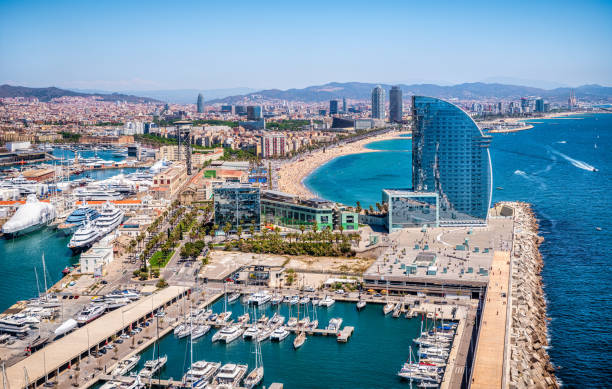
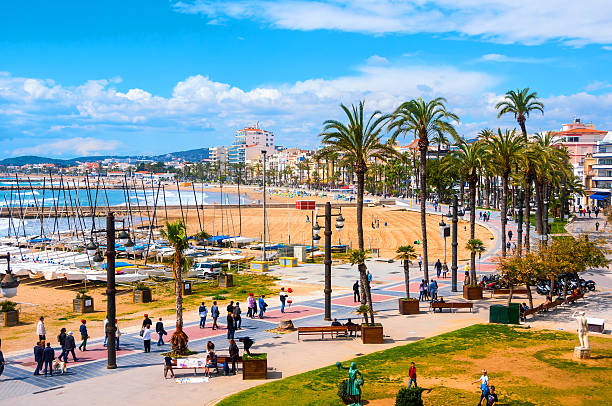
Pick Barceloneta or Port Vell when the trip mood is beach, sea air, cruise ease, or a slower coastal reset. This is not the easiest base for Gaudí days. It earns its place when you want the Mediterranean to shape the trip rather than merely appear for one photo.
Pick Gràcia when the trip mood is quieter local life, plazas, workshops, and a second-stay rhythm. It has charm and a different evening texture, but it is not the simplest base for a first-time, sight-heavy visit.
Pick Poblenou when the trip mood is quiet design, beach-adjacent breathing room, and a more contemporary Barcelona. It suits repeat visitors, design travelers, and families who want space, but it asks you to accept more deliberate transfers to the old city and Gaudí core.
The counterintuitive correction is this: do not automatically book the Gothic Quarter because it looks most “Barcelona” on a map. For many private, comfort-led trips, it creates the very friction travelers are trying to avoid: awkward vehicle access, more crowd compression, more backtracking after Gaudí visits, and a nightly walk through lanes that may not match the calmer mood of a premium stay. The Gothic Quarter is often better as a focused guided route than as the place where every day must start and end.
Where to stay in Barcelona by mood, not by district fame
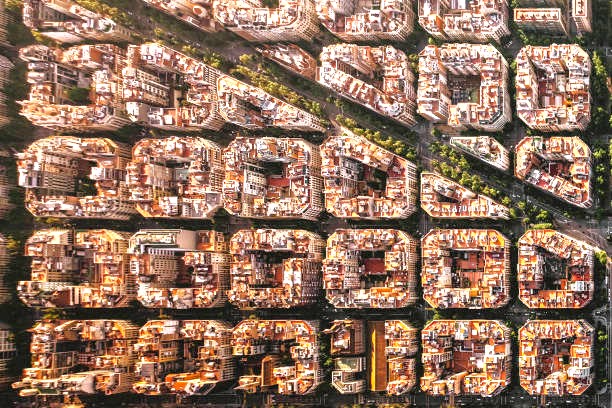
For the broadest range of private touring days, Eixample is the strongest base because it lets Barcelona pivot cleanly. The neighborhood’s grid matters more than its prestige. From the right part of Eixample, you can begin with Sagrada Família, walk or transfer to Passeig de Gràcia, return to the hotel without threading the old city, and still choose later between El Born tapas, a fine-dining dinner, or a quieter design-led evening.
This is where the Gothic Quarter-to-Eixample transfer hinge becomes practical rather than abstract. Plaça de Catalunya is not just a square; it is the point where old-town walking turns into a more legible city. South of it, the streets narrow, taxis have fewer clean approaches, and a short distance can feel busy. North of it, the blocks lengthen and the day becomes easier to pace. Travelers who choose Eixample are not choosing less atmosphere; they are choosing a base that absorbs Barcelona’s most common planning shocks.
That matters most on Gaudí days. Sagrada Família official tickets should be booked through the Sagrada Família official tickets (https://sagradafamilia.org/en/tickets-individuals) page, and Park Güell official tickets should be confirmed through the Park Güell official tickets (https://parkguell.barcelona/en/buy-tickets) page before building the day around them. These timed entries are not decorative details; they set the rhythm. If your hotel is far south in the old town or sea-first in Barceloneta, each timed entry adds a transfer decision. If your base is Eixample, those decisions are easier to absorb.
The main Eixample caution is mood: it is not the best choice if you want to step straight from your hotel into medieval lanes or beach sand. It can feel too orderly for travelers who imagine Barcelona primarily as a labyrinth of stone streets. Yet that order is precisely why it suits couples with dinner reservations, families who need clean returns, older parents who prefer fewer tight passages, and short-stay visitors who cannot afford to spend their best hours solving movement.
For travelers who already know they want a Gaudí-first trip, the better question is not whether to stay near every Gaudí site. That is impossible. The better question is how to sequence one or two major interiors without turning the day into a queue-and-transfer loop. For that decision, pair this base guide with Sagrada Família, Park Güell or Passeig de Gràcia First? before finalizing tickets.
If your mood is Gaudí: let Eixample win, then cut one hill
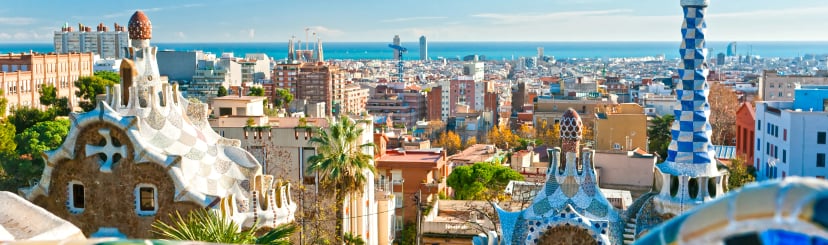
If Gaudí is the mood, Eixample should usually be the base, and Park Güell should not automatically be added to every short visit. This is a firm editorial no: stop forcing every Gaudí name into one day just because the city makes them sound close. They are not close in the way a tired traveler experiences them.
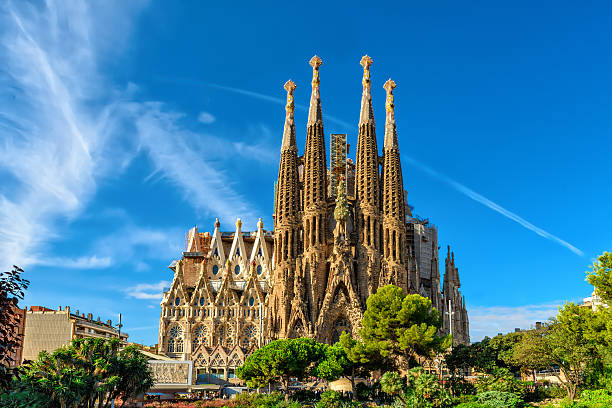
Sagrada Família is not simply another monument; it is the anchor that changes the day’s energy. The exterior pulls attention before entry, the interior needs time to breathe, and the post-visit decision matters. From Eixample, you can move toward Passeig de Gràcia for Casa Batlló or La Pedrera, pause at the hotel, or continue into a lighter evening. From the Gothic Quarter or beach, the same sequence often begins with a transfer and ends with another.
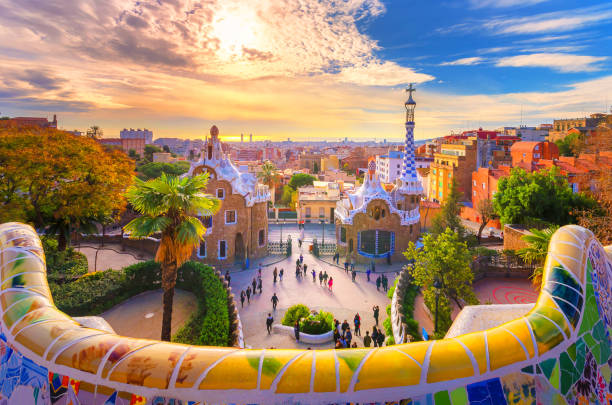
Park Güell is the key friction point because it sits uphill and behaves differently from the city-center Gaudí houses. Even when the visit is worth it, it adds slope, timing pressure, and a more exposed movement pattern. A private guide or chauffeur can improve the route, especially for families, older parents, or high-summer days, but no premium spend makes Park Güell flat or moves it beside Sagrada Família. Paying more does not earn its cost when it is used to cram too many Gaudí stops into a single short day; it earns its cost when it reduces exposed transfers, protects entry timing, and helps decide what to leave out.
The best Gaudí mood is not maximalist. It is edited. For many first visits, Sagrada Família plus one Passeig de Gràcia interior produces a stronger day than Sagrada Família, Park Güell, Casa Batlló, La Pedrera, and an old-town evening all stacked together. Barcelona does not punish ambition immediately. It punishes it at 6 p.m., when the evening you wanted becomes a recovery exercise.
There is one exception. If Park Güell is emotionally important to the traveler, build around it instead of treating it as a bonus. Start with its clock, accept the hill, and remove something else. Orange Donut Tours often treats this kind of day as a route design problem rather than a sightseeing list: where the car can actually help, where walking is still better, where the guide’s context prevents visual overload, and where the hotel should sit if the next day is not another hill. For the deeper driver-versus-walking decision, see When a Chauffeur Changes a Barcelona Gaudí Day.
If your mood is tapas: choose El Born for texture, Eixample for control
If tapas and wine are the mood, El Born gives the evening more texture, while Eixample gives it more control. The better choice depends on whether you want the night to feel discovered or carefully managed.
El Born is the most natural food-led mood for travelers who want narrow streets, Santa Maria del Mar nearby, boutiques before dinner, and a walk that can end without feeling staged. It is less heavy than the Gothic Quarter and more atmospheric than Eixample. For couples, small groups, and celebration travelers who want a first night with movement, it often feels right. The drawback is that El Born is not the easiest launchpad for a Gaudí-heavy morning, especially if the next day starts with Sagrada Família or Park Güell.
Eixample works better when the meal itself is the anchor. If your evening includes a serious tasting menu, a late reservation, or a group with mixed stamina, staying in Eixample keeps the return simpler. This is where the city does something important to the trip mood: it decides whether dinner feels like a culmination or like the second half of a commute. A base near Passeig de Gràcia can let the day soften before dinner; a base deep in the old city may keep the whole evening in motion.
For fine-dining travelers, use external proof for what changes quickly and editorial judgment for what does not. Check the Michelin Guide: Barcelona starred list (https://guide.michelin.com/us/en/catalunya/barcelona/restaurants/all-starred) for current starred status, then verify the restaurant’s own details before booking. For example, a restaurant’s official menu (https://www.disfrutarbarcelona.com/en/menu) or a venue’s reservations page (https://enigmaconcept.es/reserva/) tells you more about the current evening than a generic neighborhood label. The neighborhood still matters, but it matters because of the return, the pre-dinner hour, and whether the day leaves you sharp enough to enjoy the meal.
The mistake is treating tapas mood and fine-dining mood as the same food trip. They are different geographies. Tapas wants walkable transitions, conversation, and the ability to stop without overcommitting. Fine dining wants controlled pacing, fewer pre-dinner miles, and a clean route back. If you try to make one evening do both, the meal often becomes less memorable than the logistics around it. For a first-night tapas plan, Best Barcelona Tapas and Wine Tours for a Better First Night is the better next read.
If your mood is beach: Barceloneta is a choice, not a shortcut
If beach is the mood, choose Barceloneta or the Port Vell edge only when the sea is meant to shape the trip, not merely decorate it. This is the neighborhood decision that most often looks better on paper than it feels during a Gaudí-led stay.
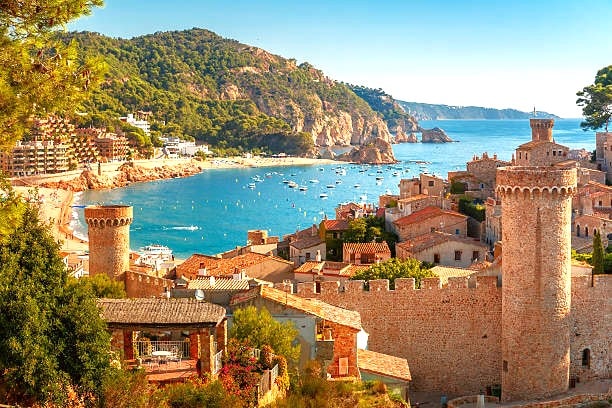
Barceloneta gives you sea air, easier beach hours, and a different morning rhythm. For families with teenagers, travelers arriving from a cruise, or couples who want one slow Mediterranean day, it can make Barcelona feel less compressed. It also works when the trip includes a coastal lunch route, a Sitges day, or a final-day sea reset before a flight. The payoff is mood, not efficiency.
The tradeoff is clear. Sagrada Família, Passeig de Gràcia, and Park Güell all pull you away from the water. If the trip is only two or three nights and the main events are Gaudí, old-town history, and a special dinner, a beach base turns the sea into a recurring transfer cost. You may still love the view, but the day will ask you to pay for it repeatedly in time and energy.
Barcelona also does something physical to beach-based travelers that is easy to underestimate. The city feels flat along the waterfront, but the moment your day moves inland and uphill toward Park Güell or across the center toward Eixample, the body registers the added transfer resets: waiting, walking out of the hotel zone, entering denser streets, then returning after dinner. In warm weather, that repeated shift from sea-level leisure to inland sightseeing can flatten the day sooner than expected.
The best use of Barceloneta is therefore intentional. Stay there when beach hours, port convenience, or sea air are central to the identity of the trip. Do not stay there because you think it gives you both beach and effortless access to everything else. For a more focused version of that decision, read Barcelona Between Gaudí and the Sea.
If your mood is nightlife: be near the evening, not inside the loudest lane
If nightlife is the mood, the best base is usually near the evening rather than directly inside the noisiest part of it. Barcelona rewards proximity, but it does not always reward sleeping at the center of late-night energy.
El Born can work well for travelers who want dinner, wine, and a lively walk without making the whole trip feel club-led. It offers old-city atmosphere and easy movement toward the waterfront, but it does not require the same deep-lane commitment as the Gothic Quarter. Eixample works for a more polished nightlife mood: better hotel comfort, easier taxis, and a cleaner return after a late meal or show.
The Gothic Quarter is the risky romance. It can be magical before dinner and frustrating after midnight, depending on the exact street, hotel access, and traveler tolerance. The difference between a charming lane and a tiring return can be one block. This is why private planning should be specific, not neighborhood-generic. “Stay in the Gothic Quarter” is not a plan; “stay near an edge with easier vehicle access and use the deeper lanes as a guided evening walk” is closer to one.
For celebration travelers, premium spend helps when it buys better sequencing: a guide who can make the pre-dinner walk meaningful, a driver for a late return from a dinner outside your base, or a plan that separates the show night from the biggest Gaudí morning. Premium spend does not help if the hotel itself is in the wrong sound environment for your sleep style. A more expensive room on the wrong street is still on the wrong street.
The cut-first rule for nightlife trips is to remove the early next-morning hill. Do not pair a late El Born or Gothic Quarter evening with a tight Park Güell start unless the group is genuinely energetic. If you want nightlife to feel like a pleasure rather than a tax, let the following morning begin with a later Eixample interior, a market route, or a guided old-town section that does not require a cross-city climb.
If your mood is quiet design: Gràcia and Poblenou are for repeat visitors, not rushed first-timers
If quiet design is the mood, Gràcia and Poblenou can be excellent, but they are strongest when the trip is not trying to win every first-time sight. These neighborhoods ask for a different kind of Barcelona: less checklist pressure, more time in shops, studios, plazas, and contemporary streets.
Gràcia suits travelers who want local-feeling evenings, smaller squares, independent boutiques, and a softer social rhythm. It is especially attractive on a second stay or for couples who do not need every night to happen near the old city. The challenge is that Gràcia is not a frictionless base for the classic first visit. It can be lovely at 8 p.m. and inconvenient at 8 a.m. if your timed entry is across the city.
Poblenou is the quieter design answer for travelers who want more space, a contemporary edge, and some beach adjacency without fully choosing Barceloneta. It can suit families who prefer wider streets and travelers interested in design-led wandering rather than medieval immersion. But it requires honesty. If your private itinerary includes the Gothic Quarter, Sagrada Família, Park Güell, Passeig de Gràcia, and a serious dinner, Poblenou becomes a calm base with a busy transport life.
Design-focused travelers often do better by staying in Eixample and dedicating a route to Gràcia, Sant Antoni, El Born, or Poblenou rather than moving the entire hotel base there. That lets you enjoy workshops and design streets without turning every major sight into a transfer exercise. If shopping, galleries, and design history are central, Passeig de Gràcia, El Born or Gràcia? sharpens the choice.
The exception is a longer stay. With four or more nights, a quieter design base can work because the schedule has enough air. You can give one day to Gaudí, one to the old city, one to food or markets, and one to design or the sea. With two nights, the same choice may feel like you booked calm but bought distance.
How Barcelona’s shape changes the body and the mood
Barcelona’s neighborhood decision is partly about what the city does to the body: block-scale walking in Eixample, lane compression in the old city, uphill exposure around Park Güell, and late-return fatigue when dinner sits far from the hotel. None of these is dramatic in isolation. Together, they decide whether a private trip feels composed or constantly corrected.
Eixample’s long blocks can look dull on a map, but they reduce decision fatigue. You can read the grid, find taxis more cleanly, and return to a hotel without decoding a maze. The Gothic Quarter does the opposite. It gives beauty and historical density, but it asks for more micro-navigation. That is delightful with a guide and light hands. It is less delightful with shopping bags, a stroller, mobility concerns, or a family group split between fast walkers and slow observers.
Park Güell adds a different body cost: elevation and exposure. Montjuïc adds another: the temptation to combine art, gardens, viewpoints, and the waterfront in one sweeping move. Barceloneta adds sea-level ease but increases inland resets. Gràcia gives charming plazas, but the return from a late central dinner can feel longer than expected. These are not reasons to avoid those neighborhoods. They are reasons to let the mood decide what you are willing to spend your energy on.
The city also changes the trip mood through evening geography. Stay in the wrong place and the day feels shorter because every evening requires a decision about how to get back. Stay in the right place and the evening expands: a hotel pause before dinner, a short walk to a wine bar, a guide-led old-town hour, or a taxi that does not feel like a rescue. This is why the “best” neighborhood is not the one with the most attractions nearby. It is the one that preserves the feeling you came for after the day has started to tire.
How to sequence neighborhoods on a short tailor-made stay
On a short Barcelona stay, sequence by anchors first, then mood. The anchors are timed interiors, meal reservations, transfer days, and any beach or hill commitment. The mood is what you protect around those anchors.
For two nights, choose one base and do not split hotels. Eixample is usually the cleanest answer unless the trip is clearly beach-first or old-town-only. Use one Gaudí anchor, one old-town or tapas evening, and one lighter reset. The mistake is trying to make two nights carry beach, Gaudí, nightlife, food, and quiet design equally. Barcelona can offer all of them, but not without changing the feel of the trip.
For three nights, Eixample still wins for most first visits, but you can give each mood a clearer place. One day can belong to Sagrada Família and Passeig de Gràcia, one to the Gothic Quarter and El Born, and one to the beach, Montjuïc, Gràcia, or a food-led route. If the trip includes a major fine-dining reservation, keep that day lighter. A serious dinner after a hill-and-queue day rarely feels as good as it looked in the itinerary.
For four or more nights, the answer can flip. A split stay may make sense if the first part is Gaudí and old-town focused and the second part is coast, design, or a slower local rhythm. But splitting hotels is not automatically more luxurious. It costs packing time, check-in energy, and luggage coordination. It works when it changes the trip’s identity, not when it merely lets you sample another lobby.
For private touring, the highest-value customization comes before the first ticket is booked. A guide can adjust pace and context during the day, but the biggest gains often come from choosing the right base, placing Sagrada Família and Park Güell in the correct order, deciding whether the Gothic Quarter is a morning route or an evening mood, and cutting the extra stop that would make dinner less enjoyable. For short stays where every half-day matters, Inquire now and ask Orange Donut Tours to design the neighborhood sequence around your hotel, tickets, meals, and energy rather than around a generic map.
The final neighborhood verdict by traveler mood
Choose Eixample for the most adaptable premium Barcelona stay. It is the best answer when the trip includes Gaudí, a special dinner, private guiding, older parents, children, shopping, or a short timeline. It is not the most atmospheric answer at every hour, but it is the one that prevents the most common planning regrets.
Choose El Born when tapas, medieval texture, and a lively but not fully chaotic evening matter more than the easiest Gaudí logistics. It is one of Barcelona’s most satisfying moods for couples and small groups who want to walk after dinner and still feel close to the city’s older layers.
Choose the Gothic Quarter as an experience before choosing it as a base. It belongs in the trip, often with a guide, but it is overvalued as the automatic place to sleep. Use it for Roman walls, cathedral context, El Call, atmospheric lanes, and a focused heritage route; avoid making it the answer to every day’s logistics.
Choose Barceloneta or Port Vell when the sea is a defining part of the trip. It is a strong choice for beach-first travelers, some cruise travelers, and those who want a slower coastal reset. It is a weaker choice for travelers whose actual priorities are Sagrada Família, Park Güell, Passeig de Gràcia, and fine dining.
Choose Gràcia or Poblenou when you can afford a quieter rhythm. These are not consolation neighborhoods; they are mood-specific choices. Gràcia is for plazas and local evenings. Poblenou is for contemporary calm and beach-adjacent design. Both are better when the stay is long enough to avoid daily transfer pressure.
The simplest rule is the most useful: put your hotel where your tired self will be happiest returning, not where your morning self is most excited to begin. In Barcelona, the morning can be guided, chauffeured, ticketed, and timed. The evening is where the neighborhood choice reveals whether it was wise.
FAQ
What is the best neighborhood to stay in Barcelona for a first visit?
Eixample is usually the best neighborhood for a first Barcelona visit because it balances Gaudí access, hotel comfort, transfers, shopping, and dinner geography better than the old city or beach areas.
Is the Gothic Quarter a good place to stay in Barcelona?
The Gothic Quarter is excellent for a guided heritage walk and atmospheric old-town time, but it is not always the best base for comfort-first travelers because narrow lanes, crowds, luggage movement, and late returns can add friction.
Should I stay near Sagrada Família?
Staying near Sagrada Família can work for a Gaudí-focused trip, but most travelers are better in Eixample near Passeig de Gràcia or a well-connected part of the grid, because the whole stay needs dinner, transfers, and other neighborhoods as well as one major basilica visit.
Is Barceloneta a good base for sightseeing?
Barceloneta is a good base when beach time or sea air is central to the trip. It is less convenient when the main priorities are Sagrada Família, Park Güell, Passeig de Gràcia, the Gothic Quarter, and fine dining.
Where should food and wine travelers stay in Barcelona?
Food and wine travelers should choose El Born for tapas texture and walkable evening atmosphere, or Eixample for more controlled pacing around fine dining, late reservations, and easier hotel returns.
What Barcelona neighborhood is best for families?
Eixample is usually the easiest family base because its wider streets, clearer routing, and better access to Gaudí sights reduce daily friction. Barceloneta can work for families when beach time is the main reward rather than a side stop.
Where should couples stay in Barcelona?
Couples usually do best in Eixample for polished hotels and flexible evenings, or El Born for a livelier tapas-and-walking mood. The better choice depends on whether the trip is Gaudí-and-dinner led or old-town-and-evening led.
Is Gràcia too far for a first Barcelona trip?
Gràcia is not too far for every traveler, but it is usually better for repeat visitors or longer stays. For a short first trip with Gaudí, old-town history, beach time, and special dinners, Eixample normally creates a smoother base.
If you’re interested in any private tours of Barcelona, please reach out to us.










 So if you are looking for the absolute best in Barcelona & surroundings with authentic local fully-licensed native guides whose English you can actually understand and with an exclusive and amazingly fun itinerary













