When a Chauffeur Changes a Barcelona Gaudí Day and When Walking Still Wins

Updated
A chauffeur changes a Barcelona Gaudí day when it bridges the parts of the city that drain energy rather than reveal architecture: especially Eixample to Park Güell, Park Güell back down to the center, and any later reach toward Montjuïc. That works because a Gaudí day is not one elegant line; it is a grid walk, a basilica ticket window, and a hill. The clearest exception is the Eixample itself, where walking still wins because the best Modernisme moments happen block by block, not through a car window. The thesis is simple: the strongest Barcelona Gaudí day is not chauffeur-led or walking-only, but hinged around where the city changes grade.
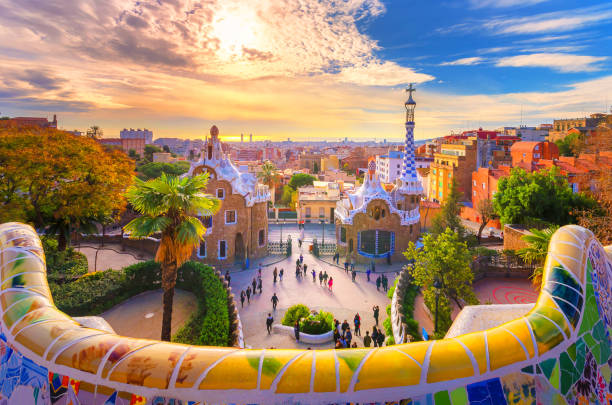
This matters most for private, tailor-made touring because Barcelona rewards very different movement styles in the same day. Around Passeig de Gràcia, a driver can make the experience worse by pulling you away from façades, corner perspectives, and the slow reveal between Casa Batlló and La Pedrera. Around Park Güell, the same driver can save the mood of the day by absorbing the climb toward the Carmel edge, the taxi shuffle around Travessera de Dalt, and the tiring return after the ticketed visit. A non-obvious cue: the decision often turns near Lesseps or the Gràcia edge, not at the park gate. By the time you are thinking about Carrer d’Olot, you have already spent more leg and attention than many first-time visitors expected.
The route hinge: walk Eixample, drive the climb, then walk again
The best default is to walk the Eixample Modernisme stretch, use a chauffeur for the move toward Park Güell, and return to walking once the site itself begins. That pattern respects the city rather than treating private transport as a blanket upgrade. Eixample is readable at pavement speed: chamfered corners, broad crossings, changing light on stone, and the way a façade only makes sense once you stand across the street long enough to see the whole block. Park Güell is different. The value is not in being driven through it, because you cannot experience the ticketed landscape that way. The value is arriving without having turned the approach into the hardest part of the morning.
A Gaudí day fails when travelers buy comfort in the wrong place. A car cannot interpret Sagrada Família, cannot replace a good guide inside the basilica, and cannot make a rushed ticket sequence feel calm. It can, however, remove the dead weight between the meaningful parts: the uphill approach after a long church visit, the return to a hotel before a late dinner, or the awkward link between a Sagrada Família window and a Park Güell entry that sits too far away to treat casually. Premium spend does not help if the route is badly ordered; hiring a driver does not fix a poorly ordered Gaudí day.
If you are building a private day with Orange Donut Tours, think of the chauffeur as the day’s hinge and the guide as the day’s intelligence. If the full architectural thread is the point, Complete Gaudí is the natural spine; the chauffeur should then be assigned only to the distances that would otherwise dull that thread. The car should connect Sagrada Família, Park Güell, and selected Eixample stops; it should not become the reason to keep adding places. The narrower your stay, the more this distinction matters. A two-night first visit needs decisions, not just access to a vehicle.
Use these scenarios to choose car, walk, or hybrid
Use the following scenarios as the decision surface for a Barcelona Gaudí day. They are not generic transport preferences; each one changes what your body spends, what your guide can explain, and how much of the evening remains usable after the last visit.
- Walk-first Eixample morning: Choose this when Casa Batlló, La Pedrera, Passeig de Gràcia, and the surrounding Modernisme context are the core of the morning. A car adds little here because the best comparisons happen across streets and between façades.
- Hybrid guide-and-chauffeur Gaudí day: Choose this when Sagrada Família, Park Güell, and Eixample all belong in one day. This is the best fit for first-time private touring because the guide keeps the story coherent while the driver absorbs the hill and cross-city transfer.
- Driver-supported hillside add-on: Choose this when Park Güell connects to Montjuïc, a hotel reset, or a later dinner plan. The car earns its place by preventing the day from ending in transit fatigue.
- Walking-only Gaudí half day: Choose this when the day is concentrated around Eixample and Sagrada Família, especially if you prefer detail over coverage. It is the wrong fit if you are determined to include Park Güell without giving the hill its own movement plan.
Where walking is the premium choice
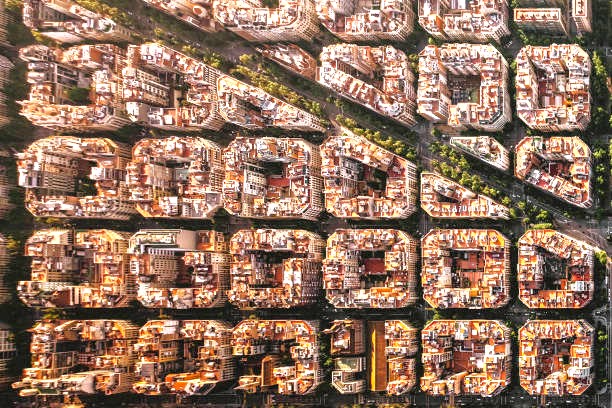
Walking is the premium choice in the Eixample, and it should not be treated as the budget version of a chauffeured day. The district was designed to be read through repetition and variation: long sightlines, chamfered intersections, balcony rhythms, and neighboring buildings that explain each other. On Passeig de Gràcia, the experience of Casa Batlló changes when you step back, cross, compare it with Casa Amatller, then continue toward La Pedrera. A vehicle breaks that sequence into stops, and the stops become less elegant than the walk.
This is the first counterintuitive correction for a high-end Gaudí day: a chauffeur is often overvalued on the most famous Eixample stretch. The car can feel luxurious at the hotel door and clumsy five minutes later, especially if it forces the group to gather, load, unload, and reorient at every façade. In the grid, those little resets flatten the day. You spend more time managing the vehicle than noticing the buildings.
A good Eixample walk also lets a private guide calibrate attention. Some travelers want the full architectural arc; others want a tight, beautiful thread before Sagrada Família. That choice is easier on foot. A guide can pause at a corner, shorten a block when children are fading, or expand the story around one façade when an architecture-focused couple wants more. A driver cannot do that from the curb without turning the experience into a sequence of awkward drop-offs.
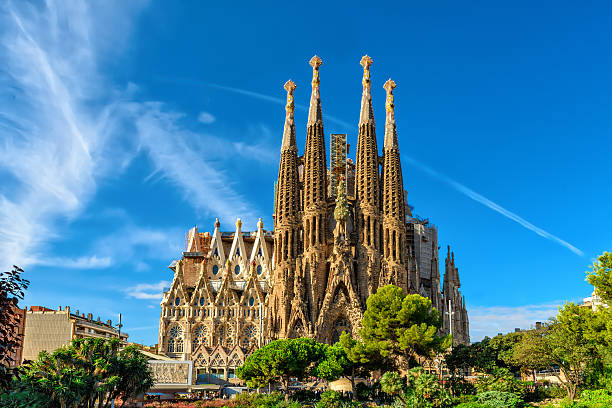
The same logic applies immediately around Sagrada Família. The basilica is powerful partly because the approach changes perspective: the towers from Avinguda de Gaudí, the Nativity façade at closer range, the Marina-side traffic, the sudden compression of crowds near the entrances. A short guided walk around the exterior before or after the visit is often more useful than being delivered as close as possible. Being dropped at the nearest edge may save steps, but it can cost context.
For travelers who want Eixample depth rather than a checklist, the better upgrade is expertise, not wheels. A focused private guide can make the district feel legible without dragging you into every interior. That is where an Eixample Private Tour can be more valuable than a chauffeured loop, especially when the day’s question is how to understand Modernisme rather than how to cover maximum ground.
Where a chauffeur saves real energy in Barcelona
A chauffeur saves real energy when the day leaves the Eixample grid and starts using Barcelona’s hills. The most important threshold is Eixample to Park Güell. On a map, the distance can look reasonable; in a private touring day, the consequences are larger. You are often leaving a dense visit at Sagrada Família or Passeig de Gràcia, carrying attention fatigue, crossing out of the flat grid, and then approaching a park whose own visit still asks you to walk, stand, climb, and orient yourself.
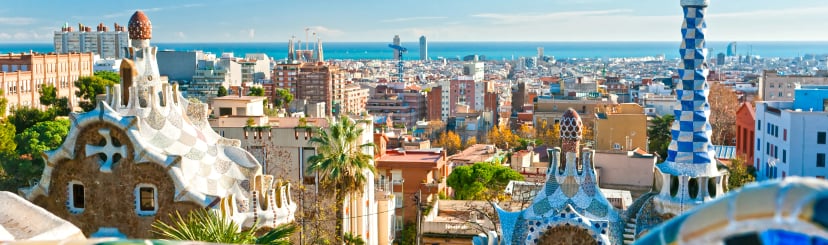
The driver’s value is not simply distance. It is the combination of distance, grade, and mental reset. From the Eixample, the route toward Park Güell pushes north through Gràcia and up toward the Carmel side. The final approach around Travessera de Dalt, Carrer de Larrard, Carrer d’Olot, and the surrounding slopes can make a group feel as if the visit has started before the guide has had a chance to frame it. That is tolerable for fit travelers on a loose afternoon. It is a poor use of energy for older parents, small children, celebration travelers in dressier shoes, or anyone trying to keep the day composed enough for a serious dinner.
A chauffeur also earns the cost after Park Güell. Many travelers focus on arrival and forget the exit. The park visit itself can be visually generous but physically uneven: inclines, open areas, photo pauses, crowds at narrow points, and the need to regroup after the ticketed section. A waiting car does not make the park shorter; it makes the next decision easier. Instead of negotiating whether to walk down toward Gràcia, wait for public transport, or scramble for a ride, the group can move cleanly toward lunch, the hotel, or a second planned stop.
Montjuïc is the other place where a driver can change the feeling of the day, but only when Montjuïc has a real purpose. Adding it because a car is available is a mistake. Adding it because your afternoon needs Miró, the Palau Nacional area, a viewpoint, or a calmer art-and-gardens shift after the Gaudí morning can be worthwhile. The hill is not difficult in the same way as Park Güell, but the transfer can stretch the day if you approach it casually from the wrong side of the city.
The clearest value judgment is this: pay for a driver when the transfer protects attention for the next meaningful place, not when it merely makes the itinerary look more luxurious. Premium spend does not help when it replaces the Eixample walk or encourages you to add stops your group would not have wanted without the car. Hiring a driver does not fix a poorly ordered Gaudí day.
How timed entries should shape a private Gaudí route
Timed entries should set the bones of the day before you decide how much chauffeur support to use. Sagrada Família and Park Güell are not casual “swing by when ready” stops for a well-run private day. Their entry windows determine whether the car creates calm or whether it creates dead time between appointments. Before you finalize the sequence, check Sagrada Família official tickets (https://sagradafamilia.org/en/tickets-individuals) and Park Güell official tickets (https://parkguell.barcelona/en/buy-tickets), then build the transfers around the confirmed windows rather than around a fantasy of constant movement.
For many first-time travelers, Sagrada Família deserves the protected window. It is the visit most likely to suffer if the group arrives flustered, late, or already overheated. A private guide can make the exterior and interior coherent, but only if the route allows enough mental space before entry. That may mean starting nearby, walking the exterior with intention, then entering at the reserved time rather than racing across the city because Park Güell was placed too close beforehand.
Park Güell is the more dangerous timing mistake because its hill makes small gaps feel larger. If the Park Güell window is too early after Sagrada Família, the group may rush the basilica or skip the exterior context that makes the visit meaningful. If the window is too late, the driver may spend the middle of the day holding a schedule together while everyone waits in the wrong part of town. The best private plan usually gives Park Güell its own clean movement block: finish the Eixample or Sagrada Família piece, transfer with purpose, visit the park, then leave the hill cleanly.
A chauffeur is especially useful when timed entries sit at opposite ends of the day’s energy curve. For example, a morning Sagrada Família visit followed by a measured Eixample walk can still leave a group fresh enough for Park Güell if the uphill transfer is handled. Without that support, the same sequence may feel as if the day has three beginnings: hotel to basilica, basilica to Eixample, Eixample to hill. The body notices each restart even when the map looks compact.
If Sagrada Família is the emotional center of the trip, consider anchoring the day around a dedicated guide rather than a general city sweep. A Sagrada Família Private Tour can sit inside a larger Gaudí route, but it should not be treated as just another stop on the way to the next ticket. For travelers comparing which Gaudí stop should come first, the deeper sequencing question is covered in Sagrada Família, Park Güell or Passeig de Gràcia First?.
When the driver should not become the itinerary
The driver should not become the itinerary when the car starts justifying extra stops rather than making the chosen stops better. This is the most common way a premium Gaudí day loses its shape. A private vehicle makes it tempting to add Sant Pau, Barceloneta, Montjuïc, a shopping pause, and one more façade because “we have the car anyway.” The result is rarely richer. It is usually a day with too many transitions and not enough digestion.
Keep the driver in a supporting role. The guide should decide how the day reads: what to explain before Sagrada Família, which Eixample corners matter, whether Park Güell deserves full attention, and whether Montjuïc belongs after Gaudí at all. The driver should solve movement without taking over the editorial logic. When travelers feel they are spending the day getting in and out of a vehicle, the plan has lost discipline.
There are three warning signs. First, the itinerary includes multiple “quick photo stops” at places that deserve either real context or no stop at all. Second, the group is asked to cross the city for a place that does not connect to the day’s theme. Third, the schedule has no quiet middle, only transfers. In that situation, cutting one destination is more luxurious than adding a better car.
This is also where private customization matters. A family with grandparents and teenagers may need the car more often but the itinerary less often. A couple with deep architecture interest may need fewer transfers and more time on foot. A celebration group may care less about seeing every Gaudí highlight and more about arriving at lunch or dinner with energy intact. A generic chauffeur plan cannot read those differences; a tailored guide-and-driver rhythm can.
For guests who want one integrated Gaudí day with selected transfers, the best next step is not a bigger route but a sharper one. Orange Donut Tours can pair a Gaudí specialist with chauffeur support so the car covers the distance between Sagrada Família, Park Güell, and the Eixample while the walk remains deliberate. Use the Luxury Chauffeured Barcelona Private Tour when vehicle support is central to the day. For a short stay where one Gaudí day has to work cleanly, Inquire now.
A better sequence for Sagrada Família, Park Güell, and Eixample
A better Gaudí sequence starts by deciding which visit must feel freshest, then placing the driver around the hardest transfer rather than around the fanciest address. There is no single perfect order for every traveler, but there is a reliable logic: protect Sagrada Família from rush, keep Eixample walking where it belongs, and avoid making Park Güell an afterthought at the end of an already full walking day.
Best default for first-time private touring
For a first-time private Gaudí day, the strongest default is Sagrada Família first or early, Eixample context next, then a chauffeured transfer to Park Güell if the ticket window supports it. This gives the basilica the clarity it deserves, lets the guide connect Gaudí to the wider Modernisme fabric, and uses the driver where the city starts to pull uphill. If the Park Güell window is later, a calm lunch or hotel pause may be better than squeezing in another attraction just to fill the gap.
Best default for architecture-focused travelers
For architecture-focused travelers, start with an Eixample walk before the basilica if the ticket window allows it. This makes Sagrada Família feel less isolated. You see how Barcelona’s grid, patronage, materials, and urban confidence shaped the environment around Gaudí before standing inside the basilica’s forest of columns. The chauffeur still matters for Park Güell, but the intellectual center of the day is the guided walk, not the transfer.
Best default for older parents or mixed-mobility groups
For older parents or mixed-mobility groups, place the driver earlier and cut more aggressively. Do not attempt a full Eixample walk, Sagrada Família interior, Park Güell, and Montjuïc unless the travelers are genuinely comfortable with repeated walking and standing. A better version may be Sagrada Família, a shortened Eixample exterior thread, chauffeured Park Güell, and a clean return. The win is not seeing less; it is having the main visits stay vivid rather than blending into endurance.
Best default when Montjuïc is tempting
Montjuïc belongs after Gaudí only when it changes the texture of the afternoon. It can work as an art, garden, or viewpoint shift after a morning of stone, symbolism, and crowds. It does not work as a trophy add-on. If the day already includes Sagrada Família, Park Güell, and a meaningful Eixample walk, Montjuïc should be questioned before it is confirmed. For a separate decision about the hill, use Barcelona’s Montjuïc choice rather than folding it automatically into a Gaudí day.
What Barcelona does to the body, and then to the mood
Barcelona makes travelers spend energy in layers. The Eixample looks easy because the grid is broad and elegant, but long blocks, repeated diagonal crossings, sun exposure on open avenues, and standing time outside major sites add up. Sagrada Família adds queue drag even when the visit is well organized, because the exterior, security, ticket checks, and interior all ask for attention before the group has moved far. Park Güell adds slope and uneven rhythm: climb, pause, look, photograph, regroup, repeat. Montjuïc adds another elevation shift if you attach it to the same day.
The body consequence is practical: once the Eixample walk, the Sagrada Família visit, and the Park Güell slope are stacked without a transfer plan, the last third of the day often becomes slower, less precise, and more expensive to rescue. Travelers start accepting weaker routing because they are tired, not because the plan is good. A chauffeur can protect the body from that avoidable drain, but only if it is placed around the hill and return movement rather than used to interrupt the best walking sections.
The consequence is not only tired feet. It is decision fatigue. After two major Gaudí stops, travelers often become less curious and more reactive. They stop asking good questions. They say yes to the next transfer because they do not want to think. They accept a weak lunch location because it is nearby. They begin treating the evening as recovery rather than pleasure. That is exactly where a well-placed chauffeur changes the day: not by removing walking, but by removing the demoralizing parts of movement after the meaningful walking has already happened.
The mood consequence is just as important. A Gaudí day that uses walking where the city speaks and a car where the city drags feels shorter in the best sense: cleaner, more legible, less like a test of stamina. A car-heavy day can feel oddly thin because the transitions take over the memory. A walking-only day can feel noble at breakfast and punishing by late afternoon if Park Güell and a dinner reservation are both in play. The right balance lets travelers arrive at the evening still capable of enjoying Barcelona rather than simply reporting that they saw it.
This is why families, couples, and celebration travelers often need a different route even when the places are the same. A couple staying in Eixample with one excellent dinner planned may want a slower morning and a chauffeured return from Park Güell. A family staying near the Gothic Quarter may need the car to avoid the old-town-to-hill shuffle after Sagrada Família. A small group with mixed interests may need the guide to shorten Eixample and expand Park Güell because the children respond better to open space than façade analysis. None of these choices are about prestige. They are about keeping the day emotionally coherent.
The cut-first rule when a Gaudí day is getting too full
When a Gaudí day is getting too full, cut the extra district before you cut the meaningful walk. In practice, that usually means removing Montjuïc, Barceloneta, or a second old-town wander before you reduce the Eixample context that helps Gaudí make sense. The mistake is assuming that a driver allows one more neighborhood without consequence. It allows the transfer; it does not create more attention.
Stop forcing every famous Barcelona name into the same day. If Sagrada Família, Park Güell, and Eixample are the purpose, then the day already has a full arc: sacred architecture, urban Modernisme, and garden-city fantasy on the hill. Adding the Gothic Quarter because it is famous or Barceloneta because someone wants to see the sea can dilute the reason you planned a Gaudí day in the first place. Those places may belong elsewhere in the stay, especially when food, evening atmosphere, or cruise logistics are the real reason to go.
The one add-on that can work is a reset with a clear job. A hotel pause after Park Güell may sound unambitious, but it can rescue a dinner, a flamenco evening, or a celebration plan. A short Eixample lunch can keep the day elegant without sending the group into another transfer. A Montjuïc art stop can work if the travelers specifically want Miró or a calmer hillside finish. The add-on should solve a problem, not advertise how much you covered.
For travelers with only two or three days in Barcelona, the cut-first rule is even more important. A private Gaudí day should not leave the next morning compromised. If you are also planning Montserrat, the Costa Brava, or a food-and-wine day, keep Gaudí disciplined. Barcelona is generous, but it is not improved by treating every day as a maximum-capacity route.
Who should choose the hybrid day, and who should avoid it
The hybrid guide-and-chauffeur day is best for first-time visitors who want Sagrada Família, Park Güell, and Eixample in one coherent arc without letting the hill consume the afternoon. It is also a strong fit for families, older parents, small private groups, travelers with a dinner reservation, and visitors staying outside Eixample who would otherwise spend too much of the day on awkward transfers.
It is not the best fit for travelers who only want an Eixample architecture morning. If your plan is Casa Batlló, La Pedrera, selected Modernisme context, and perhaps Sagrada Família exterior or interior, walking with a guide may be the more refined choice. It is also not the right fit for travelers who dislike structured timing. Once Sagrada Família and Park Güell entries are involved, the day needs discipline. A private driver can make that discipline feel smooth, but cannot remove it.
The hybrid day also breaks down when the group expects door-to-door comfort inside places that are inherently walked. Park Güell still requires moving through the site. Sagrada Família still requires standing, looking up, listening, and navigating other visitors. Eixample still rewards crossings and pauses. If the goal is to avoid walking almost entirely, a Gaudí day should be narrowed rather than chauffeured into false ease.
The firm editorial call is this: choose a chauffeur for a full Gaudí day only when Park Güell or another hill is part of the plan, or when your hotel and evening logistics make the return matter. Choose walking when the day is Eixample-centered. Choose a shorter route when mobility, heat, or attention span makes the full trio unrealistic. The best private Barcelona days are not the ones with the most inclusions; they are the ones where each movement has a reason.
FAQ
Is a chauffeur worth it for a Barcelona Gaudí day?
A chauffeur is worth it when your Gaudí day includes Park Güell, a hotel return, or a later move toward Montjuïc. It is usually not worth it for an Eixample-only architecture walk, where walking gives better context and fewer interruptions.
Should I walk or drive from Eixample to Park Güell?
Most private travelers should drive from Eixample to Park Güell if the day already includes Sagrada Família or a substantial Eixample walk. The transfer saves energy for the park itself, where walking is still required.
Where is walking better than a chauffeur in Barcelona?
Walking is better along Passeig de Gràcia, around the Eixample Modernisme blocks, and for exterior context around Sagrada Família. These places make more sense at street level than through a sequence of vehicle drop-offs.
How do Sagrada Família and Park Güell tickets affect the route?
Their entry windows should be confirmed before the route is finalized. Once those windows are known, the guide and driver can decide whether the day needs a direct transfer, a lunch pause, or a shorter walking segment between visits.
Can a driver take me through Park Güell?
No private driver can replace the walking experience inside Park Güell. The chauffeur’s value is in the arrival and departure, especially the uphill approach and the return after the visit.
Should Montjuïc be added to a Gaudí day?
Montjuïc should be added only when it has a clear purpose, such as art, gardens, or a viewpoint after the Gaudí morning. If it is being added merely because a car is available, it is usually the first thing to cut.
What is the best private Gaudí route for first-time visitors?
A strong first-time route usually protects Sagrada Família, includes a meaningful Eixample walk, and uses a chauffeured transfer for Park Güell. The exact order should follow the confirmed ticket windows and the group’s walking tolerance.
Does hiring a chauffeur mean I can add more Gaudí stops?
Not always. A chauffeur can make transfers smoother, but it does not create more attention or make a crowded schedule more meaningful. Add stops only when they strengthen the day’s story.
If you’re interested in any private tours of Barcelona, please reach out to us.








 So if you are looking for the absolute best in Barcelona & surroundings with authentic local fully-licensed native guides whose English you can actually understand and with an exclusive and amazingly fun itinerary













