Barcelona Before Cruise Boarding: Sagrada Família, Montjuïc or Eixample Before the Port?

Updated
Choose Sagrada Família before cruise boarding when you have a clean morning, a reserved ticket time, and a driver-held luggage handoff; choose Montjuïc when boarding later and you want a scenic stop closer to the port; choose Eixample when the window is tight. Barcelona makes this decision less about which sight is most famous and more about where your bags, ticket clock, and transfer line meet. The Sagrada Família to port handoff works only when the guide can end decisively near the basilica and the driver can move you south without adding another stop. The clearest exception is late checkout, young children, older parents, or a narrow embarkation window, when the safest choice is a short Eixample walk and direct Barcelona port transfer.
This article’s thesis is simple: before boarding a cruise in Barcelona, the best pre-port anchor is not the attraction with the largest reputation; it is the one that lets your ticket time finish before your boarding clock begins. The non-obvious hinge is the exit edge. Ending on the Carrer de Sardenya side of Sagrada Família, rather than drifting toward Avinguda de Gaudí for “one more look,” can decide whether the morning feels composed or starts to chase itself.
The port-clock verdict: Sagrada when the morning is clean, Eixample when it is not
The best single pre-cruise choice is Sagrada Família when your boarding time leaves enough air for one ticketed interior and an unhurried transfer. It gives first-time visitors the strongest Barcelona payoff before the ship, but it also has the least tolerance for improvisation. You should not treat it as a flexible wander. The basilica needs a real entry time, a planned exit, and luggage that is already solved before you step inside. If those three conditions are not true, the right answer changes quickly.
Eixample is the answer when the itinerary has too many loose ends. It is not the “lesser” version of Barcelona before the port; it is the calmer version when your body and your schedule need a soft landing before embarkation. A short route around Passeig de Gràcia, Rambla de Catalunya, or the quieter grid near Carrer d’Enric Granados can give you Modernista façades, a proper coffee, and an easy return to the vehicle without staking the day on one timed entrance. For guests already planning a fuller Gaudí day later, our Complete Gaudí private tour is a better place to layer interiors than the fragile hours before boarding.
Montjuïc is the runner-up for a later boarding window, not the automatic winner just because it sits above the port. The hill looks close on a map, but the experience changes depending on whether you mean a viewpoint, the castle area, the Mirador de l’Alcalde, the Fundació Joan Miró area, or a cable-car plan. Each adds a different kind of transfer, walking, slope, or waiting. Montjuïc works beautifully when it is edited down to one scenic purpose; it becomes clumsy when travelers try to turn it into a second sightseeing day.
Which Barcelona pre-cruise stop fits your boarding window?
The easiest way to choose is to start with the boarding window, not with the attraction list. Cruise lines and ships vary, so treat your own documents as the controlling source and confirm the terminal before you plan anything ticketed. The official Port de Barcelona passenger-terminal page (https://www.portdebarcelona.cat/en/business-and-services/cruise-ships/information-passenger/passenger-terminals) is useful because it reminds travelers that Barcelona port is not one single curb: cruise operations sit across named quay areas, including Adossat and Barcelona quay zones, and the last transfer should be planned from the confirmed ship details rather than a generic “cruise port” pin.
Use this as the planning frame before you buy anything. It is intentionally conservative because a pre-boarding morning has fewer rescue options than a normal city day. The penalty for being early is mild; the penalty for being late is not.
If your boarding window begins around late morning or close to lunch: choose Eixample. Keep the morning to a polished walk, one coffee or light lunch, and a direct port transfer. This is the safest plan after hotel checkout, especially if the group includes children, older travelers, or anyone who dislikes clock-watching.
If your boarding window begins in the middle of the afternoon: choose Sagrada Família, but only with official ticket timing, luggage already in the vehicle, and no add-on interior. This is the high-payoff option when the morning is clean.
If your boarding window is later and the group wants light, views, and less ticket pressure: choose Montjuïc. Keep it to a viewpoint-led route rather than trying to cover the whole hill.
If your plan includes Park Güell, Casa Batlló, La Pedrera, and Sagrada Família before boarding: cut it. That is not a premium morning; it is a transfer-risk morning with better branding.
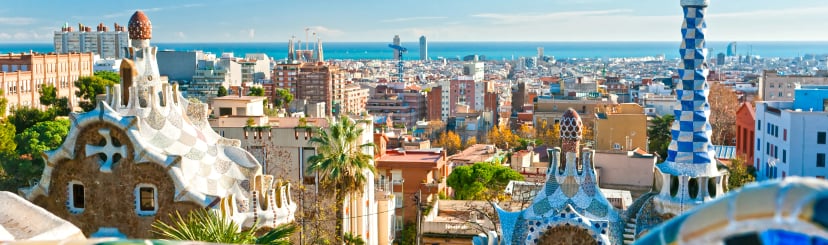
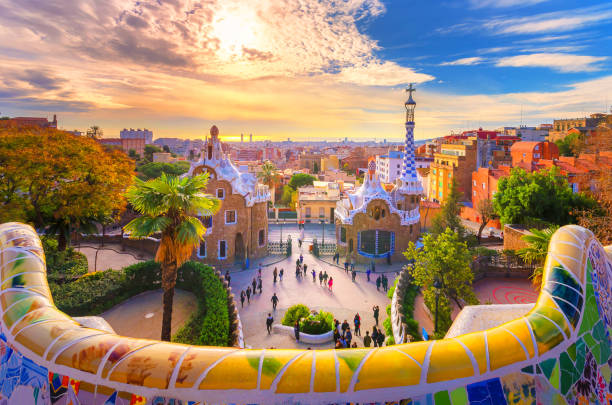
The counterintuitive correction is that Park Güell is usually the wrong upgrade before embarkation. It is beloved for good reasons, and its official ticket page (https://parkguell.barcelona/en/buy-tickets) is the right place to check entry planning if you visit on another day. But before boarding, the uphill approach, timed access, and distance from the port make it a poor companion to Sagrada Família. A chauffeur does not make Park Güell or multiple Gaudí interiors sensible before boarding.
Sagrada Família before the port: best payoff, strictest handoff
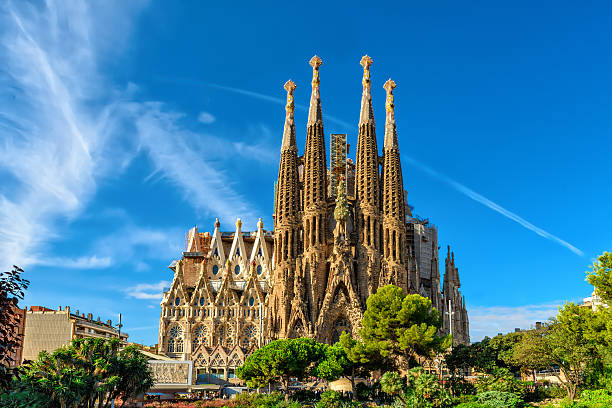
Sagrada Família is the best pre-port anchor when you want one Barcelona moment that feels complete before the ship. It gives first-time travelers a concentrated encounter with the city’s architectural imagination without asking them to wander through a neighborhood maze or spend the morning shopping for momentum. The right version is not a “Gaudí sampler.” It is one interior, one guide, one exit plan, and one driver handoff.
The planning must begin with Sagrada Família official tickets (https://sagradafamilia.org/en/tickets-individuals), not with a hopeful morning mood. Official availability, entry type, and tower choices can change the practical shape of the visit, so confirm before building the transfer. For a pre-cruise morning, towers are usually the first thing to cut. They add vertical movement, waiting, and a second rhythm inside a morning that should end cleanly. The basilica itself is enough. Travelers who try to make the tower the “premium” version often spend their margin on logistics rather than meaning.
The Sagrada Família to port handoff should be designed backwards from the exit. A guide can pace the Nativity and Passion façades, keep the interior interpretation focused, and avoid the slow fade that happens when everyone pauses for photos, bathrooms, gift shop decisions, and another exterior angle. The driver should not be an abstract promise somewhere “nearby.” The handoff belongs on a practical edge close to where the group exits, with bags already loaded and no hotel return required.
The risk is not that Sagrada Família is far from Barcelona port in a normal city-day sense. The risk is that timed tickets make the morning brittle. If you leave the hotel late, if checkout takes longer than expected, if one suitcase is still with the bell desk, or if the group separates for coffee, the attraction cannot absorb the delay gracefully. This is why a private guide is valuable here: not because the site needs sales gloss, but because interpretation and exit discipline have to happen at the same time.
Montjuïc before cruise boarding: close-feeling, but not automatically easier
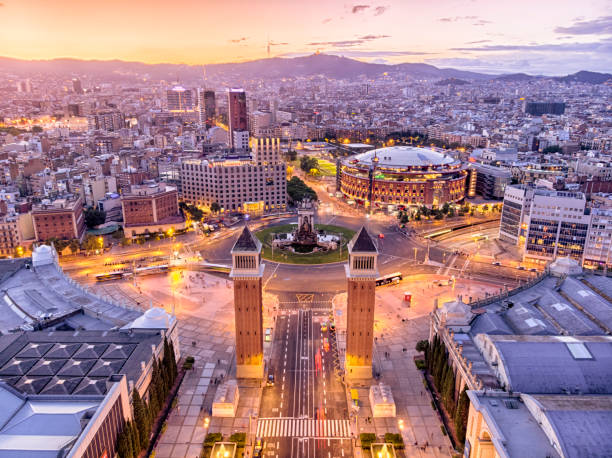
Montjuïc works before cruise boarding when you treat it as a port-side panorama, not as a full hill itinerary. It is tempting because it rises above the harbor and gives visitors a sense of the city before departure: the sea, the port infrastructure, the Eixample grid behind you, and the castle ridge above. For travelers who do not want a ticketed church interior before the ship, it can feel lighter and more spatially generous.
The catch is that Montjuïc has many versions, and only one or two belong before boarding. A short viewpoint route can work well: approach from the Plaça d’Espanya or Poble-sec side, avoid overcommitting to the top, and choose a viewing point that does not require the group to climb, queue, descend, and reassemble. A castle-first route can become heavier than expected because the top of the hill changes the transfer pattern. The cable car can be memorable, but it adds another operating schedule to verify; use the official Montjuïc Cable Car site (https://www.telefericdemontjuic.cat/en) if it becomes part of the plan, and do not make it the hinge of a tight embarkation day.
Montjuïc also does something specific to the body. Barcelona is not a uniformly steep city, but the port-facing hill turns a pre-cruise morning into a sequence of gradients, stairs, exposed viewpoints, and vehicle resets. In warm months, the sun over Avinguda del Paral·lel and the open parts of the hill can make a “quick view” feel longer than it looks in a car. For a couple, that may be fine. For a family with restless children or older parents conserving energy for the ship, it can flatten the first evening on board.
The best Montjuïc plan is edited: one view, one short cultural thread, one direct transfer. If you want Miró, the castle, the Olympic area, gardens, and the cable car, choose another day. If you want a graceful pre-port sense of Barcelona’s harbor and skyline, Montjuïc is strong. It becomes weak when travelers confuse proximity to the port with simplicity.
Eixample before the port: the safe choice when the margin is thin
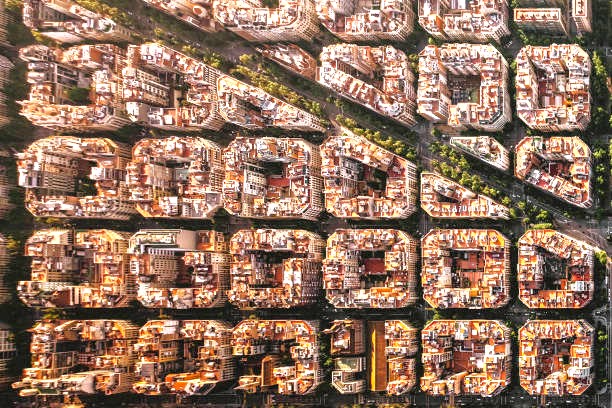
Eixample is the safest choice when the morning has hotel-checkout drag, uncertain luggage timing, or a boarding window that begins earlier than you would like. It offers Barcelona without forcing a ticketed interior: broad pavements, Modernista façades, cafés, discreet shops, and a street grid that lets a guide shorten or lengthen the route without breaking the day. That adjustability is the point.
The area around Passeig de Gràcia is especially useful because it lets travelers see Casa Batlló and La Pedrera from the outside while keeping the transfer logic simple. You can build a calm route from Diagonal down toward Gran Via, or keep to Rambla de Catalunya and neighboring streets if the group prefers a softer rhythm. The chamfered corners of Eixample blocks make walking feel open rather than compressed, and the district is easier to exit than the Gothic Quarter when a vehicle needs to collect the group cleanly.
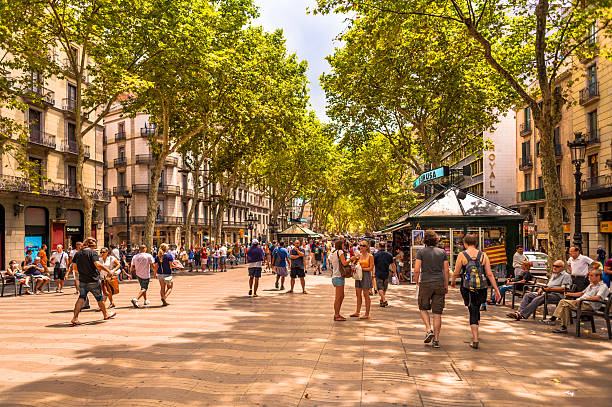
This is where Eixample beats old-town atmosphere before boarding. The Gothic Quarter can be magnificent with a guide, but its narrow lanes, crowd pulses near La Rambla, and vehicle limitations can turn a short morning into a pickup puzzle. El Born has similar appeal and similar risk when the group needs to leave at a precise time. Eixample gives you less medieval drama, but it gives you more control. On embarkation day, control often matters more.
For travelers still deciding where Eixample belongs in a first Barcelona stay, our Eixample, Gothic Quarter or Gràcia stay guide is a better place to weigh neighborhood character. Before the port, the question is narrower: can the group enjoy Barcelona and still reach the vehicle without a second transfer reset? In Eixample, the answer is usually yes.
Why the Gothic Quarter usually stays out of this decision
The Gothic Quarter is usually the wrong pre-port anchor unless the group has already solved luggage and has a very specific old-town purpose. It is one of Barcelona’s richest areas with a guide, but it asks for a different kind of attention than embarkation morning normally allows. The best old-town routes move through texture: Roman walls near the cathedral, small lane changes, Plaça Sant Felip Neri, the Jewish-quarter edge, and the busy pull toward La Rambla. That kind of walk rewards patience, not a looming port transfer.
The pickup reality matters. A route that ends near the cathedral or Plaça Reial may be satisfying as sightseeing, but it can leave the driver negotiating the city’s denser edges while the group waits with documents and boarding time in mind. Via Laietana and the Drassanes area can be useful boundaries, yet they do not remove the basic issue: the old town is better when you can finish slowly. Before boarding, slow finish and clean handoff often compete.
There are exceptions. If the group is staying near the lower Gothic Quarter, has a very late boarding window, and wants a short heritage walk rather than Sagrada Família or Montjuïc, a private guide can make it coherent. But for the core choice in this article, Eixample usually provides the better fallback because it gives Barcelona character with cleaner exits. The old town belongs on a day when the ship is not waiting.
How luggage changes the route before Barcelona port
Luggage is the reason many elegant-looking pre-cruise plans fail. A traveler imagining one final Barcelona morning often pictures the attraction sequence and forgets the suitcase sequence. The suitcase sequence is more important: where the bags are, who controls them, whether the vehicle can wait, whether the hotel return is required, and whether the group has to split attention between guide, driver, porter, and cruise documents.
The cleanest plan is hotel checkout, bags into the vehicle, one anchor, then port. That sounds obvious, but many travelers accidentally design hotel checkout, attraction, hotel return, bags, port. The extra return can consume the very margin that made the attraction possible. It also changes the mood. Instead of moving steadily toward the ship, the group feels as if it is undoing the morning and starting again.
At Sagrada Família, luggage argues for a driver-held plan. Bags should not be with the travelers, and the group should not rely on a distant locker or last-minute storage solution. At Montjuïc, luggage argues for route restraint: if the vehicle is the base, do not create a hill route where the driver and group repeatedly separate. In Eixample, luggage is easier to manage because the walking loop can return to a predictable pickup point without making the neighborhood feel truncated.
This is one reason private Barcelona cruise touring should be planned as a transfer-shaped experience, not a normal tour with a port drop tacked on. The guide’s value is not only commentary; it is choosing the one stop that survives real luggage logistics. The driver’s value is not only comfort; it is making the morning move forward rather than repeatedly circling back to the hotel.
The hotel-checkout hinge: why the same route can be calm or reckless
The same Sagrada Família plan can be elegant at 9:30 and reckless after a slow checkout. That is why the hotel checkout to cruise boarding window should be treated as one continuous operation, not as a blank morning with a port transfer at the end. The moment bags leave the room, the plan becomes more operational. Passports, medications, cruise documents, children’s layers, and last-minute purchases are no longer abstract details; they are the difference between a composed vehicle departure and a lobby search.
In practical terms, the first hour after checkout is where many pre-port plans lose their grace. Bell desks can be busy, elevators can be slow, and one traveler may still be closing a suitcase while the guide is already waiting. A private plan should absorb some of that, but it should not depend on everything going perfectly. If the morning starts late, do not “make up time” by walking faster through Sagrada Família or pushing Montjuïc higher up the hill. Cut the add-on and preserve the port transfer.
The better way is to define a latest sensible departure before the day begins. For Sagrada Família, that means knowing the point at which the ticketed visit no longer earns its cost because the group would have to rush the exit. For Montjuïc, it means knowing the point at which a viewpoint route should become an Eixample coffee and direct transfer. For Eixample, it means keeping the route modular enough that the guide can shorten the walk without the morning feeling like a failure.
This hinge also affects the emotional quality of the day. Travelers often remember the last hour before embarkation more vividly than the first hour of sightseeing, because it sets the tone for the ship. A clear checkout, a single anchor, and a driver who already has the bags creates a feeling of forward motion. A delayed checkout, a second stop, and a return to the hotel creates the opposite: the sense that Barcelona is still unfinished and the cruise is interrupting it.
What to skip before embarkation, even with a driver
The first thing to skip is a second ticketed Gaudí interior. Sagrada Família plus Casa Batlló or La Pedrera can be a superb city day when the schedule belongs to the traveler. Before boarding, it creates two fixed points and a higher chance that the morning becomes an exercise in watching the clock. If Sagrada Família is the chosen anchor, make it the interior and let Eixample façades remain exterior context.
The second thing to skip is Park Güell as an add-on. It is not close enough to the port to behave like a casual extra, and its hillside position changes the rhythm of the morning. The common mistake is believing that a private vehicle cancels out the geography. It does not. A driver can improve comfort between points, but cannot turn an uphill, ticketed, crowd-sensitive site into a low-stakes stop before embarkation.
The third thing to skip is a long lunch before the port. Food-and-wine travelers often want one last Barcelona meal, but embarkation day is not the best moment for a lingering tasting menu or a cross-city restaurant detour. A light Eixample lunch or coffee can work if it sits inside the route. A restaurant chosen because it is fashionable, rather than because it respects the transfer, can make the day feel less refined, not more.
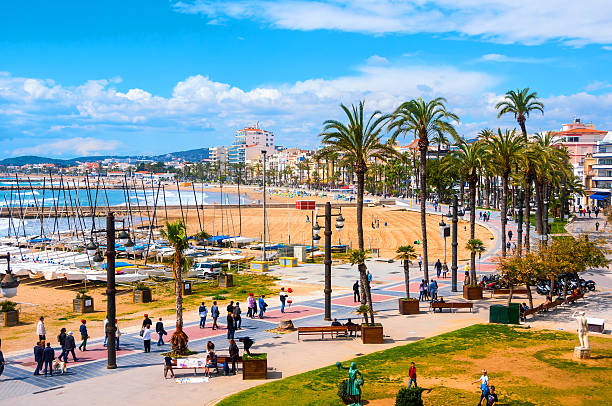
The fourth thing to skip is the beach. Barceloneta may look convenient because it is near the sea, but beach proximity and cruise ease are not the same thing. Sand, wind, boardwalk crowds, and the awkwardness of arriving at the ship feeling slightly disheveled make it a poor pre-boarding anchor for comfort-minded travelers. Save the sea for a different Barcelona day, or for the ship itself.
When to keep the morning close to port
Keep the morning close to port when your cruise documents create uncertainty, when the ship boarding window is early, when the group is large, or when the day begins with checkout friction. This is not a timid choice. It is the choice that recognizes how quickly a small delay becomes emotional when everyone is dressed for the ship, carrying documents, and aware that the next fixed point is not optional.
Close to port does not always mean physically nearest to the terminal. It means logistically nearest to an easy vehicle departure. Eixample can be “closer” in practical terms than a denser old-town lane if the pickup is cleaner. A short Montjuïc view can be close if the route is simple. The lower Gothic Quarter near Drassanes may look tempting, but the mix of La Rambla foot traffic, narrow streets, and pickup constraints can make it feel less controlled than the map suggests.
This is also the section where the hotel checkout to cruise boarding window matters most. A late hotel checkout can be a gift if it lets the group relax, but it can also tempt travelers into pretending they have a full touring day. They do not. The time between checkout and boarding is a hinge, and the plan should be shaped like one: finish the hotel, enjoy one Barcelona anchor, move to the ship.
The city changes the mood of the trip in this window. One calm anchor makes embarkation feel like a continuation of the vacation. Three half-finished stops make the ship feel like recovery. Couples may tolerate a little hustle; multigenerational groups usually do not. Celebration travelers should be especially strict, because the first evening on board matters. Arriving composed is worth more than squeezing in a final attraction that nobody fully absorbs.
How a private guide and driver earn their place on a pre-port morning
A private guide and driver earn their cost before cruise boarding when they reduce decision load, hold the route together, and protect the final transfer. This is different from paying for luxury as decoration. The value is in the timing decisions: when to leave the hotel, where the bags go, which exit matters, how to shorten the interpretation without making it feel thin, and when to abandon a secondary stop before it damages the day.
At Sagrada Família, the guide turns a fixed ticket into a focused visit, while the driver keeps the luggage and transfer aligned. At Montjuïc, the guide prevents the hill from expanding into a vague sightseeing scatter. In Eixample, the guide makes an exterior route feel intentional rather than like waiting for a car. In each case, the private setup works because it limits the morning, not because it adds more.
Paying more changes comfort, privacy, luggage control, and the ability to adjust the route as the boarding clock approaches. It does not change the basic physics of the city. It does not make Park Güell a sensible add-on to Sagrada Família before the ship, and it does not make multiple timed interiors wise when the ship is the hard deadline. The best private plan has the confidence to leave things out.
If you want one pre-port stop to feel calm rather than crowded with extras, Orange Donut Tours can shape the guide, driver, luggage handoff, and final transfer around the boarding window. For a cruise-transfer morning where the route should be designed around one anchor and not a checklist, Inquire now. Travelers comparing a vehicle-led day can also look at our chauffeured Barcelona private tour for the kind of comfort that helps when the route is disciplined.
A calm sample sequence for each anchor
The Sagrada Família sequence should begin with checkout and luggage, not with the basilica. Leave the hotel with bags already in the vehicle, meet the guide either at the hotel or near the basilica depending on the broader plan, enter on the confirmed ticket time, focus the visit, exit without a second attraction, and transfer to Barcelona port. If there is extra time, use it for breathing room, not for adding Casa Batlló. A calm buffer is not wasted time on embarkation day.
The Montjuïc sequence should be short and visual. Leave the hotel with bags solved, drive toward the hill, choose one viewpoint or a very compact cultural stop, and keep the vehicle relationship simple. If the group wants the cable car, confirm operations first and give it enough margin that it does not become a stress point. Otherwise, a guided viewpoint can be more elegant than a mechanism-heavy plan that depends on timing outside your control.
The Eixample sequence should feel like a final city morning rather than a compromise. Check out, load bags, walk a controlled route around Passeig de Gràcia or Rambla de Catalunya, read the façades from the street, pause for coffee, and transfer directly. This is especially strong for travelers who have already seen Sagrada Família or who will return to Barcelona after the cruise. It is also the best fit for guests who dislike the feeling of being managed by ticket times.
For travelers who still want a Gaudí-focused decision tree, our Sagrada Família, Park Güell or Passeig de Gràcia first guide belongs in the planning phase before you assign the cruise morning. The pre-port question is narrower. Choose the one anchor that can end cleanly, and let the rest of Barcelona wait for a day with a softer deadline.
The final cut: one anchor, one transfer, no extra heroics
The firm editorial call is this: if you have a clean mid-afternoon boarding window and have not seen Sagrada Família, make it the anchor. If the window is tight, choose Eixample and do not apologize for it. If the boarding is late and the group wants a lighter scenic morning, choose Montjuïc but keep it edited. The wrong answer is trying to prove that the last morning can behave like a full Barcelona day.
This is where discerning travelers sometimes overcomplicate the plan. Premium travel is not the same as maximum insertion. A morning can be more polished because it contains fewer moving pieces. Before embarkation, the day has a built-in endpoint, and the best route accepts that endpoint early. You should not be negotiating a tower visit, a hillside park, and a restaurant detour while the ship documents sit in someone’s bag.
The cut-first rule is clear: remove the attraction that creates a second fixed time. If the plan still feels tight, remove the attraction that creates a hotel return. If it still feels tight after that, keep only Eixample and the port transfer. The experience may sound smaller on paper, but it will feel better in the body: less standing, fewer exposed waits, fewer vehicle resets, and no last-minute debate about whether the group has time for one more angle.
Barcelona rewards travelers who do not confuse richness with accumulation. Sagrada Família, Montjuïc, and Eixample can each be the right answer before boarding, but only one should lead the morning. Choose by the transfer, obey the ticket clock, and let the port handoff stay simple.
FAQ
Is Sagrada Família a good idea before cruise boarding in Barcelona?
Yes, Sagrada Família is a good idea before cruise boarding when you have a clean morning, confirmed ticket timing, luggage already handled, and a boarding window that leaves transfer margin. It is not a good idea if checkout is uncertain or the group must return to the hotel for bags afterward.
Should I choose Montjuïc or Sagrada Família before the port?
Choose Sagrada Família if you want the strongest single Barcelona interior before the ship and can obey the ticket time. Choose Montjuïc if your boarding is later, you prefer views to a church interior, or you want a lighter route with fewer ticket pressures.
When is Eixample the best pre-cruise choice?
Eixample is best when the boarding window is tight, the group is tired, luggage timing is uncertain, or you want a polished Barcelona walk without making the morning depend on timed entry. It is especially strong after hotel checkout because the route can shorten gracefully.
Can I visit Park Güell before boarding a cruise in Barcelona?
Park Güell is usually not the right pre-boarding choice. Its uphill setting, timed access, and distance from the port make it a poor add-on to Sagrada Família or Montjuïc on embarkation day. Save it for a separate Gaudí route.
Where should luggage be during a Barcelona pre-cruise tour?
Luggage should be loaded into the vehicle before the tour begins whenever possible. The strongest route is hotel checkout, bags into the vehicle, one pre-port anchor, then the cruise terminal. A hotel return after sightseeing often consumes the margin that made the stop safe.
Is a private driver worth it before Barcelona cruise boarding?
A private driver is worth it when luggage, pickup points, and the final port transfer need to be controlled. The driver improves comfort and timing, but does not make an overpacked route wise. The best value comes from using the driver to simplify the morning.
What should I do if I arrive in Barcelona after a cruise instead of before boarding?
Arrival days have a different rhythm because the ship is behind you rather than ahead of you. For that scenario, read our Barcelona after a cruise or overnight flight guide, which treats hotel check-in, fatigue, and first-day pacing as the main constraints.
What is the simplest Barcelona plan before the port?
The simplest plan is a short Eixample walk, coffee or light lunch, luggage already in the vehicle, and a direct transfer to Barcelona port. It is the right choice when the morning is tight or the group would rather board composed than chase one more sight.
If you’re interested in any private tours of Barcelona, please reach out to us.








 So if you are looking for the absolute best in Barcelona & surroundings with authentic local fully-licensed native guides whose English you can actually understand and with an exclusive and amazingly fun itinerary













