Paris for Design Collectors: Carré Rive Gauche, Saint-Germain and One Museum Hour

Updated
The best Paris design-collector day stays compact: begin in the Carré Rive Gauche gallery cluster, let Saint-Germain supply the softer browsing and lunch rhythm, and use one museum hour, usually Musée d’Orsay, to give the objects a period and taste framework. This works because the Left Bank’s design geography is unusually tight: Quai Voltaire, Rue du Bac, Rue de l’Université and Rue des Saints-Pères sit close enough that a serious morning can be walked rather than transferred. The clearest exception is a fashion-led day; when the true goal is flagship houses, current collections or Avenue Montaigne polish, this route is the wrong map.
The thesis is simple: in Paris, design collecting improves when the day is edited by era, material and street logic, not by famous store names. A route that starts near Rue du Bac Métro, holds the river edge at Quai Voltaire, and resists the temptation to cross Pont Royal too soon will feel calmer, more discerning and more useful than a bigger loop that treats every desirable neighborhood as equally close.
The Left Bank collector verdict: small geography beats a bigger shopping map
A refined Left Bank design day should be built as a tight collector route, not as a luxury shopping sweep. Carré Rive Gauche is not valuable because it is another attractive Paris neighborhood; it is valuable because its art, antiques and design galleries sit in a compressed 6th-and-7th-arrondissement zone where a traveler can compare periods, materials and dealer vocabularies without losing half the day to transfers. The official Carré Rive Gauche (https://www.carrerivegauche.com/en/a-propos) association describes the district through artistic diversity and several millennia of art history, which is exactly why it works better as a curated route than as a directory.
The useful boundary is not “Left Bank” in the broad romantic sense. It is a practical triangle: the river-facing Quai Voltaire edge, the Rue du Bac spine, the Rue de l’Université and Rue de Verneuil layer, and the Saint-Germain side streets that pull the day toward Rue Jacob, Rue Bonaparte and Boulevard Saint-Germain. That micro-geography matters because serious looking is slow. You stop, compare, reconsider, return to a window, ask a better question, and sometimes leave without buying. A plan that adds Le Marais or Rue Saint-Honoré because they look close on a map gives away the one resource collectors need most: concentrated attention.
The counterintuitive correction is that the Right Bank is often overvalued for this specific day. It may be excellent for fashion, jewelry, palace-hotel proximity, contemporary galleries or a broader shopping brief, but it does not automatically improve a design-collector route anchored in Carré Rive Gauche. Once you cross the river, the day changes from looking to relocating. The taxi pause, the bridge crossing, the new walking pattern and the mental switch from objects to storefronts all dilute the collector arc. For a broader luxury-shopping sequence that intentionally weighs Avenue Montaigne, Le Marais and the Left Bank, use the adjacent guide to Paris shopping in the right order; this article is narrower on purpose.
The day should stay entirely Left Bank when the traveler cares more about decorative arts, antiques, small galleries, interiors, books, craft, taste education or a quieter lunch rhythm than about fashion flagships. That is not a compromise version of Paris. It is the route that gives a collector the strongest chance of seeing objects in conversation with the city that produced, collected, restored and re-sold them.
Traveler-fit clusters: who gets the most from Carré Rive Gauche and Saint-Germain
This route is strongest for travelers whose regret risk is sprawl, not omission. It suits people who would rather come away with one well-understood object category, one better eye for Parisian interiors and one unhurried conversation than a dozen store names. It also suits repeat visitors who have already “done” the Louvre, the Eiffel Tower and the Seine headline loop and now want a Paris day that feels specific to their taste.
- Collectors and design buyers: Use Carré Rive Gauche as the core, then add Saint-Germain only where it supports the eye: books, small design stops, cafés for discussion, or a chocolate pause. The win is comparison, not coverage.
- Couples on a celebration trip: Keep the route compact so the day feels intimate rather than errand-like. The best rhythm is looking, pausing, returning to one or two possibilities, and ending with enough appetite and attention for dinner.
- Families with older teens or adult children: Give each person a role: one chooses material, one chooses era, one chooses room mood. A design day becomes more engaging when it is framed as taste-building rather than shopping.
- Comfort-led visitors with limited walking tolerance: Prioritize fewer streets and better rests. Rue du Bac to Quai Voltaire and back toward Saint-Germain is more manageable than trying to connect the Left Bank, Le Marais and the 8th in one afternoon.
- First-time Paris travelers: Use this route only if your trip already includes the icons elsewhere. If you are still trying to fit the Louvre, Eiffel Tower, Notre-Dame context and a Seine hour into the same stay, this day should not carry that burden.
The wrong fit is the traveler who wants a boutique directory, a price hunt or a status-brand afternoon. Carré Rive Gauche works best when the traveler is open to learning why one commode, ceramic form, textile, lamp, drawing, frame, photograph or table belongs in a room and another does not. If that kind of conversation sounds slow, choose a more conventional shopping day. A private guide or specialist host can make the route feel sharper, but they cannot make a collector route behave like a department store.
The priority ladder: what to anchor, what to trim, what to leave unforced
The route works when the day is built from the collector’s eye outward. The ladder is not a list of shops; it is a sequence of planning decisions that keeps the day from becoming a scattered retail crawl.
First priority: the Carré Rive Gauche gallery cluster
Anchor the day in Carré Rive Gauche before adding anything else. This is where the itinerary earns its title and where the most important decisions happen: what period interests you, what materials deserve attention, whether you respond to restraint or ornament, and how much explanation you want before an object loses its mystery. The cluster’s strength is that you can move from river-facing addresses near Quai Voltaire into quieter streets around Rue du Bac and Rue de Verneuil without changing the whole day’s energy.
The traveler consequence is immediate. A compact gallery run gives you repeated exposure to related questions: provenance, restoration, scale, patina, room placement and how French taste has absorbed foreign influences. A loose citywide plan breaks that repetition. You may see more storefronts, but you hear fewer meaningful comparisons. In collector terms, the day becomes louder and less intelligent.
Second priority: one museum hour for context, not completion
The museum hour belongs in the route only if it sharpens the eye for the objects that follow or explains what you have just seen. Musée d’Orsay is the most useful default because it sits close enough to the Carré Rive Gauche edge to function as a hinge rather than a separate expedition. The official Musée d’Orsay (https://www.musee-orsay.fr/en) site is the place to confirm current visit details, but the planning principle is evergreen: do not turn this into a half-day museum visit unless the collection is the main event.
For design collectors, the best museum hour is selective. It can focus on the late 19th-century room, the relationship between painting and interiors, the social world behind collectors and patrons, or the way industrial modernity changed taste. That is different from trying to “see Orsay.” The goal is to leave with a more precise vocabulary for what you will handle, discuss or consider later in the day.
Third priority: Saint-Germain as the decompression layer
Saint-Germain should soften the route, not hijack it. Use it for lunch, a calmer browse, a bookshop moment, a short café discussion or a small food stop that keeps the day sociable. Boulevard Saint-Germain can be busy, but the side streets around Rue Jacob, Rue de Seine, Rue Bonaparte and Place Saint-Sulpice help the day breathe. This is where a couple can compare notes, a family can reset attention, and a collector can decide whether to revisit a gallery before the day closes.
Saint-Germain becomes a problem when it turns into a second shopping mission. The area can absorb time without making the collector route better. If you begin chasing every elegant storefront, you will arrive back at the galleries tired, undecided and less able to judge scale or quality. The cut-first rule is simple: cut extra Saint-Germain browsing before you cut the museum hour or the core Carré Rive Gauche pass.
Fourth priority: one small craft or taste pause
A single chocolate, coffee or pastry pause can improve the day if it is placed as a pause rather than a detour. The Le Chocolat Alain Ducasse stores (https://www.lechocolat-alainducasse.com/en/stores) page is useful for checking current shop locations before committing to a stop. In this route, Le Chocolat Alain Ducasse stores should be treated as a route-aware craft pause, not as a sweets itinerary. The point is to keep the eye and conversation alive without adding a new neighborhood.
This is where many premium plans drift. A small indulgence makes sense when it sits near the line you are already walking. It stops making sense when it pulls the group away from the design core because someone wanted to collect another famous Paris name. Good taste days are not improved by every good name in Paris.
Where one museum hour belongs on a Paris design day
The best place for one museum hour is between the first gallery pass and the wider Saint-Germain portion of the day. Start with enough Carré Rive Gauche to give the museum a purpose, then use Musée d’Orsay as a lens, then return to the district with better language. This order is more useful than starting with a museum marathon, because it lets real objects raise the questions first.
A practical model is to begin near the Rue du Bac side of the gallery cluster, work toward the river edge, then place the museum hour before lunch or before the softer Saint-Germain segment. The movement is lateral rather than cross-city. You are not asking the group to leave the Left Bank, fight a new arrival point, and rebuild attention from scratch. You are using the museum as a hinge inside the same cultural geography.
What should you see in that hour? Not everything. Choose one thread that will matter later. If your interest is interiors, look at how rooms, patrons and domestic taste appear in the art of the period. If your interest is Art Nouveau or the transition toward modern design, use Orsay to understand how decoration, industry, architecture and painting were no longer separate worlds. If your interest is collecting itself, focus on the social settings of taste: who commissioned, who displayed, who was represented, and how status entered the room.
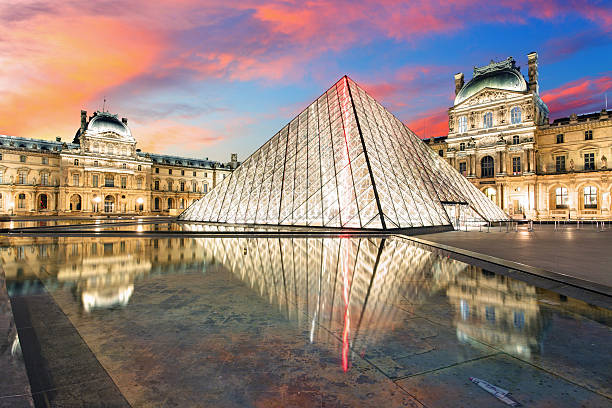
The Louvre is the overpowered choice for this narrow day. It is magnificent, but it changes the scale of the itinerary. Once the Louvre enters, the day starts to orbit monumental art, security lines, large-wing navigation and the psychological obligation to see “just one more” masterpiece. That can be excellent for a different private art day, and it is covered more fully in the Louvre, Musée d’Orsay and Rodin museum-pacing guide. For this collector route, Musée d’Orsay is usually the cleaner contextual hour because it speaks more directly to the century when modern collecting, design, interiors and the Paris art market begin to feel recognizably connected.
The museum hour also disciplines the afternoon. Without it, a shopping day can become strangely flat: one room of beautiful objects after another, with no historical frame and no reason to stop. With a selective museum hinge, the afternoon gains contrast. You are no longer asking, “Do I like this?” You are asking, “What world does this object belong to, and would I want to live with that world at home?”
How to avoid shopping-day sprawl in Saint-Germain
The way to avoid shopping-day sprawl is to set filters before you start walking. Saint-Germain is seductive because it makes digression feel cultivated. A bookshop is not “shopping,” a café is not “a delay,” one more side street is not “far,” and a small design stop is not “a new itinerary.” Yet the day can disappear into exactly those reasonable choices.
Use three filters. First, decide whether the day is about period, material or room mood. Period means you care whether the route leans 18th-century, 19th-century, modernist, contemporary craft or a mix that needs explaining. Material means you are watching wood, bronze, ceramic, textile, glass, paper, lighting or surface. Room mood means you are thinking like an interiors client: calm, ceremonial, library-like, dining-room practical, sculptural, playful, monastic, layered or spare. Without one of these filters, Saint-Germain turns into a pleasant blur.
Second, decide how many returns you will allow. A collector route often benefits from revisiting one gallery after lunch or after the museum hour. That return is useful because taste changes once the eye has warmed up. But returning to three or four places is usually a sign the day was not filtered well. Make one return possible; make five impossible.
Third, stop using famous names as proof that a stop belongs. Hiring a car or buying from bigger names does not solve a poorly filtered design route. Premium spend helps when it buys judgment, privacy, smoother timing, a specialist who can pre-filter by taste, or a better-located pause. It does not help when the itinerary itself has no thesis. More expensive addresses can still produce a worse day if they pull you away from the object questions you came to answer.
This is also why a private design or shopping route should be organized by geography and taste before brand names. Orange Donut Tours can shape Paris shopping private tours around a traveler’s real brief: serious antiques, decorative arts curiosity, gifts with context, an interiors eye, a family-friendly design walk, or a celebration day that needs beauty without exhaustion. The value is not that someone adds more stops. The value is that someone has permission to remove the wrong ones.
When should a Paris design day stay entirely Left Bank?
A Paris design day should stay entirely Left Bank when the main objective is collector depth, not retail variety. That includes travelers focused on Carré Rive Gauche, Saint-Germain, Musée d’Orsay, art-and-design context, antique galleries, decorative arts, books, interiors or a quieter high-culture day that still leaves the evening intact.
Skip the Right Bank when you are already within a short stay, when the day follows a late dinner, when the group includes someone who tires after repeated transfers, or when your hotel is already on the Left Bank and the evening plan is nearby. Skip it when the weather makes taxi waits and bridge crossings annoying. Skip it when the itinerary has one museum hour and one serious lunch; those two anchors already give the day enough structure.
The Right Bank belongs when the traveler’s brief changes. If the day is about current fashion, Place Vendôme jewelry, palace-hotel lobbies, Right Bank contemporary galleries or the high-polish retail circuit around the 1st and 8th, then you should build a different route. Do not pretend the Carré Rive Gauche plan is failing because it does not include those places. It is succeeding because it refuses them.
The most common planning error is adding Le Marais as a “small extra.” On a map it looks plausible. In the body it is not small. You leave the gallery rhythm, cross the river, enter a different walking density, and ask the group to care about a second design language before the first one has landed. The day may still be enjoyable, but it will no longer be the refined Left Bank collector route the title promises.
The same is true of forcing the 8th arrondissement. Avenue Montaigne, Rue du Faubourg Saint-Honoré and the palace-hotel axis can be excellent when the day is about fashion or a polished celebration. For Carré Rive Gauche and Saint-Germain, they are usually the expensive wrong turn. A car may make the movement feel easier, but it cannot restore the lost continuity of the eye.
The route rhythm that keeps collectors sharp
The best rhythm is a tight morning, a contextual hinge, a slow lunch or café pause, and one selective afternoon return. That rhythm respects how Paris affects the body. The city is walkable but not weightless: stone pavements, gallery floors, narrow sidewalks, river wind, umbrella weather, summer glare, Métro stairs and repeated curb crossings all accumulate. Even in a beautiful district, the body knows when a plan has too many micro-movements.
A compact Left Bank route reduces that load. It lets the group walk in short segments instead of alternating taxi sits with standing starts. It lets older parents or tired travelers pause without feeling they are delaying a citywide mission. It gives couples space to talk rather than negotiate transport. It gives a specialist host room to change the order if a gallery conversation runs long or a museum moment lands better than expected.
The mood consequence matters as much as the step count. A collector day should feel increasingly focused, not progressively thinner. When the geography is tight, the day gathers confidence: the first gallery gives vocabulary, the museum gives context, lunch gives distance, and the afternoon return tests whether the first instinct still holds. When the route sprawls, the mood changes. People stop comparing objects and start managing the itinerary. That is when a refined day becomes a stylish errand list.
Use Pont Royal and Pont du Carrousel as mental guardrails, not invitations. They are close enough to tempt a cross-river addition, especially when someone mentions the Louvre, the Tuileries or a Right Bank address. But the collector plan improves when those bridges remain context rather than route. Seeing the river is enough; crossing it is not always smarter.
Where does a chauffeur help? A car can be useful at the beginning or end of the day, for a hotel return, for poor weather, for mobility concerns, or for a later evening transfer. It is less useful inside the densest part of Carré Rive Gauche, where short walks and careful sequencing often beat repeated pickups. For a fuller discussion of when cars change Paris museum routing, see when a chauffeur changes a Paris museum day. The collector version of that advice is even stricter: spend on judgment before wheels.
A compact route model for design collectors
This model is not a fixed itinerary; it is a decision order. The exact galleries, museum thread and pauses should change with taste, opening patterns, appointments and the traveler’s energy. What should not change is the refusal to let the day sprawl.
- Opening pass in Carré Rive Gauche: Start with a tight selection near Rue du Bac, Rue de l’Université, Rue des Saints-Pères and Quai Voltaire. The aim is to establish taste language before the group has spent its attention.
- First decision point: After several focused stops, name what is emerging. Is the group responding to surface, age, restraint, color, sculptural form, provenance, wit, or room scale? This prevents the rest of the day from becoming passive browsing.
- One museum hour: Use Musée d’Orsay as a contextual hinge, not as an obligation. Choose one thread that makes the gallery material more legible.
- Saint-Germain pause: Move toward lunch, coffee, books or a small craft stop in the Saint-Germain orbit. Keep the pause close to the route, not across town.
- Afternoon return: Revisit one gallery or one object category with better questions. The return is where the day becomes collector-grade rather than merely beautiful.
- Evening handoff: End on the Left Bank or transfer cleanly to dinner. Do not add a final Right Bank shopping burst unless the whole day was designed for it from the start.
For repeat visitors, this route can be half-day or full-day. A half-day version should cut lunch ambition and keep the museum hour very selective. A full-day version can include a longer Saint-Germain pause and a more thoughtful afternoon return. What it should not include is a second museum, a Right Bank fashion loop, a pastry crawl, a Seine cruise and a last-minute antiques stop. Those may all be good Paris experiences; together, they make this particular day worse.
For celebration travelers, the most elegant version is not the fullest one. It is the one that keeps conversation unhurried, leaves space for a hotel change before dinner, and gives the day a private narrative: the object you kept thinking about, the museum room that clarified your taste, the street you returned to because the first look was not enough. That is more memorable than a bag count.
The questions that keep the route collector-grade
The simplest way to keep the day from becoming a boutique crawl is to ask better questions at each stop. In Carré Rive Gauche, the useful questions are rarely “Is this beautiful?” or “Is this famous?” They are more precise: what room would this object change, what period conversation does it carry, what restoration choices are visible, and does its scale belong to an apartment, a library, a dining room or a more ceremonial interior?
Those questions also prevent a traveler from over-buying the mood of Paris. A small object can feel irresistible after a morning on Rue du Bac and a good lunch near Saint-Germain, but the better test is whether it still makes sense when imagined away from the street that sold it to you. A specialist can slow that moment down without killing the pleasure. The point is not suspicion; it is better discernment.
Use the museum hour to sharpen one question you can carry back into the galleries. After Musée d’Orsay, you might ask whether an object belongs to a world of industrial confidence, private domesticity, academic ceremony, bohemian experiment or early modern simplification. That language makes the afternoon more efficient. You are no longer collecting attractive fragments of Paris; you are building a coherent way to look.
Where a specialist host earns the day
A specialist host earns this day by filtering, sequencing and translating taste into geography. The important work happens before the first stop: learning whether a traveler wants antiques, modern design, decorative arts, gifts, interiors inspiration, photography, books, or a collector conversation that may not involve buying at all. Once that is clear, the host can keep the day inside the right few streets and prevent the itinerary from being distorted by famous names.
This is also where private touring feels genuinely useful rather than ornamental. A good guide can explain why Musée d’Orsay belongs as an hour and not a half-day, why Saint-Germain should act as the decompression layer, why the Carré Rive Gauche gallery cluster deserves the morning’s best attention, and why a car may help at the edges but not inside every short movement. The goal is not to make travelers feel managed. It is to make the day feel as if every stop was chosen against a real alternative.
For travelers who want this design logic without turning the day into a shopping appointment, the more local-feeling route can fold into Paris like a Parisian or a fully bespoke private tour plan. For travelers whose brief is explicitly design, galleries or collector shopping, the shopping route is the sharper starting point. Either way, the best inquiry is not “What are the best boutiques?” It is “What should this day help us understand, choose or stop chasing?”
If you would like Orange Donut Tours to shape a private Left Bank design day around Carré Rive Gauche, Saint-Germain and one museum hour, Inquire now.
FAQ
Is Carré Rive Gauche worth planning a private design day around?
Yes, if you care about antiques, decorative arts, galleries, interiors or collector context. Carré Rive Gauche is worth anchoring because its galleries are close enough to compare without turning the day into a cross-city shopping route.
How long should a Carré Rive Gauche and Saint-Germain design route take?
Plan a focused half-day if you want a short collector introduction, or a fuller day if you want one museum hour, lunch, and an afternoon return. The route loses quality when you add the Right Bank, a second museum or too many unrelated food stops.
Where should the museum hour go?
The museum hour usually belongs after the first Carré Rive Gauche gallery pass and before the broader Saint-Germain portion. That order lets real objects raise the questions first, then uses Musée d’Orsay to give those questions historical and visual context.
Is Musée d’Orsay better than the Louvre for this design-collector day?
For this narrow route, yes. Musée d’Orsay is usually the better one-hour context stop because it sits close to the Left Bank gallery geography and connects strongly to 19th-century taste, interiors, patrons and modern design shifts. The Louvre is better for a larger art-focused day.
Should the day include Le Marais or Avenue Montaigne?
Not unless the brief has changed. Le Marais and Avenue Montaigne can be excellent for other shopping days, but they usually weaken a Carré Rive Gauche and Saint-Germain collector route by adding transfer time and a second retail logic.
Can a chauffeur make this route better?
A chauffeur can help with hotel transfers, poor weather, mobility needs or a clean dinner handoff. Inside the compact Left Bank gallery area, careful walking order and better filtering usually matter more than a car.
What should I cut first if the design day feels too full?
Cut the Right Bank first, then extra Saint-Germain browsing, then any second food or sweets detour. Keep the Carré Rive Gauche core and one museum hour, because those are what make the day coherent.
Is this route good for first-time visitors to Paris?
It can be, but only if the major Paris icons are already handled elsewhere in the trip. First-time visitors with limited days should not make this collector route carry the Louvre, Eiffel Tower, Seine and Notre-Dame context at the same time.
If you’re interested in any private tours of Paris, please reach out to us.



 So if you are looking for the absolute best in Paris & surroundings with authentic local fully-licensed native guides whose English you can actually understand and with an exclusive and amazingly fun itinerary













