Versailles in Fountain Season: Palace Slots, Garden Programs and the Return to Paris

Updated
Fountain season changes the order of the day
A fountain-season visit to Versailles should not be planned as a standard palace visit with extra garden time attached. The seasonal program changes which garden areas are open, when water displays occur, how admission works, how far the party is likely to walk, and how late the return to Paris remains comfortable. The palace still has the fixed appointment: its timed entry. The gardens supply the moving parts. A workable day therefore begins with three confirmed facts rather than one broad intention: the exact date, the exact palace entry time, and the latest time the group can leave Versailles without putting the Paris evening under pressure.
For most private parties, the strongest sequence is an early palace entry followed by a deliberately limited garden route timed to one or two water periods. That order reduces the risk of missing the palace slot and lets the afternoon program shape the outdoor portion. It is not universal. A garden-first sequence can make sense when the morning Great Perspective display is the main priority, while a shorter palace-and-axis day is often better for older travelers, families, or anyone with a firm dinner reservation. The decision belongs inside the wider stay: compare Versailles with the rest of a seasonal Paris stay before assigning the estate an unlimited day.
The operational mistake is to treat “fountain day” as a single product. It is a family of day types with different patterns. Saturdays can carry early daytime closing conditions because of the Night Fountains program. Tuesdays have their own seasonal overlap to verify. Musical Gardens days are not equivalent to full Musical Fountains days. Technical suspensions, restoration work, exceptional weather, and transport works can alter the visit again. The point of checking these details is not to micromanage every minute. It is to know which moments are fixed, which are cyclical, and which can be released without damaging the day.
Start with the exact 2026 day type
For 2026, the Palace of Versailles lists the Musical Fountains Show on Saturdays and Sundays from April 4 through November 1, with additional Tuesday dates from May 5 through June 30. The same official page lists Musical Gardens from Tuesday through Friday from April 1 through October 30. Because Tuesday appears in both published summaries, a weekday label alone is not enough: open the calendar or booking product for the precise date and confirm which program is attached to it. The current schedule, water periods, early-closing notes, and admission language are collected on the official Musical Fountains and Musical Gardens page.
That calendar creates four useful planning categories. A weekend Musical Fountains day usually offers the broadest daytime water program, but selected Saturdays have an earlier daytime finish. A Tuesday in the May-to-June fountain period may resemble the fountain-show pattern while using a different set of afternoon groves. A Wednesday, Thursday, or Friday Musical Gardens day is primarily a music-led walk through opened groves, with only limited recurring water features rather than the full programmed sequence. A non-program day can be quieter and simpler, but some groves may not be open and the gardens may be free rather than separately controlled. Monday is a separate condition: the palace and Trianon are normally closed even though the gardens and park may remain accessible, so it is not a palace fallback date. None of these categories is automatically best; each favors a different balance of spectacle, movement, cost, and evening reliability.
Also separate daytime programming from the Night Fountains Show. The nighttime production is not an extension that can be casually added after a normal full day. It creates a long interval, a second energy peak, and a much later return. For a party based in Paris, combining a palace visit, a complete daytime garden circuit, and the nighttime show should be treated as a specialist full-day-and-evening plan. It can be worthwhile when the night production is the main reason for choosing the date, but it is a poor fit when the evening in Paris already carries a serious reservation or when any member of the group is likely to fade after prolonged outdoor walking.
A program day is not a promise of continuous water
The phrase Musical Fountains can suggest that every basin is active throughout the day. The operating pattern is more selective. The 2026 page publishes discrete windows for the Great Perspective, selected groves, and other basins, while Neptune Fountain and the Mirror Pool use short recurring cycles. In the morning, the Great Perspective is currently listed for a continuous block from 10:30 a.m. to noon, with a shorter window for selected groves. On weekend afternoons, the central axis and the groves alternate through several periods. This means the best route is not “see every fountain.” It is “be in the right sector when that sector is active, then move with purpose to the next one.”
Musical Gardens needs even more careful reading. The official description presents it as a musical walk with groves opened for the occasion rather than a full fountain display, yet the timetable also lists short recurring operation at Neptune Fountain and the Mirror Pool. That is a useful distinction for expectations: there may be water, but the day should be valued for access, music, garden structure, and atmosphere rather than for a comprehensive hydraulic performance. A traveler who booked Wednesday expecting the same visual sequence as Sunday may feel shortchanged even when the program is operating exactly as published.
Water periods are also vulnerable to technical and operational change. The official program page currently notes a suspension of the Water Theatre Grove’s water features because of a technical issue. That status may change before a future visit. Use the published schedule as a routing framework, not as a guarantee that every named feature will perform. The practical consequence is to choose two or three primary moments and several secondary pleasures. If Latona and Apollo are running, the central axis can carry the visit. If a grove is unavailable, sculpture, perspective, music, and the transition toward the Grand Canal still provide a coherent experience.
The palace slot is the fixed appointment
Only the palace requires a timed entry within the standard full-estate admission described by Versailles. That makes the palace slot the day’s non-negotiable appointment. Garden hours may be broad, and Trianon opens later, but neither should tempt the group into arriving at the palace with an optimistic margin. A train delay, a longer station walk, security procedures, or a slow approach across Place d’Armes can consume the buffer. For a morning slot, plan to be in Versailles with enough time to walk to the entrance, orient the party, and absorb the current entry process without turning the first hour into a race.
The garden sequence then has to respect admission and gate conditions. The official 2026 program page describes program-day garden access as a controlled admission and states specific conditions for a second entry through a different gate. That is not a detail to discover after leaving the gardens for lunch or meeting a vehicle outside. Before choosing palace-first, garden-first, or a split route, verify how the admission product in hand treats garden entry, which gate the party will use, and whether the intended exit-and-return pattern is permitted. A plan that depends on casual re-entry is weaker than a plan that keeps the garden visit continuous.
An early palace slot usually creates the cleanest operational arc because it deals with the fixed interior appointment before the outdoor program becomes the focus. A later palace slot can still work when the morning garden display matters most, but it increases dependency: the group must leave the active garden sector, climb back toward the palace, pass the correct gate, and arrive punctually. That is a substantial transition, especially after warm-weather walking. Garden-first is therefore a purposeful choice, not a default response to the fountain timetable.
Three sequences that can actually work
Palace first, selected afternoon fountains
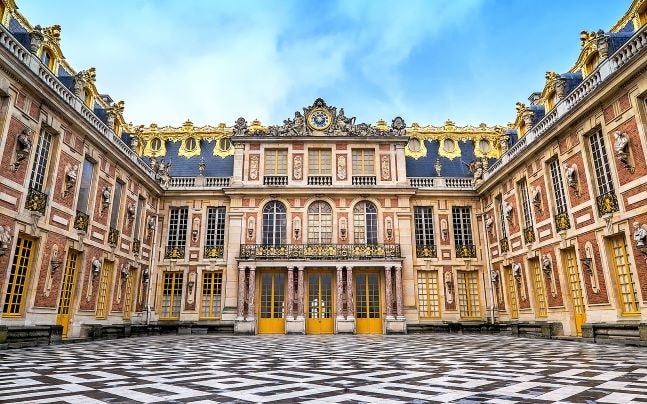
This is the most adaptable model for first-time visitors. Confirm an early palace entry, tour the State Apartments and Hall of Mirrors at a deliberate pace, then pause before entering the gardens. The garden portion should have a defined radius: for example, Water Parterre, Latona Fountain, one side of the groves, Apollo Fountain, and either the Grand Canal edge or Neptune Fountain. On a weekend fountain day, an afternoon route can be aligned with the published alternation between the Great Perspective and the groves. The advantage is reliability: the palace appointment is complete, and the group can shorten the outdoor portion without losing the day’s core achievement.
The cost is that the morning Great Perspective period may be missed, and a late-afternoon finale can pull the departure later than planned. Do not automatically wait for the final water moment merely because it exists. If the party has dinner in Paris, decide before entering the gardens whether the late display is essential or optional. The garden route then ends at the appropriate place instead of drifting westward until the return becomes awkward.
Gardens first, palace at midday
This model is justified when the morning water period is a principal interest, when the weather forecast strongly favors the morning, or when the party already knows the palace well and wants the gardens to lead. Arrive early enough to enter the gardens, position near the Water Parterre and Latona axis before the morning display, and keep the first circuit compact. The critical discipline is the turn-back time. The visual line toward Apollo and the Grand Canal encourages continued descent, but the palace appointment lies uphill and behind. Set a firm moment to reverse course, with additional time for the gate and interior entry process.
Garden-first is less forgiving for reduced mobility, slow walkers, or mixed-age parties. It also creates an awkward meal question: a substantial lunch before the palace can blunt attention, while postponing food until after the palace may leave the group depleted. Use this sequence only when the morning program is worth the extra coordination and when current garden re-entry conditions have been checked. For a broader comparison of what a garden-led day should accomplish, decide whether Versailles should be the trip’s main garden day.
Palace and central axis, then leave on time
The compressed model is not a lesser visit. It is often the best answer for a party with a fixed evening, limited walking tolerance, young children, or a second major day immediately afterward. Complete the palace, enter the gardens once, read the Water Parterre and Latona Fountain, follow the Great Perspective as far as the group’s energy permits, and turn back before the Grand Canal becomes an obligation. If a water period aligns naturally, enjoy it. If not, the garden’s geometry and iconography still carry the experience.
This model gains quality by refusing false completeness. Trianon, the Queen’s Hamlet, the far edge of the canal, Neptune Fountain, and multiple grove circuits do not belong in every first visit. They are separate modules, not compulsory proof that the estate was “done.” A private party that leaves with attention intact and reaches Paris without anxiety has usually made a better use of Versailles than one that collects distant sites while the evening unravels.
Use Latona Fountain to read the estate
Latona Fountain is the most useful orientation point in the gardens because it joins narrative, topography, and movement. The sculptural group depicts Latona protecting Apollo and Diana, while the fountain’s present composition turns her toward the Grand Canal. The official Versailles fountain history explains that Jules Hardouin-Mansart replaced the earlier rock form with the marble pyramid and reoriented the group toward the canal. That historical change matters to the visitor: Latona is not simply a basin below the palace but the point at which the royal axis declares its direction.
Use that axis as a decision tool. From the Water Parterre, Latona, Apollo, and the Grand Canal appear to form one effortless line. In practice, every westward step creates a later return uphill or a need for another exit strategy. The Grand Canal therefore should be chosen, not inherited. It is worthwhile for parties who want the scale of the estate, a waterside pause, or a route continuing toward Trianon. It is expendable when the goal is the palace plus the strongest fountain sequence and a dependable Paris evening.
The side groves create a different kind of value. They interrupt the monumental axis with enclosed rooms, sculpture, shade, music, and surprise. On program days, their opening patterns can justify a lateral circuit, but trying to cover both northern and southern networks usually multiplies steps without doubling understanding. Select one side according to the published water timetable, restoration notices, and the group’s interests. Then return to Latona or another known landmark before choosing whether to descend farther. The route remains legible, and the party avoids ending in a remote corner when the return clock has already begun.
Choose the garden radius before you arrive
The walking load at Versailles is not created by one long path. It accumulates through station approaches, palace circulation, security lines, terraces, stairs or ramps, repeated entries into groves, the descent toward Apollo, the possible extension to the Grand Canal, and the return to a station or vehicle. Trianon changes the scale again: the official practical information estimates about 30 minutes on foot from the palace to the Trianon estate, before time spent inside Grand Trianon, Petit Trianon, or the Queen’s Hamlet. A plan that says “palace, gardens, and Trianon” without assigning movement time is not yet a plan.
Set the radius in advance. A central-axis radius includes the palace terraces, Water Parterre, Latona, selected nearby groves, and perhaps Apollo. A canal radius adds the Grand Canal edge and requires a more deliberate return. A Trianon radius is a full-estate day with a different meal and transport strategy. The decision should be made according to the least mobile member of the party, not the most enthusiastic walker. It is easy to add a nearby grove when energy is good; it is difficult to remove the long return after everyone has already descended.
Weather changes the practical radius. Heat increases the value of shade and frequent pauses, while rain makes exposed axial walking less attractive and can slow movement on garden surfaces. Exceptional weather can also affect access. On a hot day, one grove network and a shorter central-axis experience may produce more attention than a canal march. On a wet day, palace depth plus a brief garden reading can be more satisfying than waiting outdoors for a water window. Fountain season improves Versailles when the program serves the group’s capacity; it becomes counterproductive when the schedule is allowed to override physical reality.
Build a mobility branch, not a late compromise
Versailles itself states that the gardens are not easily accessible for visitors with reduced mobility. Its accessibility guidance recommends particular approaches, including arrival by car with parking near Flotille or Neptune, or pedestrian access through Queen’s Gate; it also describes documented access and parking provisions for mobility-card holders. These details should be checked against the party’s documentation and current gate conditions on the official accessibility page. The important planning principle is to change the route before arrival rather than asking a standard walking itinerary to absorb mobility needs after fatigue appears.
A mobility branch can preserve the central experience while reducing repeated gradients. One version places the palace first, then uses a shorter terrace-and-Latona garden visit before meeting a vehicle. Another uses an approved park approach to begin closer to the Grand Canal or Neptune sector, making the garden program the focus while treating the palace as a separate, carefully timed module. A third removes Trianon entirely and uses the saved movement for a slower palace interpretation and a seated pause. These are not compromises in cultural content; they are different distributions of attention across a very large estate.
This is also where coordinated private service can materially change the outcome. The useful service is not merely a car from Paris. It is one sequence in which the palace entry, guide start, garden gate, mobility documentation, vehicle access, weather branch, and Paris return are understood together. For parties whose date, physical range, and evening are all fixed, a private Versailles day can be shaped around those dependencies rather than around a standard maximum-coverage route. Inquire now when the palace slot, fountain program, walking radius, and evening transfer need to be coordinated as one operational plan.
The same reasoning applies even when the party uses public transport. A guide who knows the chosen station, garden exit, and turn-back time can prevent unnecessary crossings of the estate. A vehicle is valuable only where it removes a real movement problem or strengthens the return. For a straightforward palace-first day with able walkers and a flexible evening, rail may remain entirely sensible. The service decision should follow the route problem, not precede it; private touring options in Paris are most relevant when timing and access need active coordination.
Place lunch around the program, not inside its best window
Meal placement at Versailles is a time-allocation decision before it is a culinary one. A long formal lunch between palace and gardens can consume the strongest afternoon water periods and make the final garden hours feel rushed. Going without a proper pause can be equally costly: palace concentration followed by several outdoor hours is demanding, especially in warm weather. The practical middle ground is a planned light meal or substantial break after the palace and before the main garden circuit, with enough time to regroup but without turning the day into two competing reservations.
For palace-first visitors, finish the interior, step out of the palace flow, and assess energy before entering the controlled garden sequence. This is the right moment to eat, use facilities, confirm the current fountain timetable, and decide whether the Grand Canal remains in scope. For garden-first visitors, breakfast must be adequate, because the morning water period and the later palace slot leave little room for improvisation. A small, timed pause before the palace is safer than assuming a leisurely midday meal will fit between the garden turn-back and security.
The Paris evening should influence lunch size as well. A party returning for a tasting menu or celebration dinner does not need a heavy late lunch at Versailles. Conversely, a group with a casual late evening can give the estate more room and make the midday meal part of the day. This is not about maximizing the number of prestigious experiences. It is about preserving appetite, attention, and punctuality across two different settings. Versailles should not arrive at the dinner table as fatigue.
Work backward from the Paris evening
The return is easiest to plan backward from the first immovable evening commitment. Begin with the time the party must be at the Paris address, then subtract the city transfer from hotel or arrival station, any time needed to change and rest, the Versailles-to-Paris journey, the walk from the garden position to the station or meeting point, and a contingency allowance. These are route-specific blocks, not universal durations. A dinner near Montparnasse creates a different return from one in the 8th arrondissement; a party staying on the Left Bank has different choices from one returning to Le Marais.
For a serious dinner, the relevant Versailles departure is not the closing time and not necessarily the final fountain display. It is the latest departure that still leaves the evening unhurried after normal variation. If the party wants to return to the hotel, change, and cross Paris again, the estate may need to be left well before late-afternoon programming ends. If everyone is going directly to dinner in smart-casual clothing and the address aligns with the arrival station, more garden time may be possible. Make that decision before the day begins, because the central axis visually encourages “just one more” descent.
A useful rule is to define two departure times. The preferred departure protects every evening step. The absolute departure removes the least important remaining garden element and sends the group back immediately. The gap between them is the day’s flexibility. When the preferred time arrives, the guide or organizer checks energy, transport status, and distance from the exit. When the absolute time arrives, there is no debate. For more detailed evening geography, plan the hours after Versailles around the actual hotel and reservation rather than around an abstract idea of central Paris.
The 2026 RER C closure changes the return
Versailles travel advice must be dated because the familiar RER C route is not always operating. For summer 2026, Transilien states that no RER C trains run between Paris Austerlitz and Versailles Chateau Rive Gauche from July 15 through August 22. The official notice directs travelers to live routing tools for updated journeys; the precise interruption is documented on the Transilien 2026 summer works notice. During this period, any itinerary that simply says “take the RER C back to Paris” is operationally obsolete.
The Palace’s official practical information lists the normal Rive Gauche approach as about a 10-minute walk from the palace, while Versailles Chantiers is listed at about 18 minutes and Versailles Rive Droite at about 17 minutes. Those figures describe the station-to-palace walk, not the full journey from a grove, the Grand Canal, or Trianon. During the RER C interruption, trains to Chantiers from Montparnasse or to Rive Droite from Saint-Lazare may be more useful depending on the Paris destination. Bus 171 from Pont de Sevres is another published option, with its stated travel time explicitly excluding traffic.
Choose the station by the evening geography, not by habit. Chantiers may suit a return toward Montparnasse and parts of the Left Bank. Rive Droite may align better with Saint-Lazare and the Right Bank. A private vehicle can remove station walks and transfers, but road time is exposed to traffic and must still be buffered. For a mixed-mobility party, the decisive question may be which exit allows the shortest final estate walk, not which train has the shortest scheduled ride. The best return is the one with the fewest fragile transitions for that date, party, and destination.
This closure is a dated 2026 condition, not an evergreen reason to avoid rail. Outside the interruption, RER C may again be the simplest choice for many visitors. Even then, check the live network status on the day of travel. Planned works, evening service changes, and station access can shift. The article’s durable principle is to verify the actual branch and station before assigning the garden exit, because the return starts inside Versailles, not on the platform.
Saturday and special-date exceptions matter
A Saturday fountain day can look generous on the calendar and still have a compressed daytime finish. The official 2026 program page notes early daytime closing on Saturdays associated with the Night Fountains season from June 6 through September 19, as well as July 14 and several additional named dates. It also states that fountains and pools are turned off earlier under those conditions. Travelers should recheck the exact date because a schedule built around a normal late-afternoon water period may fail on an early-closing day even though the date is still labeled Musical Fountains.
The practical response is not to cram more into the morning. It is to choose whether the daytime fountains or the nighttime production is the principal garden experience. For a normal Paris day trip with dinner back in the city, use the early closure as a reason to start promptly and keep the route compact. For a Night Fountains visit, build a separate energy and meal plan around the long interval and late end. Do not assume the palace, Trianon, a full daytime program, and the evening show can all receive equal attention.
Late-season dates need similar care. The 2026 page publishes additional early-closing notes in October and at the start of November, while Musical Gardens also has named late-October early finishes. These are precisely the conditions that disappear when a planner remembers only the headline season. The closer the trip is to a boundary date, the more important it is to read the current daily calendar rather than rely on the generic April-to-October pattern.
Restoration and technical notices should change priorities
Versailles is a working heritage estate, so restoration is part of the planning environment. The official fountain inventory currently states that the Dragon Fountain is undergoing a restoration campaign scheduled for completion in 2027, and that the Nymphs’ Bath is also under restoration with a 2027 target for renewed presentation. These projects may affect views, water operation, or the attractiveness of a particular sector. They should not be treated as disappointments discovered on arrival; they should influence which groves and basins receive the party’s limited walking budget.
Technical notices are more volatile than restoration campaigns. A suspended water feature may return, another may develop an issue, or a program may be modified for maintenance. The right response is to avoid making one fragile feature the sole justification for a long detour. Build the garden route around durable assets: the palace-to-canal perspective, Latona’s narrative, the relationship between open and enclosed garden rooms, the sculpture program, and one or two currently confirmed water periods. A technical change then alters emphasis without dismantling the visit.
This is also where expert interpretation creates resilience. A fountain is not meaningful only when water is running. The hydraulics, iconography, royal symbolism, topographic engineering, and choreography of approach remain legible. When a basin is inactive, a knowledgeable guide can explain what the water would animate and why the feature sits where it does. That interpretive fallback is more useful than pretending the program is unaffected, and more satisfying than rushing to another corner of the estate merely to find active jets.
What to drop when time or conditions deteriorate
When the day slips, remove distance before removing meaning. The first candidates are the far edge of the Grand Canal, Trianon, the Queen’s Hamlet, and a second grove network. Each adds movement and a later return. Keep the palace, Water Parterre, Latona Fountain, and a coherent piece of the Great Perspective. If one scheduled water period is close and reachable without stress, retain it. If it requires crossing the gardens against the clock, let it go. The program should enrich the route, not govern it after the route has ceased to fit.
When weather deteriorates, shorten exposure rather than waiting indefinitely for a display. In heat, favor shade, seated pauses, and a single side of the gardens. In sustained rain, use the palace and covered or sheltered transitions as the day’s substance, then take a concise axial reading outdoors. In strong winds or other exceptional conditions, follow estate access decisions. The gardens are open-air walking territory; there is no operational virtue in forcing the full plan when surfaces, visibility, or comfort have changed.
When transport deteriorates, leave earlier and simplify the Paris evening transfer. A delayed train, closed branch, or heavy road traffic is not corrected by completing one more grove. Move to the most robust departure mode available, communicate with the evening venue if necessary, and avoid an additional cross-city stop. The premium choice is often the one that preserves composure rather than the one that extracts the last possible attraction from the admission.
Recheck triggers for the final plan
Reopen the official program information whenever any of five things changes: the travel date, the palace slot, the planned garden entry gate, the mobility plan, or the Paris evening commitment. Also recheck after a substantive update to the Versailles program page, a new technical notice, a weather warning, or a transport works announcement. The fountain program and garden admission conditions are the central expiry points because they determine both sequence and movement. The 2026 dates in this guide should not be carried into another season without fresh confirmation.
A concise final verification pass should answer the following questions:
- What exact program is attached to the date: Musical Fountains, Musical Gardens, Night Fountains, or no seasonal program?
- What is the confirmed palace entry time, and which entrance applies to the party?
- Which water periods are currently published, and are there early-closing or technical notices?
- How does the admission product treat garden entry, exit, and any intended re-entry?
- Which garden radius fits the least mobile traveler and the forecast?
- Which station or vehicle meeting point matches the chosen garden exit and Paris destination?
- What are the preferred and absolute Versailles departure times?
For editorial maintenance, the durable analysis can remain while the dated callouts are refreshed. The official schedule, practical access page, accessibility guidance, fountain restoration page, and relevant transport notice are the authoritative checkpoints. A source correction or substantive page update should trigger review. Before a traveler acts, live operational information should take precedence over any static itinerary, including this one.
The evergreen fallback when the program does not fit
A non-program day is not a failed version of Versailles. It can offer a calmer garden reading, simpler admission conditions, and less pressure to chase water windows. The palace, Water Parterre, Latona Fountain, Apollo axis, formal parterres, sculpture, and Grand Canal remain the estate’s structural argument. Some groves may be closed or less animated, but the visit can become more architectural and historical. For travelers who value interpretation over spectacle, that may be a better match.
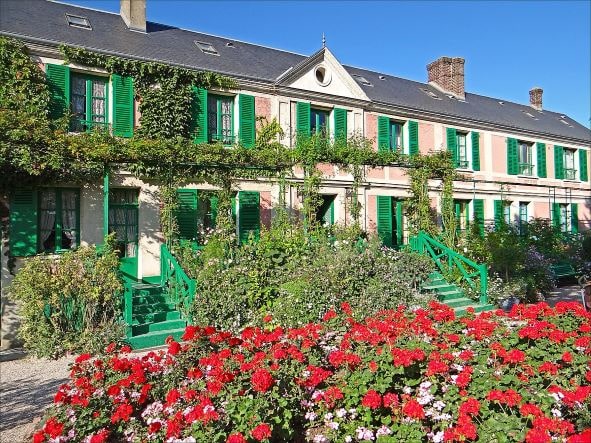
If the only available palace slot conflicts with the best water period, keep the palace slot and reduce the fountain ambition unless the gardens are the trip’s declared priority. If no palace slot is available, a gardens-and-Trianon day may still be possible under the current admission products, but it is a different article of travel and should be described honestly to the party. If the season itself is wrong for the group, compare other day trips rather than forcing Versailles to meet every interest: compare Versailles with Giverny or Champagne by distance, season, and desired pace.
The fallback also protects the wider Paris stay. Versailles should occupy the day that can absorb outdoor movement and a variable return, not the day immediately burdened with several city reservations. It helps to keep the preceding Paris schedule lighter and the following morning realistic. The estate’s scale is part of its meaning; planning must acknowledge that scale even when the route is selective.
The practical handoff
Choose the date by program type, not by the generic idea of fountain season. Secure the palace slot, then decide whether the gardens are central-axis, canal, or full-estate in scale. Mark the water periods that genuinely matter, place the meal outside them, and write down the turn-back time. Confirm the gate and admission conditions, then select the return mode according to the actual Paris destination. If the date falls between July 15 and August 22, 2026, remove the closed RER C branch from the plan and use current routing.
Finally, give the group a primary route and a shorter branch. The shorter branch should preserve the palace, Latona, one meaningful garden sequence, and a calm departure. That is the plan to use when heat, walking load, technical notices, or transport conditions change. Versailles in fountain season is at its best when the program clarifies the estate’s design and adds rhythm to the visit. It is at its worst when every published possibility is treated as an obligation.
The day is ready when each fixed element has a buffer and each optional element has a clean point of release. With that structure, the fountains can remain what they should be: an extraordinary seasonal layer on Versailles, not a reason to miss the palace, exhaust the party, or arrive back in Paris already late.
If you’re interested in any private tours of Paris, please reach out to us.


 So if you are looking for the absolute best in Paris & surroundings with authentic local fully-licensed native guides whose English you can actually understand and with an exclusive and amazingly fun itinerary