Can a Mixed-Mobility Private Group Share the Louvre and Orsay in One Paris Art Day?

Updated
Start with the map, because this is really a day of transitions
The Louvre and the Musée d’Orsay face one another across the Seine closely enough to look like an obvious pairing. On a map, the move appears to be a short river crossing. Inside the day, however, the group must complete three separate transitions: from street or vehicle to the correct Louvre entrance, from one Louvre wing to a controlled exit, and from the Right Bank to an Orsay entrance that matches the party’s mobility and admission status. Those transitions, rather than the distance between the buildings, determine whether the two museums feel like one shared art day or two visits held together by determination.
Yes, a mixed-mobility private group can share the Louvre and Orsay in one day, but only when both museums are deliberately edited. The workable version is not a comprehensive Louvre morning followed by a comprehensive Orsay afternoon. It is a focused Louvre sequence, a protected transfer, and an Orsay visit with a second, shorter object list. The group also needs a stopping rule that allows the second museum to contract or disappear without turning the change into a disappointment.
The geography favors this plan more than the buildings do. The Louvre spreads through three wings around the reception area beneath the Pyramid; Orsay occupies a former railway station with collections distributed across several levels. The Louvre creates horizontal distance and repeated orientation decisions. Orsay is more compact, yet sought-after works may still require elevator waits and a route different from the intuitive stair-led flow.
For a group that includes a wheelchair user, a guest who can walk but cannot stand for long, and fully ambulatory companions, “shared” should mean a common interpretive spine rather than identical movement every minute. Everyone sees the agreed masterworks together. Short optional branches are allowed. The group reunites at named, accessible places before any major transition. That definition preserves companionship without forcing the person with the least mobility to absorb every extra corridor or asking faster walkers to suppress all curiosity.
Travelers who are still deciding whether the Louvre deserves most of the day should first consider a focused Louvre day built around a short object list. The two-museum plan works only after that discipline is accepted.
The decision turns on four conditions, not on enthusiasm for art
A group is a strong candidate for the shared day when four conditions are present. First, the wheelchair user or limited-mobility guest is comfortable with two separate security and entry processes. Second, the party can agree on a small number of works at each museum rather than treating every famous room as mandatory. Third, the transfer can be handled door to door or by a genuinely comfortable river crossing, with no vague promise that a vehicle will “meet somewhere outside.” Fourth, every participant accepts in advance that Orsay is conditional on how the Louvre portion actually unfolds.
The day is a weaker fit when the Louvre is a once-in-a-lifetime priority for several members, when one visitor needs frequent private care in crowded interiors, when the party triggers formal group procedures, or when temporary works reduce lift or reception capacity. It is also a weak fit when the wheelchair user is being asked to tolerate the second museum mainly because others do not want to give it up. A shared day should not conceal an unequal physical cost.
Art preference matters as much as stamina. The Louvre’s collections extend from ancient civilizations through European painting and decorative arts to 1848. Orsay concentrates on the period from 1848 to 1914, with particular strength in Impressionism, Post-Impressionism, Realism and the decorative arts of the later nineteenth century. A group fascinated by ancient Egypt and Italian Renaissance painting may find that a second museum adds breadth but not urgency. A party that wants to move from academic painting and state culture into Manet, Degas, Monet, Renoir, Cézanne or Van Gogh has a clearer intellectual reason to cross the river.
That distinction is useful because it turns the second museum into a continuation of a story rather than a second collection of famous names. For a broader choice among the city’s major art institutions, compare the Louvre, Orsay and Rodin as first-choice museums before committing to both.
Entrance planning must be specific enough to survive the morning
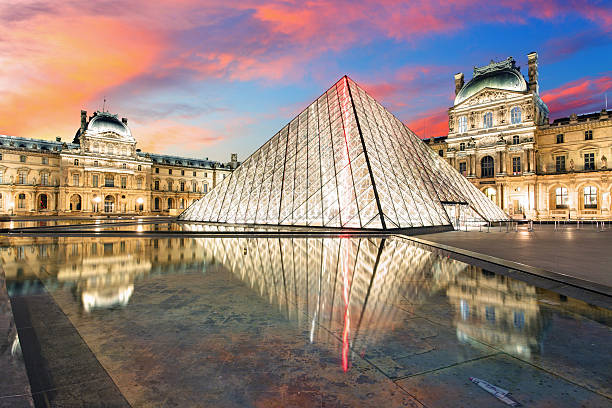
The Louvre’s official accessibility guidance strongly advises advance timed-slot booking for all visitors, grants free admission and priority access to a disabled visitor and an accompanying person when supporting documents are presented, and identifies two principal step-free approaches. The Pyramid has a central lift to the underground reception area. The Carrousel approach can be reached from the car park or 99 rue de Rivoli; museum staff direct visitors toward lifts, followed by an underground approach to security. The same guidance warns that lift-based visits are taking longer during renovations and that some rooms may close during the week. These are precisely the reasons to confirm the route rather than merely note that an accessible entrance exists. The current details are set out on the Louvre’s official page for visitors with physical disabilities.
For a mixed group, priority access for the disabled visitor and one companion does not automatically create one seamless entry for everyone else. The planner should establish whether the party will enter together, whether other members hold the correct timed admission, and where they will wait if institutional procedures temporarily separate them. The goal is not to exploit priority access for an entire entourage. It is to prevent the wheelchair user and companion from arriving below the Pyramid while the rest of the group is still uncertain about its queue, entrance or security line.
The choice between the Pyramid and Carrousel should follow arrival geography and equipment, not a belief that one is universally superior. The Pyramid leads directly toward the central reception zone but depends on its lift and may expose the group to weather before entry. The Carrousel can offer a more sheltered approach from the underground complex, yet adds its own navigation, security and lift sequence. Wheelchair size, crowd sensitivity and the amount of equipment being managed may change the preference.
The Louvre states that wheelchairs, folding chairs and certain other mobility aids can be borrowed without charge in exchange for identification, subject to availability, and that equipment must remain inside the museum. That service is valuable for an ambulatory guest who can walk short stretches but should not stand through long explanations. It should not be treated as a guaranteed substitute for a personal wheelchair or rollator. A group relying on borrowed equipment should verify the current arrangement, arrive with a fallback, and decide who will manage identification and collection so that the rest of the party is not already moving toward the galleries.
The institutional accessibility directory also lists the Louvre’s disability contact details and the 99 rue de Rivoli address. For a visit involving unusual equipment, a larger wheelchair, a transfer board, or uncertainty about a temporary exhibition route, consult the Tourisme and Handicaps Louvre directory entry and the museum’s own contact channel before the visit. This is a verification step, not evidence that every gallery and lift will be available on the day.
At the Louvre, choose an object cluster before choosing a wing
The common planning mistake is to begin with a wing name and then add attractions until the route becomes unmanageable. A mixed-mobility group should begin with a cluster of objects that creates a coherent argument. Only then should it map the wing, levels and necessary lifts. The Louvre’s internal scale means that two works appearing close on a printed plan can still be separated by crowds, level changes, one-way circulation, gallery closures or a long return to the central reception area.
A first-time group may choose an “image and empire” cluster: the Winged Victory of Samothrace, selected Italian paintings, the Mona Lisa and one or two French nineteenth-century canvases. It is legible but carries a high crowd and standing burden. The Winged Victory crowns a monumental staircase, so the wheelchair route does not reproduce the same ascent used by many walking visitors. The Mona Lisa room can require patience and crowd negotiation. Decide whether these works are central to the day or merely famous enough to feel compulsory.
A “palace and power” cluster might combine medieval foundations, a limited selection of sculpture or decorative arts, and the Napoleon III apartments when open and accessible. It offers variety but can involve substantial movement through Richelieu. An “ancient worlds” cluster focused on Egyptian, Greek, Roman or Near Eastern material may avoid one dominant congested room, yet still requires strict editing because each department could fill a half-day.
The correct number of major stops is usually lower than the group expects. Six to eight substantial objects or spaces can already fill a serious two-hour visit once lift waits, orientation, restrooms, discussion and repositioning are included. The route should include one optional object near each core stop, not a separate wish list for every participant. Optional works are visited only when they do not add another lift cycle or a distant lateral detour.
Seated pauses should also be attached to content rather than added as emergency recovery. A folding chair can be used while discussing one painting in depth. A rest can coincide with a gallery where the group can compare two works without changing levels. The pause becomes part of interpretation, allowing the guest who cannot stand to remain central to the conversation. Because benches and gallery furniture may move or be occupied, the plan should not depend on a particular seat unless the museum has confirmed it. Borrowed folding chairs, a personal mobility device and known accessible restrooms are more reliable planning tools than hoping for an empty bench.
Every Louvre plan needs an inaccessible-route check shortly before the visit. Confirm the status of the relevant rooms, identify which lifts connect the chosen levels, and ask what happens if one link is unavailable. A route is not genuinely usable because each endpoint is accessible in isolation. It is usable only if the chain between entrance, objects, restrooms, pause points and exit remains intact.
Use the least mobile guest’s route as the master route, then add short branches
A mixed-mobility party does not need to move at one speed, but it does need one authoritative route. The master route should be the one that the wheelchair user and any guest with limited standing tolerance can complete. Faster walkers can take short branches from that route, provided each branch has a clear return point and a time limit. This is more respectful and more efficient than designing an ambulatory route first and improvising alternatives whenever steps or distance appear.
At the Louvre, a good branch may be a nearby room on the same level while the master group pauses with a guide or folding chair. A poor branch crosses into another wing, requires an additional lift, or relies on phone reception to coordinate a reunion. The person taking the branch should know the exact gallery or staffed landmark where the group will meet, and the main group should continue on schedule rather than wait indefinitely. “We will find each other near the paintings” is not a rejoining plan.
This principle matters emotionally as well as logistically. A wheelchair user should not spend the day watching companions disappear up monumental staircases without knowing when the shared experience resumes. Conversely, walking guests may appreciate five minutes to see a nearby work that is difficult to integrate into the accessible circulation. A planned branch makes the difference between a flexible private day and a series of exclusions.
The master route should include the exit. The Louvre notes that leaving is final, so a group that exits early cannot simply return to retrieve an optional work. Before the final gallery, confirm that everyone has used the restroom, collected any borrowed equipment correctly, and understands the exact reunion point outside or beneath the Pyramid. The cross-river move begins before the doors: coats, bags, mobility aids and the vehicle contact must all be ready when the group leaves the secure zone.
Families comparing this problem with a larger palace-and-gardens environment may find useful parallels in the wheelchair-sharing logic for Versailles, although the Louvre’s challenge is interior circulation rather than long outdoor distances.
Orsay is more compact, but its vertical collection still needs an access plan
Musée d’Orsay’s official accessibility page states that a disabled visitor and one companion receive free priority admission with valid proof and do not need to book in advance or visit the admissions desk. It also states that all exhibition and service areas are accessible by elevator or ramp, that wheelchairs and folding chairs are available free of charge from the cloakroom in exchange for identification, and that accessible toilets are provided on multiple levels. Those are strong verified foundations. They do not mean that every elevator is continuously available, that every temporary display follows the same route, or that the rest of a private party can ignore its own admission requirements. The current institutional details are on the Musée d’Orsay accessibility services page.
Orsay’s collection is easier to narrate as a chronological transformation than the Louvre’s encyclopedic holdings. A focused visit can trace the tensions of the later nineteenth century: official culture and Realism, Manet’s challenge to conventions, the Impressionists’ changing treatment of modern life and light, and Post-Impressionist experiments in structure, color and psychology. The building itself contributes to the story. The former station’s great hall gives an immediate sense of industrial scale and public modernity, while upper-level views and the famous clock frame Paris as part of the museum experience.
Yet the most intuitive narrative may not be the easiest accessible route. Popular Impressionist and Post-Impressionist works are associated with upper levels, while other important works occupy lower floors and side galleries. A visitor following stairs can move through the building differently from someone waiting for elevators. The group should therefore decide whether to start with the highest-priority upper-level works and descend, or to build upward through chronology. Neither is always correct; the choice depends on elevator status, crowd conditions, the location of temporary displays and the participant who finds level changes hardest.
For a second museum on the same day, Orsay should usually be reduced to one argument and four to six anchor works or spaces. An Impressionism-only sweep sounds efficient, but it can still become physically costly if every famous artist is treated as a separate destination. A better list might compare two approaches to modern Paris, two treatments of the human figure, and one Post-Impressionist departure. Another group may focus on the transformation from academic scale to modern fragmentation. The important point is that the object list should justify the lifts and distances it creates.
Orsay can lend folding chairs, but the same caution applies as at the Louvre: availability cannot be assumed, and collection takes time. A guest who used a museum wheelchair at the Louvre cannot take it across the river. The handoff between institutions must account for personal equipment or a second borrowing process. This is one reason a guest who is ambulatory at breakfast may still benefit from bringing a personal mobility aid rather than relying on two separate cloakrooms.
Check whether the party is an Orsay “group” before designing the day
Private travelers often use the word “group” casually, while museums use it as an operational category. Orsay currently defines a group as seven or more visitors in addition to the person authorized to address them, and it requires a group booking for self-guided or guided visits. Its official group information also contains temporary construction restrictions. As verified on August 24, 2026, the museum states that major work in the reception area prevents it from accommodating any groups from June 10 through October 5, 2026. From October 6, 2026 through January 31, 2027, groups are directed to a specified forecourt entrance under adjusted arrangements. Because this information is date-sensitive, consult the official Orsay group practical information for the exact visit date.
This can change the answer to the article’s central question. A family of fewer than seven visitors may not fall under the published group threshold, but a larger private party with a guide cannot assume that purchasing individual admissions recreates a lawful guided visit. The group’s size, the guide’s authorization to address visitors, the category of the booking and the construction calendar all need to align. The correct response to a temporary group suspension is not to disguise the party as several unrelated individuals. It is to change the date, reduce the formal group arrangement only when genuinely permitted, substitute another museum, or make Orsay an individual visit without prohibited guiding activity.
For disability and healthcare groups, Orsay’s group page recommends limiting the total to fifteen and the number of wheelchair users to five for optimal comfort. That recommendation does not automatically apply to every private family, but it reveals an institutional concern that matters to larger mixed-mobility parties: elevator capacity, reception procedures and group cohesion become harder as numbers grow. A private party of eight with one wheelchair can be more complex than two families of four because it crosses an operational threshold and requires everyone to move through more formal procedures.
Confirming the category is therefore an early planning task, not an administrative detail left for the week of travel. It affects whether the second museum is possible, which entrance is used, what time windows are available, whether audiophone equipment is required, and how long reception will take. A beautiful route on paper has no value if the museum cannot admit the party in the planned format.
The river crossing should be chosen by curb geometry, not by map distance
There are three plausible ways to move between the Louvre and Orsay: everyone crosses on foot or by wheelchair; everyone transfers by vehicle; or the party splits for the transfer and reunites at Orsay. Each can be correct. The choice depends on weather, surfaces, bridge works, the wheelchair user’s propulsion and battery, the standing tolerance of ambulatory guests, and the legality and reliability of pickup points.
Crossing together on foot
A shared river crossing can be the most graceful version of the day. It replaces a vehicle wait with views of the Seine and gives the group a mental transition from the Louvre’s encyclopedic scale to the nineteenth century. Pont Royal and Pont du Carrousel are the most intuitive nearby crossings, but “walkable” is not the same as “effortless.” The route includes museum exits, quays or streets, bridge approaches, curb transitions, possible cobbles or uneven surfaces, cyclists, weather exposure and the final approach to Orsay. A manual wheelchair user may find the distance entirely acceptable on a calm day and unnecessarily draining in heat, rain or strong wind.
Temporary works can also make a familiar route unreliable. The City of Paris roadworks page lists Pont du Carrousel as closed to vehicles from July 20 through August 28, 2026, while pedestrian circulation remains possible and buses are diverted via Pont Royal and Pont Neuf. That dated example does not establish a permanent condition; it demonstrates why the bridge and curb plan must be checked close to travel. The exact municipal notice appears on the City of Paris roadworks page.
Moving everyone by vehicle
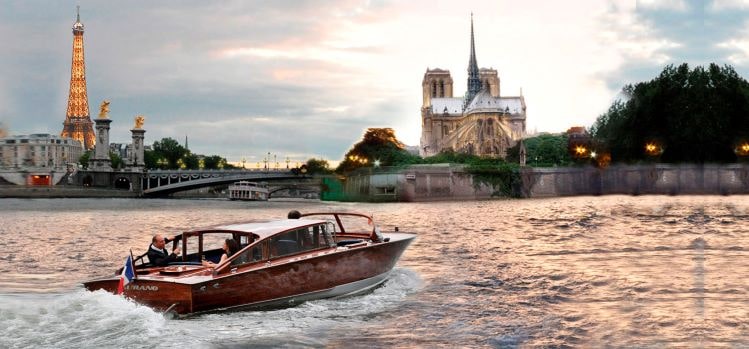
A short vehicle transfer can reduce exposure and conserve upper-body effort, but it is not automatically faster. The group must reach a legal, accessible pickup point, load the wheelchair or other device, travel around bridge and one-way restrictions, and unload at a usable Orsay approach. The Orsay accessibility page identifies a taxi and specialized-vehicle drop-off and pickup point on quai Anatole-France. At the Louvre, the group should confirm the pickup location associated with the chosen exit rather than asking a driver to improvise at the Pyramid or along a restricted curb.
The vehicle is most valuable when it arrives as the group exits, the wheelchair loading method is known, and a coordinator can communicate any delay without leaving the disabled visitor standing or exposed. It is least valuable when the party waits twenty minutes at an uncertain curb for a car that must circle the river. The relevant comparison is therefore not walking distance versus driving distance. It is total effort from the final Louvre gallery to the first Orsay pause.
Splitting the transfer
Faster walkers may cross the Seine while the wheelchair user and one companion travel by vehicle. This can work when the vehicle route is verified and Orsay has a precise reunion point. It can fail when the walking group reaches the wrong entrance, the vehicle is delayed, or one side holds the admissions documents needed by the other. The split should assign one coordinator to each subgroup, duplicate essential confirmations on both phones, and name a staffed, step-free meeting place inside or immediately at the entrance. The museum visit should not begin until the party is reunited unless a parallel plan was agreed in advance.
For a fuller examination of this exact tradeoff, see when a chauffeur materially changes a Paris museum day. The value lies in a dependable handoff, not in adding a car to a short route for appearance.
Lunch and the seated pause must protect the transfer, not compete with it
The middle of the day needs food, restrooms, medication access and a period without gallery pressure. It does not need an ambitious detour. A long formal lunch can make the Orsay portion too late, while an improvised snack may leave the guest with the highest care needs without a proper seat or accessible restroom. The right arrangement is close to the transfer line, reservable when necessary, and easy to leave if the Louvre runs late.
Three placements are sensible: eat near the Louvre before crossing; transfer first and pause near Orsay; or use museum facilities when current access and crowd conditions fit. The choice should follow the participant who needs the most predictable restroom and seating arrangement, and account for returning and recollecting borrowed equipment.
A Louvre-side lunch works when the exit and onward pickup are predictable; it is poor when the dining room pulls the party away from the accessible handoff. A Left Bank pause works when Orsay admission is secure. Museum dining may reduce street movement but can add another queue or elevator demand.
The pause should have a hard departure window and a softer content plan. In other words, protect the time needed to reach Orsay, but allow the Orsay object list to shrink. This is preferable to extending lunch anxiety into the museum or rushing a wheelchair user through the transfer. For parties that ultimately prefer a single Left Bank focus, an Orsay-led Left Bank art day offers a more spacious alternative.
Different mobility profiles change the plan in different ways
A full-time wheelchair user needs a continuous step-free chain, sufficient lift dimensions for the actual chair, reliable charging or battery planning for powered equipment, and realistic transfer procedures if a vehicle is used. The key risk is not simply distance. It is a broken link: one unavailable lift, a temporary gallery closure, an unsuitable curb or a vehicle that cannot load the device. The route should minimize unnecessary returns to the central halls and should never depend on carrying the person or chair unless that is the traveler’s established, consented method.
An ambulatory guest with limited standing tolerance may appear less complicated but can be more vulnerable to unpredictable queues. This traveler may manage stairs slowly yet be unable to stand through security, a crowded masterpiece room or an elevator wait. Priority procedures, a personal folding seat when permitted, or museum-loan seating can matter more than the total number of steps. The planner should ask about standing, not merely walking.
A cane or rollator user may prefer ramps and lifts but still choose a short staircase in some circumstances. That flexibility should not be converted into pressure. The route can offer options at each vertical change, with the group rejoining after the slower path. The museum’s rules for cane tips and the size or storage of equipment should be checked. Orsay permits canes with tips, while the Louvre specifies restrictions on metal-tipped canes and lends canes with rubber tips among its equipment.
A guest with chronic pain, fatigue or an invisible disability may need the same pacing without visible equipment. Build pauses around stated needs rather than repeated public justification, and agree on a discreet signal to finish the current object or skip the next branch.
Children and teenagers may walk farther than an older adult but tolerate less waiting. Give them one object choice at each museum and a role in spotting details. Do not solve boredom by speeding up the wheelchair route; reduce the number of stops and sharpen the interpretation.
In a multigenerational party, the person with the least predictable energy often determines whether Orsay remains valuable. This is not unfair to the others. It is the only way to protect the shared nature of the day. Faster or younger travelers can receive a short parallel branch; the person who cannot recover from overexertion cannot be given the same remedy.
Plan parallel alternatives with exact rejoining points
Parallel visiting is useful when it is brief, purposeful and reversible. It becomes fragmentation when subgroups follow separate wish lists for an hour and hope to reconnect by message. The best rejoining points have four qualities: they are step-free, easy to name, staffed or visually unmistakable, and not dependent on a specific bench being free.
At the Louvre, the central reception area beneath the Pyramid can be a strong major reunion point, but it may require considerable movement from the final galleries. Within a wing, a staffed gallery threshold, information point or agreed lift landing can be better for a ten-minute branch. The group should use the museum map’s official place names and level designations rather than personal descriptions such as “the big staircase.” Monumental spaces often have several approaches, and the wheelchair route may reach a different side from the stair route.
At Orsay, the great central nave is visually distinctive, but not every point along it is equally convenient for a wheelchair reunion. Name the level and nearby service or gallery. If part of the party goes to an upper-level clock or a popular Impressionist room while another member rests, decide whether the reunion occurs upstairs by elevator, at the lower lift landing, or near the cloakroom before exit. The resting member should not be left in a place that requires a new level change simply to rejoin.
Three kinds of parallel alternative are especially useful. The first is a nearby object branch: ambulatory guests view one additional room while the main group remains with a guide. The second is a seated interpretation branch: the wheelchair user and one or two companions examine images, maps or contextual material while others complete a physically awkward but short detour. The third is an early-finish branch: one subgroup moves to a café, bookshop or agreed pickup point while the others see the final two works.
Each branch should have a latest return time and a default action if messages fail. For example, “Meet at the staffed information point on level zero at 15:20; if anyone is missing at 15:25, both subgroups proceed to the cloakroom.” This is more useful than constant texting, which can be unreliable in large masonry buildings and distract from the art.
Decide who carries documents, medication, charging cables and vehicle information. Essential items stay with the person who needs them. A rejoining plan fails when one subgroup has the wheelchair user and the other has the proof required for priority admission or the only vehicle contact.
Adopt a stopping rule before entering the Louvre
The second museum should proceed only when the day still has physical and interpretive capacity. The decision should be made at a defined point, ideally after the Louvre exit and before a fixed lunch or vehicle commitment. Ask four questions. Did the group leave the Louvre within the agreed range? Is the least mobile guest comfortable continuing after a proper pause? Is Orsay’s admission and accessible route still confirmed? Does the group still want the specific Orsay story it planned, rather than merely wanting to complete the itinerary?
If any answer is no, the plan changes. That change can take several forms. Orsay can contract from ninety minutes to one upper-level or one chronological cluster. The group can divide, with some travelers entering Orsay independently while others take a seated river or Left Bank pause. The second museum can be replaced by a Seine hour, a garden edge or an early return. Or the whole party can preserve the day as a complete Louvre experience and move Orsay to another morning.
The stopping rule should also respond to specific warning signs: repeated lift delays, pain increasing rather than stabilizing during a pause, difficulty managing restrooms or transfers, a powered-chair battery falling faster than expected, a child whose attention has collapsed, or a Louvre route that has already expanded by several rooms. These are not minor inconveniences to overcome through willpower. They are evidence that the second museum is likely to produce less shared value.
A useful rule is to protect the group’s final good hour. Do not spend it in admission uncertainty, at a curb, or navigating a lift detour for one painting. When the second museum no longer offers a clear common purpose, the better art decision is often to stop. Travelers considering a non-museum alternative can explore when a Paris Seine hour should replace another museum.
Three day shapes can all count as a successful shared experience
The fully shared two-museum core
This format suits a small party with verified step-free routes, a personal wheelchair or dependable mobility equipment, and a common interest in the transition from older European traditions to nineteenth-century modernity. The Louvre portion uses one object cluster and one seated interpretive pause. The group exits before its concentration is exhausted, transfers together, eats near the line of travel, and enters Orsay for a shorter second cluster. No participant takes more than one optional branch in each museum.
The intellectual payoff is strong because the museums speak to one another: patronage and state power give way to changing exhibition culture, modern city life and new ways of seeing. The day feels substantial without pretending to cover either institution.
The shared Louvre with parallel Orsay choices
This format is better when the Louvre is the true group priority and Orsay interests only some members. Everyone shares the Louvre and transfer. At Orsay, the wheelchair user and companions choose either a compact accessible route or a seated alternative nearby, while the more energetic subgroup follows a pre-agreed object list. Everyone reunites at a named point for the departure.
This works only if the alternative has intrinsic value. Leaving one person in a lobby while others tour is not meaningful parallel planning. Anyone who wants interpretation or support should retain a guide, companion or family member, plus a comfortable place, restroom access and a clear departure method.
The one-museum day with a river transition
This is the best option when admission rules, lift uncertainty, heat, pain or group size make Orsay too costly. The Louvre remains focused, but the saved time allows a slower exit, a proper meal and a shared Seine or Left Bank interval. The group may see Orsay’s exterior and the river geography without entering. Orsay then receives its own morning on another day, when the wheelchair user starts with full energy and the group can use the museum’s accessible circulation without comparison to a demanding Louvre visit.
Choosing this format is not a failure to maximize Paris. It is often the choice that creates better looking, listening and conversation. A museum day is successful when the group remembers works and ideas, not when it accumulates institutional entrances.
Verify these points close to the visit
- Admission category: Confirm the exact size of the party, whether a guide will address the group, and whether the museum treats the arrangement as an individual or group visit.
- Date-specific reception rules: Check current construction notices, temporary group suspensions, entrance changes and any special operating period at both museums.
- Louvre entry: Match the Pyramid or Carrousel approach to the arrival method, weather, equipment and supporting documents. Confirm admissions for companions beyond the person receiving priority access.
- Louvre gallery chain: Check the rooms and levels containing the priority objects, the lifts that connect them, known closures, and a substitute object on the same accessible route.
- Orsay entry and vertical plan: Confirm the correct entrance, elevator availability relevant to the selected collection areas, and whether the preferred route should begin high and descend or build upward.
- Mobility equipment: Record wheelchair dimensions, whether the chair folds, vehicle-loading requirements, battery range, and whether borrowed wheelchairs or folding chairs are a convenience or a necessity.
- Restrooms and care: Identify accessible restrooms at both museums and during the middle pause. Keep medication, documents and personal-care items with the traveler who needs them.
- Vehicle handoff: Name a legal pickup location near the Louvre exit and use Orsay’s published specialized-vehicle or taxi point when appropriate. Share the same instructions with the driver and both subgroups.
- Bridge and street conditions: Review current municipal works, weather and curb conditions before choosing a pedestrian crossing.
- Rejoining points: Write down one internal reunion point in each museum, one transfer reunion point and a default action if calls or messages fail.
- Stopping rule: Agree who makes the continuation decision, when it is made and which alternative replaces Orsay without debate.
These checks are deliberately operational. “Accessible museum” is a useful institutional commitment, but it is not a complete itinerary. A complete itinerary connects the entrance, the exact objects, the pause, the exit and the next curb under the conditions of a specific date.
Where mobility-aware private coordination becomes materially useful
A private guide or planner cannot guarantee that a lift will operate, remove crowds from a masterpiece room or change a museum’s group policy. The service becomes valuable when it verifies the entrance and booking category, edits the object list around the actual accessible circulation, keeps all participants inside one interpretive story, and changes the route without making the disabled guest feel responsible for the change.
Coordination is especially important at the handoffs. One person needs to know which Louvre exit the group is using, where the vehicle can legally meet, which Orsay entrance applies, which documents must stay with the wheelchair user, and where subgroups reunite if they cross the Seine differently. A driver adds value only when the wheelchair loading method and curb plan are confirmed; otherwise the car can introduce another wait. A guide adds value only when the commentary can contract with the route; otherwise interpretation becomes pressure to keep moving.
For travelers building this art day into a wider stay, private Paris tour planning can connect museum access with the rest of the itinerary rather than treating accessibility as a note added after reservations are made.
The final judgment
The Louvre and Orsay can form one shared art day for a mixed-mobility private group when the Louvre is limited to one coherent cluster, Orsay is treated as a shorter continuation, and the transfer is planned from final gallery to first pause rather than from pin to pin. The day should include verified entrances, a live check on lift and room dependencies, a small object list, purposeful seated interpretation, exact reunion points and an agreed reason to stop.
The pairing is less convincing when the party is large enough to face restrictive group procedures, when either museum’s current works interrupt the needed access chain, or when the wheelchair user must spend disproportionate energy preserving other people’s checklist. In those cases, one museum plus a river interval is the more genuinely shared Paris day.
When the group needs entrance verification, object-level route editing, two-way transfer logic and rejoining plans that account for different mobility speeds, tailored coordination has a material role. Inquire now
If you’re interested in any private tours of Paris, please reach out to us.



 So if you are looking for the absolute best in Paris & surroundings with authentic local fully-licensed native guides whose English you can actually understand and with an exclusive and amazingly fun itinerary













