Marie de' Medici at the Louvre: Rubens, Queenship and a Cycle Made for a Palace

Updated
A royal life painted after royal authority had become unstable
Rubens’s cycle for Marie de’ Medici looks, at first encounter, like an impossible abundance of gods, ships, clouds, silk, flesh, armour and ceremony. Mythological beings crowd around a recognisable queen. Fame sounds trumpets over a harbour. Prosperity and Riches hover above a coronation. Peace, Prudence, Minerva, Mercury, Time and Truth repeatedly enter what appears to be a biography. The easy response is to treat the allegory as spectacular decoration laid over a sequence of court events. That response misses the political problem the paintings were built to solve.
Marie commissioned the cycle in 1622, after a rupture with her son Louis XIII had sent her into exile and after a reconciliation had restored her to court. She was Henry IV’s widow, the king’s mother and a former regent, but she was not a sovereign in her own right. Her authority had once been extensive, yet it had depended on dynastic circumstance: marriage to a king, motherhood of a minor king and the temporary office of regency. By the time Peter Paul Rubens began work, the question was not simply how to glorify her past. It was how to make a contested political life appear compatible with the monarchy her son now embodied.
The cycle should therefore be read as a negotiated account of queenship. Its allegories do not provide a neutral key to an uncontested life. They convert disputed episodes into a language of providence, concord, dynastic service and legitimate female majesty. That language had to honour Marie without insulting Louis XIII, and it had to enlarge the queen mother’s history without implying that she possessed the same constitutional identity as a reigning king. The grandeur is real; so are the limits the grandeur works to conceal.
Begin with the commission rather than with an isolated canvas. Marie planned two great palace galleries at the Luxembourg Palace: a western gallery devoted to her life and an eastern counterpart devoted to Henry IV. The February 1622 agreement set Rubens to the first project; the second was only partially begun and ultimately abandoned. The surviving Marie cycle comprises twenty-one immense narrative paintings and three portraits. It was completed in 1625, in time for festivities surrounding the marriage of Marie’s daughter Henrietta Maria to Charles I of England. The Louvre’s official overview of the Galerie Médicis records both the two-gallery conception and the dynastic timing.
This setting determines what the work originally was. It was not a row of autonomous masterpieces made for casual selection in a public museum. It was a painted architectural ensemble in a royal residence. Viewers moved along walls, encountered episodes in sequence, faced large concluding images and read Marie’s likeness against the identity of the palace she had built. The surviving documents do not provide a complete guest list or a transcript of every occasion on which the gallery was used. It is more accurate to speak of a courtly and dynastic audience than of one fixed “public”: members of the royal household, courtiers, visiting elites, diplomats and guests present for ceremonies could all bring different knowledge and interests to the room.
The marriage festivities of 1625 sharpen that point. A gallery recounting the queen mother’s arrival, marriage, maternity, regency and reconciliation formed an argument about lineage for visitors gathered around another international royal marriage. Marie’s past could be presented as the prehistory of present alliances. The palace audience did not need to believe every implication for the ensemble to work. It needed to recognise the claims: this foreign-born princess had entered France legitimately; she had produced and protected the dynasty; her years of government belonged within, not outside, the history of Bourbon monarchy.
The commission was architectural before it was biographical
A museum label naturally asks what a painting depicts. The Luxembourg gallery also asked where the painting stood, what came before it, what answered it across the room and what a visitor could see from the entrance. Scale, sequence and architecture were part of the iconography. The canvases were roughly four metres high, and together they covered about three hundred square metres. They occupied the wall surfaces between windows in a long, comparatively narrow gallery. This was painting experienced through bodily movement: approach, oblique view, interruption by openings, turn, return and culmination.
The Louvre catalogue reconstructs the original room as a south-to-north progression, with sequences distributed along the long walls, portraits near the entrance and major canvases controlling the far end. The same record identifies The Coronation of the Queen at the Abbey of Saint-Denis as the large north-end work concluding the western-wall sequence. Its placement mattered because an episode could acquire force by ending a visual run, not merely by following a date. The evidence is laid out in the Louvre collection record for the Coronation, which also describes the windows, the original gallery orientation and the principal figures.
That architectural logic corrects a common misconception. The cycle is chronological, but chronology is not its only ordering system. Rubens and his patrons used contrasts of scale, density and visual register to give some transitions more weight than others. A harbour scene can work as a threshold. A coronation can operate as a ceremonial closure. A scene of royal death and regency can turn private widowhood into public office. Later scenes of conflict and reconciliation can be made to answer the dynastic promises of the earlier sequence.
The palace itself amplified the argument. Marie had commissioned the Luxembourg Palace on the Left Bank, looking to Florentine models and especially to memories associated with the Pitti Palace. The residence gave a French queen mother a setting in which Tuscan origin and Bourbon identity could be joined rather than treated as opposites. Its galleries were not empty containers later filled with pictures. They were instruments of representation: long spaces in which lineage, collecting, ceremony and access could be organised.
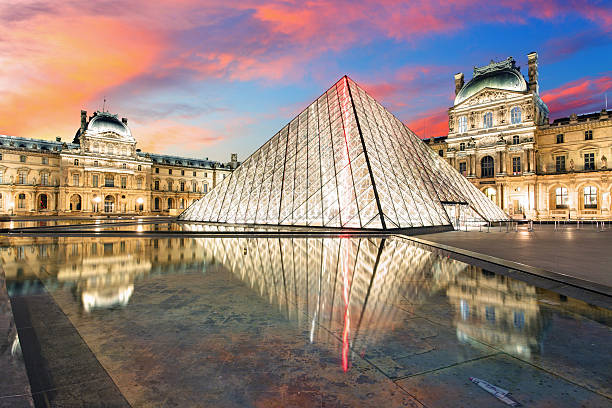
For readers interested in how royal architecture disciplines what can be seen and by whom, the Louvre’s own transformation from fortress and palace into a public museum offers a useful parallel. In both cases, art changes meaning when the governing institution around it changes. The Medici cycle moved from a queen’s residence into a national collection, from selective palace access into museum display, and from dynastic self-presentation into the history of European painting. None of those later meanings erases the first one.
Queenship had to be magnified without being mistaken for kingship
The central political difficulty was gendered. In early modern France, a queen could stand at the summit of social hierarchy while remaining legally and dynastically distinct from the king. She could transmit lineage, embody alliances, produce heirs, intercede, patronise institutions and, in particular circumstances, serve as regent. She could not inherit and exercise the French crown as a queen regnant. Marie’s image therefore had to express exceptional authority through roles that remained recognisable as those of wife, widow, mother and regent.
Fanny Cosandey’s study treats the series as an extraordinary act of female royal self-representation shaped by the institutional limits of the monarchy. Her formulation is important because it prevents two opposite errors. One is to reduce Marie to a powerless ornament whose imagery has no political content. The other is to read the cycle’s magnificence as proof that her position was equivalent to the king’s. Cosandey’s analysis of representing a queen of France locates the force of the ensemble precisely in this tension between royal elevation and institutional subordination.
Allegory was suited to that task because it could enlarge a role without defining it in constitutional prose. When Minerva educates the young Marie, the future queen appears formed by wisdom rather than merely born into rank. When gods approve a marriage, diplomatic calculation becomes cosmic order. When marine deities secure a voyage, arrival in France becomes more than transport from one shore to another. When personifications attend the regency, temporary government takes on the visual weight of universal virtues.
Yet allegory does not remove dependence. It often makes dependence visible in elevated form. Marie is received by France, crowned by a cardinal, situated beside the Dauphin, entrusted with government after Henry’s departure, and reconciled with the adult Louis XIII. Her authority is repeatedly recognised, granted, witnessed or harmonised by other figures. The cycle celebrates her agency, but it also constructs the relations through which that agency becomes legitimate.
This is why a hunt for one-to-one symbols can be unsatisfying. Identifying Neptune, Fame or Minerva is necessary, not sufficient. The interpretive question is what each supernatural intervention repairs or intensifies. Does it turn contingency into destiny? Does it suppress a political opponent? Does it recast defeat as moral endurance? Does it place Marie’s action inside a dynastic outcome that a French court audience could accept? Allegory is not an ornamental code sitting above history. It is the mechanism by which history is edited.
The Landing at Marseilles: arrival as transformation
The Landing of the Queen at Marseilles, 3 November 1600 is one of the cycle’s most seductive examples because the historical event remains legible beneath the mythological surge. Marie descends from the ship into a carefully staged welcome. A personification of France, marked by royal blue and the fleur-de-lis, receives her. Fame announces the arrival from above. Below the gangway, Neptune and marine figures rise around the vessel, turning safe passage into divine escort. Real attendants, including Marie’s sister Eleonora, coexist with bodies that could never have occupied the harbour.
The composition divides and joins several worlds. Above is the social theatre of arrival: fabrics, gestures, heraldry, rank and the first contact between foreign princess and host kingdom. Below is the mobile sea, rendered as muscular bodies and streaming water. Between them is the gangway, a diagonal device that makes disembarkation into a transformation. Marie is not simply stepping onto land. She is crossing from Medici daughter to French queen, from negotiated marriage to embodied dynastic presence.
Rubens’s marine divinities do more than decorate the lower half. They give the voyage retrospective inevitability. A successful crossing could have been represented by calm water, rigging and harbour officials. Instead, the sea itself seems to have served the marriage. Neptune’s presence makes geography participate in politics. The Mediterranean route, with all its practical risk and diplomatic consequence, becomes an obedient stage on which the new queen is delivered to France.
France’s personification performs a related operation on land. A kingdom cannot literally step forward to welcome a bride, but allegory allows the painter to collapse institutions, territory and people into one recognisable body. This is especially useful in a scene about a foreign-born queen. Marie is not shown forcing entry or remaining enclosed within an Italian entourage. France receives her. The image claims reciprocity: she arrives for the kingdom, and the kingdom acknowledges her.
Fame complicates the apparent intimacy of the greeting. The sounding trumpet turns a local welcome into public reputation. In a palace cycle completed more than two decades after the event, the arrival is already a memory being broadcast. Fame does not prove that the event was universally celebrated in 1600. It tells the later viewer how the event should enter dynastic history. The painting is therefore both narrative and publicity, a depiction of arrival and a model for its commemoration.
Close looking also reveals an important hierarchy. Marie’s body is comparatively controlled amid the agitation of wind, fabric, sound and water. Rubens lets the surrounding world move vigorously so that her composure reads as rank. She need not haul the ship, command the sea or sound her own reputation. Others perform the labour of arrival while she occupies its political centre. Queenship here is less the image of solitary action than the ability to order a field of action around the queen.
It would be a mistake, however, to equate the scene with a transparent record of Marseilles. The named date and recognisable participants anchor it in history, but the painting’s truth is rhetorical. It gives visual form to what the arrival needed to mean within Marie’s later defence of her life: legitimate entrance, willing reception, providential protection and the beginning of a fruitful French destiny. The mix of realism and mythology is not a confusion of genres. It is the work’s political method.
The Coronation at Saint-Denis: legitimacy made ceremonial
If the Marseilles canvas turns movement across water into dynastic arrival, The Coronation of the Queen at the Abbey of Saint-Denis, 13 May 1610 turns rank into rite. The scene is crowded with clergy, court witnesses, textiles and architectural enclosure. Cardinal de Joyeuse crowns Marie, assisted by Cardinals de Gondi and de Sourdis. The young Dauphin, the future Louis XIII, stands close to his mother. Henry IV appears in a tribune behind the ceremony. Above, flying personifications associated with Prosperity and Riches announce the benefits expected from the queen’s coming regency.
The canvas is exceptionally wide, approximately 3.94 by 7.27 metres. That breadth accommodates not only a principal action but the institutional bodies that make it valid. Crown, church, heir, king, nobles and witnesses belong to the event. Unlike the open harbour, the abbey is a controlled interior. The queen does not cross a threshold toward France; France’s sacred and dynastic order gathers around her.
The date gives the image unavoidable tension. Marie’s coronation took place on 13 May 1610. Henry IV was assassinated the following day. In hindsight, the ceremony stands on the edge of catastrophe and regency. Rubens does not need to paint foreknowledge into every face for a later palace viewer to bring it to the scene. The cycle’s sequence would soon move from crowned consort to widow and governor for a minor king.
The Louvre catalogue notes Henry’s recessed position and raises, cautiously, the possibility that it anticipates his approaching death. That suggestion should remain an interpretation rather than a settled fact. Spatial recession can carry several meanings: the king is a witness rather than the recipient of the rite; the ceremony’s centre belongs to Marie; architectural depth separates him from the foreground action; later knowledge may make distance feel prophetic. The value of the detail lies in its ambiguity. The living king authorises the scene, yet the composition can be read from a future in which he is absent.
The Dauphin’s position is less ambiguous in political terms. Marie’s maternity links coronation to succession. Her importance is not represented as personal splendour alone but as the production and protection of the Bourbon future. The boy seen near her is both son and dynastic officeholder in waiting. Once Henry is killed, that relation becomes the legal condition of her regency. The painting thus lets the viewer see several identities at once: crowned wife, mother of the heir and imminent queen regent.
The airborne figures above the ceremony translate political expectation into promise. Prosperity and Riches do not document the fiscal or factional record of Marie’s government. They announce what a well-ordered regency ought to bring. Their presence is programmatic, not statistical. This distinction matters throughout the cycle. Personifications state values and desired consequences; they do not independently verify that policy produced them.
Original placement added another level. According to the Louvre record, the Coronation closed the western-wall progression at the north end of the gallery. A viewer arriving after a run of earlier events did not meet it as one medium-sized canvas among equals. Its size and position made the rite a visual destination. Coronation became an architectural punctuation mark, giving Marie’s preparation for royal office a monumental conclusion just before the sequence entered the crisis of Henry’s death and her regency.
What changes when the two canvases are read together
The Landing and the Coronation are often admired separately because each sustains prolonged looking. Read together, they define two different mechanisms of queenship. The first concerns admission: a foreign princess reaches French soil and is accepted by a personified kingdom. The second concerns consecration: a queen already embedded in the dynasty receives a crown through ecclesiastical ceremony before a courtly assembly.
Their spaces oppose one another. Marseilles is open, unstable and horizontal, with ship, water and quay creating zones of movement. Saint-Denis is enclosed, hierarchical and frontal, with altar, tribune and assembled ranks fixing relationships. In the harbour, mythological bodies make the physical journey safe and glorious. In the abbey, institutional bodies make the queen’s status ceremonial and public. One image imagines France as a welcoming figure; the other manifests France through church, monarchy and succession.
Their sound worlds differ as well. Fame’s trumpet broadcasts arrival across open air. The coronation’s implied sound belongs to liturgy, proclamation and collective witness. These are not incidental atmospheres. They describe two stages by which a queen’s identity becomes known: first announced, then ratified.
Marie’s composure links them. In both scenes, the surrounding field is active while the queen remains the stable point around which activity acquires meaning. Yet she is not identical in the two works. At Marseilles she is a dynastic possibility, newly transferred from one court to another. At Saint-Denis she is the established mother of the heir and a figure whose ceremonial elevation is about to acquire unexpected governing consequence.
This comparison also exposes the cycle’s selective method. Between arrival and coronation lay ten years of marriage, childbirth, patronage and court politics. Rubens does not provide an evenly weighted diary. He chooses and enlarges moments that make status visible. A royal biography is built through thresholds, rites, births, delegations, crises and reconciliations because those episodes can bear public meaning. The gaps are not failures of storytelling; they are evidence of political selection.
A biography arranged around conflict, not freed from it
The cycle’s later half is difficult precisely because Marie’s relations with Louis XIII were not a sequence of harmonious triumphs. After Henry IV’s death, she governed as regent during her son’s minority. Her continuation of influence, reliance on favourites and struggle over access to the royal council became sources of conflict. In 1617 Louis asserted his authority, Concino Concini was killed and Marie was removed from the centre of government and sent to Blois. She escaped in 1619. Armed confrontation, negotiation and partial reconciliation followed before the settlement of 1621 that made the 1622 commission politically possible.
Rubens could neither omit the conflict entirely nor narrate it as a simple contest in which Marie defeated the reigning king. Louis XIII was not an antagonist whom a palace cycle in France could safely reduce to villainy. Marie’s honour had to be repaired inside the son’s monarchy, not at its expense. The result is a sequence in which violent or humiliating events are repeatedly redirected toward virtues, mediation and concord.
The Flight from the Château of Blois, for example, gives a dangerous escape the dignity of epic passage. The Perfect Reconciliation of the Queen and Her Son makes agreement the telos toward which conflict appears to have moved. The cycle’s concluding logic reaches for truth and restored relation rather than permanent maternal victory over royal authority. Such images do not erase the history known to contemporaries. They offer a controlled interpretation of it.
This is where the word “propaganda” can help and hinder. It helps because the paintings clearly promote a patron’s account of her legitimacy. They select, magnify and moralise. They seek to influence memory. It hinders when it suggests a crude message imposed on passive viewers or a simple opposition between false image and recoverable fact. Court audiences brought knowledge of recent events, factional loyalties and sensitivity to symbolic nuance. Rubens’s solution had to be persuasive under conditions in which contradiction was visible.
A stronger reading sees the cycle as political negotiation in paint. Marie needed a language of justification. Louis XIII’s position placed limits on what could be claimed. Rubens needed a coherent visual programme that could move between literal event and mythological elevation. Advisers, documents, architectural constraints and the demands of scale all shaped the result. No single agent need be imagined as dictating every detail for the ensemble to express Marie’s interests.
The repeated appearance of concord is especially revealing. Harmony matters most where rupture has occurred. Peace personifications, reconciliations and providential figures are not evidence that the reign was tranquil; they are signs that tranquillity required visual construction. The cycle’s splendour can therefore be read against itself. The more insistently order is staged, the more clearly the historical disorder behind it comes into view.
Marie’s gender sharpened that need. A king’s force against rebels might be framed as the restoration of sovereign order. A queen mother’s force against her adult son risked appearing unnatural in both familial and political terms. The cycle works to convert maternal opposition into maternal service, factional conflict into misrecognition, and settlement into the recovery of a proper dynastic bond. This does not make the images insincere. It identifies the cultural grammar within which her defence could be made.
The missing Henry IV gallery changes the meaning of the surviving cycle
The western gallery was only half of the original conception. Marie intended the opposite gallery to present the life and victories of Henry IV. Rubens began work on that second project later, but it was never completed. Marie’s final fall and departure from France in 1631 brought the undertaking to an end. Preparatory material and a small number of large works survive, but not the architectural counterpart that palace visitors were meant to encounter.
Sara Galletti’s study of the planned Henri IV gallery uses the commission, Rubens’s correspondence and architectural evidence to reconstruct the project’s development. Galletti’s research on Rubens and the Henri IV gallery is crucial because it prevents the completed Marie sequence from being mistaken for the whole programme. The surviving splendour is also the visible half of an unrealised pair.
The absence matters in at least three ways. First, a gallery devoted to Henry would have placed Marie’s biography in continuous relation to the founder of the Bourbon dynasty she married. Her authority as widow and regent would have appeared beside a military and royal narrative centred on the king. The pairing could have magnified her by association while also defining the difference between their forms of power.
Second, the two galleries would have turned movement through the palace into comparison. Visitors could have carried images, episodes and claims from one wing to the other. Even without knowing the exact route every guest took, the architectural symmetry encouraged a dynastic reading larger than one life. Marie’s cycle would not simply have proclaimed “the queen’s history”; it would have occupied one side of a marital and monarchical structure.
Third, the lost counterpart affects modern judgement. Seen alone, Marie’s cycle can appear uniquely self-absorbed, an immense autobiographical claim without balance. That impression is not baseless—the commission is indeed an extraordinary act of self-representation—but it is incomplete. The planned Henry cycle indicates that Marie’s self-fashioning was conceived within a double monument to marriage and dynasty. The failure to realise the second half leaves her voice louder than the initial architecture intended.
We should not solve that absence by inventing a complete programme. Surviving sketches, paintings, letters and contracts permit serious reconstruction, but they do not restore every intended scene, final placement or change of mind. Nor can they tell us how the finished pair would have altered Rubens’s later decisions. The missing gallery is evidence and limit at once: it expands the commission’s meaning while marking a gap the modern viewer cannot close.
From Luxembourg Palace to the Louvre: the ensemble survives, the original situation does not
The paintings are unusually fortunate in one respect: the complete Marie cycle survives. Yet survival of canvases is not survival of the original encounter. The works left their first architectural home, entered royal and then museum histories, were restored, reframed, separated and reunited in different rooms. The Louvre’s present Galerie Médicis was designed to recover the cycle’s coherence and chronological arrangement, but it cannot turn a museum wing back into Marie’s palace.
The official Louvre history notes that the Luxembourg gallery was narrower than the present room. It also records that the paintings were transferred to the Louvre in 1790 for restoration, displayed there from the early nineteenth century and, after several arrangements, installed as a complete cycle in the Richelieu wing in 1993. Earlier museum presentations sometimes privileged decorative impact over original sequence. The current display is an act of historical reconstruction as well as exhibition design.
Several changes follow from the move. The first is social. Palace viewers entered a residence whose owner was the protagonist of the paintings. Museum visitors enter a public institution in which Rubens, Baroque painting and French history compete for attention with thousands of other objects. A courtier’s knowledge of recent political actors cannot be assumed; labels and scholarship now mediate what living memory once supplied.
The second is spatial. In a wider room, a canvas may be easier to face frontally and from a greater distance. That can clarify composition while reducing the pressure of the original narrow gallery, where immense bodies and drapery would have occupied more of the viewer’s peripheral field. Modern lighting, floor flow and the presence of other visitors produce a different rhythm from movement through a palace gallery.
The third is material and framing. Frames separate canvases as individual works even when their repetition creates an ensemble. Wall colour, spacing and sightlines influence whether the eye reads continuity or isolation. For collectors interested in how a surrounding structure changes interpretation, this guide to reading paintings through their frames and reframing histories provides a useful method: notice not only what encloses an image, but what that enclosure asks you to treat as a unit.
The fourth is epistemic. A museum reconstruction can make the sequence seem more certain than the evidence behind it. Contracts, letters, inventories, architectural plans, physical traces and canvas dimensions support the accepted arrangement, but gaps remain. We do not possess a complete record of every alteration during production, every intended ceremonial use or every response by the first viewers. Even a carefully reconstructed hang should be understood as an evidence-based model, not time travel.
That distinction is productive rather than disappointing. It allows the Louvre room to be read in two registers. In the first, it is an extraordinary display of twenty-four works whose scale, colour and movement can be experienced together. In the second, it is a scholarly proposition about a lost palace arrangement. The visitor can admire the museum’s achievement while continuing to ask what has been changed by the move.
How to read the cycle at the Louvre without reducing it to highlights
The practical challenge is concentration. The cycle is too large to absorb by treating every canvas with equal intensity, yet a two-painting visit loses the political argument that gives the famous works their force. A focused method is more useful than either exhaustive label reading or rapid masterpiece hunting.
- First, establish the architecture of the story. Before studying details, identify the entrance logic, the long-wall progression and the works that function as visual endpoints. Ask where Marie changes role: daughter, bride, queen, mother, regent, exile and reconciled queen mother. This turns chronology into a map of political identities.
- Second, use the Landing and Coronation as anchors. In the Landing, track how sea, France and Fame transform travel into legitimate arrival. In the Coronation, track how clergy, king, heir and ceremony transform rank into recognised authority. Compare open threshold with enclosed rite.
- Third, follow the problem of delegated power. Notice when Marie receives, exercises, returns or seeks recognition for authority. The verbs matter. Her queenship is often represented relationally, through acts of entrustment, maternity, mediation and reconciliation.
- Fourth, test allegory against conflict. Each time a virtue or deity appears, ask what historical difficulty the figure is managing. A personification may elevate an event, but it may also redirect blame, compress debate or promise an outcome not secured by the historical record.
- Finally, step back to recover the ensemble. After close looking, view several canvases at once. Repetition of bodies, flying figures, royal blue, red accents, armour and clouds creates continuity beyond narrative. The cycle argues through visual recurrence as well as through subject matter.
This approach does not require encyclopedic knowledge of every classical attribute. A specialist vocabulary helps, but the larger questions are available to any attentive viewer: who authorises Marie, who witnesses her, what form of France appears, where the king stands, where the heir stands, and how conflict is made to end. Those questions keep the political structure visible even when individual identifications remain uncertain.
Allowing enough mental space matters more than adding another room immediately. The cycle’s huge canvases generate sensory fatigue before a viewer notices it. A curated Louvre-day plan can help place this focused study within a larger visit without turning the Medici gallery into a hurried corridor between more famous works. For this subject, an hour of coherent looking is usually more valuable than a longer sequence broken by unrelated departments; that is an editorial pacing judgment, not an official Louvre duration.
Access must be treated separately from interpretation. The Louvre’s official Galerie Médicis page currently identifies Salle 801 on level 2 of the Richelieu wing and labels the gallery temporarily closed. Operational status can change, and individual collection records may not update on the same rhythm as a gallery notice. Verify the official room information close to the visit and do not build a specialist day on the assumption that the entire cycle will be accessible.
What a specialist guide can materially change
The case for expert interpretation here is not that the paintings are inaccessible without a lecturer. It is that their most important meaning lies between objects. A visitor can immediately appreciate Rubens’s colour, flesh, movement and scale. The harder task is to retain the sequence while connecting an allegorical figure in one canvas to a constitutional problem, a family relation and an architectural position elsewhere in the room.
A well-prepared private guide can make that work visible through selection rather than volume. The useful service is to establish the commission first, choose a small number of recurring problems, and return to them as the group moves: foreign arrival, dynastic motherhood, delegated authority, conflict with Louis XIII, reconciliation and the absent Henry IV counterpart. This keeps the cycle readable as a royal argument rather than as twenty-four unrelated masterpieces.
For art patrons, the gain is also methodological. A specialist can distinguish what the documents establish from what the imagery suggests. The date and participants of the Coronation are recorded facts. Henry’s recession may invite a reading of impending death, but the inference must be labelled as such. The planned two-gallery commission is documented; the exact experience of every palace visitor is not. That discipline makes interpretation richer because it prevents symbolism from hardening into invented certainty.
Guidance also helps control scale. Standing too close encourages absorption in brushwork and bodies but can dissolve the architecture of the composition. Standing too far back preserves design but can hide telling relations of gaze and gesture. A focused visit alternates between those distances and between individual canvases and the room as a whole. The objective is not to cover every figure. It is to show how evidence accumulates.
Should the gallery remain unavailable, a responsible plan changes rather than pretending the promised experience can be delivered. The commission history can still shape a Louvre discussion of Rubens, royal portraiture and palace display, but that is an alternative, not equivalent access to the cycle. The distinction is especially important for patrons travelling specifically to study queenship: the value lies in seeing relationships across the ensemble, and no single substitute canvas can reproduce them.
The cycle’s strongest claim is also its unresolved question
Marie de’ Medici’s paintings insist that a queen’s life can bear the scale and formal ambition of royal history. That claim was exceptional. Her birth, education, marriage, arrival, maternity, coronation, regency, exile and reconciliation occupy a monumental programme normally associated with rulers, saints, conquerors or foundational myths. Rubens does not apologise for the size of the project. He gives female royal experience the physical dimensions of state representation.
At the same time, the cycle repeatedly locates Marie’s greatness in relationships that limit autonomous sovereignty. She is daughter of a dynasty, chosen bride, wife of Henry IV, mother of Louis XIII, regent for a minor and reconciled subject of an adult king. The paintings do not solve that contradiction. They make it magnificent. Their gods and virtues allow her to approach the visual language of sovereign glory while the narrative keeps returning her to marriage, maternity and dynastic concord.
This is why neither pure celebration nor pure debunking is adequate. To admire the cycle only as a triumph of Baroque invention leaves its political intelligence unread. To expose it only as self-serving image management understates the difficulty of the commission and the sophistication with which competing claims are held together. Marie’s version of events is selective; Louis XIII’s authority remains a boundary; Rubens’s allegory enlarges both conflict and repair.
The original palace setting makes the argument clearer. A visitor did not merely look at Marie represented as queen; the visitor stood inside Marie’s architecture, within a paired programme meant to place her history beside Henry IV’s. The abandoned second gallery then becomes more than a footnote. It is the missing term of the dynastic equation. Modern viewers see a complete set of Marie’s canvases but an incomplete commission.
The museum setting adds another productive contradiction. The Louvre protects the ensemble from the private purposes of the palace and opens it to sustained historical scrutiny. Yet the act of preservation also detaches it from the social hierarchy, narrow architecture and ceremonial uses that first gave it force. The current gallery can reconstruct order, not circumstance. To read well is to hold both rooms in mind: the visible museum and the partly recoverable palace.
For patrons who want to continue beyond this single ensemble, the next useful comparison is not automatically another Rubens. It may be another work in which a woman’s authority is represented through marriage, maternity, regency or patronage; another palace cycle whose architecture disciplines narrative; or another museum installation that reconstructs a lost decorative setting. The Medici paintings become more revealing when they supply questions that travel.
They also change how one understands royal biography. A painted life is never simply a life transferred to canvas. It is a selection of episodes, a hierarchy of scale, an arrangement of witnesses, a pattern of omissions and a theory of causation. In the Medici cycle, gods make causes visible, virtues make outcomes desirable and architecture makes sequence persuasive. History is not abandoned for myth. History is reorganised through myth so that contested queenship can appear coherent.
When the aim is to interpret the paintings together as that royal argument—rather than to pause before a few famous canvases—a privately guided Louvre study can be shaped around the commission, the palace arrangement and the politics of queenship, subject to current gallery access. Inquire now
If you’re interested in any private tours of Paris, please reach out to us.






 So if you are looking for the absolute best in Paris & surroundings with authentic local fully-licensed native guides whose English you can actually understand and with an exclusive and amazingly fun itinerary