The Left Bank Art Day in Paris: Orsay, Rodin and Luxembourg Without Louvre Gravity

Updated
From the Musée d’Orsay riverfront to Rodin’s rue de Varenne garden, the strongest Left Bank art day is Orsay first, Rodin second, Luxembourg later. It works because the route stays south of the Seine, uses the museum energies in the right order, and keeps dinner geography from being hijacked by a late cross-city return. The clear exception: if your Paris stay allows only one serious museum session, or if Impressionism is the reason you came, Musée d’Orsay alone is enough for the day.
The thesis is simple and very Paris-specific: on the Left Bank, elegance comes from Orsay-to-Rodin pacing, not from adding one more famous door. The small route decision that changes the day is not glamorous, but it matters: after Orsay, do not drift east toward Pont Royal and the Tuileries just because the river makes it look close. Cut south through Rue de Bellechasse and across Boulevard Saint-Germain toward rue de Varenne, or use a short transfer if walking energy is already low. That keeps the day in conversation with itself: railway station turned museum, sculptor’s house and garden, then the chairs and tree alleys of Luxembourg before dinner.
This guide solves one planning question only: how to make Musée d’Orsay, Rodin and Luxembourg feel like one coherent Left Bank art day instead of a museum stack. It is not a ranking of Paris museums, and it is not an attempt to cover every Left Bank attraction. If you are still choosing among the Louvre, Orsay and Rodin as your first major art anchor, use this alongside a broader Louvre, Orsay and Rodin first-choice comparison. Here, the editorial call is narrower: the Louvre is not the anchor because its gravity pulls the day away from the Left Bank mood.
The priority ladder for a Left Bank art day without Louvre gravity
The best sequence is Orsay for concentration, Rodin for air and form, Luxembourg for the mood shift, then dinner within easy reach. That order is not about cultural prestige; it is about what each stop asks from the body and what it leaves available for the evening.
- First: Musée d’Orsay. Start with the highest visual density while attention is fresh. Orsay rewards focus: the converted station volume, the central nave, the clock views, the Impressionist and post-Impressionist rooms, and the transition from academic Paris to modernity all require more mental sorting than most travelers expect. Use the official Musée d’Orsay visit page (https://www.musee-orsay.fr/en/visit) for current operational details, then plan the visit around selectivity rather than total coverage.
- Second: Rodin. Move to sculpture after painting, not before it. Rodin changes the texture of the day: bodies, hands, bronze, marble, garden paths, the Hôtel Biron, and the useful relief of seeing art from a few steps back. The official Musée Rodin site (https://www.musee-rodin.fr/en) is the right place to confirm visit details, but the planning judgment is evergreen: Rodin works best after Orsay because it lets the day breathe without abandoning art.
- Third: Luxembourg. Treat the garden as a deliberate cultural pause, not filler. Luxembourg is where the day stops proving itself. The official Luxembourg Garden practical information (https://jardin.senat.fr/en/practical-information.html) page is useful because access and hours change seasonally, but the planning reason is simpler: the chairs, basin, tree alleys and Medici Fountain give the day a human scale after two museums.
- Last: dinner geography. Keep the evening close to Saint-Germain, Odéon, the 6th, the 7th, or a short river crossing planned in advance. The wrong dinner location can undo a beautifully paced art day faster than the wrong painting room.
The priority ladder also tells you what to cut. Do not add the Louvre, Sainte-Chapelle, the Eiffel Tower summit, Le Marais shopping and a serious dinner to this same day and expect it to feel refined. The Left Bank art day succeeds because it resists the famous Paris habit of pulling everything toward the Seine and then pretending the extra crossing does not count.
Why the Louvre should not anchor this particular day
The Louvre is the wrong anchor for this route because it changes the geography, scale and emotional tempo before the Left Bank has a chance to cohere. The Louvre is not “too much” in the abstract; it is too gravitational for this specific Orsay, Rodin and Luxembourg plan.
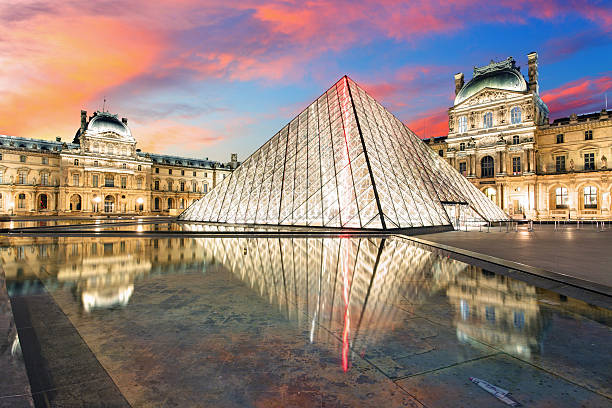
Here is the counterintuitive correction: the Louvre looks close on a map, especially from Orsay across the river, but a Louvre-first morning turns the day into a Right Bank operation. You are suddenly thinking about the Cour Carrée, the Pyramid, Tuileries crossings, the Rue de Rivoli edge, security movement, and the long interior distances of a palace museum. Even if the transfer to Orsay is short, your attention has already been trained for a different kind of day: monumental, crowded, directional and hard to keep intimate.
That matters for couples and celebration travelers. A Louvre-first plan can be brilliant when the Louvre is the purpose of the day, but it often flattens a Left Bank afternoon into a recovery exercise. By the time you reach Rodin, the garden no longer feels like a sculptural counterpoint; it feels like relief from a logistical campaign. The day becomes “we survived the museum,” not “we understood a Parisian arc from station to studio to garden.”
The Louvre also disrupts dinner geography. If your evening belongs near Saint-Germain, Odéon, Rue du Bac or the 7th, a Louvre-heavy day tempts you to tack on the Tuileries, Palais Royal, Place Vendôme or the 1st arrondissement before remembering that dinner is back across the river. If your dinner is on the Right Bank, the opposite problem appears: Luxembourg starts to look inconvenient, and the garden reset becomes the first thing sacrificed. That is the signal that this is no longer a Left Bank art day.
There is one clean exception. If the Louvre is the museum you care about most, give it its own plan and do not force it to share the day with Orsay and Rodin. A focused Louvre route can be superb with the right guide and a disciplined object list; Orange Donut Tours handles that kind of curation through a private Louvre tour when the Louvre is the true anchor. But for this article’s route, the Louvre is the famous thing to stop forcing.
How Orsay and Rodin differ in energy
Orsay is a concentrated museum experience; Rodin is a slower art-and-garden experience. Pairing them works only if you respect that difference instead of treating Rodin as “one more museum” after Orsay.
Musée d’Orsay asks for sequence. The building itself pushes you along a story: a former railway station, a long central volume, side galleries, upper-level rooms, clocks, sightlines across the Seine, and a collection that many travelers mentally compress into “Impressionism” even though the museum’s range is broader. The consequence is that Orsay can absorb more attention than you intended. A traveler who says, “We will just see the highlights,” often spends the first hour orienting, then realizes that the highlights are connected by a larger story of Paris, modern leisure, industrial life, bourgeois interiors and the shock of new ways of seeing.
Rodin asks for presence rather than sequence. Yes, there are essential works and interior rooms, but the experience is less about covering a chronological corridor and more about changing distance: close to a hand, across the garden from a bronze group, inside the Hôtel Biron with softer domestic scale, back outside where sculpture meets trees and gravel. After Orsay, that change in bodily rhythm is the reason Rodin earns its place. You are still with art, but you are not asking your group to read another dense set of rooms in the same key.
This is where many private art days go wrong. Travelers choose two museums because both are exceptional, then visit them in the same manner: full context, full route, full collection ambition. By the second museum, even cultured travelers become efficient rather than receptive. Rodin should not be “covered” after Orsay. It should be edited. Choose the pieces and spaces that let sculpture answer the painting morning, then leave while the garden still feels like a privilege rather than a bench break.
For families or mixed-interest couples, the difference is even more important. Orsay can satisfy the person who wants names, movements, context and Paris as an artistic capital. Rodin can satisfy the person who wants beauty without another long gallery march. The day works when neither traveler feels that the other’s preference has hijacked the plan.
Orsay-to-Rodin pacing is the route hinge
Orsay-to-Rodin pacing decides whether the day feels cultured or overstuffed. The route is short enough to keep the museums related, but not so short that you can ignore fatigue, lunch, weather or the mood of the group.
The simplest version is a focused Orsay morning, a break before the second museum, then Rodin with a lighter interpretive hand. Leaving Orsay matters as much as entering it. Once your group has seen the works that actually matter to your interests, do not keep circling because the building is famous and the ticket feels like a mandate. The last 30 minutes of an overlong Orsay visit are often the minutes that make Rodin fail.
The walk from Orsay toward Rodin can be one of the best diagnostic moments of the day. If Rue de Bellechasse, Boulevard Saint-Germain and the approach to rue de Varenne feel pleasant, the group probably has the energy for a proper Rodin visit. If the same transition feels exposed, footsore or conversationless, Rodin should become a shorter garden-and-key-works stop. Paris tells you more during that transfer than a spreadsheet itinerary does.
This is also where transport judgment matters. A chauffeur is not automatically better between Orsay and Rodin; the distance is too compact for a car to always improve the experience, especially when streets, drop-offs and one-way patterns add their own delay. In rain, heat, mobility limitations or a dressed-up celebration day, a short transfer can be sensible. But in fair weather, walking may preserve the continuity of the Left Bank better than getting in and out of a vehicle. For a fuller discussion of when cars help and when they simply add ceremony, see when a chauffeur changes a Paris museum day.
Paris does something physical to a museum day that travelers underestimate. You stand longer than you think inside Orsay; you negotiate stairs, stone floors, galleries, security bottlenecks, coat decisions and the small posture fatigue of looking upward, sideways and through crowds. Then the city adds curbs, crossings, gravel, heat or drizzle, and the temptation to walk “just ten more minutes” because the next place is famous. By the time dinner arrives, the body remembers every unplanned add-on even if the mind insists the day was efficient.
The solution is not to make the day timid. The solution is to sequence the intensity. Let Orsay be the intellectual ascent. Let the transfer be the test. Let Rodin be the change in medium and air. Let Luxembourg be the place where the day stops asking for museum attention.
Where the Luxembourg Garden reset belongs
The Luxembourg Garden reset belongs after Rodin and before dinner, not between Orsay and Rodin. Put it too early and it dilutes the museum arc; put it too late and it becomes a tired detour in the wrong shoes.
Luxembourg is not a consolation prize for travelers who cannot handle another museum. It is the mood anchor that makes the Left Bank day feel complete. After Orsay’s visual density and Rodin’s sculptural concentration, the garden gives you chairs, open paths, changing light, family life, students, older Parisians, the Grand Bassin, the Medici Fountain, and a civic Paris that does not require another ticket scan. That contrast is why the day feels shorter than it is.
The best placement is late afternoon, when you can use the garden to decide the evening rather than merely to rest. If the group is lively, drift toward the Odéon and Saint-Germain side. If feet are tired, keep the garden pause simple and let dinner sit nearby. If the weather is soft, the chairs around the basin can do more for a couple’s mood than another interior masterpiece. If the weather is poor, the garden may become a brief visual reset rather than a long pause, and that is still useful.
What the city does to the trip mood is different from what it does to the body. A badly placed transfer makes the day feel scattered; a badly placed museum makes the day feel dutiful; a badly placed dinner makes the whole day feel like a prelude to logistics. Luxembourg, placed correctly, lets the conversation return. It turns the plan from “Orsay, then Rodin, then something” into a Left Bank afternoon with a beginning, middle and landing. For couples, that is the mood-preserving decision. The mood-killing mistake is saving Luxembourg for after a long dinner transfer, when the garden becomes a checkbox rather than a pause.
Do not over-program Luxembourg. You do not need to turn it into a botanical lecture, a photography hunt or a tour of every statue. The garden’s job in this route is to change tempo. That may mean 25 minutes, or it may mean nearly an hour if your dinner location supports it. The point is not duration; the point is leaving the museum mindset before the evening begins.
Traveler-fit clusters for Orsay, Rodin and Luxembourg
The full Orsay, Rodin and Luxembourg arc fits travelers who want art depth without surrendering the entire day to interiors. It should be adjusted, not copied, for families, older parents, first-day arrivals or travelers with a major dinner reservation.
- Art-lovers who still want an evening. Keep Orsay and Rodin, but curate Orsay sharply. Use Rodin as a medium change, not as an equally exhaustive second museum. This is the traveler who benefits most from a guide who can connect Manet, Degas, Monet, sculpture, patronage and Parisian modernity without turning the day into a lecture marathon.
- Couples and celebration travelers. Keep Rodin and Luxembourg because they preserve atmosphere better than a second dense museum. The goal is not romance by cliché; it is leaving enough unforced space for the day to feel shared. A couple can remember a Rodin garden pause and a Luxembourg chair as vividly as a famous canvas if the pacing lets them notice it.
- Families and mixed generations. Shorten Orsay before you shorten the break. Children, teenagers and older parents often handle one strong museum better than two medium ones. If the group’s attention splits, choose a few Orsay works with real narrative power, keep Rodin tactile and visual, and let Luxembourg absorb the social energy that galleries suppress.
- Comfort-first visitors. Plan fewer transitions and stronger exits. Comfort here does not mean avoiding walking; it means deciding where walking earns its place. Orsay to Rodin can be elegant on foot for some travelers and unnecessary strain for others. Rodin to Luxembourg may need a short transfer if the day is warm, wet, or dinner clothing is not walking-friendly.
- Food-and-wine travelers. Treat dinner as part of the route architecture. If the restaurant is near Saint-Germain, Odéon, Rue du Bac or the 7th, this day can land beautifully. If the restaurant is in Le Marais, the 8th or far west, decide whether the dinner matters more than the garden. The answer may be yes, but it should be a conscious trade.
The cluster that should avoid the full arc is the traveler who wants a collection-completion day. If your satisfaction comes from seeing every famous work, every floor, every room and every label, this route will frustrate you. It is designed for selection, mood and geography. That is its value.
When Musée d’Orsay alone is enough for the day
Musée d’Orsay alone is enough when the museum is the reason for the day, when your group is tired before lunch, or when the evening has to be excellent. Cutting Rodin in that situation is not cultural failure; it is editorial discipline.
This is the clearest cut-first rule for the route: if Orsay expands beyond its planned role, stop forcing the second museum. Orsay can easily become a full art day for travelers who care deeply about Impressionism, post-Impressionism, 19th-century Paris, design, architecture or the transition into modern life. It can also become enough if your morning starts late, if the official ticket window you can secure is not ideal, if the group has jet lag, or if the dinner reservation is a centerpiece of the trip.
Orsay alone also makes sense for travelers who are emotionally satisfied by painting and do not need the sculptural counterpoint. Some visitors leave Orsay with the feeling that the day has already said what it needed to say. Adding Rodin after that can turn a complete experience into a heavier one. The better move is to leave Orsay, lunch well, walk or transfer through Saint-Germain, and use Luxembourg or a Seine-side pause as the non-museum counterweight.
For families, Orsay alone may be the more generous choice. A single strong museum, followed by garden time and dinner nearby, often creates better memories than two museums no one can fully absorb. For older parents, Orsay alone may leave enough energy for a dignified evening rather than a forced return to the hotel. For couples, Orsay alone may preserve the afternoon conversation that a second ticketed stop would consume.
The test is not whether Rodin is worthy. Rodin is absolutely worthy. The test is whether Rodin still has room to be received. If the answer is no, save it for a future morning, especially if you are staying in or near the 6th or 7th. A short, fresh Rodin visit can be magnificent. A late, dutiful Rodin visit after an overextended Orsay morning is the version that gives museum days a bad name.
The dinner geography is part of the art decision
Dinner geography should be decided before the museum route is finalized. A Left Bank art day that ignores dinner location often ends with exactly the kind of transfer fatigue it was designed to avoid.
The cleanest dinner landing is Saint-Germain, Odéon, Rue du Bac, the 6th, the 7th, or a nearby Right Bank address reached by one intentional crossing. That does not mean every dinner must be on the Left Bank. It means the evening should not require a vague “we will just get across town later” assumption. Paris rewards precise endings. It punishes optimistic endings with taxi waits, tired feet, missed aperitif time and the small irritation of arriving slightly depleted to a meal that was supposed to crown the day.
If dinner is near Saint-Germain, the Orsay, Rodin and Luxembourg route can feel beautifully aligned. You can move from museum attention to garden air to a short evening approach without the day changing identity. If dinner is in Le Marais, the 8th or near the Champs-Élysées, the route needs revision. You may still choose that dinner, but then Luxembourg may need to be shorter, Rodin may need to come before lunch, or Orsay may need to become the only museum. For more on how the evening should set the route rather than merely follow it, see Paris dinner geography around the Seine.
The most common mood-killing mistake is treating dinner as a separate luxury decision. It is not separate. A late table across town changes how much museum intensity the group can enjoy. A formal meal after a full Orsay and Rodin day changes shoe choices, transfer tolerance and whether Luxembourg feels like pleasure or obligation. A private guide can shape the art content, but the evening only works if the route and the reservation agree.
For food-and-wine travelers, this is the reason the Left Bank day can outperform a more famous icon stack. You are not merely seeing art; you are using the museum district to land in the right dinner geography. That is the practical difference between a rich day and a day that looks impressive only on paper.
Spend for curation, not for volume
Extra spend earns its cost when it reduces decision fatigue, sharpens the object list, handles timing and keeps the group from over-consuming art. It does not earn its cost when it simply adds more museum hours.
A private guide is most valuable here as an editor. In Orsay, that means choosing works that connect to your interests rather than marching through a default highlight reel. For a couple, that may mean modern Paris, light, leisure and the shock of changed seeing. For a family, it may mean fewer works with stronger stories. For collectors or design-minded travelers, it may mean interiors, decorative arts and the building itself. In Rodin, it means knowing when to slow down, when to step back, and when the garden has done enough.
Paying for private guiding does not make three full museums feel elegant. That sentence matters because premium travel often tempts people to upgrade a bad structure instead of changing it. The better spend is selectivity: fewer works, cleaner transitions, more useful context, and the confidence to leave before the day has gone stale.
A private route can also protect the group dynamic. It gives one person permission not to become the family’s unofficial docent, one spouse permission not to manage the map, and the planner permission to stop guessing whether Rodin is still wise after Orsay. It also helps when travelers want the day to connect with a broader stay: a Louvre day elsewhere in the itinerary, a Saint-Germain food evening, a family-friendly Seine moment, or a celebration dinner that should not begin with museum fatigue.
For travelers who want Orange Donut Tours to build the Left Bank art day around fewer works, better exits and dinner-aware pacing, a tailor-made Paris private tour is the right next step. The point is not to make the day grander; it is to make the choices feel inevitable. Inquire now.
What not to bolt onto this Left Bank day
The additions to avoid are the ones that change the day’s center of gravity: the Louvre, a Champagne excursion, a major shopping route, or a formal cross-town evening that has not been planned around fatigue. Each can be excellent on the right day. None improves this one by being squeezed in.
The Louvre is the first thing to keep separate. If you want the Louvre, let the Louvre be a Louvre day. Do not turn the Orsay, Rodin and Luxembourg route into a second half of a palace morning. The two structures ask for different stamina, and the Louvre’s scale makes the Left Bank feel like an appendage rather than the subject.
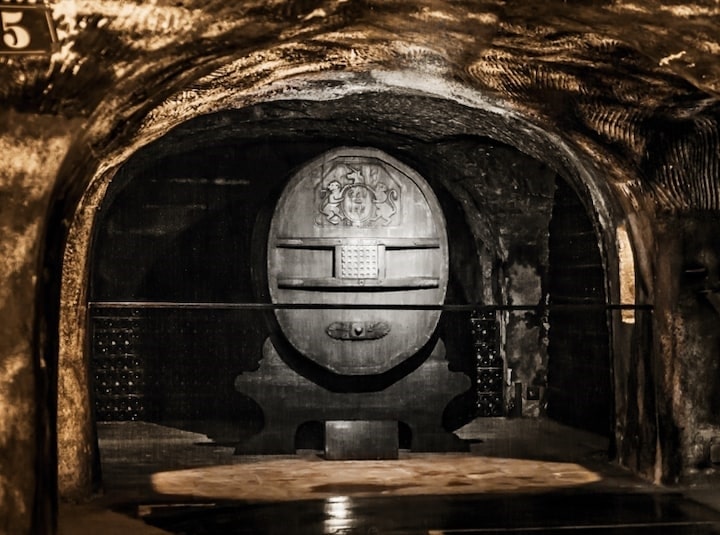
Champagne is the second thing to keep separate. Champagne Taittinger visits in Reims (https://www.taittinger.com/en/visits-reims) and Veuve Clicquot cellar visits (https://www.veuveclicquot.com/en-int/visitus.html) belong to a Reims cellar day, not to an Orsay afternoon. The mistake is not loving Champagne; the mistake is treating a cellar visit as if it were a decorative add-on. If Champagne matters in your Paris stay, give it its own architecture and use a dedicated Champagne day-planning guide to decide where it belongs.
Major shopping is the third thing to avoid unless shopping is the true priority. Carré Rive Gauche browsing, Saint-Germain design stops or a single thoughtful boutique can fit if they are treated as texture. Avenue Montaigne, Le Marais, department stores or a full personal-shopping arc will compete with the museums and pull the day into a different editorial category. The Left Bank art day has room for taste; it does not have room for a second agenda.
The final add-on to resist is the “one more nearby thing” instinct. Nearby is not the same as wise. Invalides may look close to Rodin; the Seine may look close to Orsay; Saint-Sulpice may sit naturally between Luxembourg and dinner. Any one of those can be a good touch in the right plan. But if the group is already measuring the afternoon in remaining steps, the right move is to cut, not to decorate.
A workable sequence for a private Left Bank art day
A strong private sequence keeps the morning dense, the middle edited, and the late afternoon open enough to choose the evening well. It should feel like one arc, not like three separate reservations.
- Morning at Musée d’Orsay: Begin with the works and spaces that matter to your group. Resist the urge to “warm up” too long in secondary rooms if the main reason for the visit is painting, modern Paris or the building’s railway-station transformation. The exit matters: leave while the group is still curious.
- Break before Rodin: Use the Orsay-to-Rodin transition to assess energy. A simple lunch or coffee pause near the route is more useful than a destination meal that pulls you away from the 7th. If conversation has gone quiet, shorten Rodin before you enter.
- Rodin as a sculptural counterpoint: Focus on the garden, the Hôtel Biron and a small number of works that give sculpture its own voice after Orsay. Avoid turning Rodin into a second comprehensive museum. The garden is not a lesser part of the visit; it is the reason the pairing works.
- Luxembourg before dinner: Use Luxembourg to shift out of museum mode. Choose the garden edge that suits the evening: Odéon and Saint-Germain for a Left Bank dinner, Rue de Médicis if the garden itself is the pause, or a shorter stop if a transfer has to follow.
- Dinner within the route’s logic: End close, or cross the river once with intention. If the dinner location demands a long transfer, adjust the museum day earlier rather than pretending the evening will absorb the cost.
This sequence can flex. On a cool clear day with strong walkers, the route can include more walking and less vehicle time. In rain or heat, use shorter exterior intervals and make Luxembourg a visual pause rather than a long garden stay. With older parents, decide before Orsay what the afternoon cut will be if energy drops. With teenagers, give Rodin a more visual role and do not over-explain. With a celebration dinner, treat the afternoon as preparation for the evening, not a final chance to collect one more sight.
The best version of the day feels deliberately incomplete. You will not see all of Orsay. You will not exhaust Rodin. You will not use Luxembourg as a sightseeing inventory. That restraint is not a compromise; it is why the route remains memorable after dinner.
FAQ
Can you visit Musée d’Orsay and Rodin in one day?
Yes, Musée d’Orsay and Rodin can work very well in one day if Orsay is curated and Rodin is treated as a change of medium and pace. The mistake is trying to make both visits comprehensive.
Where does Luxembourg fit in an Orsay and Rodin day?
Luxembourg fits best after Rodin and before dinner. It gives the day a garden landing after two art stops and helps the evening feel calmer instead of turning into another transfer problem.
Should the Louvre replace Orsay on this Left Bank route?
No, not for this route. The Louvre deserves its own plan when it is the priority, but it pulls this day across the river and changes the scale before the Left Bank arc has time to work.
How long should you spend at Musée d’Orsay on this kind of day?
Spend long enough at Musée d’Orsay to follow a focused story, but not so long that Rodin becomes a tired obligation. The best length depends on your interests, ticket timing and group stamina, so build the exit around energy rather than a fixed checklist.
Is Rodin better before or after Orsay?
Rodin is usually better after Orsay on this route because sculpture and garden space provide relief after a dense painting morning. Put Rodin first only if the day is short, the garden is the main priority, or Orsay has a later ticket window.
Is this a good art day for couples?
Yes, it is a strong art day for couples because it balances museum substance with atmosphere. The important choice is to leave room for Luxembourg and dinner rather than turning the day into a test of cultural stamina.
What should you cut first if the day feels too full?
Cut the second museum before you cut the pause. If Orsay has already become the main event, keep Luxembourg or a Left Bank walk and save Rodin for another morning.
Is a private guide worth it for Orsay, Rodin and Luxembourg?
A private guide is worth it when you want sharper selection, smoother transitions and a day shaped around your group’s attention span. It is not worth using private guiding simply to force more museum volume into the same day.
If you’re interested in any private tours of Paris, please reach out to us.



 So if you are looking for the absolute best in Paris & surroundings with authentic local fully-licensed native guides whose English you can actually understand and with an exclusive and amazingly fun itinerary













