What Is Montserrat Really For? Sacred Music, Museum Art or Mountain Landscape from Barcelona

Updated
When you leave Barcelona for Montserrat, what are you actually going there to experience? Is the day built around hearing the Escolania within a living Benedictine sanctuary, studying an unexpectedly broad art collection, or entering the serrated mountain landscape that gives the monastery its setting and much of its meaning?
All three answers are legitimate. The difficulty is that they belong to different clocks. Sacred music is attached to worship and therefore to fixed services, respectful access and a calendar that can change. The Museu de Montserrat rewards unhurried looking but operates within opening hours. The mountain depends on funicular operation, weather, daylight, footing and the walking capacity of the slowest person in the party. A one-day visitor can combine purposes, but cannot give equal depth to all three without accepting a late return and a high risk of rushing the very experience that mattered most.
This guide is for first-time cultural travelers with one day available. It does not prescribe a standard circuit. It helps you decide which Montserrat you would most regret missing, which second purpose can support it, and which tempting addition should be left out. Before committing a full day outside the city, it can also help to place Montserrat within a two-, three- or four-day Barcelona stay.
One destination, three fundamentally different visits
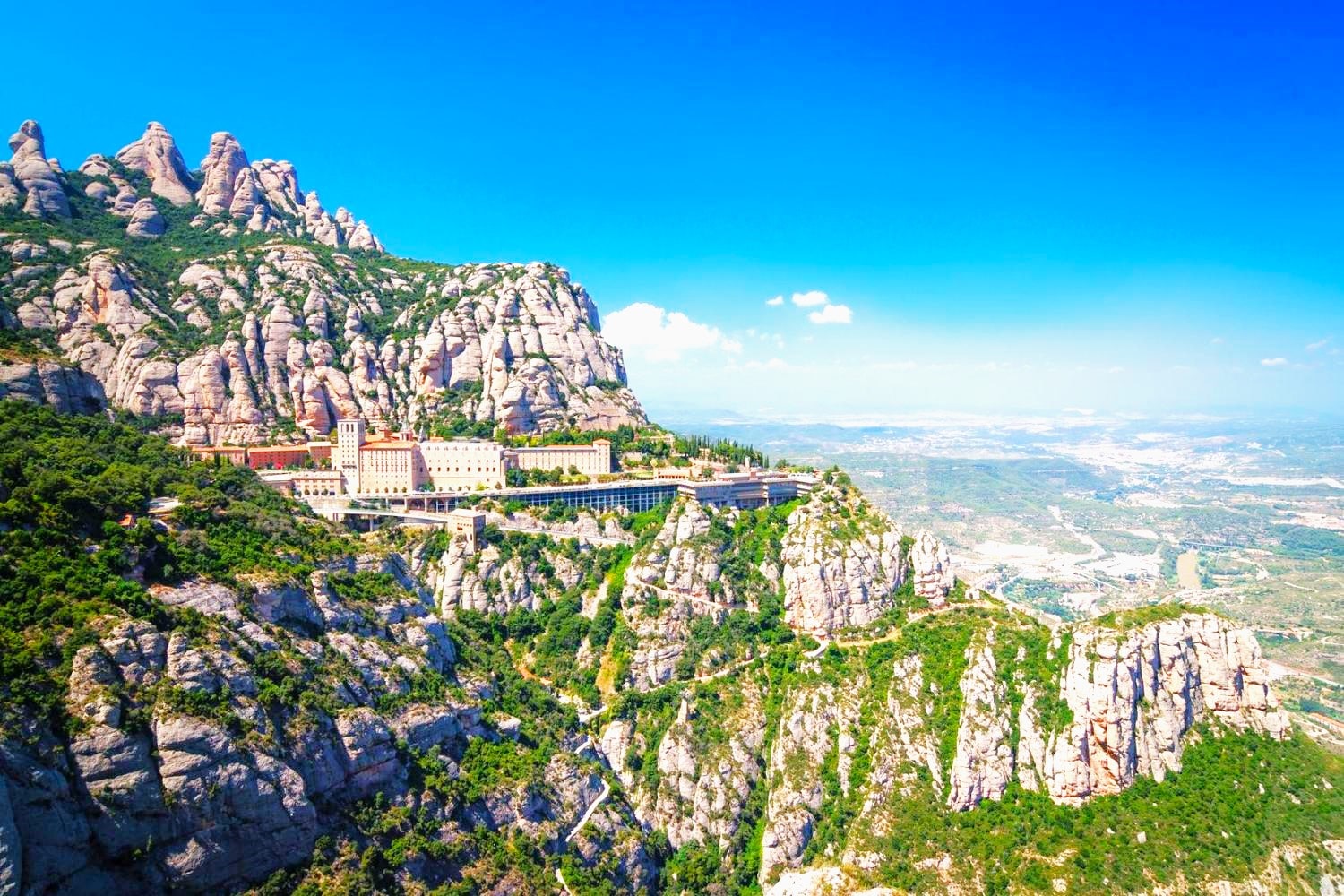
Montserrat is often described as though the basilica, museum and mountain were adjacent attractions on a compact checklist. Geographically they share the same sanctuary complex, yet experientially they pull the day in different directions. The basilica and monastery precinct concentrate people around scheduled religious activity. The museum asks you to slow down indoors and follow objects across centuries. The Sant Joan and Santa Cova routes draw you away from the central squares, introduce gradients and expose the plan to operating conditions.
The consequence is more important than the map suggests. A sacred-music visitor must work backward from a service time. An art-focused visitor should protect a continuous block rather than repeatedly entering and leaving the galleries. A landscape visitor should use the best weather and operating window, which may be early, and should treat the published trail duration as only the walking component of a larger mountain segment.
Transport adds a fourth clock. FGC describes Montserrat as about one hour and thirty minutes from Barcelona by public transport and identifies the rack railway as the connection into the sanctuary, with the Sant Joan funicular providing access toward higher points of the massif and the Santa Cova funicular serving the Holy Cave direction. The relevant planning page is the FGC Montserrat rack railway and funicular overview. That ninety-minute figure should not be treated as a hotel-door guarantee: reaching the departure point in Barcelona, waiting, changing modes and walking within the precinct all sit around it.
For a first visit, the useful distinction is therefore not “full day or half day.” It is fixed-time sacred purpose, bounded indoor study, or condition-dependent mountain time. Once the principal purpose is clear, duration becomes easier to judge and transport can be coordinated around an actual outcome rather than around the abstract idea of seeing Montserrat.
Choose by the loss you would feel, not by the number of sights
A good decision begins with a counterfactual question: at the end of the day, which omission would make the visit feel incomplete? Someone drawn by sacred music may be satisfied with only a modest viewpoint. A collector or art historian may prefer two concentrated hours in the museum to a rushed funicular ride. A walker may regard the monastery as the cultural threshold to the mountain rather than the day’s endpoint.
- Choose sacred music as the anchor when the meaning of the Escolania, communal prayer and the basilica setting matters more than schedule freedom.
- Choose the museum as the anchor when you want sustained visual study, especially across Catalan painting, devotional imagery, icons or the relationship between monastic collecting and modern art.
- Choose landscape as the anchor when the massif itself is the reason to leave Barcelona and you are prepared to let weather, trail conditions and funicular status alter the plan.
- Choose a two-purpose day when one purpose can remain deliberately light: sacred music plus a selective museum visit, museum plus a moderate viewpoint, or sacred music plus a short mountain exposure.
- Do not call it a three-purpose day unless everyone accepts that it will be a sampler. Hearing a short service, moving quickly through highlights and taking one elevated view can be enjoyable, but it is not the same as giving prayer, art and landscape the time each deserves.
Other criteria refine the choice. Fixed reservations later in Barcelona favor the basilica or museum over a long walk. Limited standing tolerance makes service queues and basilica access as relevant as trail distance. Strong heat, wind, rain or fog reduce the value of committing the day to the higher mountain. A mixed-interest party may need a shared anchor and one optional branch rather than a sequence in which every person is required to enjoy every component.
Travelers still deciding whether Montserrat is the right excursion at all should compare Montserrat with Barcelona’s other major day-trip choices. Montserrat is unusually strong when spiritual culture and dramatic geography matter together. It is less persuasive when the real priority is a long lunch, a continuous urban art day or an excursion that remains largely independent of weather.
Sacred music: plan around worship, not a performance slot
The Escolania is the most time-sensitive of the three purposes, and the easiest to misunderstand. The choir’s appearances belong to religious services and communal prayer in the basilica. They are not simply concerts inserted into a sightseeing day. That distinction changes both behavior and timing: entering quietly, following staff direction, minimizing movement and photography, and allowing the prayer to remain the center of the room are part of attending well.
The official pastoral welcome and service schedule currently lists lauds at 7:30 and conventual Mass at 11:00. It lists the Boys’ Choir singing the Salve and Virolai at 13:00 from Monday to Friday, while the Saturday 13:00 Salve and Virolai is sung by pilgrims. On Sundays and religious holidays, it lists the Boys’ Choir at 12:00 and again in the evening vespers context. The same official material makes clear that the sanctuary is welcoming visitors into prayer; the choir’s own schedule information also warns that times can vary with special religious celebrations and the school calendar.
For planning, the implication is direct: never build the day from an old screenshot, a reseller’s summary or the assumption that “the choir sings at one.” Check the official schedule for the exact weekday and date. A Saturday plan is structurally different from a weekday plan. A Sunday or feast day can alter both timing and the atmosphere around the basilica. An exceptional liturgical calendar can change what would normally be expected.
Respectful access requires a real buffer
A rail or road arrival that appears to precede the service by fifteen minutes is not a responsible connection. You still need to orient yourself within the precinct, pass any access controls, understand where to enter, account for crowd movement and settle before prayer begins. The appropriate margin varies by date and demand, so it should be treated as a planning buffer rather than a universal number. For a sacred-priority day, the service should be the protected appointment and everything around it should be movable.
It is also useful to separate three experiences that visitors often blur together: entering the basilica, attending a service, and approaching the image of Our Lady of Montserrat. They may involve different flows and waiting patterns. A traveler whose purpose is music and prayer should not assume that completing every devotional or visitor route immediately before the service is necessary. Conversely, someone for whom the Black Madonna is central should give that act its own time rather than treating it as a corridor on the way to the choir.
How much of the day does sacred music deserve?
Editorially, sacred music works best when given a broad cultural frame rather than isolated as a few famous minutes. Allow time to understand the monastery precinct, the basilica’s role as a pilgrimage sanctuary, the Marian devotion that gives the Salve and Virolai their context, and the difference between listening in a concert hall and joining a prayer attended by monks, pilgrims and visitors.
A sacred-led visit can combine well with a selective museum session because both are within the central complex and the museum offers context for Marian iconography and liturgical culture. It combines less naturally with a major hike. An early high-level walk creates vulnerability to a missed return funicular, slower pace, heat or a delayed arrival at the basilica. A long walk after the service pushes the return later and may place the most exposed activity in the hotter or less predictable part of the day.
The sacred purpose is therefore strongest for travelers willing to accept asymmetry: the service receives the non-negotiable time, while museum or mountain becomes secondary. Trying to preserve a full museum study block, a summit-scale walk and a fixed choir appearance usually converts reverence into clock-watching.
The Museu de Montserrat is a collection, not a rain shelter
The museum is often underestimated because it sits inside a destination better known for the monastery and mountain. Its scale and range are substantial enough to justify an art-led visit. According to the official Museu de Montserrat overview, more than 1,300 objects are displayed across six collections, spanning from a thirteenth-century-BC Egyptian sarcophagus to a Sean Scully painting dated 2010.
The holdings move through archaeology of the Biblical East, changing representations of Our Lady of Montserrat, Byzantine and Slavic icons, liturgical metalwork, painting from the thirteenth to eighteenth centuries, and nineteenth- and twentieth-century art. The named artists include El Greco, Caravaggio and Tiepolo in the earlier painting collection; Catalan figures such as Fortuny, Rusiñol, Casas, Nonell, Mir and Anglada Camarasa; and modern or international names including Picasso, Dalí, Monet, Degas, Miró and Tàpies. The point is not to chase signatures. It is to see how devotional objects, collecting, Catalan identity and modern artistic patronage coexist within an abbey museum.
The official overview currently notes that the Ancient World Archaeology section is temporarily closed for renovation. That is precisely the kind of condition worth checking when a specific collection is the reason for traveling. The museum’s own hours and admission page states daily opening from 10:00 to 17:45, with extension to 18:45 on calendar-marked days and shorter hours on 25 December. These operational details are date-sensitive and should be checked again before the visit.
Realistic study time
A fast forty-five-minute pass can identify the museum’s range, but it cannot support serious looking. It tends to become a sequence of labels and famous names. Around ninety minutes allows a selective visit built around two or three themes. Two hours permits a coherent progression through several collections, with enough time to compare works rather than merely locate them. A specialist with interest in iconography, Catalan painting or the abbey’s collecting history can reasonably use more, especially when temporary exhibitions are relevant.
- Forty-five to sixty minutes: orientation only; choose one collection and a small number of anchor works.
- Ninety minutes: a credible selective visit; suitable as the secondary purpose beside sacred music.
- Two to two and a half hours: an art-led visit with visual continuity and time for comparisons.
- Three hours or more: appropriate for specialists, repeat visitors or anyone including temporary exhibitions and detailed interpretation.
The museum becomes especially valuable in poor mountain weather, but it should not be treated merely as the substitute activity when clouds arrive. That framing encourages a rushed visit and obscures why the collection is unusual. If the strongest interest is medieval sacred art on a larger institutional scale, there is also a legitimate alternative: keep the day in Barcelona for a deeper Romanesque-art sequence. Montserrat wins when the collection’s monastic context and the relationship between art, pilgrimage and landscape are part of the question.
What museum depth costs elsewhere
Protecting two hours in the galleries usually means reducing the mountain to terraces, a short path or a funicular-assisted viewpoint. It can still fit a choir appearance, but the service time will divide the museum day and may force study into two fragments. For many art travelers, one continuous block is better. Looking carefully at icons and Catalan painting requires a different mental rhythm from monitoring the clock for a basilica entry.
The museum is the most operationally stable of the three purposes because it is indoors and has broad opening hours, but it is not infinitely flexible. Late arrival, a long lunch or a service-centered midday can leave less time than the closing hour appears to promise. Admission, orientation, temporary closures and the desire to use an audioguide all consume part of the apparent window.
Mountain landscape: decide how much exposure you actually want
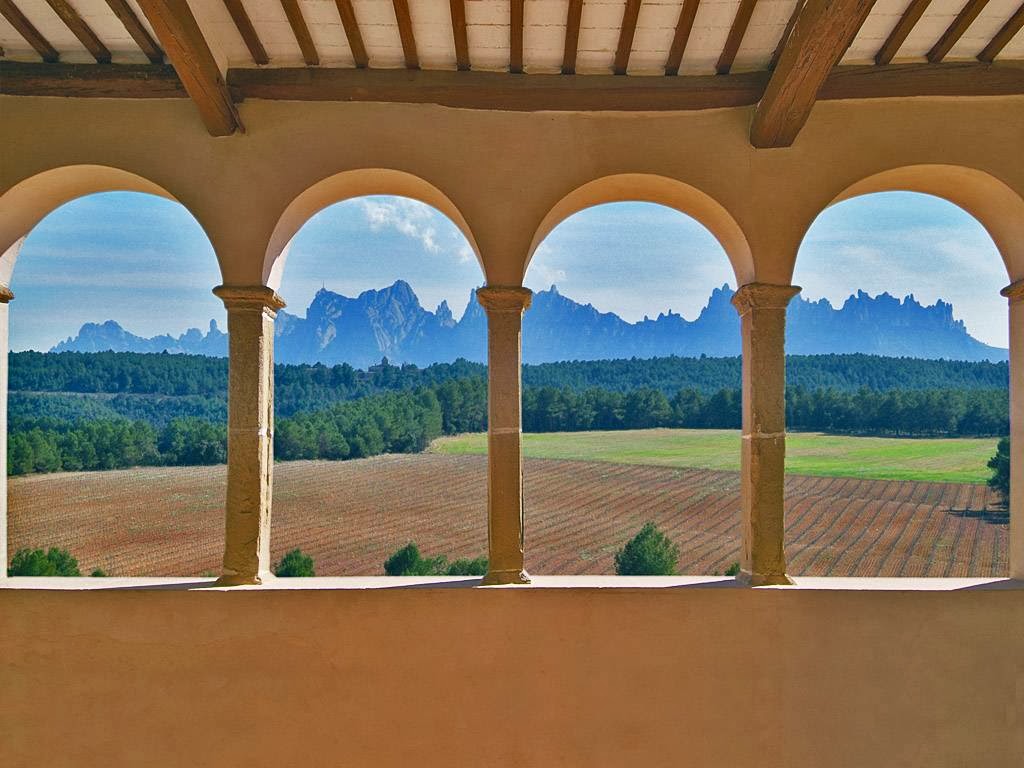
“See the views” can mean several very different physical commitments. Montserrat’s rock formations are visible from the sanctuary precinct, so a visitor can encounter the mountain without undertaking a trail. Yet the experience changes markedly as you move upward or away from the central complex. The key is to distinguish scenic presence, assisted elevation and sustained hiking.
Level one: the sanctuary precinct and nearby viewpoints
This is the lowest-exposure landscape choice. You experience the vertical drama around the basilica, look across the Llobregat corridor and understand how the monastery occupies a shelf beneath the massif. It suits travelers who prioritize the basilica or museum, anyone with limited time, and groups for whom uneven or prolonged walking would be unwise.
Low exposure does not mean no effort. The precinct contains gradients, steps, standing and transitions between buildings. Sun, heat, wind and crowded circulation can matter. A traveler using a cane, rollator or wheelchair needs a route designed around actual entrances and surfaces rather than the assumption that “we are not hiking.” The museum overview notes an entrance created to remove architectural barriers, but that fact should not be generalized to the mountain paths.
Level two: funicular-assisted landscape
The Sant Joan funicular changes elevation quickly and reaches the Pla de les Taràntules, the starting point for higher walks and viewpoints. It should be understood as access to the mountain, not as a summit attraction that eliminates walking. Once above the sanctuary, exposure to sun, wind, changing cloud and uneven terrain becomes more consequential. Even a shorter outing requires attention to the last practical descent, queueing and the operating timetable.
The Santa Cova direction is different in character. It connects the sanctuary with the route toward the Holy Cave, tying landscape to the origin legend of the Virgin’s image and to devotional movement through the mountain. A funicular can reduce part of the vertical work when operating, but it does not transform the excursion into a step-free visit. If service is unavailable, the same idea may require substantially more descent and return climbing. This is why the operator’s status page must be checked for the travel date rather than assuming both funiculars always run.
Level three: a Sant Jeroni-scale walk
The official natural-park itinerary from the upper Sant Joan station to Sant Jeroni is a useful reality check. The park authority’s Sant Jeroni route page classifies the route as medium difficulty, gives a distance of seven kilometres and an approximate duration of two hours and thirty minutes, and lists elevations from 712 to 1,236 metres. It starts at Pla de les Taràntules, reached by the Sant Joan funicular.
Those numbers are not the duration of the entire mountain segment. They do not automatically include waiting for the funicular, orientation, stops, photographs, a cautious pace on steps, weather delays, time at the summit or the final return into the sanctuary. Nor do they guarantee that every traveler who walks comfortably in Barcelona will feel comfortable on mountain terrain. The route description itself refers to narrow passages, paved climbing sections, forest, viewpoints and a choice of return paths.
As a planning judgment, a party choosing Sant Jeroni should protect a much broader block than the official walking estimate and should avoid pairing the route with a tightly timed late-afternoon commitment in Barcelona. The practical question is not merely whether everyone can complete seven kilometres. It is whether they can manage the sustained ascent and descent, variable exposure and enough physical reserve to return without anxiety.
Weather changes the value, not just the comfort
Cloud can erase the panoramic reward while leaving the physical demand intact. Rain affects rock and steps. Strong wind changes exposed viewpoints. High summer heat can turn a pleasant late-morning ascent into a poor afternoon choice. Fog makes orientation and visual interpretation harder. The park authority advises checking conditions and abandoning the activity when forecasts are unsuitable; it also warns that weather changes can be sudden and that cold, rain, fog and hot summer days require extra caution.
A landscape-led plan therefore needs a genuine alternative, not a token indoor stop. The museum is the strongest fallback because it can absorb serious time. The basilica and precinct can support a culturally rich day if approached on their own terms. What does not work is pretending that a mountain day remains unchanged when the mountain disappears into cloud.
Which combinations remain coherent?
The three purposes can be paired, but each pairing has a different logic. The combination is successful when the secondary purpose supports the primary one and remains within a defined limit. It fails when both are treated as coequal and a third attraction is added because it appears nearby.
For travelers who need a single purpose-led day, current schedule checks and coordinated movement can make the difference between a coherent sequence and a rushed sample of everything. Orange Donut Tours can shape the day around the protected experience, with the remaining elements treated as conditions rather than promises; see a purpose-led private Montserrat visit. Inquire now when you want the sacred, museum and mountain choices resolved before departure rather than negotiated on the mountain.
Sacred music plus museum art
This is the most coherent cultural pairing. Both occur within the central complex, the museum’s Marian and liturgical collections deepen the sanctuary context, and bad weather has limited effect. The fixed service becomes the hinge around which museum time is placed.
It works best when the museum is selective rather than exhaustive: roughly ninety minutes focused on chosen collections, with the service protected by a generous access buffer. It becomes less satisfying when a serious art traveler splits a two-hour study session into fragments or when a late arrival forces the galleries into the final hour before closing.
The main sacrifice is mountain depth. Keep the landscape to the precinct or one short viewpoint unless the day has no demanding Barcelona evening and the relevant funicular is confirmed. This pairing is ideal for travelers whose attraction to Montserrat is cultural rather than athletic.
Sacred music plus mountain landscape
This pairing can be powerful because the massif explains the sanctuary’s physical and imaginative setting. It is also fragile. The choir’s fixed time and the mountain’s variable conditions do not naturally cooperate. A morning walk before a midday service requires discipline about turnaround time; an afternoon walk after the service may run into heat, weather change, funicular closing or a late return.
For most first-time visitors, the coherent version is sacred music plus low- or moderate-exposure landscape: precinct views, a short path, or a funicular-assisted outlook with a conservative return. Sant Jeroni belongs only when the walking purpose is nearly equal to the sacred purpose and the rest of the day is deliberately cleared.
Museum art plus mountain landscape
This is the most flexible pairing because neither component is tied to a single brief service. The day can use the clearest weather for the mountain and the museum as the stable indoor block. It is particularly good for travelers who value art but do not need the Escolania to define the visit.
The danger is underestimating transitions. A two-hour museum visit, funicular queues, a moderate walk and return transport can still fill the day. The best version sets a threshold: if visibility and operations are favorable by a stated time, take the mountain segment; if not, deepen the museum and precinct visit without regret.
All three in one day
A three-purpose visit is possible as a survey, not as three complete experiences. The honest structure is one anchor, one meaningful secondary element and one glimpse. Examples include sacred music as anchor, ninety minutes in the museum and only precinct views; or landscape as anchor, a short basilica visit and a highlights-only museum pass. The day becomes incoherent when each component is described in advance as “the main reason” for going.
Transport should support the purpose, not dictate it
Public transport can be an elegant part of the Montserrat experience. The rail journey and rack railway make the change from Barcelona’s urban basin to the mountain tangible. They also impose connection times and a defined return pattern. For a traveler whose anchor is a fixed choir service, the critical issue is not average journey duration but the reliability of the complete chain from accommodation to being settled inside the basilica.
A coordinated private road transfer changes different variables. It can control hotel departure, reduce the need to navigate an interchange and make the return more adaptable to the group’s pace. It does not create privileged access to worship, guarantee a funicular, improve visibility or shorten a seven-kilometre route. Its value is strongest when timing, mobility, family coordination or an evening commitment makes the outer legs consequential.
For a landscape-led day, transport flexibility can preserve a weather window or allow an earlier retreat. For a museum-led day, it can support a longer continuous study block and a more predictable return. For a sacred-led day, it can provide a larger arrival buffer without requiring an unnecessarily early city departure. In each case, the service is useful because it protects the chosen outcome, not because Montserrat requires a luxury vocabulary.
Whichever mode you choose, build the plan from four separate durations: the Barcelona departure leg, the mountain-access leg, the on-site purpose block and the return from sanctuary to the actual evening destination. “Back in Barcelona” may still leave a transfer to the hotel, time to change and travel to dinner. That last mile is where apparently comfortable schedules often become tight.
Conditions that change the answer
The day of the week
Weekday, Saturday and Sunday are not interchangeable for a sacred-music plan. The official pastoral schedule distinguishes the Boys’ Choir’s weekday and Sunday appearances from the Saturday pilgrim-sung service, and special religious observances or the school calendar can alter normal expectations. If hearing the Escolania is essential, confirm the exact date first; only then should transport and museum time be fixed.
Funicular operation
A closed Sant Joan funicular does more than remove a ride. It changes access to Pla de les Taràntules and therefore the logic, duration and exposure of higher-route plans. A closed Santa Cova funicular changes the vertical effort of reaching the Holy Cave direction. Treat service status as a branch in the plan, not as a minor inconvenience to be absorbed after arrival.
Heat, rain, wind and visibility
Landscape should be promoted or demoted according to conditions. In hot weather, the highest-exposure segment should not automatically be pushed after lunch because the morning was used indoors. In rain or strong wind, the correct response may be to shorten the route substantially. In fog, the museum can become the primary purpose rather than a consolation.
Mobility and standing tolerance
Walking distance alone is an incomplete measure. Consider standing during access, gradients between levels, steps, the ability to board transport, uneven surfaces and the psychological effect of exposed edges. A mixed-capacity party may do better with a shared basilica and museum core, followed by an optional short mountain branch for the stronger walkers. Separating briefly can be more respectful than forcing every person through the same exposure.
How much interpretation you want
Montserrat contains several overlapping stories: Benedictine life, Marian pilgrimage, Catalan cultural identity, sacred music, collecting, geology and the transformation of a difficult mountain into an accessible visitor destination. Without interpretation, the day can feel like unrelated stops. With too much interpretation, a traveler seeking quiet or physical landscape can feel over-programmed. Decide whether the guide’s central task is theological and historical context, close looking in the museum, landscape reading, or the coordination that lets those strands meet without crowding one another.
Your Barcelona evening
A same-day dinner, concert or timed interior changes the rational maximum at Montserrat. An early evening commitment favors a single strong purpose and a conservative departure. A flexible evening allows a two-purpose day. A major hike should generally be paired with a deliberately uncommitted return rather than a reservation that turns every pause into a calculation.
Six conditional models for a one-day visit
These are not universal itineraries. Each is a response to a specific priority and condition set. The times of services, museum access and transport must still be checked for the date.
1. The weekday sacred-music day
Use it when: hearing the Escolania in the basilica is the principal reason for going and the date is confirmed against the official schedule.
Sequence: arrive with ample time to understand the precinct and enter the basilica without hurry; attend the service as prayer; then choose either a selective museum visit or a low-exposure landscape segment. If the museum is the secondary purpose, identify collections in advance so the visit does not dissolve into a rapid survey.
Leave out: Sant Jeroni and any plan that requires the mountain segment to finish at an exact minute. The sacred appointment has already supplied the day’s fixed structure.
2. The Sunday or religious-holiday sacred day
Use it when: the Sunday worship context is part of the attraction and you can allow extra margin around an explicitly devotional schedule.
Sequence: work from the confirmed service rather than borrowing a weekday pattern. Protect more circulation time around the basilica and avoid assuming that visitor flows will resemble an ordinary weekday. Pair with the museum only if the opening window and your return plan leave a continuous block.
Leave out: tight transfers and an evening reservation that depends on the sanctuary operating like a museum with predictable exit speed.
3. The art-led Montserrat day
Use it when: the collection’s mix of sacred art, Catalan painting, icons and modern works is the intellectual reason for the excursion.
Sequence: protect two or more continuous hours in the museum. Use the basilica and precinct to frame the collection’s monastic and Marian setting. Add landscape only after assessing visibility and group energy; a short elevated or nearby view is enough to connect the art to place.
Leave out: the obligation to hear the choir merely because it is famous. If the service divides the most valuable study block, the art-led visitor may gain more by staying with the collection.
4. The landscape-led day with Sant Joan operating
Use it when: the weather is suitable, everyone has appropriate footwear and walking capacity, and the mountain is the acknowledged anchor.
Sequence: use the best conditions for the higher route rather than automatically placing the museum first. Confirm the funicular timetable and establish a turnaround rule. Return to the precinct with enough reserve for the basilica or a short museum visit, but regard both as cultural context rather than coequal goals.
Leave out: a fixed choir appearance unless its timing genuinely aligns with the completed walk. Do not accelerate the mountain in order to convert it into a prelude to a service.
5. The mobility-conscious cultural day
Use it when: someone in the party has limited standing tolerance, uses a mobility aid or wants mountain presence without trail exposure.
Sequence: build a precise route through the precinct, confirm accessible entrances and minimize unnecessary backtracking. Give the museum a meaningful block, choose basilica access appropriate to the group, and use views available without committing to an uneven trail. A private transfer may be valuable here because it reduces interchange burden and makes departure responsive to fatigue.
Leave out: vague promises that the funicular makes the mountain easy. Boarding, gradients beyond stations and the return path still need assessment.
6. The deliberate three-part sampler
Use it when: the party explicitly prefers breadth to depth and understands that each component will be selective.
Sequence: protect the fixed sacred event if one is included, set a hard museum focus rather than roaming all collections, and choose only a short landscape exposure with a clear return. Build generous transition margins; the sampler fails when every saved minute is assigned twice.
Leave out: claims that you have “done” Montserrat’s museum or mountain. The value of the sampler is orientation. It can reveal what deserves a deeper return, but it should not imitate a complete pilgrimage, collection visit and hike in one day.
Return-time tradeoffs are part of the Montserrat decision
A first-time visitor often evaluates the day only until departure from the sanctuary. The actual consequence appears later: the return journey, arrival in Barcelona, movement to the hotel and the energy required for the evening. A basilica-led day can usually preserve the most control. An art-led day may extend quietly because one more gallery feels manageable. A mountain-led day has the widest range because pace, weather and funicular timing can all shift the finish.
If the evening matters, define what must be protected. “Dinner in Barcelona” is too vague; a fixed tasting menu, a casual meal near the hotel and an unreserved walk have different tolerances. Once the return band is known, you can choose what should follow Montserrat back in Barcelona without asking the mountain day to support an unrealistic second act.
A useful rule is to match evening ambition to daytime uncertainty. The more exposed and condition-dependent the Montserrat plan, the simpler the evening should be. The more fixed the evening, the more bounded the Montserrat purpose should become.
So what is Montserrat really for?
Montserrat is for the encounter you deliberately protect. For one traveler, that is the sound of the Salve and Virolai within prayer rather than on a recording. For another, it is the surprise of finding Catalan modern art, icons and old-master painting inside an active abbey. For another, it is the physical revelation that the monastery is not merely beside a mountain but embedded in a difficult, changing massif.
The weak plan treats these as equal attractions and tries to collect them. The stronger plan gives one purpose enough time to become memorable, uses a second to deepen the first and lets the third remain optional. Sacred music needs verified timing and respectful access. Museum art needs a protected study block. Mountain landscape needs operating confirmation, suitable conditions and honest walking margins.
Choose the purpose before the transport, the secondary purpose before the extras, and the return commitment before you promise a summit. Then Montserrat stops being a famous excursion from Barcelona and becomes a day with a clear reason for existing.
If you’re interested in any private tours of Barcelona, please reach out to us.








 So if you are looking for the absolute best in Barcelona & surroundings with authentic local fully-licensed native guides whose English you can actually understand and with an exclusive and amazingly fun itinerary













